
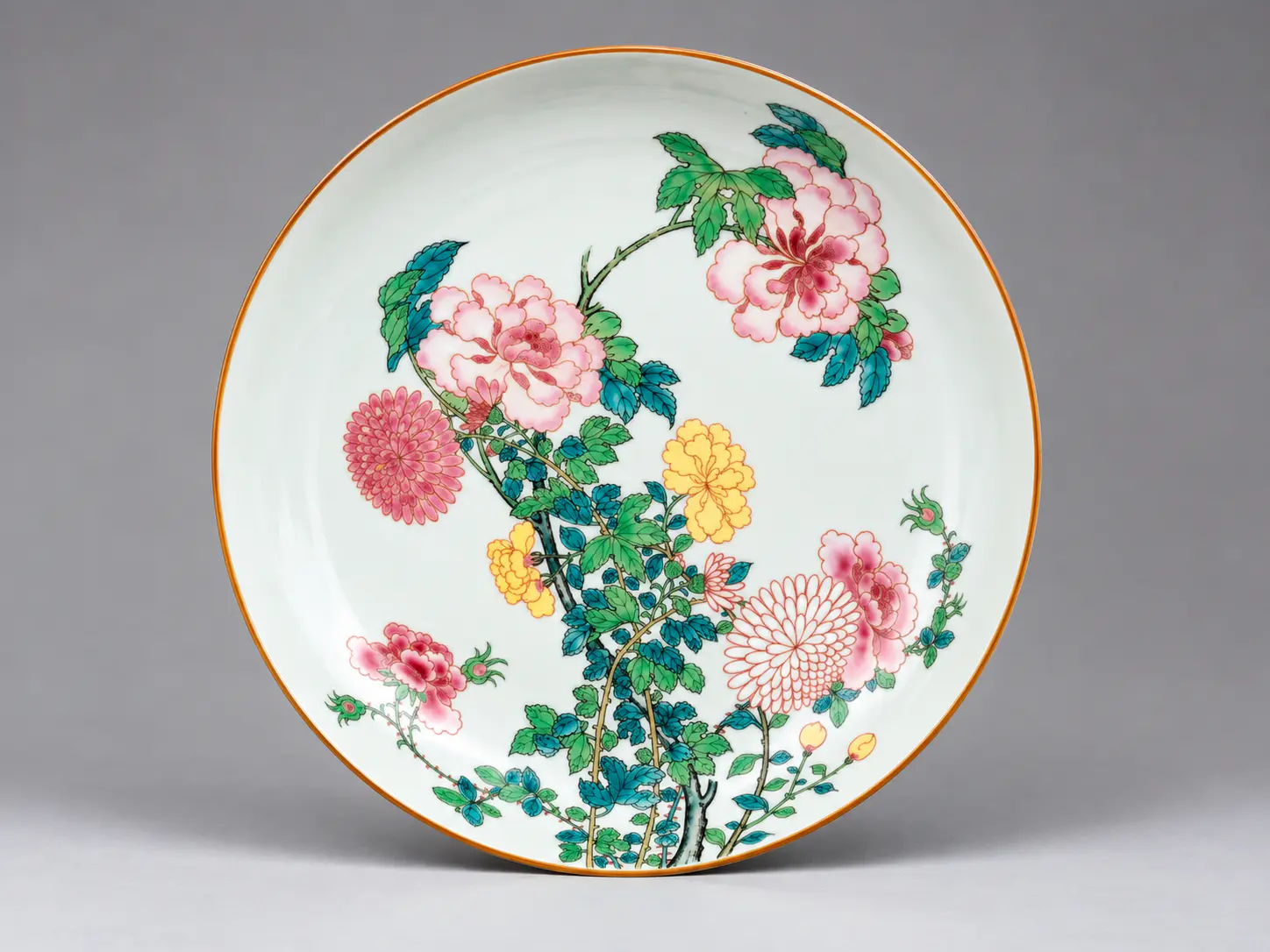
At a Glance
| Type / tradition | Main body | Visual clue | Important period | Key center |
|---|---|---|---|---|
| Painted earthenware | Earthenware | Painted clay body | Neolithic | Multiple regions |
| Sancai | Earthenware | Green, amber, cream lead glazes | Tang | Northern China |
| Jian ware | Stoneware | Dark iron-rich glaze | Song | Fujian |
| Jun ware | Stoneware | Blue / blue-gray glaze, sometimes purple splashes | Song–Yuan | Henan |
| Longquan celadon | High-fired stoneware / porcelaneous ware | Green glaze | Song–Yuan | Zhejiang |
| Qingbai | Porcelain | Pale bluish-white glaze | Song–Yuan | Jingdezhen |
| Blue-and-white | Porcelain | Cobalt blue beneath clear glaze | Yuan onward | Jingdezhen |
| Doucai | Porcelain | Underglaze blue outlines + overglaze colors | Ming onward | Jingdezhen |
| Famille verte | Porcelain | Green-dominant overglaze enamel palette | Qing | Jingdezhen |
| Famille rose | Porcelain | Pink-dominant opaque enamels | Qing | Jingdezhen |
| Dehua / blanc de Chine | Porcelain | Ivory-white / white glaze | Ming–Qing | Dehua, Fujian |
These rows are a practical map, not mutually exclusive bins. The same object can sit in more than one column at once.
How Chinese Ceramics Are Classified
Chinese ceramics can be classified simultaneously by ceramic body, firing, glaze, decorative technique, production center or kiln, dynasty or period, and intended market. Celadon, porcelain, Ming, Jingdezhen and blue-and-white are not equivalent categories. They answer different questions about the same object.
Earthenware, stoneware and porcelain
Museum labels often use three modern body categories. They are useful, but Chinese historical ceramic terminology does not map perfectly onto Western studio-ceramic language. Borderline high-fired wares are not classified identically in every collection.
Earthenware
Earthenware is generally lower fired and more porous unless glazed. The body is frequently opaque. The category includes many ancient pottery traditions and Tang sancai. A painted Neolithic jar and a lead-glazed Tang tomb figure can both be earthenware without sharing a glaze system, workshop or function.
Stoneware
Stoneware is generally fired at higher temperatures. The body is dense and durable, and often vitrified or partly vitrified. Historically it is important for celadon, Jian ware, Jun ware and many other Chinese traditions. A high-fired green-glazed bowl may be stoneware even when English speakers casually call it porcelain.
Porcelain
Porcelain is generally high-fired, dense and vitrified. The body is typically pale or white, and often translucent when sufficiently thin. It is made using highly refined ceramic materials. The Victoria and Albert Museum describes hard-paste porcelain as very hard, strong, white, translucent, resonant and non-porous; The Metropolitan Museum of Art emphasizes high firing and a vitrified body. Those institutional descriptions overlap, but they are not a claim that every museum will place the same borderline ware in the same bin.
Classification by glaze
Some important ceramic categories are identified mainly through the glaze rather than through a unique body recipe. Celadon, Jun, Jian, monochrome glazes and qingbai are all glaze-led names in common use. The underlying body may be stoneware, porcelaneous stoneware or porcelain depending on the ware and on how a given museum classifies it. Glaze color is a visual clue, not a complete identity.
Classification by decoration
Painted and enameled wares are often named for where the color sits in relation to the glaze.
Underglaze
Underglaze decoration is placed beneath the final transparent glaze and then high-fired with it. The most recognizable example is blue-and-white porcelain, in which cobalt is painted on the biscuit or glazed body and sealed under a clear glaze.
Overglaze
Overglaze enamels are applied over an already glazed ceramic surface and fired again at a lower temperature. Famille verte and famille rose are overglaze enamel palettes in this sense.
Combined techniques
Some wares deliberately combine underglaze and overglaze decoration. Doucai is the clearest example: The Met describes doucai as using underglaze blue outlines combined with overglaze colored enamels. The two campaigns are the distinguishing point, not a generic “multicolored” look.
Classification by kiln or production center
Names including Jingdezhen, Longquan, Jian, Dehua, Jun and Cizhou identify geographic or kiln traditions rather than one universal material type. Jingdezhen is a production center, not a porcelain type. Objects from one location are not visually identical: a Jingdezhen qingbai bottle and a Jingdezhen blue-and-white flask share a place name and still belong to different glaze and decoration systems.
Classification by dynasty
Tang, Song, Yuan, Ming and Qing describe historical periods, not materials. Qing porcelain can include blue-and-white, famille rose, monochromes, Dehua ware and many other types. Period is one coordinate, not a substitute for body, glaze or kiln. For the longer chronological account, see the history of Chinese porcelain and ceramics.
Earthenware and High-Fired Stoneware Traditions
Porcelain is not the whole of Chinese ceramics. Major non-porcelain traditions remain essential to a usable classification model.
Painted earthenware
Painted earthenware is a ceramic category, not a dynasty chapter. Neolithic communities produced low-fired clay bodies with painted decoration for utility, storage, ritual and burial. Majiayao and related traditions are representative examples of that painted-earthenware class. The traveler takeaway is material: a painted clay body at a lower firing temperature is a different category from later high-fired porcelain, even when both objects are “Chinese ceramics.”
Tang sancai
Sancai is conventionally translated as “three-color.” It is primarily lead-glazed earthenware, strongly associated with the Tang dynasty. Common colors include green, amber or brown, and cream; some pieces use additional colors. Sancai is particularly associated with tomb objects, including figures, animals and vessels. It is earthenware, not porcelain.
Jian ware
Jian ware is high-fired stoneware associated with Fujian and with Song dynasty tea culture. Dark iron-rich glazes can develop “hare's-fur” effects during firing. Bowls were particularly important. The Met records Song Jian tea bowls as stoneware with dark or “hare's-fur” glazes and links their appearance to whisked tea culture. The classification point is body plus glaze: Jian is a stoneware glaze tradition, not a painted porcelain type.
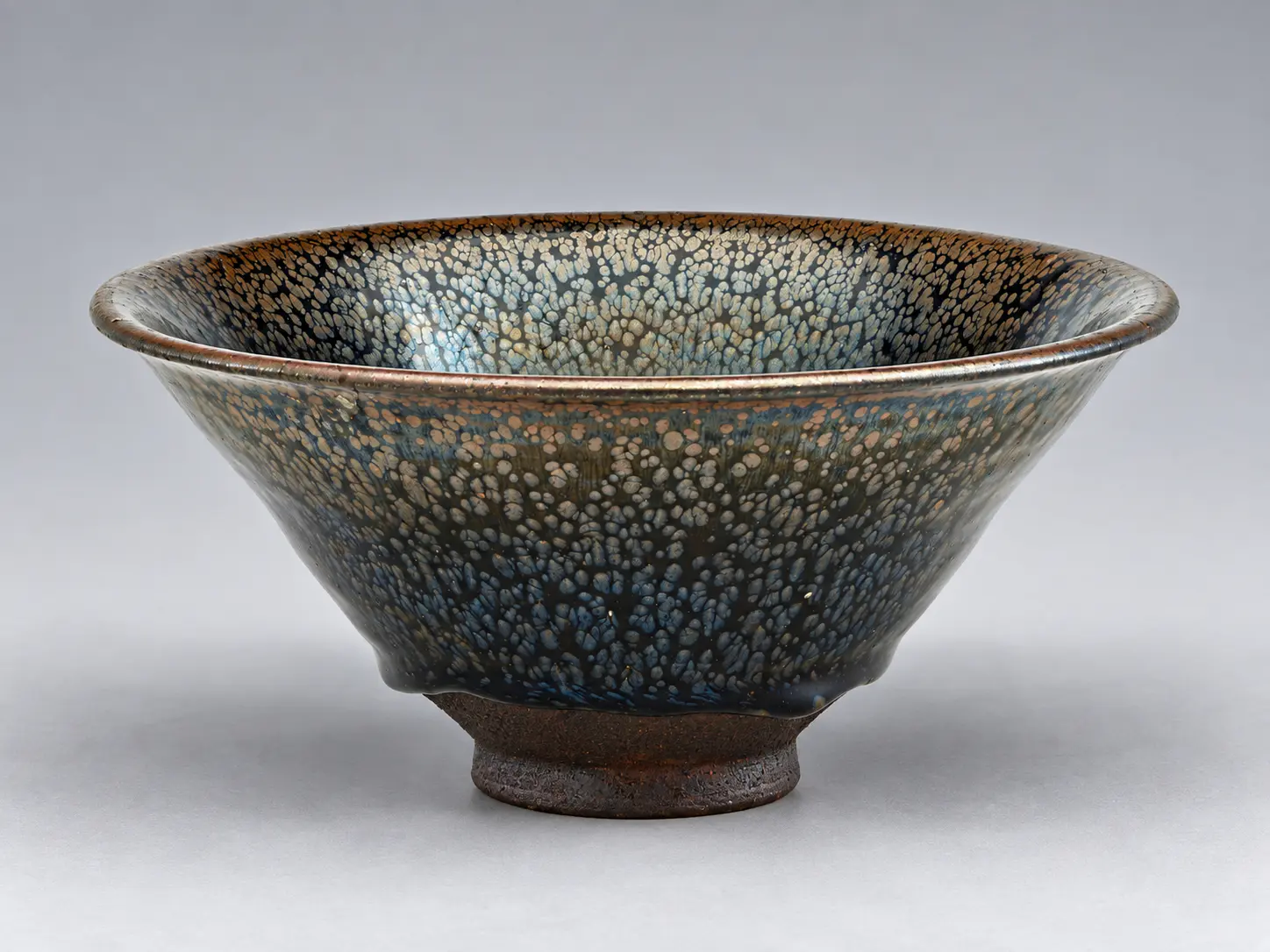
*Jian ware tea bowl with hare's-fur glaze, Song dynasty, 11th–12th century. The Metropolitan Museum of Art, Public Domain.*
Jun ware
Jun ware is high-fired stoneware with a blue, blue-gray or opalescent glaze, sometimes with purple or reddish splashes. It is associated particularly with northern China, with Song, Jin and Yuan contexts depending on the object. The effects arise from glaze chemistry and firing rather than from painted surface decoration. The Met records Jun wares as stoneware with blue and splashed glazes; some purple effects were achieved through copper additions. Jun is a glaze tradition on stoneware, not a pictorial enamel style.
Cizhou and painted stoneware
Cizhou is a northern kiln tradition of high-fired stoneware. Decoration can be painted, carved, incised or executed in slip, often with strong graphic contrast. Song-era ceramic diversity includes this highly decorated stoneware as well as restrained celadon. Cizhou is a kiln-family name, not a claim that every northern painted stoneware object is identical.
Celadon, White Wares and Qingbai Porcelain
Glaze color and body tone become the main identifiers in this group. Celadon is not simply “green porcelain,” and qingbai is not an early version of blue-and-white.
What is celadon?
Celadon generally refers to high-fired ceramics with glazes whose iron content and firing conditions create colors ranging through pale green, gray-green, blue-green and olive tones. Many important celadons are classified as stoneware. A green glaze is the visual clue; the body may be stoneware, porcelaneous ware or, in some museum records, porcelain.
Longquan celadon
Longquan is in Zhejiang Province. It became one of China's major celadon-producing regions, especially during the Southern Song and Yuan. Longquan celadon is a high-fired ceramic tradition associated with Longquan in Zhejiang Province and characterized by green-toned glazes. Thick green glazes and forms that emphasize shape and glaze are typical. Longquan ceramics were also exported widely. Use Longquan as a representative celadon family rather than as a synonym for all celadon. The Met classifies Longquan objects variously as stoneware, porcelaneous ware, and in some instances porcelain, which is itself useful evidence for why body terminology needs nuance.
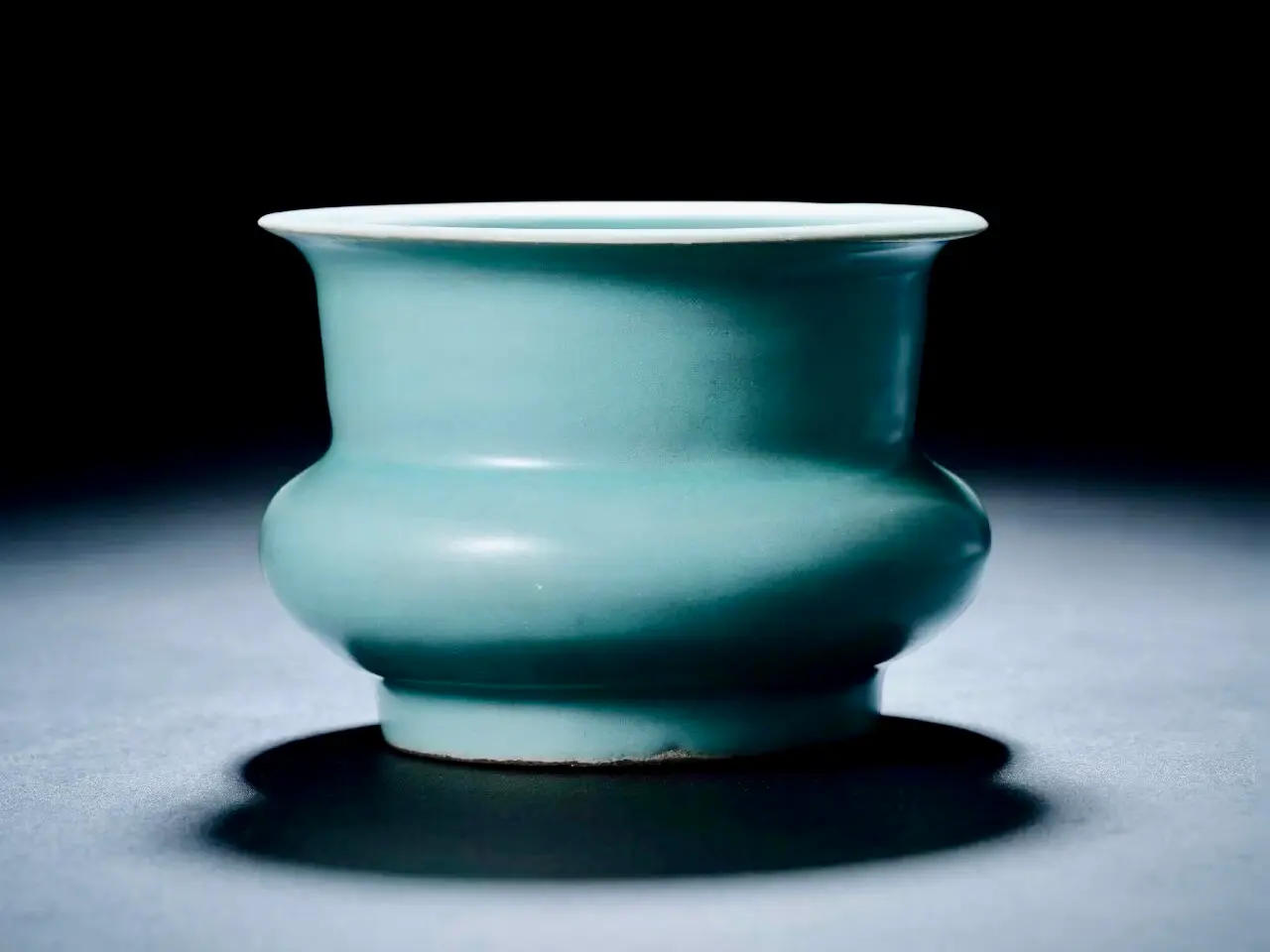
*Longquan celadon bowl, Southern Song dynasty, 12th–13th century. The Metropolitan Museum of Art, Public Domain.*
White wares
White-bodied and white-glazed ceramics developed in several northern and southern traditions. Ding ware is an important Song-period example: a pale body, a clear or ivory glaze, and molded, incised or carved decoration where relevant. White wares influenced later porcelain aesthetics by making a pale, refined body the visual ground. Ding is mentioned here as a white-ware type, not as a separate kiln history.
Qingbai porcelain
Qingbai is a bluish-white porcelain tradition strongly associated with Jingdezhen during the Song and Yuan periods. The name literally means roughly bluish-white. Qingbai is associated especially with Jingdezhen and surrounding kilns and was dominant during the Song–Yuan transition. The ware uses a pale bluish glaze over a fine porcelain body; carved or incised decoration often appears beneath the glaze. It was widely traded domestically and internationally. The Met describes qingbai as bluish-white porcelain with a jade-like glaze and identifies it as a major Jingdezhen product during the 12th–13th centuries, exported as far as East Africa.
Qingbai is not simply an early version of blue-and-white. The decoration system is fundamentally different: qingbai is a pale glazed porcelain, not cobalt-painted decoration under a clear glaze.
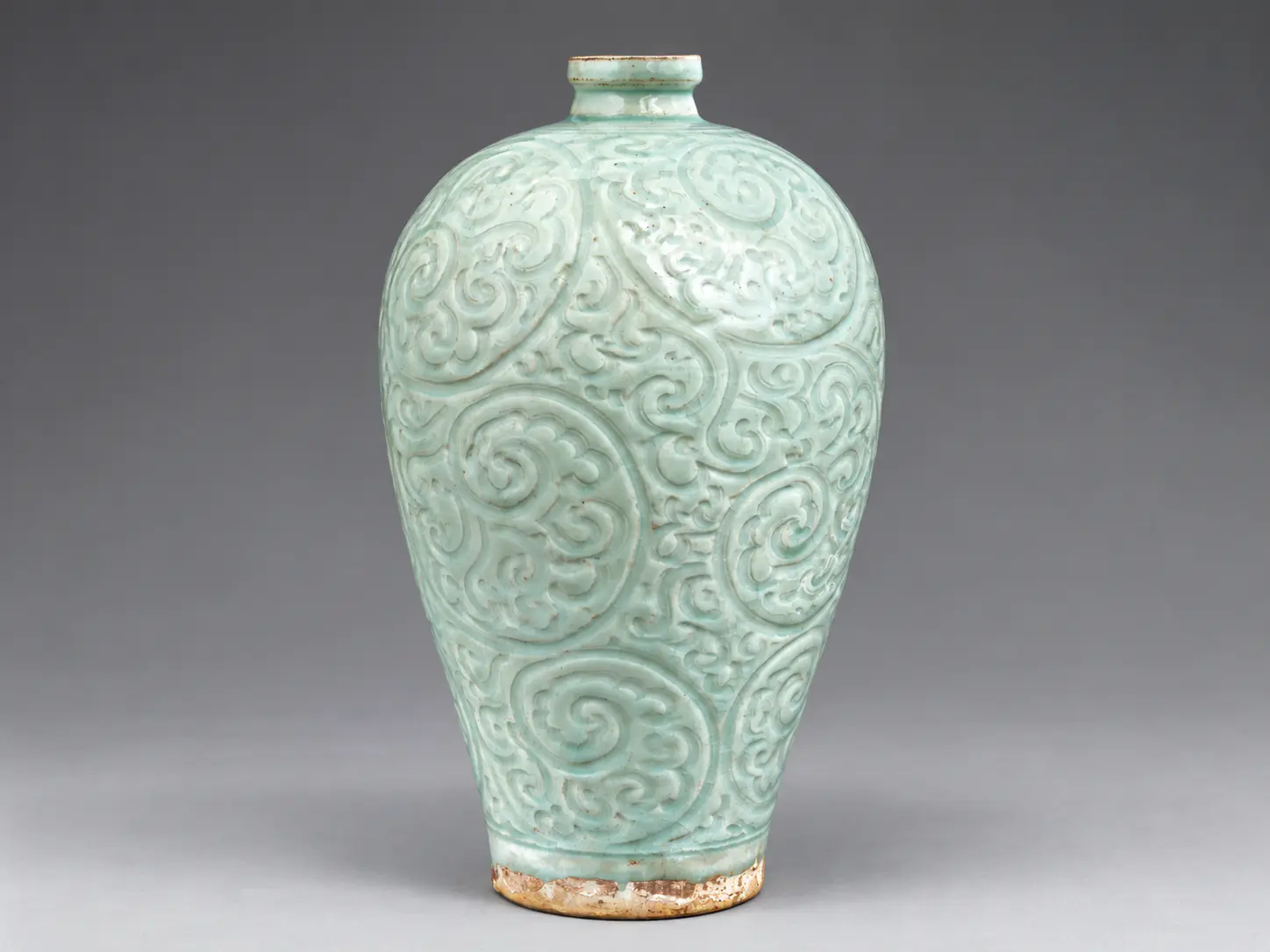
*Qingbai porcelain bottle with carved vegetal decoration, Jingdezhen, late 13th century. The Metropolitan Museum of Art, Public Domain.*
Blue-and-White and Polychrome Porcelain
These are among the most commonly recognized porcelain families. The subsections stay at classification depth: how the decoration is built, not a full history of each ware.
Blue-and-white porcelain
Blue-and-white porcelain uses a white porcelain body with cobalt decoration applied beneath a transparent glaze. High-temperature firing fixes the design. Mature Jingdezhen production developed during the Yuan dynasty and became especially important during Ming and Qing, for imperial, domestic and international buyers. The V&A defines blue-and-white broadly as cobalt-blue decoration on a white ceramic body, usually painted beneath the glaze, and identifies Jingdezhen's Yuan-period technical refinement as decisive. Jingdezhen is the major center for this technique; it is still a place name, not a porcelain type.
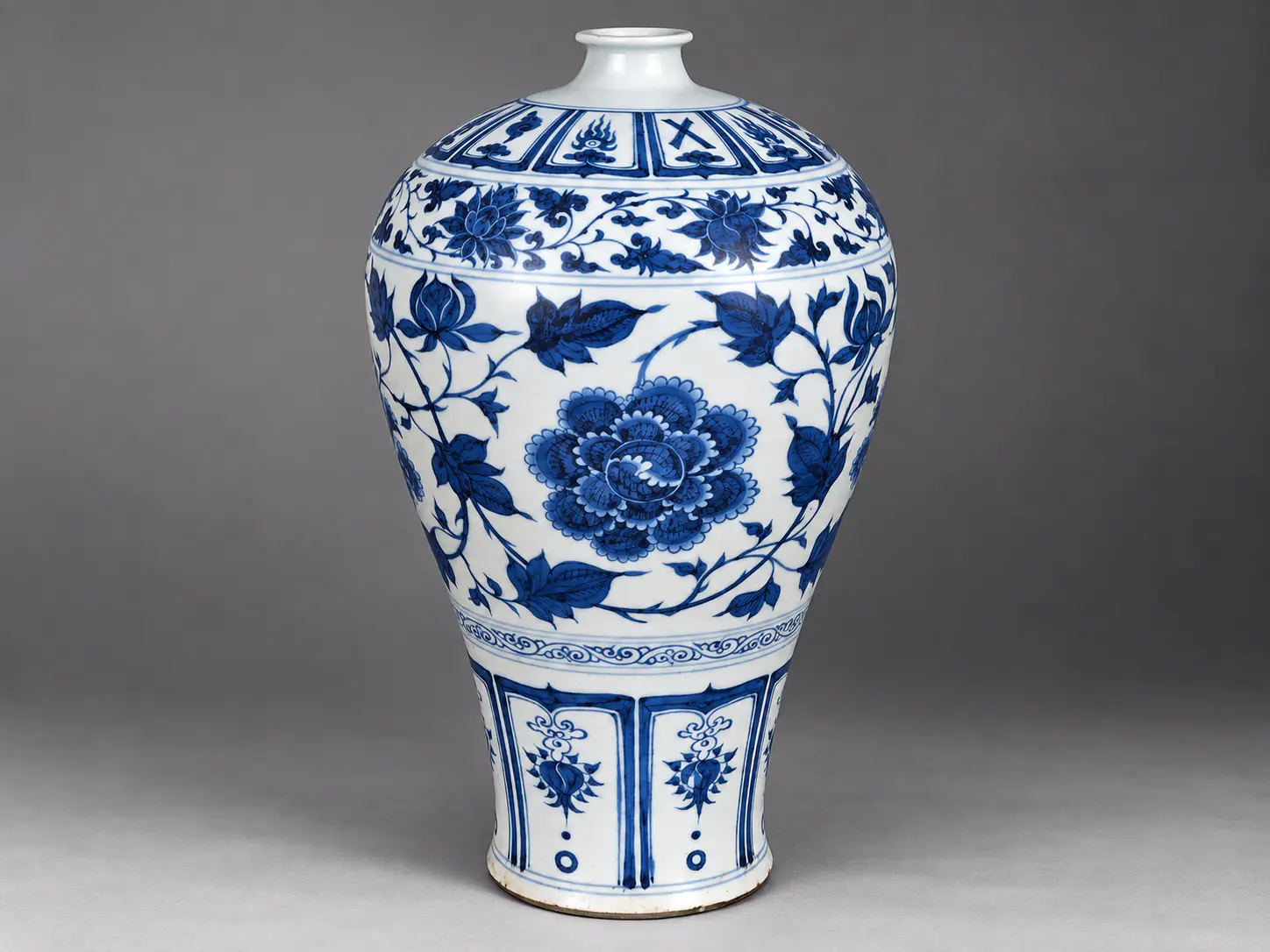
*A blue-and-white porcelain flask decorated with scrolling lotus designs.*
Doucai
Doucai is often translated as joined colors or contrasting colors. Doucai combines underglaze cobalt-blue decoration with colored overglaze enamels. The sequence is underglaze cobalt-blue outlines or elements, a transparent glaze firing, colored overglaze enamels added afterward, and an additional firing. It is closely associated with Ming imperial porcelain, especially the Chenghua period, although the technique continued and was revived later. The Met explicitly describes the technique as overglaze enamels filling or complementing underglaze-blue outlines. Doucai is not simply “multicolored porcelain”; the underglaze/overglaze relationship is the distinguishing point.
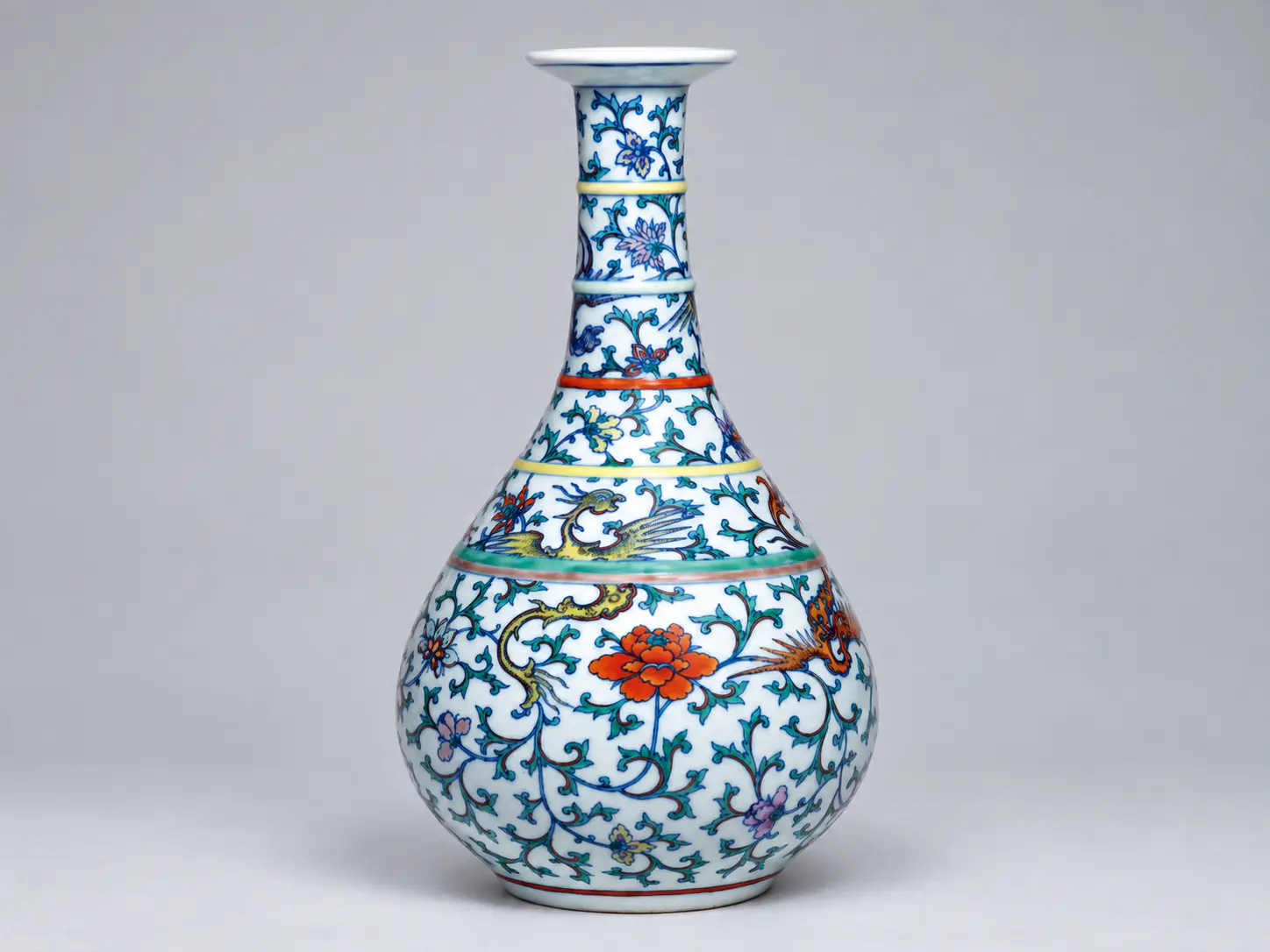
*A bottle-shaped porcelain vase combining blue decoration with colourful floral enamels.*
Wucai
Wucai literally means approximately five colors, but should not be interpreted as requiring exactly five pigments. It is a combination of colored decoration in which overglaze enamels are essential and underglaze blue may also be present. Wucai is especially associated with later Ming production. It is a related polychrome system, not a synonym for famille verte.
Famille verte
Famille verte is a Western collecting term. It emerged from a classification system developed by European collectors and broadly describes porcelain decorated with an enamel palette in which greens are prominent. It is especially associated with the Kangxi period of the Qing dynasty. Chinese potters did not historically call all such porcelain “famille verte.” The Met explicitly notes that the term derives from nineteenth-century French collecting terminology and is not standard Chinese historical terminology.
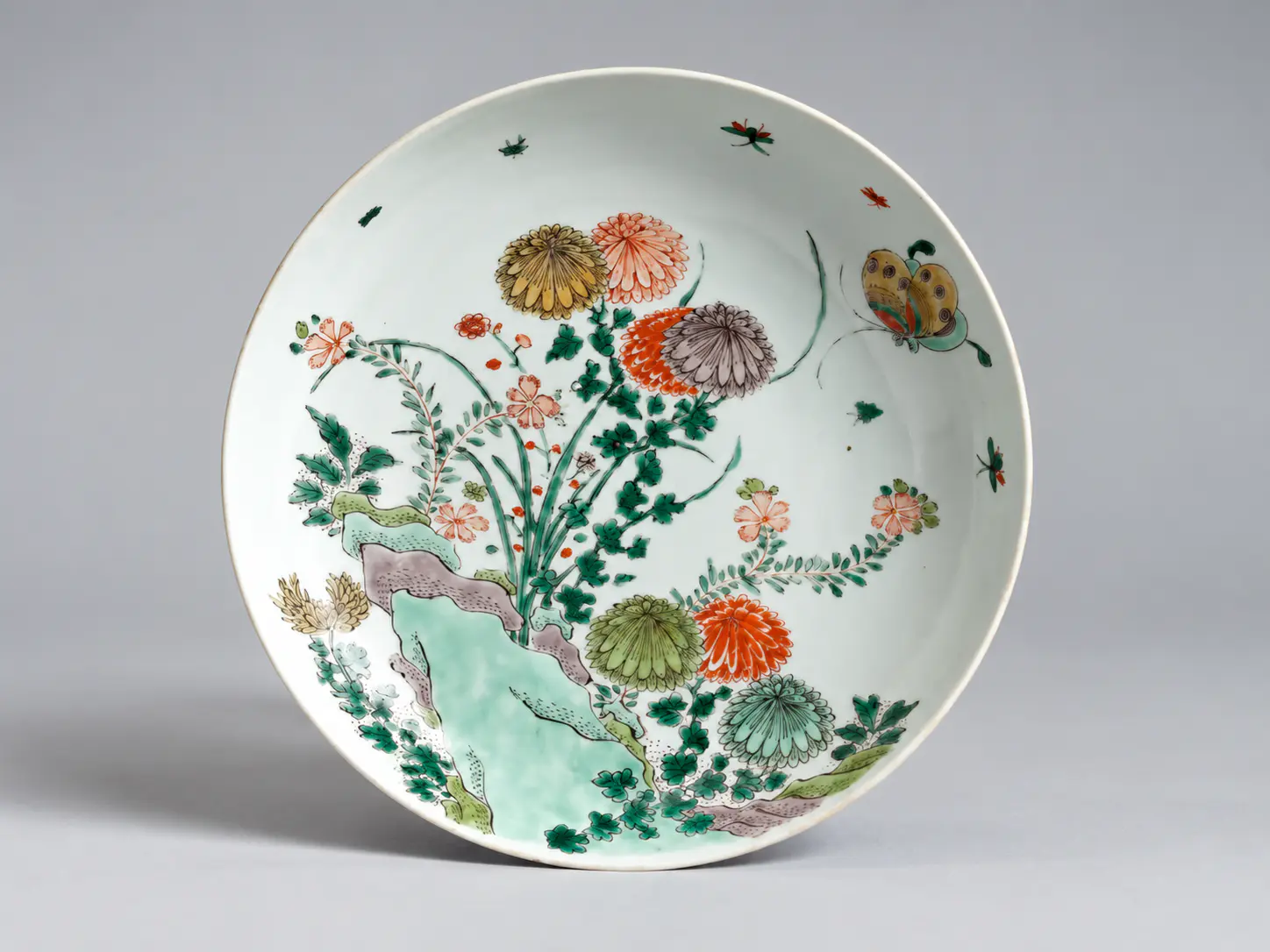
*A floral porcelain dish decorated in a famille verte-style palette.*
Famille rose
Famille rose is likewise a Western collecting term. It is a Qing dynasty overglaze tradition using an opaque enamel palette in which pinks become particularly prominent, with a broader subtle color range than earlier enamel systems. It developed in the late Kangxi period and reached a high level of refinement under Yongzheng and Qianlong, and was widespread in both imperial and export porcelain. The Met notes that the classification system was developed in nineteenth-century French scholarship and describes famille rose as porcelain in which shades of pink are prominent. Not every object containing pink enamel is automatically best classified as famille rose.
Dehua and Chinese Monochrome Porcelain
White porcelain is not one ware, and a single glaze color is itself a classification path.
Dehua porcelain / blanc de Chine
Dehua is in Fujian Province. Kilns there became especially famous for white porcelain with a thick, lustrous white or ivory-toned glaze, used for religious figures, scholar's objects and vessels, with substantial export to Europe. Blanc de Chine means “China white” in French. It is a Western term widely used for Dehua white porcelain. The Met states that Dehua kilns in Fujian flourished especially from the 16th–18th centuries and that their white porcelains became known in Europe as blanc de Chine. Not all Chinese white porcelain is Dehua ware; Ding, qingbai and Jingdezhen white glazes are different traditions.
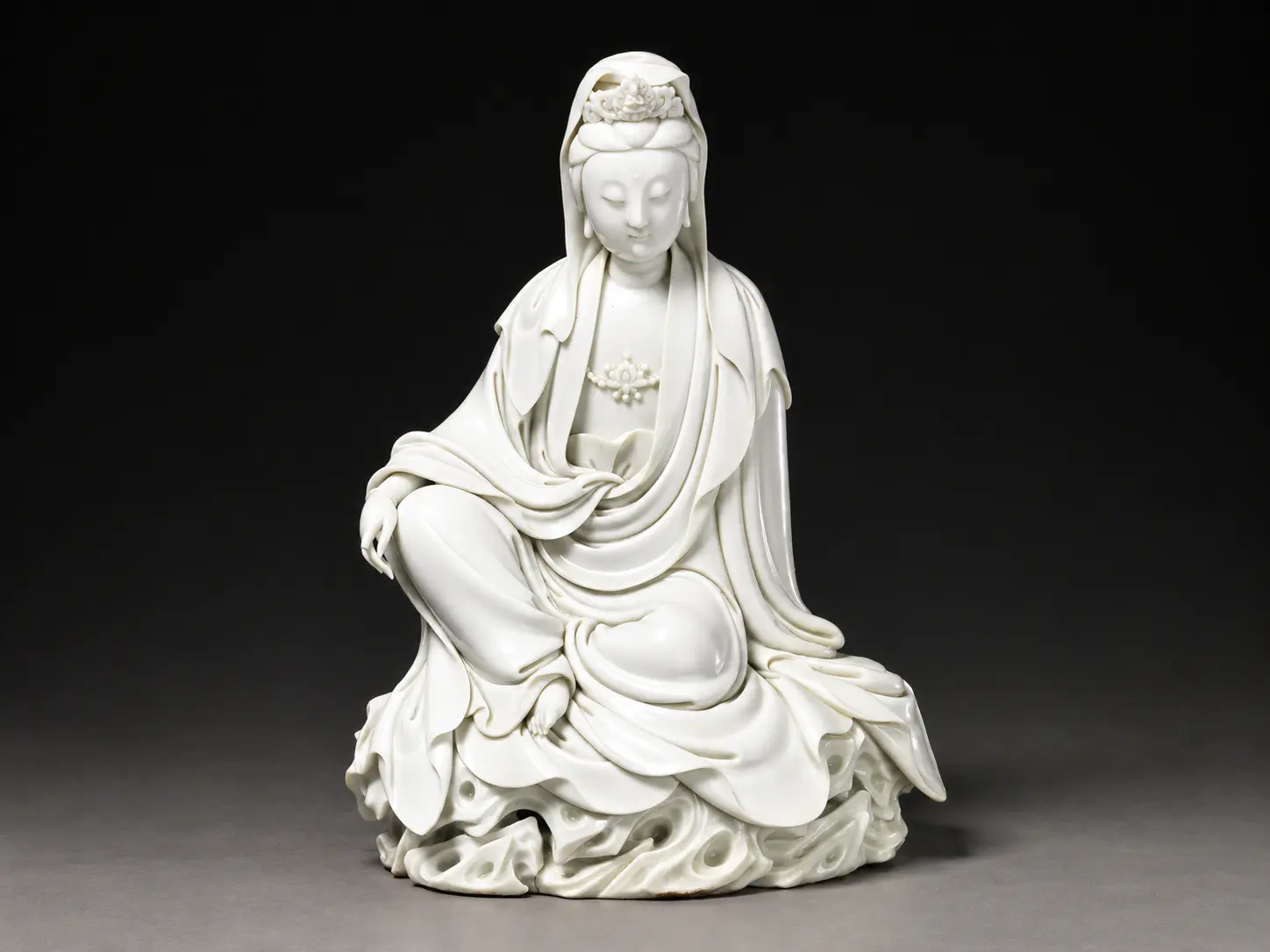
*A white porcelain Guanyin figure with smoothly modelled robes and a serene expression.*
Monochrome porcelain
Monochrome refers primarily to ceramic surfaces dominated by a single glaze color rather than painted pictorial decoration. This can include white, blue, yellow, red, green, turquoise, lavender and other glaze colors. The technical interest often lies in glaze chemistry, firing atmosphere and control rather than in drawn narrative. Monochrome is a surface class that can overlap with imperial Jingdezhen porcelain, Dehua white ware and other kiln traditions.
Copper-red and peachbloom glazes
Copper can produce red tones under carefully controlled firing conditions. Copper-red glazes are technically demanding. Qing peachbloom is one specialized glaze family associated especially with Kangxi-period scholar's objects. These names describe glaze chemistry, not a method for authenticating antiques from a photograph.
Imperial yellow and blue glazes
Monochrome color could carry court associations. Yellow-glazed porcelain had particularly strong imperial associations, and cobalt-blue monochrome porcelain also appears in imperial contexts. Associations vary by period, form and shade; they are not a simple rule that a single color was reserved for one person.
One object can belong to several categories
The same ceramic can be named accurately in more than one system at once.
Example 1
Yuan Jingdezhen blue-and-white flask
- body: porcelain
- decoration: underglaze cobalt
- style: blue-and-white
- place: Jingdezhen
- period: Yuan
Example 2
Song Longquan celadon bowl
- body: high-fired stoneware / porcelaneous ware depending on classification
- glaze: celadon
- center: Longquan
- period: Song
Example 3
Qing Jingdezhen famille rose dish
- body: porcelain
- decoration: overglaze enamels
- style: famille rose
- center: Jingdezhen
- period: Qing
See These Ceramic Traditions in Beijing
Visitors interested in Chinese porcelain can see Ming and Qing imperial ceramics in Beijing's Palace Museum, where blue-and-white, monochrome and enameled porcelains can be understood in their court context. For a palace-focused reading guide, see Forbidden City porcelain and Palace Museum ceramics. A Forbidden City private tour can help with timing when ceramic galleries fit the day. Related craft context sits under Chinese Arts & Crafts.
Sources & Further Reading
- The Metropolitan Museum of Art — How to Read Chinese Ceramics; object records for qingbai, celadon, Jian, Jun, doucai, famille verte, famille rose and Dehua
- Victoria and Albert Museum — A–Z of Ceramics (porcelain terminology) and Chinese blue-and-white ceramics
- British Museum — Chinese ceramics gallery overview