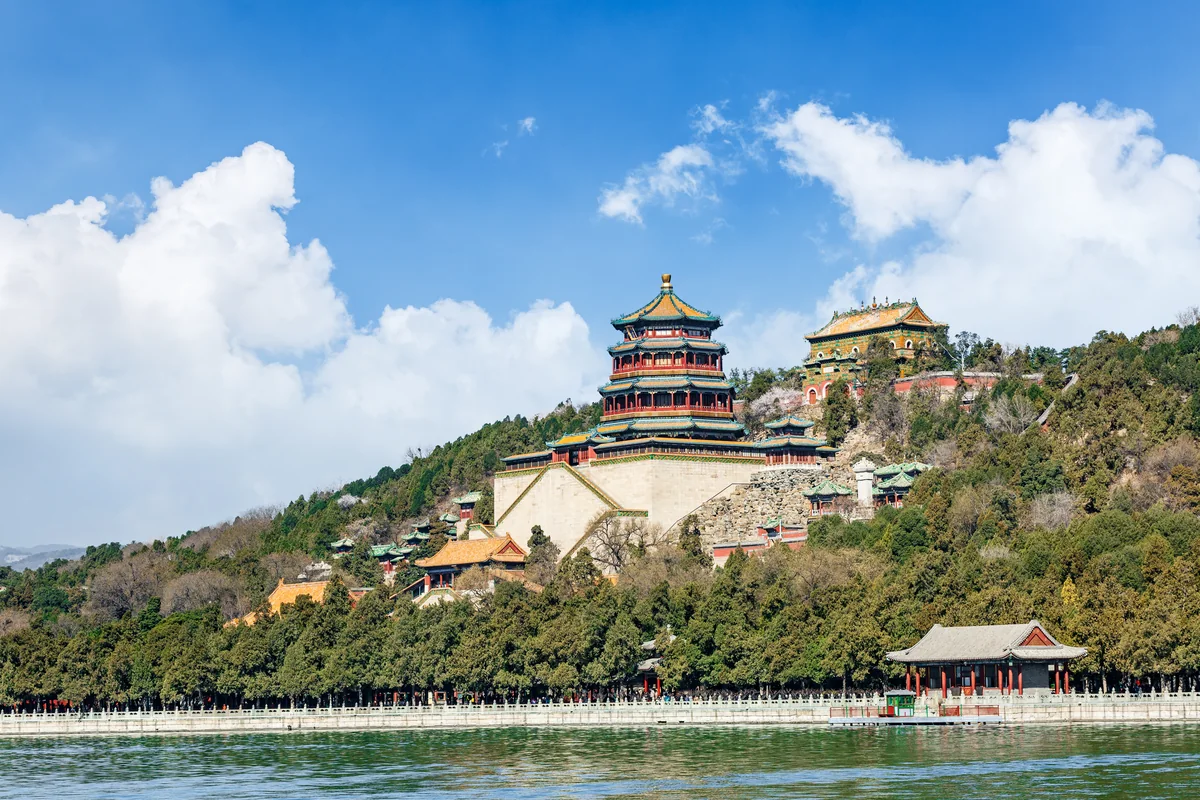
Summer Palace overview
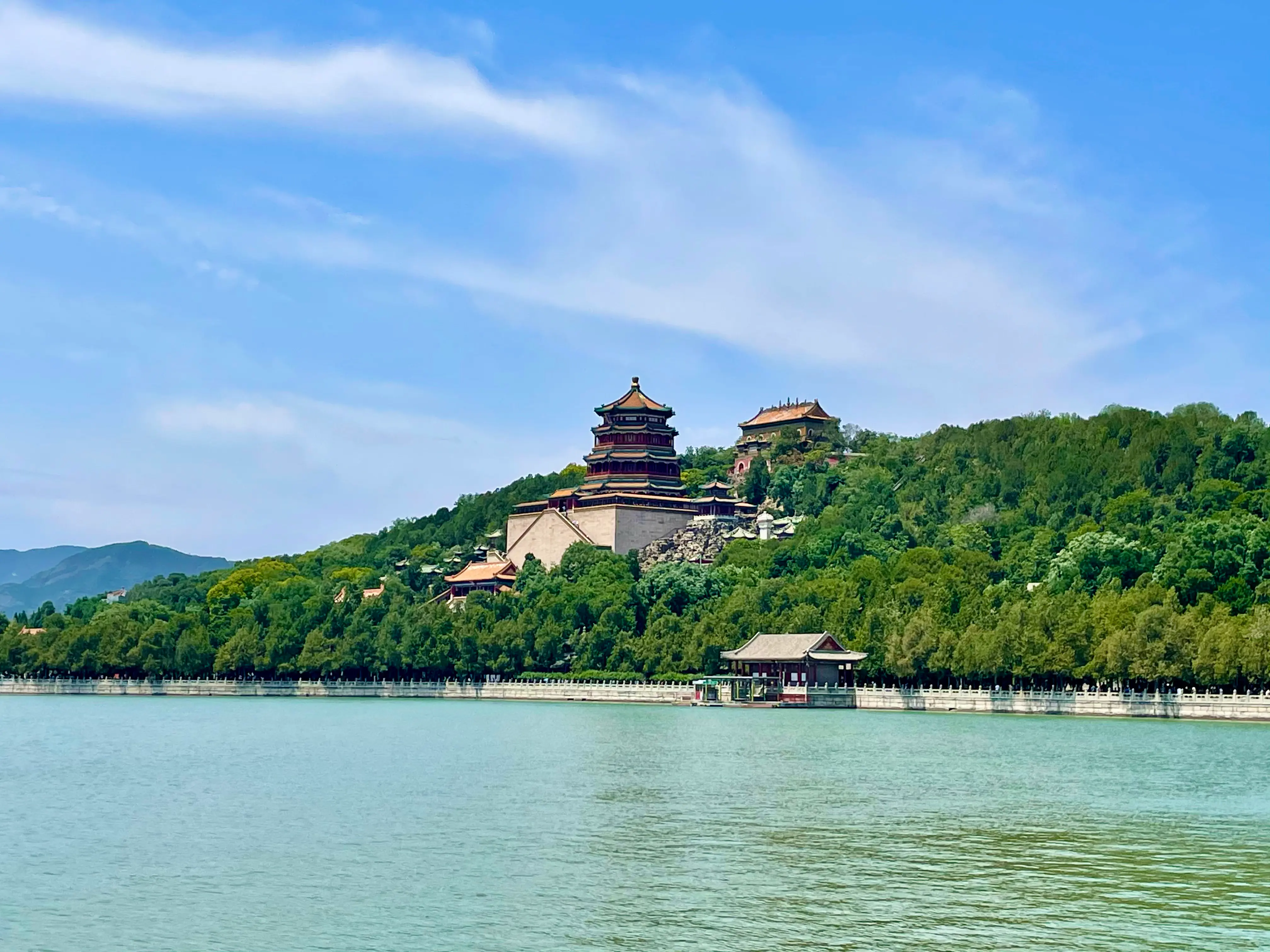
The Summer Palace at a glance
| Attribute | Detail |
|---|---|
| UNESCO listing | 1998 |
| Built | 1750 (Qianlong) / rebuilt 1888 (Cixi) |
| Area | about 3.0 km²; official park-management figure 3.009 km² |
| Lake area | Water surface approximately three quarters of the park |
| Main park hours | Peak 6:00 AM-8:00 PM (last entry 7:00 PM); off-season 6:30 AM-7:00 PM (last entry 6:00 PM) |
| Main park Monday? | Open daily year-round, including Monday |
| Paid internal attractions Monday? | Usually closed Mondays except statutory holidays (Tower of Buddhist Incense, Garden of Virtue and Harmony, Palace Museum area, Suzhou Street) |
| Ticket | 30 RMB basic / 60 RMB combined (peak); 20 / 50 off-season |
| Time on site | 2-3 hr standard; 4-5 hr full |
| Principal visitor approaches | East Palace Gate; North Palace Gate/Beigongmen; New Palace Gate; West Gate; additional Ruyi gates |
| Landmark count | Long Corridor, Tower of Buddhist Incense, 17-Arch Bridge, Marble Boat, Suzhou Street |
Summer Palace reference map
Why visit?
Three reasons. (1) Scale and design: the literal model for 'classical Chinese garden' - hill, lake, causeways, pavilions. (2) Cixi's political stage: late-Qing power centred here for two decades. (3) Quieter than the Forbidden City, and the main park grounds stay open Mondays when the Forbidden City is closed. Most Beijing visitors include it as a half-day on their second or third day.
- Classical Chinese garden archetype.
- Cixi's residence 1888-1908.
- Main park open Mondays — a Forbidden City alternative.
- Boat on Kunming Lake is a signature Beijing experience.
Practical planning
Basic 30/20 RMB vs through-ticket 60/50 RMB decision
Main park 6:00 AM-8:00 PM peak; open Mondays (paid attractions usually closed Monday)
End-to-end practical guide from gate to exit
Three named routes: walking, boat-assisted, half-day
2 hr fast / 3 hr standard / 4-5 hr full
Gates, Longevity Hill, Kunming Lake, key sights
Honest verdict by visitor type
The realistic 12-hour Mutianyu + Summer Palace combo
Gates, transport & landmarks
Subway Line 4, taxi, bus, walking
East, North (Beigongmen), and New Palace gates
Dragon-boat / paddle / 30-45 min time saver
more than 200 hectares lake, ~75% of the complex
Tower of Buddhist Incense + Hall of Dispelling Clouds
728 m covered walkway, 14,000 paintings
150 m stone bridge to South Lake Island
Qing imperial mock shopping street, north bank
History & culture
Qianlong 1750 → 1860 destruction → Cixi rebuild → UNESCO 1998
Qianlong's mother's 60th birthday gift
Hill-water-pavilion classical Chinese garden style
Borrowed views, Hangzhou-inspired causeway
Borrow, harmony, framed views - decoded
Cixi's residence; political role 1888-1908
Yiheyuan vs Yuanmingyuan - rebuilt vs ruined
Who it's for, when to go & how to plan
Boat ride hook, 17-Arch Bridge stone lions
Boat option avoids hills; East→Boat→North short route
Frozen lake skating, off-season pricing
Long Corridor as covered shelter
April-May + Sept-Oct; avoid October 1-7
Tower, 17-Arch Bridge, Marble Boat, ceiling paintings
3-hour focused route for time-tight visitors
Common Summer Palace mistakes
Buying only basic admission when you need paid interiors
Basic gets you into the garden but not the Longevity Hill structures (Tower of Buddhist Incense, Hall of Dispelling Clouds, Suzhou Street). Choose the combined ticket (¥60 peak / ¥50 off-season) when the paid internal attractions you want are open—several normally close on Mondays.
Underestimating the scale
about 3.0 km² - 4x the Forbidden City. Plan 3 hours minimum, not 90 min. Use the boat or East-North short route if time-tight.
Going to the wrong gate
Several usable gate areas. East Gate is the historic main entrance; Beigongmen (north) is the subway-friendly choice; New Palace (south) is less used. Plan based on transport, not just on the map.
Skipping the boat
Dragon-boat or paddle saves 30-45 min walking around Kunming Lake and is a signature experience when a current ferry route matches your plan (¥30–40 one way).
Visiting October 1-7
National Day - crowds peak here too, despite being larger than the FC. Reschedule by a week.
Summer Palace FAQ
- China's largest preserved imperial garden - about 3.0 km² of hill, lake, and pavilions in northwest Beijing. Built 1750 (Qianlong), rebuilt 1888 (Cixi). UNESCO World Heritage Site 1998.
- The main park grounds are open every day year-round, including Mondays — a natural alternative when the Forbidden City is closed. Separately charged internal attractions such as the Tower of Buddhist Incense, Garden of Virtue and Harmony, Palace Museum area and Suzhou Street are typically closed Mondays except statutory holidays.
- Basic admission: 30 RMB peak season / 20 RMB off-season for the garden grounds. Combined (through) ticket: 60 RMB peak / 50 RMB off-season, adding Longevity Hill structures such as the Tower of Buddhist Incense, Hall of Dispelling Clouds and Suzhou Street. Choose the combined ticket when the separately ticketed attractions you want are open; several of those attractions normally close on Mondays.
- 2-3 hours for a standard visit; 4-5 hours for a full visit including all Longevity Hill structures and a boat ride.
- Subway Line 4 to Beigongmen (north entry, 5-min walk to the gate) is the easiest option. Taxi from central Beijing takes 30-45 min off-peak.
- Yes for almost every Beijing visitor with 3+ trip days. It's the natural pair with the Forbidden City - imperial palace vs imperial garden, walled court vs lake-and-hill landscape.
Plan a Summer Palace visit
The most popular way to do the Summer Palace is a private half-day with an English-speaking guide who handles the through-ticket booking, boat rental, and pacing through Longevity Hill and the Long Corridor.
If you also want the Great Wall on the same trip, the Mutianyu + Summer Palace combo packs both into a single 12-hour day.
Plan a private Summer Palace tourGreat Wall + Summer Palace in one day