Three aesthetic principles
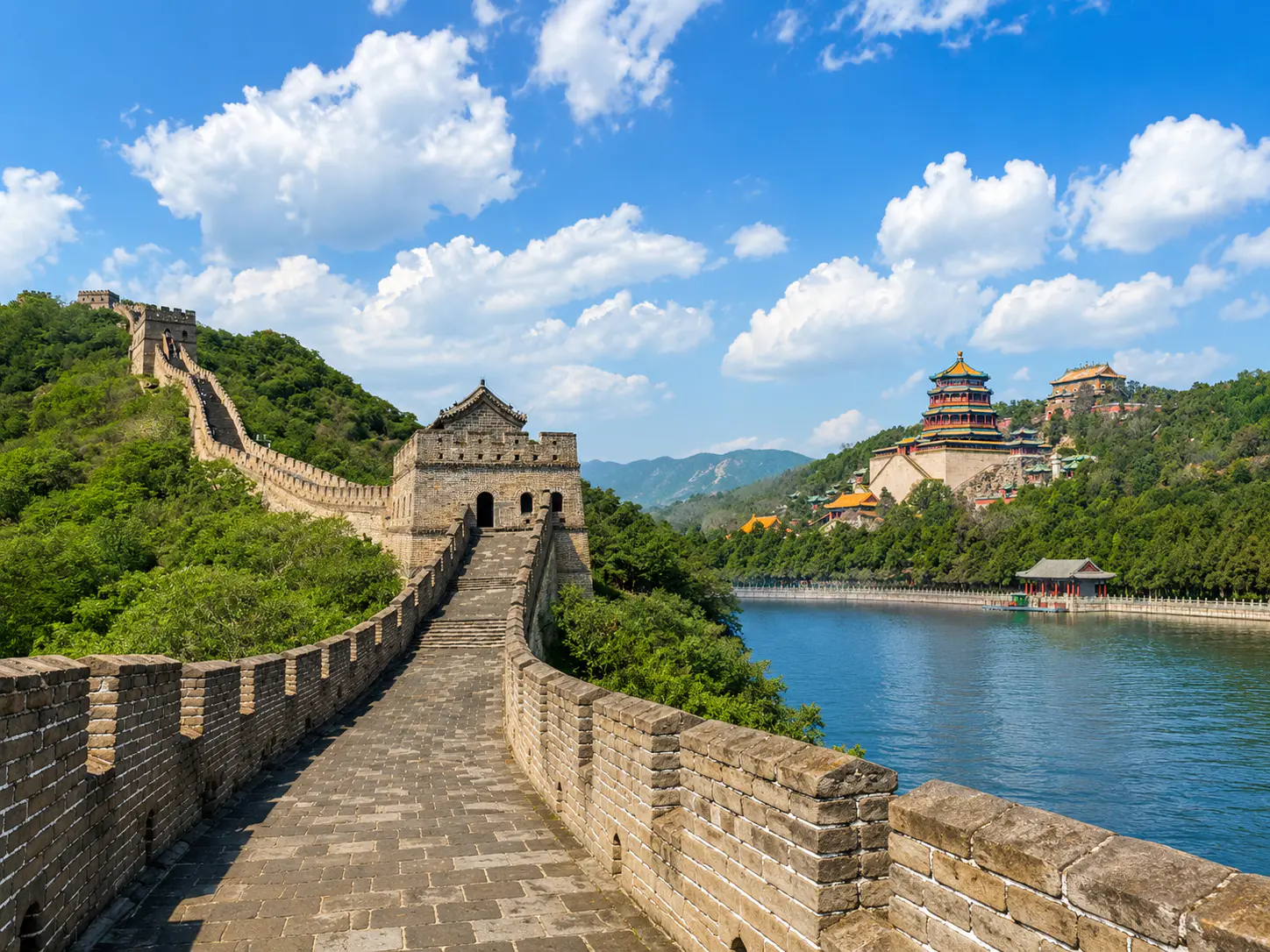
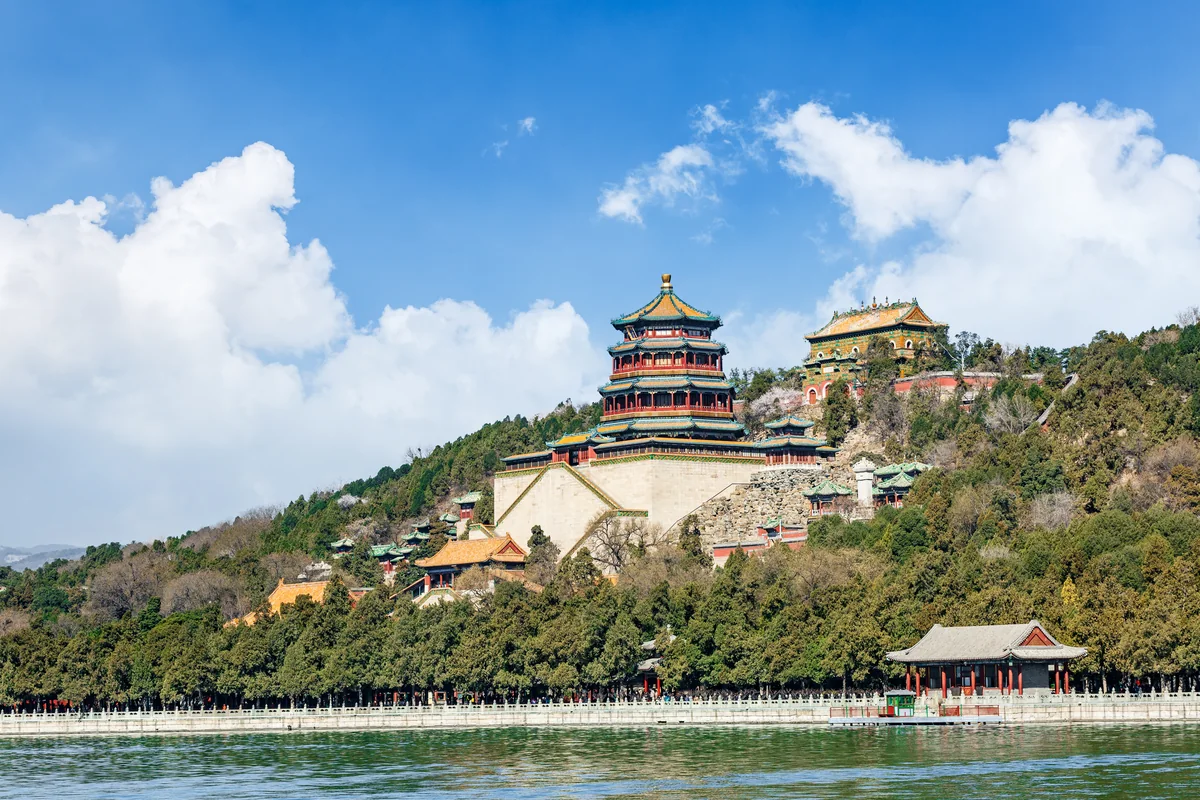
Classical Chinese garden aesthetics rest on three principles, all expressed at the Summer Palace at maximal imperial scale. (1) Borrowed views (jiejing) - integrate distant landscapes into the composition so a finite garden feels infinite. (2) Harmony between human and nature (tianren heyi) - human architecture (pavilions, halls, walkways) should complement and frame the natural landscape, not dominate it. (3) Framed views (kuangjing) - pavilions, windows, and gates frame specific scenes as if they were paintings, training the eye to see composition rather than just view. These principles distinguish Chinese garden design from the Western tradition of formal geometry (Versailles, Boboli) or romantic naturalism (English landscape garden).
- From central Beijing: Northwest Beijing — about 30–45 minutes from central Beijing (subway or taxi)
- Reading time: 7-8 min
- Guide type: Cultural background
- Best for: Garden / aesthetics-curious visitors; Travellers comparing East and West garden traditions
- Less ideal for: Practical-planning visitors
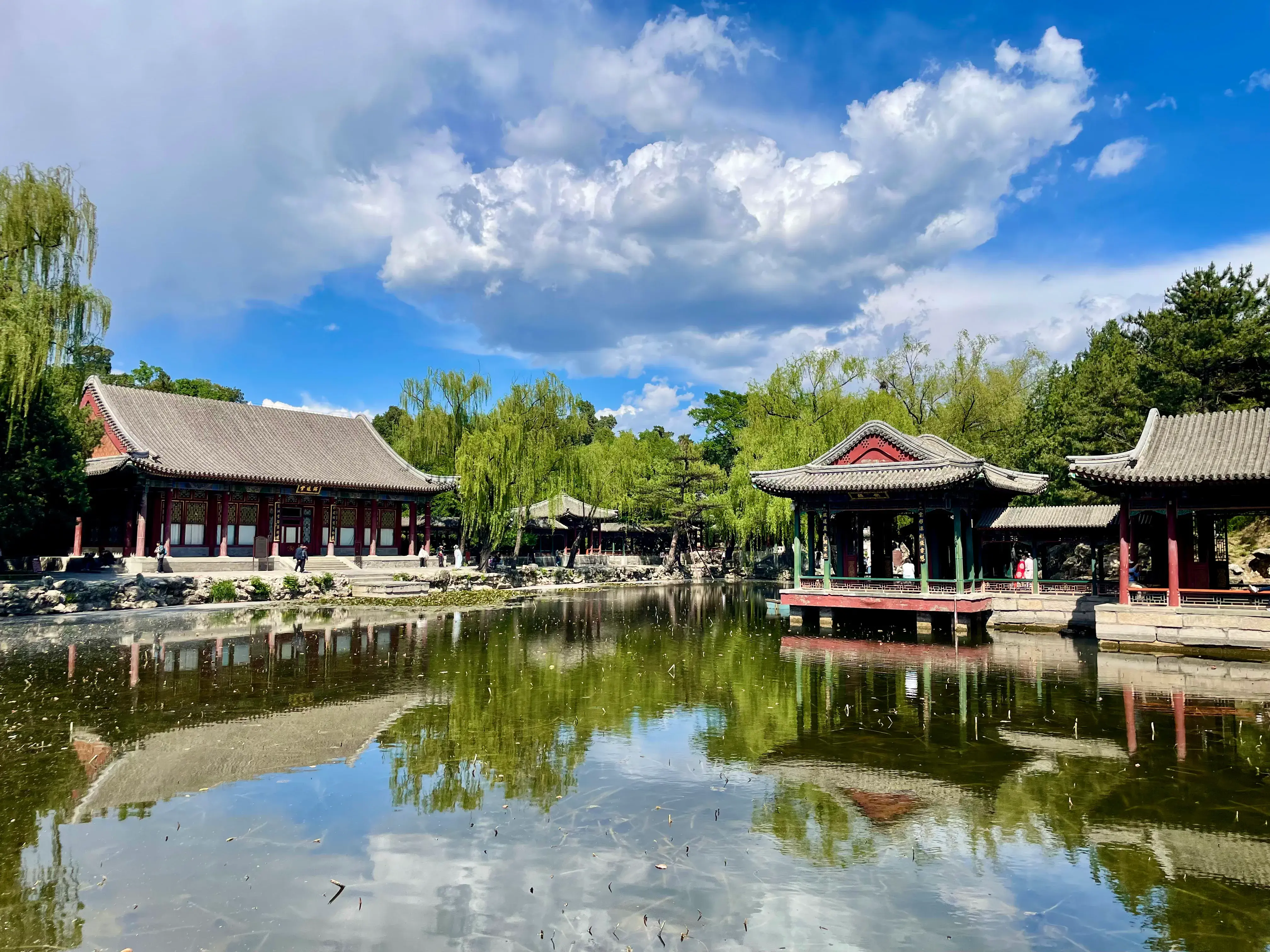
Borrowed views and reflection
Chinese vs Western garden aesthetics
| Element | Chinese (Summer Palace) | Western (Versailles) |
|---|---|---|
| Layout | Asymmetric, paths wind, scenes reveal slowly | Symmetric, formal axes, scenes visible at once |
| Hill / water role | Hill + water dominate (75-95% of area) | Hill / water flat or terraced; built form dominates |
| Building scale | Small human punctuation (~5% area) | Large palatial buildings dominate |
| Borrowed views | Integrate distant hills into composition | Hard boundary, controlled enclosure |
| Built materials | Wood timber + glazed tile + carved marble | Stone facade + sculpture + formal hedge |
| Walking experience | Slow reveal of scenes | Long sightlines, panoramic vistas |
| Cultural reference | Quotation of southern Chinese landscape (Hangzhou) | Quotation of classical Italian / French ideal |
Harmony between human and nature (tianren heyi)
Tianren heyi (天人合一, 'heaven and human as one') is the cosmological principle behind Chinese garden design - and indeed much of Chinese architecture and philosophy. In garden practice it means: human-built form (pavilions, halls, walkways) should complement and frame the natural landscape, not dominate it. At the Summer Palace, Long Corridor is human architecture but it sits at lake level and follows the lake shore - it serves the landscape rather than imposing on it. Tower of Buddhist Incense rises 41m but is a single vertical accent on a 60m natural-looking hill; it punctuates rather than dominates.
- Tianren heyi = 'heaven and human as one'.
- Cosmological principle of Chinese design.
- Human form complements, doesn't dominate.
- Long Corridor serves the lake shore.
- Tower of Buddhist Incense punctuates not dominates.
Framed views (kuangjing) - the painting trick
Kuangjing (框景, 'frame scene') is the technique of framing specific scenes so they appear as paintings. Every pavilion window, every gate opening, every Long Corridor section is designed to frame a particular view: a particular lake angle, a particular hill peak, a particular pavilion in the distance. You stand at one point and the architecture organises your eye to see one composed scene; you move to the next and you see a different composed scene. The garden is effectively a sequence of 3D paintings. The 14,000 actual paintings on Long Corridor's ceiling reinforce this 'garden as painting gallery' identity.
- Kuangjing = 框景, frame scene.
- Pavilion windows / gates / corridor sections frame views.
- Garden is a sequence of 3D paintings.
- Long Corridor's 14,000 paintings reinforce the metaphor.
- Each viewpoint = one composed scene.
How Chinese garden differs from Western
Three differences. (1) Layout: Chinese gardens are asymmetric with winding paths; Western formal gardens (Versailles, Boboli) are symmetric with long sightlines. (2) Built form: in Chinese gardens, hills and water dominate (~95% of area at the Summer Palace), with buildings as the smaller human punctuation (~5%). In Western formal gardens, large palatial buildings dominate. (3) Experience: Chinese gardens reveal slowly as you walk; Western formal gardens give panoramic vistas immediately. This makes the Summer Palace a slower, more contemplative experience than a Versailles-style visit - the design intent rewards a 3-hour walk, not a 30-min photograph.
- Chinese: asymmetric, winding paths.
- Western formal: symmetric, long sightlines.
- Chinese: hill + water dominate.
- Western: buildings dominate.
- Chinese: slow reveal; Western: immediate vistas.
How Chinese garden differs from Western
Three differences. (1) Layout: Chinese gardens are asymmetric with winding paths; Western formal gardens (Versailles, Boboli) are symmetric with long sightlines. (2) Built form: in Chinese gardens, hills and water dominate (~95% of area at the Summer Palace), with buildings as the smaller human punctuation (~5%). In Western formal gardens, large palatial buildings dominate. (3) Experience: Chinese gardens reveal slowly as you walk; Western formal gardens give panoramic vistas immediately. This makes the Summer Palace a slower, more contemplative experience than a Versailles-style visit - the design intent rewards a 3-hour walk, not a 30-min photograph.
- Chinese: asymmetric, winding paths.
- Western formal: symmetric, long sightlines.
- Chinese: hill + water dominate.
- Western: buildings dominate.
- Chinese: slow reveal; Western: immediate vistas.
Common aesthetic misunderstandings
Calling it a 'park'
It's not a park - it's a designed garden following 2,000-year-old aesthetic principles.
Comparing scale to Versailles
Different aesthetic tradition. Don't compare; understand each on its own terms.
Trying to see it all at once
The design depends on sequence and concealment. 3-hour walk reveals what 30-min walk cannot.
Missing the borrowed view
Western Hills visible from the top. Look beyond the wall.
Chinese landscape aesthetics FAQ
- Three principles: borrowed views (jiejing), harmony between human and nature (tianren heyi), and framed views (kuangjing). All expressed at the Summer Palace at maximal imperial scale.
- Jiejing - the design technique of integrating distant landscapes outside the garden boundary into the composition. The Western Hills, visible from Tower of Buddhist Incense, are 'borrowed' into the Summer Palace view.
- Chinese gardens are asymmetric with winding paths and slow reveal; Western formal gardens (Versailles, Boboli) are symmetric with long sightlines. Chinese gardens give hills and water dominance; Western formal gardens emphasise buildings.
- The Ming-era classic 'Yuanye' (Craft of Gardens, 1631) by Ji Cheng is the foundational text. Modern English-language summaries cover the principles for general readers.
- It's the largest imperial example. For smaller-scale southern scholar gardens (Suzhou), visit Master of Nets Garden or Humble Administrator's Garden in Suzhou.
- It's designed to feel natural - the slow reveal and asymmetric paths are intentional. The 'unfinished' feel is the point.
Walk with aesthetic context
Our private SP day includes the aesthetic decoder - your guide names the borrowed views, framed views, and harmony principles as you walk through them.
If you want to see the comparison with the Old Summer Palace (Yuanmingyuan) ruins, the next page covers the choice.