
Chinese lacquer furniture is furniture whose prepared surface is coated with layers of natural lacquer resin. In polished hardwood furniture, the wood grain often remains visually dominant. In lacquer furniture, the surface can become an independent artistic layer—black, red, painted, carved, gilded or inlaid—while the wooden structure remains beneath it. Lacquer is not simply paint: it is a resin-based coating system traditionally applied in successive layers over a prepared core, hardening through exposure to oxygen and humidity into a durable protective surface. For overall design language, see traditional Chinese furniture; for exposed hardwoods, huanghuali, zitan and hongmu; for dynasty tendencies, Ming vs Qing furniture.
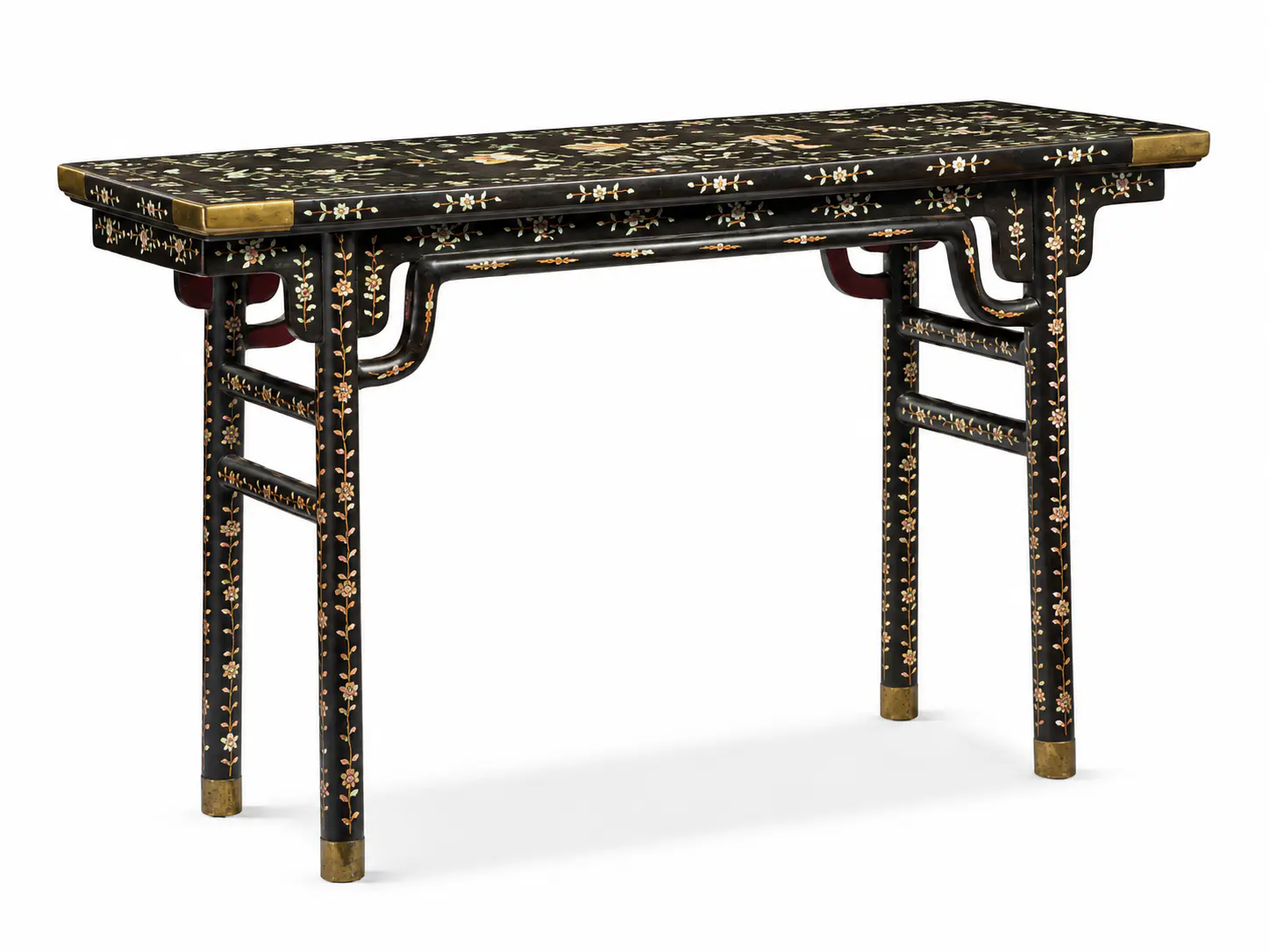
*Fine floral inlay traces the dark surface and slender frame of this lacquer table.*
Chinese Lacquer Furniture at a Glance
| Feature | Explanation |
|---|---|
| Base | Usually a wooden or other prepared core |
| Lacquer material | Natural lacquer resin applied in successive coatings |
| Common historic colors | Black and red |
| Black pigment | Traditionally associated with carbon-based pigment |
| Red pigment | Historically associated especially with cinnabar |
| Major techniques | Plain lacquer, painted lacquer, carved lacquer, incised decoration and inlay |
| Common inlay | Mother-of-pearl, sometimes combined with gold or other materials |
| Furniture forms | Tables, screens, cabinets, chests, beds and stools |
| Major periods | Long history; particularly rich surviving Ming and Qing examples |
Color and technique are not the same thing.
For example: red lacquer names a color/surface category; carved lacquer names a technique; mother-of-pearl inlay names a decoration technique. Lacquer color cannot by itself determine the age of furniture.
Chinese lacquer furniture is defined by how the surface is constructed and decorated—not simply by whether the furniture is red, black or shiny.
How Chinese Lacquer Furniture Is Made
The Furniture Core
The lacquer surface normally sits over a structural core. For furniture this is usually wood. Carved lacquer furniture is not carved from a huge solid block of red resin. In carved lacquer, the decoration is cut into accumulated lacquer layers above the underlying core rather than carved directly into the furniture’s structural wood. Museum descriptions of carved lacquer typically emphasize multiple lacquer layers applied over a substructure—usually wood—then carved through those layers.
Preparing the Surface
In general terms: the structural core is completed; the surface is prepared; foundation layers may be used; lacquer coatings are applied; each coating requires controlled curing; later decoration depends on technique. Methods varied by period, object, workshop and technique—there is no single universal fixed number of foundation layers for all Chinese lacquer furniture.
What matters for the reader is the sequence: structure first, surface system second, decoration third. Skipping that order is how lacquer gets misread as “just a shiny finish” rather than as a built coating that can carry carving, inlay or pictorial work.
Building Lacquer in Layers
Lacquer is not normally applied as one thick coat. Traditional lacquer hardens through exposure to oxygen and humidity. For complex carved lacquer, numerous layers may be accumulated before carving. Carved-lacquer works could use dozens of layers and, in some cases, far more. Carved lacquer requires many successive layers; the exact number varies by object and intended depth. Not every carved lacquer furniture object has a fixed layer count such as “200 layers.”
Traditional East Asian lacquer is obtained from lacquer-tree sap; the species commonly known as the lacquer tree is *Toxicodendron vernicifluum*, historically also published under names including *Rhus verniciflua*.
Black, Red and Other Lacquer Colors
Black and red are two of the most important historic lacquer colors. Color is a surface category, not a dating rule and not a technique name.
Black Lacquer
Black lacquer is one of the fundamental traditional lacquer colors. Carbon was historically used to create black lacquer. A deep dark ground is particularly effective for mother-of-pearl, gold and painted decoration. The Ming *Table with Flowering Sprays* above and Kangxi-period screens below are documented black-lacquer furniture examples—not proof that every dark surface is “black lacquer,” and not an age category. Chinese black lacquer furniture is not always antique; modern furniture can also be black lacquered.
Red Lacquer
Red lacquer is one of the most famous Chinese lacquer colors. Cinnabar was an important red pigment historically, and red is especially prominent in carved lacquer. “Cinnabar lacquer” is often used in English for red carved lacquer, but that wording should not imply every red lacquer surface has identical composition. Red lacquer does not equal Qing, just as black lacquer does not equal Ming.
Gold and Polychrome Decoration
Lacquer furniture was not limited to pure red and black. Surfaces may combine gold, colored pigments, mother-of-pearl, painted figures, architecture, landscapes, flowers and birds. Kangxi-period screens catalogued as lacquer on wood with colors and gold show how polychrome decoration can expand the visual vocabulary of furniture.
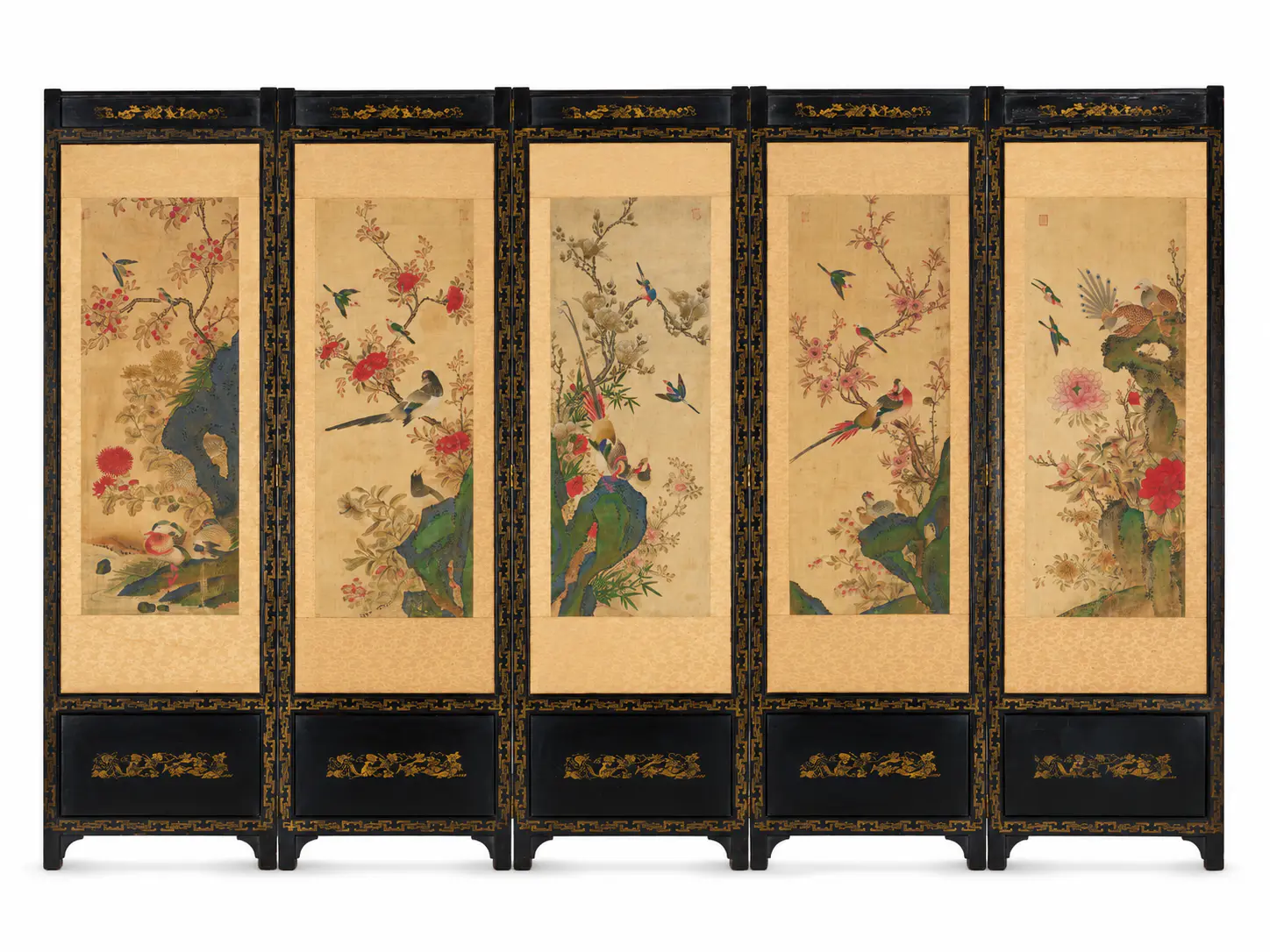
*Five-panel lacquer folding screen, 1676, Qing dynasty, Kangxi period; lacquer on wood, colors and gold. The Metropolitan Museum of Art, Public Domain.*
Major Chinese Lacquer Furniture Techniques
Plain and Polished Lacquer
The baseline technique uses successive lacquer coats to create a smooth finished surface. Visual focus falls on sheen, color and form. Undecorated lacquer is not technically unsophisticated: a restrained lacquer surface can still require substantial preparation and controlled curing.
Painted Lacquer
Pictorial decoration can be placed onto lacquer surfaces—figures, landscapes, architecture, flowers and birds. In broad historical terms, Chinese lacquer develops both surface/pictorial decoration and the carving of lacquer as major paths.
Carved Lacquer
Carved lacquer (*diaoqi* 雕漆) is among the most laborious lacquer techniques. Craftspeople build repeated layers, allow them to cure, accumulate sufficient depth, then carve the lacquer itself into relief designs. In carved lacquer, the carved material is primarily the lacquer layer—not simply the wooden furniture underneath.
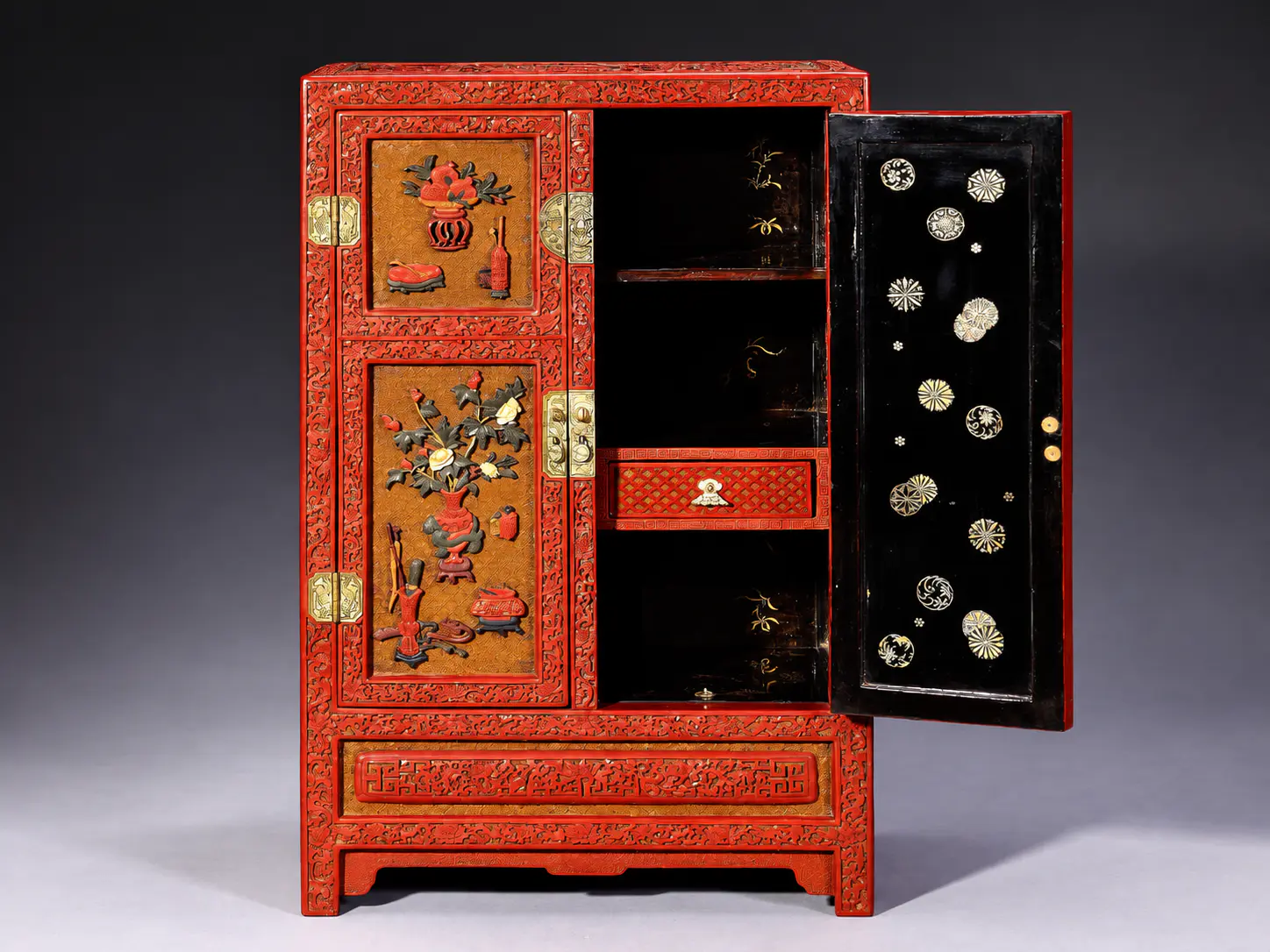
*Carved red lacquer, dark compartments and decorative fittings create a densely ornamented cabinet front.*
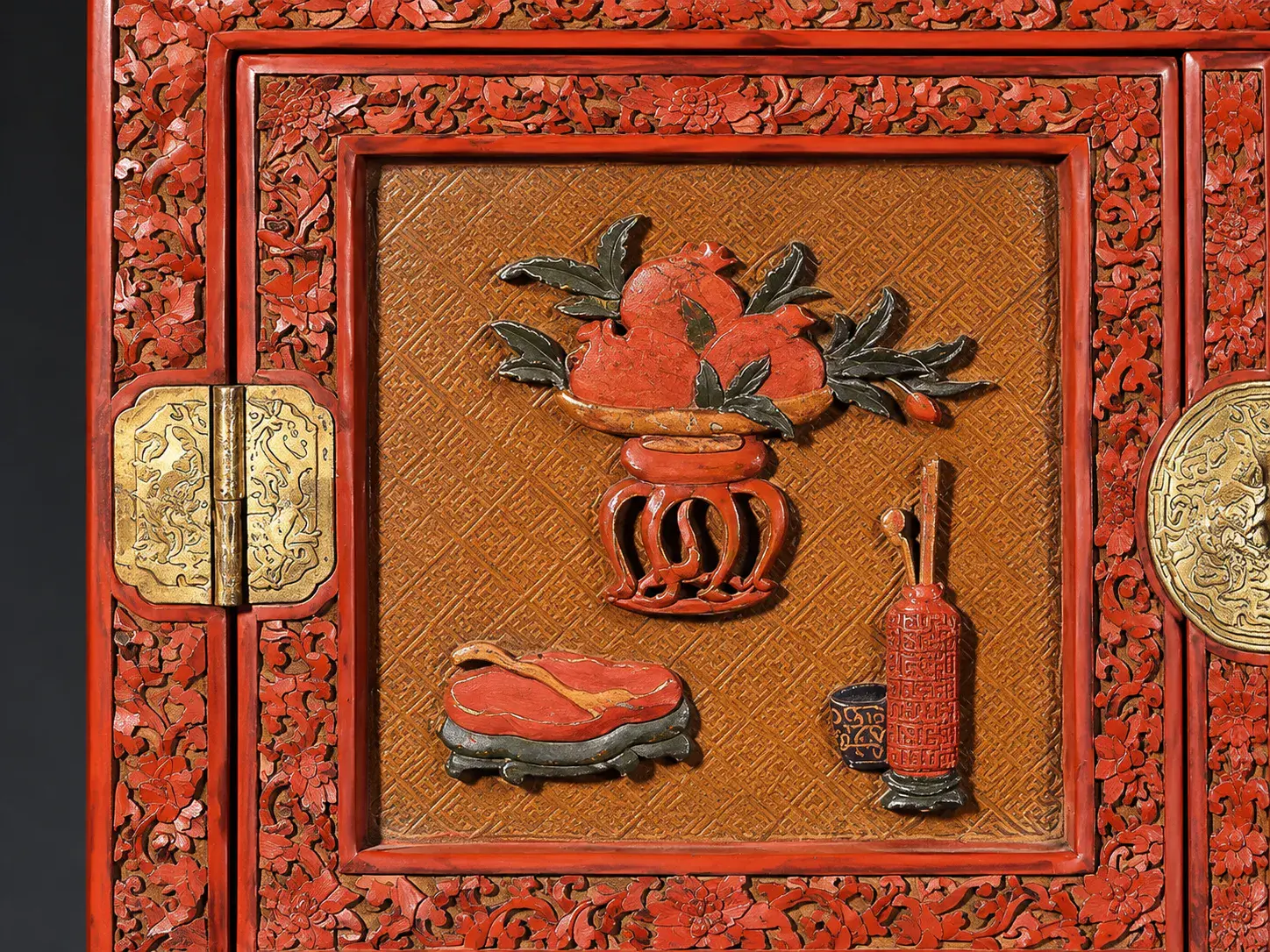
*Raised symbolic objects and fruit motifs decorate a red lacquer cabinet panel.*
Sharp carving and a densely worked patterned background give this red lacquer panel its ornamental intensity. That describes one highly elaborate lacquer object—not every Qing lacquer piece.
Mother-of-Pearl Inlay
Shell is cut into shaped pieces and fitted into the lacquer surface. Designs may include flowers, birds, landscapes and figures; shell can produce changing iridescent colors. Mother-of-pearl was used in China by the twelfth century to decorate furniture including beds, chests, tables and garden stools. The Ming *Table with Flowering Sprays* uses mother-of-pearl pieces inlaid into lacquer-coated rosewood—documented evidence that Ming furniture includes black lacquer and mother-of-pearl examples as well as exposed hardwood furniture.
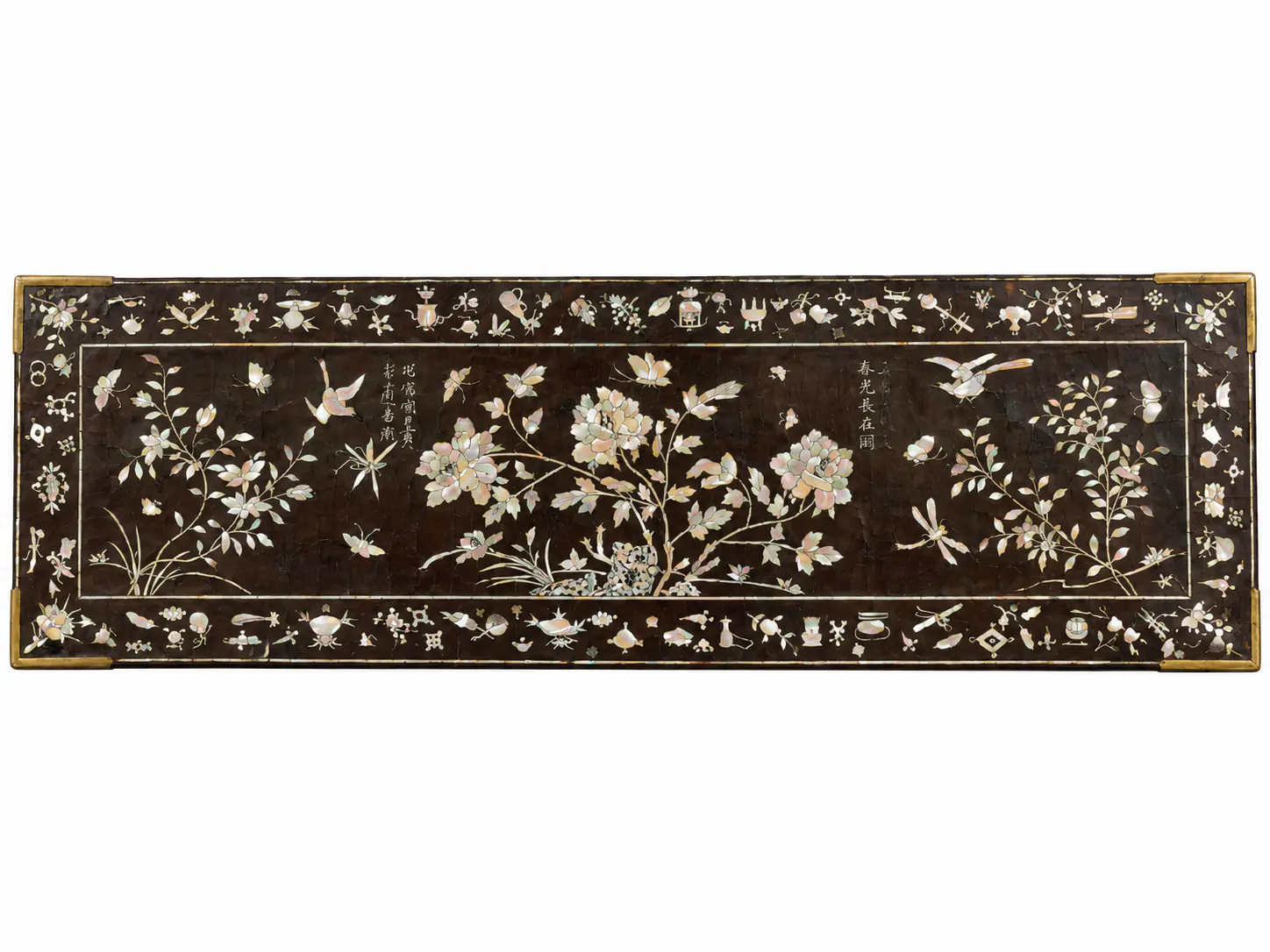
*Flowering branches and birds spread across a dark lacquer panel within an ornamental border.*
Mother-of-pearl does not automatically equal Ming any more than red lacquer automatically equals Qing.
Incised and Filled Decoration
Lacquer surfaces can also be incised, with designs enhanced using gold, pigment or contrasting lacquer. Engraved-gold and filled decoration form part of the broader development of Chinese lacquer traditions. For travel readers, the practical point is simple: lacquer furniture may carry cut-and-filled linear ornament as well as painted, carved or inlaid surfaces.
Decoration on Chinese Lacquer Furniture
Technique and subject matter are different questions. The same carved or inlaid method can carry flowers, landscapes or palace scenes.
Flowers and Plants
Peony, plum blossom, chrysanthemum and lotus appear frequently. The Ming *Table with Flowering Sprays* includes peony, plum and chrysanthemum with butterflies. This is motif evidence, not a complete symbolism guide.
Landscapes and Figures
Furniture surfaces can operate almost like landscape painting, narrative panels or architectural scenes. The Qianlong carved red lacquer cabinet carries panels with figures by riverbanks and garden terraces, with hills receding into the distance—dense pictorial programs executed in relief lacquer rather than ink on paper.
Court and Palace Scenes
Large screens allowed furniture surfaces to carry highly complex narrative imagery. Kangxi-period *Women in a Palace* is catalogued as black lacquer with mother-of-pearl and gold-foil inlay; the complete screen measures more than 24 feet / 7.5 meters across. The image below is a detail view of that pictorial ground—not a photograph of the full twelve-panel span.
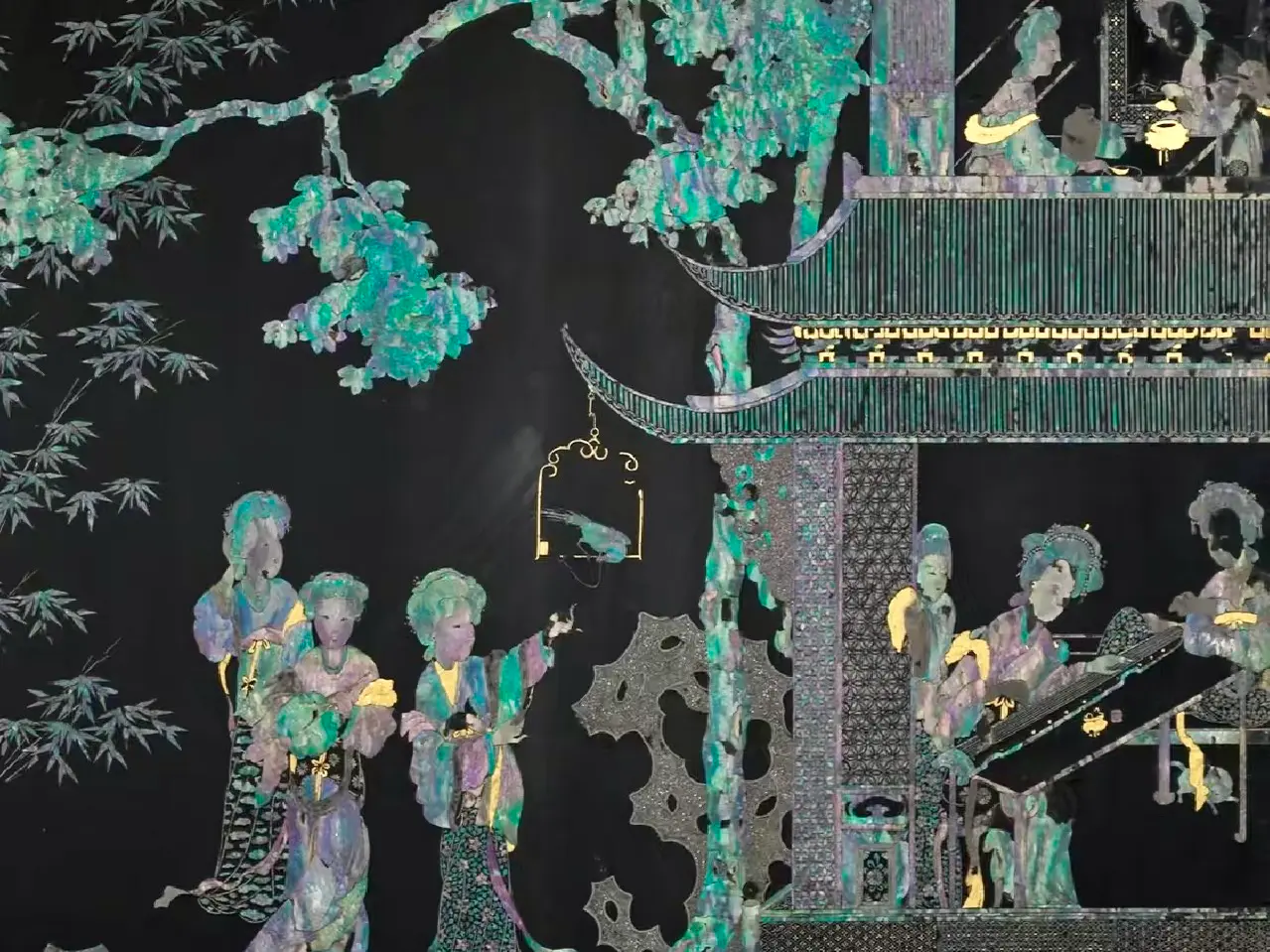
*Colourful figures and architectural details form a lively palace scene on black lacquer.*
Geometric and Brocade Grounds
Background surfaces may contain repetitive geometric patterns. Deeply carved brocade-pattern grounds on Qianlong red lacquer furniture intensify the sense that the lacquer surface is an artistic field in its own right.
| Black lacquer | Red carved lacquer |
|---|---|
| Ming *Table with Flowering Sprays* | Qianlong carved red lacquer cabinet |
These are genuine museum photographs with HTML labels—not synthetic color swatches.
Lacquer Furniture in the Ming Dynasty
Ming lacquer furniture includes restrained lacquer surfaces, black lacquer, mother-of-pearl, carved lacquer, and painted and inlaid furniture. The late Ming *Table with Flowering Sprays* is strategically important because it disproves any claim that Ming furniture equals exposed huanghuali only. The documented table is Ming dynasty, late 16th–early 17th century, black lacquer with mother-of-pearl, classified as furniture. Dynasty comparison belongs on the Ming vs Qing page; this page owns lacquer technique and surface.
Lacquer Furniture in the Qing Dynasty
Qing production continues Ming-derived furniture traditions while expanding sophisticated lacquer, relief and inlay techniques. The Palace Museum notes that during the Kangxi reign, craftsmen continued producing furniture in Ming-derived styles while making significant advances in the use of lacquers and inlays, and that the wider Qing imperial collection contains many examples of lacquer patterns, inlays and relief.
Kangxi
Kangxi (1662–1722) contexts include large lacquer screens, black lacquer, colored decoration, mother-of-pearl and gold. A few famous screens cannot define one universal Kangxi furniture style.
Qianlong
Qianlong (1736–1795) court production is associated with exceptionally advanced craftsmanship, costly materials, dense carving, layered decorative systems and technical virtuosity. The carved red lacquer cabinet above is a concrete example of that workshop intensity. For broader dynasty tendencies, return to Ming vs Qing furniture.
Lacquer Furniture vs Hardwood Furniture
| Feature | Lacquer furniture | Exposed hardwood furniture |
|---|---|---|
| Visual focus | Surface color and decoration can dominate | Wood grain and structural form often remain prominent |
| Surface | Lacquer layers over prepared core | Polished/waxed exposed wood |
| Color | Black, red, colored, gold and combinations | Natural timber tones |
| Decoration | Painting, carving, inlay, gold, relief | Carving, grain, shaped structural members, occasional inlay |
| Material visibility | Core wood may be largely hidden | Timber species often visually important |
| Main visual effect | Surface becomes an artistic field | Structure and material frequently remain visually legible |
Neither category is superior. Hardwood furniture can contain lacquer; historical furniture can combine techniques and materials. Exposed-hardwood terminology is covered in the rosewood materials guide.
How to Recognize Lacquer Furniture
This section is observational, not authentication.
Look at the surface. Does it appear opaque, polished, layered, carved, painted or inlaid?
Look at carved relief. Ask whether carved forms appear to arise from the surface coating rather than from exposed timber.
Look for inlay. Mother-of-pearl, gold and mixed materials are common clues—not dating proofs.
Examine edges and damaged areas carefully. Damaged areas can sometimes reveal construction layers. Avoid scraping, sanding or otherwise damaging furniture to “test” lacquer.
Appearance alone cannot authenticate lacquer furniture. A modern reproduction can use traditional lacquer techniques. For provenance, construction, repairs and documented comparison, see Chinese antique furniture.
Black lacquer is a technique/color tradition, not an age category. Likewise, red lacquer does not equal Qing, and mother-of-pearl does not automatically equal Ming.
Where to See Chinese Lacquer Furniture in Beijing
Lacquer furniture is easier to understand in person because photographs flatten the depth of carved surfaces, the iridescence of shell inlay and the changing reflections of polished lacquer. Spatial context for screens and interiors also relates to traditional Chinese houses.
Palace Museum Furniture Gallery
The Palace Museum’s furniture collection includes pieces made primarily from lacquer, hardwood and other woods. Its lacquered furniture includes lacquer patterns, inlays and relief. The collection exceeds 6,200 Ming/Qing pieces or sets. The Palace Museum’s furniture collection contains significant lacquer furniture, although the exact objects on display can change.
Chinese Lacquer Furniture FAQ
What is Chinese lacquer furniture?
Chinese lacquer furniture is furniture whose prepared surface is coated with layers of natural lacquer resin. The wooden structure remains beneath; the lacquer surface can become an independent artistic layer.
What is Chinese lacquer made from?
Traditional lacquer is a natural resin from lacquer-tree sap. The lacquer tree is commonly identified as *Toxicodendron vernicifluum* (historically also published under names including *Rhus verniciflua*).
Is lacquer the same as paint?
No. Lacquer is a resin-based coating system traditionally applied in successive layers and cured under controlled humidity and oxygen exposure—not a single brush-on paint film.
Why is Chinese lacquer furniture red?
Red is one of the major historic lacquer colors; cinnabar was an important red pigment, especially associated with carved red lacquer. Other colors exist, and red alone does not date a piece.
What is black lacquer furniture?
Black lacquer is a color/surface tradition historically associated with carbon-based pigment. It is not an age category and not proof of Ming manufacture.
What is carved lacquer?
Carved lacquer is produced by building up multiple layers of lacquer and carving into those layers. The carved material is primarily the lacquer surface, not the structural wood alone.
What is mother-of-pearl lacquer furniture?
Furniture decorated by cutting shell into shaped pieces and inlaying them into a lacquer surface. Mother-of-pearl was used on Chinese furniture by at least the twelfth century.
Was lacquer furniture made during the Ming dynasty?
Yes. Documented Ming examples include black lacquer tables with mother-of-pearl inlay as well as other lacquered forms.
Was lacquer furniture important during the Qing dynasty?
Yes—especially in court production and sophisticated inlay, relief and polychrome lacquer traditions under Kangxi and Qianlong contexts.
Can lacquer furniture be authenticated from photos?
No, not conclusively. Photographs flatten depth and sheen; reproductions can imitate traditional techniques. Authentication requires broader evidence than color or silhouette alone.