
Ming and Qing furniture are often contrasted as restrained versus ornate, but the real distinction is more gradual. Many late-Ming forms continued into the early Qing, while Qing court production—especially by the eighteenth century—expanded the use of dense hardwoods, carving, lacquer, inlay and precious materials. Ming furniture is particularly celebrated for proportion, structural clarity and polished hardwood surfaces, but decorated Ming furniture also existed; likewise, not all Qing furniture is heavy or elaborate. Political dynasty boundaries are clearer than furniture-style boundaries: museums frequently date classical pieces “late Ming–early Qing,” evidence of continuity across 1644. For forms and design language, see traditional Chinese furniture; for materials, huanghuali, zitan and hongmu; for authenticity questions, Chinese antique furniture.
Ming dynasty: 1368–1644. Qing dynasty: 1644–1911. Furniture styles did not change overnight when the dynasty changed.
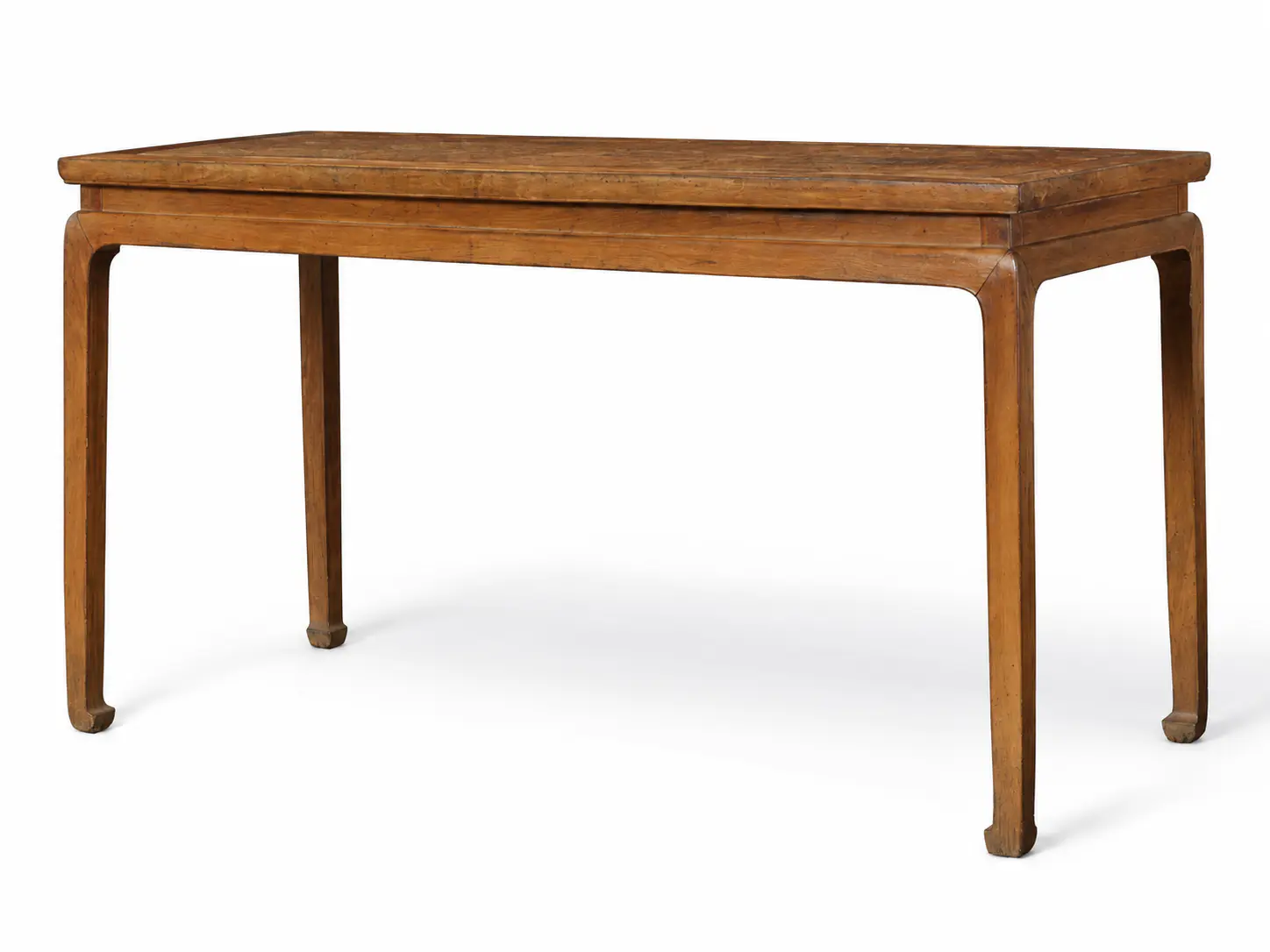
*A painting table with balanced proportions and a simple exposed wooden frame.*
Ming vs Qing Furniture at a Glance
| Feature | Ming furniture tendencies | Qing furniture tendencies |
|---|---|---|
| Period | 1368–1644 | 1644–1911 |
| Form | Strong emphasis in many classical pieces on proportion and structural clarity | Ming-derived forms continue, alongside broader and sometimes more massive forms |
| Visual mass | Often relatively light and open | Frequently greater in elaborate court furniture, but not universally |
| Materials | Huanghuali strongly associated with elite surviving examples; lacquer and other woods also important | Zitan, huali/hongmu, lacquer and other materials; wider luxury-material use in court pieces |
| Decoration | Often restrained in famous hardwood examples, but carved/lacquered/inlaid examples also exist | Can become significantly denser through carving, lacquer and inlay, especially in imperial contexts |
| Surface | Wood grain frequently allowed to carry visual interest | Exposed hardwood, carving, lacquer, inlay and mixed-material surfaces |
| Court production | Important palace and elite production | Extensive imperial workshop production, especially well represented under Kangxi, Yongzheng and Qianlong |
| Overall rule | Structure often dominates decoration | Decoration may become more integrated and elaborate |
These are tendencies, not authentication rules.
A piece cannot be dated as Ming or Qing simply because it looks “simple” or “ornate.”
Ming furniture and Qing furniture do not form two completely separate design traditions.
Why Ming Furniture Became the Classical Ideal
Proportion and Structural Clarity
Elite classical Ming furniture is admired for clear frame construction, balanced leg and rail relationships, restrained aprons, carefully controlled curves, open negative space, relatively thin structural profiles and proportions that make construction visually legible. The famous Ming aesthetic is better described as restrained, structurally legible and proportion-driven than as modern “minimalism”—a category that does not map cleanly onto historical Chinese design.
The huanghuali painting table above shows what that can look like in practice: a long horizontal top, straight legs, a relatively restrained apron, open space beneath, visible structural logic and material grain that is not overwhelmed by surface decoration.
Huanghuali and the Ming Aesthetic
Huanghuali is particularly famous among surviving elite Ming hardwood furniture. Expressive grain could serve as visual decoration; polished surfaces kept form and material prominent; strong wood supported sophisticated structural members. Huanghuali is not the only Ming material—lacquer and other woods were also important—and the fuller material vocabulary is covered in the Chinese rosewood / huanghuali / zitan guide.
Literati and Scholar Context
Famous surviving classical forms—painting tables, writing furniture, carefully proportioned chairs—are often read against scholars’ studios, collecting and literati interiors. That association helps explain why proportion and quiet surfaces matter so much in the classical ideal. It does not mean all Ming furniture was scholar furniture. Surviving elite classical forms are not the full range of furniture used throughout Ming society.
Qing Furniture: Continuity Before Contrast
The Qing did not replace Ming furniture design overnight. Many forms continued. The Metropolitan Museum of Art catalogs multiple seventeenth-century chairs and tables across the dynastic boundary—including zitan armchairs and related hardwood forms—so 1644 is a poor visual cutoff.
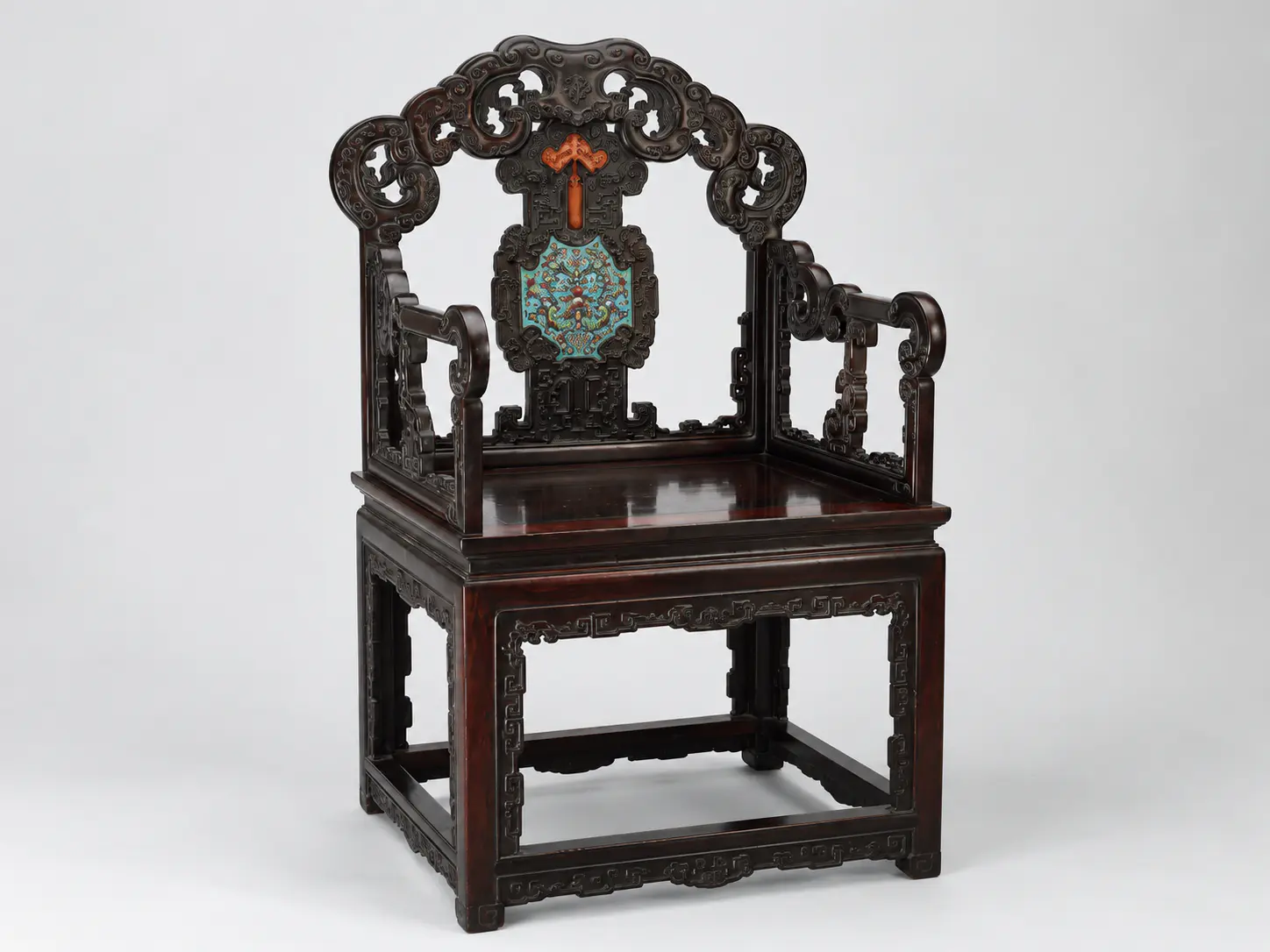
*Zitan armchair, 17th century, late Ming or early Qing dynasty. The Metropolitan Museum of Art, Public Domain. Cataloguing across the dynastic boundary illustrates continuity rather than an abrupt style break in 1644.*
Early Qing Continuity
Early Qing production continues Ming-derived chair forms, hardwood joinery, proportion-driven furniture and established types. Many late-Ming furniture forms continued into the early Qing dynasty. Readers should not imagine two unrelated furniture traditions meeting at a hard chronological wall. Collectors and museums therefore often treat seventeenth-century classical hardwood as a continuous field rather than as two sealed dynastic inventories.
That continuity matters for travel and museum viewing as much as for collecting. A chair or table labeled “late Ming or early Qing” is not an uncertain compromise—it is often the most honest description when form, joinery and material belong to a shared classical vocabulary that outlasted the dynastic calendar.
How Qing Furniture Expanded the Design Vocabulary
Differences become especially visible in mature Qing court furniture.
Greater Visual Mass
Many Qing court examples use thicker structural members, denser carved surfaces, visually heavier bases and more substantial framing. Greater visual mass becomes more common in many elaborate Qing court examples—but not all Qing furniture is heavy.
Zitan and Dense Hardwoods
Zitan becomes especially associated with elite Qing and imperial furniture. Its density supports fine carving, and a dark surface gives a different visual effect from strongly figured huanghuali. Both materials cross chronological boundaries; the association is one of emphasis rather than exclusivity. The Met itself has zitan furniture dated late Ming or early Qing. See huanghuali vs zitan materials for terminology detail.
Carving Becomes More Prominent
Qing court examples may feature relief carving, pierced work, carved aprons, dragons, lotus, clouds, scrollwork, geometric borders and landscape scenes. Carving did not originate in the Qing. The difference is often one of degree, density and court use among many surviving examples.
Lacquer and Inlay
Qing production expands carved red lacquer, black lacquer, painted lacquer, mother-of-pearl, precious materials, gilt fittings and mixed-material surfaces. Qianlong carved-red-lacquer works—such as The Met’s cabinet with figures in a landscape—show sharp, precise carving and deeply worked patterned backgrounds associated with Qianlong workshops. Not every Qing object looks like that.
Kangxi, Yongzheng and Qianlong Court Furniture
Kangxi
Kangxi (1662–1722) partly consolidates court culture after the Ming–Qing transition. Avoid inventing a universal “Kangxi furniture style” from a few famous pieces.
Yongzheng
Yongzheng (1723–1735) is associated with refined court production. Stylistic claims should stay close to documented objects rather than broad slogans.
Qianlong
Qianlong (1736–1795) is the key subsection for elaborate imperial furniture. The Palace Museum reports that the largest share of its Ming/Qing furniture holdings comes from the Qianlong period. Qianlong court production is strongly associated with imperial workshops, high-quality hardwoods, sophisticated carving, lacquer, inlay, precious materials, dense decorative programmes and technical virtuosity.
The Palace Museum records imperial furniture decorated with materials including gold, jade, ivory, coral, shell, kingfisher feather, agarwood, stones and other precious materials. The conceptual point is not exotic listing for its own sake: furniture becomes a platform for multiple specialized crafts. The Qianlong period is especially well represented in the Palace Museum’s imperial furniture collection.
The Most Important Difference: Structure vs Surface?
A useful lens—not an absolute opposition—is:
Famous Ming hardwood furniture often directs attention toward structure → proportion → line → wood grain.
Elaborate mature Qing court furniture can direct more attention toward surface → carving → material richness → symbolic decoration.
Both dynasties contain exceptions. The lens helps visual comparison without pretending to date an object.
Why “Ming = Simple, Qing = Ornate” Is Wrong
Ornate Ming Furniture Exists
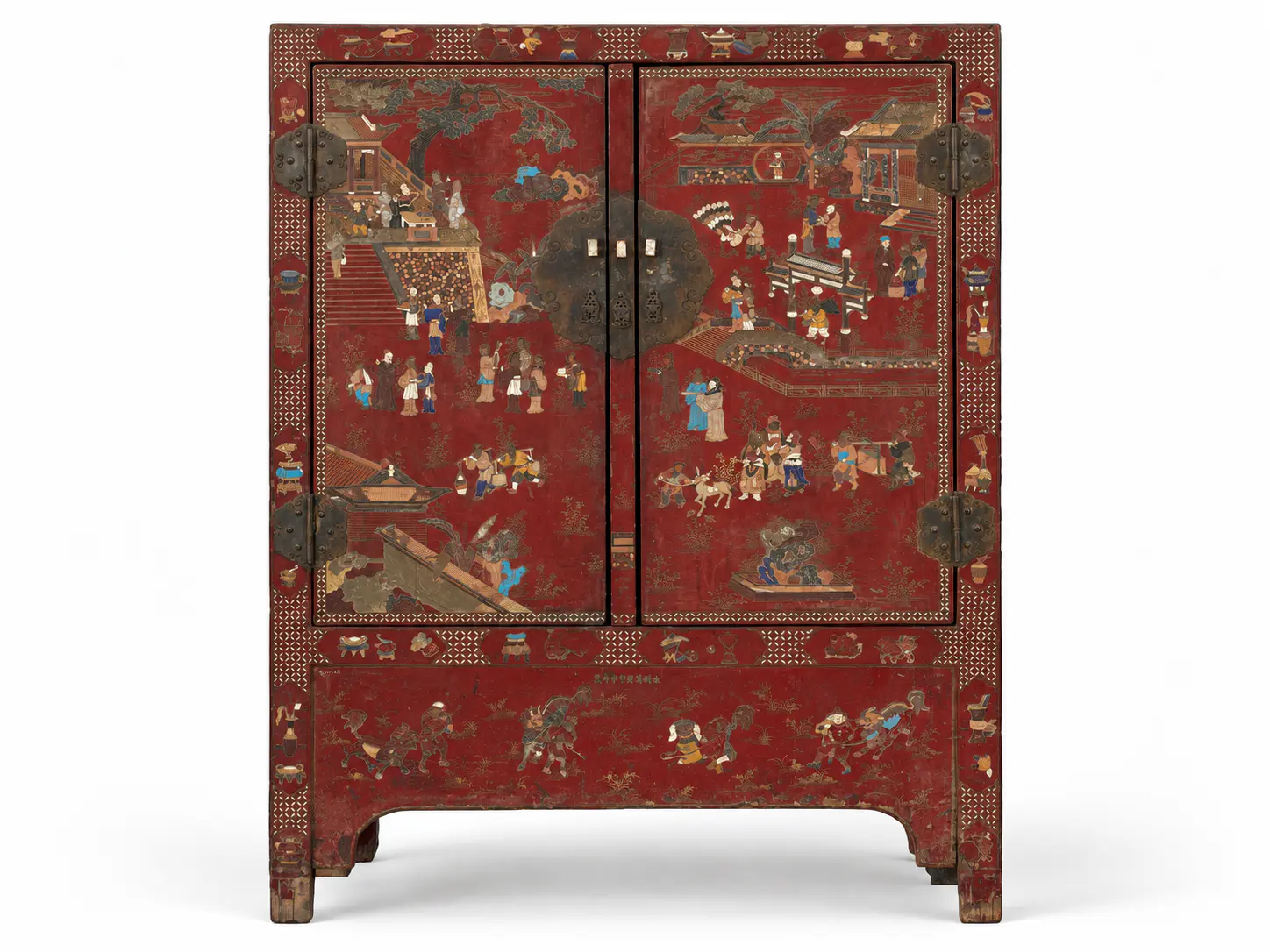
*Narrative scenes cover the doors and lower panels of this richly decorated cabinet.*
Documented Ming lacquer and inlaid tables likewise show that decoration cannot by itself make furniture Qing. Ming furniture is particularly celebrated for proportion, structural clarity and restrained hardwood design, but elaborate Ming lacquer and inlaid furniture also existed.
Restrained Qing Furniture Exists
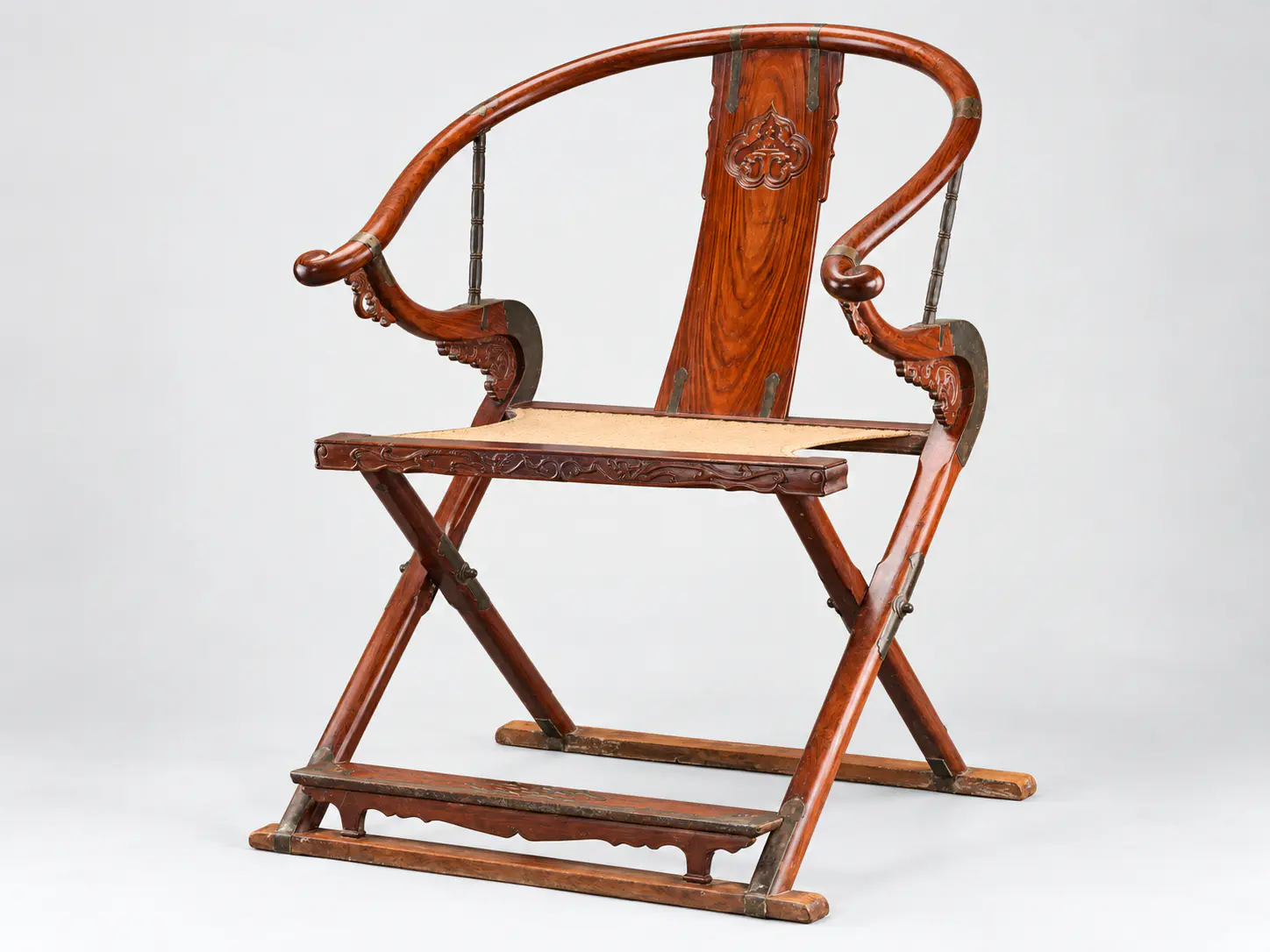
*Huali armchair, Qing dynasty, c. 1700. The Metropolitan Museum of Art, Public Domain. The museum identifies the material as huali—not huanghuali. Structural clarity and relative restraint continued into the Qing.*
Qing furniture includes restrained Ming-derived forms as well as highly elaborate imperial furniture. Restraint cannot by itself make furniture Ming.
Elaborate Qing Court Craftsmanship
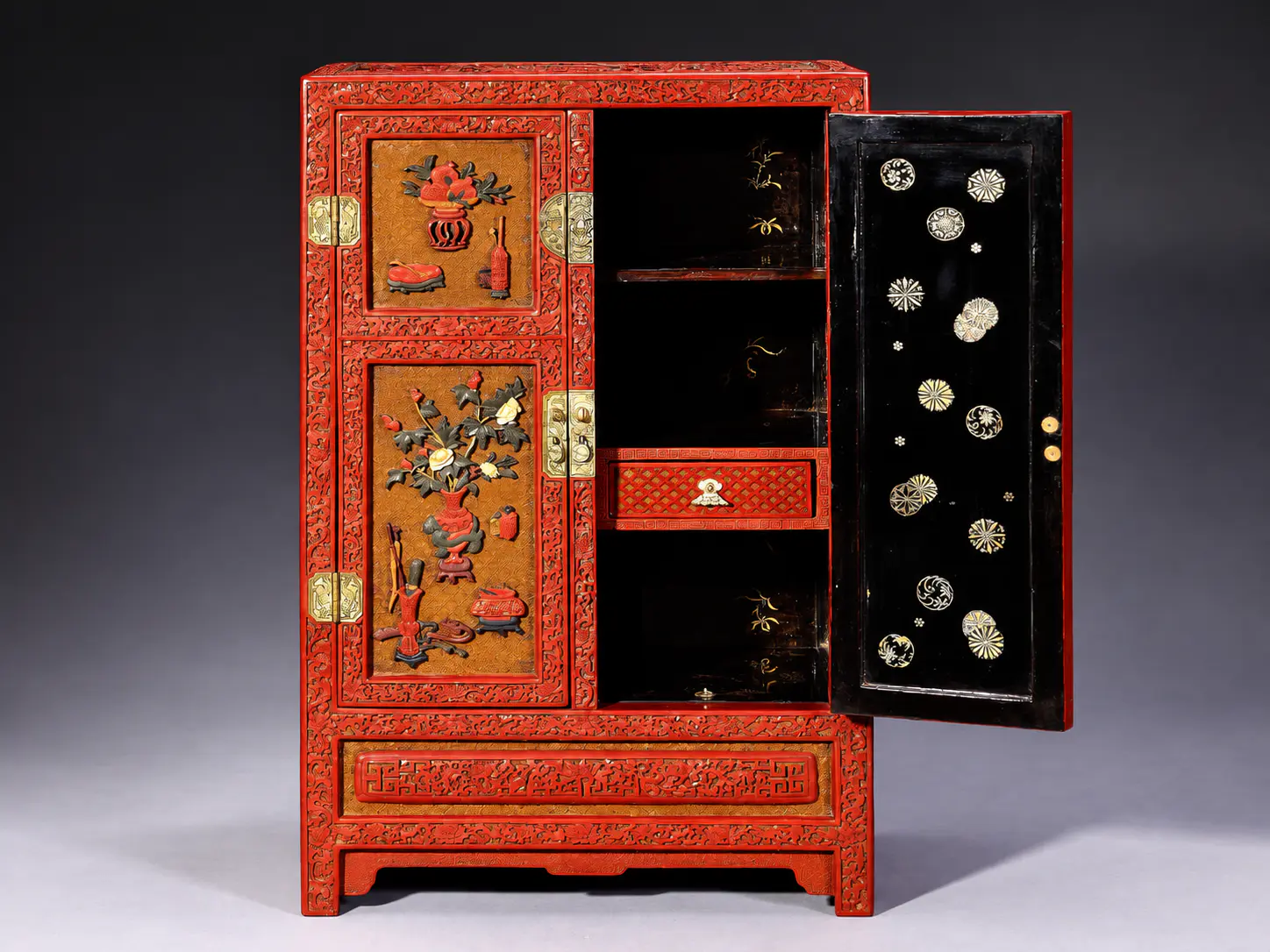
*Carved red lacquer cabinet, Qing dynasty, Qianlong period, 18th century. The Metropolitan Museum of Art, Public Domain. Dense carving, patterned surfaces and luxury finish associated with Qianlong workshop production—not a statement that every Qing piece looked like this.*
Together, the four Met examples destroy the simplistic binary while still teaching useful tendencies:
| Restrained | Elaborate |
|---|---|
| Ming — huanghuali painting table | Ming — inlaid wardrobe |
| Qing — huali armchair | Qing — Qianlong lacquer cabinet |
Dynasty ≠ level of decoration.
Ming vs Qing Furniture by Feature
Shape and Proportion
Ming tendency: lighter profile, open frame, strong proportion, continuous lines.
Qing tendency: wider range; some heavier forms; denser visual construction in many court examples.
Legs, Aprons and Structural Members
Ming classical examples often allow legs, aprons and rails to read clearly as structural components. Some Qing examples use heavier aprons, richer carving and more visually integrated decorative members. Joint technology did not fundamentally change at the dynasty transition.
Wood
Ming: huanghuali particularly famous among elite hardwood survivors; other hardwoods and lacquer also used.
Qing: zitan particularly prominent in court contexts; huali/hongmu and many other woods; lacquer remains important.
Zitan became particularly important in Qing court furniture, while huanghuali is strongly associated with classical Ming and early-Qing hardwood furniture—emphasis, not exclusivity. Details: rosewood materials guide.
Decoration
Ming: famous hardwood tradition often restrained; carving, inlay and lacquer definitely existed.
Qing: greater decorative density becomes prominent in many court examples; carving and mixed materials can dominate the surface.
Decoration alone cannot reliably date Chinese furniture.
Furniture Scale and Visual Weight
Use qualitative comparison only. Avoid unsupported claims such as percentage size differences between dynasties.
Symbolism
Qing imperial furniture can carry dense auspicious and court symbolism—dragons, bats, lotus, longevity motifs, clouds, landscapes—especially where furniture becomes a platform for multiple crafts. This is not a complete Chinese-symbolism guide.
Can You Date Furniture by Style?
Not reliably. Styles overlap; Ming-derived forms continued into Qing; reproductions imitate both; pieces can be restored; components can be replaced; regional furniture differs; and elite museum objects are not representative of all historical furniture.
“Ming style” is a design description, not proof that a piece was made during the Ming dynasty.
“Qing style” likewise does not prove Qing-period manufacture.
“Ming style” does not mean “made during the Ming dynasty.” For how specialists weigh form, construction, material, surface, restoration and provenance together, see Chinese antique furniture identification.
Where to Compare Ming and Qing Furniture in Museums
Palace Museum Furniture Gallery — Beijing
The Palace Museum Furniture Gallery holds more than 6,200 pieces or sets of Ming and Qing furniture, spanning Yongle through Xuantong/Puyi. The majority was used by the Qing court, and the largest share is from the Qianlong period. Principal categories include chairs, beds, tables, cabinets and screens. Materials include lacquer, hardwood and other woods; important hardwood terminology includes zitan, huali and hongmu. Beijing gives visitors an unusually strong physical opportunity to see Qing imperial furniture in context.
Shanghai Museum Ming and Qing Furniture Gallery
The Shanghai Museum’s permanent Chinese Ming and Qing Furniture Gallery displays more than 100 pieces and reconstructs Ming–Qing reception-room and study contexts. It is useful evidence that Ming/Qing furniture is commonly studied comparatively rather than as completely isolated categories. Spatial context for furniture also relates to Chinese architecture, traditional Chinese houses and siheyuan.
Ming vs Qing Furniture FAQ
What is the main difference between Ming and Qing furniture?
Ming furniture is particularly celebrated for proportion, structural clarity and restrained hardwood surfaces in many famous classical examples, while mature Qing court furniture often expands carving, lacquer, inlay and material richness. Many late-Ming forms continued into the early Qing, so the difference is a set of tendencies—not two sealed traditions.
Is Ming furniture always simpler than Qing furniture?
No. Documented Ming wardrobes and lacquer tables with mother-of-pearl and other inlay show elaborate Ming decoration. Ornament alone does not make a piece Qing.
Is Qing furniture always ornate?
No. Restrained Qing hardwood chairs continuing Ming-derived structural clarity are well documented. Qing furniture includes restrained Ming-derived forms as well as highly elaborate imperial works.
What wood was used in Ming furniture?
Huanghuali is strongly associated with surviving elite Ming hardwood furniture, but lacquer and other woods were also important. Huanghuali was not the only Ming material.
What wood was used in Qing furniture?
Zitan is particularly prominent in Qing court contexts; huali/hongmu, lacquer and many other woods also appear. Materials overlap with earlier periods.
Is huanghuali Ming and zitan Qing?
Not exclusively. Both materials cross chronological boundaries. Huanghuali is strongly associated with classical Ming and early-Qing hardwood furniture; zitan became particularly important in Qing court furniture—emphasis, not exclusivity.
Why is Qianlong furniture often elaborate?
Qianlong imperial workshops specialized in high-quality hardwoods, carving, lacquer, inlay and precious materials, turning furniture into a platform for multiple crafts. The Palace Museum’s holdings are especially rich in Qianlong-period pieces. That does not mean all Qing furniture is Qianlong style.
Did Ming furniture styles continue into the Qing dynasty?
Yes. Many late-Ming furniture forms continued into the early Qing dynasty. Dynastic change in 1644 is not an instantaneous visual break.
Can you tell Ming from Qing furniture by appearance alone?
Not conclusively. Style overlap, restoration, replacement parts and later reproductions all limit what silhouette or decoration can prove. Treat dynasty labels as attributions requiring broader evidence.