
Dumplings in Beijing food culture
Jiaozi belong to a wider northern wheat-staple environment that includes Beijing noodles, breads and dumplings. For the capital’s cuisine frame, see the Beijing Food guide.
What does “Chinese dumpling” mean?
“Dumpling” is an English category rather than one exact Chinese culinary term. Depending on context, it may refer to jiaozi, wontons, steamed buns, soup dumplings, glutinous-rice parcels or other dishes made from dough or wrappers. Chinese names distinguish these foods more precisely.
What jiaozi means
Jiaozi—饺子 in simplified characters and 餃子 in traditional characters—is the specific focus of the recipe on this page. Jiaozi normally use a rolled, unleavened wheat wrapper and a minced filling. The word is pronounced jiǎozi in Standard Mandarin.
Why terminology matters
Ordering “dumplings” does not identify one exact food. Wrapper composition varies, and leavened doughs (as in baozi) differ from unleavened jiaozi wrappers. Soup-filled buns such as xiaolongbao are not ordinary jiaozi. Wontons use a different wrapper and preparation tradition. English menu translations may vary, and no single English translation is universally correct.
- Jiaozi: unleavened wheat wrapper, sealed edge, boiled or steamed or pan-fried.
- Wonton: thinner wrapper, typically served in broth.
- Baozi: leavened dough, larger, always steamed.
- Xiaolongbao: thin wrapper, gelatinized broth filling, steamed in bamboo baskets.
- Zongzi: glutinous rice, bamboo leaf, Dragon Boat Festival association.
Jiaozi and other Chinese dumpling types
The Smithsonian distinguishes Chinese dumpling types by wrapper composition, sealing method and cooking technique. Shuijiao, zhengjiao and guotie are cooking-method variants of jiaozi sharing the same basic unleavened wrapper and sealed edge; the others differ in wrapper dough, folding or filling convention.
| Food | Chinese | Wrapper | Cooking | Key distinction |
|---|---|---|---|---|
| Jiaozi | 饺子 / 餃子 | Unleavened wheat dough | Boiled, steamed or pan-fried | Focus of this page; crimped sealed edge |
| Shuijiao | 水饺 | Unleavened wheat dough | Boiled | Boiled variant of jiaozi; water dumpling |
| Zhengjiao | 蒸饺 | Unleavened wheat dough (sometimes slightly varied) | Steamed | Steamed variant; wrapper may differ slightly by region |
| Guotie | 锅贴 | Unleavened wheat dough | Pan-fried | Potsticker; crisp base, soft top |
| Wonton | 馄饨 húntūn | Thin wheat wrapper | Boiled or in soup | Thinner wrapper; folded differently; served in broth |
| Baozi | 包子 | Leavened bread dough | Steamed | Larger; soft pillowy exterior; not sealed with a crimp |
| Xiaolongbao | 小笼包 | Thin unleavened wrapper | Steamed in bamboo baskets | Contains gelatinized broth; soup inside; Jiangnan origin |
| Shaomai | 烧卖 | Thin wheat wrapper | Steamed | Open-top; visible filling; often pork and shrimp |
| Zongzi | 粽子 | Glutinous rice wrapped in bamboo leaves | Steamed or boiled | Not wheat dough; Dragon Boat Festival association |
Several of these foods may appear on the same menu or in the same meal. Restaurant English translations may use “dumpling” for multiple distinct items.
Shuijiao, zhengjiao and guotie are sometimes treated as sub-types of jiaozi rather than separate foods. Regional and restaurant usage varies.
Wrappers, fillings and folding
A jiaozi wrapper is made from unleavened wheat flour and water. The filling is placed in the centre, the wrapper is folded over and the edge is pinched or pleated to seal. Thickness, filling composition and folding style all vary by region, household and occasion.
Wrapper dough
Combine all-purpose flour with warm water and a pinch of salt. Knead until smooth and let the dough rest, covered, for at least 20 minutes. Resting relaxes the gluten and makes the dough easier to roll thin without tearing. Machine-made wrappers are available in many Asian grocery stores; homemade wrappers are thinner and more tender than most pre-made versions.
Fillings
Pork and Napa cabbage is the most common combination and the one used in the recipe on this page. Shrimp and pork, beef and onion, lamb and leek, and all-vegetable fillings are also widely made. The cabbage must be salted and squeezed dry before mixing to prevent a watery filling that can burst the wrapper during cooking.
Folding
Fold the filled wrapper in half to form a half-moon and press the edges together firmly. Many makers add pleats along one edge for a decorative appearance and a more secure seal. The sealed edge must have no gaps or the filling will escape during cooking. Multiple regional folding styles exist; all serve the same function of enclosing the filling.
- Wrapper thickness affects texture: thinner wrappers produce a more delicate result; thicker wrappers are sturdier.
- Resting the dough is not optional: it makes rolling significantly easier.
- Salting and squeezing the cabbage is the single most important step for preventing burst or soggy dumplings.
Boiled, steamed and pan-fried jiaozi
The same filling can be used for boiled, steamed or pan-fried jiaozi. Cooking method changes the texture of the wrapper significantly.
| Method | Chinese name | Texture | Technique notes |
|---|---|---|---|
| Boiled | Shuijiao 水饺 | Tender, slightly yielding wrapper throughout | Brought to boil; cold water added 2–3 times; most common everyday form |
| Steamed | Zhengjiao 蒸饺 | Soft, slightly chewier; translucent when done | Placed in steamer basket over simmering water; 8–12 minutes |
| Pan-fried | Guotie 锅贴 | Crisp golden base, soft steamed top | Fry flat side in oil until golden; add water and cover to steam-finish; uncover to crisp |
Boiled jiaozi are the most common everyday form in northern Chinese households.
Pan-fried guotie are often served as a street food or snack rather than as part of a meal.
At a Beijing class, confirm which cooking method is taught before booking; formats vary by provider.
Regional and household variation
Jiaozi making is widespread across China, and regional and household differences in wrapper thickness, filling ingredients, folding technique and dipping sauces are significant. There is no single authoritative version.
Northern China
Jiaozi are a staple food, especially associated with Chinese New Year and family gatherings. Pork and cabbage (Napa cabbage or Chinese chives) is the classic northern combination. Boiled jiaozi dipped in black vinegar and soy sauce is the standard serving style.
Eastern and southern China
Shrimp and pork fillings appear more frequently in coastal areas. Steamed and pan-fried variants are more common in restaurant contexts in southern and eastern China. Xiaolongbao—a distinct food—originates in the Jiangnan region and is served in bamboo steamers.
Household variation
Filling ratios, seasoning and folding techniques are passed between generations and vary significantly between families. Many households have preferred fillings, wrapper thickness preferences and distinctive folding styles that are not documented in any standardized form.
Dipping sauces
Black vinegar (Chinkiang vinegar) is the most widely paired dipping sauce. Soy sauce, chilli oil, sesame paste, minced garlic and ginger-based sauces are also used. Combinations vary by region and household preference.
- A Beijing class teaches one provider's version; it may not represent all regional styles.
- Restaurant menu descriptions may not specify cooking method or filling variation.
- Wrapper flour type also varies: some cooks use a mix of all-purpose and cake flour for steamed varieties.
Dumplings and Spring Festival
Making and eating jiaozi is a widely observed Chinese New Year tradition, particularly in northern China. The activity brings families together around a shared task and the food carries festive symbolic associations. Specific customs vary by family, region and generation.
Family preparation
Beijing municipal cultural material describes communal dumpling making as a characteristic Spring Festival family activity. Family members gather around a table to roll wrappers, fill and fold dumplings together. The activity involves multiple generations and extends over a period of shared preparation rather than a single cooking step.
Symbolism
Jiaozi's half-moon shape is associated with ancient gold ingots called yuanbao. The Smithsonian Asian Pacific American collection and other cultural sources describe this shape-based association with wealth and good fortune. The exact symbolic interpretation varies between sources and between families. Accounts that describe coins inserted inside dumplings as a general custom should be read cautiously; this is one documented folk practice, not a universal or recommended modern household norm.
- Dumpling-making as a Spring Festival family activity is documented in Beijing cultural materials and Smithsonian coverage of Chinese American traditions.
- The new-year timing varies year to year according to the Chinese lunisolar calendar.
- This guide does not state a specific eating time such as midnight as a universal rule; timing customs vary by household.
- Coin insertion is a folk practice documented in some sources; it is not recommended as a general food safety practice.
Handmade pork and Napa cabbage jiaozi recipe
This recipe makes approximately 50 boiled jiaozi with a handmade wheat wrapper and a pork-and-Napa-cabbage filling. It has been moved from DragonTrail’s Beijing dumpling-class guide so the practical class page and the culinary recipe have separate roles.
Recipe status: migrated from DragonTrail’s original Beijing dumpling guide
Last recipe review: July 2026
Test-cooked: not independently test-cooked for this migration
Recipe yield
Yield: approximately 50 dumplings
Dough
- 4 cups (500 g) all-purpose flour
- 1 cup plus 2 tablespoons (250 ml) warm water
- 1/2 teaspoon salt
Filling
- 14 ounces (400 g) ground pork (70% lean preferred)
- 1.75 pounds (800 g) Napa cabbage
- 2 green onions, chopped
- 1 tablespoon minced ginger
Seasoning
- 2 tablespoons soy sauce
- 1/2 tablespoon dark soy sauce
- 1 tablespoon oyster sauce
- 3 tablespoons cooking oil
- 1 tablespoon sesame oil
- Salt
- White pepper
- Optional Chinese five-spice
Additional water and salt used in the method
- 1 teaspoon salt for drawing moisture from the cabbage
- Additional salt to taste for the filling
- 3–4 tablespoons water for mixing into the pork filling
- Additional cold water for the boiling method (about 1/2 cup per boil cycle)
Contains wheat, soy and sesame. Oyster sauce commonly contains shellfish-derived ingredients; verify the specific product. Check every packaged sauce for its own allergen statement.
Step 1 — Make the dough
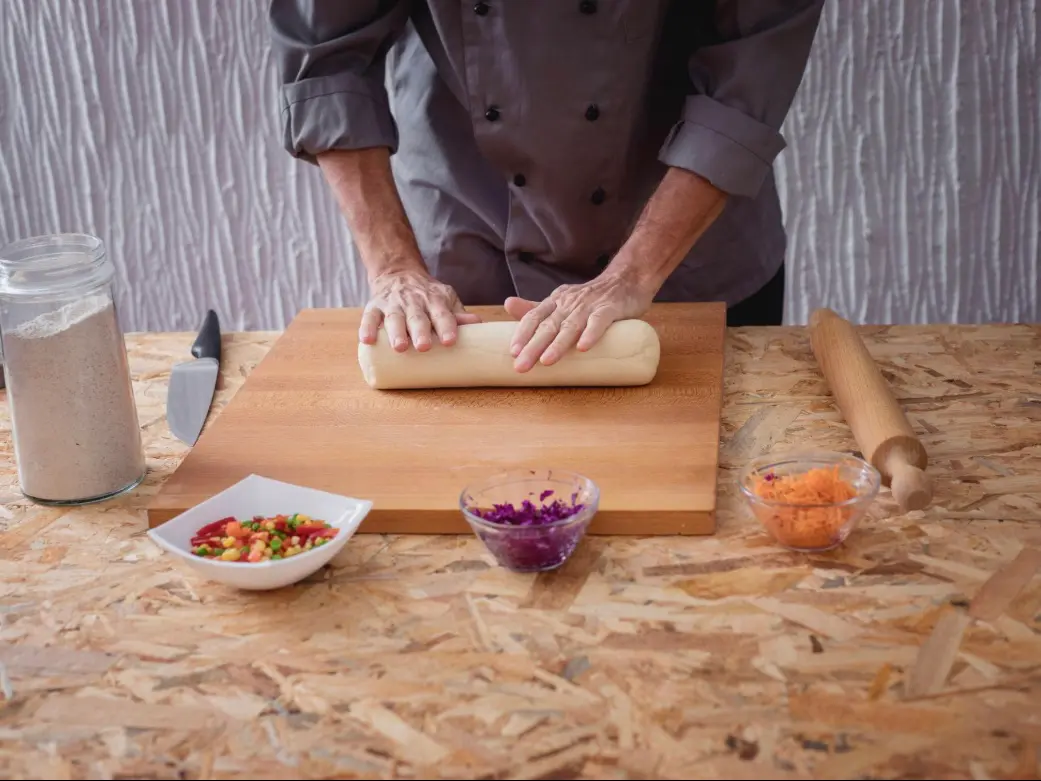
- Mix flour and salt.
- Gradually add warm water while stirring.
- Knead into a smooth, slightly firm dough.
- Cover and rest for 20 minutes.
Step 2 — Prepare the cabbage
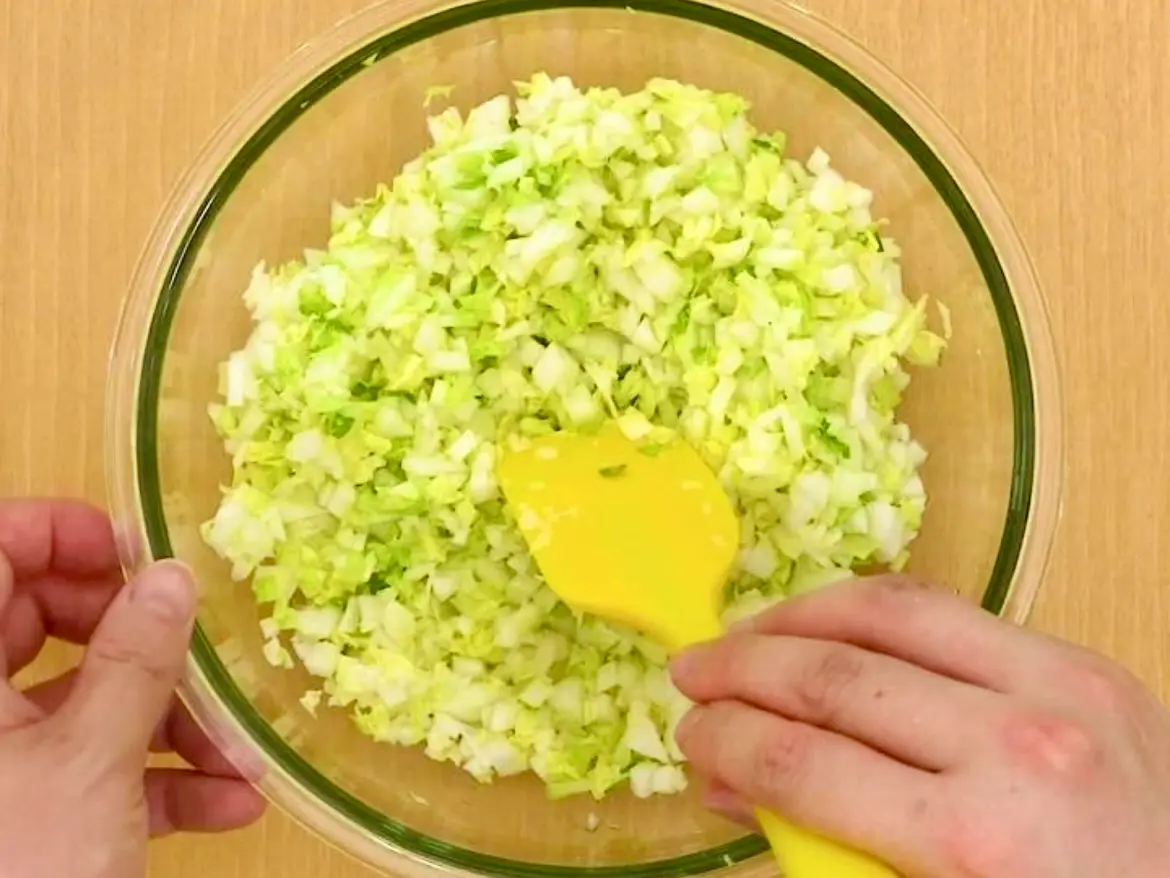
- Finely chop Napa cabbage.
- Mix with 1 teaspoon salt and rest for 10 minutes.
- Squeeze out as much water as possible.
- This helps reduce watery filling and wrapper breakage.
Step 3 — Make the filling
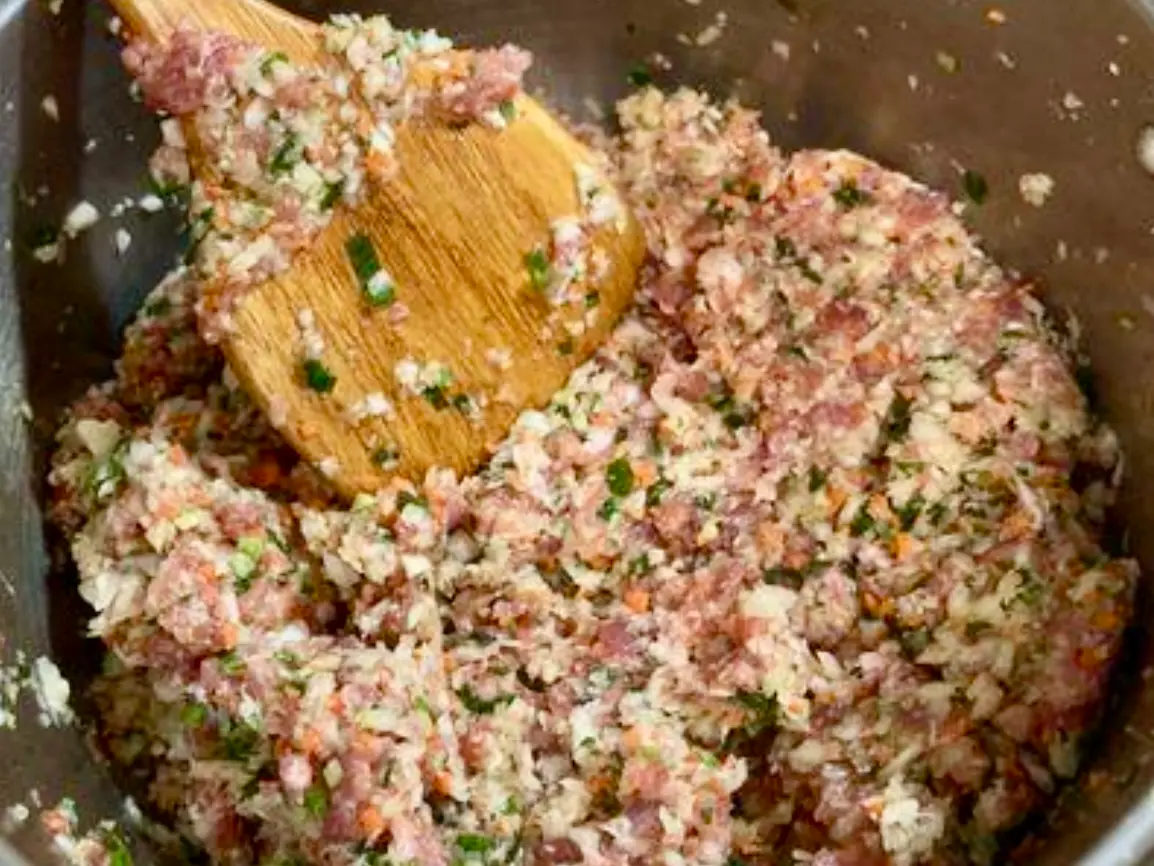
- Mix pork, green onion and ginger.
- Add soy sauce, dark soy sauce, oyster sauce, white pepper and optional five-spice.
- Stir in one direction until sticky.
- Add 3–4 tablespoons water gradually while mixing.
- Add cooking oil and sesame oil.
- Mix in the squeezed cabbage.
Keep the raw pork filling refrigerated when it is not being actively mixed or wrapped. Wash hands and clean utensils and surfaces that contacted raw pork before handling cooked dumplings.
Step 4 — Roll and wrap the dumplings
- Roll the dough into a long log and cut it into small pieces.
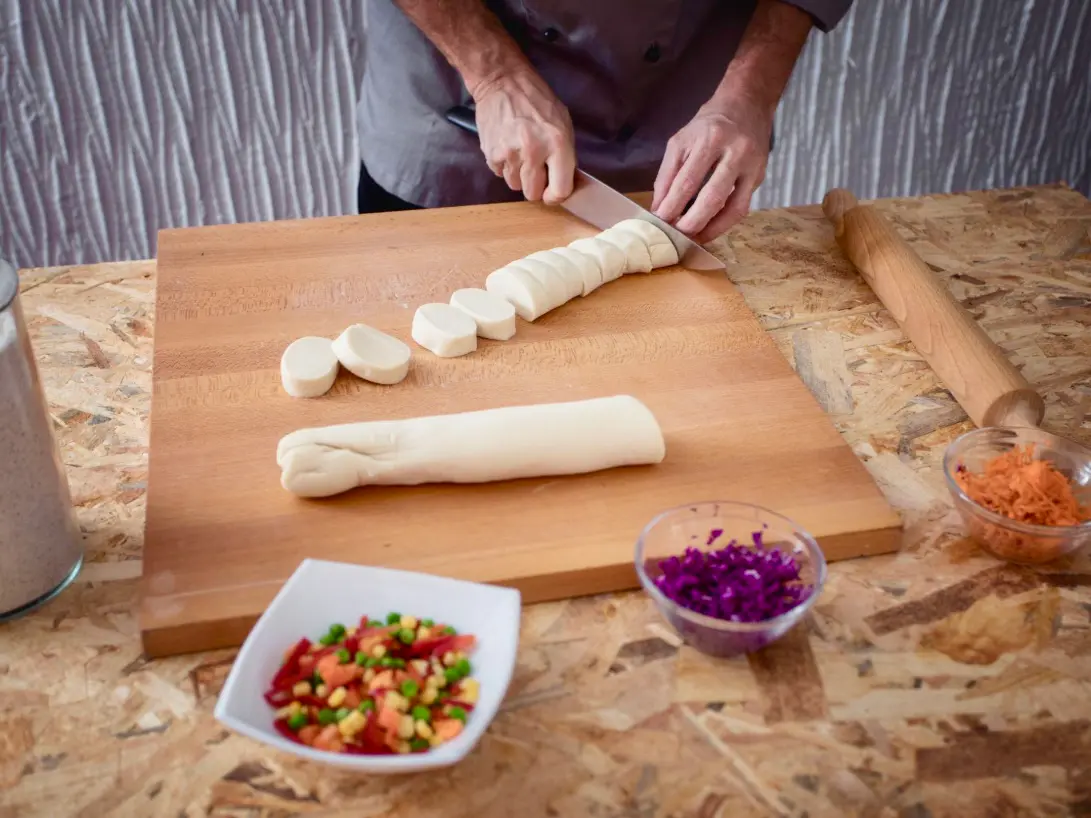
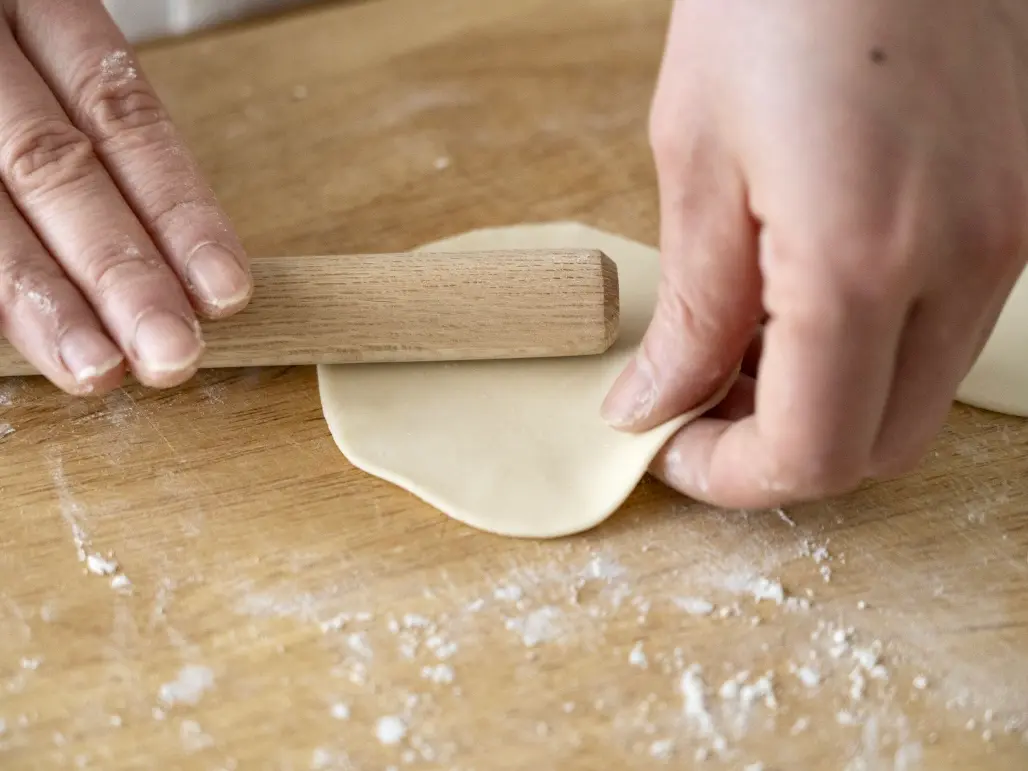
- Roll each piece into a round wrapper.
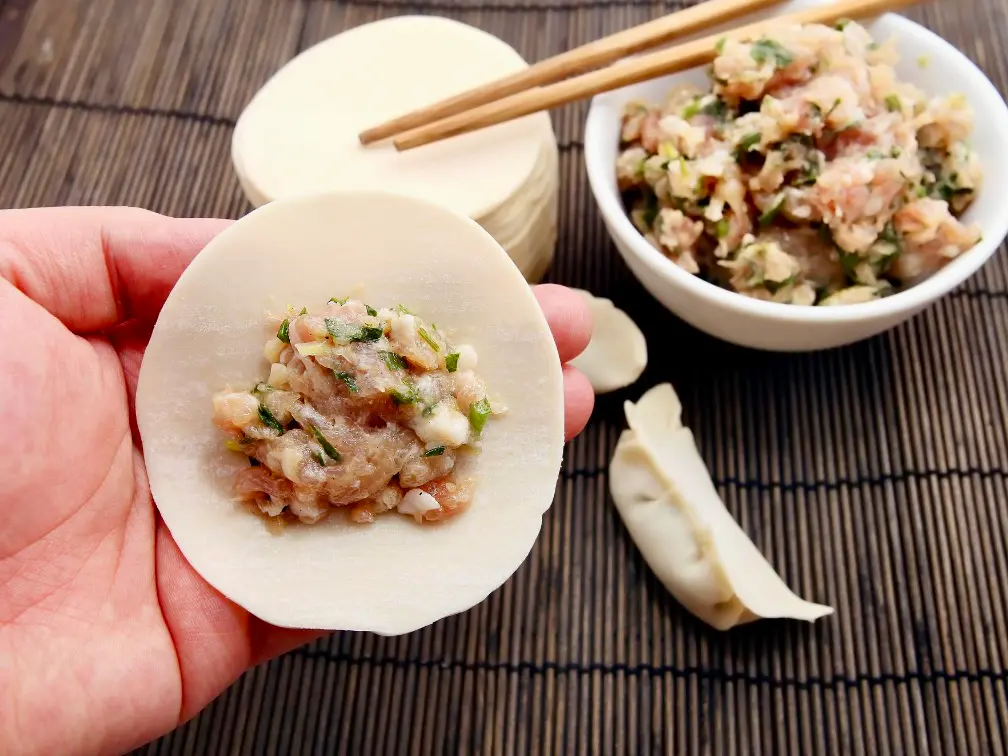
- Add filling to the centre.
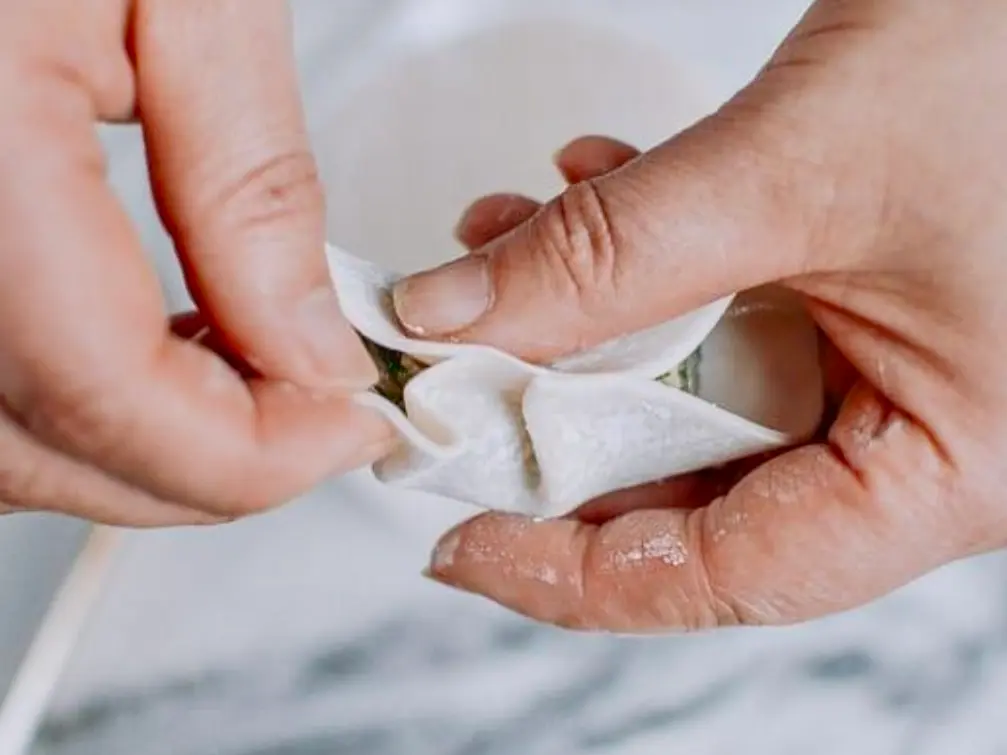
- Fold and pinch tightly closed. A firmly sealed simple fold is enough; decorative pleats are optional.
Keep unused dough and finished wrappers covered so they do not dry out.
Step 5 — Boil and serve
- Bring a large pot of water to a boil.
- Add dumplings and stir gently.
- When the water boils again, add 1/2 cup cold water.
- Repeat the cold-water addition three times.
- The dumplings should be floating and puffed.
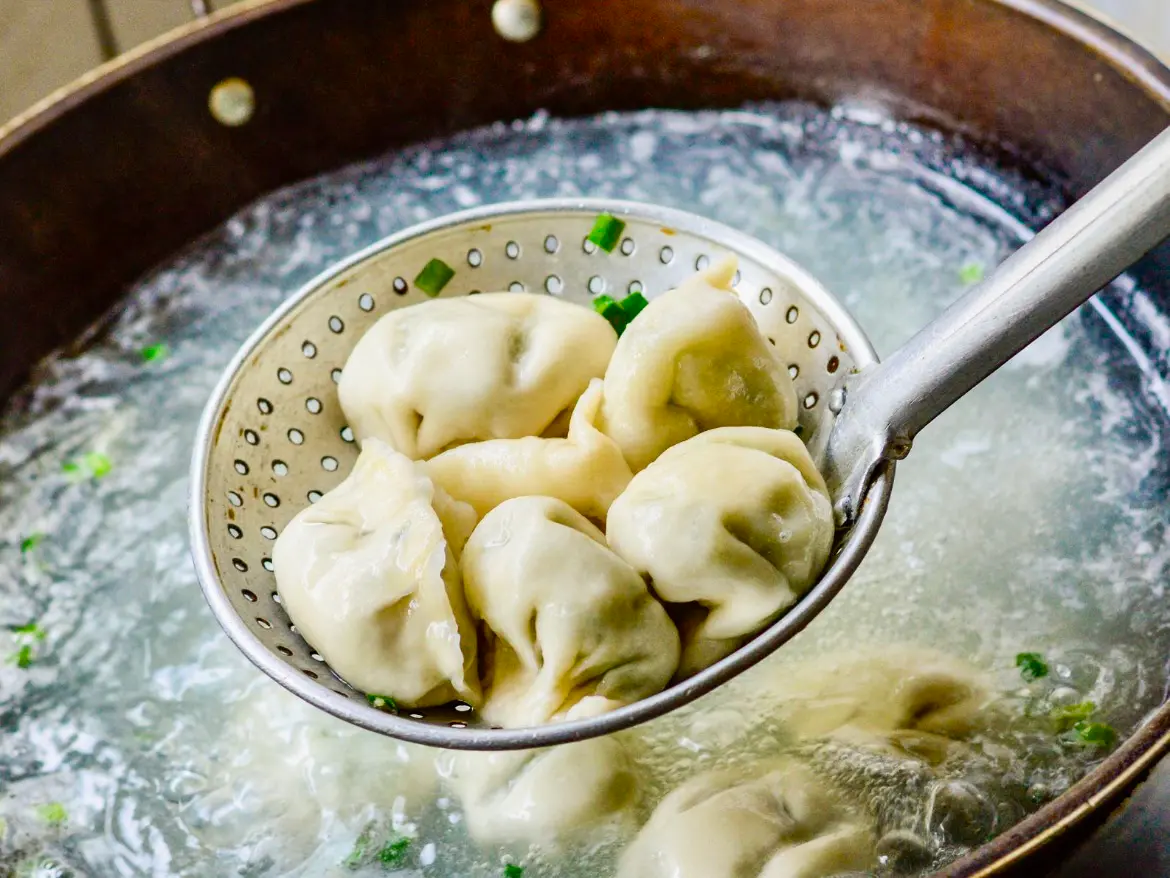
- Serve hot with soy sauce and black vinegar.
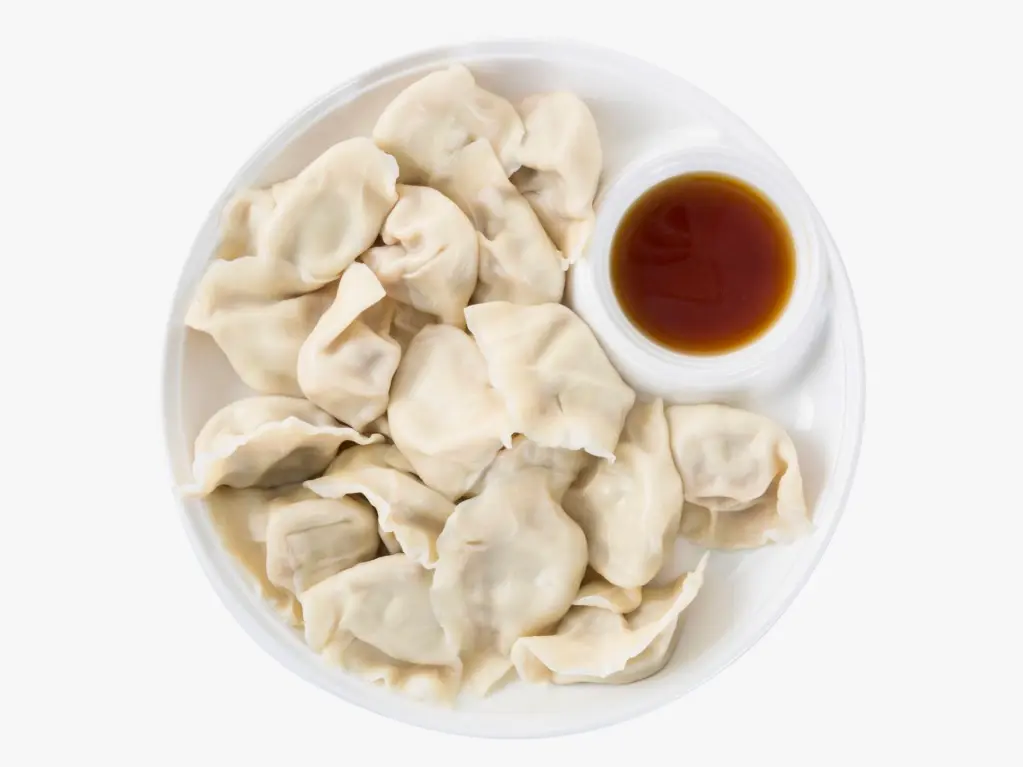
Floating and puffing are useful visual signs, but meat-filled dumplings should also be checked for safe doneness. Ground pork should reach 160°F (71°C) internally.
Variations, storage and reheating
The pork-and-cabbage recipe on this page is one version. Many filling variations exist, and jiaozi can be made in large batches and frozen for later cooking.
Filling variations
Common alternatives include shrimp and pork, beef and onion, lamb and leek, pork and chive, and vegetarian combinations with tofu, shiitake mushrooms, glass noodles and egg. The seasoning and technique remain similar across fillings; moisture control is important for any vegetable-heavy filling.
Storing uncooked dumplings
Place uncooked jiaozi on a floured tray in a single layer and freeze until firm before transferring to a sealed bag. Frozen jiaozi can be cooked directly from frozen; add one extra boiling cycle or extend cooking time by a few minutes. Do not refrigerate raw jiaozi for more than a few hours; the wrapper becomes wet and sticks to surfaces.
Reheating cooked dumplings
Boiled jiaozi that have already been cooked are best pan-fried for reheating: a small amount of oil in a pan, flattened side down, with a splash of water and a lid to steam. This produces a good texture from previously boiled dumplings. Microwaving produces a softer result. Do not reboil cooked jiaozi as the wrapper becomes waterlogged.
Vegetarian and allergy considerations
A vegetarian filling eliminates pork but the standard wrapper contains wheat. Oyster sauce in the seasoning typically contains shellfish-derived ingredients; verify the specific product or omit. Gluten-free wrappers using rice flour are possible but require a different dough technique.
- Freeze in a single layer before bagging; otherwise jiaozi stick together.
- Cook from frozen without thawing; add extra time.
- Reheat cooked jiaozi by pan-frying rather than reboiling.
- The wrapper always contains wheat in the standard recipe.
Common Chinese dumpling mistakes
Treating every Chinese dumpling as jiaozi
Baozi, wontons, xiaolongbao and jiaozi have different wrappers and preparation traditions.
Overfilling the wrapper
Excess filling makes the seam difficult to seal and increases the chance of splitting.
Letting dough or wrappers dry out
Keep unused dough, wrapper portions and finished wrappers covered while assembling.
Leaving too much water in the cabbage
Excess moisture can loosen the filling and make sealing more difficult.
Using visual doneness alone for raw meat
Floating does not replace a safe internal-temperature check for ground pork.
Confusing wonton wrappers with jiaozi wrappers
They may differ in thickness, shape and intended preparation.
Requiring decorative pleats
A firmly sealed simple fold is more important than an elaborate shape.
Assuming one dipping sauce is universal
Vinegar, soy sauce, garlic, chilli and sesame combinations vary by household and region.
Chinese dumplings FAQ
- There is no single Chinese term covering every food described as a dumpling in English. Jiaozi—饺子 or 餃子—is one major category made with a filled, unleavened wrapper. Wontons, baozi and xiaolongbao have their own names and preparation traditions.
- Dumpling is a broad English category. Jiaozi is a specific Chinese filled-wrapper food that may be boiled, steamed or pan-fried.
- Baozi are often grouped under the English word dumpling, but they are leavened filled buns. Their dough and preparation differ from ordinary jiaozi.
- Jiaozi normally use a round, rolled wrapper and are often served as individual boiled, steamed or pan-fried parcels. Wontons commonly use thinner wrappers, different folds and are frequently served in broth.
- Yes. Jiaozi may be boiled, steamed or pan-fried. The cooking method changes the texture and may also change the specific Chinese name used for the dish.
- Jiaozi are strongly associated with Spring Festival in northern China. Popular explanations connect their shape and name with prosperity and the transition into the new year, while making them can also be a shared family activity.
- Basic homemade jiaozi wrappers commonly use wheat flour and water, sometimes with salt. Commercial wrappers vary in thickness, ingredients and intended use.
- Avoid overfilling, seal the edges firmly, keep wrappers from drying out, remove excess moisture from wet fillings and avoid overcrowding the pot.
- Floating and puffing are useful visual signs, but ground-pork filling should reach an internal temperature of 160°F or 71°C.
- Yes. Freeze uncooked sealed dumplings apart on a tray until firm, then transfer them to a labelled airtight container or freezer bag. Cook them from frozen using an appropriately adjusted method.