
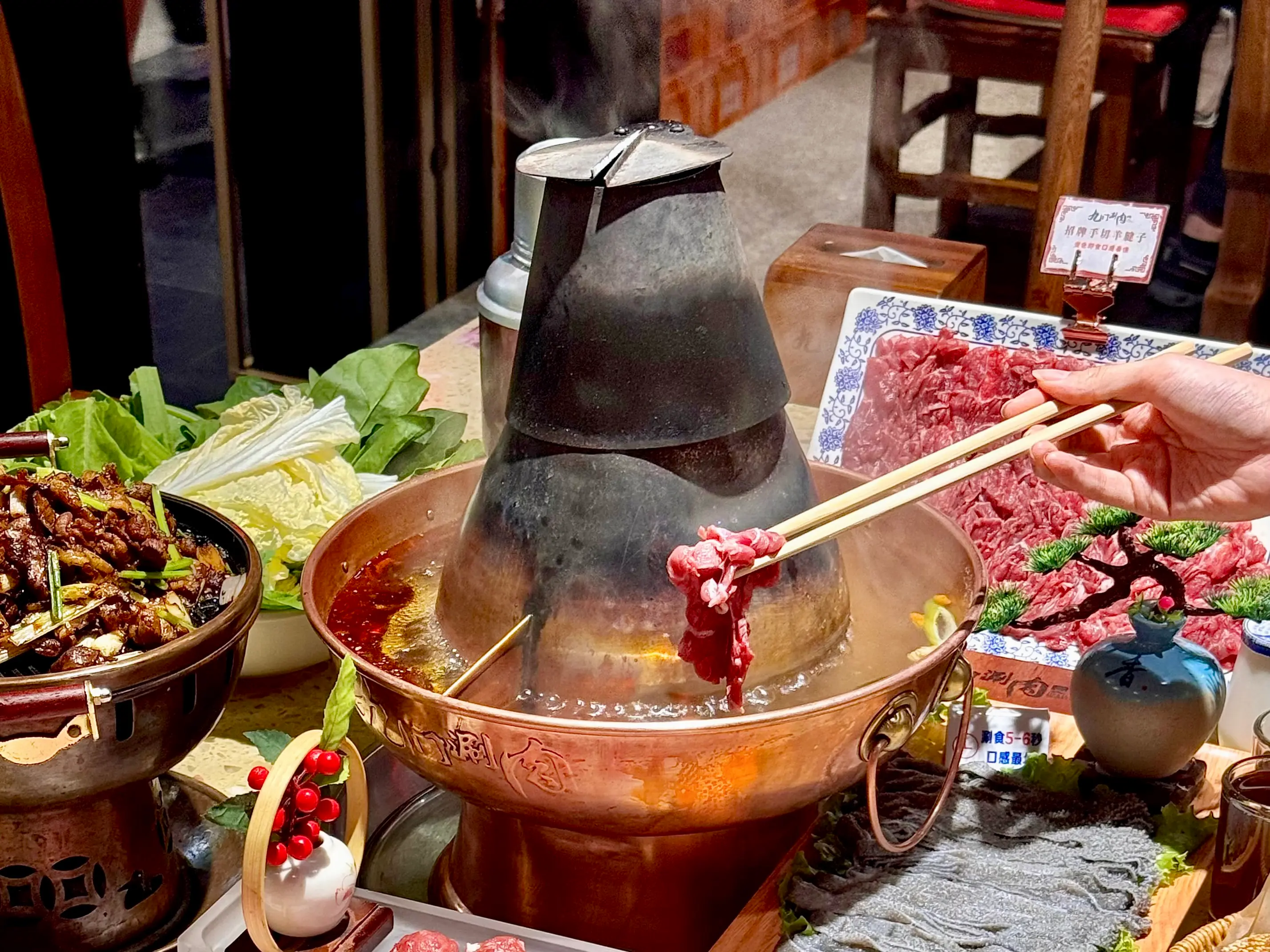
Traditional Beijing hotpot is very different from the fiery red hotpots associated with Sichuan and Chongqing. Beijing's classic version, 涮羊肉 (shuàn yángròu), centres on thin slices of lamb briefly cooked in a clear broth inside a traditional copper pot, then dipped in a rich sesame-based sauce. The simple broth deliberately puts the quality of the meat at the centre of the meal.
Traditional Beijing hotpot is thinly sliced lamb cooked briefly in a clear broth, traditionally in a charcoal-heated copper pot, and eaten with sesame-based dipping sauce. In Chinese the dish is 涮羊肉 — shuàn yángròu — instant-boiled, or “swished,” mutton.
Quick Answer
- What it is: thinly sliced lamb cooked for seconds in clear broth.
- Traditional vessel: copper pot heated by charcoal.
- Is it spicy? No. Traditional Beijing copper-pot hotpot is not inherently spicy. Its broth is deliberately mild. Chilli can be added to the dipping sauce if you want heat.
- Typical meal budget: roughly ¥100–150 per person at well-known traditional restaurants, depending on meat cuts and quantity.
- Best overall local choice: Jubaoyuan.
- Best near the Temple of Heaven: Nanmen Shuanrou.
- Best for hand-cut lamb and sesame-sugar pancake: Manhengji.
- Historically important name: Donglaishun, although it is not DragonTrail’s current taste-focused recommendation.
Current listings place well-known traditional branches roughly around ¥100–125 per diner: Jubaoyuan Niujie around ¥102, Nanmen Shuanrou's Temple of Heaven main branch around ¥102, Manhengji Ping'anli around ¥112, and Donglaishun's Beijing APM branch around ¥123. Treat these strictly as indicative current averages, not guaranteed menu prices.
This page covers Beijing's copper-pot mutton tradition, not Chinese hotpot in general. For the capital's wider cuisine, see the Beijing food guide. For country-level context see Chinese food; for a northern staple see Chinese dumplings.
What Is Traditional Beijing Copper-Pot Hot Pot?
Traditional Beijing copper-pot hotpot is 涮羊肉 — shuàn yángròu. The Chinese name describes the action: diners quickly “swish” thin slices of lamb through boiling broth, then lift them out as soon as the meat is cooked. English speakers usually call the same dish instant-boiled mutton.
Traditional Beijing service uses a distinctive tall copper vessel with a chimney in the middle. Charcoal traditionally heats the vessel from the centre. Copper conducts heat efficiently and helps keep the water continuously boiling. Many restaurants still present a copper-style pot; charcoal is the traditional method, not a claim that every modern branch still burns charcoal at the table.
The broth is intentionally simple. Traditional versions may contain little more than water, scallion, ginger and a few mild aromatics. The lamb, rather than the broth, provides the principal flavour. After the meat, vegetables, tofu and vermicelli can be cooked in the broth, which gradually becomes richer as the meal continues.
Official Beijing tourism material describes copper-pot hotpot as a centuries-old Beijing style and emphasizes its quick-heating copper pot, sliced lamb, vegetables and clear broth. The light broth is designed to preserve the flavour of the lamb rather than to season the soup heavily.
This is not Sichuan or Chongqing hotpot, not lamb-spine hotpot, and not chain-style spicy hotpot. Beijing 涮羊肉 is a meat-first meal eaten with sesame sauce.
Beijing Hot Pot vs Sichuan Hot Pot
| Beijing copper-pot hotpot | Sichuan/Chongqing hotpot | |
|---|---|---|
| Main flavour | Lamb + sesame dipping sauce | Spiced broth |
| Broth | Clear and mild | Usually chilli- and spice-heavy |
| Traditional meat | Lamb/mutton | Beef, offal and many other ingredients |
| Pot | Traditional copper chimney pot | Conventional divided or round hotpot |
| Heat level | Mild | Often very spicy |
| Dining focus | Quality of meat | Broth + ingredients |
Neither style is more “authentic” than the other; they represent different regional hotpot traditions. Beijing hotpot emphasizes lamb, clear broth and sesame sauce; Sichuan hotpot emphasizes a highly seasoned chilli-and-spice broth. Beijing's version is not a weaker form of Sichuan hotpot.
Best Beijing Hot Pot Restaurants
Beijing has several established copper-pot mutton restaurants, but historical reputation and the present-day dining experience are not necessarily the same thing. DragonTrail currently recommends Jubaoyuan, Nanmen Shuanrou and Manhengji. Donglaishun remains an important name in the history of Beijing hotpot, but it is not our current first choice when taste is the priority.
| Restaurant | Best for | Area | Approx. current spend |
|---|---|---|---|
| Jubaoyuan | Best overall local choice | Niujie | ~¥100–120 pp |
| Nanmen Shuanrou | Best near the Temple of Heaven | Temple of Heaven | ~¥100 pp |
| Manhengji | Hand-cut lamb and sesame-sugar pancake | Ping'anli | ~¥110–120 pp |
| Donglaishun | Historically important name | Wangfujing | ~¥120 pp |
Spend figures are approximate current planning averages from public listings. Branches, meat cuts and portion sizes vary.
Jubaoyuan — Best Overall Local Choice
聚宝源(牛街创始店)
Address:
5-2 Niujie, Xicheng District, Beijing 北京市西城区牛街5-2号附近
Jubaoyuan is DragonTrail’s current best overall local recommendation for Beijing copper-pot mutton. It is located in Niujie, Beijing's historic Muslim food district. Current listing data identifies the Niujie founding store as an Old Beijing hotpot restaurant with an average spend around ¥102 per person. It is particularly well known for hand-cut fresh lamb and traditional copper-pot service with clear broth — a strong option if you want to combine the meal with Niujie's halal food culture.
Useful reference prices currently include roughly ¥46 for hand-cut fresh lamb and ¥68 for one standard mutton selection; treat these as menu snapshots, not permanent prices. Its sesame shaobing is an important accompaniment.
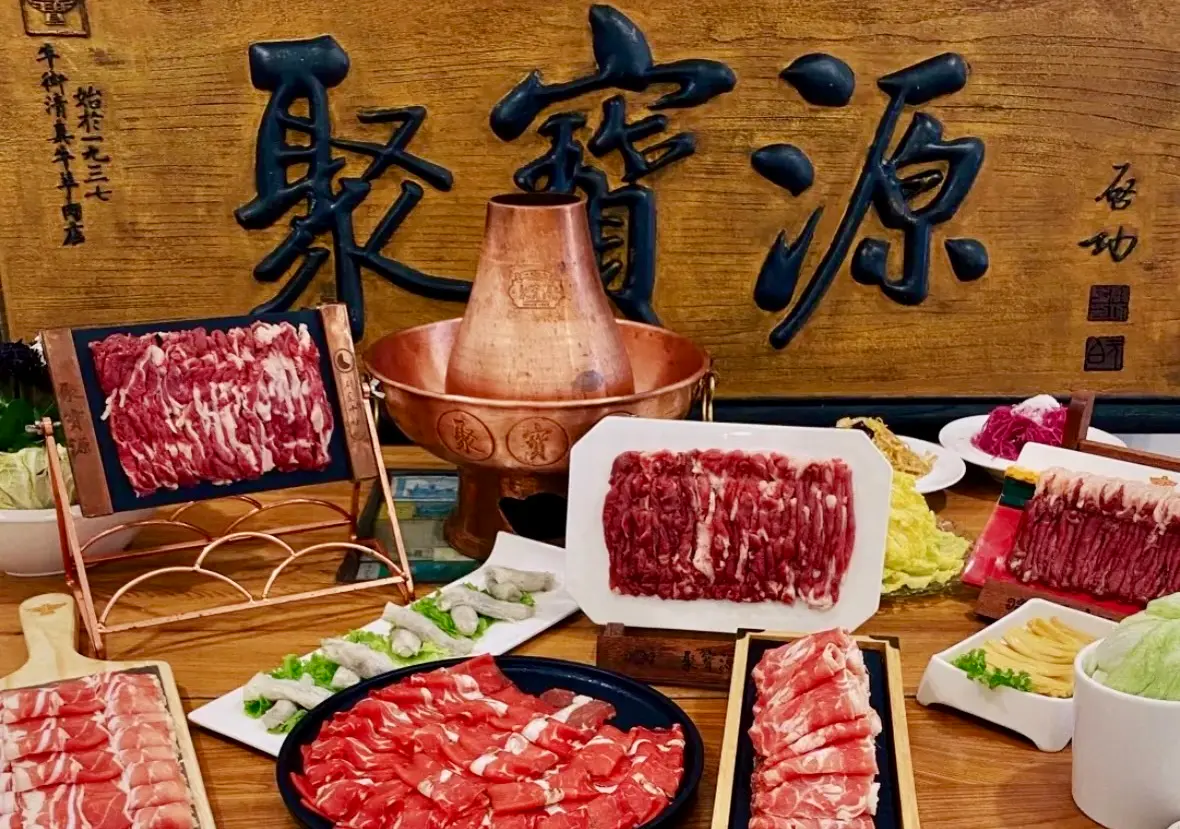
*A copper-pot mutton meal at Jubaoyuan in Beijing.*
Nanmen Shuanrou — Best Near the Temple of Heaven
南门涮肉
Primary visitor location:
Temple of Heaven / South Gate area, Dongcheng District
Nanmen Shuanrou was founded in 1994. The name literally refers to its original location near the south gate of the Temple of Heaven. Official Beijing tourism sources specifically describe it as traditional halal Beijing hotpot and connect the name to the Temple of Heaven South Gate.
It became one of Beijing's most recognizable modern traditional 涮羊肉 brands and is a good fit after a Temple of Heaven visit. It is known for hand-cut lamb, clear broth and traditional sesame dipping sauce. Current listings put average spend around ¥100 per person at the Temple of Heaven main location. Popular branches may require waiting during dinner hours.
Manhengji — Best for Hand-Cut Lamb and Sesame-Sugar Pancake
牛街清真满恒记
Address:
14 Ping'anli West Street, Xicheng District, Beijing 北京市西城区平安里西大街14号
Manhengji is another strong local-style traditional hotpot option, particularly known for fresh hand-cut lamb. Its 麻酱糖饼 — sesame-paste brown-sugar pancake is a major secondary reason to visit. Current listings show an average spend around ¥112 per person, with menu snapshots around ¥38 for hand-cut lamb and ¥15 for the sesame sugar pancake. These are planning snapshots rather than fixed prices. Queues can be substantial at popular periods.
Donglaishun — Historically Important, but Not Our Current Pick
东来顺
Primary visitor branch:
Donglaishun Restaurant — Beijing APM / Wangfujing 5F, Beijing APM, 138 Wangfujing Street, Dongcheng District
Donglaishun is one of the historical names associated with Beijing’s instant-boiled mutton tradition. That history is worth understanding, but it should be considered separately from deciding where to eat today.
Based on DragonTrail’s current assessment, we would not make Donglaishun our first recommendation when taste is the priority. Experiences can vary by branch and visit, but we generally find that Jubaoyuan, Nanmen Shuanrou and Manhengji offer more satisfying choices for travellers seeking the meal itself. Visitors primarily interested in the history of the brand may still find Donglaishun relevant.
Donglaishun was founded in 1903. Official Beijing sources have identified Donglaishun's instant-boiled mutton technique as national intangible cultural heritage. The Wangfujing / Beijing APM branch remains easy to reach for visitors because it is central. Current listings put average spending around ¥123 per person at that location. Typical items include hand-cut fresh lamb, sliced lamb, sesame sauce, shaobing and pickled garlic.
Do not assume every Donglaishun branch still uses traditional charcoal. Heat sources at individual modern branches can differ.
What to Order and How Much It Costs
Beijing copper-pot hotpot is best ordered as a shared meal. The main cost comes from the number and quality of meat plates you order rather than from the pot itself.
| Item | Typical role |
|---|---|
| Hand-cut fresh lamb 手切鲜羊肉 | Main meat; prioritize this |
| Lamb shoulder / upper cuts 羊上脑 | Tender, slightly richer |
| Beef tripe / fresh tripe 百叶 | Classic additional texture |
| Chinese cabbage 白菜 | Traditional vegetable |
| Frozen tofu 冻豆腐 | Absorbs the broth |
| Vermicelli 粉丝 | Usually added near the end |
| Sesame dipping sauce 麻酱小料 | Essential accompaniment |
| Pickled sweet garlic 糖蒜 | Traditional side |
| Sesame shaobing 烧饼 | Bread served alongside the meal |
The traditional meal is meat-first. Order lamb first, cook it while the broth is still clean, and add vegetables later after the lamb has flavoured the broth. Do not start by ordering ten ingredients at once; see the portion size of the first meat plates before adding more.
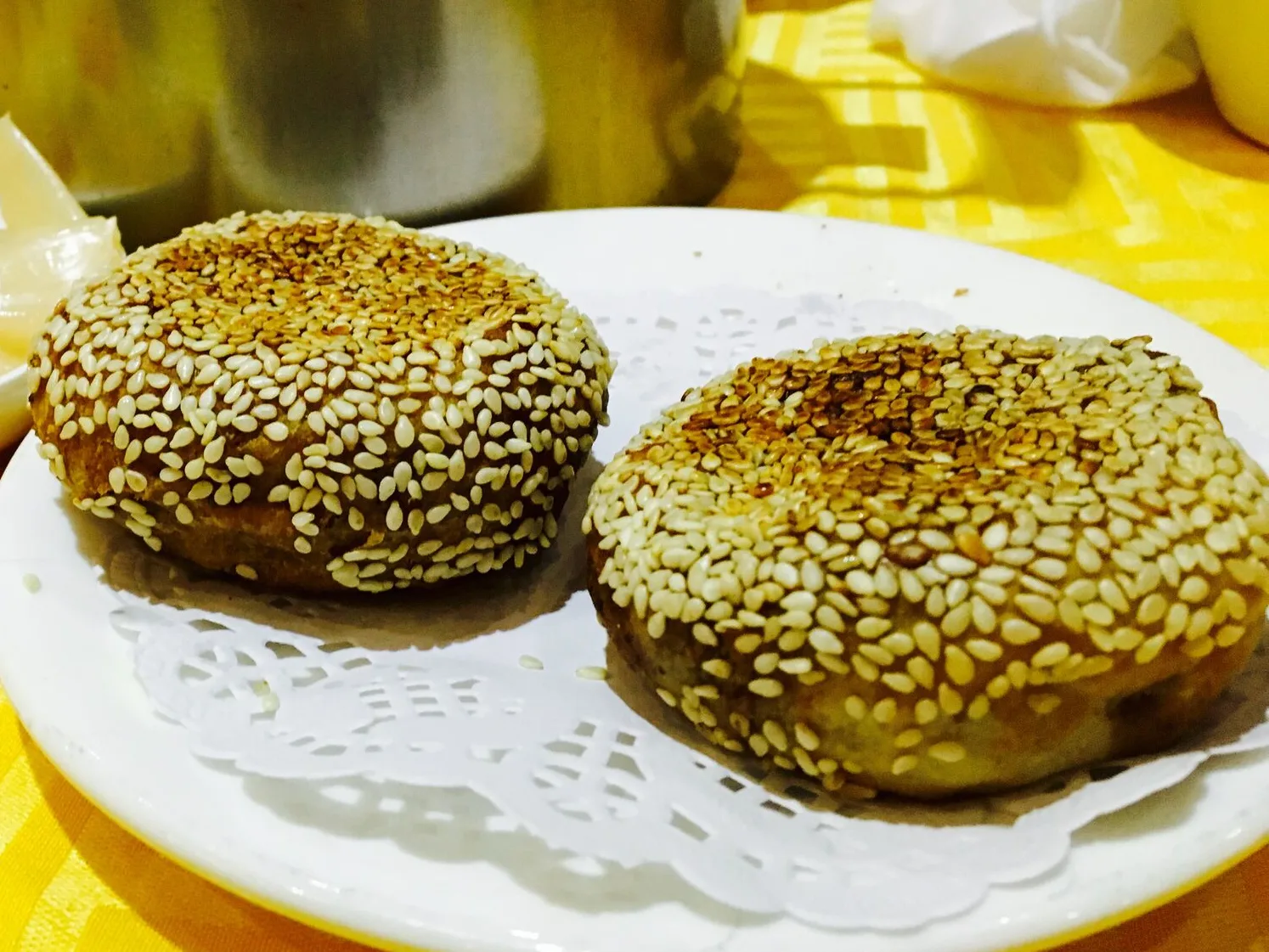
*Sesame shaobing, a classic accompaniment to Beijing copper-pot mutton.*
| Meal level | Approximate budget |
|---|---|
| Simple local meal | ¥70–100 pp |
| Well-known traditional restaurant | ¥100–150 pp |
| Larger meal / premium meat cuts | ¥150–220+ pp |
These are planning ranges rather than fixed menu prices. Branches, meat cuts and portion sizes vary. A practical budget for a well-known traditional restaurant is around ¥100–150 per person.
For two people
For two travellers, start with two or three plates of lamb, one vegetable or tofu dish, vermicelli, dipping sauce and one or two shaobing. Add more meat only after seeing the portion size.
Pickled sweet garlic and sesame sauce belong in the first round; they are part of the classic set, not optional garnish.
How to Eat Beijing Hot Pot
Keep the lamb in small batches, cook it briefly, and save vegetables for later.
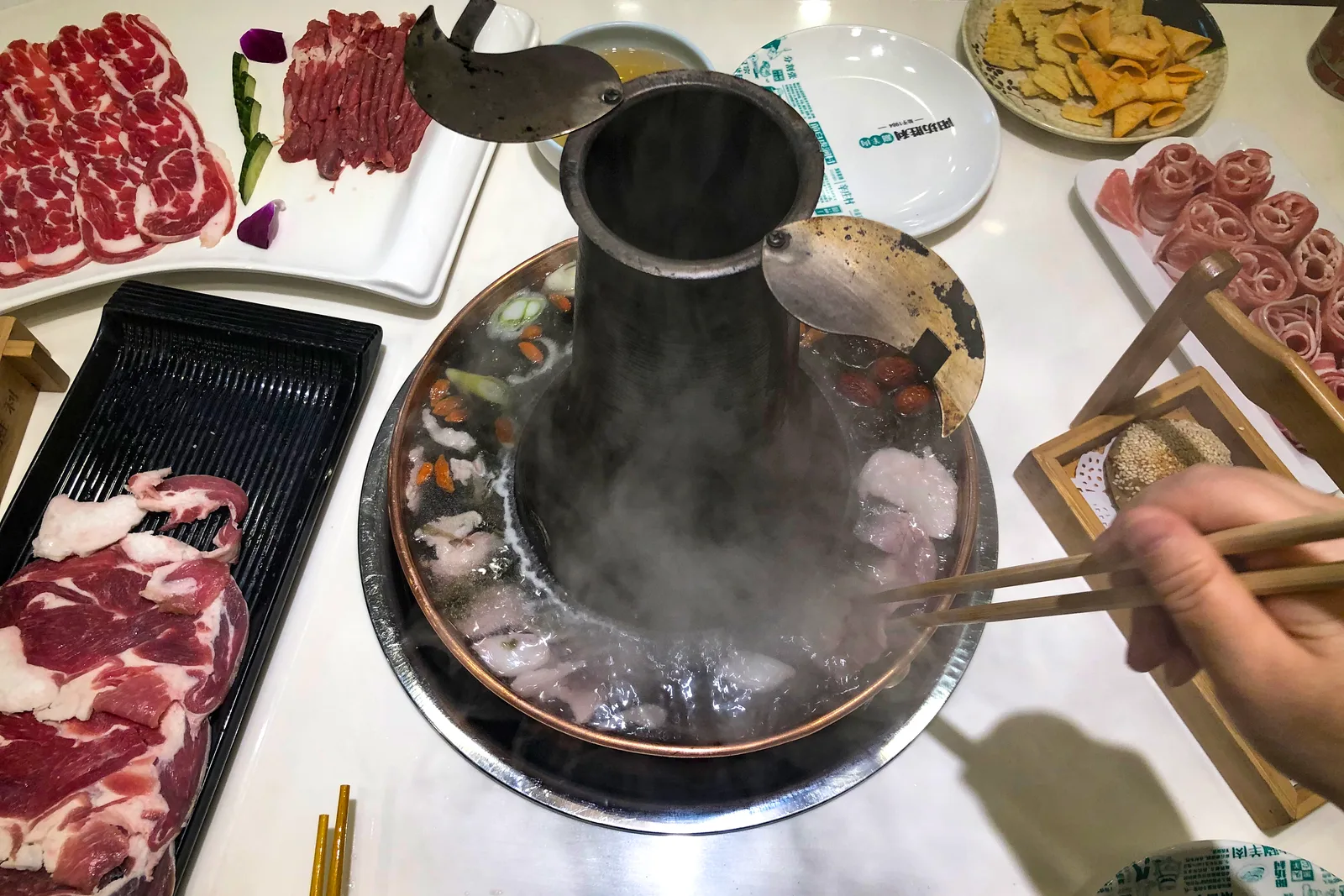
*Thinly sliced lamb cooks quickly in a traditional Beijing copper pot.*
Step 1: Prepare the dipping sauce
The classic Beijing dipping sauce is based on sesame paste rather than the sesame-oil dips common in some southern hotpot traditions. Typical additions can include sesame paste, fermented tofu, chive flower sauce, soy sauce, coriander, scallion, and chilli oil according to preference. Restaurants do not all use an identical recipe; staff will often mix a house sesame base and leave extra condiments on the table.
Step 2: Add one or a few slices of lamb
Do not empty an entire plate of lamb into the pot. Use chopsticks to place or swish a few slices through the boiling broth. Official tourism instructions similarly recommend briefly dipping individual slices rather than dumping a whole plate into the pot.
Step 3: Cook only until the colour changes
Thin lamb slices usually need only a few seconds. Remove them once the red colour disappears and the meat is cooked through. Thickness varies, so there is no universal timer: watch the colour, then lift the slices out.
Step 4: Dip in sesame sauce
Transfer the cooked lamb to your bowl and coat it lightly in the sesame-based dipping sauce. The sauce, not the broth, is where most of the seasoning lives.
Step 5: Eat the meat before the vegetables
Start with the lamb while the broth remains clean. Add cabbage, tofu, mushrooms or vermicelli later so the meat flavour gradually enriches the broth. Vegetables cooked too early crowd the pot and pull attention away from the lamb.
Step 6: Eat shaobing and pickled garlic alongside it
`烧饼` provides a crisp, savoury starch. `糖蒜` provides acidity and sweetness between bites of lamb and sesame paste. These are part of the classic Beijing hotpot experience rather than decorative extras.
Add Beijing Hot Pot to a Food or Hutong Experience
Beijing hotpot works particularly well as an evening meal after a day of sightseeing. Unlike a quick street snack, copper-pot mutton is a seated shared meal, so it is best planned as the final stop rather than squeezed between attractions.
Temple of Heaven + Nanmen Shuanrou
Visit the Temple of Heaven in the afternoon, then finish with traditional copper-pot mutton around the Temple of Heaven area.
Hutongs / Shichahai + Hotpot
Explore Beijing's hutongs and historic neighbourhoods before a traditional hotpot dinner around Shichahai, Ping'anli or another central district. The Beijing hutongs guide is the place to choose a neighbourhood walk; this page is only the dinner that follows it.
Niujie Food Route + Jubaoyuan
Travellers especially interested in local food culture can combine Niujie, Beijing's historic Muslim food district, with copper-pot mutton at Jubaoyuan.
If you want a hosted food activity rather than a restaurant meal, compare formats on the Beijing food experience page. The bookable hutong calligraphy and dumpling lunch is a courtyard activity, not a copper-pot restaurant booking. Restaurant meals are not automatically included in existing tours unless a product specifically says so.
If you want to combine sightseeing, Beijing's historic neighbourhoods and a traditional hotpot dinner in one private itinerary, DragonTrail can help plan the route around your hotel and other Beijing visits. Send dates and your hotel area via contact.
National context: Chinese Hot Pot · How to Eat Hot Pot · Hot Pot Ingredients.