
| Item | Answer |
|---|---|
| Categories | Meat, offal, seafood, tofu/soy, mushrooms, vegetables, starches/noodles |
| Ordering format | Menu list or self-serve fridge, usually priced per plate |
| Cooking method | Diners cook their own portions in shared broth |
| Availability | Varies by restaurant, city and regional style—not universal |
| Vegetarian caution | Vegetable-looking ingredients do not guarantee a vegetarian meal |
| Related pages | Broths & Soup Bases, How to Eat |
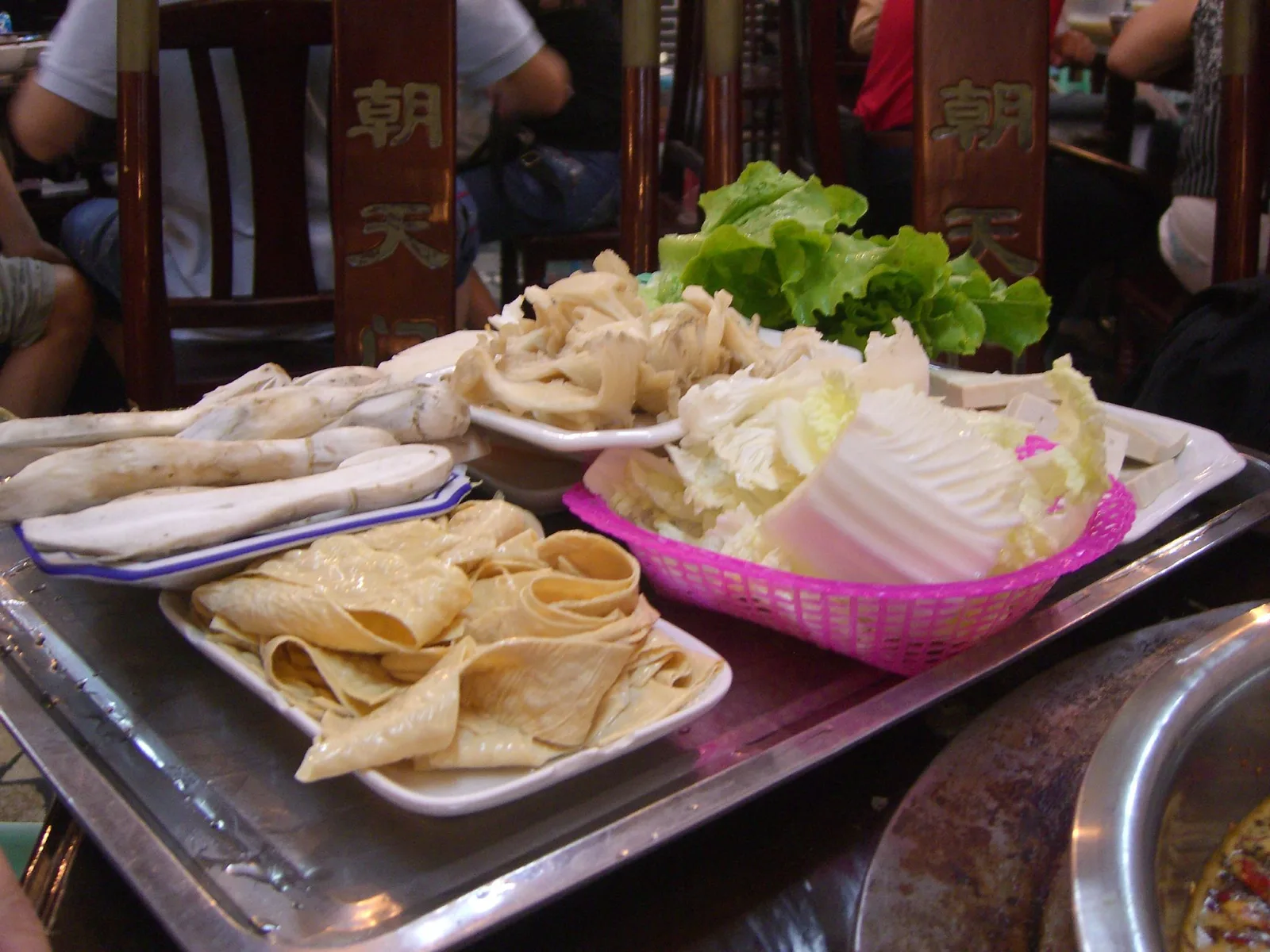
*Fresh vegetables, mushrooms and corn prepared for a hotpot meal.*
Hot Pot Ingredients at a Glance
Most hot pot restaurants organize their ordering menus by category—meat, seafood, tofu, vegetables, starches—so diners can build a balanced spread rather than overloading on one type of ingredient. The table below groups common items travelers will see on an English or bilingual hot pot menu, with the Chinese terms that help when a menu is Chinese-only.
| Ingredient | Chinese | Category | Texture/role | Common regional context | Important traveler note |
|---|---|---|---|---|---|
| Thin-sliced lamb/mutton | 羊肉片 | Meat | Fast-cooking, tender | Central to Beijing-style hot pot | Cooks in seconds in clear broth; do not overcook or it toughens |
| Thin-sliced beef | 牛肉片 | Meat | Fast-cooking, tender | Widely available nationally | Quality and cut vary by restaurant tier |
| Beef tripe | 毛肚 | Offal | Chewy, needs quick blanching | Strongly associated with Chongqing/Sichuan hot pot | Traditionally blanched briefly rather than long-cooked |
| Duck blood | 鸭血 | Offal | Soft, custard-like | Common in Sichuan/Chongqing spreads | Cook fully; texture surprises some first-time visitors |
| Fish balls | 鱼丸 | Seafood | Bouncy, mild | Available nationwide | Usually pre-cooked; reheats quickly in broth |
| Shrimp | 虾 | Seafood | Firm once cooked | Common in coastal and city restaurants | Confirm freshness at self-serve fridges |
| Tofu (firm) | 豆腐 | Tofu/soy | Absorbs broth flavor | Available nationwide | Vegetarian-friendly ingredient, but broth may not be |
| Frozen tofu | 冻豆腐 | Tofu/soy | Spongy, holds broth | Common in northern and Sichuan-style hot pot | Distinct texture from fresh tofu |
| Enoki mushrooms | 金针菇 | Mushrooms | Thin, quick-cooking | Nationwide staple | Popular budget ingredient |
| Shiitake mushrooms | 香菇 | Mushrooms | Meaty texture | Nationwide | Adds savory depth to broth |
| Napa cabbage | 白菜 | Leafy vegetables | Absorbs broth, wilts fast | Nationwide staple | Classic pairing with clear broth |
| Spinach | 菠菜 | Leafy vegetables | Wilts within seconds | Widely available | Add near the end to avoid overcooking |
| Lotus root | 藕片 | Root vegetables | Crunchy | Nationwide, especially central/southern China | Needs longer cooking than leafy greens |
| Potato slices | 土豆片 | Root vegetables/starch | Starchy, thickens broth slightly | Nationwide | Takes several minutes to cook through |
| Sweet potato noodles | 红薯粉 | Noodles/starch | Chewy, absorbs spicy broth well | Common with mala-style hot pot | Popular finishing item in spicy broths |
| Instant noodles | 方便面 | Noodles/starch | Soft, quick-cooking | Nationwide, casual restaurants | Common budget-friendly finishing item |
Meat and Poultry
Thin-sliced lamb, beef and sometimes chicken or pork belly are the most common meat options. Meat is usually sliced very thin so it cooks in seconds—thicker cuts belong in longer-simmering dishes, not hot pot. Beijing-style hot pot in particular is built around lamb, often labelled 羊肉 or 羊肉片, while Sichuan-style hot pot restaurants tend to offer a wider mix of beef, lamb and pork alongside offal.
Offal and Texture-Driven Ingredients
Beef tripe (毛肚), duck blood (鸭血), pork intestine and other offal are classic hot pot ingredients, especially in Sichuan and Chongqing-style restaurants, where texture is as important as flavor. These ingredients are optional additions, not a required part of every hot pot order—travelers who prefer to skip offal can build a full meal from meat, seafood, tofu and vegetables instead.
Seafood and Fish Balls
Shrimp, sliced fish, squid and a wide range of processed fish and seafood balls (鱼丸, 虾滑, 蟹肉棒) are common across most hot pot restaurants. Processed balls are usually pre-cooked and only need reheating, while raw shrimp and fish need to be cooked fully before eating.
Tofu and Soy Products
Firm tofu, frozen tofu (冻豆腐), tofu skin (腐竹) and fried tofu puffs are hot pot staples that absorb the broth's flavor. They are useful for vegetarian travelers building a meal around plant-based protein, but the tofu itself being vegetarian does not make the whole meal vegetarian if the broth contains meat stock—see Vegetarian & Vegan Hot Pot.
Mushrooms
Enoki, shiitake, oyster and king oyster mushrooms are widely available and popular for both flavor and texture. Mushroom trays are often sold as mixed platters, making them an easy way to add variety without ordering many separate items.
Leafy Vegetables
Napa cabbage, spinach, lettuce and chrysanthemum greens (茼蒿) cook within seconds and are typically added toward the end of a batch rather than at the very start, since they wilt quickly and can cloud the broth if left too long.
Root Vegetables and Starches
Potato, lotus root, taro and daikon radish take longer to cook than leafy greens and are usually added earlier so they have time to soften. These ingredients also help balance a spicy meal by adding bulk and mild flavor.
Noodles and Vermicelli
Sweet potato noodles (红薯粉), glass/mung bean noodles, wheat noodles and instant noodles are common finishing items, added near the end of the meal to soak up the broth. Noodles are rarely the centerpiece of hot pot—they usually come after the main round of meat and vegetables.
Ingredients by Regional Style
Ingredient emphasis shifts by region rather than following one national list:
- Beijing-style hot pot centers on thin-sliced lamb, napa cabbage, frozen tofu and vermicelli, with a comparatively narrow, focused ingredient list.
- Sichuan/Chongqing-style hot pot typically offers the widest range, including offal, duck blood, tripe, a large mushroom selection and multiple noodle types alongside standard meat and vegetables.
- Contemporary chain restaurants in large cities often blend regional ingredient lists and add extras such as cheese, dumplings or Western-style additions not tied to any single tradition.
Do not assume every ingredient on this page is available at every hot pot restaurant—smaller shops carry a narrower selection than large specialist chains.
What First-Time Visitors May Not Recognize on a Chinese Menu
Several common hot pot items surprise first-time visitors because they are unfamiliar outside China or look different from what the English name suggests:
- Duck blood (鸭血)—a firm, custard-like block, not liquid blood.
- Beef tripe (毛肚)—thinly sliced stomach lining with a distinctive ridged texture, meant to be blanched briefly rather than boiled long.
- Frozen tofu (冻豆腐)—spongy and full of small air pockets from freezing, quite different from fresh tofu.
- Century egg or other preserved items—occasionally offered as a side rather than a hot pot ingredient; confirm with staff if unsure what a menu photo shows.
If a dish name or photo is unclear, asking staff or pointing at a neighboring table's order is a practical way to confirm what an ingredient is before ordering it.
Vegetarian and Dietary Checks
A plate of vegetables or tofu does not make the overall meal vegetarian if it is cooked in a meat-based broth, and shared pots create cross-contact between meat and vegetable ingredients cooked side by side. Travelers with dietary restrictions should confirm the broth ingredients directly and, where available, ask for a separate pot—see Vegetarian & Vegan Hot Pot and Halal Hot Pot for what specifically to verify.
Common Mistakes
- Assuming a vegetable platter means a vegetarian meal. The broth is the bigger risk factor, not the ingredient plate.
- Overcooking thin-sliced meat. A few seconds in a hard-boiling broth is usually enough; extended cooking makes it tough.
- Undercooking offal or root vegetables. These need longer than leafy greens—do not treat every ingredient as equally fast-cooking.
- Ordering everything at once. Cooking too many ingredients simultaneously makes it hard to track what is ready and can cool the broth.
FAQ
What ingredients are typically used in Chinese hot pot?
Common ingredients include thin-sliced meat, offal such as tripe and duck blood, seafood and fish balls, tofu and soy products, mushrooms, leafy and root vegetables, and noodles. The exact mix depends on the restaurant and regional style.
Is offal always included in hot pot?
No. Offal such as beef tripe and duck blood is popular in Sichuan and Chongqing-style hot pot but is entirely optional—travelers can build a complete meal from meat, seafood, tofu and vegetables instead.
Can I eat hot pot without meat?
Many hot pot ingredients are plant-based, but the broth itself may contain meat stock or animal fat. Confirm the broth before assuming a meal is vegetarian—see Vegetarian & Vegan Hot Pot.
What is frozen tofu in hot pot?
Frozen tofu (冻豆腐) is tofu that has been frozen and thawed, giving it a spongy texture full of small air pockets that absorbs broth flavor well. It is different in texture from fresh tofu.
Are hot pot ingredients the same in every Chinese city?
No. Beijing-style hot pot tends to have a narrower, lamb-focused ingredient list, while Sichuan and Chongqing-style restaurants typically offer the widest range, including offal and a large mushroom and noodle selection.
How long does it take to cook hot pot ingredients?
It depends on the ingredient—thin-sliced meat and leafy greens cook within seconds, while root vegetables, offal and some starches take longer. Cook fully and follow the venue's guidance rather than a fixed universal timer.
Do all hot pot restaurants offer the same menu?
No. Menu size and ingredient variety vary widely, from small neighborhood shops with a limited selection to large chains offering dozens of ingredient trays.
Continue with Chinese Hot Pot
- Chinese Hot Pot guide
- Hot Pot Broths & Soup Bases
- How to Eat Hot Pot
- Vegetarian & Vegan Hot Pot
- Halal Hot Pot
Regional hot pot guides
Sources & Review
- TravelChinaGuide — Chengdu and Sichuan regional dining context
- Chinese characters verified
- Author: DragonTrail editorial
- Last reviewed: August 2026