
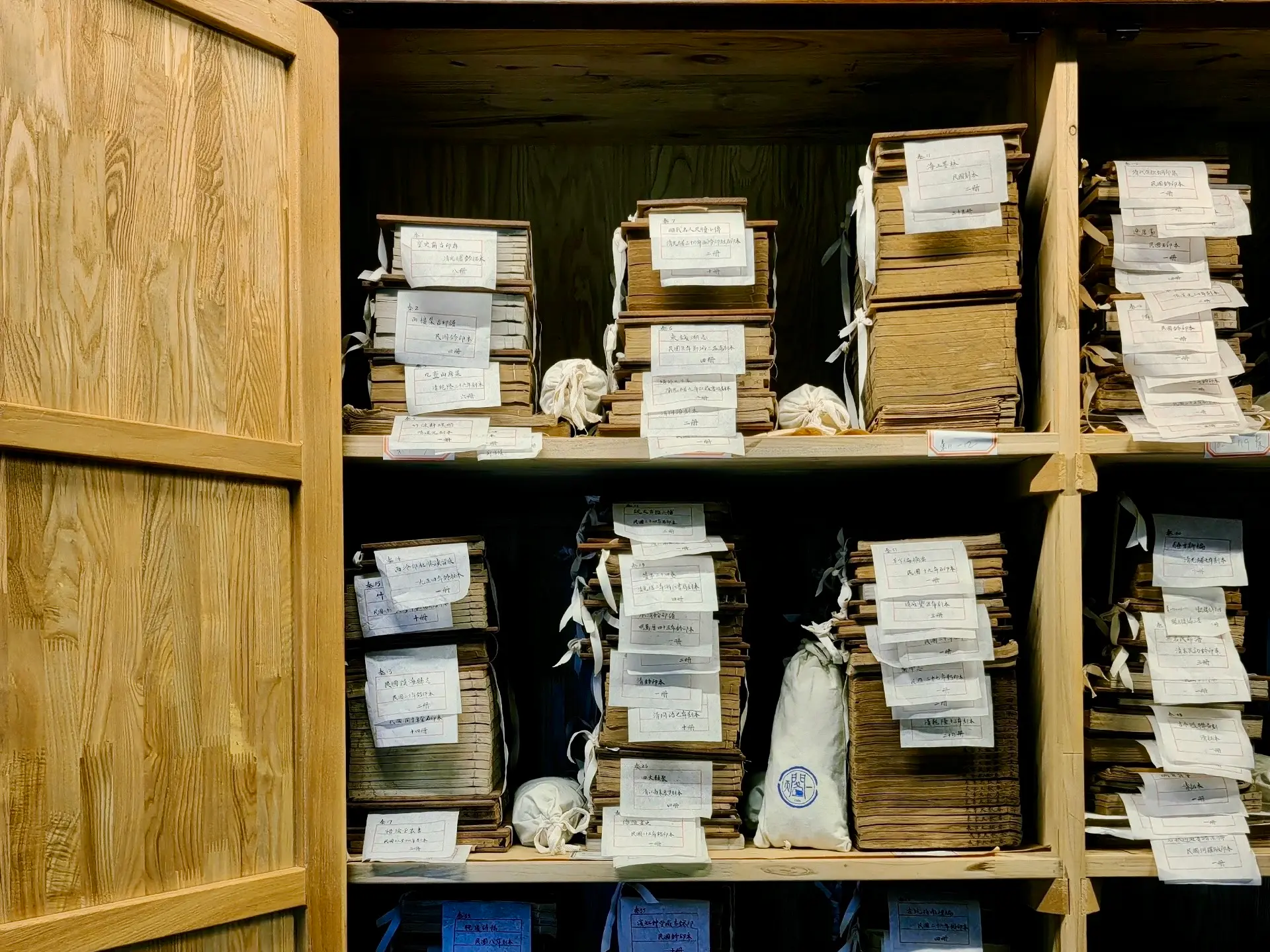
Chinese printing history includes both woodblock printing—where an entire page of text or imagery is carved in relief on a block—and movable type, where individual reusable characters can be assembled into pages. Printing on paper was established in China centuries before Gutenberg, while Bi Sheng is traditionally credited with developing movable type during the Northern Song period. Woodblock printing nevertheless remained extremely important because Chinese publishing developed around technologies, writing systems and production economics different from those of later European presses.
Chinese Printing at a Glance
| Topic | Orientation |
|---|---|
| Early major method | Woodblock printing |
| Basic woodblock principle | Full page/image carved in relief |
| Movable-type innovator | Bi Sheng |
| Period | Northern Song |
| Major religious role | Buddhist scripture and image printing |
| Famous printed object | Diamond Sutra, dated 868 |
| Later art form | Multicolor woodblock printmaking |
| Major comparison | China / Korea / Gutenberg |
This table is a traveler orientation, not a claim that one invention year covers every printing technology. Open the linked guides below for process detail, invention history, Song publishing, Buddhist books or pictorial printmaking.
What Is Chinese Printing?
In Chinese book and art history, “printing” usually means reproducing text or images with a carved or assembled relief surface that transfers ink to paper. That definition covers woodblock pages, movable-type composition, and later pictorial printmaking. It does not automatically mean a European-style screw press or industrial commercial printing.
UNESCO’s overview of East Asian printing distinguishes Chinese woodblock printing, eleventh-century Chinese movable type, early Korean metal type, and Gutenberg’s later European press tradition as related but not identical developments. For museum visits and reading labels, that distinction matters more than a single slogan. A Tang woodblock scroll, a Song clay-type account, a Korean metal-type book and a fifteenth-century European press are four different technological stories that share the broad goal of multiplying text and images on paper.
Chinese printing also sits inside a materials culture of brush writing, paper and ink. Workshop practice grew beside calligraphy and manuscript culture rather than replacing them overnight. When you see a printed page in a rare-book case, you are looking at craft labor—design transfer, carving or type composition, proofing, inking and impression—not at a modern commercial plant.
A Short Timeline of Printing in China
early block-printing traditions
→ Tang-era printing on paper
→ Diamond Sutra, 868
→ major Song publishing expansion
→ Bi Sheng movable type, 11th century
→ Yuan wooden movable type developments
→ Ming multicolor woodblock sophistication
→ later mass publishing and modern printmaking
Do not collapse this into one unsupported “invention year” for all printing. Early block traditions and Tang-era paper printing establish that reproduced texts and images existed before the famous 868 Diamond Sutra. Song expansion shows scale: more titles, more markets and denser circulation. Bi Sheng’s movable type is an eleventh-century Chinese innovation inside that publishing world, not a sudden replacement of woodblocks. Yuan wooden type and Ming color manuals mark later technical chapters. Modern printmaking and mass publishing are later still.
Treat every date as an orientation for museum labels and scholarly summaries. Surviving objects, documentary notices and living heritage practices do not all begin on the same calendar day.
Woodblock Printing
Chinese woodblock printing carves an entire page—or an image—in relief. Negative spaces are cut away; the raised surface takes ink; paper is pressed or rubbed against the block. Because each page can live on one reusable block, the method suited long print runs of the same edition.
Woodblocks were central to Chinese book culture for centuries. They carried classical texts, histories, religious scriptures, commercial titles and pictorial sheets. When a museum label says “woodblock,” expect a fixed page design preserved in wood rather than a page composed from separate type pieces. The dedicated woodblock guide explains design transfer, carving, proofing, inking and printing in more detail, including the difference between book pages and pictorial blocks.
How Woodblock Printing Works
At a high level: prepare wood; transfer design; carve relief; proof; ink; print. UNESCO’s description of China’s engraved block-printing technique—inscribed in 2009 on the Representative List of the Intangible Cultural Heritage of Humanity—documents manuscript transfer, carving, correction, inking and hand printing as a living craft tradition. More detail: Chinese Woodblock Printing.
For travelers, the useful mental model is simple. The carver removes what should stay blank. The printer inks what stands up. The paper receives a mirror transfer of that relief. Characters on the block look reversed relative to the finished page; that reversal is intentional. Hand rubbing or pressing dominates traditional descriptions; do not assume every historic Chinese book was made on a European-style screw press.
Movable Type and Bi Sheng
Movable type uses separate reusable characters. Bi Sheng (毕昇, Bì Shēng) is traditionally credited with clay movable type in the Northern Song (11th century). Later printers used wooden and metal type. Woodblocks did not disappear when movable type appeared.
Movable type changes the production unit from “one carved page” to “a store of characters that can be composed into many pages.” That flexibility is real. So are the costs of sorting, storing and composing a large character inventory. Chinese tradition credits Bi Sheng with the early clay-type method; later Chinese practice includes wooden type (including living heritage traditions such as wooden movable-type printing of China, inscribed in 2010 on UNESCO’s List of Intangible Cultural Heritage in Need of Urgent Safeguarding) and metal-type experiments. Korea’s early metal-type books belong in the same East Asian comparison set and are covered on the invention and movable-type pages.
Why Movable Type Did Not Replace Woodblocks
Chinese publishing often needed thousands of distinct characters, plus storage, sorting and composition labor. A large character inventory changed production economics compared with alphabetic systems—it did not make movable type “impossible.” For many editions, carving a full-page block remained efficient: one block could reprint the same page many times without re-composing type. Technologies coexisted.
Think in workshop terms. If a publisher expected to reprint a stable classic or scripture many times, a finished woodblock page was a durable production asset. If a publisher needed frequent rearrangement of text, movable type offered different advantages. Neither method “failed” because the other existed. Song-to-Ming book history shows parallel use rather than a single winner-take-all switch.
Printing in the Song Dynasty
The Song dynasty mattered for scale: government editions, commercial books, religious texts and scholarly circulation expanded. Woodblocks remained dominant for many jobs; Bi Sheng’s movable type was an important innovation inside that broader publishing world.
Song printing is therefore both a technology story and an institutions story. Official presses, examination culture, Buddhist reproduction and commercial markets all increased the number of books in motion. Travelers who only remember “Bi Sheng invented movable type” miss the larger point: Song China became a denser print society even while woodblocks carried most of the daily production load.
Buddhism and the Expansion of Printing
Buddhist communities were major early users of reproduced scriptures and images—merit, dissemination and standardization all encouraged multiples. See Buddhism in China and the Diamond Sutra page.
Religious demand does not mean Buddhism invented printing, and it does not mean only Buddhist texts were printed. It does explain why early surviving landmarks often involve scriptures and frontispieces. Merit-making, the desire to circulate a correct text and the usefulness of identical copies all fit printing’s strengths. Later centuries continued religious printing while also expanding secular and commercial genres.
The Diamond Sutra
The woodblock-printed Diamond Sutra scroll dated 11 May 868 is commonly described as the world’s earliest dated complete printed book. It was found among Dunhuang’s Library Cave manuscripts and is held by the British Library. Printing itself is older than 868.
Read that claim carefully. “Earliest dated complete printed book” is more precise than “first printed object ever.” The scroll is woodblock, not movable type. Its exact workshop location is not securely known; Chengdu has been suggested as a possibility because it was a major printing center, but that suggestion is not proven fact. The object’s discovery context is Dunhuang; its present collection home is London. For date, colophon, frontispiece and location cautions, use the dedicated Diamond Sutra guide.
Printed Images and Chinese Printmaking
Printing was not only for text. Chinese woodblock printmaking includes Buddhist images, book illustration, Ming multicolor manuals such as the Ten Bamboo Studio, New Year pictures (nianhua) and later woodcut movements.
Pictorial print culture shows the same relief logic applied to line, tone and—later—color registration across multiple blocks. Ming manuals sit at the intersection of technique and painting pedagogy. Popular New Year pictures are a separate regional tradition, not a synonym for all Chinese printmaking. Modern woodcut movements form a twentieth-century chapter with different political and artistic aims. Travelers comparing prints with paintings should remember that a print is an impression from blocks and can exist in multiple copies.
China, Korea and Gutenberg
China developed major paper-printing traditions centuries before Gutenberg. Korea developed early movable metal type; the surviving *Jikji* (1377) is identified by UNESCO as the oldest existing book printed with movable metal type. Gutenberg’s fifteenth-century system combined movable metal type with press-based European production. See Who Invented Printing?.
A fair comparison separates four claims: (1) Chinese woodblock printing on paper is centuries earlier than Gutenberg; (2) Bi Sheng’s movable type is an eleventh-century Chinese tradition; (3) Korean metal type and *Jikji* are essential East Asian chapters that predate Gutenberg’s metal-type books; (4) Gutenberg’s achievement was a highly effective European press-based metal-type system that transformed European book markets—not the invention of printing worldwide. Earlier Asian printing traditions certainly predated Gutenberg, but direct workshop-to-workshop transmission into his Mainz operation is not securely documented.
Printing, Paper and Calligraphy
Brush writing, paper and ink culture overlap with printing’s materials world. Explore Chinese Calligraphy and the Four Treasures of the Study. Printing does not replace calligraphy as an art; the two coexisted in book and scholarly culture.
Printed books often preserved calligraphic styles through manuscript transfer onto blocks. Scholars continued to write by brush for letters, drafts and artworks even as printed editions multiplied. Paper quality, ink behavior and layout conventions are shared concerns across manuscript and print. When a museum shows both a calligraphy scroll and a printed fascicle, look for related materials culture rather than a false story that printing ended brush writing.
Printing and Chinese Characters
Character inventory, layout and composition economics shape how woodblocks and type were used. For how characters work as a writing system, see Chinese Characters.
A writing system with thousands of needed graphs changes storage and sorting costs for type. That is why full-page woodblocks remained competitive for many editions. It is also why revolving type cases and carefully organized wooden-type traditions appear in later Chinese technical literature and living heritage. Character structure does not make printing “impossible”; it changes which method wins for which job.
How to Look at a Historic Chinese Printed Object
- Read the museum date and attribution carefully.
- Ask whether the label documents woodblock or movable type.
- Inspect page layout and margins.
- Compare character consistency across a page or opening.
- Note illustrations and registration of color blocks if present.
- Observe paper, format (scroll, fascicle, album) and mounting.
- Read colophons and collector notes when labeled.
- Distinguish early impressions from later reprints and facsimiles.
These steps keep looking practical. Labels matter more than phone-app guesses. Woodblock pages can show very consistent character forms because one carved page produces many impressions; movable-type pages may show different composition and spacing cues when documented as type. Color prints need registration checks. Later reprints and modern facsimiles are common in teaching collections—treat “Song style” visual look as a clue, not automatic proof of a Song impression.
Where Travelers Can Explore Printing History in China
Museum displays and demonstrations can change, so confirm current access before planning around a specific exhibit.
- Beijing — China Printing Museum (25 Xinghua North Road, Huangcun Town, Daxing District) is a specialist museum of printing history. Beijing’s official museum information describes four principal exhibition zones covering the origins of printing, modern and contemporary printing technology, digital technology and printing machinery. It is a Daxing specialty stop that can be considered when printing history is a particular interest; confirm opening hours, reservation requirements and temporary gallery closures before visiting.
- Yangzhou — China Block Printing Museum at Yangzhou / Yangzhou Museum is especially relevant for historic engraved printing blocks and engraved-block craft context. Confirm current collection displays and visitor details before travel.
- Rui’an, Zhejiang preserves a documented living wooden movable-type tradition (UNESCO Urgent Safeguarding List, 2010), including genealogy printing; verify current visitor or demonstration arrangements before travel.
- Major national and provincial museums sometimes mount temporary rare-book or printing exhibitions that are stronger than permanent “printing corners.” Confirm whether demonstrations are running and whether photography is restricted.
From Printing History to a Beijing Culture Day
Build a Beijing Culture & Museum Day
If printing history, calligraphy or museum collections are priorities, a private Beijing itinerary can leave time for specialist stops such as the China Printing Museum alongside other culture days. Specialty museums take travel time; confirm current opening status when you plan.
Common Misconceptions
- Gutenberg did not invent all forms of printing.
- China did not invent Gutenberg’s press.
- Movable type did not immediately replace woodblock printing in China.
- The Diamond Sutra is not the first thing ever printed.
- A printing block may show characters in reverse—that is intentional for relief printing.
- Printed images and painted images are different processes.
These misconceptions usually come from collapsing several technologies into one English word—“printing”—or from treating Europe’s press story as the only story. Keep woodblock, movable type, Korean metal type and Gutenberg’s press system as separate claims, and museum visits become clearer.
Explore Chinese Printing
- Chinese Woodblock Printing
- Movable Type & Bi Sheng
- Who Invented Printing?
- Printing in the Song Dynasty
- The Diamond Sutra & Buddhist Printing
- Woodblock Prints & Printmaking
FAQ
When was printing invented in China?
There is no single invention date for “all printing.” Surviving evidence and scholarship place major woodblock printing on paper in Tang-era contexts, with the dated Diamond Sutra of 868 as a landmark complete printed book, and Bi Sheng’s movable type in the Northern Song (11th century). Use those landmarks as orientation rather than a slogan year that covers every technology.
Did China invent printing?
China developed the earliest major paper-printing traditions known from East Asia, including woodblock printing and movable type. Saying China “invented the printing press” is too imprecise—it collapses woodblocks, type and European presses into one claim. A more accurate traveler sentence separates Chinese woodblocks and Bi Sheng’s type from Korea’s metal-type books and from Gutenberg’s later European press system.
What is Chinese woodblock printing?
It is relief printing from a carved block that usually holds an entire page or image. See the woodblock guide. The raised surface takes ink; cut-away areas stay blank; paper receives a mirror transfer of the carved design.
Who was Bi Sheng?
Bi Sheng is traditionally credited with developing movable type in eleventh-century Northern Song China, using individual clay characters. Surviving historical information about Bi Sheng himself is limited; his importance rests primarily on the movable-type process described in Song sources. For process and later wooden/metal type, open the movable type page.
Who invented movable type?
In Chinese tradition, Bi Sheng. Other cultures later developed their own type systems; Korea’s early metal type and Gutenberg’s European system are separate chapters. “Invented movable type” therefore needs a place and technology qualifier—clay/wood/metal and China/Korea/Europe are not interchangeable.
Why did China continue using woodblock printing?
Full-page blocks remained practical for many editions, while a large character inventory changed the economics of composing and storing type. Technologies coexisted. Reprinting a stable classic from finished blocks could be more efficient than re-composing thousands of characters for every job.
What is the Diamond Sutra?
A Mahayana Buddhist text. The famous 868 woodblock scroll is the earliest known complete printed book with a date. It was found among Dunhuang manuscripts and is held by the British Library; printing itself is older than 868, and the scroll is not movable type.
Did Gutenberg invent printing?
He developed a highly effective European movable-metal-type press system in the fifteenth century—not printing as a whole. Chinese woodblock printing and Bi Sheng’s movable type are earlier; Korean metal-type books such as *Jikji* (1377) also predate his metal-type landmark status in Europe.
Where can travelers learn about printing history in China?
Start with the China Printing Museum in Beijing (Daxing), Yangzhou’s block-printing museum context, Rui’an wooden movable-type heritage contexts, and temporary rare-book exhibitions—confirm current access before visiting. Printing history can also be planned into a Beijing culture day.
Sources & Review
- UNESCO — “China engraved block printing technique” (2009, Representative List of the Intangible Cultural Heritage of Humanity)
- UNESCO — “Wooden movable-type printing of China” (2010, List of Intangible Cultural Heritage in Need of Urgent Safeguarding)
- UNESCO Memory of the World / related materials on *Jikji* (1377)
- International Dunhuang Programme / British Library — Diamond Sutra object and learning materials
- Beijing Municipal Government / Beijing Municipal Cultural Heritage Bureau — China Printing Museum visitor information
- The Metropolitan Museum of Art — *The Printed Image in China*; Ten Bamboo Studio object records
Museum displays rotate; confirm visitor details before travel.
Last reviewed: September 2026