
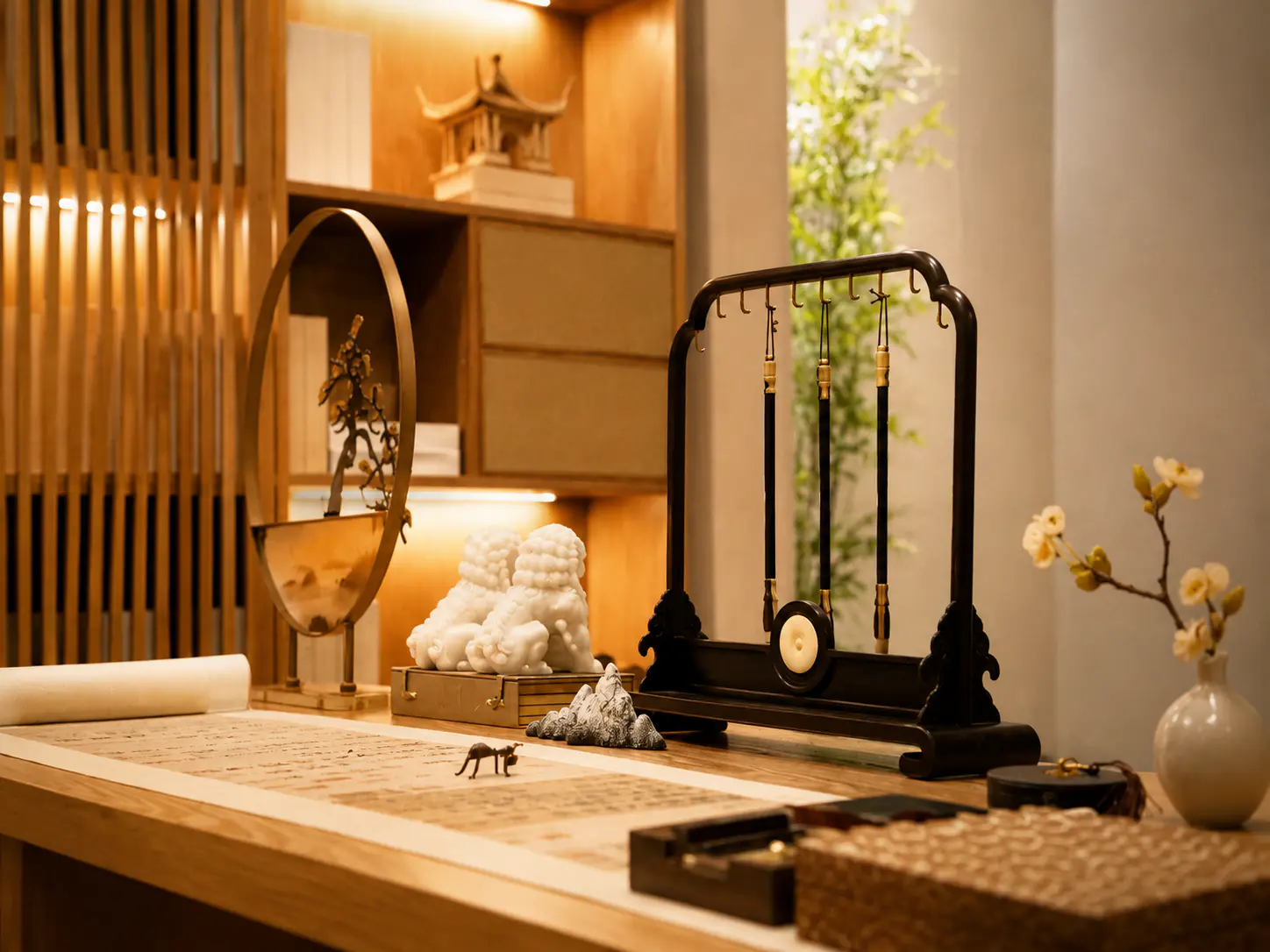
What are the Four Treasures of the Study?
The Four Treasures are a traditional grouping of the central materials used for brush writing. They should be understood as a working set rather than four isolated objects. The brush cannot produce a mark without ink; solid ink requires water and a grinding surface; and the behaviour of the resulting line depends on the paper.
Writing brush
A flexible, tapered tool that holds liquid ink and releases it through changes in pressure, angle, speed and moisture.
Inkstick
A solid form of ink traditionally ground with water to create liquid ink of a chosen concentration.
Paper
The receiving surface. Fibre, sizing, thickness and absorbency influence how rapidly ink spreads, dries or remains controlled.
Inkstone
A hard working surface used to grind solid ink with water and to hold or regulate the prepared liquid.
- English-language sources also use “Four Treasures of the Scholar’s Studio,” “Four Treasures of the Study” and, less commonly, “Four Essentials of the Scholar’s Study.” This page uses “Four Treasures of the Study” consistently.
Why are they called “treasures”?
The term reflects the cultural importance of writing, calligraphy, painting and literary practice within the scholar’s studio. It does not mean that every brush, inkstick, sheet of paper or inkstone was expensive. Ordinary working tools and highly crafted collector’s objects existed side by side.
Enabled scholarly work
The tools enabled writing, painting and other scholarly work that depended on brush and ink.
Functional and refined forms
Materials could be functional, refined, decorated or collectible without leaving the same material category.
Crafted objects
Inkstones and inksticks could be valued as crafted objects; brushes and papers could be selected for different working properties.
Cultural grouping
The grouping became culturally meaningful beyond its literal utility as four studio materials.
- A “treasure” may be valued because of its material, maker, provenance, carving, inscription, performance or association—not simply because it is old.
The writing brush
The Chinese writing brush is designed to form both fine and broad marks with the same tip. Its flexibility allows a writer to press, lift, turn and change direction continuously, recording movement more visibly than a rigid pen.
Brush anatomy
- A working brush typically has a tip, a belly that holds liquid, a base where the hair is secured, and a handle. Some brushes also include a hanging loop. Labels below use English only.
Tip
- The working point. A good point supports fine starts, turns and controlled endings, but exact expectations differ by brush type and use.
Belly
- The midsection of the hair bundle. It holds liquid while the tip controls release.
Base of the hair
- Where the hair is bound into the handle.
Handle
- Usually bamboo or another lightweight material; length and balance affect control.
Hanging loop (when present)
- Allows the brush to hang tip-down while drying or in storage.
Hair or fibre
- Different brush constructions vary in softness, resilience, ink capacity and the speed with which the tip returns to shape. Commercial names, mixtures, processing and construction all affect behaviour; a label such as “goat” or “wolf” does not by itself describe performance.
Pressure and angle
- Pressure changes contact area and line width. Angle and direction affect the form and texture of the stroke.
Moisture
- A saturated brush, a moderately loaded brush and a relatively dry brush can create materially different marks.
Practical response
- More pressure → larger contact area. Less pressure → finer contact area. More ink → darker or wetter mark. Less ink → drier or broken texture.
A brush is not simply a larger version of a pen. It changes shape while it is being used.
The inkstick
Traditional Chinese ink is commonly prepared from a solid inkstick. The writer places a small amount of water on the inkstone and grinds the inkstick against its surface until the liquid reaches the desired depth and consistency.
Solid ink
- Convenient for storage and transport; prepared gradually rather than poured directly; may be plain, inscribed, moulded or decorated; can function as both working material and crafted object.
Grinding
- Uses controlled circular or back-and-forth movement with water. Material transfers from the inkstick into the liquid so concentration can be adjusted. There is no single universal grinding motion that is the only correct technique.
Ink concentration
- A concentrated mixture can produce a dense black, while additional water creates lighter tones. The result also depends on brush load, paper and application.
Pine-soot and oil-soot traditions
- The Smithsonian notes that East Asian solid ink was historically made from pine soot or lampblack mixed with glue and pressed into moulds. The liquid’s darkness changes according to the amount of water used. Different soot sources and manufacturing methods can affect colour, sheen and handling, but quality cannot be determined from one label alone.
“Chinese ink” is not always supplied as a stick. Modern practice also uses bottled liquid ink.
The paper
Paper is not a passive background. Its fibres, surface treatment, thickness and absorbency determine how quickly ink enters the sheet, how far it spreads and how clearly the edge of a stroke remains visible.
Absorbency
- More absorbent paper responds quickly. Ink may spread beyond the apparent brush contact. Hesitation and excess moisture become visible. Controlled application requires anticipation.
Sizing
- Sizing reduces or regulates absorbency. Sized and unsized papers can behave very differently even when they look similar before use.
Texture and fibre
- Surface texture can affect drag, ink release and edge character.
Colour and format
- Writers may encounter white or cream practice sheets, red festive paper, gridded practice paper, and formats such as scroll, album, fan and couplet. Red paper is not standard in every session.
Xuan paper is not every calligraphy paper
- Xuan paper is a specific material and craft tradition, not a precise synonym for every Chinese calligraphy paper. The English phrase “rice paper” is frequently used loosely and should not be treated as an exact material description.
Jing County craft tradition
- Traditional Xuan-paper craftsmanship is associated with Jing County in Anhui. UNESCO identifies bark and rice straw among its raw materials. Its properties include strength, smoothness and responsiveness to water and ink. Not every workshop uses genuine Xuan paper. “Xuan-style,” “practice paper” and genuine Xuan paper should not be conflated.
The inkstone
An inkstone is a working surface for preparing liquid ink. Its flat or gently shaped grinding area allows the inkstick to release material into water, while a recessed area may help hold the prepared liquid.
Grinding surface
- Must be hard enough to work against the inkstick and should support controlled preparation. Surface behaviour varies with material and finish.
Reservoir or well
- Some inkstones have more obvious wells than others. Designs are not uniform.
Material
- Common materials include stone and ceramic; other historical materials also appear. This page does not attempt an exhaustive taxonomy of named stone traditions.
Functional versus collectible
- An inkstone may be an ordinary working object or a carved and inscribed scholar’s object. Decoration does not by itself establish age, quality or authenticity.
Inkstone versus ink dish
- A dish that merely holds bottled ink is not performing the same grinding function as a traditional inkstone, even if a workshop uses the terms loosely.
The inkstone does not create ink by itself. It provides the surface on which water and the inkstick are worked together.
How the four tools work together
No material acts independently. A dark ink mixture may still produce a pale or dry stroke if the brush carries little liquid, while the same loaded brush may behave differently on two papers. The Four Treasures are best understood as a chain of material decisions rather than a checklist of four prestigious objects.
1. Water is placed on the inkstone
A small amount of clean water begins the preparation.
2. The inkstick is ground into the water
Solid ink transfers into the liquid on the grinding surface.
3. Liquid ink reaches the intended concentration
Depth, viscosity and behaviour are judged for the intended mark.
4. The brush absorbs and carries the ink
The belly holds liquid while the tip controls release.
5. Pressure, speed and direction control its release
The brush changes contact area and moisture as it moves.
6. The paper absorbs and preserves the mark
Fibre, sizing and absorbency determine spreading, edge and drying.
How changing one material affects the mark
| Likely effect | |
|---|---|
| More water in the prepared ink | Lighter value and potentially greater spreading |
| More concentrated ink | Denser, darker mark |
| More ink in the brush | Wetter line and longer continuous release |
| Drier brush | Broken, textured or pale areas |
| Softer or more absorbent paper | Faster response and greater spreading |
| More heavily sized paper | Slower absorption and more controlled edges |
| Increased brush pressure | Broader contact and wider mark |
| Faster movement | Different continuity, edge and moisture behaviour |
The Four Treasures are best understood as a chain of material decisions rather than a checklist of four prestigious objects.
Preparing and controlling ink
There is no universal number of grinding minutes that produces “correct” ink. The desired concentration depends on the paper, brush, scale and intended effect.
1. Add water
A small amount of clean water is placed on the working surface of the inkstone.
2. Grind the inkstick
The inkstick is moved against the wet grinding surface so that soot-and-binder material gradually enters the water.
3. Test concentration
The writer observes the liquid’s depth, viscosity and behaviour rather than relying only on grinding time.
4. Load the brush
The brush is moistened or loaded according to the intended effect. Excess liquid may be regulated before writing.
5. Adjust during use
Water, concentrated ink or brush moisture may be adjusted as the work develops.
Solid inkstick and bottled liquid ink
| Bottled liquid ink | |
|---|---|
| Prepared on the inkstone | Ready to use |
| Concentration can be built gradually | May be diluted or used directly |
| Preparation is part of the process | More efficient for classes and repeated practice |
| Requires an appropriate grinding surface | Can be held in a dish or inkstone |
| Properties vary by manufacture | Properties also vary by formulation |
Bottled ink is not inherently inferior or inauthentic. It is a modern material choice with different setup and teaching trade-offs.
Paper absorbency, sizing and texture
Two sheets described simply as “calligraphy paper” may respond very differently. The exact paper matters more than the generic category label. Readers should observe edge sharpness, degree of spreading, saturation, dry-brush texture, show-through, cockling or surface movement, and drying time.
Unsized or highly absorbent paper
Responds quickly; ink may travel beyond the brush contact; hesitation becomes visible.
Partially sized paper
Slows absorption enough for more controlled edges while still showing moisture behaviour.
More heavily sized practice paper
Often used for beginners because marks stay more contained and corrections are easier to see.
Red decorative or festive paper
May appear in seasonal exercises. Colour and coating can change visibility and absorbency; it is not universal workshop paper.
Traditional tools and modern workshop supplies
| Common modern alternative | What changes | |
|---|---|---|
| Solid inkstick ground on an inkstone | Bottled liquid ink | Faster setup; less emphasis on ink preparation |
| Specialist calligraphy paper | General practice paper | Lower cost; different absorbency and durability |
| Individually selected brush | Standard workshop brush | Easier group setup; less material variation |
| Full inkstone | Ink dish or palette | Holds ink but may not support grinding |
| Handwritten model | Printed or reusable tracing sheet | More consistent instruction; less direct demonstration |
| Scroll or mounted format | Loose practice sheet | Easier for beginner use and transport |
A modern workshop is not automatically superficial because it uses bottled ink or practice paper. The provider should simply describe the materials accurately and align them with the purpose of the session.
Traditional material preparation can provide useful context, but it should not consume most of a short beginner session unless ink preparation is a stated focus.
Related scholar’s-studio objects
The scholar’s desk included more than four objects. These related items may be essential to a particular working setup, but they are not part of the conventional group called the Four Treasures.
Water dropper
Controls the addition of water during ink preparation.
Brush rest
Supports the brush and helps prevent ink from contacting the desk.
Brush washer
Used for rinsing or managing brushes and water.
Seal
Carries a carved name, studio name or other identifying text.
Seal paste
The red material used to make a seal impression.
Paperweight
Holds sheets or scroll material in position during writing.
Brush pot
Stores or displays brushes when they are not being used.
- Do not treat every decorative desk object as a required calligraphy tool.
What beginners use in a calligraphy session
A beginner workshop may introduce all four treasures, but it may not use them in their most traditional form. Many sessions provide a standard brush, bottled ink, practice paper and an inkstone or ink dish. The materials should be described according to what is actually supplied.
| What a beginner may encounter | What to confirm | |
|---|---|---|
| Brush | Standard workshop brush | Size, condition and whether individual correction is provided |
| Ink | Bottled ink or prepared solid ink | Whether grinding is demonstrated |
| Paper | Practice, gridded, red or Xuan-style paper | Exact paper type and take-home arrangements |
| Inkstone | Working inkstone or ink-holding dish | Whether it is used for grinding |
| Model | Printed tracing sheet or practitioner demonstration | Whether meaning and stroke structure are explained |
| Finished work | Practice sheet or selected final attempt | Whether it may be taken away and how it is protected |
Common misconceptions about the Four Treasures
“All Chinese calligraphy paper is rice paper”
False. “Rice paper” is often used loosely in English. Chinese calligraphy uses multiple paper types, and Xuan paper is a specific material and craft tradition.
“All ink is bottled black liquid”
False. Traditional ink is commonly prepared from a solid inkstick, although bottled ink is widely used in modern practice and workshops.
“An inkstone is only an ink container”
False. Its defining traditional function is to provide a grinding surface for preparing liquid ink.
“A more expensive tool automatically produces better calligraphy”
False. Material quality affects handling, but technique, compatibility and intended use remain central.
“Every traditional brush uses the same hair”
False. Brush construction and materials vary, and commercial labels do not fully describe performance.
“Xuan paper is the correct paper for every beginner”
False. Highly responsive paper can be difficult for first-time users. Practice paper may better match an introductory exercise.
“The Four Treasures are the only objects on a scholar’s desk”
False. Water droppers, brush rests, seals, paste, paperweights and other objects also formed part of the working environment.
“Using bottled ink makes a class inauthentic”
False. Bottled ink is a modern material choice. The important issue is whether the materials and teaching format are represented honestly.
Explore related guides
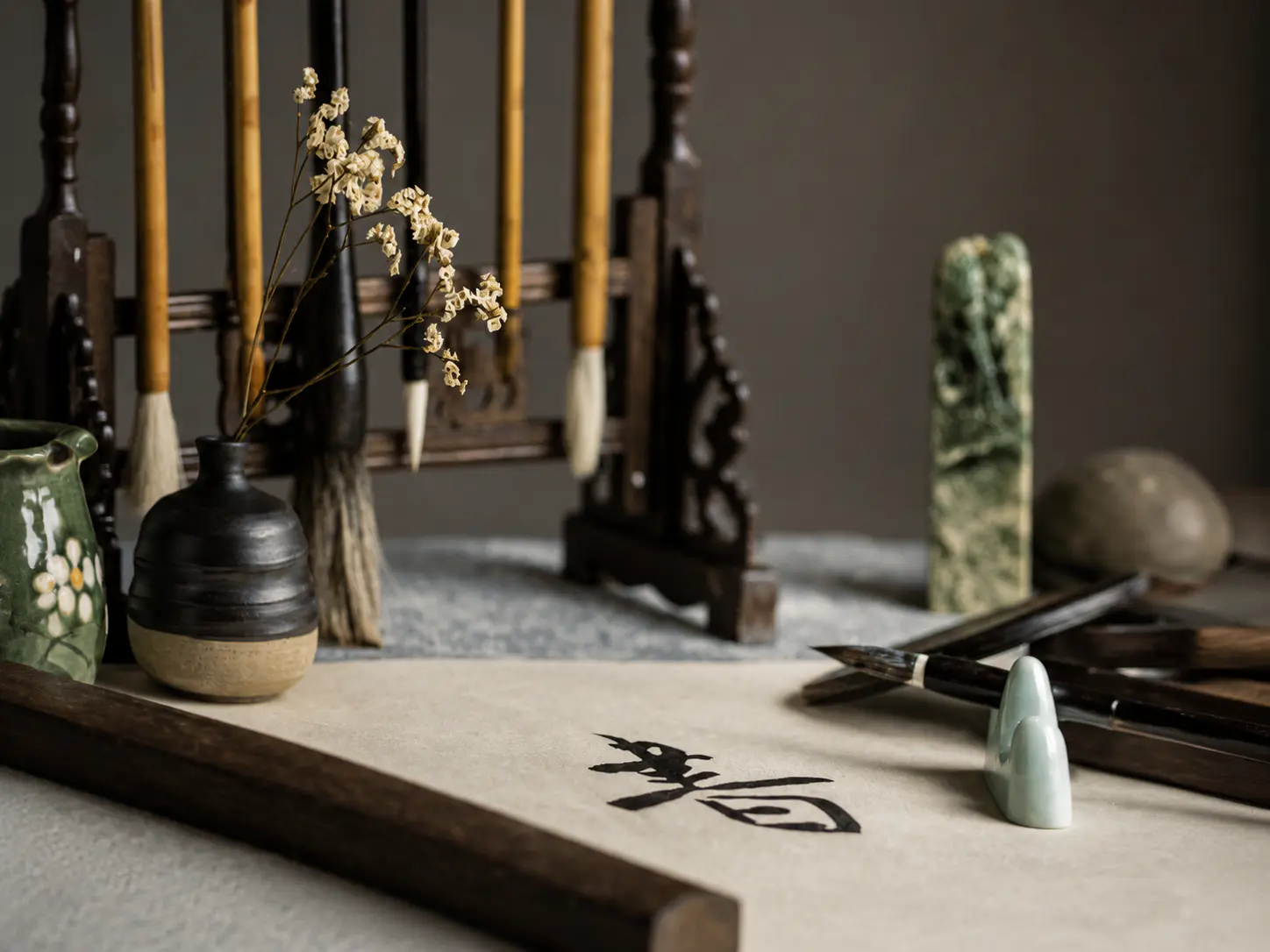
Parent cultural guide to scripts, brushwork and meaning.
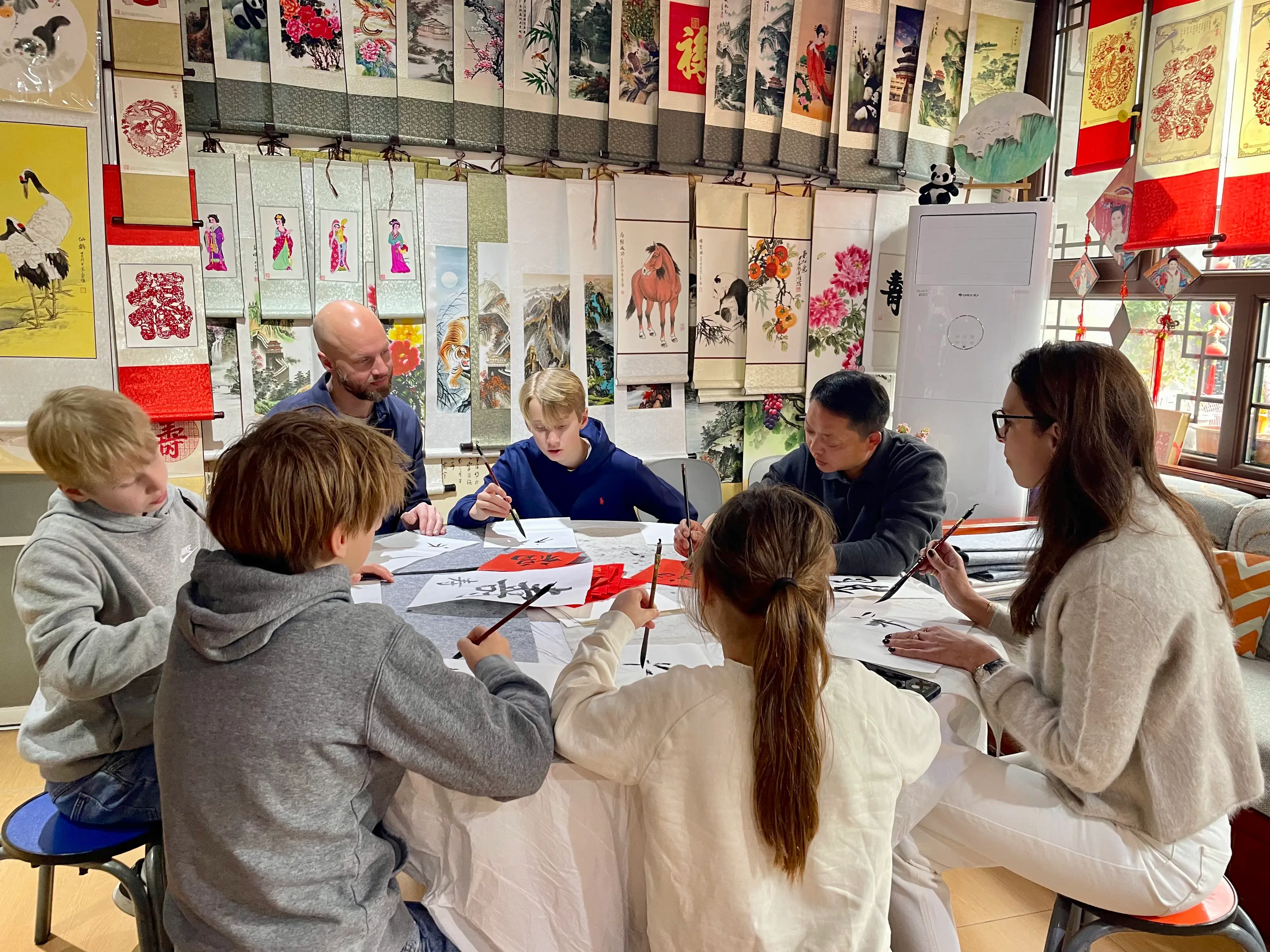
Hanzi structure, components, stroke order and forms.
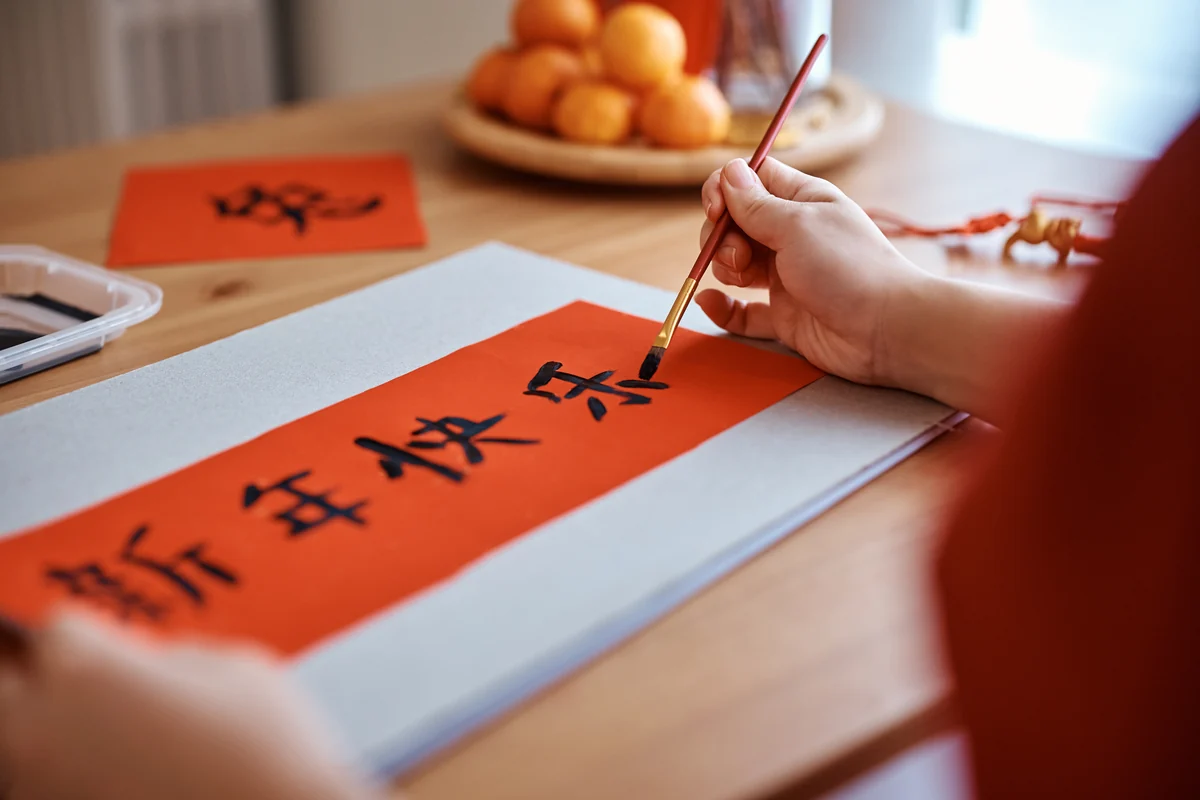
Beginner formats, tools and what actually happens.
Suitability, pacing and mixed-age session questions.
Calligraphy versus dumpling and related cultural choices.
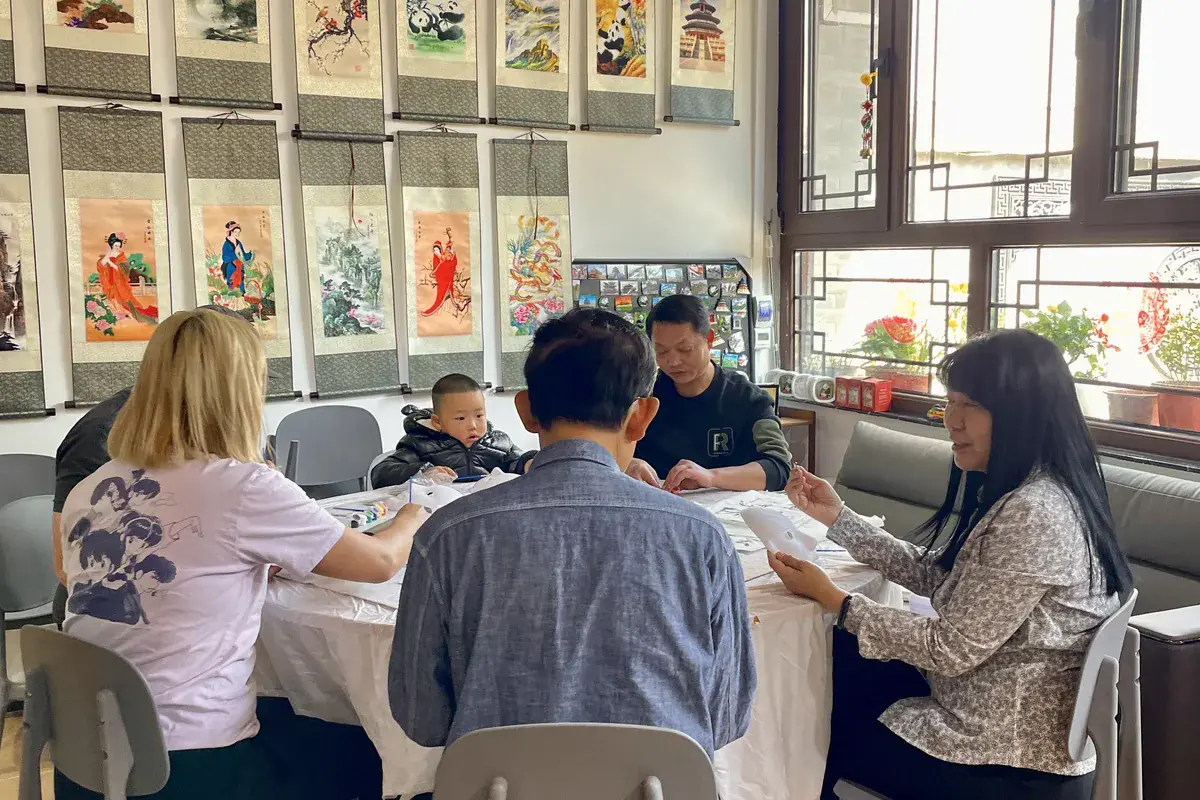
Hutong calligraphy with cultural exchange and lunch.
Four Treasures of the Study FAQ
- They are the writing brush, inkstick, paper and inkstone traditionally associated with Chinese calligraphy and painting. The four form a connected working system: ink is prepared on the inkstone, carried by the brush and received by the paper.
- The Chinese term is 文房四宝 in simplified characters and 文房四寶 in traditional characters, pronounced wénfáng sìbǎo in Standard Mandarin. The phrase refers to four valued objects of the scholar’s room or study.
- Traditional ink was manufactured and stored in solid sticks or cakes. The user grinds the inkstick with water on an inkstone to prepare liquid ink and adjust its concentration before writing or painting.
- An inkstone provides a hard working surface for grinding a solid inkstick with water. Many designs also include an area that helps hold the prepared liquid ink.
- No. Chinese calligraphy uses many types of paper. Xuan paper is a specific material and craft tradition associated with Jing County in Anhui, while workshops may use practice paper, gridded paper, red paper or Xuan-style paper.
- Traditional Xuan-paper production uses a combination of plant materials that includes bark and rice straw. Calling all Xuan paper—or all Chinese calligraphy paper—simply “rice paper” is imprecise.
- Yes. An inkstone may hold bottled ink even when no grinding is required, although a simple ink dish can perform that holding function. The defining traditional role of the inkstone is its grinding surface.
- Not always in their traditional forms. A beginner class may use a brush, bottled ink, practice paper and an inkstone or dish. Some sessions also demonstrate how solid ink is ground, while others prioritize writing time.
- No. Seals and red seal paste are important related objects in Chinese calligraphy, but the conventional Four Treasures are the brush, inkstick, paper and inkstone.
- There is no universal single answer because the materials work together. A suitable brush can behave poorly with incompatible ink or paper, and the same prepared ink may produce different results on different surfaces.
Continue exploring Chinese calligraphy
After the materials map, return to the calligraphy cultural hub, see how a Beijing beginner session uses these tools, or continue to a hosted hutong cultural half-day when you want a practical format.
Further reading paths
Stay with materials context before choosing a session format.
- Chinese calligraphy hub
- How Chinese characters work
- Beijing calligraphy class guide
- Calligraphy for kids and families
- Hosted calligraphy and cultural exchange
Chinese calligraphy cultural guideWhat to expect from a Beijing calligraphy class