
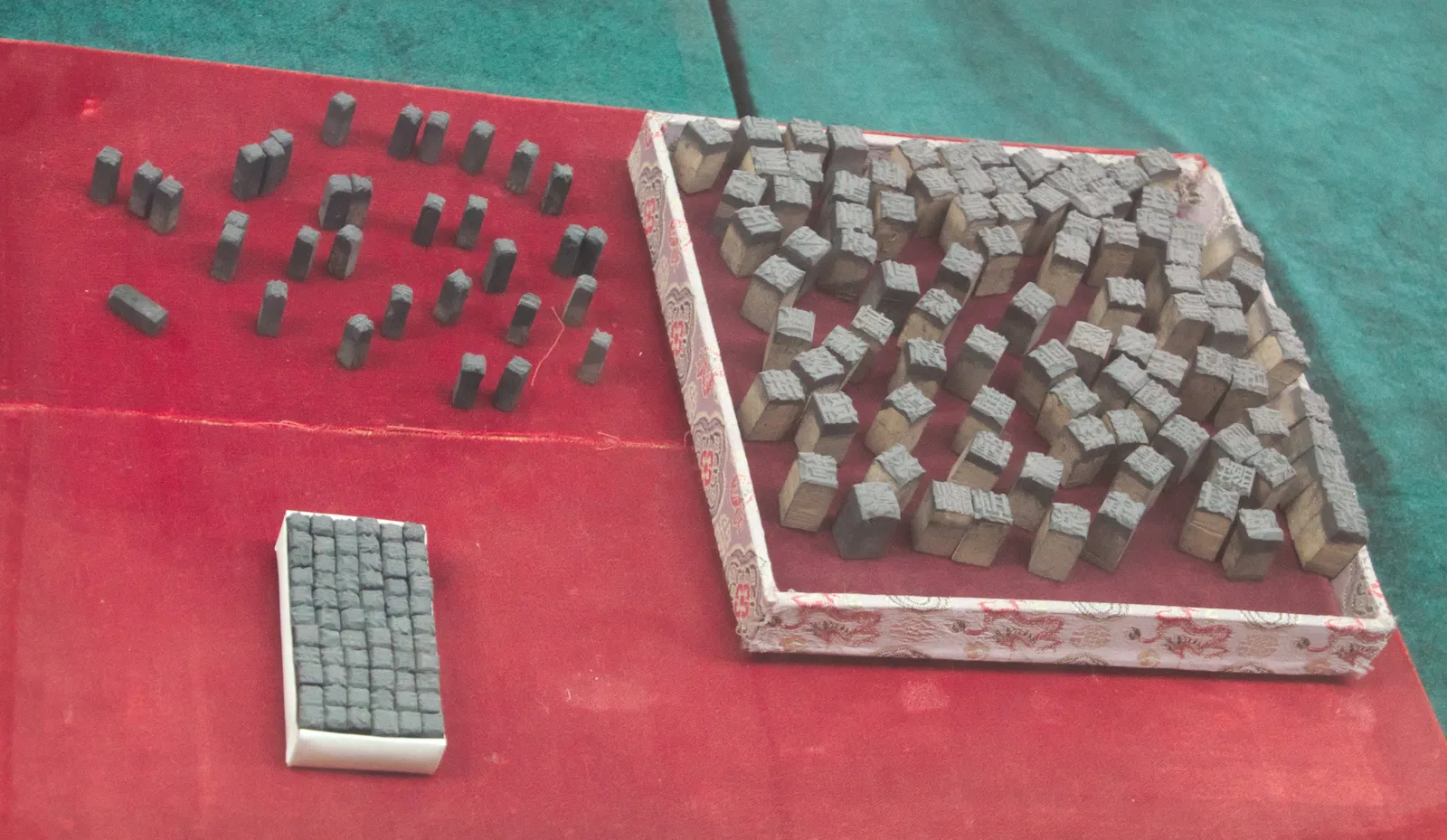
Movable type printing uses separate reusable characters that can be arranged into a page, printed, dismantled and used again. Bi Sheng (毕昇, Bì Shēng) is traditionally credited with developing movable type during the Northern Song period in the 11th century, using individual clay characters. Later Chinese printers experimented with wooden and metal type, while woodblock printing continued alongside movable type for practical and economic reasons.
Movable Type at a Glance
| Topic | Orientation |
|---|---|
| Key innovator | Bi Sheng |
| Chinese | 毕昇 |
| Period | Northern Song |
| Core principle | Individual reusable characters |
| Early material | Clay / ceramic type in traditional account |
| Later Chinese development | Wooden and metal type |
| Important later figure | Wang Zhen |
| Living heritage | Rui'an wooden movable type |
Read the table as a sequence of chapters, not as a claim that clay type instantly replaced woodblocks. Chinese movable type, Korean metal type and Gutenberg’s European press system remain distinct technologies.
What Is Movable Type?
Movable type (活字) separates the writing system into pieces that can be composed, printed and reused. That is different from carving a permanent full-page woodblock.
With movable type, the workshop’s asset is a store of characters plus composition skill. After printing, characters can return to storage for later jobs. With woodblock printing, the asset is often a finished page block that reprints the same design efficiently. Both methods produce inked impressions on paper; they organize labor differently. Movable type is also not identical to Gutenberg’s screw-press European system or to modern commercial typesetting.
Who Was Bi Sheng?
Bi Sheng is traditionally credited in Song sources with inventing movable type. Surviving historical information about Bi Sheng himself is limited; his importance rests primarily on the movable-type process described in Song sources. No authenticated set of Bi Sheng’s own clay types is treated as a tourist “must-see original object.”
Northern Song China traditionally associates reusable clay characters with Bi Sheng. Museum displays may show later type examples or reconstructions; those are teaching tools unless a label explicitly documents an early original set.
How Bi Sheng's Type Worked
Traditional accounts describe individual clay characters assembled for printing, then redistributed for later use. Exact workshop reconstructions should follow museum and scholarly presentations rather than speculative demos.
The practical idea is composition: select characters, set them into a page form, print, then return pieces to storage. Clay/ceramic behavior, binding methods and page-locking details are discussed differently across sources; prefer labeled museum explanations over improvised tourist scripts. What travelers should retain is the reusable-character principle and the Northern Song dating of the traditional account.
Clay Movable Type
Clay/ceramic type is the material associated with Bi Sheng in the traditional narrative. Later Chinese practice also used wood and metal.
Clay type belongs to the early Chinese movable-type story. It should not be confused with Korea’s early metal-type books or with Gutenberg’s metal-type European system. Later Chinese workshops that used wooden or metal pieces are continuations and experiments inside a longer tradition, not proof that Bi Sheng personally used every later material.
Why Chinese Characters Created Different Production Economics
A large character inventory changed sorting, storage and composition labor compared with alphabetic systems. That is an economic and logistical difference—not proof that “Chinese characters made movable type impossible.”
Alphabetic printers can often work with a few dozen sorts plus extras. Chinese printers needed far more distinct graphs for many texts, which raised the cost of cutting, storing and finding characters during composition. That cost structure helps explain why finished woodblock pages remained competitive for stable editions. It does not mean movable type failed or could not work; Chinese printers used it, refined wooden-type systems and experimented with metal type.
Why Woodblock Printing Continued
For many editions, a finished page block was efficient to reprint. See woodblock printing. Coexistence is historically normal.
If a publisher expected repeated impressions of the same classic or scripture, a corrected woodblock page was a durable production tool. Re-composing thousands of characters for every reprint could be slower and more error-prone. Song and later book history therefore shows parallel technologies rather than a clean “type replaces blocks” timeline. Travelers should not assume every Chinese printed book is movable type.
Wooden Movable Type
Wooden movable type became important in later Chinese practice. Wooden movable-type printing of China was inscribed in 2010 on UNESCO’s List of Intangible Cultural Heritage in Need of Urgent Safeguarding; the documented living tradition is associated especially with Rui’an, Zhejiang.
Wooden characters can be cut, stored and composed with workshop systems adapted to Chinese texts. Living heritage documentation matters because it shows movable type as practiced craft, not only as a museum slogan. Genealogy printing and related local uses appear in UNESCO descriptions of the Rui’an tradition. Access for travelers still requires current verification.
Wang Zhen and Revolving Type Cases
Wang Zhen is associated with Yuan-period developments in wooden type and revolving type-case systems illustrated in technical literature. Treat diagram reconstructions as explanatory, not as photographs of a single surviving machine.
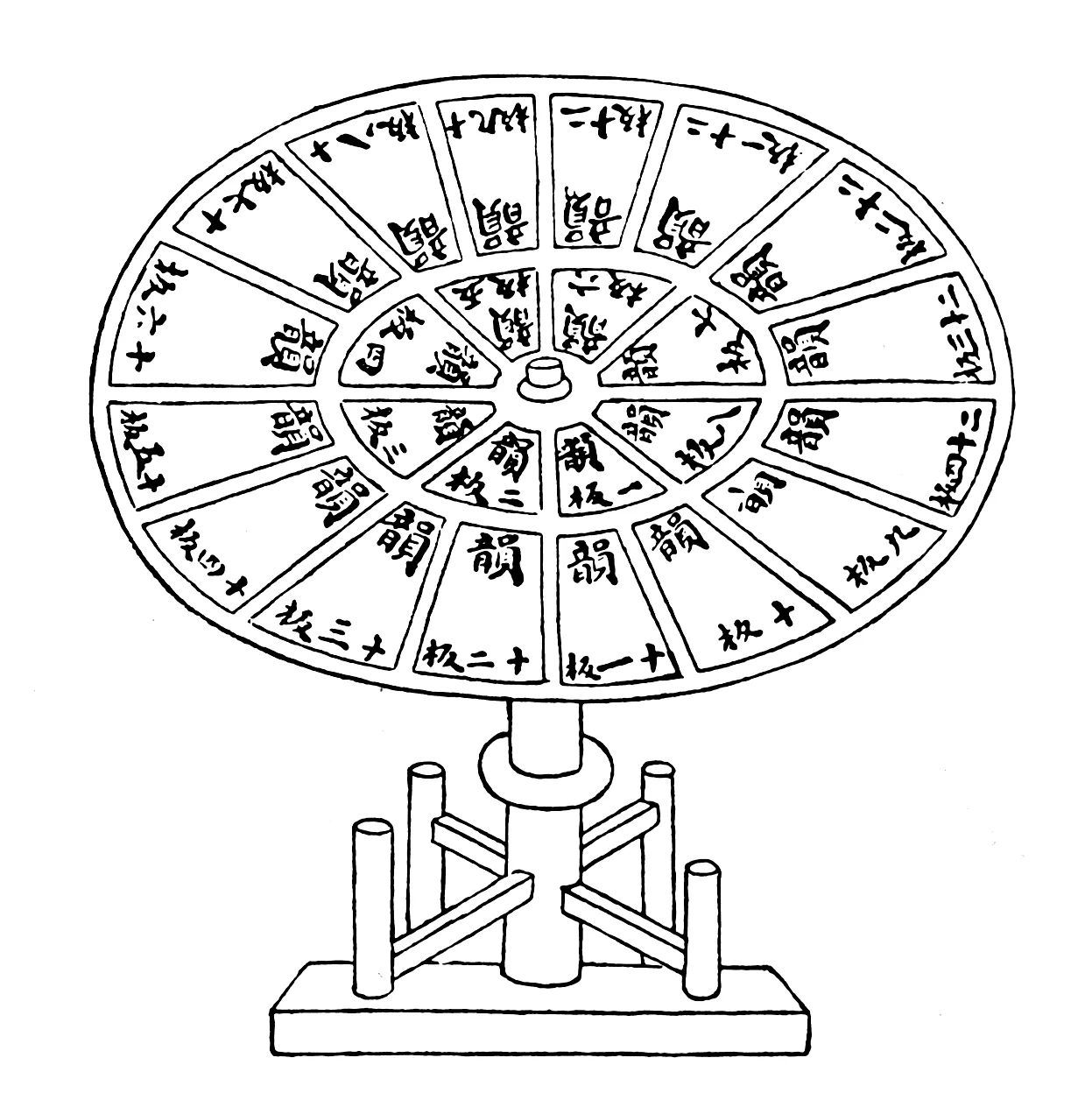
Revolving cases are a response to inventory: when many characters must be found quickly, physical organization becomes part of the technology. Illustrations help explain the idea. They should not be captioned as if one photographed original machine survives unchanged for tourist display unless a museum label says so.
Metal Movable Type in China
Chinese printers also experimented with metal type. Korea’s early metal-type tradition is a separate, crucial chapter—do not erase it when discussing East Asia.
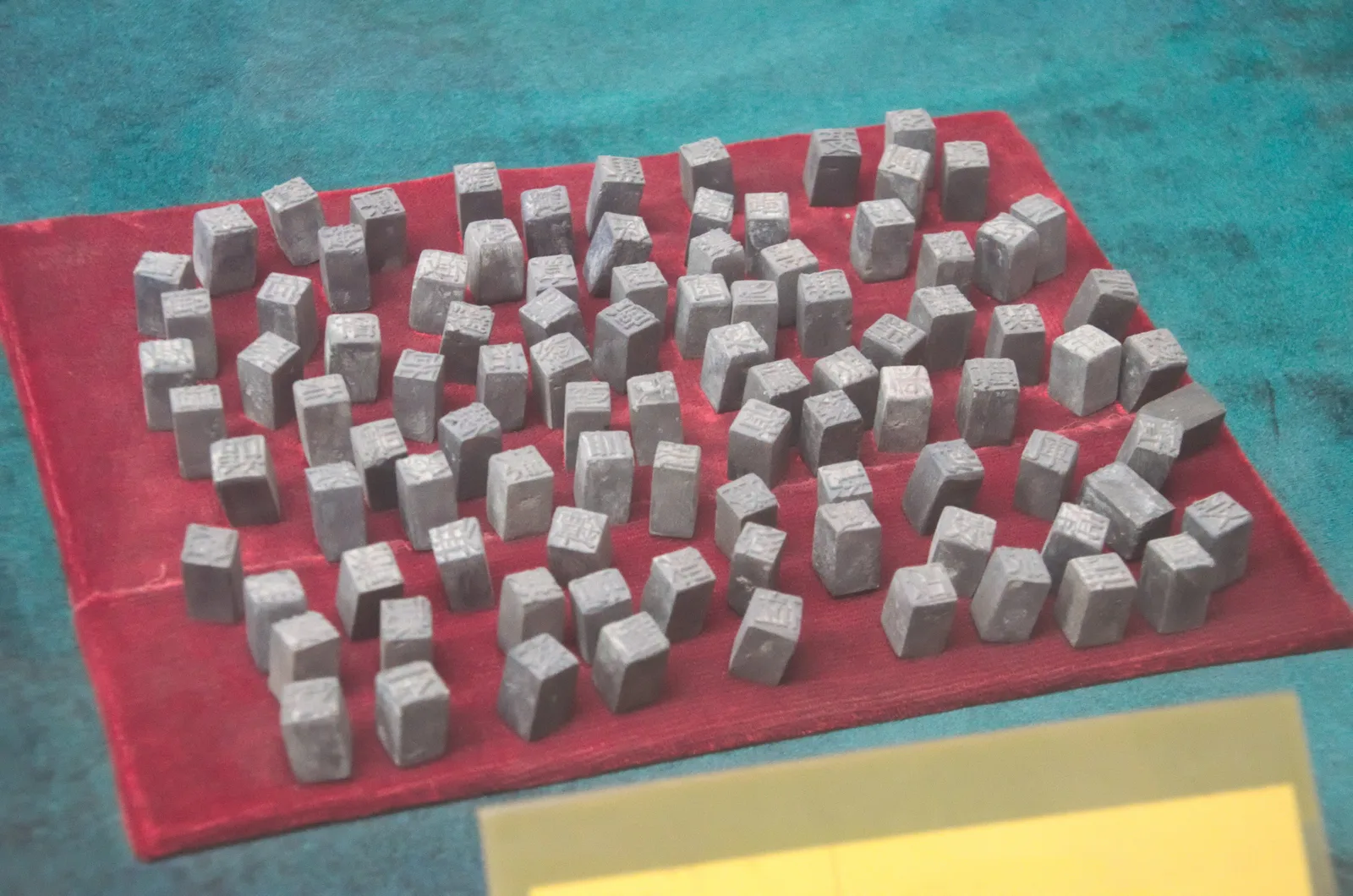
Metal type in Chinese collections and experiments belongs in the Chinese technology story. Early Korean metal-type books belong in the East Asian comparison at the same time. Collapsing both into “China invented metal type, then Europe followed” erases Korea; collapsing both into “Gutenberg invented metal type” erases East Asia. Keep the chapters distinct.
Korea and Early Metal Movable Type
UNESCO identifies *Jikji* (1377) as the oldest existing book printed with movable metal type. Korean metal type predates Gutenberg and belongs in any accurate invention narrative. See Who Invented Printing?.
*Jikji* is a Korean Buddhist text and a technological landmark for surviving metal-type books. Including Korea prevents a false China-versus-Europe binary. Bi Sheng’s earlier Chinese movable type (traditionally clay) and Korea’s metal-type achievement answer different precise questions. Both matter; neither is Gutenberg’s European press system.
China vs Gutenberg
Bi Sheng’s movable type is centuries earlier than Gutenberg. Gutenberg’s achievement was a European press-based metal-type system—not the origin of movable type worldwide.
A careful comparison says: Chinese movable type associated with Bi Sheng is eleventh century; Korean metal-type books such as *Jikji* date to 1377 for the oldest surviving example; Gutenberg’s fifteenth-century system combined movable metal type with press-based European production and transformed European markets. That European achievement stands without claiming he invented printing or movable type as such. Direct workshop transmission from China to Gutenberg is not securely demonstrated and should not be invented for a tidy story.
Rui'an Wooden Movable Type
UNESCO documents wooden movable-type practice in Rui’an, Zhejiang, including uses such as genealogy printing. It is living heritage, not a theme-park reconstruction.
Rui’an preserves a documented living wooden movable-type tradition; verify current visitor or demonstration arrangements before travel. Heritage status documents practice and transmission; it does not guarantee a daily tourist workshop. Pair Rui’an interest with realistic routing from Zhejiang or East China plans.
Where Travelers Can See Movable Type
The China Printing Museum in Beijing displays wooden and metal type examples; confirm current galleries before visiting. Heritage contexts in Rui’an and temporary exhibitions elsewhere may also help.
Type cases, individual sorts and reconstructed composition scenes are easier to understand in person than in abstract diagrams. Still, gallery rotation is real. If movable type is a priority, mention it when planning a private Beijing itinerary so museum timing can be checked against your other stops.
Ask About a Beijing Culture & Museum Itinerary
If printing history is a priority, a private Beijing itinerary can leave time for the China Printing Museum or related cultural stops. Specialty museums compete with better-known Beijing sights for time and energy; confirm opening status when you plan.
Common Misconceptions
- Bi Sheng did not invent woodblock printing.
- Bi Sheng did not build Gutenberg’s press.
- Movable type existed before Gutenberg.
- Korean metal movable type predates Gutenberg.
- Woodblocks remained important after movable type.
- A large Chinese character inventory did not make movable type impossible.
These points keep the technology map honest. Woodblock and movable type are different methods; China, Korea and Europe contribute different chapters; coexistence is normal.
FAQ
What is movable type printing?
Printing with separate reusable characters assembled into pages. After printing, characters can be redistributed for later composition—unlike a permanent full-page woodblock.
Who invented movable type?
In Chinese tradition, Bi Sheng in the Northern Song. Other regions developed type systems independently or later. Korea’s early metal type and Gutenberg’s European metal-type press system are separate chapters with their own dates and materials.
Who was Bi Sheng?
The innovator traditionally credited with eleventh-century Chinese movable type. Surviving historical information about Bi Sheng himself is limited; his importance rests primarily on the movable-type process described in Song sources.
What was Bi Sheng's type made from?
Traditional accounts describe clay/ceramic individual characters. Later Chinese printers also used wooden and metal type; those later materials should not be backdated onto Bi Sheng without evidence.
When was movable type invented in China?
Eleventh century (Northern Song), in the traditional chronology. That dating places Chinese movable type centuries before Gutenberg and earlier than the surviving Korean metal-type landmark *Jikji* (1377), which answers a different question about metal type books.
Why did China keep using woodblocks?
Because full-page blocks remained practical for many editions alongside type. Reprinting a stable page from a finished block could beat re-composing a large character set for every job.
Did China use wooden movable type?
Yes—later practice includes wooden type; Rui’an heritage is a living example. Wooden movable-type printing of China was inscribed in 2010 on UNESCO’s List of Intangible Cultural Heritage in Need of Urgent Safeguarding.
Did China use metal movable type?
Yes, in later experiments and collections; Korea’s early metal-type books are separately fundamental. *Jikji* (1377) remains the oldest existing book printed with movable metal type in UNESCO’s identification.
Was Chinese movable type invented before Gutenberg?
Yes—by centuries, for the Chinese movable-type tradition associated with Bi Sheng. Gutenberg’s later European achievement was a press-based metal-type system, not the worldwide origin of movable type.
Sources & Review
- UNESCO — “Wooden movable-type printing of China” (2010, List of Intangible Cultural Heritage in Need of Urgent Safeguarding)
- UNESCO Silk Roads overview of East Asian printing
- UNESCO Memory of the World / related materials on *Jikji* (1377)
- China Printing Museum (Beijing) — wooden and metal type displays
Related: Chinese Characters, Song printing, Chinese Printing hub.
Last reviewed: September 2026