
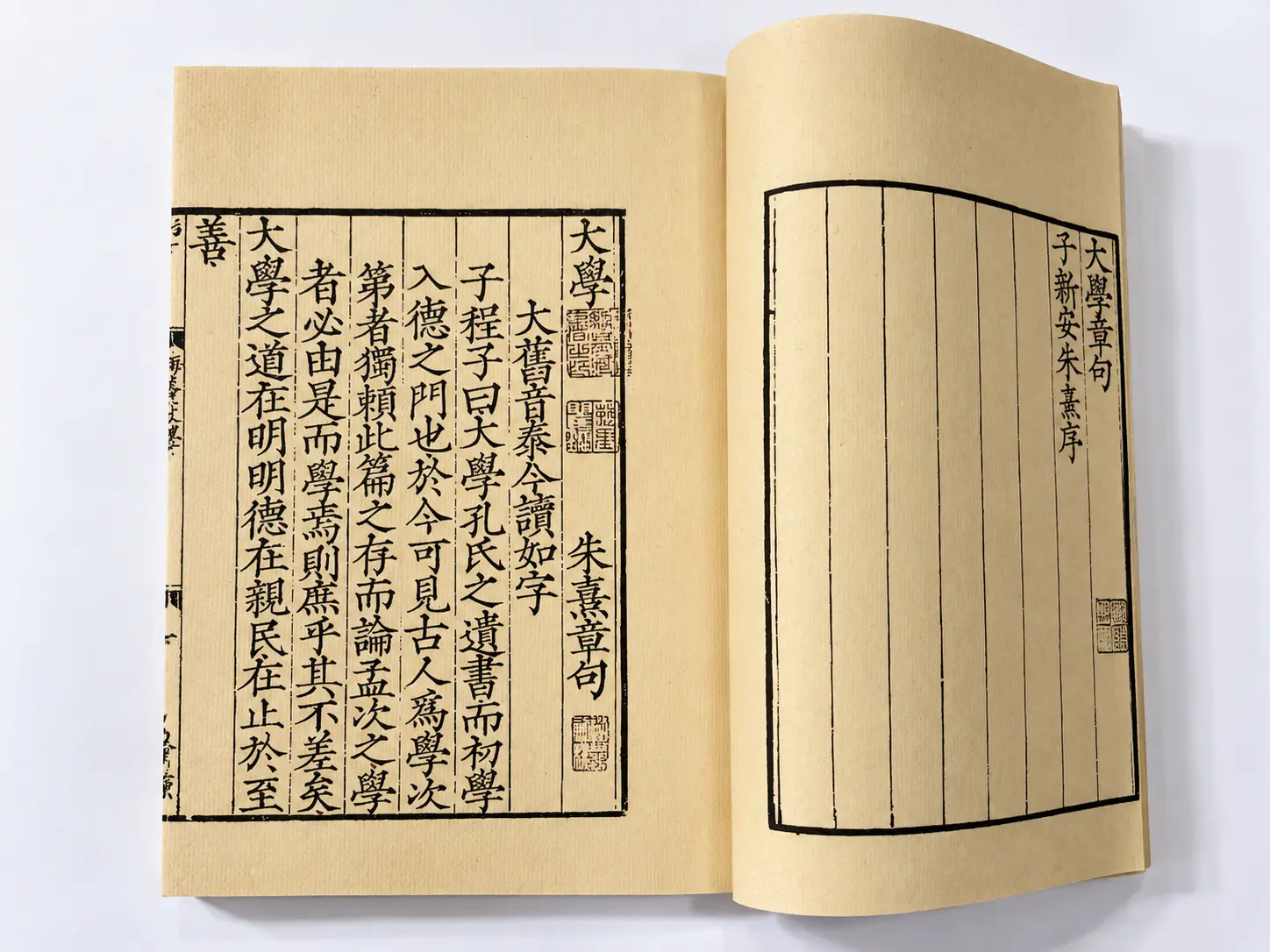
Printing expanded dramatically during the Song dynasty as government institutions, religious communities, scholars and commercial publishers produced growing quantities of books. Woodblock printing remained the dominant production method for many editions, while Bi Sheng's movable type represented an important technological innovation. The significance of Song printing therefore lies both in new techniques and in the broader expansion of publishing, education and textual circulation.
Song Printing at a Glance
| Topic | Orientation |
|---|---|
| Dominant method for many editions | Woodblock |
| Key innovation | Bi Sheng movable type |
| Drivers | Government, religion, commerce, education |
| Effect | More books in circulation |
| Caution | Not universal literacy |
Song printing is a scale-and-institutions story first. Technique matters, but so do markets, exams, temples and official editorial projects.
Why the Song Period Matters
Song China is a hinge in book history: cheaper paper and expanded printing supported more texts in motion—official, religious, commercial and scholarly.
Compared with earlier centuries that already knew woodblock printing on paper, the Song stands out for volume and institutional breadth. More titles reached more readers and listeners through schools, temples, offices and bookshops. Bi Sheng’s movable type belongs here as a Northern Song innovation, yet the dynasty’s publishing importance would remain even if travelers remembered only woodblock books. For cluster context, start from the Chinese Printing hub.
The Expansion of Printed Books
More titles, more copies and denser book markets appear across Song evidence. Expansion is multi-causal: technology, institutions and demand together.
No single cause explains the rise. Paper supply, carving workshops, distribution routes, examination pressure and religious reproduction all pushed in the same direction. Commercial printers responded to buyers; government projects standardized approved texts; temples and lay patrons sponsored scriptures. Treat “Song printing boom” as a shorthand for that combined system, not as a claim that one gadget suddenly appeared and changed everything.
Government Publishing
Official editions of classics, histories and administrative texts used printing to standardize and distribute state-approved versions.
State involvement mattered because authority and accuracy were political as well as scholarly goods. Printed official editions could reduce some forms of manuscript drift for widely needed texts and could supply offices and schools more evenly than purely local copying. Government publishing did not erase private or temple printing; it added another large demand stream for woodblock workshops.
Commercial Publishing
Commercial printers produced books for sale, including exam aids and popular texts. Markets varied by city and region.
Commercial output shows that books were economic objects as well as ritual or official ones. Examination aids, literary collections and practical titles could be produced for buyers who were not state offices. Regional market strength differed; not every Song city had the same bookshop density. For travelers, the takeaway is simple: Song print culture included shops and customers, not only palace projects.
Education and Examination Culture
Examination culture increased demand for classics and commentaries. Printing helped supply that demand without making “everyone literate.”
Students and teachers needed stable texts. Printing could multiply those texts faster than one-off manuscripts for many editions. That still left literacy uneven by class, gender, region and occupation. More books in circulation is not the same claim as universal schooling. When museum labels mention examination culture, read it as demand pressure on publishers, not as proof that every resident read printed classics.
Confucian Texts and Classics
Printed Confucian canons and commentaries circulated widely among scholars and students.
Classics and commentaries were central to elite education and examination preparation. Woodblock editions could fix a page layout for repeated printings of the same curriculum texts. Calligraphic style on those pages still reflects manuscript culture transferred onto blocks—see Chinese Calligraphy for brush-writing context. Printing multiplied Confucian books; it did not abolish manuscript study or oral teaching.
Buddhist Printing
Buddhist canons and shorter texts continued to be printed; religious reproduction remained a major use case. See Diamond Sutra & Buddhist printing.
Song Buddhist printing sits on top of earlier Tang-era landmarks such as the 868 Diamond Sutra rather than replacing them. Merit, dissemination and standardization still encouraged multiples. Large canon projects and shorter popular scriptures could both use woodblocks. Buddhism was one major driver among several; Song commercial and educational printing expanded beside it.
Reference Works and Technical Books
Technical and reference works—including architectural and craft manuals in later transmission—show printing’s reach beyond classics alone. Surviving pages such as *Yingzao Fashi* printings illustrate Song-period book culture when museum labels support the dating.
Printed technical books matter because they show workshops serving craft and professional readers, not only moral or religious audiences. Later reprints of Song works are common, and visual “Song style” is not automatic proof of a Song impression. When a label supports Song printing for a technical leaf, it is evidence that practical knowledge also moved through print.
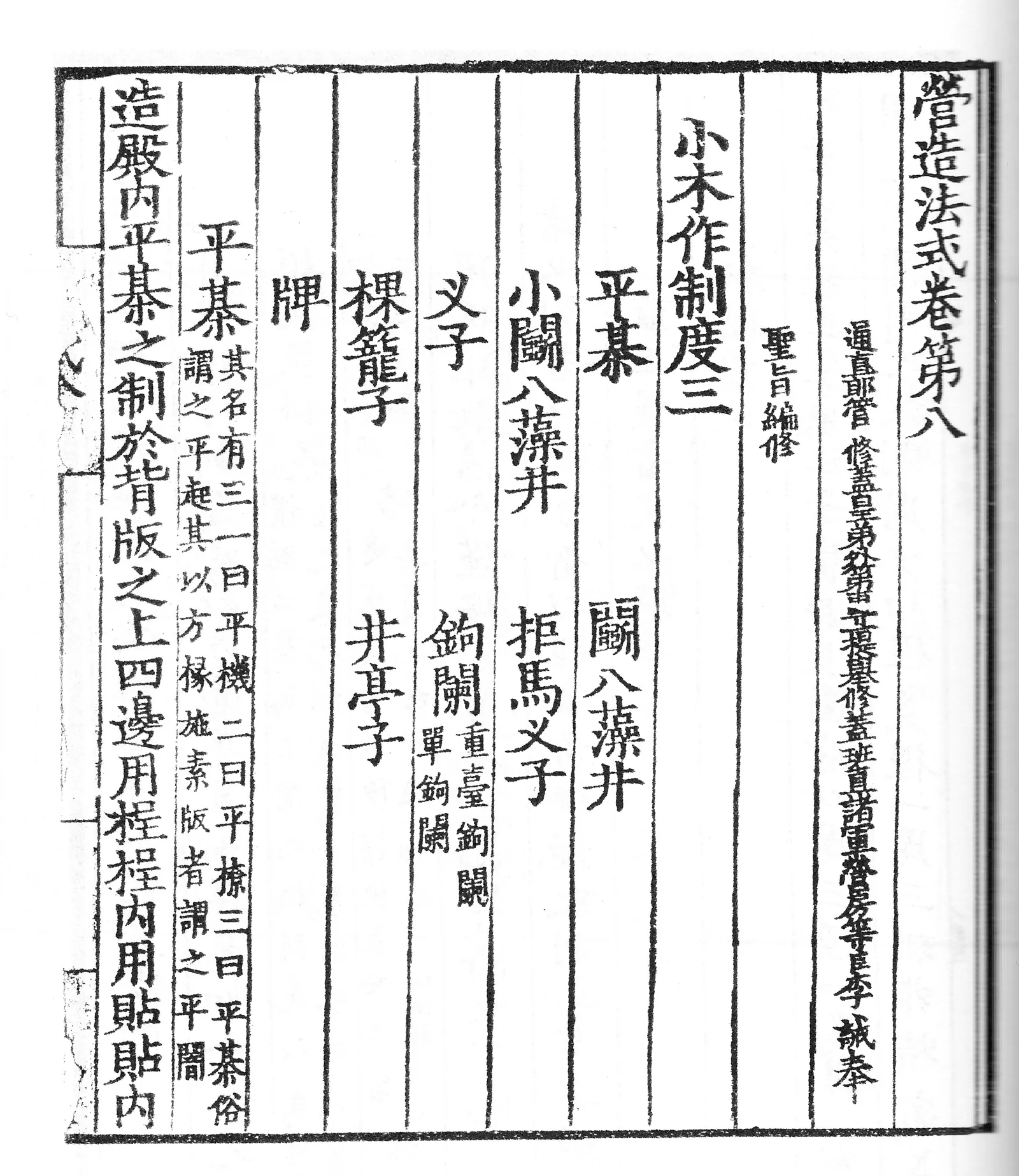
*Printed leaf associated with the *Yingzao Fashi* architectural tradition—use museum dating for the specific impression shown.*
Bi Sheng and Movable Type
Bi Sheng’s movable type is part of Northern Song history; this page focuses on the publishing ecosystem rather than a full biography. See Movable Type & Bi Sheng.
Traditional accounts credit Bi Sheng with reusable clay characters in the eleventh century. That innovation is important and earlier than Gutenberg by centuries. It did not erase woodblocks. Korean metal-type developments such as *Jikji* (1377) belong in the wider East Asian comparison on the invention and movable-type pages; they are later than Bi Sheng and answer a different metal-type question.
Why Woodblock Printing Still Dominated Many Editions
Full-page blocks remained efficient for reprinting stable editions. See woodblock printing.
A corrected woodblock page is a durable asset for classics, scriptures and other texts expected to reprint. Composing and storing a large Chinese character set for movable type changed labor costs compared with alphabetic systems. Song publishers therefore often kept woodblocks as the default for many jobs while still recognizing movable type as a real option. Coexistence is the historically accurate frame.
Printing Centers
Scholarship and museum labels associate major Song printing activity with centers such as Kaifeng, Hangzhou, Sichuan/Chengdu and Fujian. Treat city lists as orientations supported by sources, not as a complete map of every workshop.
Capitals and commercial cities concentrated demand, paper trade and skilled labor. Sichuan/Chengdu appears in educational materials as an early and important printing region; that regional strength is also why Chengdu sometimes appears in discussions of possible origins for earlier printed objects—without turning unverified locations into facts. Fujian and other centers show that Song printing was multi-regional. Local museum exhibitions may highlight nearby imprints; read the label dating in front of you.
Books, Literacy and Knowledge Circulation
More printed books increased textual circulation among those who could read or hear texts read aloud. That is not the same as universal literacy.
Printed leaves could be shared, sold, stored in temples and schools or read aloud to listeners. Knowledge moved through mixed channels: silent reading, teaching, ritual recitation and second-hand copies. Expansion of print therefore widened access relative to scarce manuscripts for many titles, while still leaving large populations outside elite literate culture. Song China did not become universally literate simply because printing expanded.
Printing and the Song Economy
Paper, labor, transport and retail networks made books a commercial object as well as a scholarly one.
Blocks, carvers, printers, binders, transporters and sellers all sat inside supply chains. Paper costs and labor skill constrained edition size. Urban markets could support more speculative commercial titles than remote districts. High-level economic framing is enough for travelers.
Printing Among the Song's Major Technologies
Printing was one part of a much broader Song technological and economic environment. Song technical achievements extend beyond printing alone; this guide focuses on publishing—woodblocks, Bi Sheng’s type, institutions and circulation. Collapsing Song history into a fixed invention checklist usually erases Korean metal type, European presses and the continued importance of woodblocks after movable type appeared.
How a Song Printed Page Looks
Song pages typically show carved-character clarity, column layout and paper qualities documented in rare-book collections. Museum examples (including Met Open Access Song printing samples when labeled) help travelers learn visual cues—without amateur dating from phone photos alone.
Look for column structure, character evenness consistent with a carved page, paper tone and mounting. Compare labels for “Song,” “Song style,” “later reprint” and “facsimile.” Impression wear can mark a long-used block. Color is less central for many Song book pages than for later Ming pictorial manuals. If you cannot read classical Chinese, use layout and label language rather than guessing dates from aesthetics.
Common Misconceptions
- Movable type did not replace woodblocks overnight.
- The Song did not invent all Chinese printing.
- Book expansion was not caused by one technology alone.
- Widespread printing did not mean universal literacy.
- Not every surviving “Song-style” print is an original Song impression.
Tang-era paper printing and the 868 Diamond Sutra already show earlier chapters. Song importance is expansion plus Bi Sheng’s innovation inside a woodblock-heavy publishing system.
FAQ
Why was printing important in the Song dynasty?
It expanded how books were produced and circulated across government, religion, education and commerce. The result was denser textual circulation, not a single gadget replacing every earlier method.
What did Bi Sheng invent?
Movable type (traditionally clay characters) in the Northern Song. Detail and later wooden/metal developments are on the movable type page; woodblocks still carried much Song production.
Did the Song dynasty use woodblock printing?
Yes—widely; it remained dominant for many editions. Full-page blocks suited reprinting stable classics, scriptures and commercial titles.
Did the Song use movable type?
Yes—Bi Sheng’s innovation is part of this era; woodblocks still carried much production. Technologies coexisted rather than switching in a single year.
Why were more books printed during the Song?
Technology plus institutions, markets and educational demand. Paper supply, workshops, exams, temples and commercial buyers all increased the number of titles and copies in motion.
What kinds of books were printed?
Classics, histories, religious texts, commercial titles, technical and reference works. The mix shows Song print culture serving officials, monks, students, craft readers and ordinary buyers in varying degrees.
Where were Song books produced?
Multiple centers—including places such as Kaifeng, Hangzhou, Sichuan/Chengdu and Fujian in scholarly overviews—appear in printing histories. City lists are orientations, not a complete workshop census.
Are original Song printed books still preserved?
Yes, in rare-book collections; many later reprints also exist—read museum dating carefully. “Song style” appearance alone does not prove a Song impression.
Sources & Review
- UNESCO Silk Roads overview of East Asian printing
- Museum Song printing samples (including Met Open Access leaves when labeled)
- Chinese Printing hub
- Chinese Calligraphy and Chinese Characters for related book culture
Last reviewed: September 2026