
Chinese Paper Cutting at a Glance
| Topic | Orientation |
|---|---|
| Chinese name | 剪纸 / 剪紙 (jiǎnzhǐ) |
| Medium | Paper cut with scissors or knife/chisel techniques |
| UNESCO | Representative List of the Intangible Cultural Heritage of Humanity, 2009 |
| Common festive colour | Red is especially common; other colours and uncoloured paper also appear |
| Typical uses | Windows, doors, interiors, festivals, weddings, pattern references |
| Related pages | New Year, jianzhi folk art, symbols, how-to, where to experience |
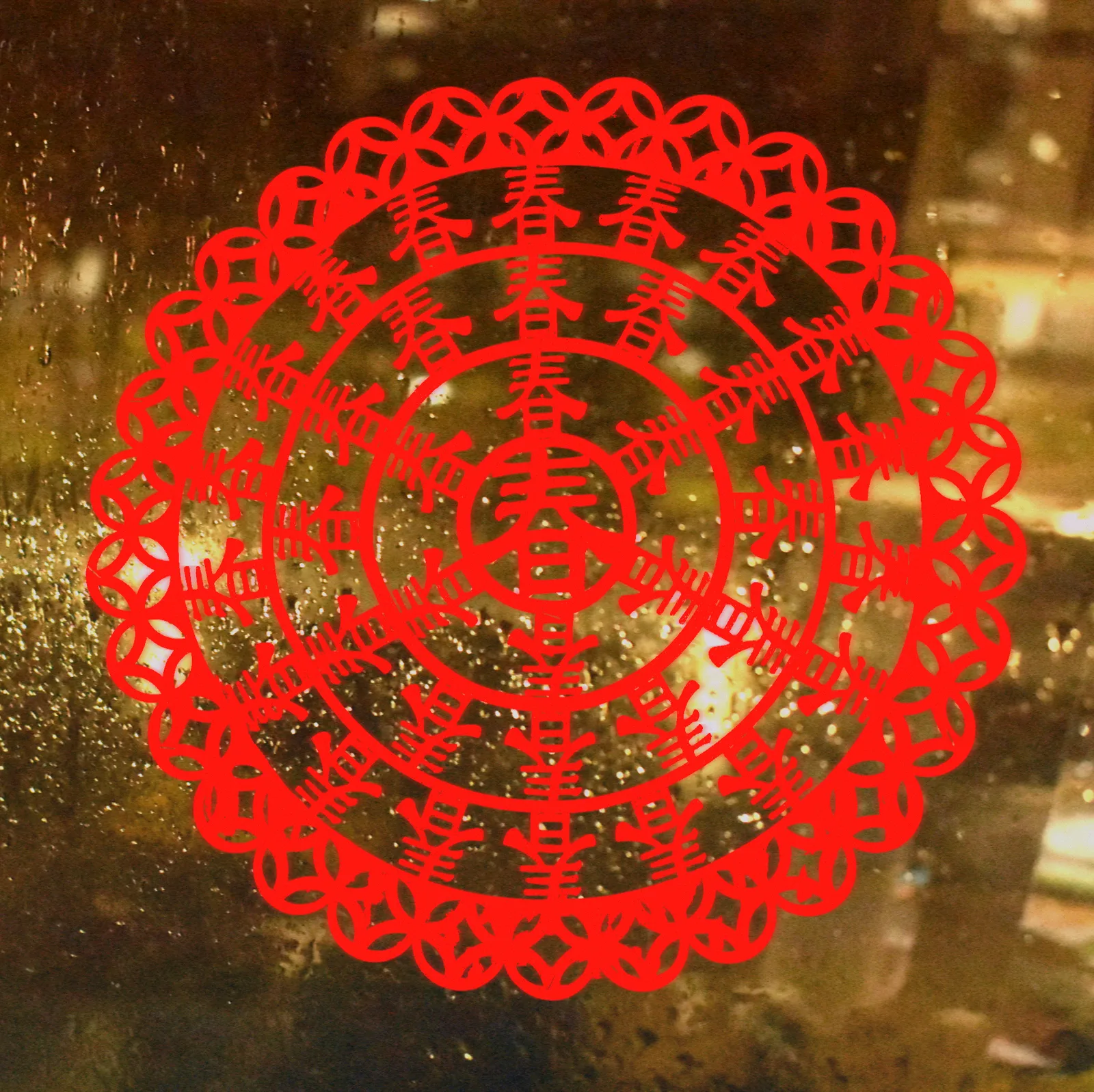
*Chinese paper cut with the character 春 (spring). Photograph: Lanneixi, Wikimedia Commons, CC BY-SA 4.0.*
What Is Chinese Paper Cutting?
Chinese paper cutting produces an image by removing or retaining paper so that positive shapes and openwork (negative space) read as a finished design. Some works are symmetrical because the paper was folded before cutting; many traditional designs are cut freehand or from a drawn outline without treating folding as the definition of the craft.
English speakers often say papercutting for the global craft. In Chinese cultural writing, jianzhi points specifically to Chinese paper-cutting traditions. The two terms overlap in conversation, but they are not identical: not every papercut worldwide is jianzhi, and not every Chinese decorative paper object is a scissors-cut jianzhi piece.
Paper may be coloured before cutting—red festive sheets are familiar—or left plain, dyed later, or layered. Colour choice follows occasion and regional taste more than a single national rule.
Paper cutting shares motifs and techniques with other Chinese decorative arts, including embroidery and New Year prints. Related crafts: Chinese Arts and Crafts and Chinese Calligraphy.
Why Paper Cutting Matters in Chinese Folk Art
Jianzhi sits among household and festival crafts rather than temple architecture or court painting. Institutional descriptions emphasize how cut designs decorate living spaces, mark celebrations and transmit motifs that also appear in embroidery, textiles and New Year prints.
That “folk” label should not be read as primitive or static. UNESCO treats Chinese paper-cut as living intangible heritage: communities continue to cut, teach, adapt and display works. Museum examples and festival windows are different encounters with the same craft family.
How Chinese Paper Cutting Developed
Paper-cutting traditions developed over centuries after paper became available and practical for decorative use. Surviving evidence does not identify one inventor or a single universally accepted start year. Papermaking history and paper-cutting history are different topics—do not credit paper’s legendary inventors with inventing paper cutting itself.
Useful orientation, not a complete chronology:
- After paper became practical for everyday use, cutting and piercing paper for ornament and ritual contexts became possible at household scale.
- Over time, regional styles, festival calendars and domestic display habits shaped recognizable motif families.
- Later centuries show stronger documentary and collecting attention to folk paper arts, including window decorations and New Year imagery.
- Contemporary artists, ICH transmission programs and cultural centres keep the craft visible beyond rural households alone.
This hub is not a history of paper manufacture. For festive seasonal practice, see Chinese New Year Paper Cutting. For the named folk tradition, see Jianzhi Folk Art.
Materials and Cutting Techniques
Core materials are simple: paper, cutting tools and a steady surface. Practice is not.
| Element | Traveler notes |
|---|---|
| Paper | Thin coloured sheets for festive cuts; other weights for practice or multi-layer work |
| Scissors | Common for many household and beginner designs |
| Knife / engraving tools | Used in some regional and workshop traditions for finer openwork |
| Folding | One beginner and symmetry method—not the definition of all jianzhi |
| Structure | Designs need “bridges” so the sheet does not fall apart when cut |
Positive shapes (the paper left behind) and openwork (removed areas) work together. Multi-layer cutting appears in some teaching and production contexts. A careful beginner sequence is separate from advanced freehand or knife work—see How to Make Chinese Paper Cutting.
What Paper Cuts Are Used For
Institutional and folklife sources describe varied uses rather than one universal national practice:
- Windows — especially festive “window flowers”
- Doors and interior walls — seasonal and celebratory display
- Weddings and household occasions — motifs chosen for the event
- Ritual or prayer-related contexts in some communities
- Pattern references for embroidery or other crafts in certain traditions
A single red zodiac animal on a shop window is only one contemporary face of a much wider practice.
Common Symbols and Designs
Recurring motifs include festive characters such as 福 (fú), zodiac animals, flowers, birds and paired forms associated with family or seasonal wishes. Meanings are contextual: a motif can express a wish or association in one setting without guaranteeing a fixed meaning everywhere in China.
For a closer look at the symbols, see Chinese Paper Cutting Symbols & Motifs.
Paper Cutting at Chinese New Year
Around Spring Festival / Chinese New Year, paper cuts often appear as red window decorations, lucky-character designs and zodiac-year imagery. Families and regions differ in how elaborate the display becomes. “Lunar New Year” is also common in English for related seasonal traditions across several cultures.
For New Year window flowers and seasonal practice, see Chinese New Year Paper Cutting. Festival context: Chinese New Year.
Jianzhi as a Regional and Living Tradition
Jianzhi is not one school with one syllabus. Northern and southern cutting habits, rural household practice, urban teaching studios and contemporary gallery work all sit under the same broad name. UNESCO’s nomination describes the tradition historically as a predominantly female pursuit in many communities, especially rural ones; that historical description is not a universal rule about who cuts paper today.
For the named folk tradition, see Jianzhi: Traditional Chinese Folk Paper Cutting.
Chinese Paper-Cut and UNESCO
Chinese paper-cut was inscribed in 2009 on UNESCO’s Representative List of the Intangible Cultural Heritage of Humanity. UNESCO frames the element as living heritage practiced and transmitted in communities—not as a certificate for any individual workshop, tour product or DragonTrail experience.
Inscription supports visibility and safeguarding language; it does not freeze motifs, tools or who may practice the craft.
Encountering Paper Cutting in China
Travelers usually meet paper cutting as:
- Festival and street display during New Year periods
- Museum or cultural-centre exhibitions
- Short demonstrations or hands-on sessions arranged through cultural venues or hosts
Do not expect every city to advertise a dedicated “paper-cutting workshop” product. Practical planning: Where to See and Try Chinese Paper Cutting.
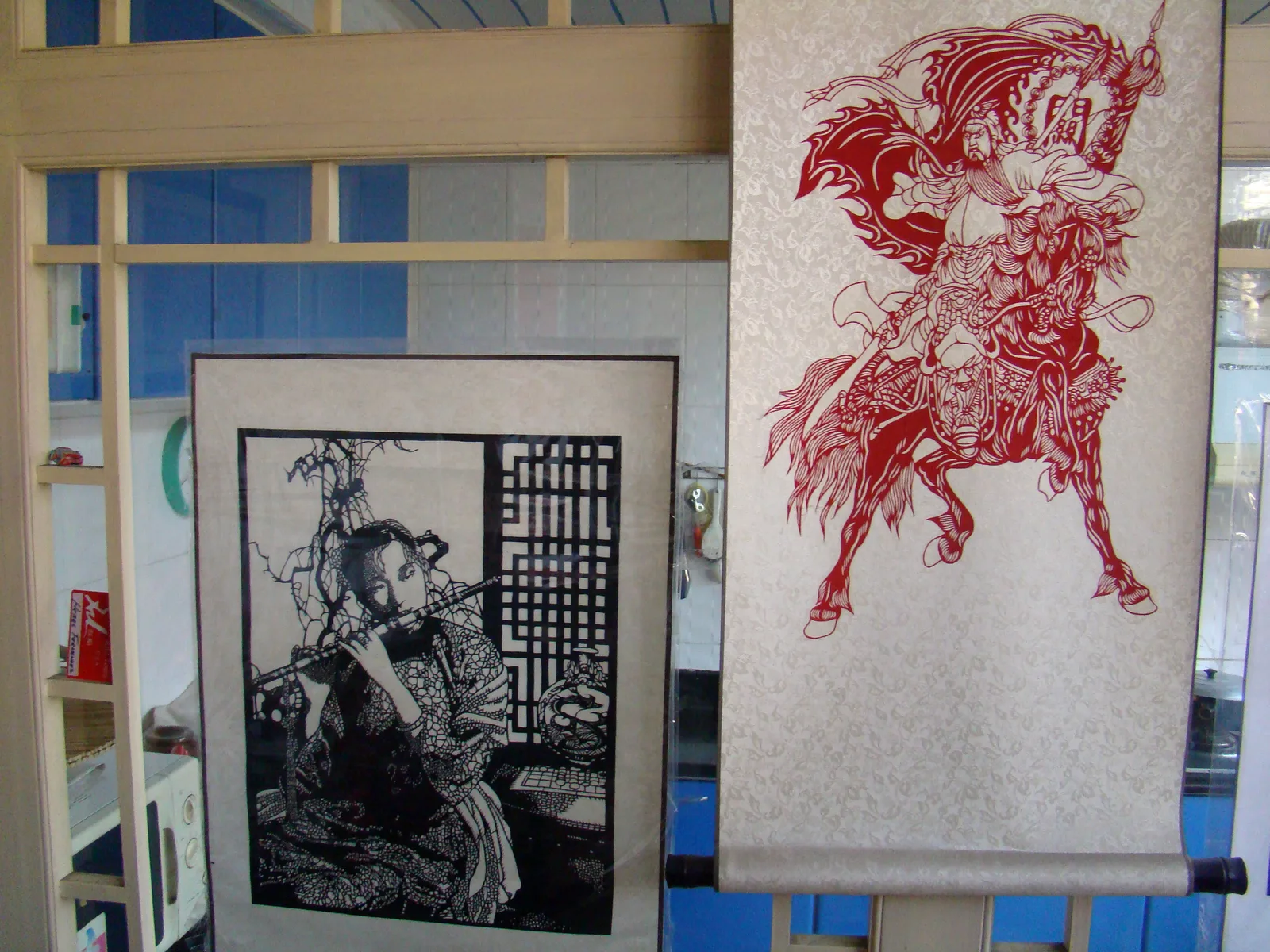
*Paper cutting in a Beijing hutong. Photograph: istolethetv, Wikimedia Commons, CC BY 2.0. Representative cultural activity; not a DragonTrail session.*
In Beijing, paper cutting can fit naturally alongside hutong and local cultural activities. DragonTrail’s existing private hutong experience centres on calligraphy, dumpling making and lunch. If you want paper cutting added, request it and wait for confirmation—do not assume it is included.
Ask about adding paper cutting to a Hutong cultural experience → Private Beijing Hutong Calligraphy & Dumpling Experience.
Explore Related Guides
- Chinese New Year Paper Cutting
- Jianzhi Folk Art
- Symbols & Motifs
- How to Make Paper Cuts
- Where to Experience
- Chinese Arts and Crafts
- Chinese New Year
- Chinese Calligraphy
Frequently Asked Questions
What is Chinese paper cutting called?
In Chinese it is commonly called jianzhi (剪纸 / 剪紙). English speakers usually say Chinese paper cutting or Chinese paper-cut. UNESCO uses the element title Chinese paper-cut.
Is jianzhi the same as Chinese paper cutting?
For practical traveler language, yes—jianzhi is the Chinese name for the tradition. Papercutting as a global craft is broader than jianzhi alone.
Why is Chinese paper cutting often red?
Red is especially common for festive and New Year works because of its celebratory associations in many Chinese contexts. Paper cuts may also use other colours or uncoloured paper.
When did Chinese paper cutting begin?
Paper-cutting traditions developed over centuries after paper became available and practical for decorative use. Surviving evidence does not identify one inventor or a single universally accepted start year.
What tools are used for Chinese paper cutting?
Scissors are widespread. Some traditions and workshops also use knives or engraving tools for finer openwork. Beginners often start with scissors and thin paper.
Is all Chinese paper cutting symmetrical?
No. Folding can create symmetry, but many designs are cut without relying on folded bilateral patterns.
Is Chinese paper cutting recognized by UNESCO?
Yes. Chinese paper-cut was inscribed in 2009 on UNESCO’s Representative List of the Intangible Cultural Heritage of Humanity.
Can travelers try paper cutting in China?
Sometimes—through cultural centres, hosted sessions or optional add-ons arranged with a local host. Availability varies by city, season and booking. See Where to Experience.
How Paper Cutting Relates to Other Chinese Arts
Jianzhi shares motif vocabulary with embroidery, New Year prints and other decorative arts, but the making process is different: the image is created by cutting paper rather than stitching thread or printing with blocks. Travelers who enjoy Chinese embroidery or brush arts will recognize familiar auspicious themes while still needing paper-specific eyes for bridges, openwork and window display.
Calligraphy and paper cutting sometimes appear in the same cultural half-day because both reward close handwork and Chinese character literacy. They remain separate skills: brush writing builds strokes with ink; paper cutting removes material to leave a silhouette.
Reading a Paper Cut in Person
When you see a cut on a window or in a case, look for:
- Outer frame — does a border hold the design together?
- Bridges — thin connectors inside floral or animal forms
- Character counters — closed holes inside strokes such as 福 or 春
- Light — window flowers are meant to be read with backlight
- Layering — some displays stack colours; others are single sheet
Those visual checks help separate careful handwork from coarse stickers without requiring you to be a specialist.
Travel Planning Notes
If paper cutting is a priority theme for your trip:
- Time part of the journey near Chinese New Year for public displays.
- Build one cultural half-day that can absorb a short hands-on request rather than hunting a dedicated attraction.
- Read the where to experience page before assuming workshop inventory in your city.
- Use the motif and New Year guides to interpret what you photograph.
The standard hutong experience includes calligraphy, dumpling making and lunch. Paper cutting is available only when separately requested and confirmed.
Materials Table for Travelers
| Need | Beginner / traveler note |
|---|---|
| Seeing the craft | Festival windows; museum folk-art rooms; cultural-centre shows |
| Trying one cut | Scissors session; confirm language and duration |
| Understanding motifs | Start with 福, 春 and the year’s zodiac animal |
| Beijing experience | Optional request on hutong calligraphy + dumpling experience |
Paper cutting rewards slow looking. Even without a class, comparing a dense lace-like cut with a bold single-character window flower trains your eye for bridges and openwork.
Sources & Further Reading
- UNESCO — Chinese paper-cut (2009, Representative List of the Intangible Cultural Heritage of Humanity)
- Smithsonian Folklife Festival — Paper Cuttings, Shaanxi Province
- Smithsonian National Museum of Asian Art — Paper Cutting educator material
Image credits appear under each figure. Motif meanings are described as associations and customary uses, not guaranteed effects.
Continue Exploring Chinese Paper Cutting
Start with the seasonal page if you are traveling near Chinese New Year, or the symbols page if you want to read common designs. For a Beijing hands-on day that already combines calligraphy and dumplings, inquire about an optional paper-cutting request on the hutong cultural experience page—confirmation comes before payment.