
Quick Orientation
| Topic | Orientation |
|---|---|
| Name | 剪纸 / 剪紙 — jianzhi |
| Craft type | Folk visual art; household and festival decoration |
| Tools | Scissors; knife/engraving tools in some traditions |
| UNESCO | Chinese paper-cut inscribed 2009 |
| Hub | Chinese Paper Cutting |
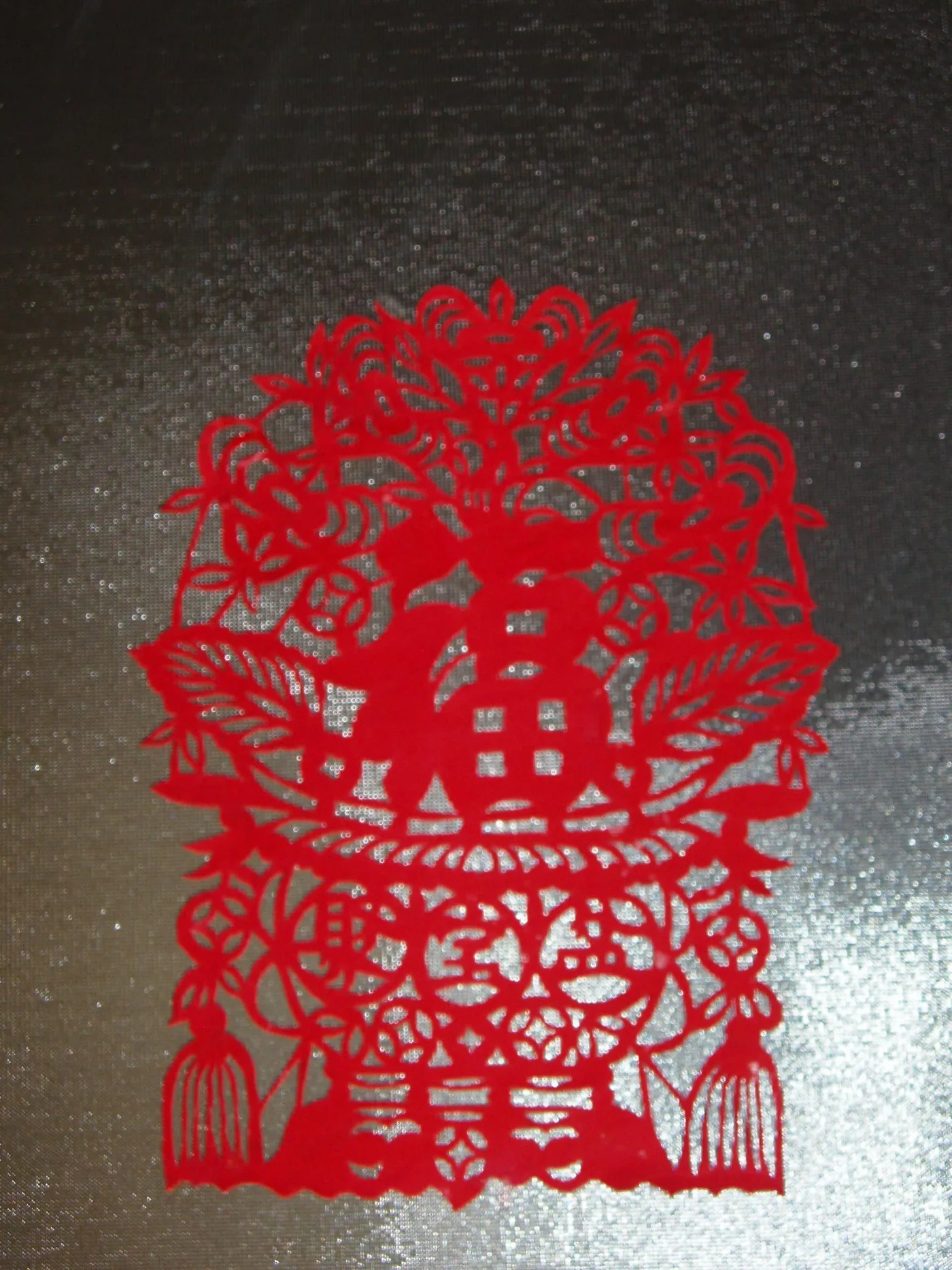
*Chinese paper-cut window-flower style decoration for New Year. Photograph: Fanghong, Wikimedia Commons, CC BY-SA 3.0.*
What Jianzhi Means
Jianzhi names Chinese paper cutting as a cultural practice rather than one trademarked style. The word points to cutting paper into ornamental or pictorial forms. English “papercutting” can describe similar crafts worldwide; using jianzhi keeps the Chinese tradition distinct when precision matters.
Related traveler language includes Chinese paper-cut (UNESCO’s element title) and Chinese paper cutting (common English wording). This page treats them as one tradition unless a source draws a technical distinction.
Jianzhi as Folk Art
Calling jianzhi folk art highlights household skill, festival calendars and community transmission—not a claim that the craft is simple or frozen. Smithsonian Folklife writing on Chinese paper cutting emphasizes living practice, seasonal cycles and regional teaching, including well-documented Shaanxi paper-cutting communities among other areas.
Folk art here means social context: decoration of everyday and festive space, motif sharing across generations, and local variation—alongside museum collecting and contemporary studio work.
Regional Variation
There is no single national jianzhi syllabus. Cutting habits, preferred tools, motif density and teaching styles vary by region and community. Some areas are better documented in English folklife materials than others. Regional traditions extend well beyond the examples most commonly documented in English-language sources.
Travelers should expect diversity: bold single-layer festive cuts, dense openwork, multi-colour layering and modern graphic adaptations can all appear under the same craft name.
Traditional Uses
Jianzhi appears across:
- Festival decoration, especially around Chinese New Year (see New Year paper cutting)
- Wedding and celebratory household display
- Interior ornament beyond the festival season
- Pattern reference for other crafts in some traditions
- Exhibition and teaching contexts today
Uses are plural. Do not collapse the craft into “only New Year windows.”
Tools and Techniques Overview
Scissors dominate many household and beginner settings. Knife or chisel-like cutting appears in traditions that favour fine pierced detail. Folding supports symmetrical designs but is only one method. Structural “bridges” keep a cut sheet intact.
Technique deep dive for beginners: How to Make Chinese Paper Cutting. Motif vocabulary: Symbols & Motifs.
Living Heritage and UNESCO
Chinese paper-cut was inscribed in 2009 on UNESCO’s Representative List of the Intangible Cultural Heritage of Humanity. UNESCO presents the element as living heritage—practiced, taught and adapted—rather than only as antique museum craft.
UNESCO’s nomination materials describe the tradition historically as a predominantly female pursuit in many communities, especially rural ones. That is a historical and community description, not a rule that only women practice jianzhi today. Contemporary artists, teachers and cultural centres include a wider range of practitioners.
UNESCO recognition does not certify any particular commercial workshop or tour add-on.
Common Misunderstandings
- Equating all papercutting worldwide with jianzhi
- Assuming every Chinese decorative paper item is hand-cut
- Treating UNESCO listing as a quality badge for souvenirs
- Freezing “authentic” jianzhi to one province’s look
- Claiming one inventor or exact invention year
Frequently Asked Questions
Is jianzhi only a New Year craft?
No. New Year is a highly visible seasonal use. Jianzhi also appears in other celebrations, domestic decoration and contemporary teaching.
Does jianzhi require folding the paper?
No. Folding is common for symmetrical beginner and window designs. Many works are cut without folded symmetry.
Is jianzhi the same as Chinese paper-cut in UNESCO texts?
UNESCO’s inscribed element is titled Chinese paper-cut; jianzhi is the ordinary Chinese name for the tradition. For travelers they refer to the same heritage practice.
Why do sources mention women in paper-cutting history?
UNESCO and folklife descriptions note historically strong female participation in many communities. That does not define who may practice or teach the craft now.
Where can travelers see or try jianzhi?
Displays, demonstrations and hosted sessions vary by place and season. Practical guide: Where to Experience.
Jianzhi, Nianhua and Other Paper Arts
Travelers sometimes confuse paper cutting with New Year prints (nianhua) or with the history of paper manufacture and printing. Jianzhi is cut paper. Prints are impressed images. Paper history is about material invention and papermaking—not automatically about scissors crafts. Keep those categories separate when reading museum labels.
Teaching and Transmission Today
Living heritage means teaching continues: family transmission, community classes, cultural-centre workshops and formal ICH inheritor narratives in some regions. English-language access varies. A traveler class may be simplified compared with local apprenticeship, which is appropriate for a short visit if labeled honestly.
Aesthetic Range
Some jianzhi is dense and lace-like; some is bold and graphic; some contemporary work experiments with scale and colour beyond festive red. Judging authenticity only by “looks old and rural” misses urban and studio practice that still belongs to the craft family.
Jianzhi Vocabulary for Museum Labels
| Term | Traveler reading |
|---|---|
| Jianzhi / 剪纸 | Chinese paper cutting tradition |
| Chinese paper-cut | UNESCO element title (2009 inscription) |
| Window flower / 窗花 | Paper cut designed for window display |
| Openwork | Removed paper that lets light or background show |
| Bridges | Connecting paper that keeps the sheet intact |
Keeping vocabulary straight prevents mixing papermaking history, printmaking and scissors crafts into one blurry story.
Sources & Further Reading
- UNESCO — Chinese paper-cut (2009, Representative List of the Intangible Cultural Heritage of Humanity)
- Smithsonian Folklife Festival — Paper Cuttings, Shaanxi Province
- Smithsonian National Museum of Asian Art — Paper Cutting educator material
Motif and gender history are kept qualified.
Continue Exploring
Chinese Paper Cutting hub · Symbols & Motifs · How-to · Chinese Arts and Crafts