
Quick Orientation
| Topic | Orientation |
|---|---|
| Approach | Context first; avoid one-symbol-one-meaning charts |
| Common characters | 福, 春 and other festive graphs |
| Animals | Zodiac set plus birds and other creatures |
| Plants | Peony, lotus, plum and other floral families (context-dependent) |
| Related hub | Chinese Paper Cutting |
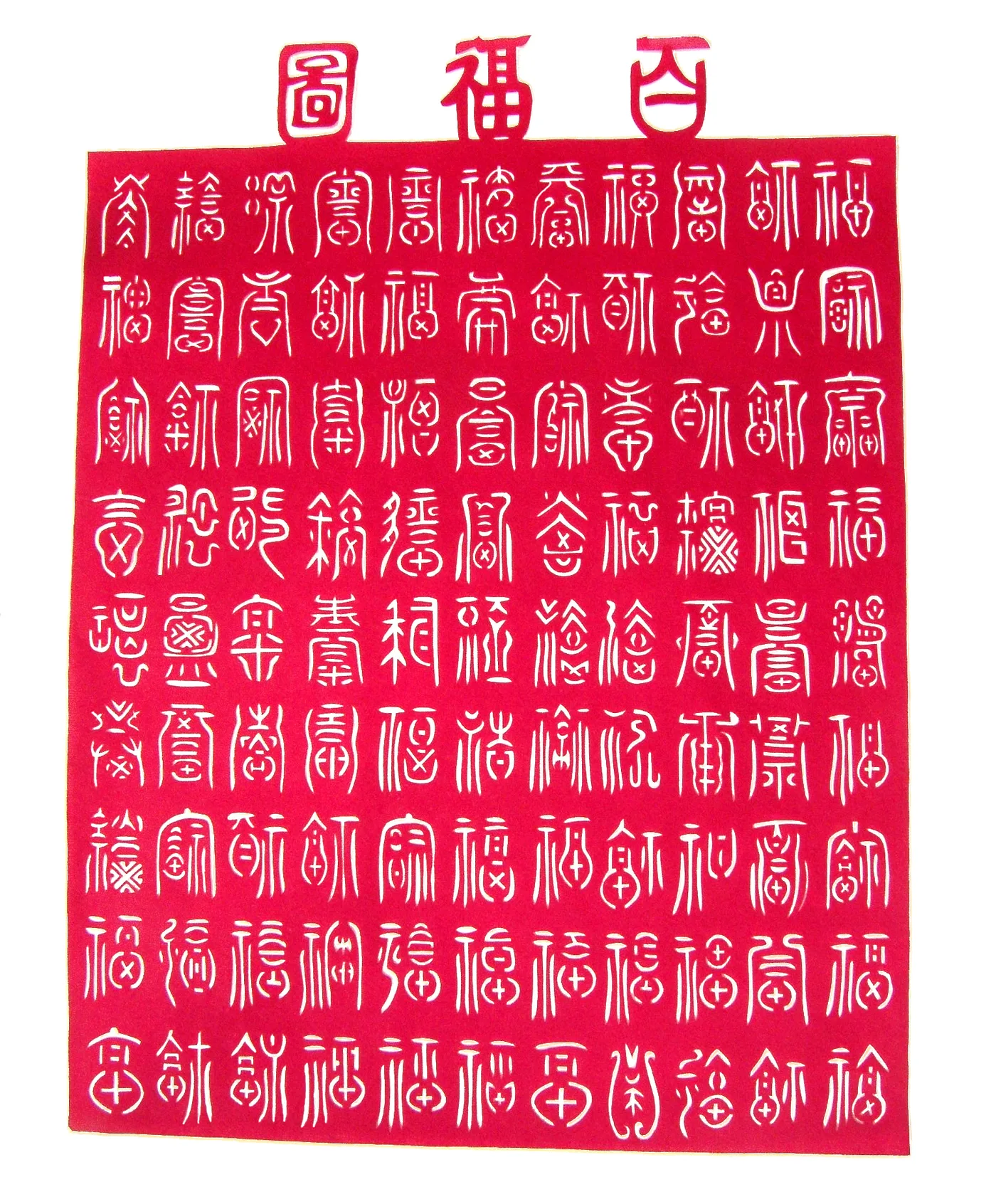
*Chinese paper cut composed of repeated 福 (fú) characters. Photograph: Patricia Bjaaland Welch, Wikimedia Commons, CC BY-SA 3.0.*
How to Read Motifs Without Overclaiming
Travel guides sometimes flatten Chinese visual culture into lucky-charm dictionaries. For paper cutting, prefer:
- Associated with…
- Can express a wish for…
- Commonly used to symbolize… in this context…
Avoid literal efficacy claims about wealth, household protection or automatic good fortune. The same animal or flower can carry different emphases at a wedding, a New Year window or a contemporary art display.
Festive Characters
福 (fú) is among the most photographed paper-cut characters. In New Year contexts it is commonly associated with blessing or good-fortune wishes. Designs may show a single large 福, mirrored pairs or dense fields of repeated characters.
春 (chūn) (spring) appears in seasonal cuts linked to the turn of the year. Other characters appear in couplets and related festival graphics; not every festive graph is produced as a scissors-cut jianzhi piece.
Zodiac Animals
The twelve zodiac animals are frequent paper-cutting subjects, especially near the matching lunar year. Market and teaching designs for horse, dragon, goat, dog, pig and the rest circulate widely online and in seasonal stalls.
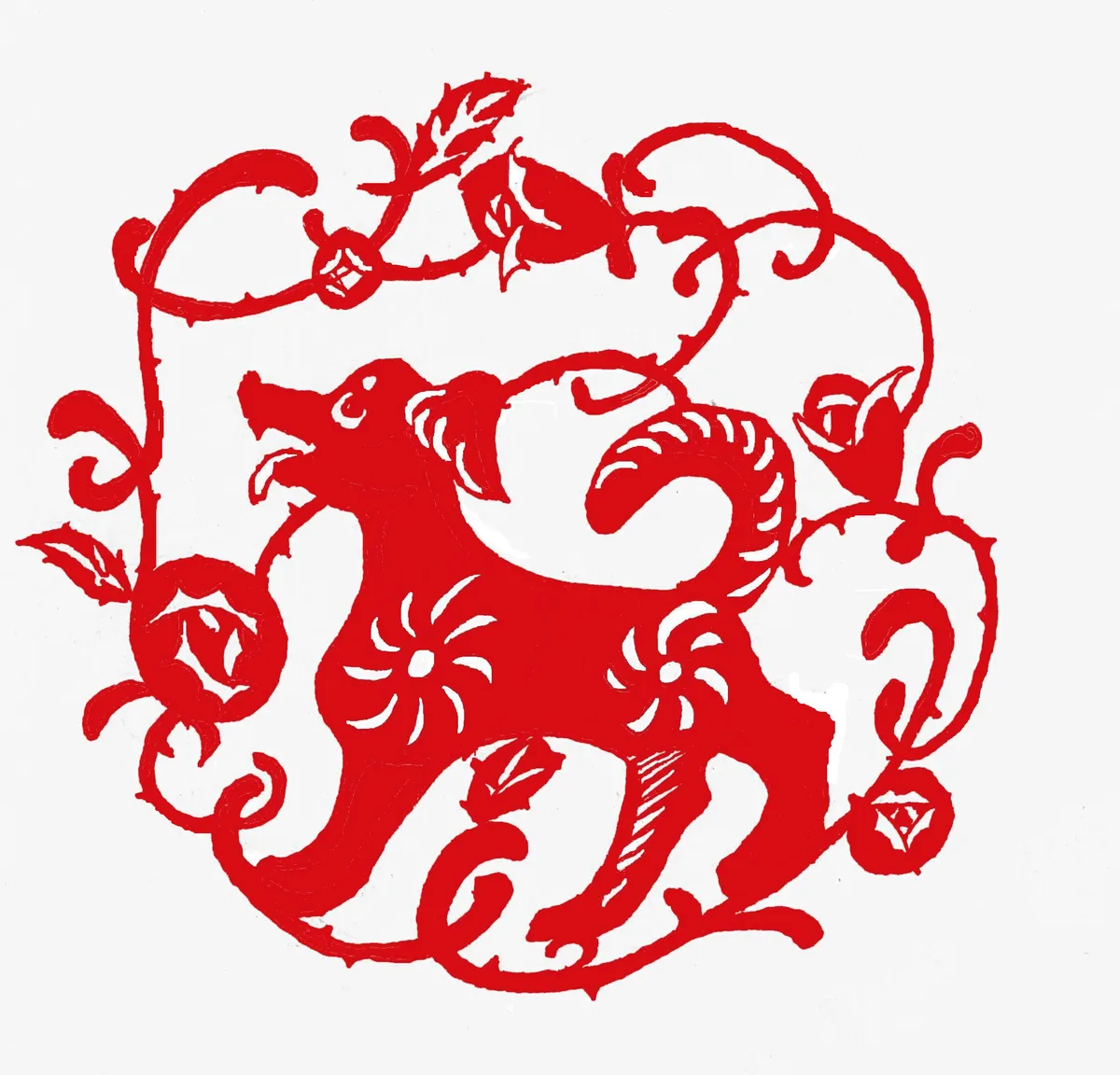
*Chinese zodiac dog paper-cutting design. Photograph: Fanghong, Wikimedia Commons, CC BY-SA 3.0.*
Zodiac animals are especially visible around the matching lunar year; they are still only one motif family. This guide covers the full zodiac set together so travelers can recognize the year’s animal.
Flowers, Birds and Other Creatures
Floral and animal motifs can express seasonal beauty, pair symbolism or customary wishes depending on composition and occasion. Peonies, lotus, plum blossom, fish, birds and butterflies appear across Chinese decorative arts; paper cutting shares that vocabulary with embroidery and New Year prints without identical meanings in every medium.
When a design combines a character with an animal or flower, read the whole composition and setting—not each element in isolation.
Designs for Weddings and Household Display
Some motifs are especially common in wedding or household celebration contexts (paired forms, festive characters, floral frames). Regional habit matters. A design popular in one community’s wedding set may be rare in another’s window-flower tradition.
Pattern Sheets Versus Finished Cuts
Finished cuts, teaching outlines and commercial stickers are different objects even when they share imagery. This guide explains motif families as design references, not as downloadable templates.
Common Mistakes
- Treating a blog motif chart as authoritative for all of China
- Assuming red colour changes a motif’s core association automatically
- Confusing printed New Year stickers with hand-cut jianzhi
- Inventing efficacy claims about animals automatically producing wealth
Frequently Asked Questions
What is the most common Chinese paper-cutting symbol?
福 appears extremely often in festive contexts, but “most common” depends on season, region and whether you count market stickers or hand-cut works.
Do zodiac paper cuts only appear in their year?
They are most visible in the matching year, yet teaching sets and decorative collections may show the full cycle anytime.
Can the same motif mean different things?
Yes. Occasion, region, accompanying characters and whether the piece is festive, marital or purely decorative all shape interpretation.
Are paper-cutting symbols the same as embroidery symbols?
They overlap in vocabulary but are not a shared rigid dictionary. See also embroidery motifs for textile context.
Where do these designs show up at New Year?
Often as window flowers and interior festive cuts. See Chinese New Year Paper Cutting.
Composition Tips for Travelers
When a paper cut combines several motifs, ask what the occasion is before assigning meanings. A New Year window with 福 and a zodiac animal is usually seasonal celebration. A wedding set may emphasize pair symbolism. A gallery piece may quote folk motifs ironically or abstractly.
Colour and Meaning
Red intensifies festive reading for many viewers, but colour alone does not lock a motif’s association. Gold, multicolour stacks and monochrome cuts appear in teaching and exhibition contexts.
Using Motifs as Design References
Use the motif families here to recognize what you see; use the how-to page to attempt a simplified cut of your own.
Motif Families at a Glance
| Family | Examples travelers see | Reading tip |
|---|---|---|
| Characters | 福, 春 | Strongly seasonal in New Year displays |
| Zodiac | Dog, dragon, pig, horse, goat, etc. | Peak visibility in matching years |
| Flora | Peony, lotus, plum | Share vocabulary with other decorative arts |
| Creatures | Birds, fish, butterflies | Interpret with occasion and companions |
| Pairs / frames | Dual forms, borders | Often celebratory or structural |
Sources & Further Reading
- UNESCO — Chinese paper-cut (2009, Representative List of the Intangible Cultural Heritage of Humanity)
- Smithsonian Folklife Festival — Paper Cuttings, Shaanxi Province
- Smithsonian National Museum of Asian Art — Paper Cutting educator material
Motif caution follows institutional heritage language rather than commercial luck copy. Credits under figures.
Continue Exploring
Hub · Jianzhi · How-to · Where to experience