
Chinese New Year at a Glance
| Topic | 2026 / traveler note |
|---|---|
| Chinese name | 春节 (Chūnjié) — Spring Festival |
| Calendar rule | 1st day of the 1st Chinese-calendar month |
| Festival date (2026) | 17 February 2026 |
| Official holiday (2026) | 15–23 February 2026 (9 days); work 14 Feb & 28 Feb |
| Major themes | Reunion, greetings, decorations, red envelopes |
| Key foods | Reunion meals; dumplings and many regional dishes — see Festival & New Year Foods |
| Traveler impact | Peak domestic travel; book transport/hotels early; hours may change |
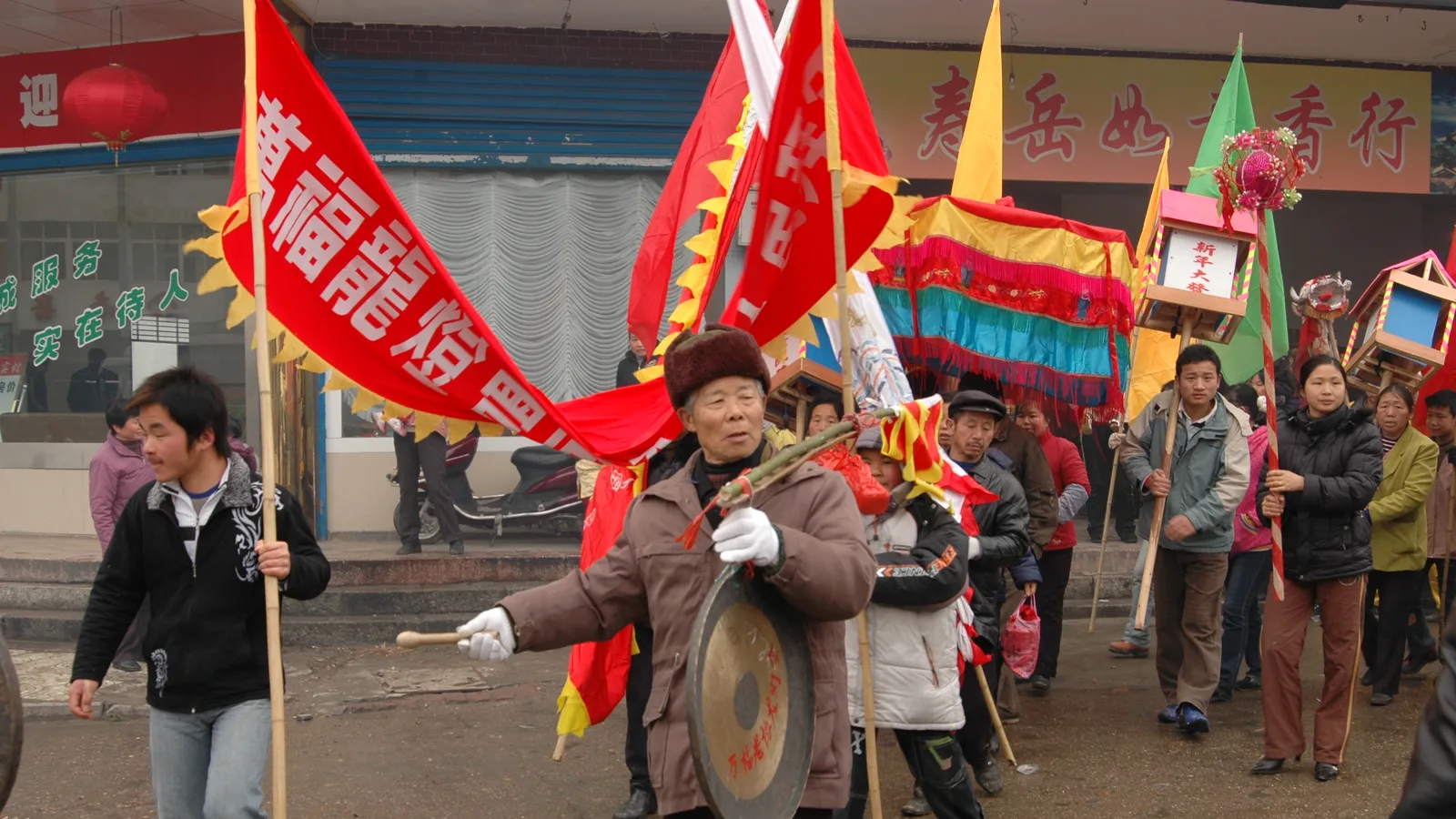
*A dragon dance moves through a crowded Chinese festival celebration.*
Chinese New Year vs Spring Festival vs Lunar New Year
- Spring Festival (春节) — the standard name in China for the traditional New Year celebration.
- Chinese New Year — the common English name for the same core Chinese celebration.
- Lunar New Year — a broader international term that can refer to New Year observances across multiple cultures that use lunisolar calendars. It should not be treated as exclusively synonymous with Chinese Spring Festival.
Chinese New Year and Spring Festival describe the same Chinese celebration; Lunar New Year is a broader cross-cultural term that is not exclusive to China.
When Does Chinese New Year Begin?
Separate four clocks:
- Festival/calendar date — first day of the first Chinese-calendar month (17 February 2026).
- New Year’s Eve — the evening before the first day; reunion meals often center here.
- Broader celebration period — many families treat the first half-month through Lantern Festival as an extended festive sequence.
- Official holiday period — the statutory rest window (15–23 February 2026 in the State Council notice), which is not identical to “how long the festival lasts” in cultural terms.
Reunion and New Year’s Eve
Family reunion is a central theme for many households. New Year’s Eve meals and visits to relatives are common patterns, while who gathers, what is cooked and how travel is arranged vary widely by region, generation and work situation.
Decorations, Couplets and the Character Fu
Red decorations, door couplets and the character 福 (fú) appear widely. Placement and styles differ; there is no single nationwide “correct” decoration set for every household.
Red Envelopes / Hongbao
红包 (hóngbāo) — red envelopes with money — are a familiar gift custom in many families and workplaces. Amounts, who gives and who receives, and digital versus physical envelopes vary. Treat descriptions as orientation, not rigid etiquette rules.
Chinese New Year Food
Temple Fairs
Temple fairs are a long-standing festive tradition in many cities, combining market stalls, snacks and performance. Beijing and other cities have hosted well-known fairs in recent years, but venues and dates change—check current municipal or venue notices for the year you travel.
Lion Dances, Dragon Dances and Performance
Lion and dragon dances appear in many festive contexts. For performance literacy beyond festival timing, see Chinese Performing Arts.
Greetings and New Year Language
| Phrase | Pinyin | Traveler note |
|---|---|---|
| 过年好 | guònián hǎo | Common seasonal greeting |
| 新年快乐 | xīnnián kuàilè | Widely used New Year greeting |
| 恭喜发财 | gōngxǐ fācái | Prosperity wish; context-dependent |
What Travelers Experience during Spring Festival
Domestic transport demand is typically high around the holiday window. Some urban neighborhoods feel quieter if residents leave for hometowns; tourist districts and remaining open attractions can still be busy. Restaurant and shop hours vary. Temple fairs and temporary events may appear. Confirm current opening notices for the places on your itinerary.
Traveling during Chinese New Year
For 2026, plan around the official holiday 15–23 February, knowing the cultural first day is 17 February. Book early when possible, build buffer into train/flight connections, and treat attraction hours as changeable.
Common Misconceptions
- Spring Festival and Chinese New Year describe the same core Chinese celebration.
- Lunar New Year is a broader cross-cultural term.
- Spring Festival is not one identical set of customs across China.
- The celebration period and statutory holiday period are not identical.
- Not every business closes for the whole traditional festival period.
FAQ
What is Chinese New Year called in China?
Spring Festival — 春节 (Chūnjié).
Is Chinese New Year the same as Spring Festival?
Yes, for the core Chinese celebration. English and Chinese names refer to the same festival.
Is Chinese New Year the same as Lunar New Year?
Not perfectly. Lunar New Year is a broader international label.
When is Chinese New Year in 2026?
Festival day 1: 17 February 2026. Official holiday: 15–23 February 2026.
How long does Spring Festival last?
Culturally, many people treat an extended period through Lantern Festival as festive. Officially, use the published holiday window—do not confuse the two.
What do Chinese families do during Spring Festival?
Reunion, meals, greetings, decorations and visits are common themes; details vary by region and household.
What are red envelopes?
红包 (hóngbāo) — money gifts in red envelopes (or digital equivalents), with flexible local practice.
Can tourists travel in China during Chinese New Year?
Yes, with planning. Expect busy transport and variable hours; book ahead where you can.
Continue with Chinese Festivals
Sources & Review
- State Council 2026 holiday notice (国办发明电〔2025〕7号), gov.cn.
- UNESCO: Spring Festival, social practices of the Chinese people in celebration of traditional new year (cultural context).
Last reviewed: August 2026