
Quick Orientation
| Topic | Orientation |
|---|---|
| Season | Spring Festival / Chinese New Year period |
| Common form | Window flowers (窗花, chuānghuā) and interior festive cuts |
| Frequent colour | Red festive paper |
| Recurring motifs | 福 and other characters, zodiac animals, flowers, paired forms |
| Related hub | Chinese Paper Cutting |
| Festival context | Chinese New Year |
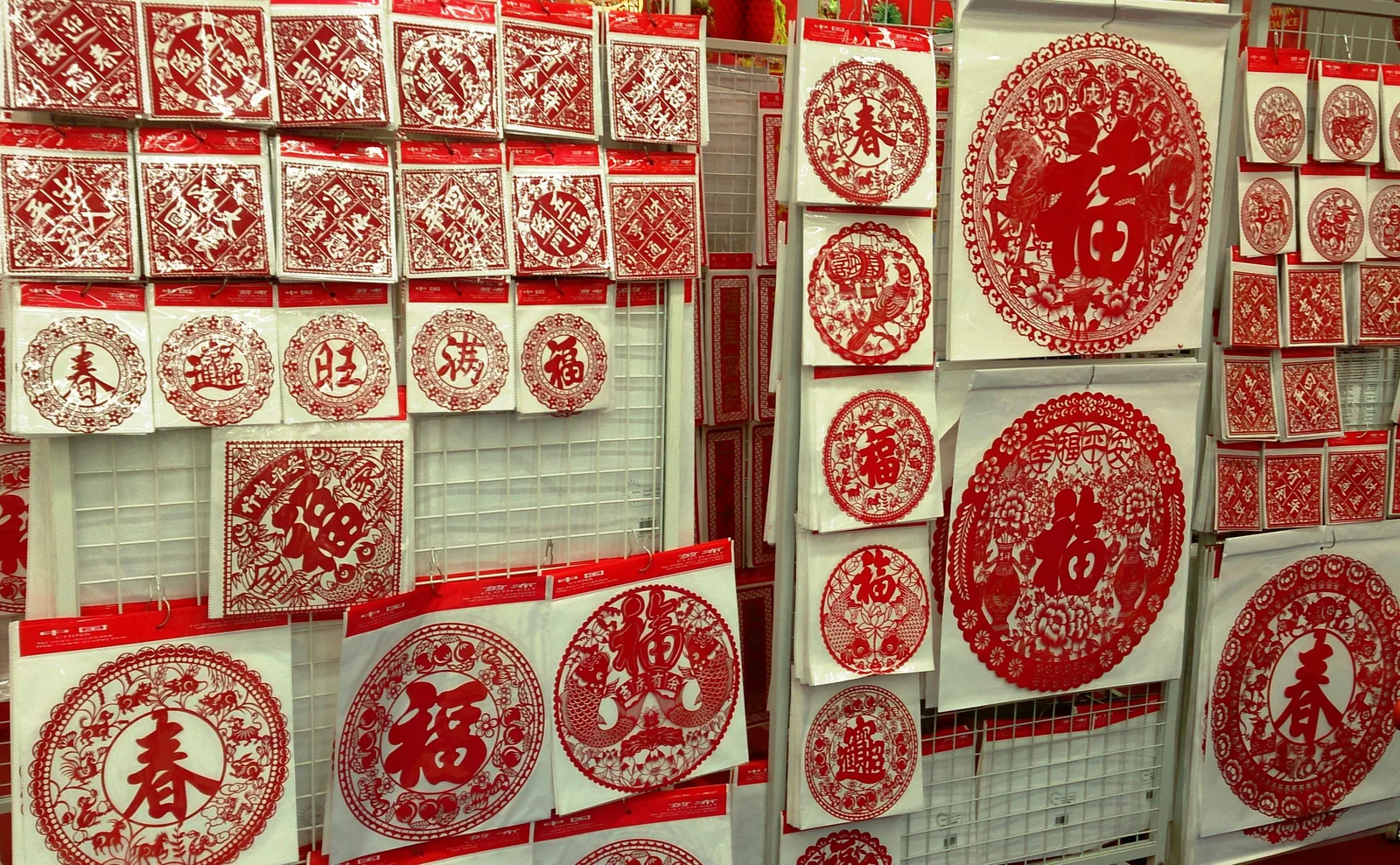
*Chinese paper cuttings for New Year. Photograph: ProjectManhattan, Wikimedia Commons, CC BY-SA 3.0.*
Why Paper Cutting Is Used at Chinese New Year
Paper cuts mark the household visually for the festival: windows glow with openwork designs, and interiors may show characters or animals associated with the year. Folklife and museum educator materials describe paper cutting as part of seasonal decoration culture—alongside couplets, lanterns and other festive arts—rather than as a substitute for the whole New Year.
For travelers, the key point is practical: if you visit China near the festival, you are more likely to see paper cuts in windows, markets and cultural displays than at other times of year.
Why Red Paper Is Common
Red is especially common for New Year paper cuts because it is widely used in Chinese festive contexts to signal celebration. That does not mean every historical or contemporary paper cut is red. Teaching studios, exhibitions and artworks may use other colours, layered sheets or uncoloured paper.
Treat “red New Year papercut” as a strong seasonal pattern, not a universal law of jianzhi.
Window Flowers: 窗花 (chuānghuā)
Window flowers (窗花, chuānghuā) are paper cuts designed to sit on window panes so light passes through the openwork. The name points to placement and effect more than to one fixed motif set. Designs range from dense lattice-like patterns to bold single characters or animals.
Not every New Year paper cut is a window flower—door panels, interior walls and table displays also appear—but chuānghuā is the form travelers most often photograph from the street.
Common New Year Characters and Motifs
Frequently seen festive elements include:
- 福 (fú) — commonly associated with blessing or good fortune wishes in New Year display
- 春 (chūn) — spring, often linked to the seasonal turn of the festival
- Floral and animal motifs used as decorative companions to characters
- Paired forms that can express wishes for harmony or family celebration in festive contexts
Use cautious language: motifs are associated with wishes and seasonal meanings; they do not literally bring wealth or guarantee luck. Deeper motif reading: Symbols & Motifs.
Zodiac Paper Cuts
Each lunar year is linked to one of the twelve zodiac animals. Seasonal paper cuts often feature that year’s animal—dog, dragon, pig and others appear in teaching sets and market displays when the calendar turns.
Zodiac animals are especially visible around the matching lunar year, but they are not the whole of New Year paper cutting. Character designs and floral window flowers remain common even in zodiac years. For motif families, see Symbols & Motifs.
How New Year Paper Cuts Are Made
Household and beginner New Year cuts often use scissors and thin red paper. Some makers fold paper for symmetrical window flowers; others cut freehand or from printed outlines. Workshop and demonstration contexts may show knife techniques for finer openwork.
A conservative beginner path: How to Make Chinese Paper Cutting. Festival cutting is usually about recognizable festive forms, not museum-grade virtuosity.
What Varies by Region and Family
Display intensity varies. Some households put up many window flowers; others use a few key pieces or buy ready-made cuts. Regional cutting styles, preferred motifs and whether paper cutting is a home skill or a purchased decoration all differ.
Travelers should not treat one photographed hutong window as a national standard.
Common Mistakes
- Assuming every red decorative paper item is hand-cut jianzhi
- Treating one motif chart as valid for every region
- Claiming paper cutting “invented” Chinese New Year customs
- Expecting identical window displays in every city you visit
- Confusing New Year papercuts with the general history of paper as a material
Frequently Asked Questions
Why do people put paper cuts on windows for Chinese New Year?
Window flowers decorate the home for the festival and let light show through openwork designs. They are a familiar seasonal visual custom in many communities, not a single required ritual everywhere.
Are Chinese New Year paper cuts always red?
Red is especially common for festive works, but other colours and uncoloured paper also appear in teaching, art and some household practice.
What does the 福 paper cut mean?
福 is commonly associated with blessing or good-fortune wishes in New Year contexts. Treat that as customary association, not a guaranteed effect.
Are zodiac animal paper cuts required each year?
No. They are popular seasonal designs. Many households emphasize characters or floral window flowers instead of—or alongside—the year’s animal.
Is Chinese New Year paper cutting the same as jianzhi?
It is a major seasonal use of jianzhi. Jianzhi also covers wedding, everyday and regional practices beyond the festival. See Jianzhi Folk Art.
Can I learn a simple New Year cut as a beginner?
Yes—simple folded window flowers and character practice cuts are common teaching starting points. See the how-to guide.
Paper Cutting Beside Other New Year Decorations
Paper cuts rarely appear alone. Households may combine them with couplets, lanterns, door gods imagery and festive textiles. Understanding paper cutting as one layer of the decorative mix prevents over-focusing on a single craft when you walk festival streets.
The general festival guide covers calendar, greetings and travel timing: Chinese New Year. This page stays on papercuts—especially chuānghuā, characters and zodiac designs.
Buying Versus Making Festival Cuts
Many urban households buy ready-made window decorations. That does not make the imagery “fake”; it changes how the craft is transmitted. Travelers interested in making rather than buying should look for teaching sessions or request a short activity with a host, using the how-to page for expectations and the hutong experience page only as an optional inquiry path.
Photographing Window Flowers Respectfully
Street-facing windows are often easy to photograph; interior courtyard homes are not public galleries. Do not enter private spaces for a closer shot. Avoid implying that a photographed window is a DragonTrail venue.
Seasonal Checklist for Travelers
| If you want… | Do this |
|---|---|
| Photos of window flowers | Walk residential and commercial streets near the festival; stay outside private courtyards |
| Motif literacy | Learn 福 / 春 and the year’s animal on the symbols page |
| A short hands-on try | Arrange a class or request an optional activity; do not assume inclusion |
| Festival logistics | Use the main Chinese New Year guide for travel timing |
Red Paper, Light and Night Views
Window flowers change character after dark when interior lights push through openwork. Daytime shots show colour and paper texture; evening shots show silhouette. Both are legitimate ways to document chuānghuā without entering homes.
Sources & Further Reading
- UNESCO — Chinese paper-cut (2009, Representative List of the Intangible Cultural Heritage of Humanity)
- Smithsonian Folklife Festival — Paper Cuttings, Shaanxi Province
- Smithsonian National Museum of Asian Art — Paper Cutting educator material
Motif language stays associative. Image credit appears under the figure above.
Continue Exploring
Return to the Chinese Paper Cutting hub, read Symbols & Motifs, or place the festival in wider context with Chinese New Year. For a Beijing cultural half-day, you can request—not assume—paper cutting on the hutong calligraphy and dumpling experience.