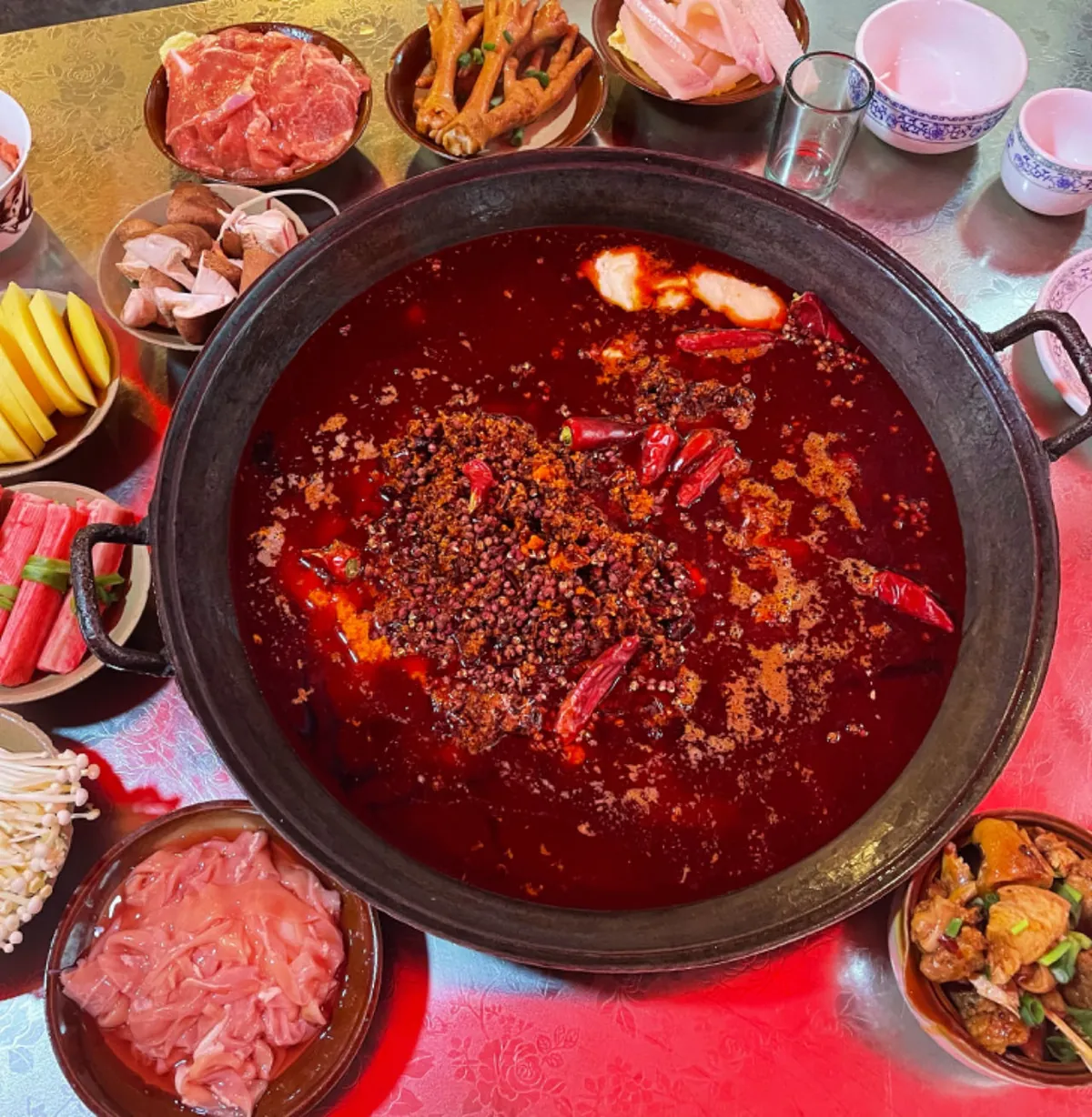
| Item | Detail |
|---|---|
| Chinese | 火锅 (huǒguō); Sichuan-style: 四川火锅 |
| City association | Chengdu and Chongqing are the two cities most linked to this hotpot style |
| Typical broth | Chilli-oil and beef-tallow base, often available split with a milder side |
| Spice range | From mild/clear broths to intensely málà (numbing-spicy) |
| Format | Shared pot at the table; diners cook raw ingredients themselves |
| Typical meal length | Often 1.5–2+ hours for a full sitting |
| Best for | Groups, evening dining, travelers comfortable sharing one pot |
Why Chengdu Is A Hotpot Destination
Chengdu supports a dense, long-running hotpot restaurant culture: neighbourhood spots, large multi-floor venues, and everything in between. Locals eat hotpot as a regular social meal rather than a novelty, and the city's slower-paced teahouse and evening-leisure identity gives hotpot dinners room to run long. That combination—volume of restaurants plus a culture built around lingering meals—is what makes Chengdu a genuine hotpot destination rather than a city that simply happens to have hotpot restaurants.
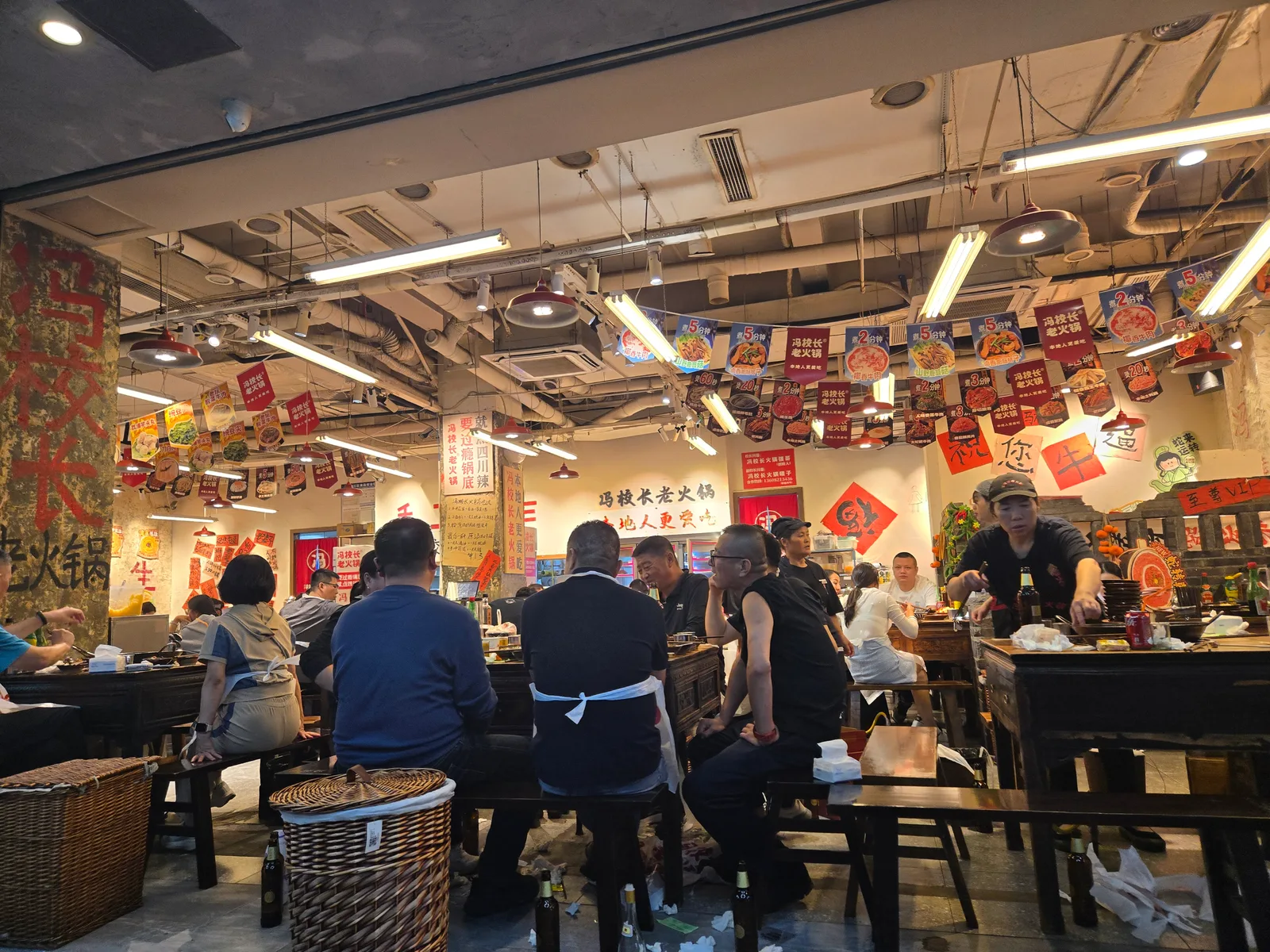
*Diners share hotpot at a busy open-air restaurant.*
Chengdu Hotpot And The Wider Sichuan Tradition
Chengdu hotpot sits inside the broader Sichuan hotpot tradition, which itself is part of Sichuan cuisine's wider pantry of doubanjiang, chilli oil and Sichuan pepper. The core flavour idea—málà, the combined chilli-heat-plus-numbing sensation—runs through Chengdu hotpot broths, dry-dip spice mixes and many stir-fried dishes from the same province. Visitors who try Chengdu hotpot are tasting one expression of a flavour system that extends well beyond this single dish. See the Chinese hotpot hub for how Chengdu fits alongside other regional hotpot styles.
Chengdu vs Chongqing Hotpot
Chengdu and Chongqing are often mentioned together, and their hotpot pantries overlap heavily—chilli oil, beef tallow, Sichuan pepper and shared-pot dining are common to both. Restaurants and diners in each city describe some general tendencies (Chongqing is frequently associated with a heavier, more offal-forward style; Chengdu is often described as slightly milder on average), but individual restaurants in both cities vary widely, and neither city eats one single "correct" version. For a fuller side-by-side comparison, see Chengdu vs Chongqing hotpot.
Broth And Base Choices
Most Chengdu hotpot restaurants offer more than one broth option:
| Broth style | What it is |
|---|---|
| Chilli-oil / beef-tallow (红汤) | The classic málà base—chilli, Sichuan pepper, beef tallow or vegetable oil |
| Clear / mild broth (清汤) | Bone or vegetable stock without chilli, for non-spicy eating |
| Tomato or mushroom broth | Milder options offered by many restaurants as an alternative to clear broth |
| Split pot (see below) | Two broths in one pot, so a table can order both |
Broth richness and oiliness vary by restaurant—some kitchens use lighter oil levels than others, and this is not standardised across the city.
Spice Level And How To Order It
Spice level in Chengdu hotpot is usually adjustable on request. Common phrases to know:
- Bù là (不辣) — not spicy.
- Wēi là (微辣) — mild.
- Zhōng là (中辣) — medium.
- Tè là / hěn là (特辣 / 很辣) — very spicy.
Staff can usually calibrate the chilli level of a broth or dip when asked, though "not spicy" hotpot broth in Chengdu will still often carry background chilli-oil aroma unless a fully clear broth is chosen. First-time diners who are heat-sensitive should default to a clear or mild broth rather than assuming a "medium" request will be genuinely mild.
Split Pots (鸳鸯锅)
The split pot (鸳鸯锅, yuānyāng guō, literally "mandarin duck pot") is a divided cooking vessel with two separate broths—typically a spicy málà side and a mild side—cooked in the same pot at the same table. It is the standard solution for groups with mixed spice tolerance and is widely available at Chengdu hotpot restaurants; it is worth requesting by name if a table has both spice-lovers and spice-avoiders.
Ingredients Travelers See On The Table
Chengdu hotpot menus are typically ordered à la carte from a long list of raw ingredients, cooked briefly in the shared broth. Common categories:
| Category | Examples |
|---|---|
| Thin-sliced meats | Beef, lamb, pork belly |
| Offal (optional) | Tripe (毛肚), duck intestine (鸭肠), kidney |
| Seafood | Shrimp, squid, fish slices (restaurant-dependent) |
| Tofu and soy products | Fresh tofu, tofu skin, frozen tofu |
| Vegetables | Lotus root, potato, enoki mushroom, leafy greens, winter melon |
| Starches | Wide flour noodles (宽粉), instant noodles, sweet potato noodles |
Cooking times differ sharply by ingredient—thin meat and leafy greens cook in seconds, while root vegetables and some starches need several minutes. Overcrowding the pot slows everything down, so most tables order and cook in smaller waves rather than all at once.
Dipping Sauce (油碟)
Chengdu hotpot is commonly eaten with a dip built at a self-serve sauce bar, most classically a sesame-oil base (油碟, yóudié) mixed with garlic, cilantro and scallion. The sesame oil dip serves a practical purpose: it cools ingredients fresh out of hot broth and softens the chilli hit. Some diners also add a dry spice mix (蘸料) with ground chilli and peanuts for extra flavour on top of the oil base. Sauce-bar setups vary by restaurant, so taste a small amount before building a full bowl.
How Chengdu Hotpot Ordering Works
Most restaurants follow a similar sequence:
- Choose the pot and broth(s) — single broth or split pot, spice level for each side.
- Order ingredients à la carte, usually from a paper checklist or tablet menu, in rounds rather than all at once.
- Build a dipping sauce at the sauce bar before the food arrives.
- Cook in the pot yourselves, adding items in order of cooking time (quick-cooking items last, slower ones first).
- Reorder as needed — most tables add two or three rounds over the course of the meal.
A First-Timer Order Framework
For a first Chengdu hotpot meal, a simple starting order avoids over-ordering and lets the table calibrate spice before committing further:
- One split pot (mild + medium, not full spice, for a first visit).
- Two thin-sliced meats (beef and lamb are common starting choices).
- Two to three vegetables (leafy greens plus one root vegetable such as lotus root or potato).
- One tofu item and one starch (wide flour noodles are a common finish).
- A simple sesame-oil dip, tasted before adding dry spice.
Reorder based on what runs out first rather than ordering everything up front—portions and appetite vary by group.
Vegetarian And Dietary Notes
Most Chengdu hotpot broths, including "clear" options, are typically made with meat-based or bone stock unless a restaurant explicitly offers a vegetarian broth—ask directly rather than assuming. Vegetable, tofu and mushroom ingredients are usually easy to find on the à la carte list even when the broth itself is not vegetarian, so travelers with dietary restrictions should confirm the broth base first and select ingredients afterward. Shared pots also carry cross-contact risk between meat, seafood and vegetable items cooked in the same broth—relevant for shellfish allergies and strict dietary needs. See Vegetarian & Vegan in China and Chinese Dining Etiquette for wider context on eating around dietary restrictions in China.
Pairing Hotpot With A Chengdu Evening
Hotpot's long, unhurried format suits Chengdu's evening pace well. A common structure for visitors is an early hotpot dinner followed by a Sichuan opera performance—which often includes the well-known face-changing (变脸) segment—as a two-stop evening rather than trying to combine both into one seated event. DragonTrail can arrange this pairing directly: Chengdu hotpot food tour for a guided hotpot introduction, or Chengdu hotpot and Sichuan opera for the combined evening.
FAQ
Is Chengdu hotpot the same as Chongqing hotpot?
They share the same core pantry—chilli oil, beef tallow, Sichuan pepper—and are often discussed together, but restaurants in each city differ in style and intensity. See Chengdu vs Chongqing hotpot for a fuller comparison.
Can I order Chengdu hotpot without spice?
Yes. Ask for a clear or mild broth, or a split pot with one non-spicy side. Confirm the level directly with staff since "mild" can still carry background chilli aroma.
What is the split pot (鸳鸯锅)?
A divided pot with two separate broths—commonly spicy and mild—cooked side by side in one vessel. It is the standard option for groups with mixed spice tolerance.
What should a first-time visitor order?
A split pot, two sliced meats, two or three vegetables, one tofu item and one starch, with a simple sesame-oil dip. Reorder in small rounds rather than ordering everything at once.
Is hotpot broth in Chengdu vegetarian?
Not by default. Most broths use meat or bone stock unless a restaurant specifically states otherwise—ask before assuming a "clear" broth is vegetarian.
What is málà?
Málà (麻辣) is the combined sensation of chilli heat (辣) and Sichuan-pepper numbing (麻) that defines Sichuan-style hotpot broths and many other Sichuan dishes. See the málà guide for more detail.
How long does a Chengdu hotpot meal usually take?
Often 1.5 to 2 hours or longer, since ingredients are ordered and cooked in rounds rather than served as a set course.
Can DragonTrail arrange a Chengdu hotpot experience?
Yes. See the Chengdu hotpot food tour and hotpot with Sichuan opera options.
Continue with Chinese hotpot
Book Chengdu hotpot experiences
Sources & Review
- Chinese Culinary Association — Eight Great Cuisines educational framework (Sichuan cuisine context)
- Fuchsia Dunlop, *Land of Plenty* — Sichuan pantry, hotpot and málà background
- Chengdu municipal cultural tourism materials on local dining culture
- Chinese characters verified
- Author: DragonTrail editorial
- Last reviewed: August 2026