
| Item | Answer |
|---|---|
| Chinese | 麻辣 (málà) |
| 麻 (má) | Numbing/tingling sensation from Sichuan pepper |
| 辣 (là) | Chilli heat |
| Associated regions | Sichuan, Chongqing |
| Related but different dishes | Malatang (麻辣烫), mala xiang guo (麻辣香锅) |
| Key point | Sichuan pepper is not a chilli |
| Related pages | Sichuan Hot Pot, Broths |
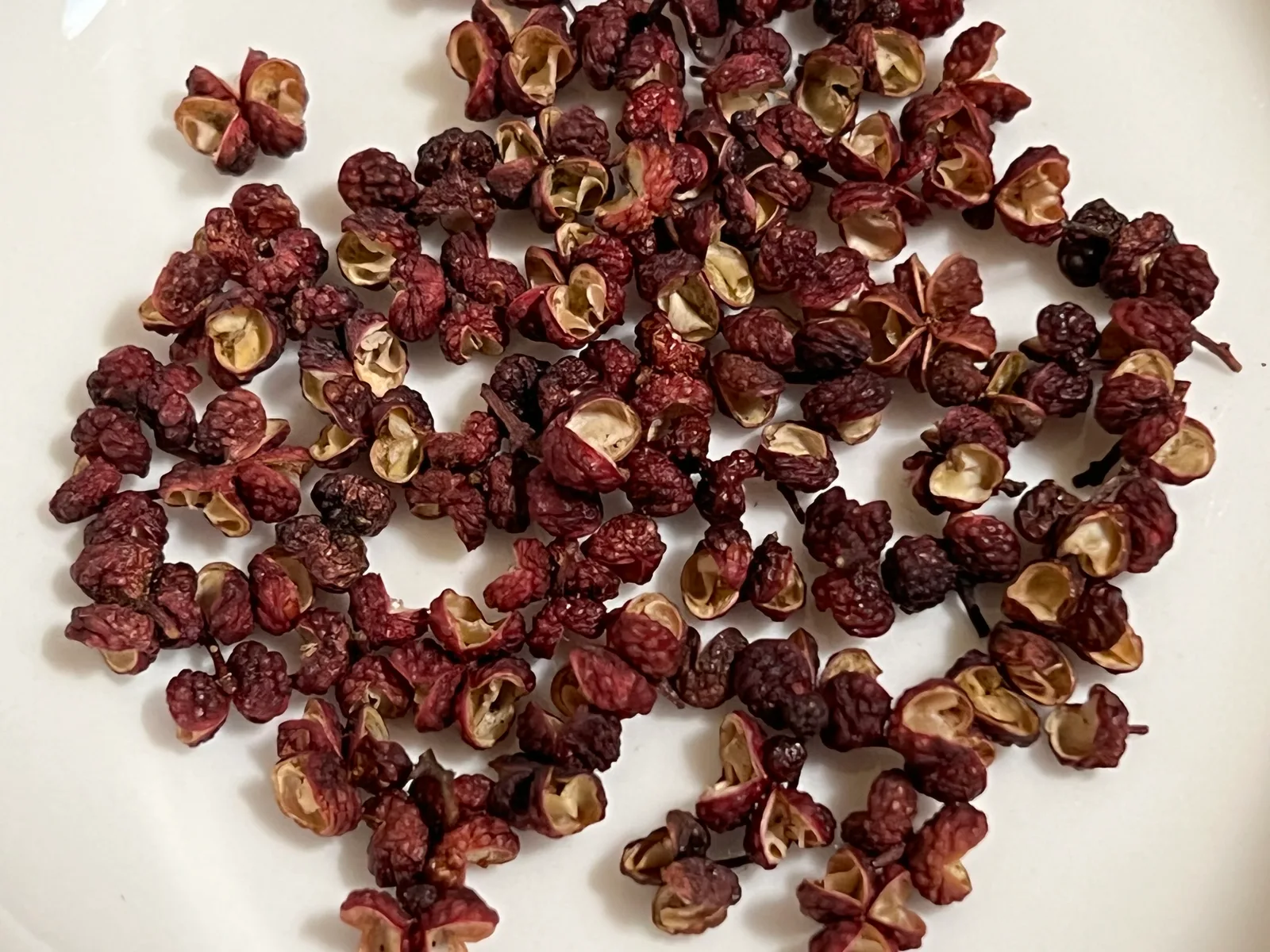
*Sichuan pepper (花椒)—the source of the numbing "má" sensation in mala flavor, distinct from chilli's "là" heat. DragonTrail editorial image.*
What 麻 (Má) Means
麻 (má) describes the tingling, slightly numbing sensation produced by Sichuan pepper (花椒, huājiāo). It is not painful heat in the way chilli is—it is closer to a mild electric buzz on the lips and tongue, and it fades and returns in waves as you eat. Sichuan pepper is not a chilli and is not related to black pepper; it comes from the dried husks of a different plant entirely, and its numbing effect is a distinct sensory category from spiciness.
What 辣 (Là) Means
辣 (là) is the standard Chinese word for chilli heat—the burning sensation produced by capsaicin in fresh and dried chillies, chilli oil and chilli paste. This is the same basic sensation associated with spicy food worldwide, and it is what most travelers expect when a menu says a dish is "spicy."
Mala as a Combined Flavor System
Mala (麻辣) combines má and là together rather than referring to either sensation alone. The combination is often described as "numbing-spicy," and the balance between the two varies by dish, restaurant and region—some mala preparations lean heavily on chilli heat with only a light touch of numbing, while others emphasize a strong Sichuan pepper presence alongside moderate heat. Mala is a flavor profile, not a specific dish, and it is strongly associated with Sichuan and Chongqing cooking without being exclusive to hot pot—mala seasoning appears in stir-fries, skewers, snacks and sauces well beyond the hot pot table.
Mala Hot Pot vs Malatang
Mala hot pot and malatang share the same flavor family but are different formats:
- Mala hot pot (麻辣火锅) is a shared, communal meal: a pot of mala broth sits at the table, and diners cook their own raw ingredients in it over the course of the meal.
- Malatang (麻辣烫) is typically a single-serving dish: you choose skewered or loose ingredients from a self-serve counter, and the kitchen cooks your selection in spicy broth before handing it to you, often to eat quickly at a counter or take away.
The key distinction is who does the cooking and how the meal is served, not the flavor itself—both can use a similar mala-style broth.
Mala Hot Pot vs Mala Xiang Guo
Mala hot pot and mala xiang guo (麻辣香锅) also share the mala flavor family but differ in cooking method and format:
- Mala hot pot uses a simmering liquid broth that diners cook ingredients in themselves at the table.
- Mala xiang guo has no broth at all—ingredients are chosen at a counter, then stir-fried or tossed in spicy oil in a wok by the kitchen, producing a "dry," sauce-coated dish rather than a soup.
If a menu or dish looks spicy but has no visible liquid broth, it is more likely mala xiang guo than mala hot pot.
Comparison Table
| Dish | Format | Cooking method | Typically served as |
|---|---|---|---|
| Mala hot pot (麻辣火锅) | Shared pot at the table | Diners cook raw ingredients themselves in broth | Communal meal for two or more |
| Malatang (麻辣烫) | Counter-selected ingredients | Kitchen boils your selection in spicy broth | Single-serving street food/fast-casual |
| Mala xiang guo (麻辣香锅) | Counter-selected ingredients, no broth | Stir-fried/tossed in spicy oil, "dry" | Single-serving stir-fry, no soup |
How to Order a Less Intense Version
Asking for 微辣 (wēilà, mildly spicy) reduces the amount of chilli and Sichuan pepper used, and choosing a split (yuānyāng) pot lets you cook mainly on a mild side while others at the table use the mala side. That said, ordering a milder version does not guarantee the result will feel mild to every traveler—spice and numbing tolerance vary widely, and kitchens calibrate "mild" differently from one restaurant to the next. If you are unsure of your tolerance, start with a small taste of the broth before committing a full meal's worth of ingredients to it.
Where Mala Fits in the Hot Pot Cluster
Mala is one flavor system among several used in Chinese hot pot, not a definition of hot pot itself—clear, tomato and mushroom broths are common non-mala alternatives. For the fuller regional picture, see Sichuan Hot Pot, which covers Sichuan cuisine's broader flavor range, and the Chengdu Hot Pot and Chongqing Hot Pot city guides, which describe how mala broth is applied differently in each city. For the technical breakdown of broth families, see Hot Pot Broths & Soup Bases.
FAQ
What does mala mean?
Mala (麻辣) combines two sensations: 麻 (má), the numbing effect of Sichuan pepper, and 辣 (là), chilli heat. Together they form the "numbing-spicy" flavor profile associated with Sichuan and Chongqing cooking.
Is Sichuan pepper the same as black pepper or chilli?
No. Sichuan pepper is a distinct spice that produces a numbing, tingling sensation, unrelated botanically to both black pepper and chilli. Chilli produces the separate "là" heat sensation in mala flavor.
Is mala hot pot the same as malatang?
No. Mala hot pot is a shared, self-cooked meal at a communal pot of broth. Malatang is usually a single-serving dish where you choose ingredients at a counter and the kitchen cooks them for you before serving.
What is the difference between mala hot pot and mala xiang guo?
Mala hot pot uses a liquid broth that diners cook ingredients in themselves. Mala xiang guo has no broth—ingredients are stir-fried in spicy oil in a wok, producing a "dry" dish rather than a soup.
Can I order a mild version of mala hot pot?
Yes—ask for 微辣 (wēilà, mildly spicy) or choose a split (yuānyāng) pot with a mild side. Note that "mild" still varies by restaurant and by individual spice tolerance.
Is mala only used in hot pot?
No. Mala is a flavor profile used across many Sichuan and Chongqing dishes, including stir-fries, skewers and snacks, not only hot pot.
Is all Sichuan and Chongqing food mala?
No. Both regions produce many non-spicy and non-numbing dishes; mala is one important flavor system within a much broader regional cuisine.
Continue with Chinese Hot Pot
City hot pot guides
Sources & Review
- TravelChinaGuide — Chengdu and Sichuan regional dining context
- Chinese characters verified
- Author: DragonTrail editorial
- Last reviewed: August 2026