Chinese names: 五道营胡同 (Wǔdàoyíng Hútòng), 国子监街 (Guózǐjiàn Jiē) Location: Dongcheng District, Beijing Admission: Free to explore both streets; museums and temples require separate admission Suggested visit: 2–3 hours, or half a day with nearby temples Nearest subway: Yonghegong, Lines 2 and 5; Andingmen, Line 2 Best for: Architecture, cultural history, independent cafés, photography and relaxed neighborhood walks
Where Old Beijing Meets Contemporary Culture
Between the red walls of the Lama Temple and the historic streets surrounding Andingmen lies one of Beijing's most distinctive neighborhoods.
Two parallel streets form the heart of the area.
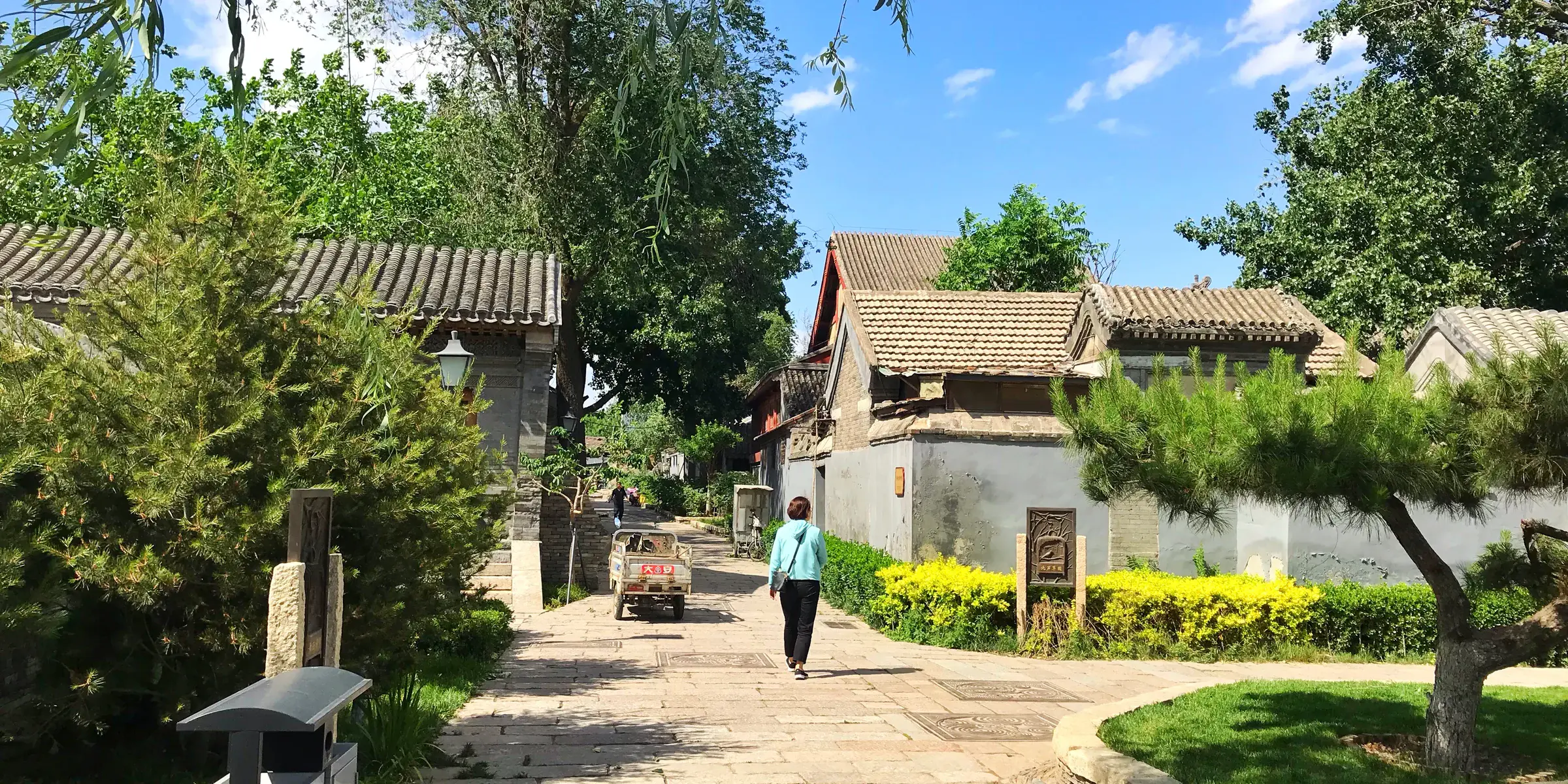
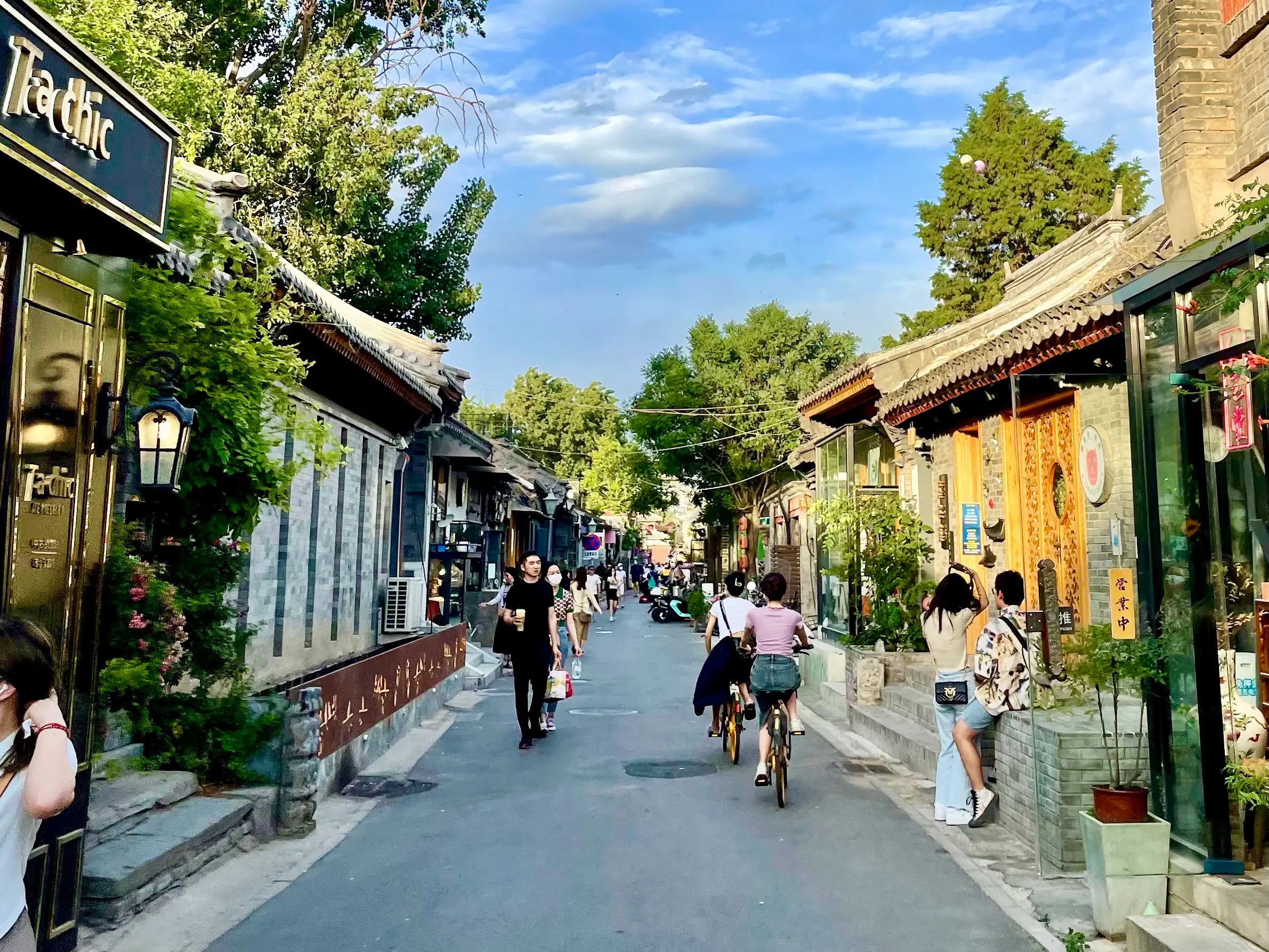
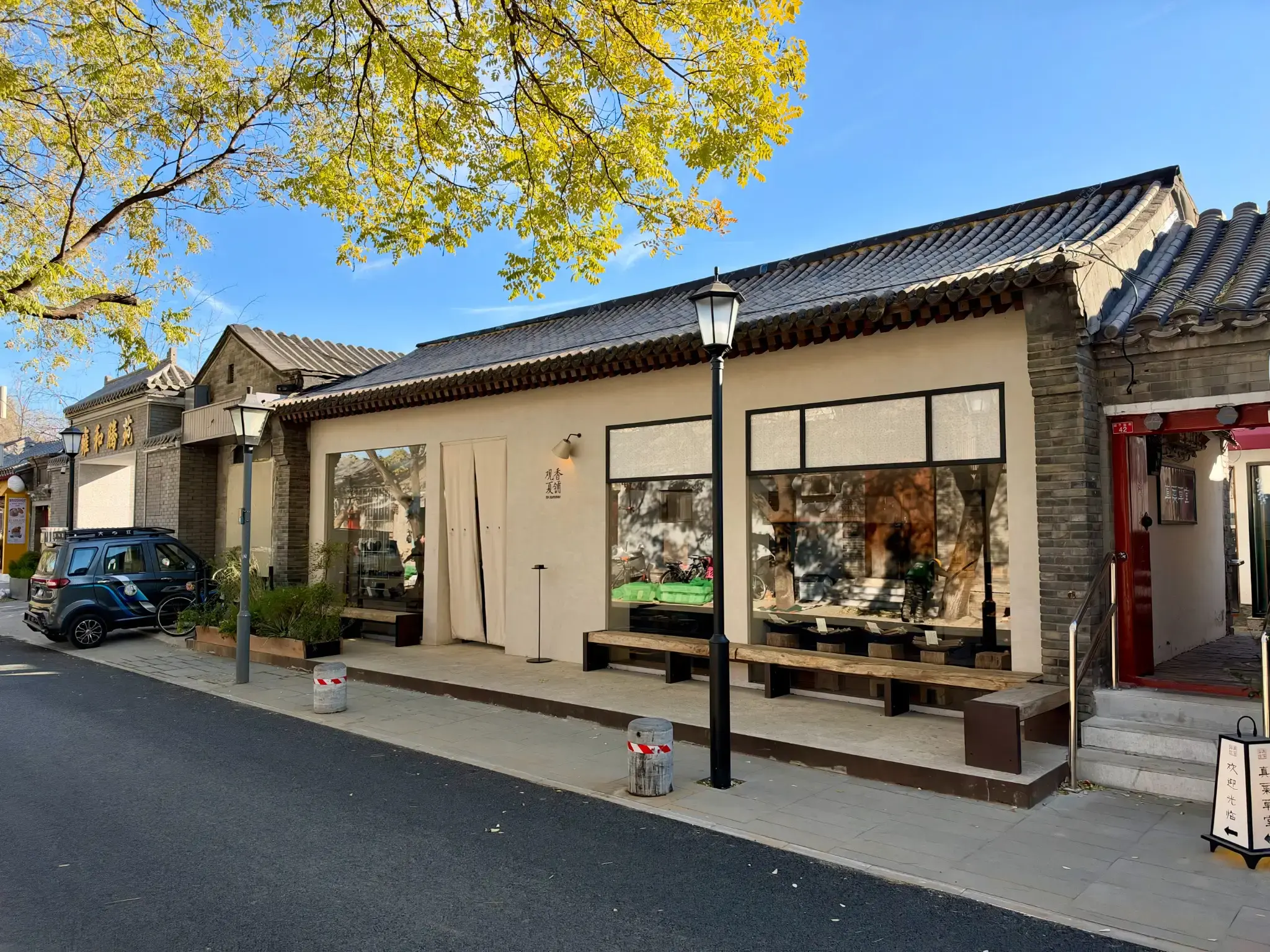
To the north, Wudaoying Hutong is a narrow residential lane where traditional courtyard buildings accommodate independent cafés, design shops, small restaurants and creative businesses.
A short distance to the south, Guozijian Street preserves a more ceremonial atmosphere. Its historic archways, mature trees and red-walled institutions recall the centuries when this area was the intellectual center of imperial China.
The two streets offer very different experiences despite their geographical proximity.
One reflects the evolving culture of contemporary Beijing. The other preserves the architectural dignity of its scholarly past.
Together with the nearby Lama Temple, Confucius Temple and Imperial College, they form a compact and rewarding neighborhood that can easily be explored on foot.
1. The History of Wudaoying Hutong
 Click to enlarge
From Military Quarters to Residential Neighborhood
Wudaoying Hutong's history can be traced to the Ming dynasty, when the northern part of Beijing contained military installations responsible for protecting the capital.
The area belonged to a historical administrative district known as Chongjiaofang (崇教坊).
The lane was associated with a military establishment called Wude Wei Camp (武德卫营), reflecting its connection with the Ming military organization.
Its name subsequently evolved into Wudaoying during the Qing dynasty.
In 1965, the present official street name, Wudaoying Hutong, was established during a citywide standardization of place names.
Over the centuries, the area's military associations gradually gave way to residential functions.
Traditional courtyard houses developed along the lane, creating the low-rise streetscape that remains characteristic of the neighborhood today.
A Compact Historic Street
Wudaoying stretches approximately 632 meters between Yonghegong Street in the east and Andingmen Inner Street in the west.
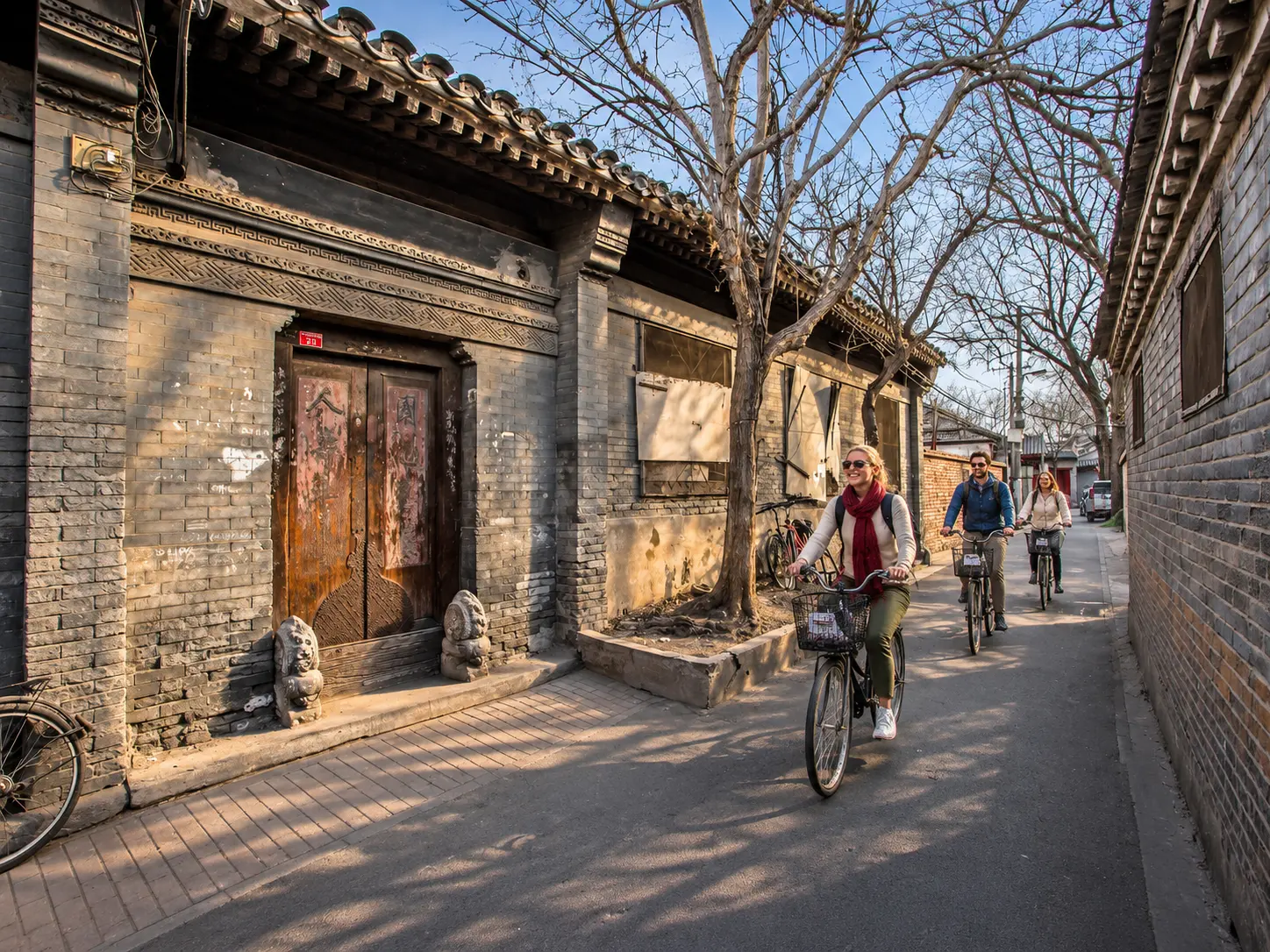
At around six meters wide, it retains the intimate proportions of a traditional Beijing hutong.
Historically, the lane contained dozens of courtyard compounds.
Its narrow scale encourages a different kind of exploration from Beijing's broad avenues and monumental imperial complexes.
Here, architectural details, doorways and small businesses are often more interesting than any single landmark.
2. The Transformation of Wudaoying
Wudaoying's contemporary identity developed gradually during the early twenty-first century.
From the mid-2000s onward, entrepreneurs began adapting traditional courtyard buildings for restaurants, cafés and other small businesses.
The neighborhood attracted independent designers, international residents, artists and people interested in alternative urban lifestyles.
Unlike large-scale commercial developments, many businesses operated within existing residential structures.
This created an unusual relationship between traditional architecture and contemporary commercial activity.
Adaptive Reuse of Courtyard Buildings
A traditional courtyard residence can accommodate a surprising variety of new uses.
Former residential rooms can become cafés, galleries, workshops or dining spaces.
Internal courtyards provide opportunities for outdoor seating, planting and natural light.
Traditional timber structures, brick walls and rooflines can be retained while interiors are modified for contemporary needs.
Wudaoying provides an accessible example of this architectural process.
Not every commercial renovation preserves historic fabric equally well, and the neighborhood continues to face the challenges of balancing conservation, tourism and residential life.
Nevertheless, it illustrates how old urban spaces can acquire new economic and cultural functions without necessarily losing their original scale.
3. Wudaoying's Courtyard Café Culture
Wudaoying is particularly well known for its independent cafés.
Many occupy relatively small spaces behind traditional brick facades or within converted courtyard buildings.
Their atmosphere often differs from the larger commercial coffee shops found in Beijing's shopping centers.
Coffee in a Traditional Setting
The experience is as much about the setting as the coffee itself.
A small timber-framed entrance may open into a contemporary interior. A narrow passage may lead toward a planted courtyard. Some businesses have seating positioned to enjoy views of neighboring rooftops.
These arrangements create a relationship between historic architecture and contemporary urban leisure.
Rather than rushing from one café to another, choose a place that appeals to you and spend some time enjoying the surroundings.
Independent Businesses and Design Shops
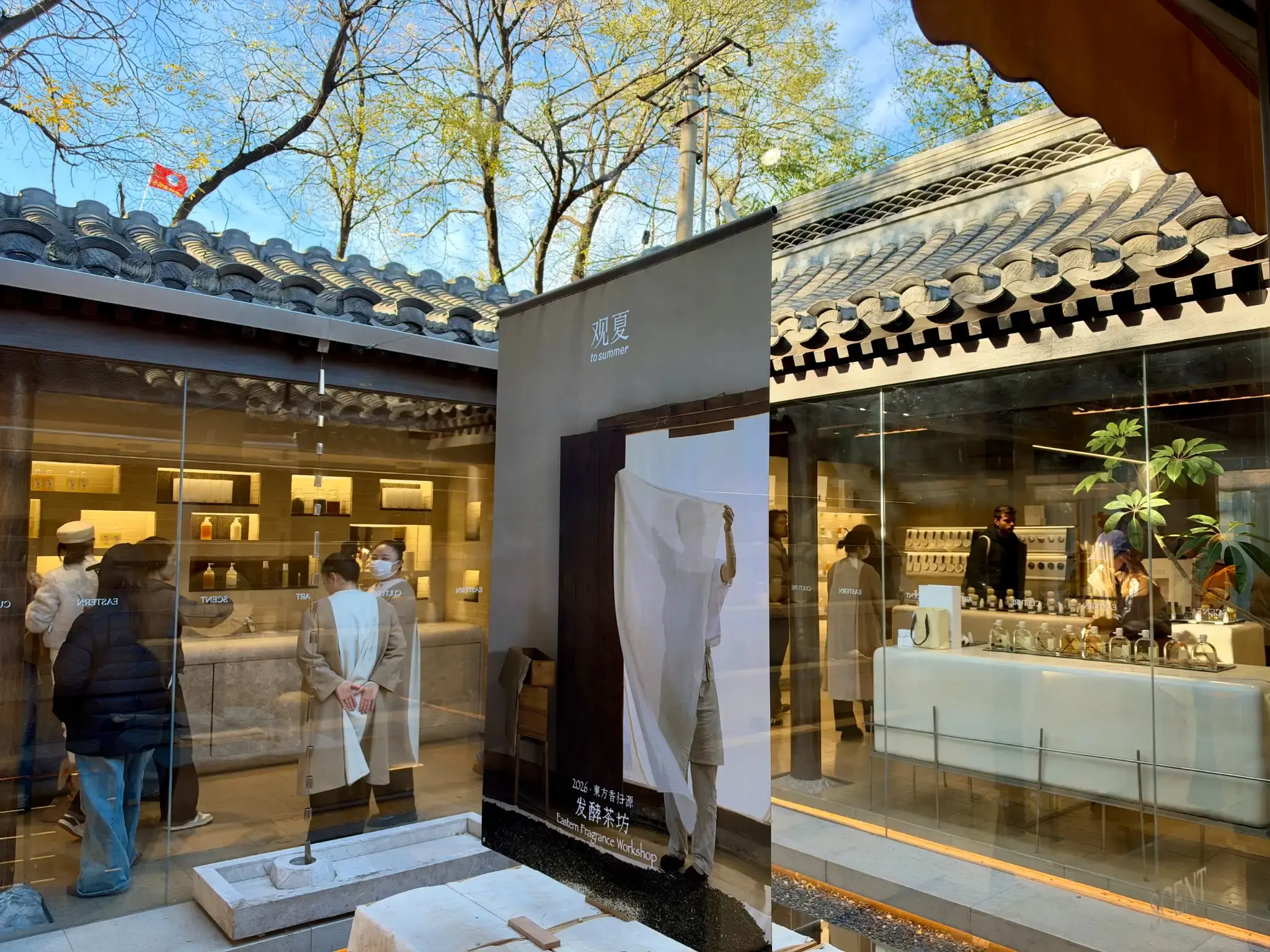
Beyond cafés, the lane is known for a changing collection of independent businesses.
Visitors may encounter handmade ceramics, clothing, jewelry, books, decorative objects and products created by local designers.
The concentration of small shops gives the street a distinctive character compared with Beijing's major shopping districts.
Individual businesses change frequently, so it is worth exploring the street rather than relying entirely on a fixed list of recommended shops.
Dining in Wudaoying
The neighborhood offers a mixture of Chinese regional food, vegetarian restaurants, contemporary dining and international cuisine.
Its proximity to the Lama Temple also makes it a convenient place to stop for lunch after visiting the monastery.
Even visitors who are not particularly interested in shopping will find Wudaoying a pleasant setting for a meal or a relaxed afternoon break.
4. Traditional Architecture Along Wudaoying
Behind the contemporary storefronts, Wudaoying retains many features associated with traditional Beijing residential architecture.
Grey-brick walls, pitched roofs, weathered timber doors and decorative stonework remain important elements of the streetscape.
Courtyard Houses
The traditional Beijing courtyard house, or *siheyuan* (四合院), consists of buildings arranged around an enclosed central space.
Larger compounds could contain several successive courtyards, while smaller residences occupied more modest plots.
The arrangement provided privacy, access to sunlight and a structured division between different household functions.
In Wudaoying, some courtyard buildings continue to serve residential purposes, while others have been adapted for commercial use.
This mixture is one of the reasons the neighborhood feels different from a purpose-built shopping street.
Small Architectural Details
Look beyond shop windows and signs to notice traditional features such as:
- Carved stone door blocks.
- Grey-brick decorative patterns.
- Wooden doors and metal fittings.
- Pitched tiled roofs.
- Traditional courtyard entrances.
- Plants arranged around doorways and windows.
These details often tell a more interesting story about the neighborhood than its contemporary storefronts alone.
5. Guozijian Street: The Historic Scholars' Quarter
 Click to enlarge
 Click to enlarge
A short distance south of Wudaoying lies Guozijian Street (国子监街), one of Beijing's most historically significant traditional streets.
Unlike Wudaoying, whose origins are connected with military and residential functions, Guozijian developed around institutions associated with education, philosophy and state ritual.
The street takes its name from the Imperial College, historically the highest state educational institution in China.
During the Qing dynasty, it was also known as Chengxian Street (成贤街), a name associated with the cultivation of worthy and accomplished people.
A Street Shaped by Learning
The Confucius Temple and Imperial College occupy adjoining compounds along the northern side of the street.
For centuries, scholars, officials, students and ceremonial participants passed through this neighborhood.
Its physical environment reflects that history.
The streetscape is dominated by institutional red walls, mature trees and ceremonial archways rather than large commercial buildings.
Walking along Guozijian Street offers a sense of the dignity and intellectual prestige once associated with this part of the capital.
6. The Four Historic Archways
 Click to enlarge
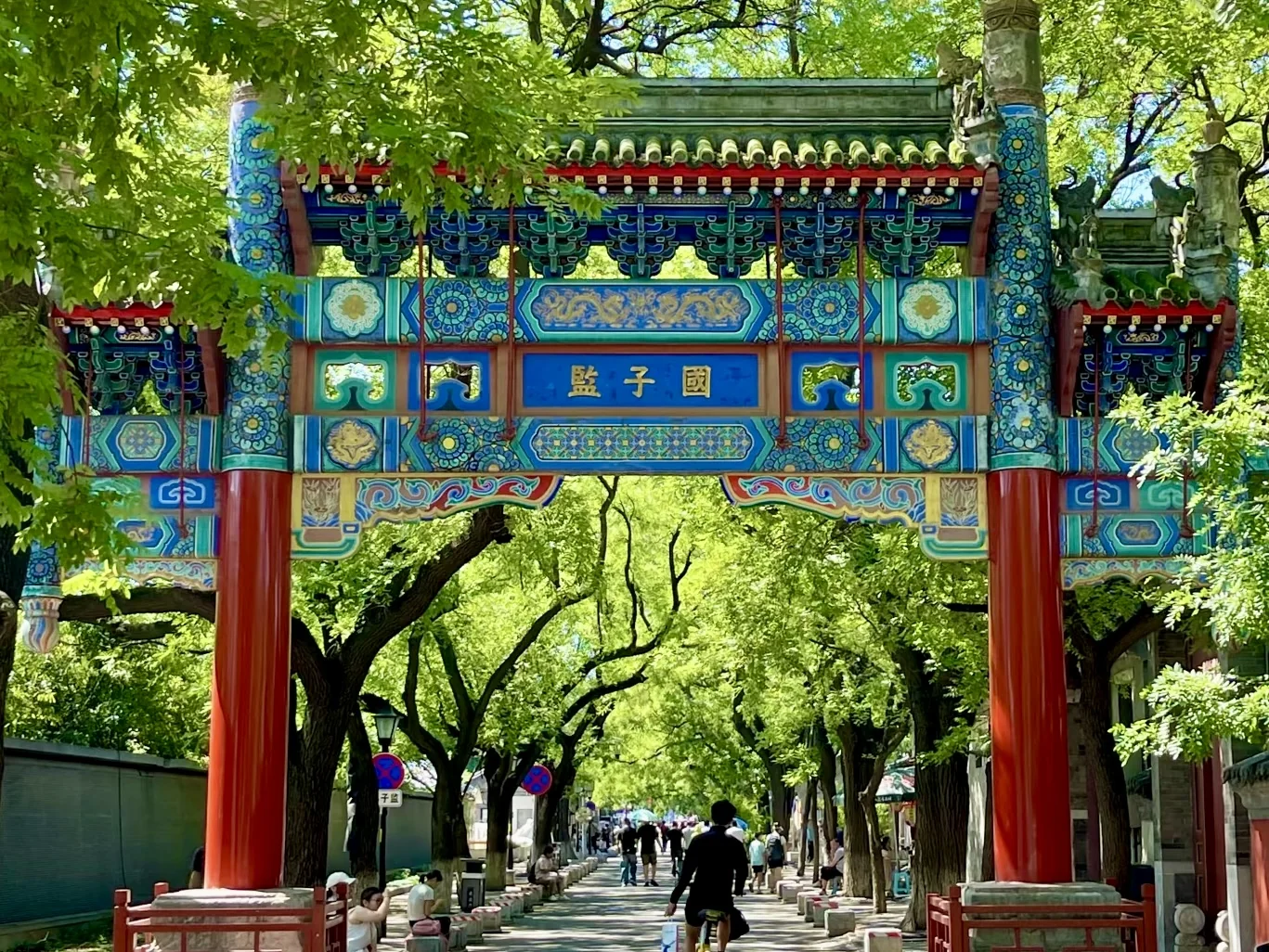
One of Guozijian Street's most remarkable features is its ensemble of four historic ceremonial archways, known as *paifang* or *pailou* (牌坊、牌楼).
Beijing's municipal tourism materials identify Guozijian as the city's only street retaining four such archways.
These structures are among the most recognizable visual features of the neighborhood.
What Are Paifang?
Traditional Chinese ceremonial archways were used to mark streets, institutions, important locations and places associated with particular cultural or social values.
They could commemorate achievements, express institutional prestige or define the boundaries of significant spaces.
Unlike defensive city gates, many ceremonial archways were primarily symbolic.
Their architectural proportions, inscriptions and decorative details communicated the identity of the places they marked.
The Archways of Guozijian
The archways along Guozijian Street are closely associated with the area's educational and ceremonial identity.
Their timber structures and traditional roof decorations create a distinctive sequence of landmarks along the street.
Walking beneath them provides a gradual progression through the historic neighborhood.
Their visual relationship with the surrounding trees, brick walls and traditional buildings makes Guozijian particularly rewarding for architectural photography.
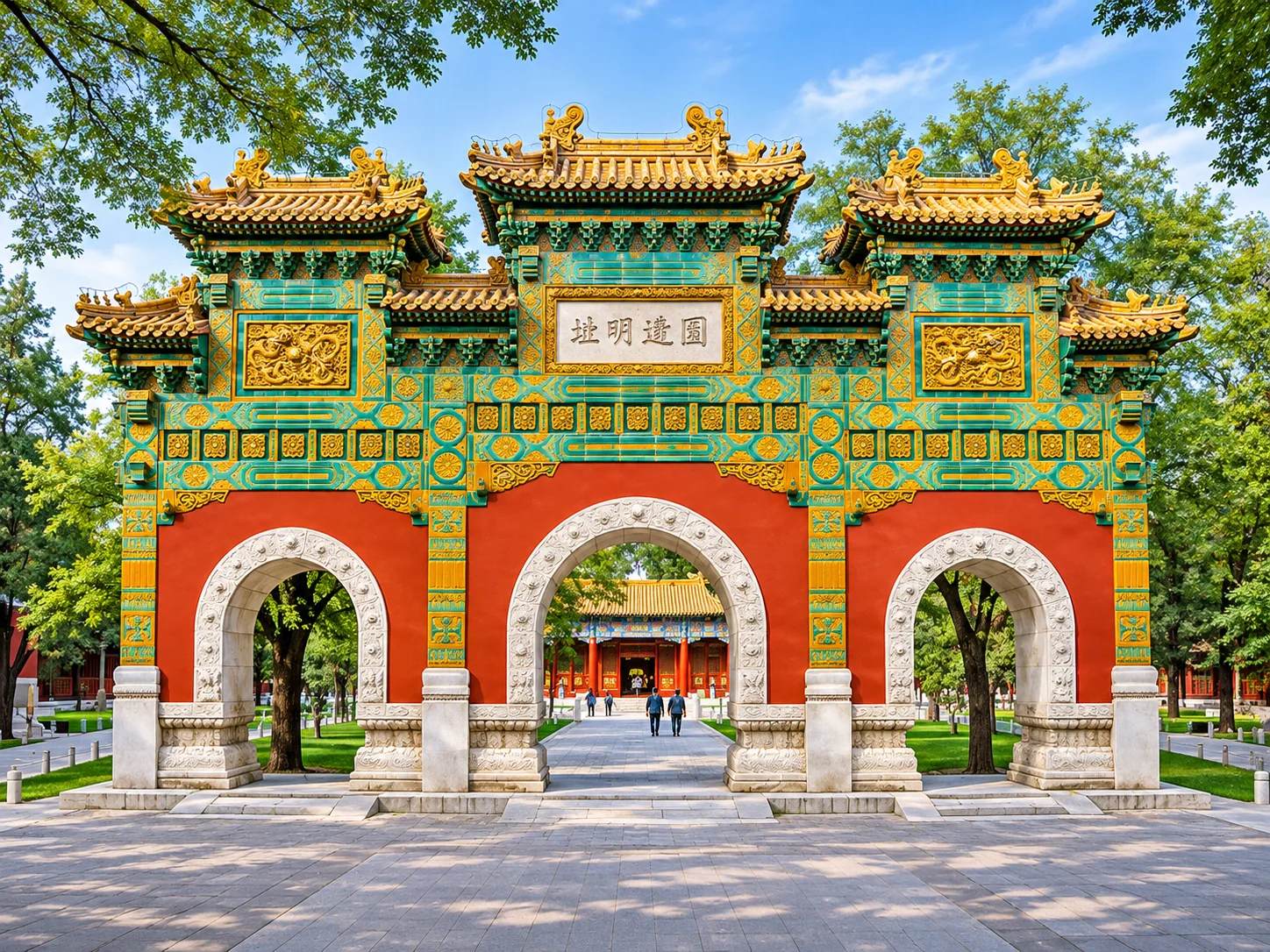
These street archways should not be confused with the elaborate glazed archway located inside the Imperial College itself.
7. The Locust Trees of Guozijian Street
Guozijian Street has a longstanding tradition of planting Chinese scholar trees, sometimes called Chinese pagoda trees or locust trees (槐树).
Their broad branches create shade above the street and soften the formal appearance of the surrounding architecture.
Trees of this kind have long been associated with traditional Chinese streets, courtyards and institutional landscapes.
A Streetscape That Changes With the Seasons
In spring, the trees bring fresh greenery to the neighborhood.
During summer, their canopy provides welcome shade along the red walls.
Autumn introduces warmer tones, particularly attractive against the traditional architectural palette.
Winter reveals the underlying proportions of the archways, buildings and street itself.
The changing relationship between vegetation and architecture is one of Guozijian's understated attractions.
It rewards a leisurely walk rather than a hurried passage between museums.
8. Confucius Temple: Honoring China's Intellectual Tradition
For comparison, the Confucius Temple in Qufu, Shandong, is a separate site from Beijing’s Confucius Temple.
 Click to enlarge
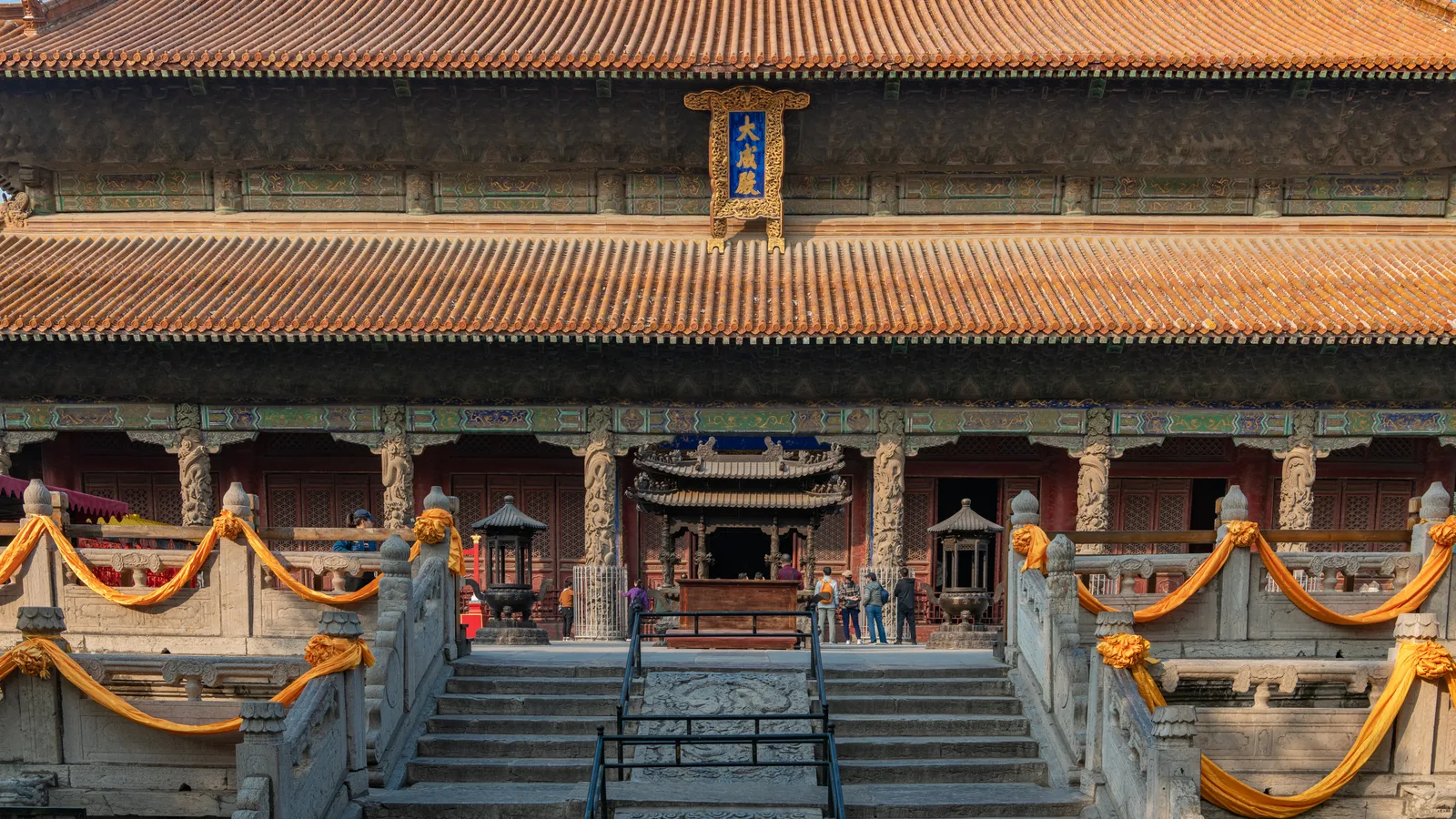
The Beijing Confucius Temple (北京孔庙) was founded in 1302 during the Yuan dynasty.
For centuries, it served as an important ceremonial institution dedicated to Confucius and the intellectual tradition associated with his teachings.
Its principal buildings, ancient cypress trees and imperial examination inscriptions preserve an important dimension of Chinese cultural history.
Highlights of the Confucius Temple
Among its most significant attractions are:
- Dacheng Hall, the principal ceremonial building.
- Historic courtyards and ancient cypress trees.
- Stone inscriptions recording successful imperial examination candidates.
- Monumental inscriptions preserving Confucian classical texts.
The temple provides an opportunity to understand how philosophy, education and government were connected in imperial China.
It is particularly rewarding when visited alongside the Imperial College next door.
For historical interpretation, architectural highlights and visiting information, see our dedicated Confucius Temple and Imperial College guide.
9. The Imperial College: The Authority of Learning
 Click to enlarge
 Click to enlarge
The Imperial College, or Guozijian (国子监), served as the highest state educational institution during the Yuan, Ming and Qing dynasties.
It performed educational and administrative functions closely associated with the imperial government.
Its surviving Beijing complex includes ceremonial halls, traditional courtyards and some of the most distinctive architecture in the neighborhood.
Biyong Hall
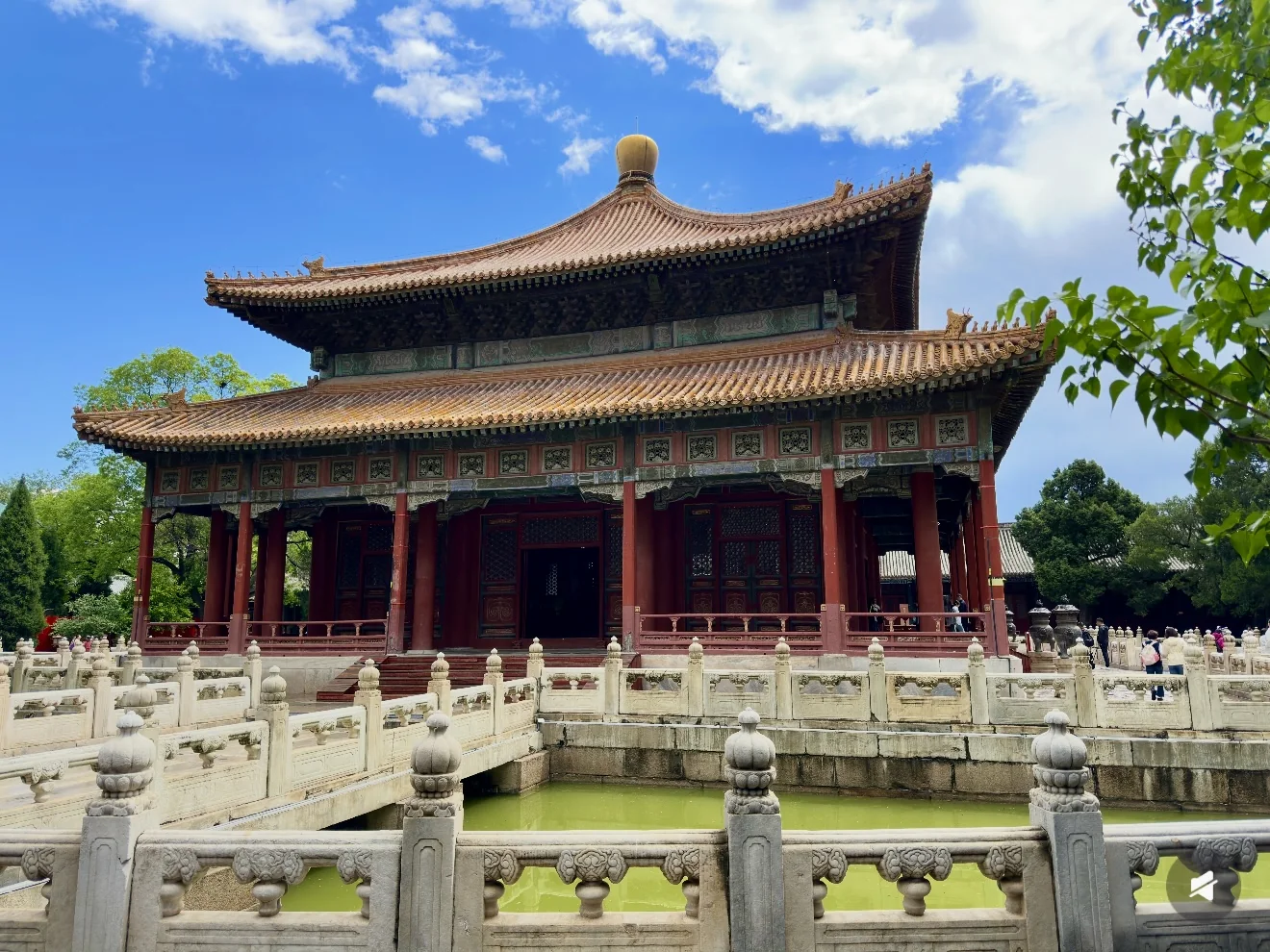
The architectural highlight is Biyong Hall (辟雍殿), constructed during the reign of the Qianlong Emperor.
The building stands on a square platform surrounded by a circular pool, with stone bridges providing access across the water.
It served as a ceremonial setting for imperial lectures.
Its distinctive arrangement expresses the importance assigned to learning within the imperial political system.
Temple and School
The Confucius Temple stands to the east of the Imperial College.
This arrangement reflects the traditional institutional relationship sometimes described as "temple on the left, school on the right" (左庙右学).
The temple honored the Confucian intellectual tradition.
The college institutionalized education within the imperial state.
Their physical proximity gives Guozijian Street much of its historical identity.
10. Lama Temple: Another Dimension of the Neighborhood
 Click to enlarge
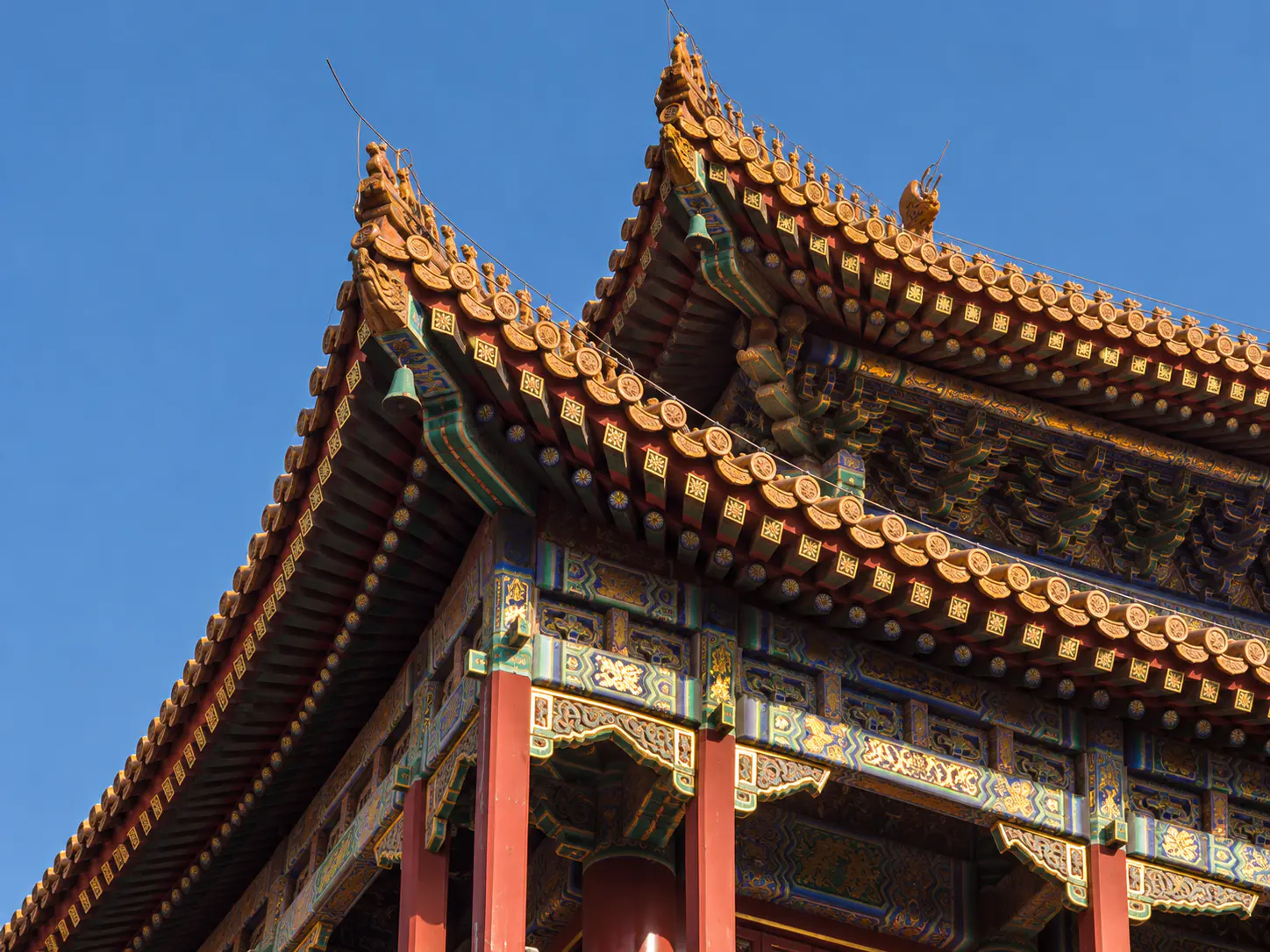
At the eastern side of the district stands Yonghegong, commonly known as the Lama Temple.
Originally constructed as a princely residence during the Qing dynasty, it later became an important Tibetan Buddhist monastery.
Its golden roofs, ceremonial halls, religious sculptures and incense-filled courtyards provide a striking contrast with the neighboring Confucian institutions.
Three Different Historical Traditions
Within a remarkably compact area, visitors can experience three distinct aspects of imperial Beijing:
- The Lama Temple reveals the relationship between Qing imperial patronage and Tibetan Buddhism.
- The Confucius Temple illustrates the state's ceremonial respect for Confucian learning.
- The Imperial College demonstrates the organization of education within the imperial system.
Together, these institutions create one of Beijing's richest cultural neighborhoods.
A morning exploring the historic complexes followed by lunch or coffee in Wudaoying provides a balanced introduction to the area.
For opening hours, tickets and architectural highlights, see our dedicated Lama Temple guide.
11. Fangjia Hutong: A Further Look at Beijing's Creative Culture
South of Guozijian Street lies Fangjia Hutong (方家胡同), another interesting residential lane in the wider neighborhood.
It offers a useful extension for visitors interested in Beijing's evolving cultural and architectural landscape.
The street has become associated with creative businesses, cultural venues and the adaptive reuse of older buildings.
Beyond Traditional Courtyard Architecture
While much of Wudaoying's contemporary identity developed through the reuse of residential buildings, Fangjia also contains spaces associated with more recent industrial and institutional history.
Former factory compounds, workshops and other utilitarian buildings have provided opportunities for new cultural and commercial functions.
The area illustrates a broader process of urban adaptation in Beijing.
Rather than demolishing every older structure, some projects have explored how existing buildings can accommodate new uses.
Individual venues and access arrangements change, so explore public streets and check the opening arrangements of any particular cultural space before visiting.
12. Andingmen and the Northern Edge of Old Beijing
At the western ends of both Wudaoying and Guozijian lies Andingmen Inner Street (安定门内大街).
The name recalls Andingmen, one of the historic gates of Beijing's inner city.
Although the original gate has not survived, its name remains embedded in the contemporary urban landscape.
The surrounding streets help explain the historical geography of the neighborhood.
Wudaoying's early military associations were connected with the northern part of the old city, while Guozijian's institutional identity developed within the same broader urban area.
Today, Andingmen connects the historic lanes with the city's modern transportation network.
It also provides a convenient starting or finishing point for walking between Wudaoying and Guozijian.
13. A Self-Guided Wudaoying and Guozijian Walking Route
The simplest way to experience both streets is to follow a compact loop between Yonghegong Street and Andingmen Inner Street.
Suggested duration: 2–3 hours Core walking distance: Approximately 1.5–2 kilometers, depending on detours Walking effort: Easy Starting point: Yonghegong Subway Station Best for: Architecture, photography, cafés and relaxed neighborhood exploration
Stop 1 — Yonghegong and the Eastern Entrance of Guozijian
*10–15 minutes*
Begin near Lama Temple and head south along Yonghegong Street toward the eastern entrance of Guozijian Street.
Observe the contrast between the busy main road and the quieter historic lane.
Stop 2 — Guozijian Street and Its Archways
*25–35 minutes*
Walk west along Guozijian Street.
Take time to appreciate the ceremonial archways, tree-lined streetscape, red walls and traditional architecture.
Pass the entrances of the Confucius Temple and Imperial College.
If visiting the museum interiors, allow additional time.
Stop 3 — Andingmen Inner Street
*10–15 minutes*
Continue to the western end of Guozijian Street.
Turn north along Andingmen Inner Street toward the western entrance of Wudaoying.
Stop 4 — Wudaoying Hutong
*30–45 minutes*
Walk east through Wudaoying.
Explore its courtyard entrances, independent shops and contemporary architectural details.
The street's narrow scale makes it easy to explore without following a rigid schedule.
Stop 5 — Coffee or Lunch in a Courtyard Setting
*30–60 minutes*
Choose a café or restaurant along the lane.
This is a good place to pause rather than immediately continuing to another major attraction.
Stop 6 — Return to Yonghegong
*10 minutes*
Continue to the eastern end of Wudaoying.
From here, return to Yonghegong Subway Station or continue exploring the Lama Temple area.
14. A Half-Day Cultural Itinerary With Lama Temple
For visitors interested in both history and contemporary neighborhood culture, allow four to five hours.
9:00 AM — Lama Temple
Begin with the monastery's ceremonial halls, Tibetan Buddhist art and monumental Maitreya Buddha.
Allow approximately 90 minutes.
10:45 AM — Confucius Temple and Imperial College
Continue to the neighboring museum complex.
Explore the ceremonial halls, imperial examination inscriptions, ancient trees and Biyong Hall.
Allow approximately 90 minutes to two hours.
12:30 PM — Guozijian Street
Walk west beneath the historic archways and mature trees.
Enjoy the transition from the formal museum complexes to the surrounding neighborhood.
1:00 PM — Wudaoying Hutong
Reach Wudaoying via Andingmen Inner Street.
Stop for lunch, coffee or a relaxed afternoon exploring independent shops.
Visitors with more time can extend the experience south toward Fangjia Hutong.
15. Wudaoying vs Nanluoguxiang: Which Hutong Should You Visit?
Wudaoying and Nanluoguxiang are frequently compared because both combine traditional architecture with contemporary commercial activity.
However, their character, scale and surrounding attractions differ.
| Feature | Wudaoying & Guozijian | Nanluoguxiang & Gulou |
|---|---|---|
| Atmosphere | Relaxed, artistic and scholarly | Lively, historic and urban |
| Street layout | Two parallel historic streets | Central lane with sixteen principal side hutongs |
| Main attractions | Lama Temple, Confucius Temple, Imperial College | Drum Tower, Bell Tower, historic residences |
| Commercial character | Independent cafés, design shops and restaurants | Snacks, boutiques, restaurants and visitor-oriented shops |
| Architecture | Courtyard reuse, ceremonial archways, institutional buildings | Historic courtyard houses and residential street planning |
| Suggested duration | 2–3 hours without museums | 2–4 hours |
| Best for | Relaxed cultural walks and café culture | Residential history and traditional urban architecture |
Choose Wudaoying and Guozijian if you prefer a slower neighborhood experience combined with religious and educational heritage.
Choose Nanluoguxiang and Gulou if you are particularly interested in Beijing's historic residential layout, courtyard architecture and Central Axis.
Both neighborhoods can be combined into a longer day, although allowing sufficient time for each usually creates a more enjoyable experience.
16. Wudaoying vs Shichahai
Shichahai offers a different kind of neighborhood experience.
Its character is defined by interconnected lakes, waterfront paths, historic bridges and former princely residences.
Wudaoying and Guozijian are more compact and street-oriented.
Their attractions lie within architectural details, institutional courtyards, small businesses and the relationship between the historic streets themselves.
Choose Shichahai for scenic waterfront walks.
Choose Wudaoying and Guozijian for architecture, philosophy, religious heritage and contemporary café culture.
The neighborhoods are close enough to combine using a short subway journey or a longer walk through northern Dongcheng.
17. Tickets and Opening Hours
Wudaoying and Guozijian Streets
Admission: Free
Opening hours: Public streets are generally accessible throughout the day.
No reservation is normally required simply to walk along either street.
Individual cafés, restaurants, shops and cultural spaces maintain their own operating hours.
Many commercial businesses become more active from late morning onward.
Nearby Museums and Temples
The Lama Temple and the Confucius Temple and Imperial College Museum require admission.
Their ticketing arrangements, opening hours and closure days differ.
Check the dedicated attraction guides and official notices before organizing your visit.
If visiting on a Monday, pay particular attention to museum closures.
The surrounding neighborhood remains worth exploring even when museum interiors are unavailable.
18. How to Get to Wudaoying and Guozijian
By Subway
Yonghegong Station (雍和宫), Lines 2 and 5
The most convenient starting point for visiting Lama Temple and exploring both streets from their eastern ends.
Andingmen Station (安定门), Line 2
Convenient for entering Wudaoying and Guozijian from the west.
Either station works well for a circular neighborhood walk.
By Taxi or DiDi
Useful destination names include:
- 五道营胡同 — Wudaoying Hutong
- 国子监街 — Guozijian Street
- 雍和宫 — Lama Temple
- 孔庙和国子监博物馆 — Confucius Temple and Imperial College Museum
The surrounding hutongs are narrow and may be subject to vehicle restrictions.
It is generally easier to arrange a drop-off on Yonghegong Street or Andingmen Inner Street and continue on foot.
Walking Around the Neighborhood
The area is compact and predominantly flat.
Walking is more convenient than repeatedly arranging transportation between the individual attractions.
Allow extra time if visiting museum interiors, stopping for meals or exploring adjoining lanes.
19. Best Time to Visit
Morning
Morning is particularly rewarding for Guozijian Street.
The historic archways, trees and red walls can be appreciated before visitor activity increases.
If visiting Lama Temple, starting early also provides additional flexibility for the rest of the neighborhood.
Afternoon
Wudaoying is generally more active in the afternoon, when cafés, restaurants and independent shops are open.
This is an ideal time for a relaxed meal or an unhurried architectural walk.
Evening
As shops and restaurants illuminate their entrances, Wudaoying acquires a warmer and more intimate atmosphere.
The surrounding museum and temple interiors generally close earlier than commercial businesses.
An evening visit is therefore best suited to dining and neighborhood exploration.
Spring and Autumn
Spring and autumn are particularly pleasant for walking between the two streets.
Guozijian's mature trees add considerable character to the streetscape during these seasons.
Summer
The tree canopy along Guozijian provides some relief from summer heat.
A morning visit followed by lunch or an indoor café stop works well during hotter weather.
Winter
Winter offers quieter streets and clearer views of traditional architectural details.
Wudaoying's cafés provide convenient places to warm up during a longer walk.
20. Photography and Neighborhood Etiquette
Wudaoying and Guozijian offer excellent opportunities for architectural and street photography.
Particularly interesting subjects include ceremonial archways, traditional courtyard entrances, grey-brick walls, rooftop silhouettes and the contrast between historic buildings and contemporary storefronts.
However, both streets remain part of a living neighborhood.
Many buildings continue to serve residential functions.
Do not enter private courtyards simply because a door is open.
Ask permission before photographing people closely, respect the rules of individual businesses and avoid blocking narrow residential entrances.
Inside museums and temples, follow the site's photography restrictions.
The most rewarding photographs often come from observing how architecture, vegetation and everyday activity naturally fit together.
21. Is Wudaoying Worth Visiting?
Yes, particularly if you enjoy historic architecture, independent cafés and slower-paced urban exploration.
Wudaoying is not primarily a monumental sightseeing destination.
Its appeal lies in the small details: traditional buildings adapted for new uses, intimate courtyard spaces, independent businesses and the coexistence of residential and commercial life.
Guozijian adds an important historical dimension.
Its ceremonial architecture and educational heritage give the neighborhood cultural depth beyond its contemporary lifestyle attractions.
For visitors who have already experienced the Forbidden City, Great Wall and Summer Palace, this area offers a different perspective on Beijing.
It is also an excellent choice for a less demanding afternoon between larger sightseeing days.
22. Why Wudaoying and Guozijian Matter
The proximity of these two streets reveals an interesting aspect of Beijing's historical development.
Wudaoying began with associations with the military organization of the capital before developing into a residential neighborhood.
Guozijian grew around institutions dedicated to scholarship, education and ceremonial tradition.
The nearby Lama Temple added another layer of religious and imperial history.
In more recent decades, traditional courtyard buildings have accommodated new businesses and forms of cultural activity.
The neighborhood therefore brings together several dimensions of Beijing's development: defense, education, religion, residential life and contemporary urban culture.
Its significance lies not only in the preservation of individual buildings but also in the continuity of an urban environment that has adapted to changing needs over centuries.
Wudaoying and Guozijian are places where Beijing's history remains visible within the ordinary experience of walking through the city.
23. Explore More of Historic Beijing
Wudaoying and Guozijian are part of a wider network of historic neighborhoods across Beijing.
To explore other aspects of the city's urban heritage, consider:
Nanluoguxiang & Gulou — Yuan-dynasty street planning, historic residences and the Drum and Bell Towers.
Shichahai — Lakes, bridges, historic gardens and former princely residences.
Qianmen & Dashilar — Traditional commerce, historic shops and merchant culture.
Dongsi Hutongs — Residential architecture and everyday neighborhood life.
Xiangchang New District — Republican-era urban modernization and Western-influenced architecture.
Each reveals a different side of Beijing's development.
Together, they provide a deeper understanding of the city beyond its famous imperial landmarks.