
The Front Door of Old Beijing
- Location: Qianmen, Dongcheng and Xicheng districts, Beijing
- Chinese name: 前门 (Qiánmén)
- Suggested visit: 2–4 hours, or half a day with nearby hutongs
- Best for: History, architecture, food, photography, shopping, and cultural walks
At the southern end of Tiananmen Square stands Zhengyangmen, one of the most recognizable surviving gateways of imperial Beijing. Beyond its imposing towers, a broad pedestrian street stretches south into a neighborhood that has welcomed merchants, travelers, performers, and shoppers for centuries.
This is Qianmen (前门), literally Beijing’s “Front Gate.” For much of its history, it was a meeting point between imperial authority and everyday commercial life. Emperors passed through Zhengyangmen on ceremonial journeys. Merchants established shops outside the city walls. Restaurants, theaters, teahouses, and inns attracted visitors from across China.
As Beijing entered the twentieth century, the neighborhood embraced modern storefronts, commercial buildings, public transportation, and Western-influenced architecture. Its main pedestrian street has been extensively restored. Beyond the broad thoroughfare lie the narrower lanes of Dashilar, Xianyukou, and the surrounding historic neighborhoods.
1. Zhengyangmen: The Imperial Gateway to Beijing
The history of Qianmen begins with Zhengyangmen (正阳门), the southern gateway of Beijing’s inner city during the Ming and Qing dynasties. First constructed in 1419 under the Yongle Emperor, Zhengyangmen occupied a prestigious position on Beijing’s central north–south axis.
The gateway included a main gate tower, an archery tower, and an enclosed barbican. The imperial road passed through Zhengyangmen toward southern ceremonial sites, including the Temple of Heaven. The gate also controlled movement between the inner city and the prosperous commercial districts to the south.
 Click to enlarge
 Click to enlarge
Two Towers, One Historic Gateway
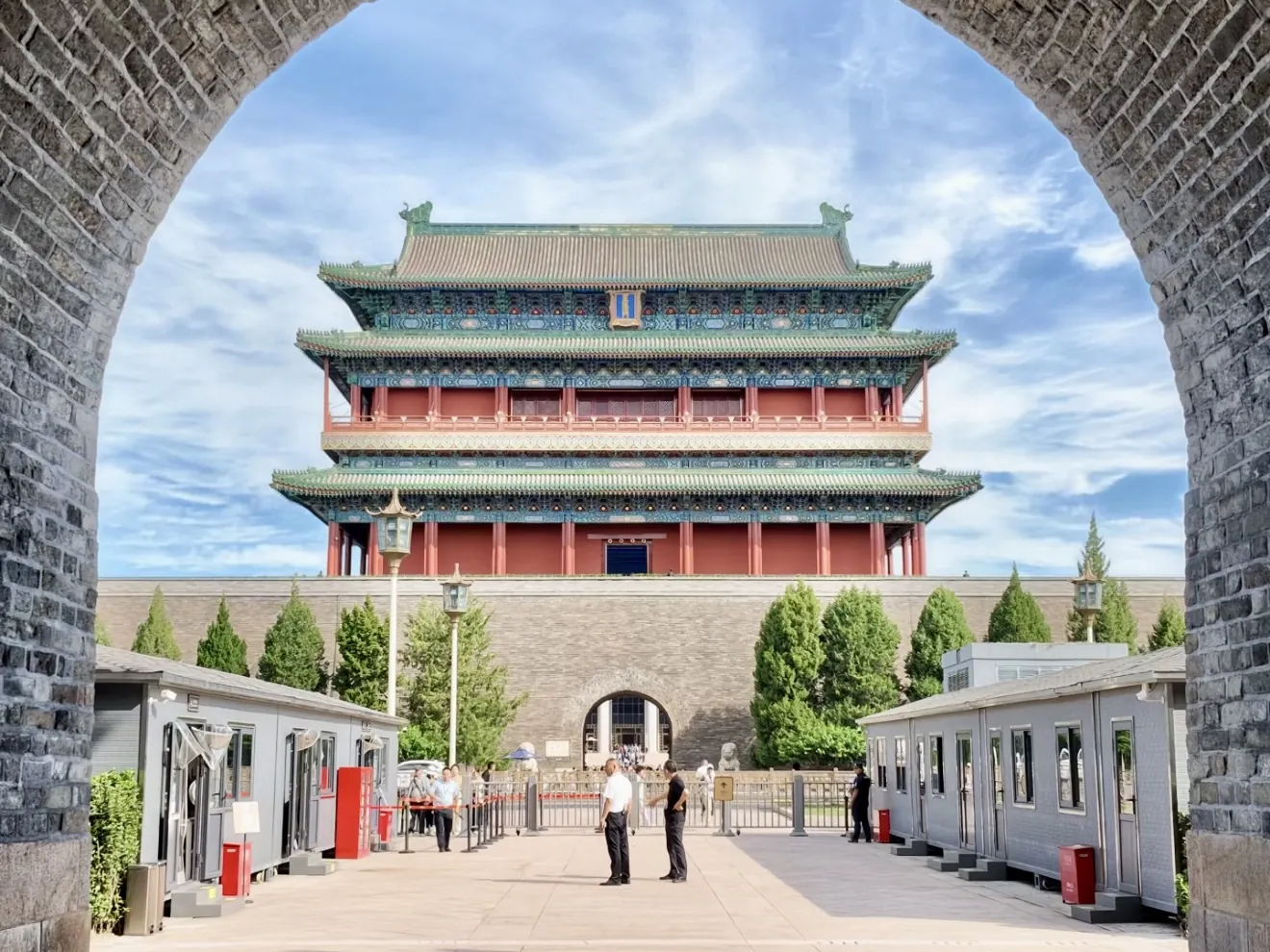
Zhengyangmen Gate Tower stands to the north, immediately south of Tiananmen Square. It once formed the principal entrance through the inner city wall.
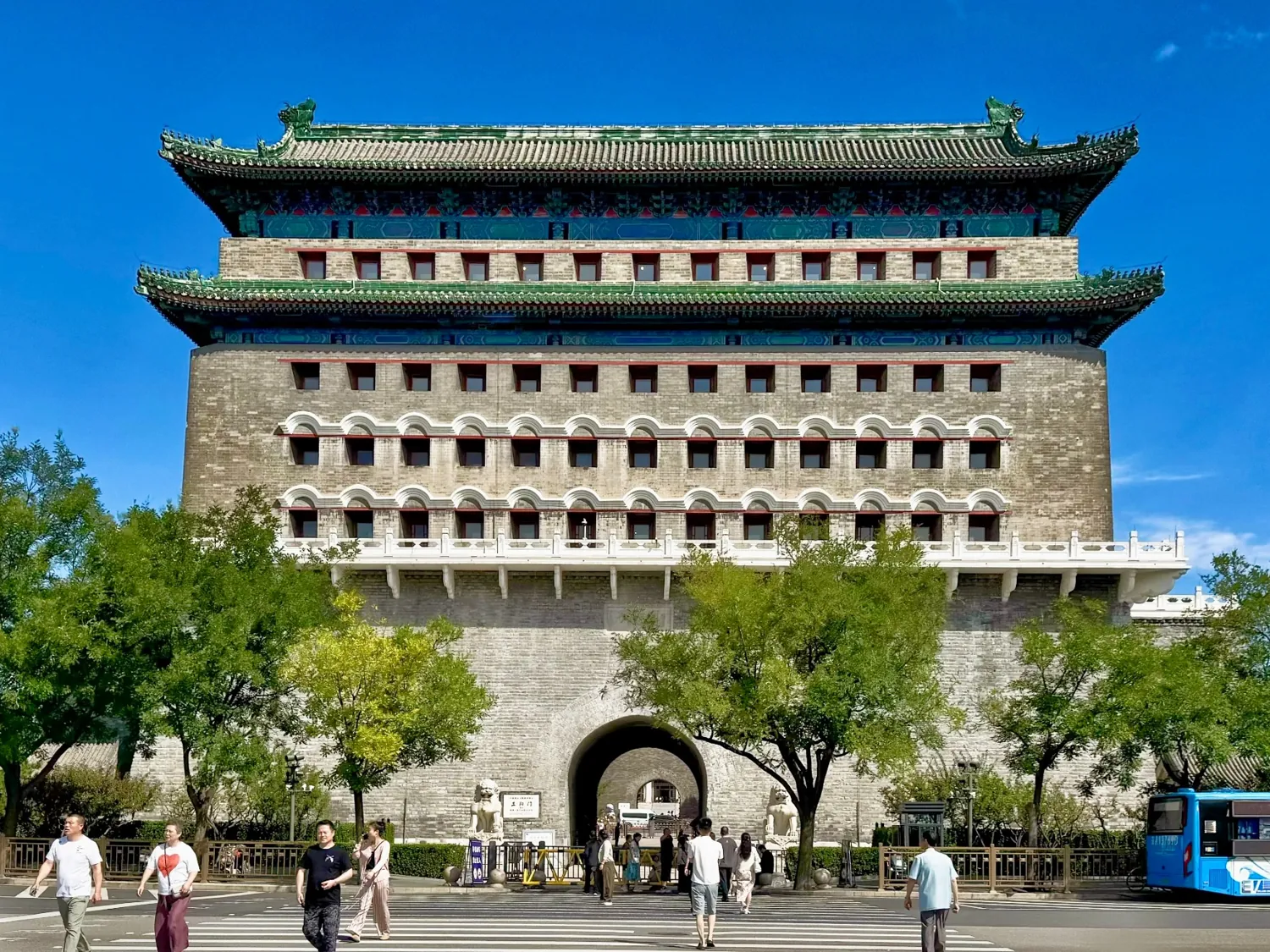
Zhengyangmen Archery Tower stands farther south, overlooking the northern end of Qianmen Street. Its defensive design includes rows of narrow archery openings.
The connecting barbican and much of the surrounding city wall were removed during Beijing’s modernization. The separation of the two towers traces the transformation of a fortified imperial city into a modern urban center.
Visiting Zhengyangmen Today
The Gate Tower introduces the history of Beijing’s Central Axis, while the Archery Tower illustrates the defensive and ceremonial functions of the gateway. Check opening hours and separate reservation arrangements for each tower before planning an interior visit. Both can be appreciated from outside.
2. Qianmen Street: Beijing’s Historic Commercial Avenue
Stretching approximately 840 meters south from Zhengyangmen, Qianmen Street (前门大街) has been an important commercial thoroughfare for centuries. During the Ming and Qing dynasties, movement of officials, merchants, travelers, and goods supported restaurants, inns, specialty shops, and other businesses. By the late Qing and early Republican periods, Qianmen had become one of Beijing’s most prosperous shopping areas.
 Click to enlarge
From Imperial Road to Shopping Street
The area evolved from an imperial route toward ceremonial sites into a commercial center serving a broader population. Traditional shops were joined by modern businesses, new architectural styles, and changing forms of transportation.
The Restored Pedestrian Street
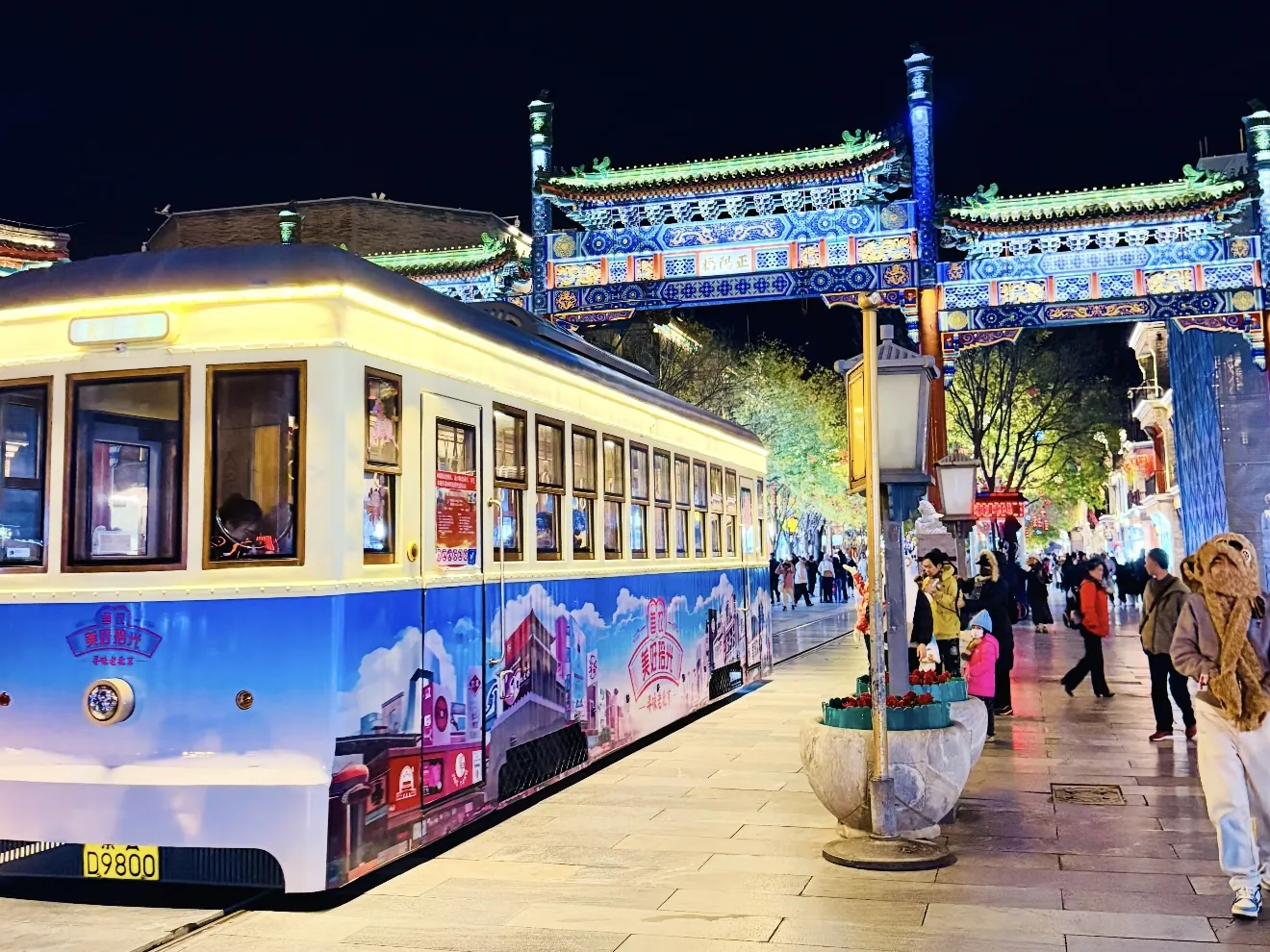
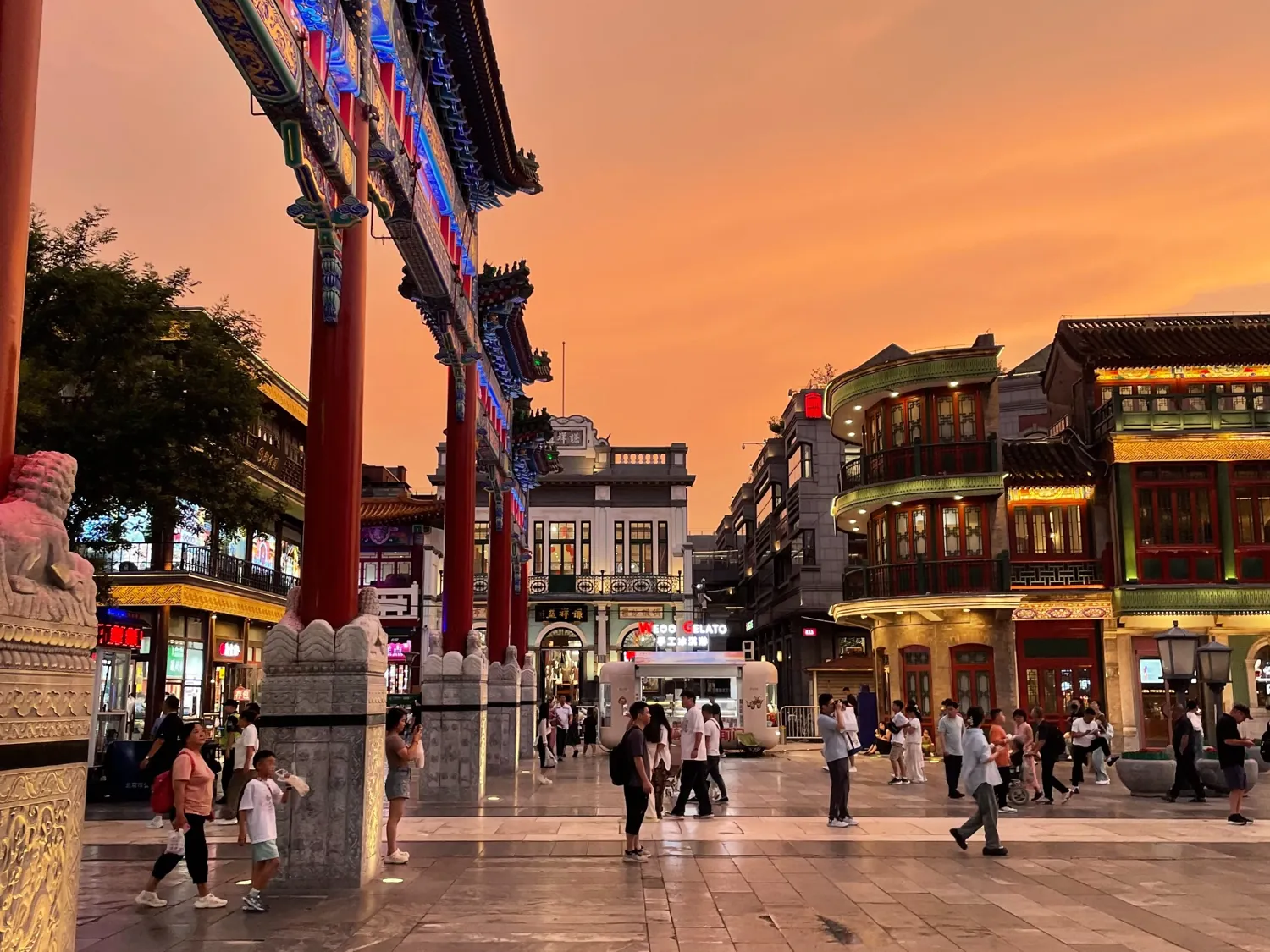
Today the pedestrian avenue is lined with reconstructed and restored traditional-style shopfronts. A heritage-style tram recalls the public transportation that once operated here. Visitors will find restaurants, traditional brands, souvenir shops, and cultural attractions.
In the evening, illuminated storefronts and the Zhengyangmen towers frame the avenue. Much of its current appearance reflects modern redevelopment. Explore the surrounding lanes for older architectural layers and smaller streetscapes.
3. Dashilar: The Commercial Heart of Old Beijing
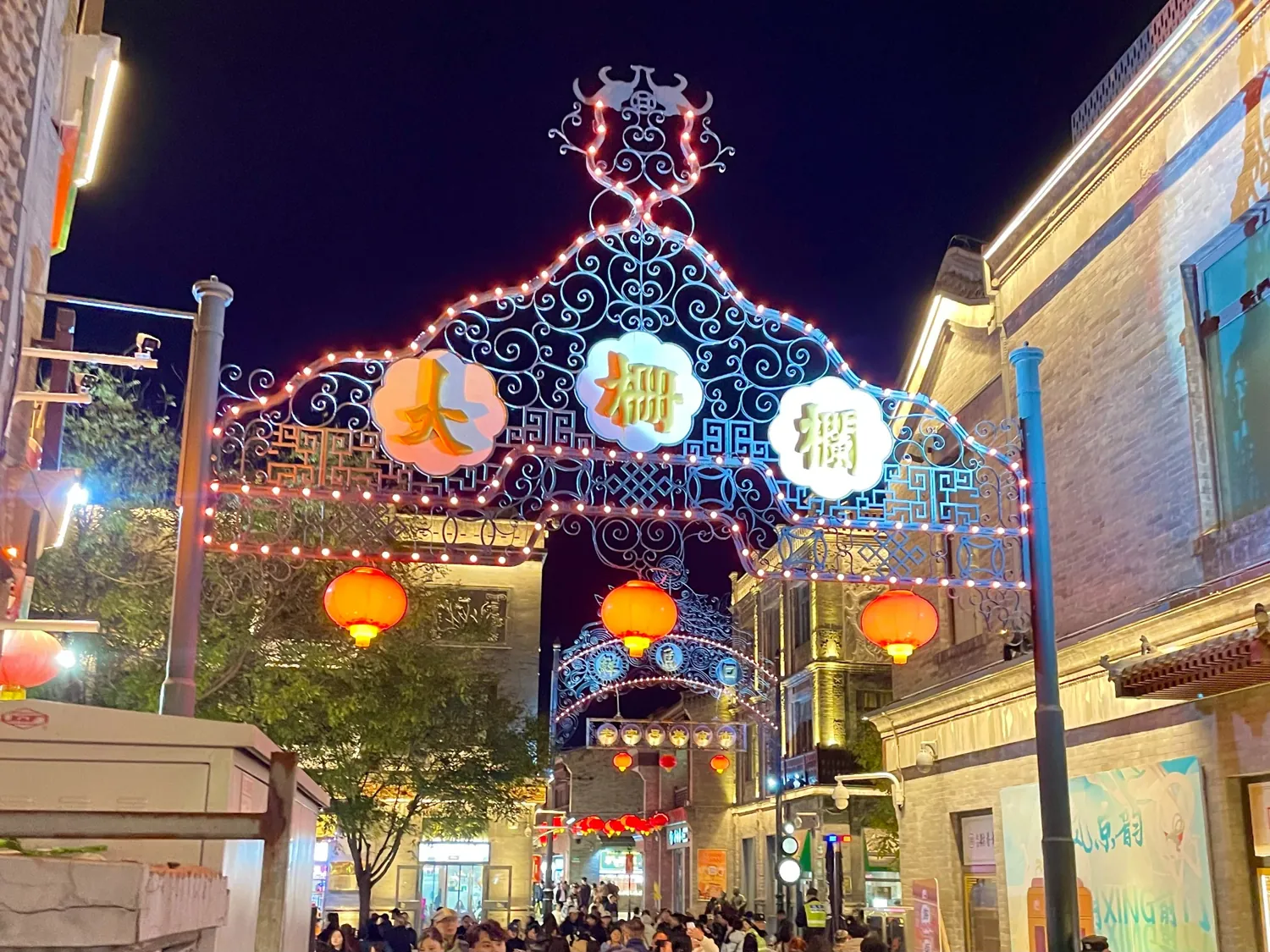
Just west of Qianmen Street lies Dashilar (大栅栏), one of Beijing’s best-known historic shopping streets. The street is about 275 meters long. Its development can be traced to the Ming dynasty, and it flourished as a shopping district during the Qing period.
 Click to enlarge
The Meaning Behind the Name
Dashilar refers to a large fence or barrier. Gates and fences once regulated movement and improved security at entrances to streets and lanes. The prominent barrier associated with this commercial street eventually gave the neighborhood its name.
Beijing’s Time-Honored Shops
- Nei Lian Sheng (内联升) is known for traditional Chinese cloth shoes, including layered-sole footwear.
- Rui Fu Xiang (瑞蚨祥) is a historic textile and silk merchant associated with fine fabrics and traditional clothing.
- Zhang Yi Yuan (张一元) is a Beijing tea brand particularly associated with jasmine tea.
These businesses show how specialist craftsmanship and retail shaped the district.
Beyond the Main Street
The narrower lanes branching from Dashilar contain historic storefronts, small courtyards, workshops, restaurants, and later additions. Here the district’s commercial history connects with everyday neighborhood life.
4. Yangmeizhu Xiejie: Books, Design, and Old Beijing Architecture
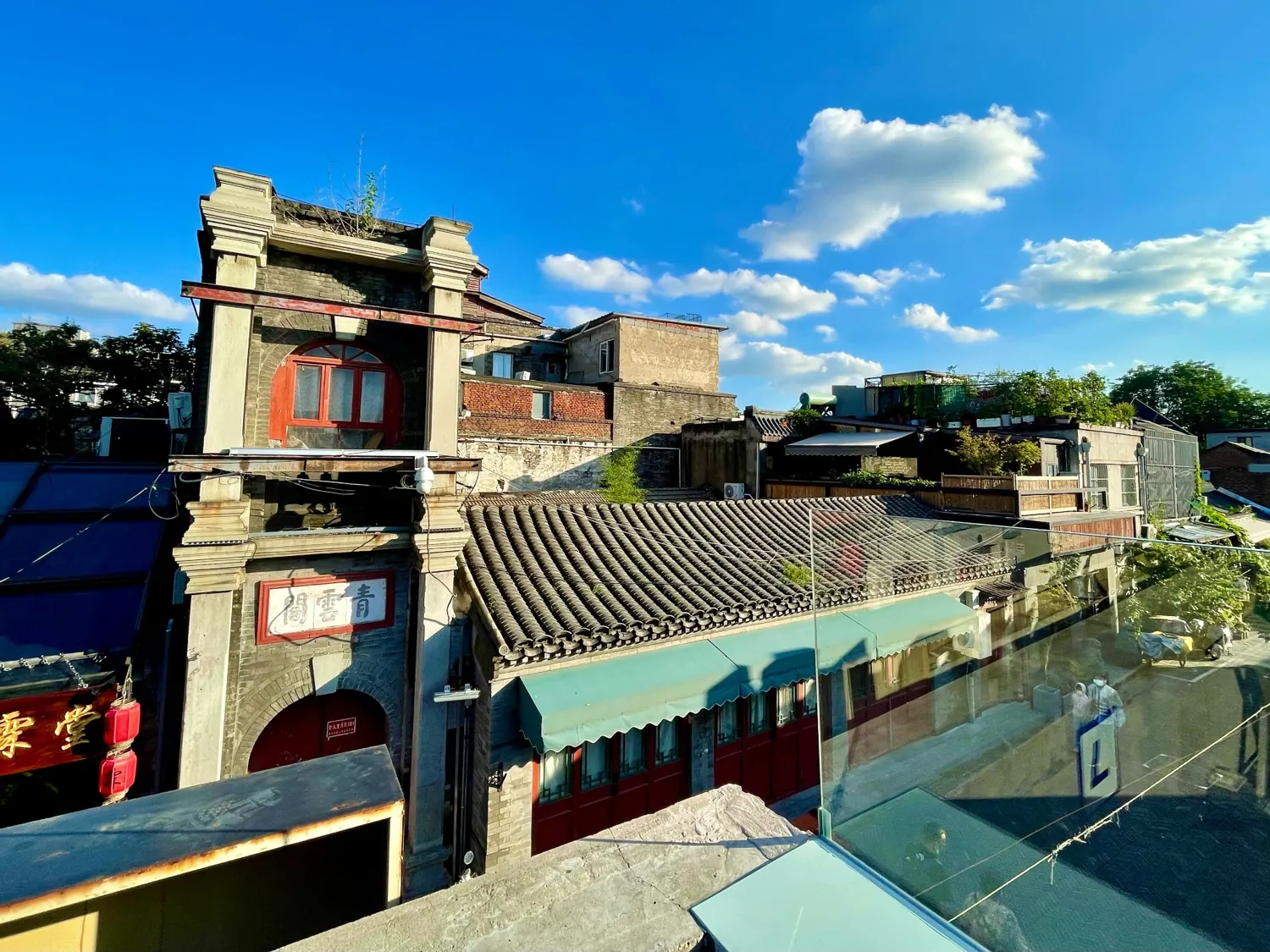
West of Dashilar, Yangmeizhu Xiejie (杨梅竹斜街) is a diagonal street that reflects the irregular street patterns of historic southern Beijing. During the late Qing and Republican periods, the wider area was associated with publishing, cultural activity, and small businesses.
 Click to enlarge
An Evolving Historic Street
Today older buildings coexist with independent shops, design studios, bookstores, cafés, and cultural spaces. Some retain historic façades and traditional layouts, while others have been adapted for contemporary use. Look for brickwork, traditional entrances, older shop signs, and the transition from narrow lanes into modern commercial interiors.
5. Xianyukou: The Flavors of Old Beijing
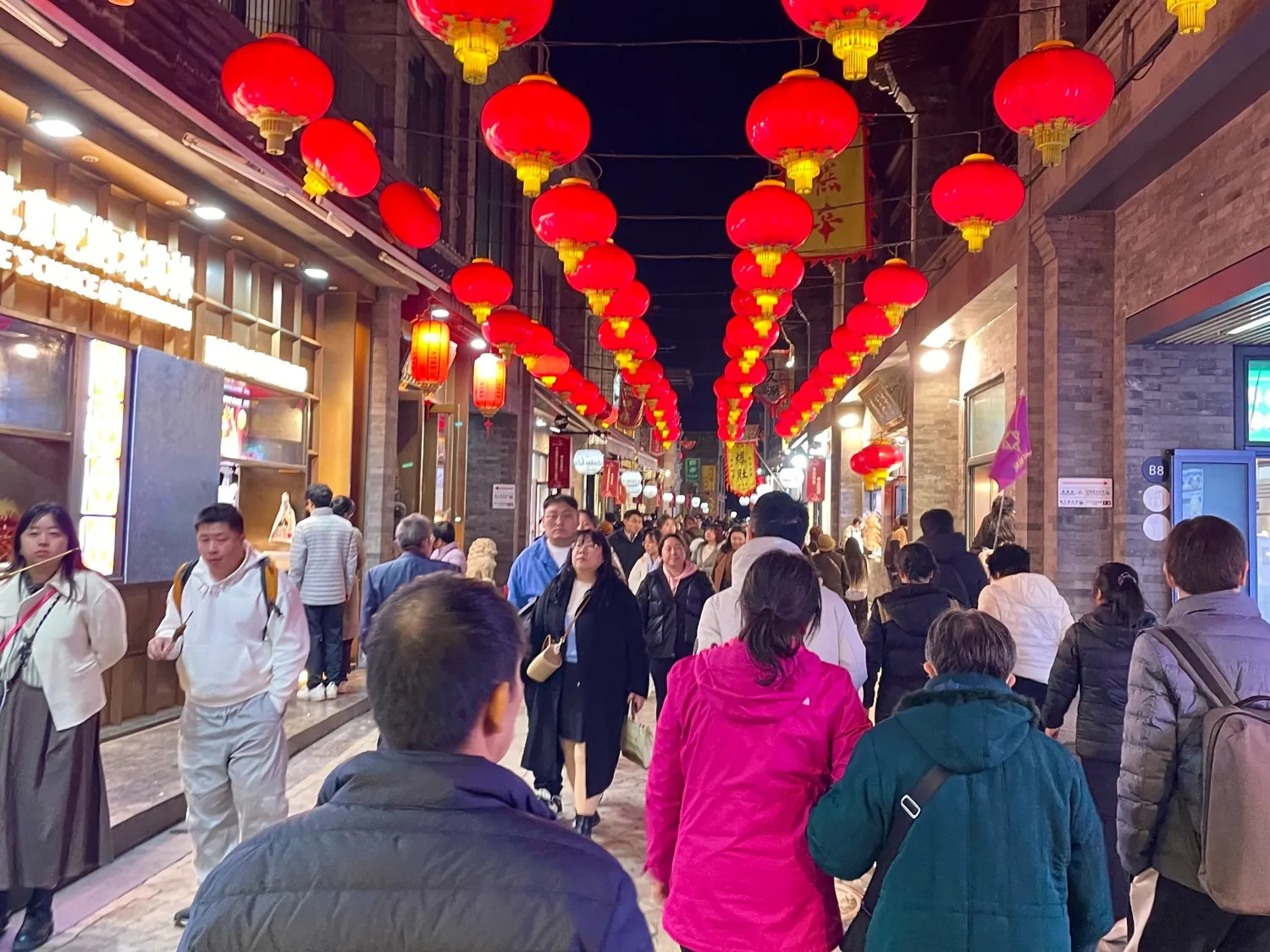
On the eastern side of Qianmen Street lies Xianyukou (鲜鱼口), a historic commercial area especially associated with food. The district developed around restaurants, specialty food shops, and other businesses. Today it is known for Beijing’s time-honored culinary brands.
 Click to enlarge
What to Eat in Qianmen
- Peking duck. Roast duck served with thin pancakes, scallions, cucumber, and sweet bean sauce. Qianmen has a longstanding association with roast duck restaurants including Quanjude.
- Beijing-style hotpot. Thinly sliced mutton cooked in a copper pot and served with a sesame-based dipping sauce.
- Zhajiangmian. Wheat noodles with fermented soybean paste sauce, minced meat, and fresh vegetables.
- Douzhi. A distinctly sour fermented mung bean drink and a traditional Beijing specialty.
- Traditional pastries. Beijing-style cakes, sweets, and snacks are also available in the area.
A Note on Food Streets
Consider both established brands on the main streets and smaller local restaurants in the surrounding lanes.
6. Beijing Fun: Historic Architecture Meets Contemporary Commerce
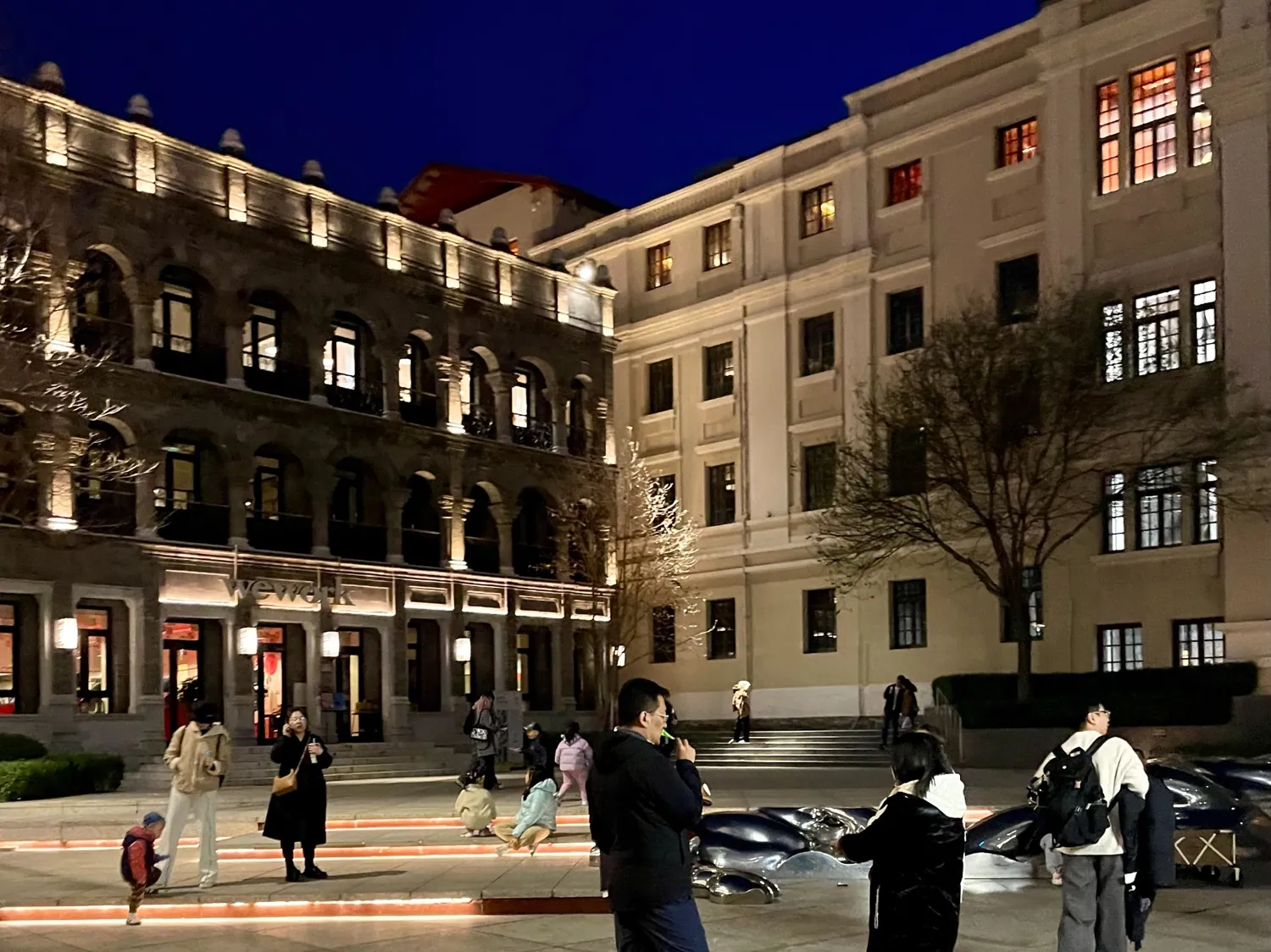
Near Dashilar, Beijing Fun (北京坊) represents a more contemporary phase in Qianmen’s evolution. It brings shops, restaurants, and cultural venues into a development that uses restored and historically inspired architecture.
 Click to enlarge
The Changing Identity of Qianmen
The district’s buildings and businesses have changed repeatedly with its economy and social life. Beijing Fun’s plazas and renovated commercial spaces illustrate the latest phase of that change. Compare them with the older, narrower streets of Dashilar and Yangmeizhu Xiejie.
7. Qianmen and the Rise of Modern Beijing
During the late nineteenth and early twentieth centuries, Western-influenced façades and new building technologies appeared alongside traditional Chinese structures. New public transportation, hotels, theaters, and entertainment venues changed how people used the city.
The Republican-Era Commercial City
After the Republic of China was established in 1912, Qianmen and Tianqiao became important settings for modern commerce, hospitality, and public entertainment. The nearby Xiangchang New District was a particularly ambitious experiment, with planned streets, Shanghai-inspired residences, modern hotels, and entertainment venues.
Surviving landmarks include Tai’an Li, Huakang Li, and Beijing Oriental Hotel. The former New World Entertainment Complex, which no longer stands, was another striking building of the period. Xiangchang can be explored on a separate historical walk.
8. The Hutongs Around Qianmen
Narrow lanes once connected shops, workshops, residential courtyards, theaters, inns, and neighborhood markets. Their irregular layouts reflect centuries of development.
What Makes These Hutongs Different?
The hutongs around Qianmen were generally more commercially oriented than residential neighborhoods north of the Forbidden City. Shops and homes often shared the same street, linking everyday life with trade.
What to Look For
Look for traditional doorways, brick façades, courtyard entrances, older shopfronts, and changing lane widths. Some buildings have been restored, while others show later alterations. Respect residential privacy and avoid entering private courtyards without permission.
9. A Self-Guided Qianmen Walking Route
- Suggested duration: 3–4 hours
- Walking style: Relaxed cultural and architectural exploration
- Starting point: Zhengyangmen
- Finishing area: Xianyukou or Qianmen Street
Stop 1 — Zhengyangmen Gate and Archery Tower
*30–45 minutes.* Begin at the northern end of Qianmen. Compare the two surviving towers and see how the gateway once controlled access between the inner city and its southern commercial districts. Allow extra time for interiors.
Stop 2 — Qianmen Street
*30 minutes.* Walk south along the pedestrian avenue past traditional-style storefronts, restaurants, and the heritage tram route.
Stop 3 — Dashilar
*30–45 minutes.* Turn west into Dashilar for traditional retailers, historic shopping architecture, and narrow side lanes.
Stop 4 — Yangmeizhu Xiejie
*30–45 minutes.* Continue into Yangmeizhu Xiejie to see historic buildings, independent cultural spaces, bookstores, and design businesses.
Stop 5 — Beijing Fun
*20–30 minutes.* Return toward the Qianmen commercial area and compare Beijing Fun’s contemporary redevelopment with Dashilar’s older streets.
Stop 6 — Xianyukou
*45–60 minutes.* Cross to the eastern side of Qianmen Street and finish with a meal or snacks in Xianyukou.
10. Combining Qianmen With Nearby Attractions
Qianmen and Tiananmen Square
Qianmen is immediately south of Tiananmen Square. Combine the monumental civic spaces to the north with the commercial streets to the south. Check Tiananmen Square’s separate access and reservation requirements before visiting.
Qianmen and the Forbidden City
A longer itinerary can connect Zhengyangmen, Tiananmen Square, and the Forbidden City along Beijing’s Central Axis. Plan Forbidden City tickets in advance.
Qianmen and the Temple of Heaven
The Temple of Heaven lies southeast of Qianmen. Pairing the two links imperial ceremonial architecture with the commercial and residential life of southern Beijing.
Qianmen and Xiangchang New District
Xiangchang is an extension for travelers interested in Republican-era architecture. Its surviving lane residences, historic hotel, and performing arts heritage trace early experiments in modern urban planning.
11. Practical Information for Visitors
Where Is Qianmen?
Qianmen is immediately south of Tiananmen Square. The pedestrian avenue is in Dongcheng District, and parts of the historic commercial area extend into Xicheng District.
How Do You Get There?
Qianmen Station is served by Beijing Subway Lines 2 and 8. Taxis and private vehicles can drop visitors near the district. Pedestrian streets and traffic restrictions limit direct vehicle access.
Is Qianmen Free to Visit?
Qianmen Street, Dashilar, Xianyukou, and the surrounding public streets are generally free. Museums, exhibitions, and other attractions may charge admission.
When Is the Best Time to Visit?
Morning suits a quieter architectural walk. Late afternoon and evening offer a livelier atmosphere as the main avenue lights up. Spring and autumn are generally comfortable for extended walking.
How Much Time Do You Need?
Two hours covers a brief introduction to Qianmen Street and Dashilar. Allow three to four hours for Yangmeizhu Xiejie, Xianyukou, and a meal. Plan half a day or longer to add nearby attractions.
Is Qianmen Worth Visiting?
Yes, especially for commercial history, traditional food, and historic neighborhoods. Start with the restored pedestrian avenue and explore Dashilar, Yangmeizhu Xiejie, and the surrounding hutongs for a fuller picture of the district.
12. Why Qianmen Matters
Zhengyangmen represents the fortified and ceremonial order of the imperial capital. Qianmen Street reflects the rise of urban commerce. Dashilar preserves the legacy of specialized retail and craftsmanship, and Xianyukou connects visitors with Beijing’s culinary traditions.
Yangmeizhu Xiejie shows how historic buildings adapt to contemporary cultural life. Nearby Xiangchang illustrates early twentieth-century ambitions for a modern city. Together, these places show how Beijing’s history lives on in shops, restaurants, streets, and neighborhoods alongside its imperial monuments.
13. Explore Historic Beijing With DragonTrail
DragonTrail can arrange private transportation and a customized route through Zhengyangmen, Dashilar, Xianyukou, Yangmeizhu Xiejie, and nearby historic neighborhoods. The walk can be part of a broader itinerary including Tiananmen Square, the Forbidden City, the Temple of Heaven, or Xiangchang New District.
- Suggested experience: Qianmen, Dashilar & Historic Southern Beijing
- Duration: Half day or full day
- Transport: Private vehicle with driver
- Optional: English-speaking guide, subject to availability
- Pickup: Beijing hotels or agreed city locations
Contact DragonTrail to arrange a customized Beijing cultural itinerary.
Frequently Asked Questions
- Qianmen is famous for Zhengyangmen Gate, its historic shopping street, traditional Beijing brands, food, and the surrounding commercial neighborhoods of Dashilar and Xianyukou.
- Dashilar is a historic commercial street west of Qianmen Street. Both belong to the wider Qianmen commercial district.
- Yes. The main pedestrian street and surrounding public lanes are generally free to visit. Individual attractions may charge admission.
- The main pedestrian street is approximately 840 meters long. Walking its length takes around 10–15 minutes without stops, but sightseeing and shopping take considerably longer.
- Check current opening hours and separate reservation arrangements for the Gate Tower and Archery Tower. Both towers can be viewed from outside.
- Popular options include Peking duck, Beijing-style mutton hotpot, zhajiangmian, traditional pastries, and local snacks.
- Daytime is better for architecture and exploring smaller lanes. Evening offers illuminated streets, restaurants, and a livelier commercial atmosphere.
- Yes. Qianmen lies along Beijing’s central axis south of Tiananmen Square and the Forbidden City. Allow sufficient time for security procedures, walking, and advance reservations.
- It can be suitable for longer layovers, depending on the airport, flight schedule, immigration procedures, and available sightseeing time. Private transportation can help coordinate the visit. Allow sufficient time to return to the airport.