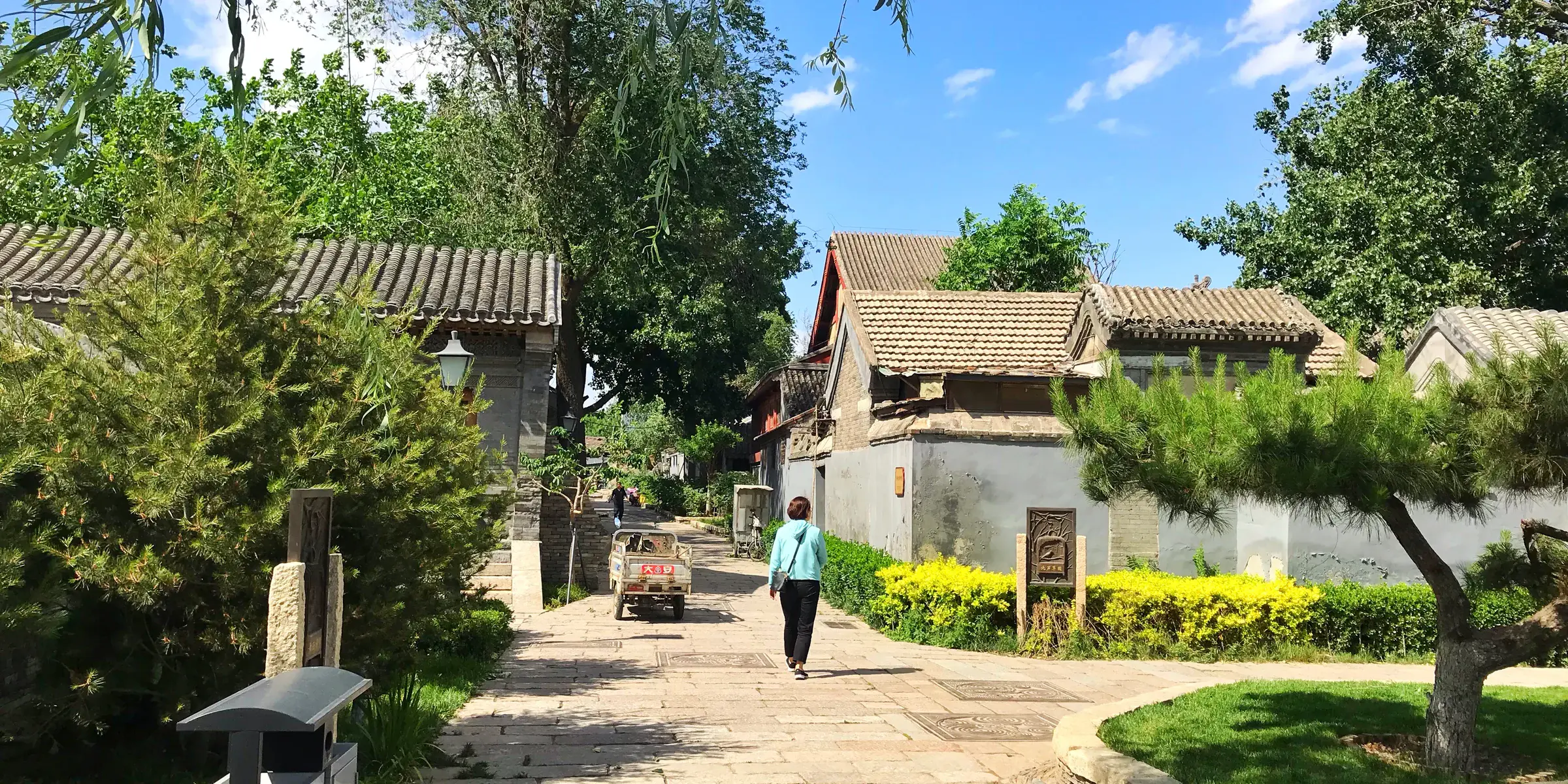
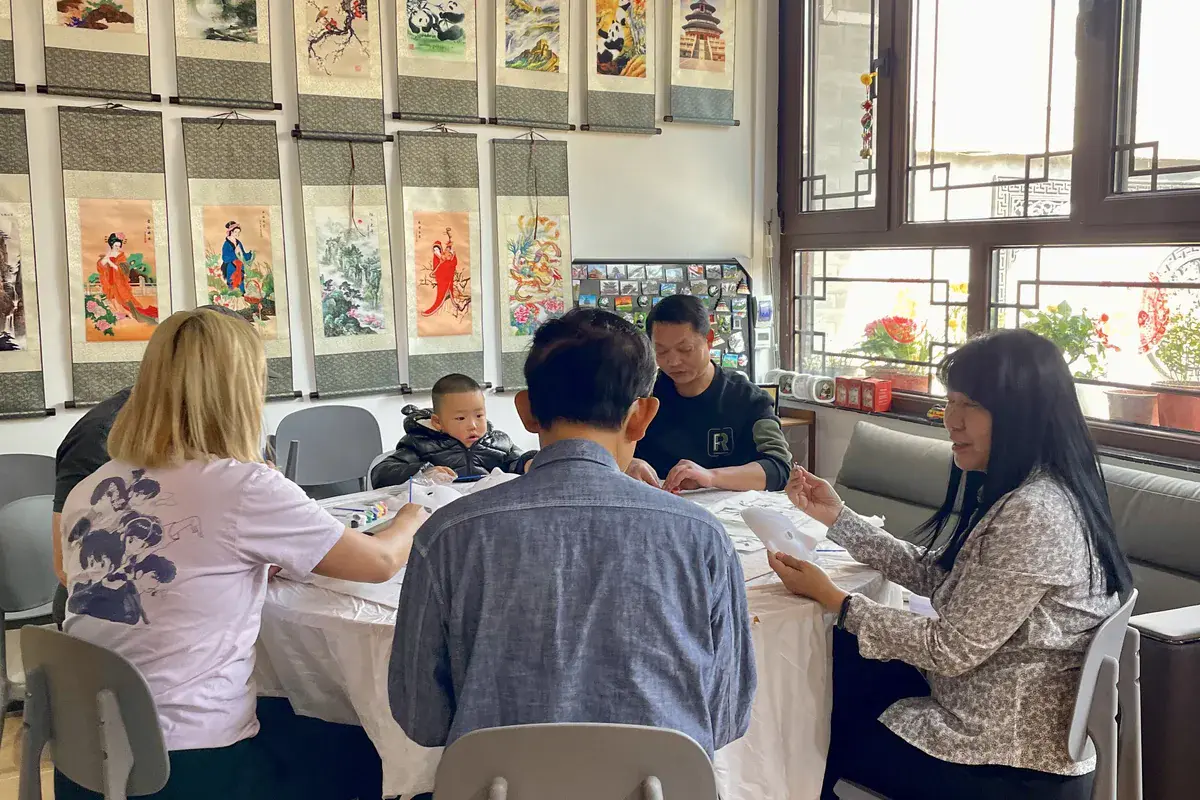
Chinese names: 南锣鼓巷 (Nánluógǔxiàng), 鼓楼 (Gǔlóu) Location: Dongcheng District, central Beijing Admission: Free to explore the neighborhood; individual attractions require tickets Suggested visit: 2–4 hours Nearest subway: Nanluoguxiang Station, Lines 6 and 8; Shichahai Station, Line 8 Best for: Historic architecture, hutong walks, local food, photography and neighborhood culture
Beyond Beijing's Most Famous Hutong
Few neighborhoods capture the contrasts of contemporary Beijing as clearly as Nanluoguxiang and Gulou.
Traditional grey-brick houses stand beside independent cafés. Centuries-old courtyard entrances open onto narrow residential lanes. Small restaurants and neighborhood shops operate in the shadow of two monumental towers that once regulated daily life across the imperial capital.
Nanluoguxiang is perhaps Beijing's best-known hutong street. Its central lane attracts visitors with restaurants, boutiques, dessert shops and traditional architecture.
But the main street tells only part of the story.
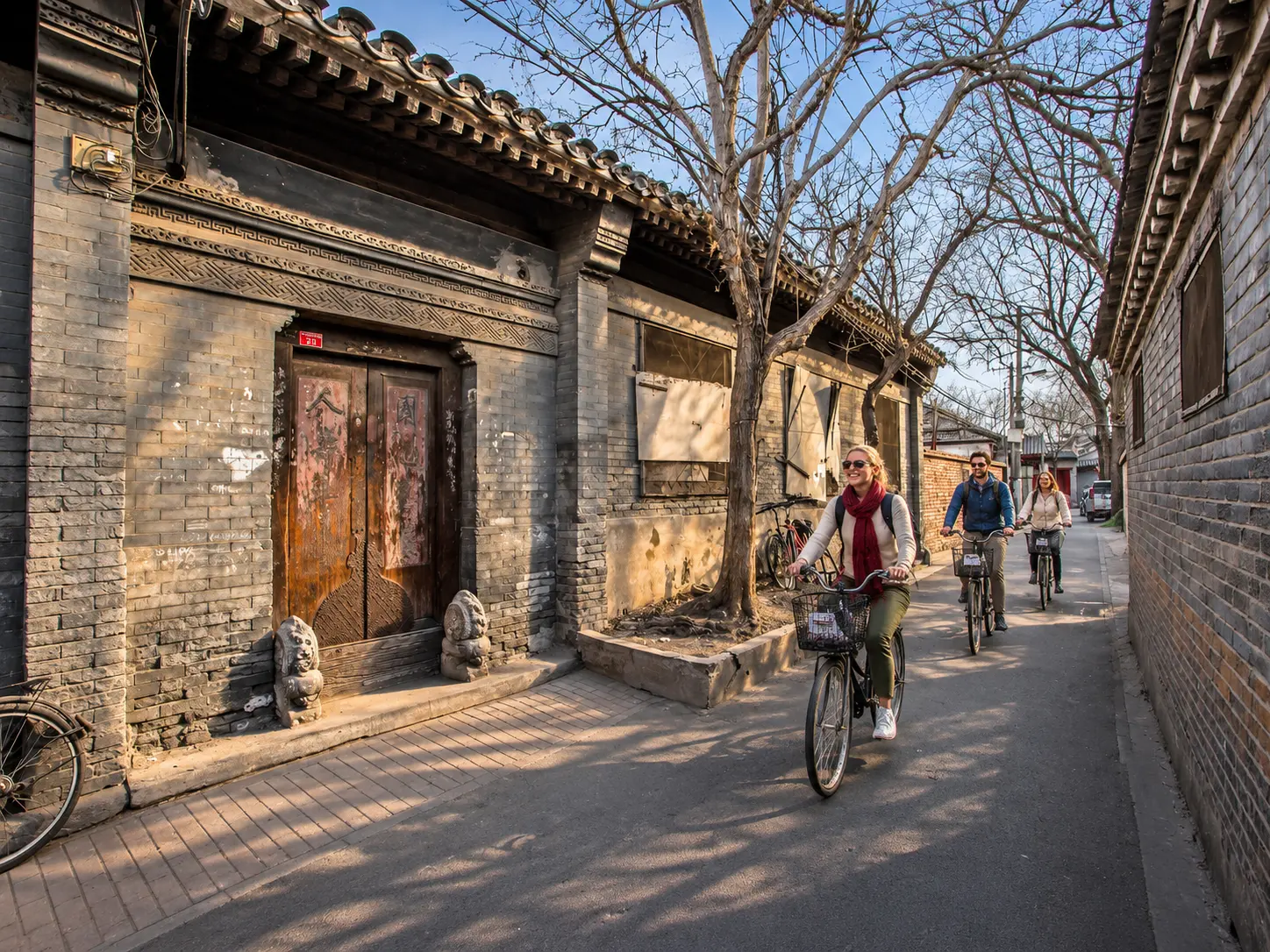
Turn into one of its quieter side lanes and a different neighborhood emerges: old courtyard residences, historic trees, weathered wooden doors and traces of the city's architectural development over seven centuries.
Continue west toward Gulou, and the narrow residential streets give way to the imposing Drum and Bell Towers, marking the northern end of Beijing's historic Central Axis.
Together, these neighborhoods offer one of the most rewarding ways to explore Beijing on foot.
1. The History of Nanluoguxiang
A Neighborhood From the Yuan Dynasty
Nanluoguxiang's origins can be traced to the development of Dadu (大都), the Yuan-dynasty capital established under Kublai Khan in the thirteenth century.
Unlike earlier settlements that developed around different parts of present-day Beijing, Dadu was conceived as a large, systematically planned imperial capital.
Its urban organization included broad avenues, administrative districts, residential blocks and a network of smaller streets.
Many of today's Beijing hutongs developed from this tradition of urban planning.
Nanluoguxiang preserves a particularly recognizable example of that historic street pattern.
Although its individual buildings have been rebuilt, altered and restored over the centuries, the neighborhood's underlying layout remains an important part of its Yuan-dynasty heritage.
From Residential Quarter to Historic Neighborhood
During the Ming and Qing dynasties, the area continued to develop as a residential and commercial district.
Its proximity to the imperial city's northern neighborhoods made it an attractive location for officials, scholars, wealthy families and members of the aristocracy.
Numerous substantial courtyard residences were constructed within its side streets.
In the twentieth century, the neighborhood became associated with artists, writers, educators and other prominent residents.
The area's contemporary identity reflects all of these historical layers.
It is neither a preserved Yuan-dynasty village nor an entirely modern shopping district, but a neighborhood that has evolved continuously alongside Beijing itself.
2. The Fishbone Layout: Sixteen Hutongs and One Main Street
One of Nanluoguxiang's most distinctive features is its street plan.
The main lane extends approximately 786 meters from north to south, between Gulou East Street and Di'anmen East Street.
Eight smaller hutongs branch from each side.
Viewed from above, the arrangement resembles a fishbone or a centipede, which explains its traditional nickname, Centipede Street (蜈蚣街).
The Western Hutongs
From north to south:
- Qiangulouyuan Hutong (前鼓楼苑胡同)
- Heizhima Hutong (黑芝麻胡同)
- Shajing Hutong (沙井胡同)
- Jingyang Hutong (景阳胡同)
- Mao'er Hutong (帽儿胡同)
- Yu'er Hutong (雨儿胡同)
- Suoyi Hutong (蓑衣胡同)
- Fuxiang Hutong (福祥胡同)
The Eastern Hutongs
From north to south:
- Ju'er Hutong (菊儿胡同)
- Houyuanensi Hutong (后圆恩寺胡同)
- Qianyuanensi Hutong (前圆恩寺胡同)
- Qinlao Hutong (秦老胡同)
- Beibingmasi Hutong (北兵马司胡同)
- Dongmianhua Hutong (东棉花胡同)
- Banchang Hutong (板厂胡同)
- Chaodou Hutong (炒豆胡同)
The layout is worth understanding before visiting.
Rather than treating Nanluoguxiang as a single shopping street, think of it as the central spine of a much larger historic residential district.
The side lanes are where much of its architectural and cultural character can still be found.
3. Nanluoguxiang Main Street: Historic Setting, Contemporary Life
 Click to enlarge
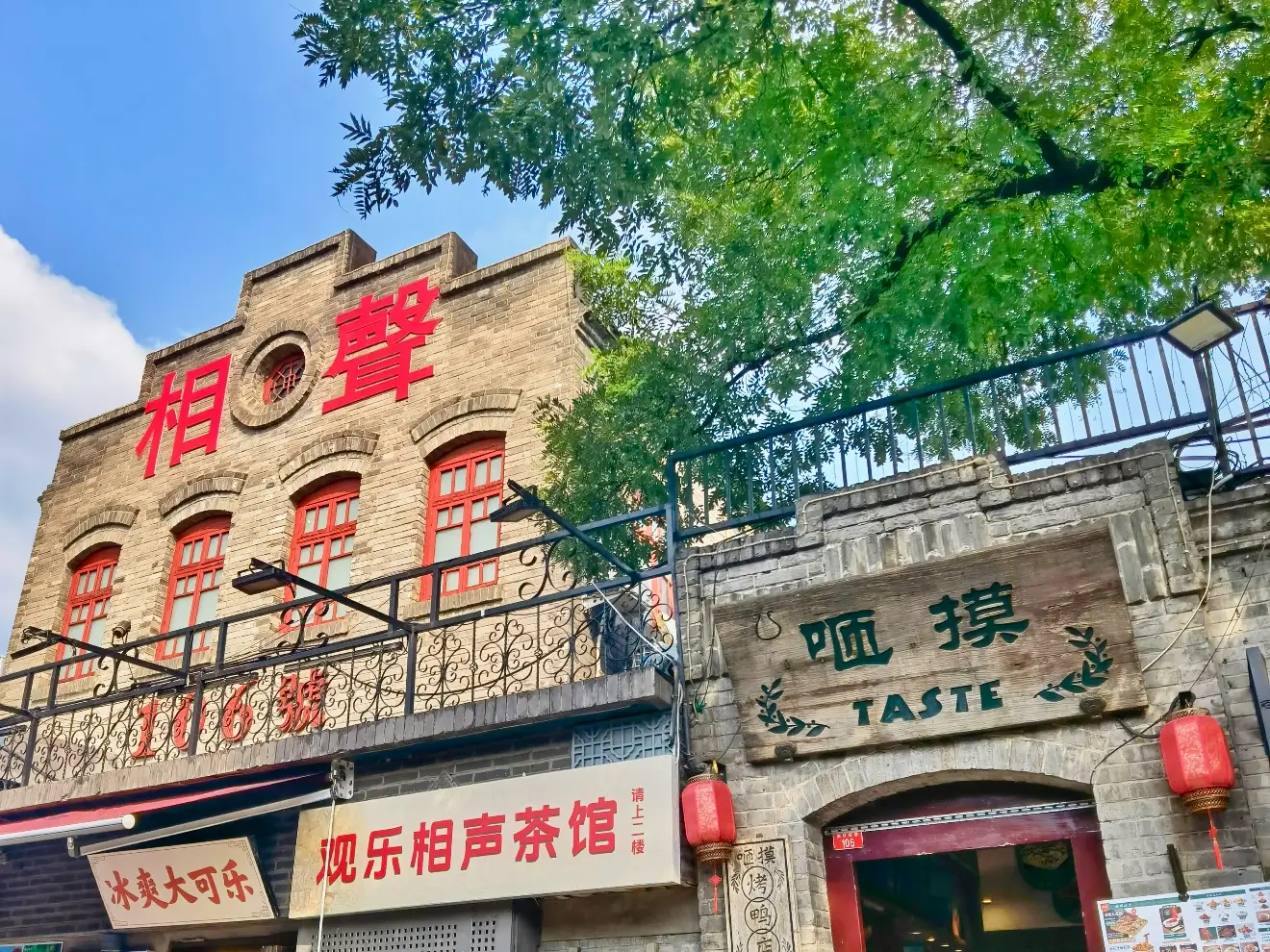
The central street is the busiest part of the neighborhood.
Its traditional architectural setting now accommodates cafés, restaurants, souvenir shops, dessert outlets and small boutiques.
Many visitors come here for snacks, casual shopping and photography.
What to Expect
Nanluoguxiang is lively, accessible and easy to explore, particularly for first-time visitors to Beijing.
It is also heavily commercialized.
On weekends and public holidays, the street can become extremely crowded. Some businesses cater primarily to tourists, and the experience is noticeably different from Beijing's quieter residential hutongs.
That does not make it unworthy of a visit.
Its commercial transformation is itself part of the neighborhood's recent history, illustrating how traditional urban spaces adapt to tourism and changing consumer culture.
The most enjoyable approach is to spend some time on the main street, then explore the smaller lanes that branch from it.
Food and Local Shops
Visitors will find a mixture of traditional Beijing snacks and contemporary food businesses.
Common options include candied hawthorn, yogurt, pastries, dumplings, noodles and various modern desserts.
Traditional Beijing dishes can also be found throughout the wider Gulou neighborhood.
You do not need to plan your entire visit around shopping or food. The street works equally well as a starting point for a longer architectural and historical walk.
4. Mao'er Hutong: Aristocratic Residences and Qing-Dynasty Architecture
Mao'er Hutong (帽儿胡同), on the western side of Nanluoguxiang, is among the neighborhood's most historically significant lanes.
Its name is associated with the city's traditional hat-making trade, although its later history became closely connected with wealthy and influential residential households.
Keyuan Garden
Keyuan (可园) is a historic private garden associated with the Qing official Wen Yu.
It illustrates how wealthy officials incorporated landscaped gardens into urban courtyard residences.
Unlike imperial gardens such as the Summer Palace, private gardens were designed on a more intimate scale, combining planting, architectural details and carefully arranged spaces within a residential setting.
Keyuan is primarily a protected heritage site rather than a regular public garden. Do not assume its interior is accessible.
The Former Residence Associated With Wanrong
Mao'er Hutong also contains a former residence associated with Wanrong (婉容), the wife of China's last emperor, Puyi.
The residence connects this seemingly ordinary lane with the final years of China's imperial household and the transition to the Republican era.
Its historical significance lies in the way major national events intersected with the residential geography of old Beijing.
What to Notice
Mao'er Hutong is particularly rewarding for observing courtyard entrances, substantial residential walls and the architectural scale of former elite households.
Much of the neighborhood remains residential, so appreciate these buildings from public streets unless an entrance is clearly open to visitors.
5. Yu'er Hutong: An Artistic and Intellectual Legacy
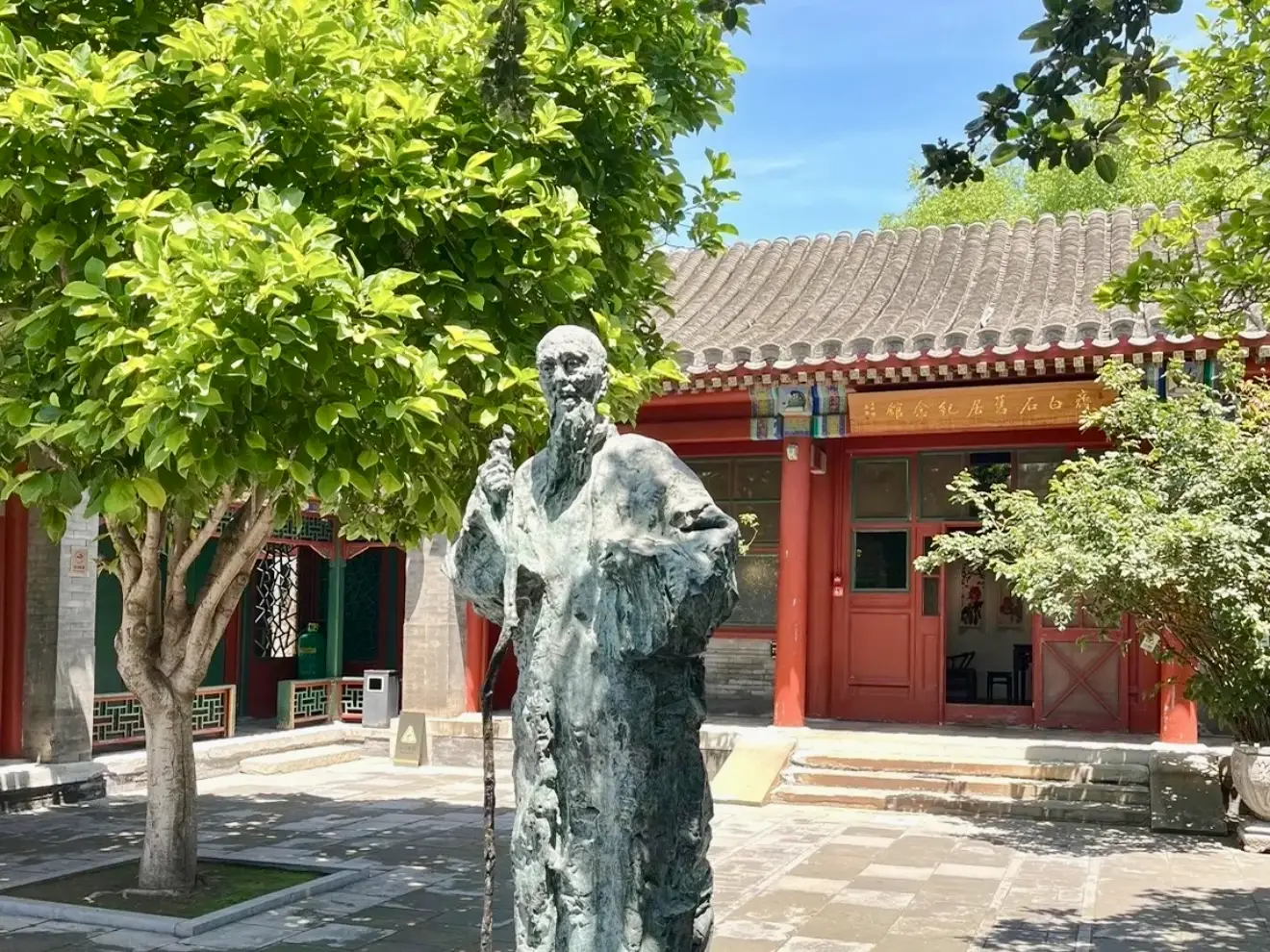 Click to enlarge
Yu'er Hutong (雨儿胡同) lies south of Mao'er Hutong and provides another perspective on the area's cultural history.
The lane is associated with several prominent twentieth-century residents, including the celebrated Chinese painter Qi Baishi (齐白石).
Qi Baishi and Modern Chinese Painting
Qi Baishi was one of the most influential Chinese artists of the twentieth century.
His paintings of shrimp, insects, plants and everyday subjects are admired for their expressive brushwork and deceptively simple compositions.
His association with Yu'er Hutong reflects a period when Beijing's traditional residential neighborhoods were important centers of artistic and intellectual life.
His former residence at No. 13 Yu'er Hutong is a significant cultural landmark, although visitors should check current arrangements before expecting public access.
Beyond Imperial History
Many Beijing travel itineraries concentrate on emperors, palaces and ancient monuments.
Yu'er Hutong offers a reminder that the city's modern cultural identity was also shaped by artists, writers, educators and ordinary residential communities.
The neighborhood's quieter architecture provides a useful contrast with the commercial activity of Nanluoguxiang's main street.
6. Ju'er Hutong: Tradition and Modern Urban Renewal
Ju'er Hutong (菊儿胡同), near the northern end of Nanluoguxiang, is particularly interesting for visitors interested in architecture and urban development.
The lane contains traces of substantial historic residences, including buildings associated with Ronglu, an influential late-Qing official.
However, Ju'er Hutong is also known for a much more recent architectural project.
Reinterpreting the Courtyard House
During the late twentieth century, architect and urban planner Wu Liangyong (吴良镛) led a pioneering housing renewal project in Ju'er Hutong.
Rather than replacing the neighborhood with conventional high-rise development, the project explored how traditional courtyard-based living could be adapted to modern residential needs.
Its design introduced contemporary housing arrangements while retaining elements of Beijing's historic urban scale and architectural character.
The project became an important reference in discussions about heritage conservation and residential renewal.
A Different Kind of Heritage
Ju'er Hutong demonstrates that preserving a historic neighborhood does not necessarily mean freezing it at a particular moment in time.
Cities must accommodate changing living standards, infrastructure requirements and population needs.
The challenge is to manage those changes without losing the qualities that make a place distinctive.
For visitors interested in architecture, Ju'er Hutong offers a worthwhile contrast with both the restored traditional streets and purely commercial developments elsewhere in Beijing.
The renewed housing remains residential and should be observed respectfully from publicly accessible areas.
7. Dongmianhua Hutong and the Central Academy of Drama
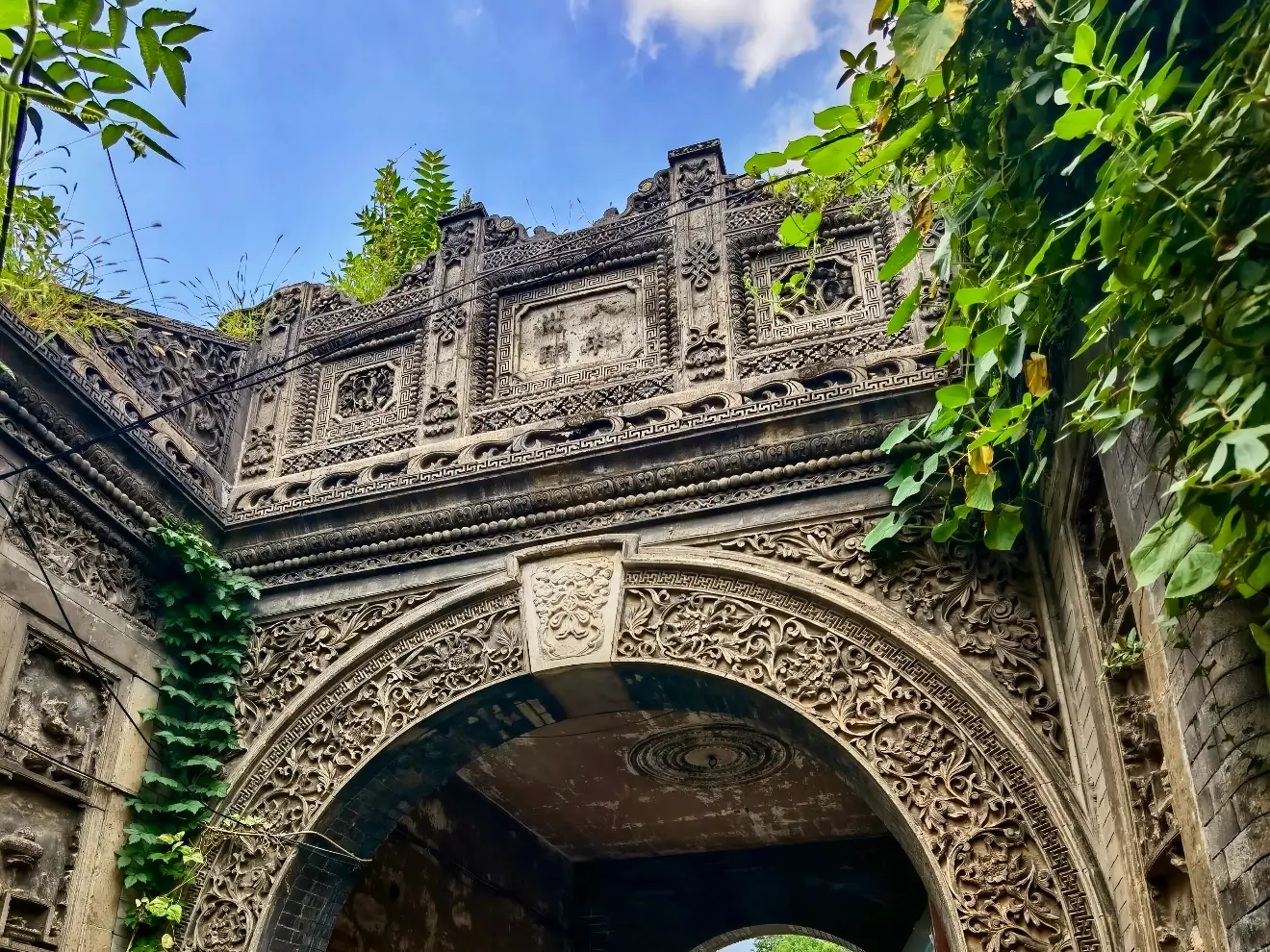 Click to enlarge
Dongmianhua Hutong (东棉花胡同) is closely associated with Beijing's performing arts community.
The historic campus of the Central Academy of Drama (中央戏剧学院) is located within the lane.
The academy has played an influential role in Chinese theater, film and television education, producing generations of actors, directors and other performing arts professionals.
Theater Within the Old City
The presence of an important cultural institution within a traditional residential neighborhood creates a distinctive atmosphere.
It also reflects how Beijing's historic urban fabric has accommodated new educational and cultural functions over time.
The lane contains traditional architecture alongside buildings associated with the academy.
The campus is an educational institution, not a general tourist attraction. Entry may be restricted.
Visitors can appreciate the street itself without entering academic or private buildings.
8. Beijing's Traditional Courtyard Houses
Throughout Nanluoguxiang and Gulou, visitors will encounter buildings constructed around the traditional Beijing courtyard-house model known as *siheyuan* (四合院).
How a Siheyuan Is Organized
A typical courtyard residence consists of buildings arranged around an enclosed central courtyard.
Traditional arrangements often placed the principal rooms on the northern side, facing south for favorable sunlight.
Additional buildings occupied the eastern, western and southern sides.
Larger residences could contain several successive courtyards, sometimes accompanied by private gardens and service areas.
The layout reflected family relationships, social status, environmental considerations and the division between public and private spaces.
Architectural Details to Look For
Many of the neighborhood's most interesting features can be observed directly from the street:
- Grey-brick exterior walls and tiled roofs.
- Traditional wooden gates.
- Decorative stone door blocks, known as *mendun* (门墩).
- Carved brickwork and roof ornaments.
- Doorway screens and recessed entrances.
- Differences between modest houses and former elite residences.
These details help visitors understand how architecture once communicated the status and organization of a household.
A Living Residential Environment
Not every courtyard house is a museum, guesthouse or commercial property.
Many continue to accommodate Beijing residents.
Some have been subdivided, adapted or renovated to meet changing housing needs.
The appearance of a traditional courtyard from the street may therefore conceal a much more complex modern residential history.
An open doorway does not necessarily indicate public access.
9. Gulou: The Drum Tower and the Rhythm of Imperial Beijing
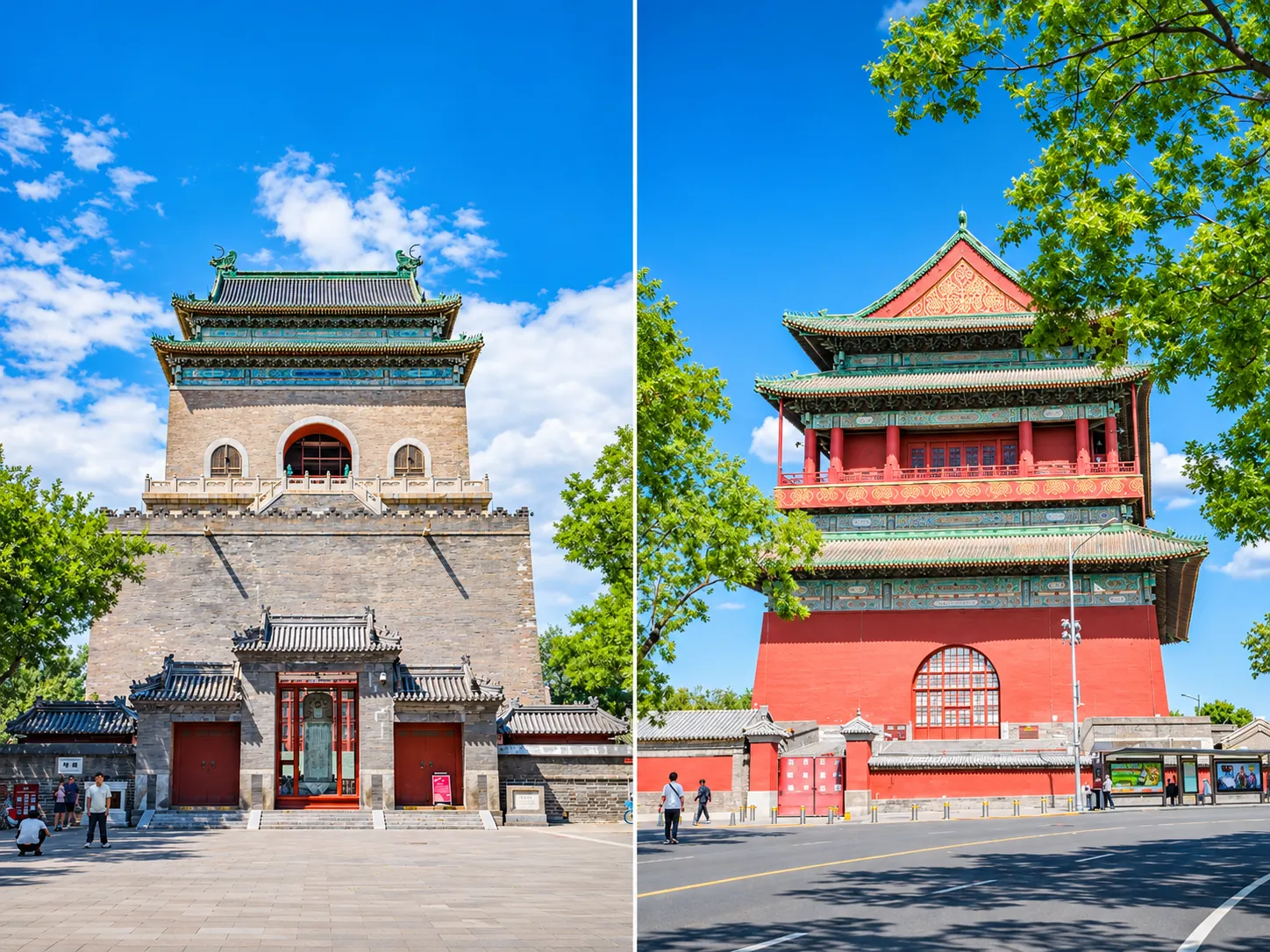 Click to enlarge
West of Nanluoguxiang stands the Drum Tower, known in Chinese as Gulou (鼓楼).
The name also informally refers to the surrounding neighborhood.
The tower occupies a prominent position near the northern end of Beijing's historic Central Axis, overlooking one of the old city's most distinctive residential districts.
Timekeeping Before Modern Clocks
Before mechanical clocks became widely available, imperial Beijing relied on collective systems of timekeeping.
The Drum and Bell Towers communicated time to the surrounding city through carefully regulated sound signals.
These signals helped organize daily activity and nighttime periods.
The institutions behind them reflected the imperial government's responsibility for regulating urban life.
From the Yuan Dynasty to the Present
The history of Beijing's timekeeping towers extends back to the Yuan dynasty.
The structures visible today reflect subsequent dynastic construction and restoration.
The existing Drum Tower is principally associated with Ming-dynasty architecture, while the Bell Tower reflects later Qing reconstruction.
Their survival provides a connection between Beijing's medieval urban origins and the subsequent development of the imperial capital.
Inside the Drum Tower
Visitors can explore exhibitions relating to historical timekeeping and traditional drums.
Drumming demonstrations may be available during designated periods.
The upper level provides views across the surrounding roofs, streets and historic Central Axis.
The staircase is steep, so visitors with limited mobility should consider enjoying the building from ground level instead.
10. Zhonglou: Beijing's Historic Bell Tower
The Bell Tower (钟楼, Zhōnglóu) stands immediately north of the Drum Tower.
Although the two buildings are closely connected in function and location, their architectural appearances are noticeably different.
The Drum Tower is characterized by its imposing red walls and timber architecture.
The Bell Tower has a more restrained masonry appearance.
The Great Bronze Bell
The Bell Tower houses an enormous historic bronze bell associated with the city's traditional timekeeping system.
Its size reflects the need to produce sound that could travel across a large urban area.
Historically, the bell and drums helped communicate the passing of time before personal timekeeping devices became widespread.
Two Towers, One Urban Landmark
The positioning of the towers along a shared axis creates a distinctive architectural ensemble.
Between them lies an open public square that provides one of the best places to appreciate their contrasting forms.
The towers are also part of the Beijing Central Axis, which received UNESCO World Heritage inscription in 2024.
Their significance extends beyond timekeeping: they form the northern termination of an urban design that shaped the historic capital.
11. Zhonglouwan and the Quieter Lanes Around Gulou
The area immediately surrounding the towers is worth exploring in its own right.
Zhonglouwan Hutong (钟楼湾胡同) winds around the Bell Tower and offers some particularly atmospheric views of traditional houses against the monumental architecture.
Bell and Drum Towers Square
The square between the towers provides a welcome contrast with the narrow lanes of Nanluoguxiang.
Depending on the time of day, visitors may encounter residents resting, walking, exercising or passing through on their daily routines.
It is an interesting place to observe how historic monuments remain embedded within the city's contemporary life.
Doufuchi Hutong
Doufuchi Hutong (豆腐池胡同) lies within the wider Bell Tower neighborhood.
Its traditional streetscape and residential character make it a worthwhile extension to a walk around Gulou.
The changing views of the towers from surrounding lanes are particularly attractive for photography.
Hong'en Temple
Hong'en Temple (宏恩观) is a historic Daoist complex within the neighborhood.
The restored site has also been developed as a cultural space interpreting Beijing's Central Axis and local heritage.
It provides another example of how historical buildings can acquire new cultural functions while retaining their architectural identity.
Check current exhibitions and access arrangements before planning a dedicated interior visit.
12. Gulou East Street: Contemporary Culture in Historic Beijing
Gulou East Street (鼓楼东大街) connects the Nanluoguxiang neighborhood with the Drum Tower area.
It has become associated with independent businesses, cafés, restaurants, music culture and creative communities.
Its commercial character is different from the concentrated tourist activity of Nanluoguxiang.
Music, Cafés and Independent Shops
The wider Gulou area has long attracted younger residents, artists and visitors interested in contemporary urban culture.
Over time, small music-related businesses, vintage shops, cafés and restaurants have contributed to the neighborhood's identity.
Individual venues change, but the mixture of historic architecture and contemporary cultural activity remains part of the area's appeal.
A Neighborhood That Changes Throughout the Day
Morning brings residents, deliveries and relatively quiet street scenes.
By afternoon, cafés and shops become more active.
In the evening, the surrounding restaurant streets take on a different atmosphere.
This makes Gulou a rewarding neighborhood for both historical sightseeing and a more relaxed exploration of contemporary Beijing.
13. The Best Hutong Walking Route: Nanluoguxiang to Gulou
This route is designed to introduce the area's architecture, cultural history and major landmarks without spending the entire visit on its busiest commercial street.
Suggested duration: 3–4 hours, including tower visits Walking effort: Generally easy, with optional steep staircases inside the towers Starting point: Nanluoguxiang Subway Station Finishing point: Bell and Drum Towers
Stop 1 — Southern Entrance of Nanluoguxiang
*15–20 minutes*
Begin at Di'anmen East Street and walk north into Nanluoguxiang.
Observe how the main pedestrian street connects with the narrow lanes branching from either side.
Stop 2 — Dongmianhua Hutong
*15–20 minutes*
Turn east into Dongmianhua Hutong.
Explore its traditional streetscape and the neighborhood associated with the Central Academy of Drama before returning toward the main lane.
Stop 3 — Yu'er Hutong
*15–20 minutes*
Explore the quieter western lane associated with Qi Baishi and other notable twentieth-century residents.
Return toward Nanluoguxiang or follow connecting public lanes where convenient.
Stop 4 — Mao'er Hutong
*20–30 minutes*
Observe historic courtyard entrances and the exteriors of former aristocratic residences.
This is one of the most rewarding parts of the walk for visitors interested in Qing residential architecture.
Stop 5 — Ju'er Hutong
*20–30 minutes*
Continue toward the northern part of Nanluoguxiang and explore Ju'er Hutong.
Look for the contrast between surviving traditional architecture and the neighborhood's more recent residential renewal.
Stop 6 — Gulou East Street
*15–30 minutes*
Leave Nanluoguxiang at its northern end and turn west toward the Drum Tower.
Allow time for a café stop or a look at the independent shops along the way.
Stop 7 — Drum and Bell Towers
*45–75 minutes*
Visit the historic timekeeping towers and the square between them.
If time and mobility allow, climb the towers for views across the traditional roofs of northern Beijing.
Stop 8 — Zhonglouwan Hutong
*15–30 minutes, optional*
Finish with a walk around the Bell Tower's surrounding lanes.
Continue toward Doufuchi Hutong or explore the Hong'en Temple area if time permits.
14. Extend Your Walk Into Shichahai
The Gulou neighborhood connects naturally with Shichahai, making it possible to extend a short hutong walk into a half-day or full-day exploration.
From the Drum Tower, head south along Di'anmen Outer Street toward Yandai Xiejie (烟袋斜街), one of Beijing's recognizable historic commercial lanes.
The street leads toward Silver Ingot Bridge (银锭桥), connecting the Qianhai and Houhai lake areas.
From there, continue along the waterfront, explore the adjoining hutongs or stop for lunch.
Nanluoguxiang and Shichahai: How They Differ
| Nanluoguxiang & Gulou | Shichahai |
|---|---|
| Historic residential street grid | Lakes and historic waterfronts |
| Courtyard architecture | Gardens and princely residences |
| Drum and Bell Towers | Silver Ingot Bridge and lakeside views |
| Independent shops and urban culture | Waterfront dining and scenic walks |
| Best for architectural exploration | Best for relaxed landscape-oriented walks |
Neither neighborhood is necessarily better than the other.
They reveal different aspects of historic Beijing and are close enough to explore together.
For a more detailed waterfront route, see our Shichahai guide.
15. Tickets, Opening Hours and Visitor Information
Nanluoguxiang and Gulou Streets
The neighborhood consists primarily of public streets.
Admission: Free
Opening hours: The public lanes are generally accessible throughout the day.
No attraction ticket is normally required simply to walk through the neighborhood.
Individual shops, cafés, museums and cultural venues maintain their own operating hours.
Drum and Bell Towers
The towers require separate admission.
Drum Tower: RMB 20
Bell Tower: RMB 10, according to recent municipal visitor notices.
Combined admission: RMB 30
Summer closing time: Generally 17:30
Winter closing time: Generally 16:30
Opening time: Generally 09:30
The first-floor Drum Tower exhibition has separate Monday closure arrangements. Seasonal dates, performance schedules and last-admission times may vary.
Check the official Beijing Drum and Bell Towers WeChat account (北京钟鼓楼) before visiting.
Bring your passport if purchasing attraction tickets, particularly where identity verification is required.
Former Residences and Courtyard Houses
Many historically significant buildings within the hutongs are private residences, protected properties or institutional premises.
Their inclusion in a historical guide does not mean they are open for interior visits.
Check current public access arrangements for any specific building you wish to visit.
16. How to Get to Nanluoguxiang and Gulou
By Subway
Nanluoguxiang Station — Lines 6 and 8
The most convenient starting point for a south-to-north walk through Nanluoguxiang.
Shichahai Station — Line 8
Convenient for the Drum Tower, Yandai Xiejie and nearby lakeside areas.
Gulou Dajie Station — Lines 2 and 8
An alternative starting point for exploring the Bell Tower and surrounding northern neighborhoods.
By Taxi or DiDi
Useful destination names include:
- 南锣鼓巷南口 — Nanluoguxiang South Entrance
- 鼓楼 — Drum Tower
- 钟楼 — Bell Tower
The surrounding hutongs are narrow, and vehicle access may be restricted.
Arrange a drop-off or pickup on a larger adjoining street rather than expecting a vehicle to reach every courtyard entrance.
Exploring on Foot
Walking is the most practical way to experience the neighborhood.
Most streets are relatively flat, although historic paving, thresholds and narrow passages may present occasional accessibility challenges.
The staircases inside the Drum and Bell Towers are significantly steeper than the surrounding walking routes.
17. Best Time to Visit
Morning
Morning is generally the best time for architecture, photography and quieter residential streets.
The commercial parts of Nanluoguxiang may be less active, but the surrounding hutongs retain their everyday neighborhood character.
Afternoon
The afternoon is ideal for combining historical sightseeing with shops, cafés and restaurants.
The main street becomes busier, especially on weekends.
Evening
Gulou is particularly atmospheric in the evening, when restaurants and cafés bring activity to the surrounding streets.
The towers' interiors and museum exhibitions generally close earlier than neighborhood businesses.
Spring and Autumn
April, May, September and October often provide comfortable conditions for walking.
Autumn foliage can be particularly attractive against traditional grey-brick architecture.
Summer and Winter
Summer can be hot and humid, making morning or later-afternoon walks preferable.
Winter brings colder conditions but often quieter streets and clearer architectural views.
18. Visiting Hutongs Respectfully
Nanluoguxiang and Gulou are not open-air museums.
They are living neighborhoods where people continue to carry out their daily routines.
A respectful visit is simple:
- Remain on public streets unless a building is clearly open to visitors.
- Keep residential doorways and narrow passages clear.
- Ask permission before photographing people closely.
- Avoid entering courtyards simply because their gates are open.
- Keep noise low in quieter residential lanes.
Some of the most rewarding experiences in Beijing come from observing the city without interrupting it.
19. Is Nanluoguxiang Worth Visiting?
Yes, provided you explore beyond its main commercial street.
Nanluoguxiang is accessible and historically significant, but visitors who spend their entire time among its snack shops and souvenir stores may leave with an incomplete impression of Beijing's hutong culture.
The surrounding side lanes offer greater architectural variety and a more substantial connection with the city's history.
Combining them with Gulou adds another important dimension: the relationship between Beijing's residential neighborhoods, historic timekeeping institutions and imperial urban planning.
If you only have a short time, prioritize two or three side hutongs and the Drum and Bell Towers.
If you have half a day, continue into Shichahai and enjoy the transition from narrow residential streets to the open lakeside landscape.
20. Other Historic Neighborhoods to Explore
Shichahai
A scenic network of lakes, historic bridges, courtyard residences and former princely estates.
Qianmen and Dashilar
Beijing's historic commercial district, associated with traditional brands, theaters, merchant culture and distinctive narrow streets.
Wudaoying and Guozijian
A neighborhood combining historic educational institutions, traditional archways, independent cafés and contemporary cultural life.
Dongsi Hutongs
A quieter area particularly rewarding for visitors interested in residential architecture and traditional urban planning.
Xiangchang New District
An early twentieth-century district illustrating Beijing's transition toward modern urban development during the Republican era.
Each neighborhood reveals a different chapter in the city's urban history.
21. Why Nanluoguxiang and Gulou Matter
The significance of Nanluoguxiang and Gulou lies in the continuity of their urban structure.
Their underlying street patterns recall the planning of the Yuan capital.
Their courtyard houses reflect centuries of residential architecture.
Their former mansions preserve connections with imperial officials and prominent families.
Their artistic and educational institutions tell stories of twentieth-century cultural development.
And their cafés, shops and renewed residential buildings illustrate the changing needs of contemporary Beijing.
At the center of the wider neighborhood, the Drum and Bell Towers recall an earlier city whose daily rhythms were communicated through sound.
Few areas bring together so many different periods of Beijing's history within such a compact and walkable setting.