
That sequence—city, history, cliffs, misty mountains, tributaries and modern engineering—is what makes the Three Gorges journey more interesting than simply seeing one famous viewpoint.
The Yangtze Journey in One View
Downstream: Chongqing → Yichang
Chongqing (Chaotianmen) ↓ Fengdu ↓ Fengjie / Baidicheng (White Emperor City) ↓ Qutang Gorge & Kuimen ↓ Wu Gorge / Wushan ↳ Goddess Stream / Wushan small-boat excursion ↓ Xiling Gorge ↓ Maoping Port, Zigui County ↓ Sandouping / Three Gorges Dam ↓ Downtown Yichang
Upstream cruises travel through the same geography in reverse.
Not every cruise stops at every shore destination shown above. Fengdu, White Emperor City and the Wushan tributary excursion vary by operator and departure, but Qutang, Wu and Xiling form the core geography of the classic Chongqing–Yichang journey.
Qutang, Wu and Xiling at a Glance
| Gorge | Approx. length | What makes it distinctive | Main places |
|---|---|---|---|
| Qutang Gorge 瞿塘峡 | 8 km | Shortest and narrowest; dramatic Kuimen gateway | Fengjie, Baidicheng |
| Wu Gorge 巫峡 | About 46 km | High forested mountains, Twelve Peaks, mist and cloud | Wushan, Goddess Peak |
| Xiling Gorge 西陵峡 | About 66 km | Longest of the three; mountains give way toward the dam and Yichang | Zigui, Sandouping, Yichang |
The three named gorges themselves cover roughly 120 km, but the classic cruise journey is much longer because Chongqing, Fengdu and other stretches of the Yangtze lie outside the gorges proper.
Qutang's official length is 8 km; Chongqing sources describe Wu Gorge at about 46 km; Yichang records Xiling at about 66 km.
Downstream cruises normally begin in central Chongqing around Chaotianmen, where the Yangtze meets the Jialing River beneath the city's steep skyline.
The contrast is useful: the journey starts in one of China's largest cities, but within hours the dense urban landscape gives way to smaller river towns and mountains. The Three Gorges themselves are still far downstream—you do not enter Qutang Gorge immediately after leaving Chongqing.
Boarding details: ports & boarding.
Fengdu: The Cultural Stop Before the Gorges
Fengdu lies well before the Three Gorges themselves and is a common early shore-excursion area on Chongqing–Yichang cruises. Its best-known attraction is Fengdu Ghost City on Ming Mountain, a temple complex whose imagery draws on Chinese ideas about the afterlife, judgment and the underworld.
The English name can make it sound like a horror attraction, but its roots are religious and folkloric rather than simply theatrical. Temples, statues and stories portray moral judgment after death through traditions influenced by Taoism, Buddhism and Chinese popular religion.
Some ships use other Fengdu-area cultural excursions instead, so treat Fengdu as a common cruise stop rather than a guaranteed part of every itinerary.
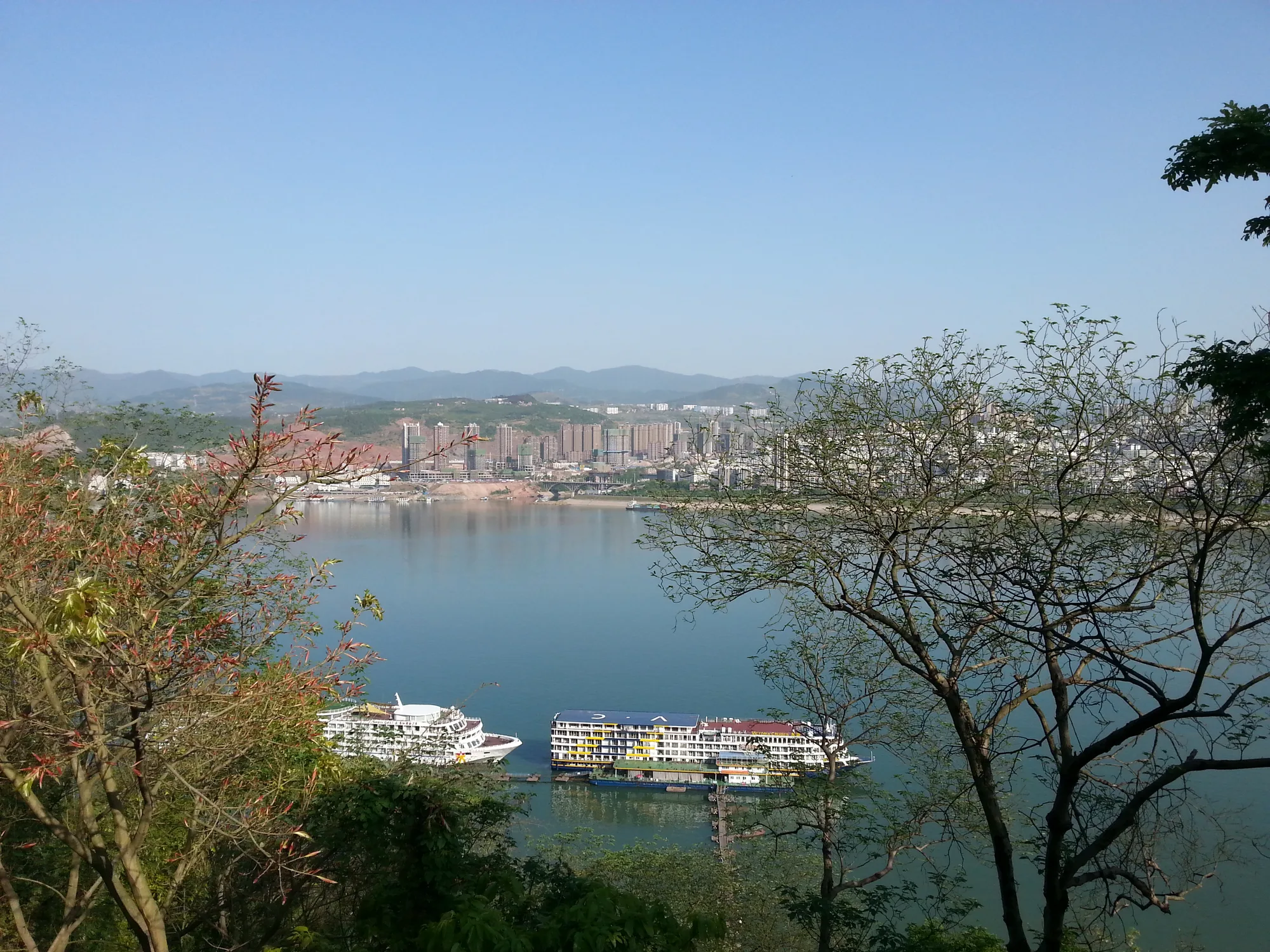
*Fengdu is a common early shore stop on Chongqing–Yichang cruises, before the ship reaches the Three Gorges.*
Fengjie & Baidicheng: History Before Qutang Gorge
By the time the ship reaches Fengjie, the river landscape has become much more mountainous. This is the western gateway to the Three Gorges and one of the places where China's history, poetry and scenery overlap most clearly.
White Emperor City
Baidicheng—White Emperor City—stands on Baidi Mountain beside the western entrance to Qutang Gorge. The site takes its name from Gongsun Shu, who ruled part of southwestern China during the turmoil following the Western Han dynasty and called himself the “White Emperor.”
For Chinese visitors, however, Baidicheng is equally associated with the Three Kingdoms period and with poetry. Liu Bei's final years and the famous story of entrusting his heir to Zhuge Liang are linked to the site, while poets including Li Bai and Du Fu helped make this stretch of the Yangtze one of China's best-known literary landscapes.
Li Bai's famous poem traditionally translated as “Departing Baidi in the Morning” begins here and imagines the rapid downstream journey through the mountains. Baidicheng is still promoted locally as the “City of Poetry.”
Depending on the cruise, White Emperor City may be included, optional or replaced by another Fengjie-area excursion such as a Three Gorges panoramic viewpoint.
Current Century programs, for example, can offer a choice between White Emperor City and a Three Gorges summit excursion.
Qutang Gorge & Kuimen: The Dramatic Gateway
Qutang is the first and shortest of the Three Gorges, running only about 8 km from Baidi Mountain toward Daxi in Wushan. It is also the section most likely to match the mental image travelers have of the Three Gorges: steep cliffs closing tightly around the Yangtze.
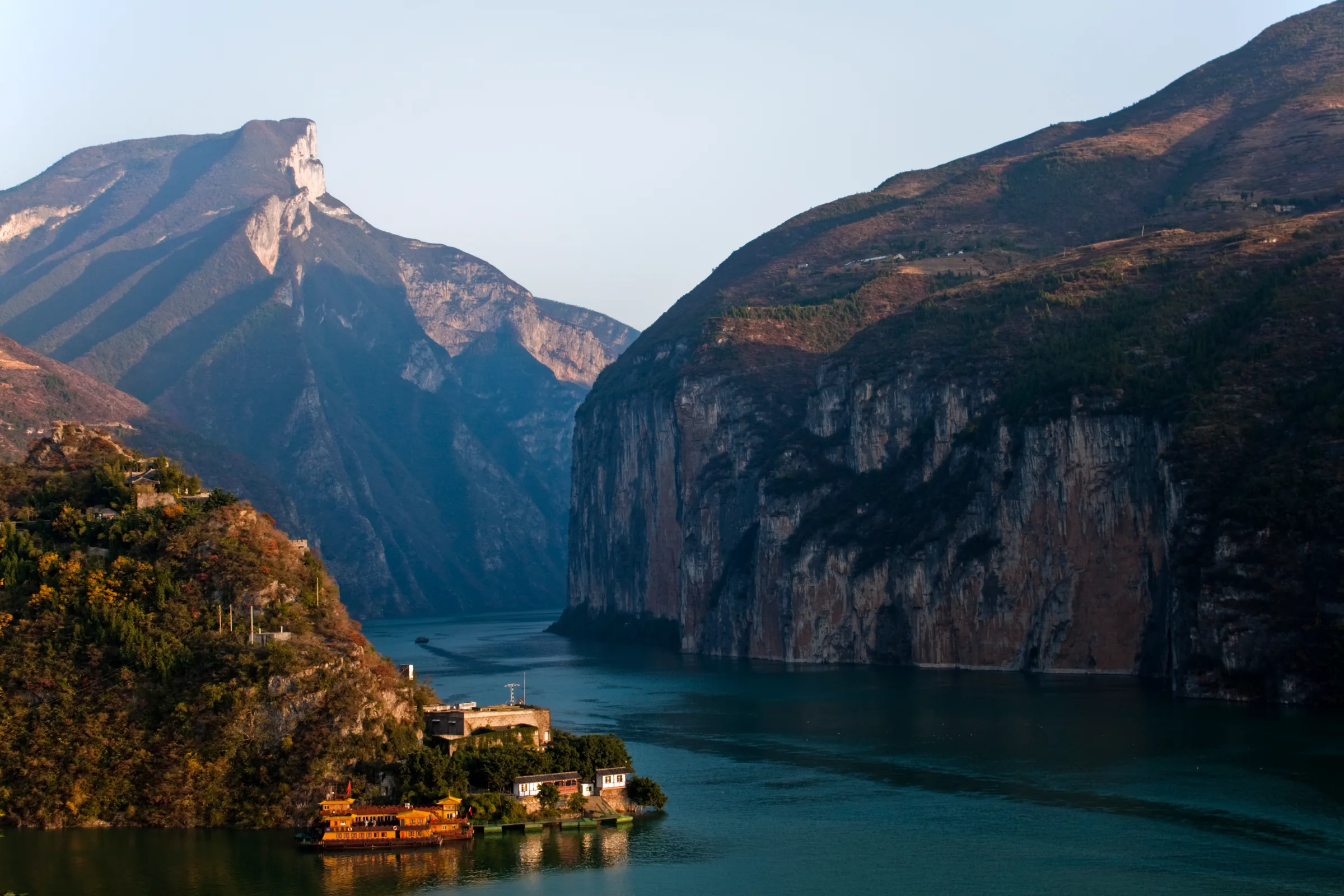
*Qutang Gorge is the westernmost and shortest of the Three Gorges on the Chongqing–Yichang cruise corridor.*
Kuimen
The western entrance is called Kuimen, or Kui Gate. Two massive cliff faces frame the river so sharply that the landscape feels almost architectural when the ship approaches.
This is also the Three Gorges view shown on the reverse of China's current 10-yuan banknote, which is one reason Chinese travelers immediately recognize the scene.
Qutang is short. If the cruise announces that you are approaching Kuimen or Qutang Gorge, go to the open deck rather than assuming you can see it later.
Wu Gorge: Mountains, Mist & the Twelve Peaks
Wu Gorge is very different from Qutang. Instead of one abrupt gateway, the Yangtze continues for roughly 46 km through a deeper mountain landscape around Wushan. Peaks rise one after another above the river, often partly hidden by cloud or mist.
The traditional landscape is described through the Twelve Peaks of Wushan—six on either side of the river. The best known is Goddess Peak, also called Shennü Peak, on the north bank of Wu Gorge.
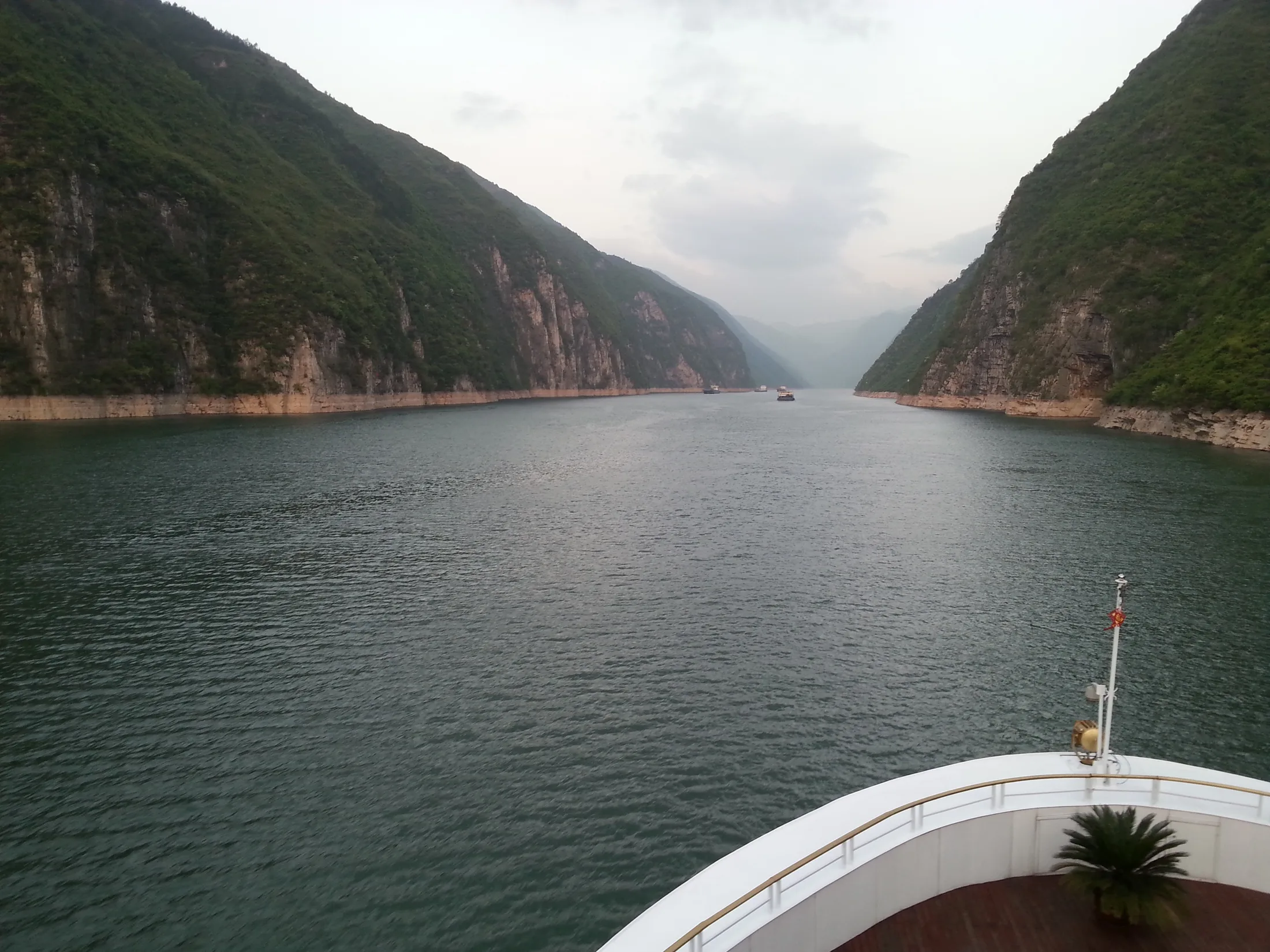
*Wu Gorge is the long mountain corridor of the Three Gorges around Wushan.*
Goddess Peak
A slender rock formation near the summit gives the peak its name. Over centuries it became connected with legends of the Wushan Goddess and with a much wider tradition of Chinese poetry and literature about “clouds and rain over Wushan.”
You do not need to know the mythology to enjoy the scenery, but recognizing Goddess Peak gives the cruise commentary and the names of nearby places much more meaning.
Goddess Stream & the Wushan Tributaries
One of the most memorable changes of scale on many Yangtze cruises happens around Wushan. You leave the large cruise ship and transfer to a smaller sightseeing boat that can enter a narrower tributary.
Goddess Stream—Shennü Stream—is a common example. The smaller boat moves much closer to forested slopes and rock walls than the main Yangtze vessel can, so the experience feels more intimate than the broad river journey.
Not every cruise uses Goddess Stream. Depending on the ship and itinerary, you may instead encounter Shennong Stream, the Lesser Three Gorges or another Wushan-area excursion. Compare the actual sailing rather than treating all tributary excursions as interchangeable.
Current Century itineraries, for example, use Goddess Stream and pair it with passage through Qutang and Wu Gorges.
This tributary excursion is not a “fourth Three Gorge.” Qutang, Wu and Xiling are the three main gorges of the Yangtze.
Xiling Gorge: The Longest of the Three
Xiling is traditionally the longest of the Three Gorges, stretching about 66 km from the Xiangxi area toward Nanjin Pass near Yichang. Historically it was also the section most associated with difficult navigation, reefs, shoals and powerful rapids.
That history matters because modern Xiling looks very different. River engineering, the Gezhouba project and especially the Three Gorges Dam changed water levels and eliminated many of the hazards that gave Xiling its old reputation.
What remains is a long transition from mountain gorge scenery toward one of the largest engineering landscapes in China.
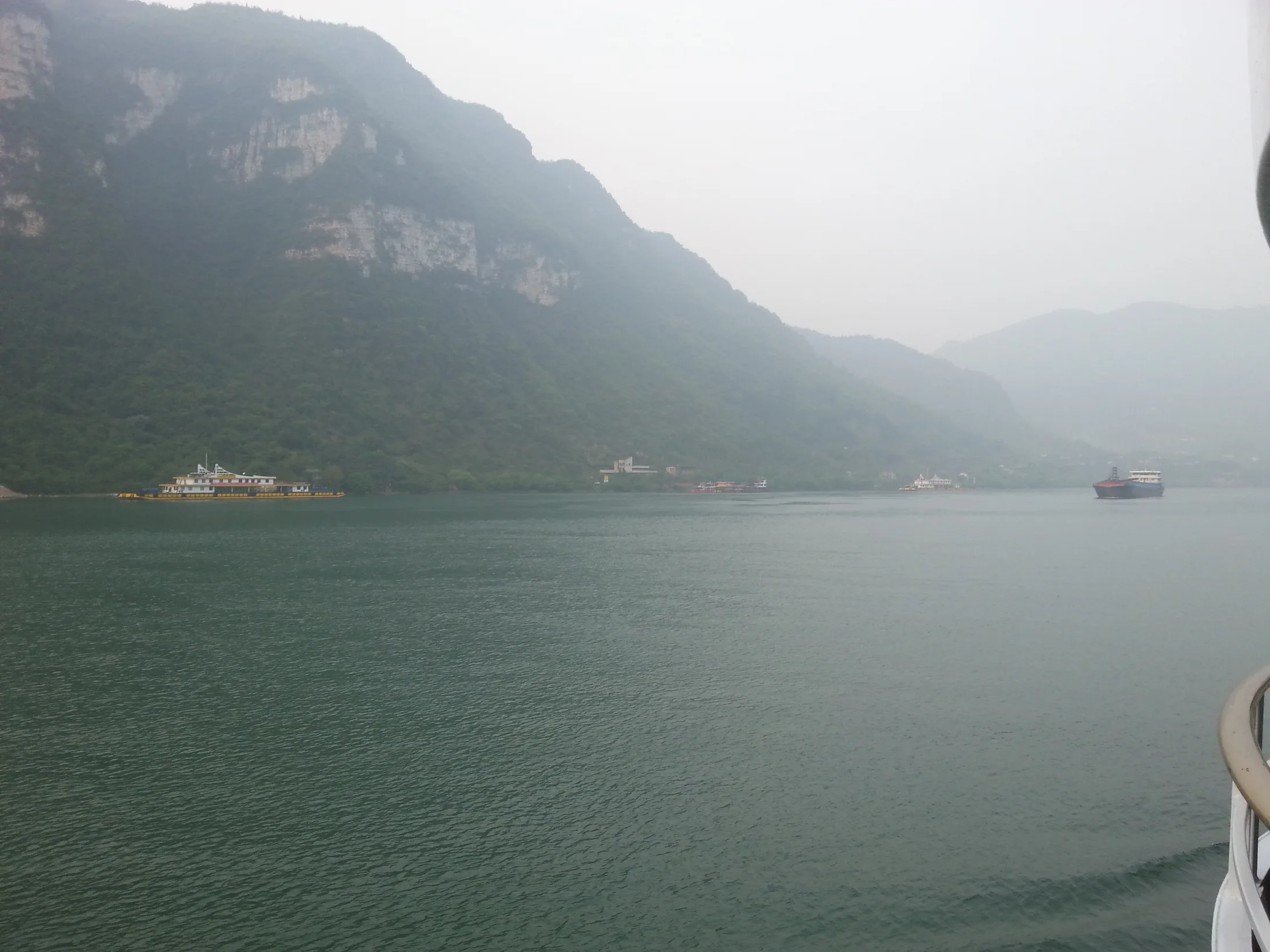
*Xiling Gorge is the eastern gorge on the classic Chongqing–Yichang cruise route toward Yichang.*
Maoping, Zigui County
Many modern cruises use Maoping Port in Zigui County on the Yichang side of the route. For downstream travelers, this is commonly where the overnight cruise portion ends before the Three Gorges Dam excursion and onward transfer to central Yichang.
This is why a cruise itinerary may say “Yichang” even though the ship itself does not berth in downtown Yichang.
See ports & boarding for pier and transfer detail.
Sandouping & the Three Gorges Dam
The Three Gorges Dam stands at Sandouping near Yichang, within the wider Xiling Gorge region. For most cruise travelers it marks the final major landmark at the eastern end of the journey.
Its scale is difficult to separate from the modern Three Gorges story. The reservoir raised water levels upstream, changed settlements and shorelines, and transformed navigation through sections that were once famous for dangerous rapids. At the same time, Qutang, Wu and much of Xiling remain recognizable mountain landscapes rather than having disappeared beneath the reservoir.
The dam deserves its own explanation—hydropower, flood control, locks, ship lift, resettlement and controversy are too large a subject for this page.
**Read our Three Gorges Dam guide.**
How You Experience the Three Gorges on a Cruise
The Three Gorges are not one shore excursion. Most of the experience happens while the ship is moving.
| How you see it | What it adds |
|---|---|
| Open deck | Widest views of cliffs, peaks and river bends |
| Private balcony | Quiet viewing without staying on the public deck |
| Main lounge / panoramic windows | Useful in rain, heat or cold |
| Shore excursions | History and cultural context at places such as Fengdu or Baidicheng |
| Tributary boat | Closer-scale scenery around Wushan |
| Dam excursion | Modern engineering and the reservoir story |
The strongest Three Gorges experience usually combines all three scales: the main Yangtze from the ship, cultural sites on land, and a tributary from a smaller boat.
Why the Three Gorges Matter in Chinese Culture
The Three Gorges were famous long before modern tourism. For centuries this was both a difficult transport route and a landscape celebrated by poets, painters and storytellers.
Baidicheng connects Gongsun Shu, Liu Bei, Zhuge Liang and Three Kingdoms memory. Li Bai's poetry at Baidicheng captures the speed of downstream travel through the mountains. Du Fu lived in the Fengjie area and wrote extensively about the landscape. Kuimen marks the natural gateway between the Sichuan Basin and the middle Yangtze. Wushan's Goddess Peak sits at the center of a long literary tradition around Wushan clouds and rain.
This cultural layer is one reason the Three Gorges mean something slightly different to Chinese travelers than they may to first-time international visitors. The cliffs are scenery, but they are also landmarks embedded in Chinese history and literature.
The Yangtze cut through a complex folded mountain region over geological time, creating the steep river passages that define the Three Gorges.
Did the Three Gorges Dam Change the Scenery?
Yes—substantially, but not in the simple sense that “the Three Gorges were flooded and disappeared.”
The reservoir raised water levels, changed shorelines, submerged former settlements and archaeological sites, and removed many of the shoals and rapids described in older travel accounts. Baidicheng, for example, became surrounded by water after the reservoir reached its modern level.
At the same time, the high cliff walls of Qutang and the mountain peaks around Wu Gorge remain prominent. The experience today is a calmer, broader river moving through the same major mountain system.
For dam mechanics, locks and visitor routes, see the Three Gorges Dam guide.
When Should You Be on Deck?
You do not need to stay outside for the entire cruise, but there are several moments worth prioritizing.
- Kuimen and Qutang Gorge: do not miss the announcement; Qutang is only about 8 km long.
- Wu Gorge: spend longer outside because the mountain sequence unfolds gradually.
- Goddess Peak: listen for the ship commentary because the formation is easy to miss if you do not know where to look.
- Approach to the dam: useful for understanding how the natural gorge landscape meets the modern project.
Mist is not automatically bad weather for this journey. Wu Gorge in particular can be atmospheric when clouds hang around the mountain peaks. For photography, keep a lens cloth accessible and move between the open deck and your balcony rather than trying to shoot everything through glass.
Common Three Gorges Mistakes
- Thinking Qutang, Wu and Xiling are three shore excursions. They are sections of the Yangtze that the ship sails through.
- Assuming Fengdu is inside the Three Gorges. It is a common cruise stop before reaching Qutang.
- Missing Qutang because it is short. Listen for the ship announcement and go outside before entering Kuimen.
- Assuming Goddess Stream is one of the Three Gorges. It is a tributary excursion near Wushan.
- Expecting every cruise to use the same shore excursions. White Emperor City and tributary outings vary by sailing.
- Expecting the pre-dam Yangtze described in older books. The modern reservoir changed water levels and navigation substantially.
See the Three Gorges on a Yangtze Cruise
Send us your dates, direction and number of travelers. We can compare suitable cruises and explain which shore excursions accompany Qutang, Wu and Xiling on the sailings available for your trip.
DragonTrail does not operate the cruise ships. We compare and coordinate sailings through local cruise partners.
FAQ
- The Three Gorges are Qutang Gorge, Wu Gorge and Xiling Gorge, a sequence of mountain gorges along the Yangtze between Fengjie in Chongqing Municipality and the Yichang area of Hubei.
- Traveling downstream from Chongqing toward Yichang, the order is Qutang Gorge → Wu Gorge → Xiling Gorge. Upstream cruises travel through them in reverse.
- Qutang Gorge is about 8 km long, making it the shortest of the Three Gorges. It begins beside Baidicheng near Fengjie and is famous for the narrow Kuimen gateway.
- Wu Gorge is roughly 45–46 km long. It passes through the Wushan mountain landscape and is famous for the Twelve Peaks, including Goddess Peak.
- Xiling Gorge is traditionally about 66 km long, making it the longest of the Three Gorges. It extends toward Yichang and includes the area transformed by the Three Gorges Dam project.
- There is no objective winner. Qutang is the shortest and most dramatic, Wu is known for layered mountain peaks and mist, while Xiling is the longest and combines natural scenery with the modern dam landscape.
- Kuimen, or Kui Gate, is the narrow western entrance to Qutang Gorge near Fengjie. Its steep opposing cliffs form one of the most recognizable views of the Three Gorges and appear on China's 10-yuan banknote.
- Baidicheng, or White Emperor City, is a historic site beside the entrance to Qutang Gorge. It is associated with Gongsun Shu, the Three Kingdoms era and poets including Li Bai and Du Fu.
- No. Goddess Stream is a tributary near the Wu Gorge and Wushan area. Many cruises visit it by smaller sightseeing boat, although other ships may use different tributary excursions.
- Yes. Classic Chongqing–Yichang and Yichang–Chongqing cruises pass through Qutang, Wu and Xiling, although exact daylight timing and shore excursions vary.
- No, but it substantially changed them. Reservoir water raised river levels, changed shorelines and removed many historic rapids and settlements. The major cliff and mountain landscapes of Qutang, Wu and Xiling remain visible.
- Many downstream cruises currently disembark at Maoping Port in Zigui County, followed by a Three Gorges Dam excursion and transfer to downtown Yichang. Exact arrangements depend on the sailing.