Orders that work
| Detail | Plan |
|---|---|
| One day | Temple or mountain |
| Two days | A night between them |
| Do not | Both counties after a noon arrival |
| Context only | Xing kiln |
| History, not a stop | The 1966 earthquakes |
| Better first base | Beijing, Chengde, or the coast |
Xingtai fits a trip in three shapes, and only three. Skip it when the week is Beijing and the Great Wall. Stay one night when either Bianque Temple or Tianhe Mountain is the reason, and give that reason the next day. Stay two nights when you want both, on two different dates. Everything else people sketch on the train, a museum hour plus a sunset gorge plus an onward ticket to Henan, is a fourth shape this city will not support.
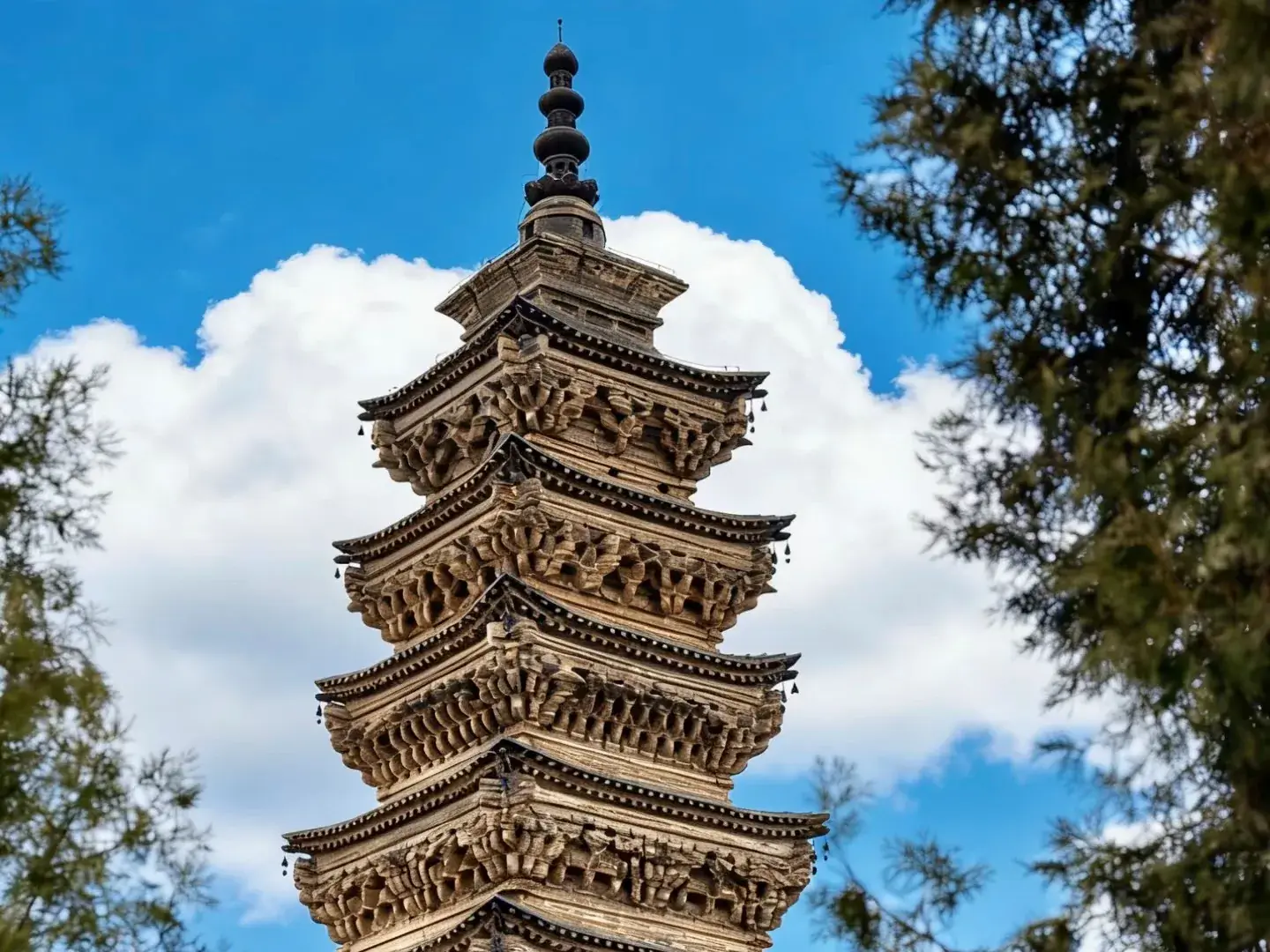
The photograph is one ornate multi-eave brick pagoda with wind bells against a blue sky. Carved eaves, small bells, a single tower. Do not give it a temple name. Xingtai's historic pagoda forest, the brick tower-tombs at Kaiyuan Temple and Tianning Temple, was largely destroyed in 1967. Do not arrive expecting that forest to be standing, and do not spend an hour hunting a remnant. None of the shapes below depend on it. The days are spoken for by a temple or a gorge.
The Xingtai guide is the argument for stopping at all. This page is the calendar once you have agreed. Read Bianque Temple before you promise the county, and Tianhe Mountain before you promise the stairs. Read from Beijing before you buy the seat. Let the current timetable edit every block below. Check the current ticket when you travel. A clock copied from an old article is how groups miss gates.
Skip Xingtai when the week is only Beijing
A week that is the capital plus the Wall does not have a spare night hiding inside a two-hour train. Many fast trains from Beijing to Xingtai East do take roughly two hours or a bit less. Confirm the exact train. That ease is the trap. The day you want at the other end is a car day, either Neiqiu for the temple or a full stair day in the Taihang. Add the return, add the hotel, and you have spent a Wall day or a rest day to stand in a different province for one rushed gate.
Use the Beijing guide for that week and let the southern plain wait. The Great Wall sections a first week usually means are not in Xingtai. Seeing a pagoda in a photograph is not a substitute for the Wall day you postponed, and seeing the Wall later does not become unnecessary because you once changed trains in southern Hebei. If someone in the group is restless and wants "one night out of Beijing" as a change of air, aim that night at a city whose outing matches the mood. Shijiazhuang has its own reasons to stay. If that change of air is really Zhengding, use a Shijiazhuang product and say so. The Shijiazhuang and Zhengding day tour is a rail day from Beijing for Longxing Temple, and it ends back in the capital. The Shijiazhuang two-day tour keeps an overnight there and adds that city's own county sights. Neither is an Xingtai package, and there is no Xingtai tour to swap in. A Shijiazhuang private driver is the practical way to add Neiqiu or Tianhe once you are already based in Shijiazhuang: a driver from that city, not a trip branded for Xingtai. For the mountain, have the driver stay the night here with you. A same-day loop from the provincial capital to the gorge and back is a long, unkind day, and it is still not included in those two packaged trips.
Skip also when Henan is the point and Xingtai is only a sentence someone added because the line passes through. The Beijing–Guangzhou trains continue south through Handan and on toward Henan. Staying aboard is the efficient choice, and for once efficiency and pleasure agree. Getting off without a night and a full anchor is how you see a station and lose the clock. Handan is the southern Hebei stop to choose instead when the interest is the Zhao-state terrace and the caves, not a physician's temple and not this gorge. The Hebei guide helps you pick which chapter of the province you actually have time for. Xingtai is an easy chapter to close. Baoding and the Western Qing Tombs sit north of Shijiazhuang, back toward Beijing. Do not ride south to Xingtai in order to reach them.
The emotional version of the skip is worth naming. The train feels short, the pins look near each other, and nobody wants to be the person who "missed" a place. You are not missing it. You are refusing a fragment. Come back when the temple or the mountain is the reason you can say out loud.
The one-night rail stop
One night means one sleep. You arrive, you do not sightsee, you do one anchor the next day, and you leave when that anchor is truly finished. It is the usual length when a single outing is the point. It is a poor length when you secretly want both.
Arrival day, Bianque version. Take a train that puts you at Xingtai East with enough evening to reach a hotel and eat, not a train that lands at noon and tempts a county dash. The ride from Beijing is often about two hours or a bit less on the fast services. From Shijiazhuang it is often well under an hour. Neither figure is a taxi to 扁鹊庙. Go to the hotel. If, and only if, the next morning is the temple and a shorter start would change the day, the hotel can be nearer Neiqiu. Otherwise sleep in the city. Dinner is noodles or whatever is simple beside the pin. The arrival walk, if you take one, ends when you are sleepy.
Temple day. Breakfast, then the car, agreed as a round trip the night before, with 扁鹊庙 and 内丘 in the driver's phone and the hotel as the return. Spend the middle of the day in the courts. Sit once. A kiln stop in Neiqiu or Lincheng belongs here only if the day is already a car day and you have checked that the specific site is open. One stop, after the temple, or none. Back to the city in daylight. An evening train out of Xingtai East can be honest when you started early, skipped the extra stop, and chose the departure after you knew the temple would be done. If the only departures are mid-afternoon, you do not have a one-night plan. You have a wish. Hold the next morning's train and accept the second night, or pick a different anchor date.
Arrival day, Tianhe version. Same rail logic, and a firmer rule at dusk: you do not "preview" the gorge. The scenic area is a full day of stairs and a valley walk. Arriving tired and then riding out for sunset is the plan the mountain page refuses. Sleep in the city. A Neiqiu hotel does not help a Tianhe morning.
Mountain day. Car after breakfast, 天河山 on the driver's phone, current ticket at the gate, walk, turn around when someone is done, descend while you still have light, drive back. Same-evening train to Beijing is the combination to decline unless the timetable shows a departure you can reach without rushing the last staircase. Many parties should leave the next morning instead. That next morning is a second night in the hotel. Take it deliberately. A one-night Tianhe stop works when the return is late enough or when you are continuing only a short hop and you have already finished the walk. It fails when the group treats "two hours back to Beijing" as if those two hours started at the trailhead. They start at Xingtai East, after the car, after the shower you will wish you had taken.
The same-day return from Beijing, with no night here at all, is the shape to retire before anyone buys a ticket. About two hours down, a station on the east side of the city, a car west to Neiqiu or farther into the Taihang, the visit, the reverse, and about two hours back. Confirm the timetable, then notice that the timetable was never the scarce resource. Daylight in the courtyards or on the stairs was. Sleep the night. One anchor the next day is the itinerary. Two anchors on that same date are not.
Two nights when both anchors are the point
Two nights is the shape that holds Bianque and Tianhe without asking either one to be a fragment. Keep one hotel in the city for both nights. A move to Neiqiu and back spends the margin the second night was purchased to protect. The exception is narrow: sleep nearer the county only on the night before the temple, and only if that morning needs the shorter drive. If Tianhe is the next day, stay in the city.
The order that survives weather and trains is mountain on the middle day, temple on the leaving day, when the forecast allows.
Arrival evening. Train to Xingtai East, hotel, dinner, sleep. Save the Chinese names offline: 邢台东, 天河山, 扁鹊庙, 内丘. Agree tomorrow's driver before you sleep. Look at the sky, not only at the city forecast, and be willing to swap the next two days if rain is sitting on the hills.
Middle day, dry. Tianhe from the morning. Stairs, gorge or valley, the Cowherd and Weaver Girl story as the park's captions and not as a historical address. Food in your bag, water, shoes you trust. Back at the hotel for a quiet evening. This night is recovery. It is not the moment to add a downtown museum because you feel you have underused the city. The Xingtai guide already told you to skip that hour. Believe it when you are tired, which is when the museum idea returns.
Leaving day. Bianque by car, courts, a sit, lunch in the county if you want the day to feel finished. Kiln country only if something specific is open and the train is not the master of the afternoon. Return to Xingtai East for a departure you checked that morning, or the night before. South toward Handan, north toward Shijiazhuang, or back to Beijing: one of those, not a sightseeing sequel in the next city. If the train is tight, let the kiln go. The temple was the point of this date.
Wet middle day. Swap. Bianque can live in light rain if the road is sane. Keep Tianhe for the leaving day only if that day is actually dry and you accept the exit problem: a gorge plus an evening long-haul is the fragile ending. If the second day is also wet, drop the mountain. Do not convert a washed-out stair day into a late, sulky temple visit and call both things done. A two-night stay that becomes "temple, and a good meal, and a walk in the city" is still a successful stay. A two-night stay that becomes a double sprint is not.
If the mountain is the day you cannot move and the only dry window is the leaving day, book the return for the following morning and call the trip three nights, or leave the temple out. Two nights is a plan, not a dare. The extra hotel night is cheaper in spirit than a missed train and a group that climbed too fast.
A corridor stop when you are already on the line
The one-night shape still holds when the party did not start in Beijing that morning. You are already in Shijiazhuang, or you are already going to Handan, and you want one southern Hebei night in between. The train from Shijiazhuang to Xingtai East is often well under an hour. Confirm it. The shortness is the arrival, not the anchor. Sleep here, do Bianque or Tianhe the next day, and only then continue.
A workable corridor, if the interest is real, looks like this. A Shijiazhuang night for whatever you came to that city to see. A Xingtai night, one anchor. A Handan night if Wuling Congtai and that city's sites are also the point. Each city keeps its own day. The failure is the blended afternoon: Shijiazhuang in the morning, Xingtai's temple after lunch, Handan for dinner and a terrace. Three guides just flinched. Pick the city whose outing you would be sorry to rush, and give the others a different date or a clean miss.
If the corridor is only a ride to Henan, return to the skip. Check the current timetable for the city you actually want to sleep in. Xingtai is "on the way" in the sense that the rails pass. It is not on the way in the sense that a temple and a gorge are platform amenities.
What to pack onto each morning
Temple morning: comfortable shoes for thresholds, sun or rain cover, water, the driver's round trip already agreed, the site name in characters, and a willingness to be finished without a second pin. Mountain morning: grippy shoes, more water, a layer, food you can eat on a step, the hotel pin saved offline, and a turnaround rule everyone heard at breakfast. Both mornings: passport, because the train out uses the same name as the ticket, and the suitcase stays in the room.
Arrival evening bag is the opposite. You need the hotel address in Chinese, a patient stomach, and no plan. Cashless pay works in most city hotels. A little cash covers a small county stop the next day. Ask as you go, including when a dish is sold by weight.
Delays, holidays, and the version you tell the group
Trains slip. A delayed arrival is a later dinner, not a later temple. Move the outing to the next daylight and change the hotel if you must. Chasing Neiqiu in the dark because the train "owes" you the day is how small accidents happen on unfamiliar roads. The mountain gate will not extend itself to match your carriage.
National holiday weeks, especially early October, fill Tianhe's stairs and tighten return seats toward Beijing. If those are your dates, buy the rail tickets when you buy the plan, go to the gorge early, and do not add a second sight. A weekday outside those peaks is the same itinerary with more air in it. Qixi, the seventh night of the seventh lunar month, is a busier mountain day because the scenic area tells the lovers' story. Check the lunar date. It is not a reason to combine the temple.
Tell the group the shape in one sentence the night you arrive, and do not reopen it at the gate. "Tomorrow is the temple, then the train." "Tomorrow is the gorge, and we are not going to Neiqiu afterward." "We are skipping Xingtai and staying on to Handan." Sentences like that are the whole craft of this city. The plain between Shijiazhuang and Handan is a good place to sleep when the sentence is true. It is a long platform when the sentence is still a list.
If you leave with one anchor done well, the itinerary worked. If you leave with two anchors done on two days, it worked. If you leave having stayed on the train because the week belonged to Beijing, it also worked. The unsuccessful version is the only one that feels busy in the moment: three gates, one sunset, a driver checking the time, and a story nobody can quite tell afterward. Choose the sentence before you choose the seat.
Ways to plan the days
The Shijiazhuang products are optional tools, not a disguise for an Xingtai package.
Temple day
Time fit: 1 day
Neiqiu.
- Temple day
Why choose it: Neiqiu.
Mountain day
Time fit: 1 day
Tianhe.
- Mountain day
Why choose it: Tianhe.
Both
Time fit: 2 days
Sleep in between.
- Both
Why choose it: Sleep in between.
Want this kept to one county?
Say which one. The itinerary is that ride.
Keep planning
A southern rail city for Bianque Temple or Tianhe Mountain, not a first base beside Beijing.
A Neiqiu car day for the legendary physician. Not a dig.
A full scenic day that tells the Cowherd and Weaver story.
Xingtai East is about two hours south. Confirm the train.
Itinerary questions
- Only if Beijing already had its days and you accept a long rail ride for one county.
- Tianhe for a scenic walk. Neiqiu for the temple. Do not flip a coin and then try both.
- As other nights. Not as Xingtai afternoons.
- No. It was largely destroyed in 1967.
- Know it happened. Do not schedule an invented memorial.
- Your train, and a Shijiazhuang driver only if the car must start there.
Plan Xingtai as one extra day in the south
Come after Beijing is settled. Do one county well.