A restrained visit
| Detail | Plan |
|---|---|
| Date | 28 July 1976 |
| Tone | Quiet. No casualty spectacle |
| Not on this ground | Hetou's lantern boats |
| Park nearby in spirit | Nanhu, on subsided mine land, a separate hour |
| Optional industry | Kailuan, only if the underground visit is actually open |
| Wrong pairing | Shanhaiguan the same afternoon |
The Tangshan Earthquake Memorial Park is the reason to come into the city, and it asks for a morning you have not already sold to something louder. The earthquake struck in the early hours of 28 July 1976, while people were asleep, and it destroyed Tangshan. The city was rebuilt. This park, in the urban area, is where you stand with that history. It includes a memorial square and preserved ruin elements. It is a quiet visit. It is not a theme park, not a disaster spectacle, and not a stop you finish because a night street is waiting.
The Chinese name to show a driver is 唐山地震遗址纪念公园. Confirm the pin the morning you go. A second map result with a similar English name is a reason to ask which site holds the preserved ruin, not a reason to guess. A taxi or ride-hail from the stop printed on your ticket is the simple approach. The park is not outside the station exit. If the ticket names a different stop from the one you assumed, the ride changes, which is why the from Beijing page tells you to read the arrival name before you promise an opening-time arrival.
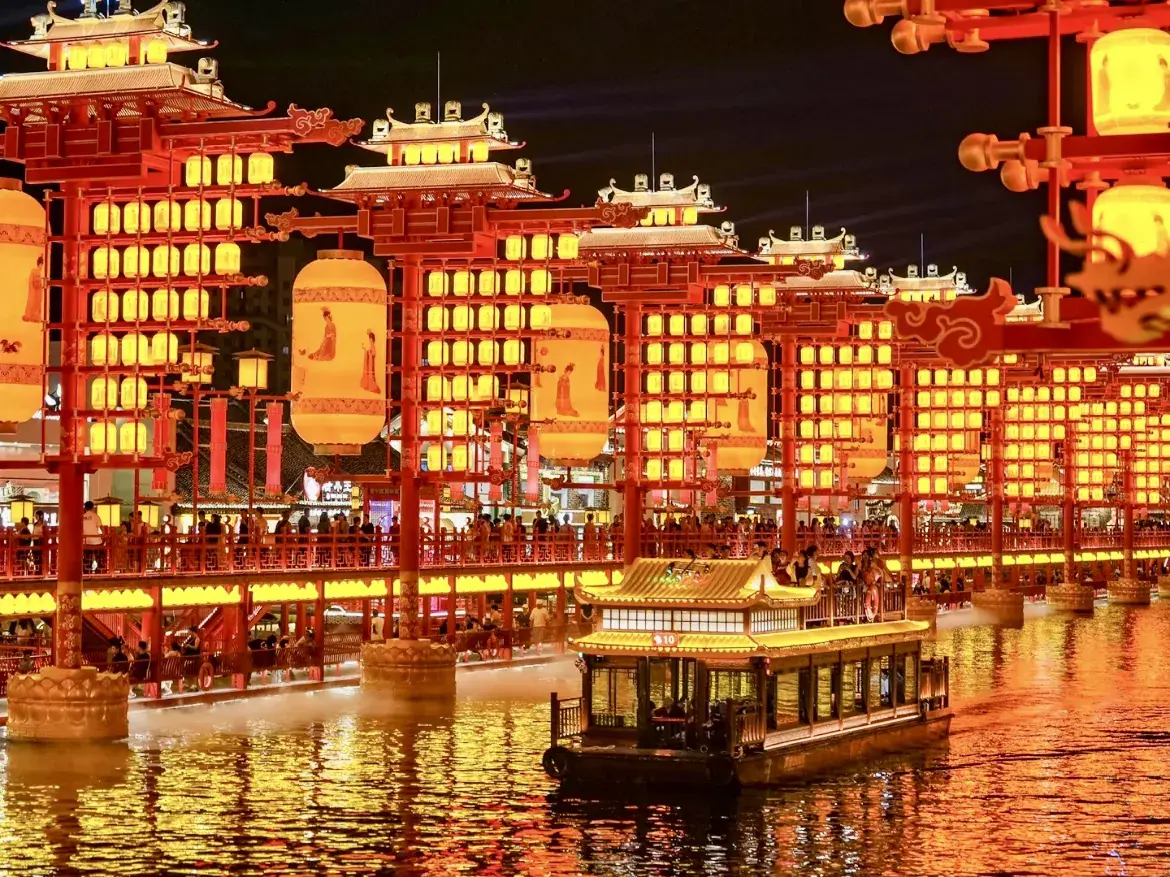
The photograph at the top is not this park. It is Hetou Old Street, 河头老街, a new lantern district in Fengnan on a former coal canal, rebuilt around 2023. Red pavilions, a pleasure boat, and a Tang-style stage set are an evening choice for people who want lights. They are not a surviving Tang-dynasty street, and they have nothing to do with 1976. If you landed here from that picture, stay for the memorial or go back to the Tangshan guide and choose a different day. Do not treat the park as the serious preface to the lanterns.
What the grounds contain
The preserved ruin is industrial, not palatial. The park stands on ground of the former Tangshan rolling-stock plant, and the wrecked steel-casting workshop was left as a hall you look at rather than a building that was prettied into a museum facade. Twisted structure, empty bays, and the plain fact of a factory that did not survive are the point. A rail bent by the quake runs through the grounds and out toward the water. It is an object to look at. It is not a balance beam, a seat, or a place to pose.
The memorial square is open and formal. A long wall carries the names of the dead. You will not read them all, and you are not supposed to. Families sometimes come looking for one name. Give them the wall. Water and a wooded area are part of the same visit: places to stand after the names, not a second attraction with its own countdown. Indoor halls have been built here, one of them a memorial exhibition and one of them more of a science hall. Whether a given room, film, or passage is open changes. Check the current site rules at the door. Do not build the morning around a show. If a shaking-seat film or a similar effect is offered, treat it as optional. Some people find that tone wrong after the wall. Skipping it is not a failed visit.
Follow the path the entrance gives you. A closed gate would make any fixed turn-by-turn false. The order that serves most people is the wall and the square before a long sit in the woods, with the ruin given real time rather than a glance from the path. Schematic boards help you see the shape of the park. They are not a substitute for walking it, and they are not a script you must finish.
How to be there
Speak quietly. Phones go silent before you reach the wall, not after the first ringtone. A guided commentary through a loudspeaker is the wrong tool; if you are with a guide, ask for a normal voice and a small group that can stop without blocking the names. Do not climb on the ruin, sit on the wall, or move flowers and offerings other people have left. Do not eat a picnic on the square. A bottle of water is fine. A celebration is not.
Photograph the place if you want a record. Do not use the ruin as a costume backdrop, a jumping photo, or a grin for the camera. Ask before you photograph anyone who is mourning, searching for a name, or standing with their own family. Many of the people around you live here. The park is part of their city, not a set opened for visitors. Drones are unwelcome. Tripods in a busy remembrance moment are a way of taking space you do not need. If a ceremony is underway, stand back and let it finish. You can return to the same wall afterward.
Children can come if an adult has explained, before you arrive, that this is where the city remembers people who died, and that the morning will be quiet and slow. A child who cannot stay with that plan should have a shorter visit, or should wait with one adult outside the most solemn stretch. Do not turn the square into a game because the paths look like a park. Older children often manage better when they are given one job: walk the wall without talking, then say what they noticed. Do not force a speech about history at the gate.
School groups and tour groups use the park. You may have to wait at a narrow point. Waiting is part of a public memorial. Shouldering through a line of students to reach a corner of the ruin is not. If the grounds are crowded because of the anniversary days around 28 July, or because of a holiday, keep the same manners and drop the indoor hall first. The wall and the ruin are the visit. A packed calendar is not a reason to behave as if the site were a viewpoint.
English on signs is partial. The names are in Chinese. You do not need a translation to understand what the wall is. Hall captions are where a translation app earns its place, and only if you have chosen to go in. An app narrating out loud is another loudspeaker. Read it on the screen.
When you are not sure how to feel
You do not have to perform grief. Many visitors have no family tie to Tangshan. Quiet attention is enough: look at the workshop without turning it into a joke, stand at the wall, and let the square be a square. You will see people bring flowers. That is their custom, not a requirement, and a bouquet bought at the gate so you look correct is worse than arriving with empty hands. If a family is arranging offerings, give them the space. Do not film them.
Leaving the gate is part of the morning. Outside, Tangshan is a working city of traffic, shops, and people going to ordinary jobs. The contrast belongs to the history. The city was destroyed, then rebuilt into a place that had to function. You are not searching the streets for leftover rubble. The streets are new because the old ones fell. A few minutes of that ordinary noise, before anyone opens a map and optimizes the afternoon, tells you more than a second lap you do not want.
If a guide is steering you back to the vehicle, ask what time they believe the visit is finished. A short stop arranged so that Hetou, a mine, or a long lunch can happen is a different day from the one you came for. You are allowed to stay. Agree it the night before, so the wall is not where the argument starts. The Hebei guide can wait. This park cannot be skimmed to make the province look more complete.
Pacing: the morning is the visit
Unhurried means the memorial owns the morning. Arrive when the site opens if you can, or as early as your train honestly allows. Stay long enough to walk the wall, stand in the square, look at the ruin, and sit. For most people that is a real morning, not a forty-minute window between a station and a lunch on the far side of town. Do not book a meal at a fixed early hour that forces you to watch the clock from the moment you enter. Eat afterward, somewhere ordinary, when you know how the group feels.
You are finished when the people you are with have had the time they need, not when every zone on the board is ticked. Someone who wants to leave after the wall should leave. The visit is not a test of endurance, and it is not more meaningful because you stayed until you were numb. It is also not meaningful because you raced. The failure to avoid is the driveway photo: gate, two pictures, back in the car, and a claim that Tangshan's history has been "done."
Bags do not belong on this walk. Leave luggage at the station or the hotel. The paths are mostly level and still long enough that a suitcase becomes the thing you think about. Shoes should be ordinary walking shoes. Winter is a hard cold on the square, with wind off the open ground, so a real coat matters more than a smart layer. Summer is heat on pale stone; start early, carry water, and use the trees. Rain does not cancel the outdoor meaning of the park. It does change halls, steps, and how long people are willing to stand. Check closures rather than assuming a wet day is the same circuit.
If you are traveling with someone who finds disaster sites hard to be in, say so the day before. They can skip the hall, sit in the wooded area, or skip the park entirely and meet you at Nanhu. Do not surprise them with the wall. Do not narrate casualty figures on the path. The scale is already in the length of the names and in the fact that a city was destroyed and had to be rebuilt. Numbers recited for effect help no one here.
Access, shade, and the halls
The main paths and the square are broad. That is not a promise that every edge of the ruin, every hall, or every walk to the water is step-free. If someone uses a wheelchair or a cane, or cannot manage stairs, ask at the entrance what is open and shorten the route. Uneven ground beside a preserved industrial hall is what a ruin is. It is not a polished gallery floor.
Shade is uneven. The wall and the square can be fully exposed. The trees are where you rest. In summer, cross the open ground first and sit afterward. In winter the same open ground holds the wind, so a hat and gloves matter more than another lap, and a shorter stand at the wall is wiser than an hour of cold. Toilets belong in a park this large and still should not be assumed at the moment you need them. Go when you see them.
Entering a hall means captions, objects, and the city's account of rescue and rebuilding. It can be moving, and it can be more than someone wants after the names. One hall is enough. A second room, or a film, is for people who still have attention. Bag checks and photo rules inside are whatever the door says that morning. A livestream along the wall is a bad idea even where still photos are allowed. The names are not a broadcast. You are finished when the group has stood there, not when an app has recorded it.
What not to bolt on
Nanhu, 南湖, is the right afternoon. South Lake is a large urban park on land that subsided after mining, and a walk there is a change of air without pretending the morning did not happen. Keep the loop modest. You are not trying to audit the whole shore. In season the lake may have an evening light show. Do not promise one, and do not leave the memorial early to chase it. If the notice says nothing is running, the paths are still the plan.
Hetou is allowed the same night only as a separate decision, made after you have left the park and eaten. It is a ride to Fengnan, a crowded lantern walk, boats, and whatever performance is posted that night. It is loud on purpose. People who want that should go knowing they are changing worlds. People who do not should not be talked into it as the "fun part" that balances death with entertainment. A packed nightlife promise is the wrong partner for this morning. An early night is a complete Tangshan day. The itinerary page puts the one-night shape in order and keeps Hetou optional.
Do not add the Eastern Qing Tombs to this date. They are in Zunhua, not across town, and they need their own day, usually from Beijing. The western cemetery, on the Baoding side of the province, is even less related to this morning. Do not add the Beidaihe shore or Shanhaiguan. That coast is Qinhuangdao, further east, and it wants its own night. A driver who offers the memorial, the lanterns, and "a quick look at the tombs" is describing three trips. Ask which one keeps its hours. The answer should be the memorial.
Kailuan's mine park is industrial heritage, not a decompression from the wall. If you care about coal and you have confirmed that the site, and any underground visit, is operating, give it a different half day. Do not invent a depth, and do not use it as the cheerful second act after the names. On a first stay the lake is the better second act.
A memorial day versus a city night
A same-day return to Beijing can be right when the park is the only goal. Take a morning train, give the grounds the middle of the day, and leave without Hetou. You will be tired. You will have done the thing you came for. Calling that dash a full introduction to Tangshan is the over-claim. The lake will be a fragment, and the lanterns should stay off the list. One night is what you add when Nanhu and a possible evening matter. The night does not make the memorial longer. It stops you from spending the memorial's hours on a return train.
Come back to the hotel or a quiet lunch before any evening plan. The gear change is the point of the pause. If the group is silent in the car, let the silence stand. You do not need to summarize the earthquake for them. There is no Tangshan city tour on this site that will host this morning for you. The Eastern Qing Tombs day tour is a cemetery day from Beijing, not a memorial visit. The Qinhuangdao two-day tour and the Shanhaiguan Great Wall tour are the coast. The Chengde two-day tour by high-speed rail goes north to the mountain resort, with its own guide at Chengde. None of those should be bolted onto this wall. Read the Tangshan guide if you still need to decide whether this city belongs in the week at all, and read Beijing if the alternative is another day in the capital. For many people, another day in the capital is the better use of the date. For the people who want this park, the morning is enough, and it should not be hurried to make room for a boat.
Ways to plan the days
The memorial fits a city day. It does not fit a tombs morning.
Memorial morning
Time fit: Half day
The site, then nothing loud.
- Memorial morning
Why choose it: The site, then nothing loud.
City day
Time fit: 1 day
Memorial, a simple lunch, Nanhu or rest, Hetou after dark.
- City day
Why choose it: Memorial, a simple lunch, Nanhu or rest, Hetou after dark.
Skip the street
Time fit: Half day
When the group wants history and an early train.
- Skip the street
Why choose it: When the group wants history and an early train.
Want the memorial kept quiet?
We will not pair it with a beach or a banquet schedule.
Keep planning
A memorial, a rebuilt lantern street, and the Eastern Qing Tombs out in Zunhua.
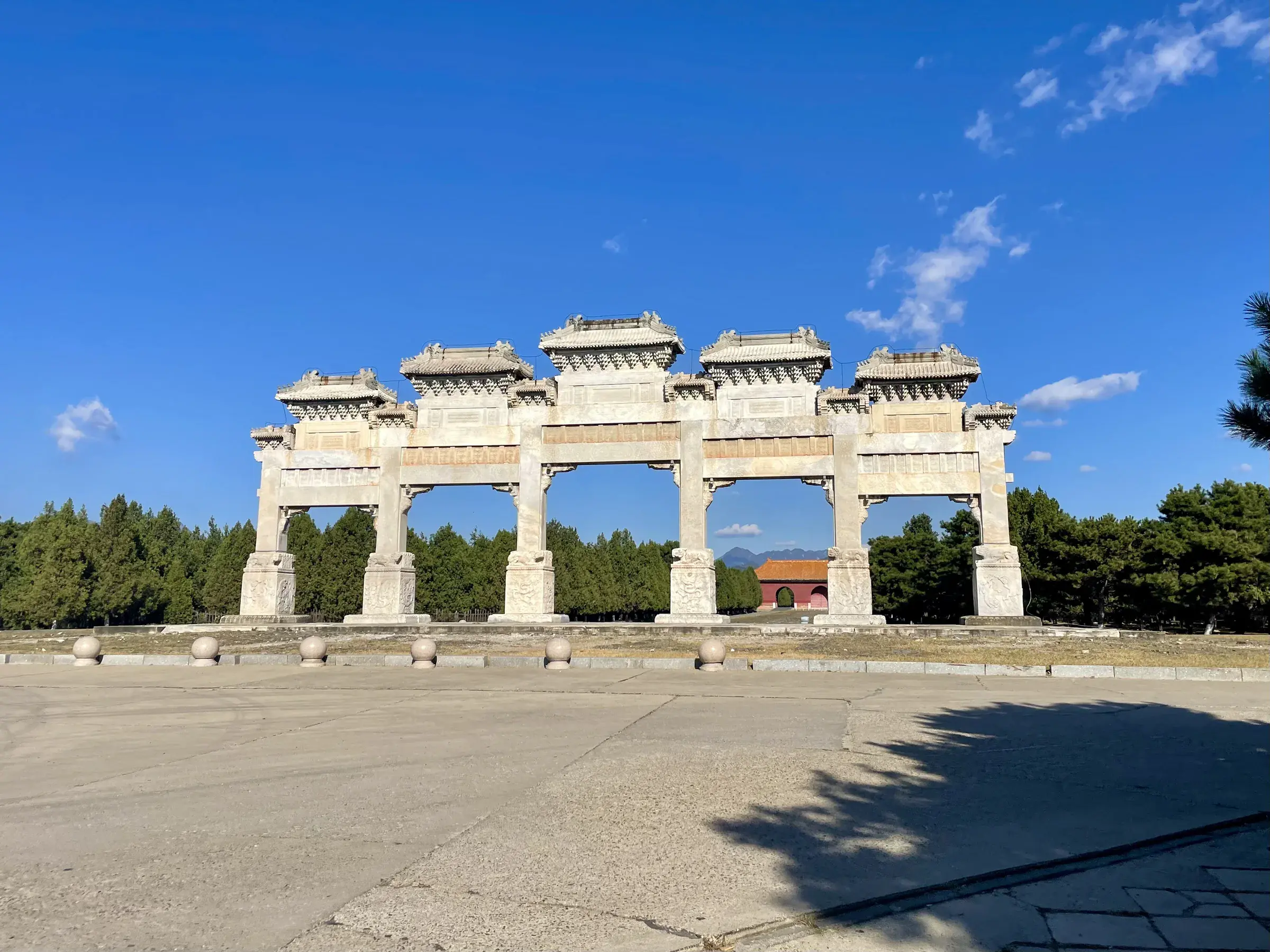
Zunhua. Cixi and Ci'an are here. The Western Tombs are not.
Memorial and Hetou, or the tombs. Not the Qinhuangdao beach.
Often around an hour or a bit more. Read the station on the ticket.
Memorial questions
- No. The scale is part of why you lower your voice. A precise figure is not required to be respectful.
- Only if you are prepared for a serious place. It is not a playground stop.
- Yes, as morning and evening, with a rest between. Not as one blurred attraction.
- No. Nanhu is a park built where mining subsided the land.
- A morning is enough. Do not fill the afternoon with a second prefecture.
- There is no Tangshan city tour here. The Eastern Qing Tombs day does not pass through this memorial.
Leave time to be quiet at the memorial
The visit is the date and the place. Hetou can wait until evening if you still want it.