Are they masks or painted makeup?
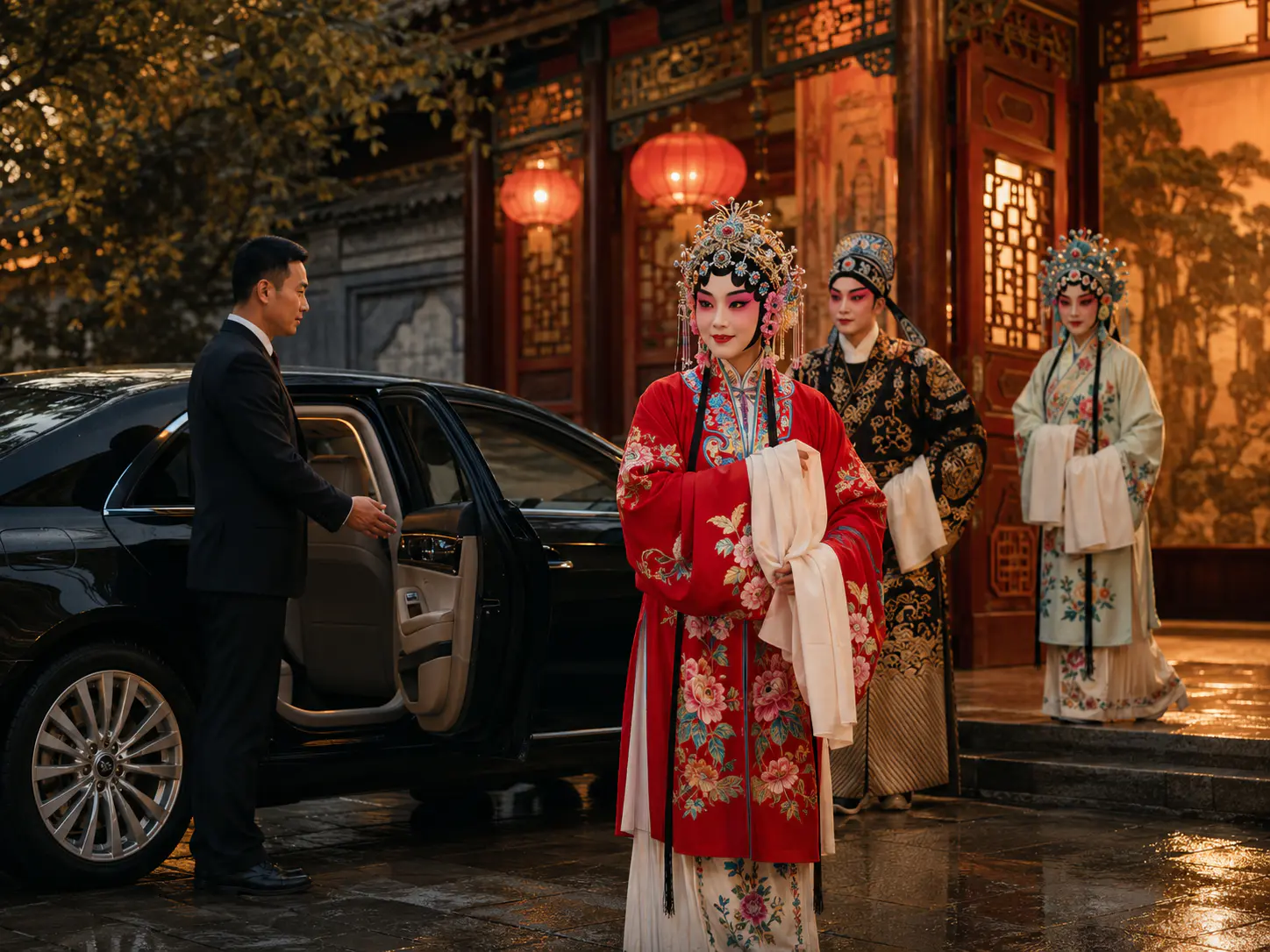
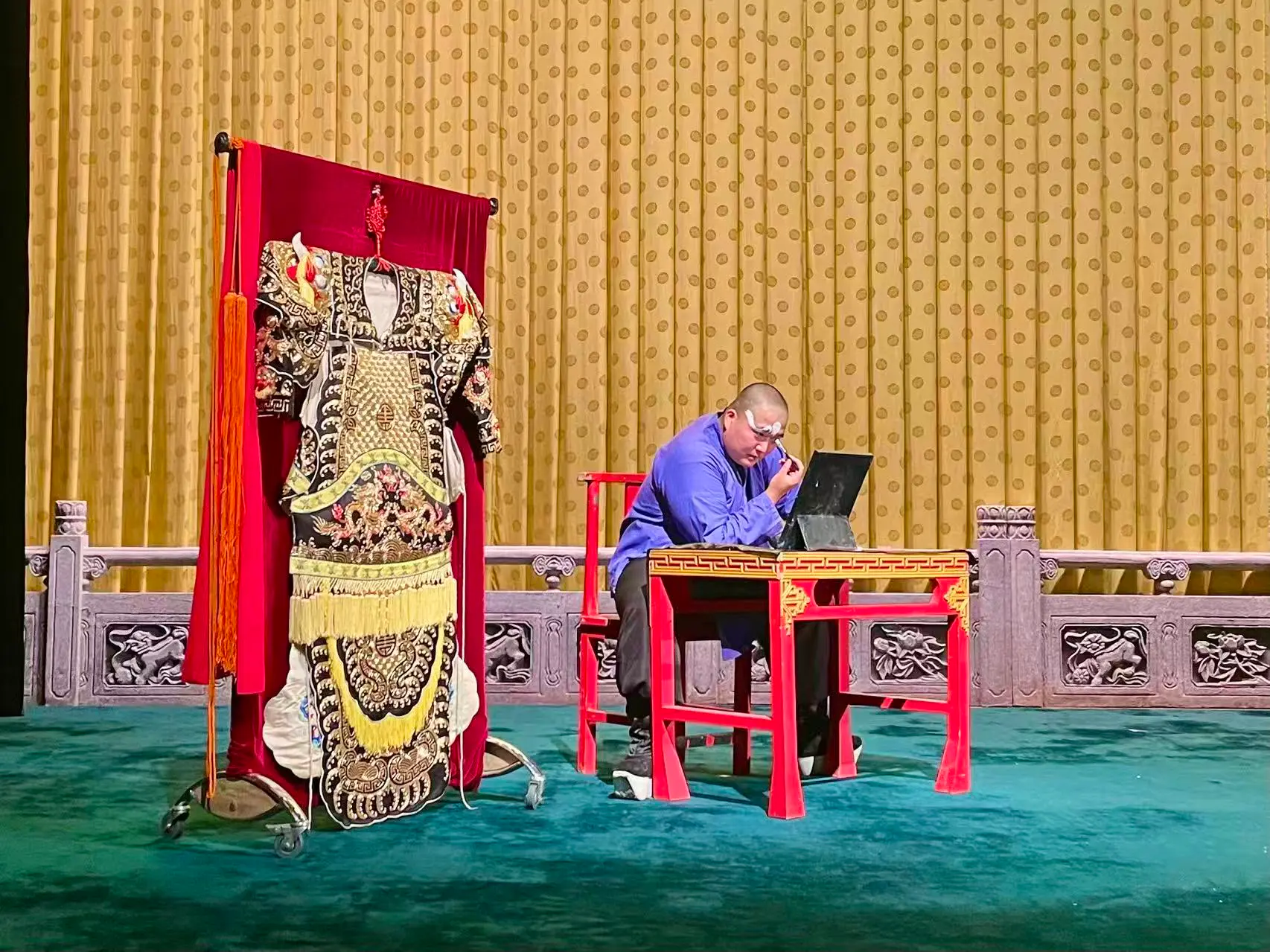
In most Peking Opera performances, the distinctive designs are painted directly onto the actor’s face rather than worn as removable masks. “Peking Opera masks” is common international search language; painted facial makeup is the more accurate description for live Peking Opera. The traditional system is commonly called lianpu. Direct painting allows the actor’s facial movement to remain visible. Physical masks exist in the broader traditions and history of Chinese opera, and mask-changing techniques belong to other performance traditions and should not be treated as ordinary Peking Opera practice.
| Term | Meaning |
|---|---|
| Peking Opera mask | Common informal English term |
| Facial makeup | Accurate general description |
| Lianpu | Codified painted-face designs, especially for Jing and Chou |
| Decorative opera mask | Artwork or souvenir based on theatrical patterns |
| Face-changing | Separate theatrical technique associated with other opera traditions |
Practical terminology: Use “Peking Opera masks” when answering the search question, but explain that stage performers normally wear painted facial makeup.
What is lianpu?
Lianpu is the codified system of painted facial designs used particularly for Jing and Chou roles.
How the design is built
- Paint, powder, lines, and blocks of color build the design
- The eyes and eyebrows receive particular emphasis
- The nose, forehead, and major facial contours also carry information
What the design does
- The design identifies the dramatic character rather than simply decorating the actor
- Established characters may have recognizable traditional designs
- Designs can still vary by production, performer, school, scene, or facial structure
- Lianpu forms a complete visual system rather than a collection of unrelated colors
Pronunciation
- Lianpu: liǎnpǔ
Which Peking Opera roles use painted faces?
Jing uses the most elaborate painted-face designs, while Chou uses a smaller white patch. Sheng and Dan use theatrical makeup but generally not full Jing-style lianpu.
| Role | Typical makeup | What first-time viewers notice |
|---|---|---|
| Sheng | Decorative or character-enhancing makeup | Male role without a full painted-face design |
| Dan | Decorative stage makeup emphasizing facial features | Female character role |
| Jing | Elaborate full or large painted-face patterns | Strong colors, eyes, brows, forehead and facial contours |
| Chou | Small white patch near the nose and eyes | Comic-role marker |
Jing makeup
Jing is the principal painted-face role category. The design may cover most of the face.
What Jing can be
- Jing characters can be heroic, authoritative, rough, treacherous, comic, supernatural, or morally complex
- A painted face does not automatically indicate a villain
- Makeup works with a strong voice, broad movement, costume, and beard
Chou makeup
Chou is the comic-role category. The small white patch may appear in different shapes and is commonly placed around the nose and eyes.
What the patch means
- The patch primarily identifies the role convention
- It does not automatically mean the character is evil or foolish
- Chou can include civilian and martial characters
Sheng and Dan makeup
Sheng and Dan actors still wear stage makeup. Their makeup enhances, ages, or stylizes the face. It does not usually follow the full painted-face Jing system.
Do not say they perform with “no makeup”
- Theatrical decorative makeup still shapes age, gender presentation, and facial clarity
- Role taxonomy in full
What do Peking Opera colors mean?
The meanings below are broad theatrical conventions, not fixed translations. Traditional cultural references identify red, white, and black as the earliest principal colors and describe later additions including purple, yellow, blue, green, gold, and silver.
| Color | Common associations | Important qualification |
|---|---|---|
| Red | Loyalty, courage, integrity, sincerity | May also reflect complexion or a character-specific convention |
| Black | Integrity, directness, seriousness, strength | Can also suggest roughness or an uncompromising temperament |
| White | Cunning, suspicion, calculation, treachery | Must be distinguished from the smaller Chou white patch |
| Purple | Dignity, solemnity, steadiness, justice | Often overlaps with red or black qualities |
| Yellow | Bravery, calculation, intelligence, fierceness | Meaning varies significantly by character |
| Blue | Resolution, stubbornness, forceful or wild temperament | Not automatically negative |
| Green | Bravery, impulsiveness, irritability, rebellious energy | Context determines whether it is positive or negative |
| Gold | Divine, immortal, spirit, or supernatural figure | Often identifies a nonhuman character |
| Silver | Spirit, monster, ghost, or supernatural figure | Strongly tied to theatrical effect |
| Pink or gray | Age, complexion, humor, or character-specific detail | Avoid oversimplified one-line definitions |
Use “commonly suggests,” “often represents,” and “depends on the role and pattern.”
What does a red Peking Opera face mean?
Red commonly suggests loyalty, courage, integrity, or sincerity.
How to read red
- Red is often associated with upright or heroic characters
- Guan Yu is the best-known red-faced example
- Red does not mean every character is morally identical
- The forehead symbol and secondary colors can add character-specific information
- Some red coloration may represent complexion rather than a moral quality
Concise rule
- Read red as a clue toward loyalty or courage, not as a universal “good character” label.
What does a black Peking Opera face mean?
Black commonly suggests integrity, directness, seriousness, strength, or an uncompromising personality.
How to read black
- Black is not the standard color of evil
- It can identify upright and forceful characters
- It can also suggest roughness or severity
- Eyes, brows, forehead markings, beard, and costume refine the meaning
Concise rule
- A black face often signals a direct or powerful character, but the complete design identifies who the character actually is.
What does a white Peking Opera face mean?
A predominantly white Jing face often suggests cunning, suspicion, calculation, or treachery. A white Jing face and a Chou white nose patch are not the same theatrical sign.
| White makeup type | General meaning |
|---|---|
| Predominantly white Jing design | Often cunning, suspicious, calculating, or treacherous character |
| Small white Chou patch | Comic-role convention |
| White secondary detail | Must be interpreted as part of the complete design |
| Pale decorative makeup | May serve age, complexion, or character styling |
This distinction is one of the most important corrections for first-time viewers.
What do blue and green faces mean?
Blue and green usually identify forceful, stubborn, impulsive, wild, or rebellious characters rather than one fixed moral category.
Blue can suggest
- Resolution
- Stubbornness
- Courage
- Fierceness
- Wild temperament
Green can suggest
- Bravery
- Impulsiveness
- Irritability
- Rebellious energy
- Lack of restraint
Do not write
- Blue always means cruelty
- Green always means a monster
- Either color automatically means villain
What do gold and silver faces mean?
Gold and silver commonly identify supernatural, divine, immortal, spirit, ghost, or monster characters.
How to read metallic colors
- Reflective colors visually separate the figure from ordinary human roles
- They are common in mythological or supernatural stories
- They can indicate nonhuman identity or unusual power
- They should not be decoded using the same human morality framework as red, black, or white
Concise rule
- Gold and silver usually answer “what kind of being is this?” before answering “is this character good or bad?”
How patterns change the meaning
A Peking Opera face is a complete character design, not a simple color chart. The same broad color can appear in different character designs. A pattern may identify a particular character. Secondary colors can modify the first impression. Costume and headwear indicate rank, age, profession, or status. A character’s design may change between productions or stages of a story.
| Interpretation priority | What to examine |
|---|---|
| 1 | Role category: Jing, Chou, Sheng, or Dan |
| 2 | Dominant color |
| 3 | Eye and eyebrow pattern |
| 4 | Forehead symbol |
| 5 | Nose and mouth design |
| 6 | Secondary colors |
| 7 | Symmetry or fragmentation |
| 8 | Beard and headwear |
| 9 | Costume |
| 10 | Named character and story |
Color provides the first clue; pattern and character context provide the final meaning.
Common Peking Opera facial patterns
Official cultural sources identify common forms commonly translated as whole-face, three-section, fragmented, divided, and lopsided designs. English names for technical patterns vary — use “commonly translated as” or “often described as” rather than implying one English translation is universally authoritative.
| Pattern type | Basic description |
|---|---|
| Whole face | One main color dominates most of the face |
| Three-section or three-tile face | Eyes, brows, and nose create three main visual areas |
| Fragmented face | Multiple irregular blocks and lines form a complex design |
| Divided face | The face is separated into clear visual zones |
| Lopsided face | Deliberate asymmetry forms part of the character design |
| Chou white patch | Small white area rather than a full Jing face |
Why is the makeup so exaggerated?
The makeup is exaggerated because it must communicate character quickly and remain readable across a theatre.
Practical reasons
- Strong brows and eye patterns increase visibility
- Color separates role types
- The face works with large costumes and headwear
- Peking Opera uses symbolic rather than naturalistic stage design
- Exaggeration is part of the theatrical language
- Makeup can also help shape the actor’s face toward the role
Accuracy note
- Beijing’s cultural guide notes that exaggerated makeup helps audiences recognize characters from a distance. Distance visibility is not the only reason for the makeup system.
Are Peking Opera face designs fixed?
Major characters often have recognizable traditional designs, but the details are not completely fixed.
What varies
- Established conventions guide the design
- Performers and productions can vary details
- The actor’s facial structure affects placement
- A different scene may emphasize a different element
- Decorative artworks may stylize the design further
- A generic souvenir “Chinese opera mask” may not match one authentic stage character
Accuracy note
- Traditional cultural material notes significant variation among painted-face designs, including multiple designs associated with the same character. Do not claim an exact number of designs unless the specific character and source are verified.
Stage makeup vs decorative Peking Opera masks
Decorative masks can still be inspired by real Peking Opera traditions. They should not automatically be labeled as exact stage makeup. Stage photographs should be prioritized; decorative examples can be used only when clearly captioned.
| Stage facial makeup | Decorative mask or artwork | |
|---|---|---|
| Application | Painted directly onto a performer | Painted on paper, wood, ceramic, fabric, or another object |
| Context | Connected with a live role and story | May simplify or combine traditional motifs |
| Movement | Moves with facial expression | Static |
| Supporting systems | Works with costume, voice, and gesture | Usually displayed independently |
| Variation | Can vary by performer or production | Often standardized for decorative use |
| Purpose | Part of theatrical storytelling | Primarily art, souvenir, craft, or design |
How to read Peking Opera makeup during a live show
Use this practical sequence during a first performance.
Step 1: Identify the makeup type
- Full painted face: probably Jing
- Small white nose patch: probably Chou
- Decorative natural-looking makeup: more likely Sheng or Dan
Step 2: Notice the dominant color
- Start with red, black, white, gold, or silver — these provide the clearest beginner clues
Step 3: Examine the eyes and eyebrows
- Look for sharpness, curves, symmetry, enlarged shapes, and aggressive or dignified lines
Step 4: Look at the forehead
- A symbol may identify a particular character, a weapon, a supernatural quality, or a story-specific feature — do not guess a precise symbol unless the character has been verified
Step 5: Read the costume and beard
- These can help indicate age, rank, military identity, official status, or supernatural identity
Step 6: Use movement and voice
- Forceful broad movement may reinforce Jing
- Comic speech and timing may reinforce Chou
- Controlled refined gesture may indicate other role categories
Step 7: Check the synopsis or subtitles
- Use story context to confirm the initial visual interpretation
First-time viewer rule
- Identify the role, then the dominant color, then the pattern, and finally the story context.
Do tourists need to memorize every color and pattern?
No. Four basic distinctions are enough to improve a first performance.
Remember these four
- Red often suggests loyalty or courage
- Black often suggests integrity or forcefulness
- White often suggests cunning — but a small white patch indicates Chou
- Gold and silver commonly mark supernatural figures
Practical goal
- The purpose is not to classify every face perfectly. It is to recognize that the makeup is part of the storytelling system.
Seat note
Common misconceptions about Peking Opera masks
“Every performer wears a mask”
Most distinctive Peking Opera designs are painted directly onto the face.
“Every painted face is a Jing role”
Chou also uses recognizable facial makeup, while Sheng and Dan use decorative stage makeup.
“Red means good and white means bad”
These are broad conventions, not complete moral judgments.
“A white face and a Chou white patch mean the same thing”
They belong to different facial and role systems.
“Jing means villain”
Jing characters may be heroic, authoritative, rough, sinister, comic, or supernatural.
“Gold always means a god”
Gold and silver broadly indicate supernatural or nonhuman identity, but the exact character still matters.
“Every image online represents authentic stage makeup”
Many images show souvenirs, decorative masks, modern artworks, or unrelated opera traditions.
“Peking Opera makeup is the same as Sichuan face-changing”
They are different theatrical practices.
“The color alone identifies the character”
Pattern, placement, costume, and story are also necessary.
“A visitor must memorize the entire system”
Basic recognition is enough for a first show.
First-show makeup planning defaults
If makeup and costumes are your main interest, these planning defaults are usually the most practical.
Programme
- Visitor-oriented excerpts with visibly distinctive role types
Language
- English subtitles confirmed
Seat
- Middle or central
Preparation
- Explain Jing, Chou, red, black, white, gold, and silver
Arrival
- Allow time for ticket collection and any confirmed makeup viewing
Venue
- Choose by current programme, not by theatre name alone
Photography
- Confirm theatre rules before suggesting photos
Family
Culture specialist
- Review the actual repertoire and characters
Transfer
Important limit
- Backstage makeup access is only available when the theatre confirms it for the selected ticket and date.
FAQ — Peking Opera masks and makeup
- The facial designs use colors, lines, and patterns to communicate a character’s role, personality, status, and dramatic identity. The full meaning depends on the complete design and story context.
- Usually not. The distinctive designs are normally painted directly onto the actor’s face. “Peking Opera masks” is a common informal English term.
- Lianpu is the codified system of painted facial designs associated particularly with Jing and Chou roles.
- Red commonly suggests loyalty, courage, integrity, or sincerity, although the complete design and character context still matter.
- Black commonly suggests integrity, directness, seriousness, strength, or an uncompromising nature.
- A predominantly white Jing face often suggests cunning, suspicion, calculation, or treachery. A smaller white Chou patch is a comic-role marker.
- Blue and green commonly identify forceful, stubborn, impulsive, wild, or rebellious characters. They do not have one fixed moral meaning.
- Gold and silver commonly identify supernatural, divine, immortal, spirit, ghost, or monster characters.
- Jing is most strongly associated with elaborate full-face painted designs. Chou uses a smaller white patch.
- Yes. They use theatrical decorative makeup, but generally not the full symbolic painted-face system associated with Jing.
- No. Peking Opera normally uses painted facial designs connected with roles and characters. Face-changing is a different theatrical technique.
- Yes. Learning the basic role types and a few color conventions helps visitors recognize character identity even when they cannot follow all the dialogue.
Learn more or see the makeup in performance
Peking Opera facial makeup becomes much easier to understand when it is seen together with costume, movement, voice, and story. Learn the role types first, then use color and pattern as clues rather than fixed translations.
Learn the Peking Opera rolesPlan a Peking Opera show in Beijing