
Motifs at a Glance
| Motif | Common associations | Context warning |
|---|---|---|
| Dragon | Power, status, cosmic force | Not every dragon equals emperor |
| Phoenix | Auspicious pairing, feminine/status contexts in some pairings | Pairings and period matter |
| Crane | Longevity themes in many Qing contexts | Confirm accompanying imagery |
| Bat | Blessings via homophone | Often rebus-based |
| Peony | Wealth / flourishing | Decorative use is also common |
| Lotus | Purity / Buddhist associations in many contexts | Not universal in every textile |
| Peach | Longevity | Often combined with other symbols |
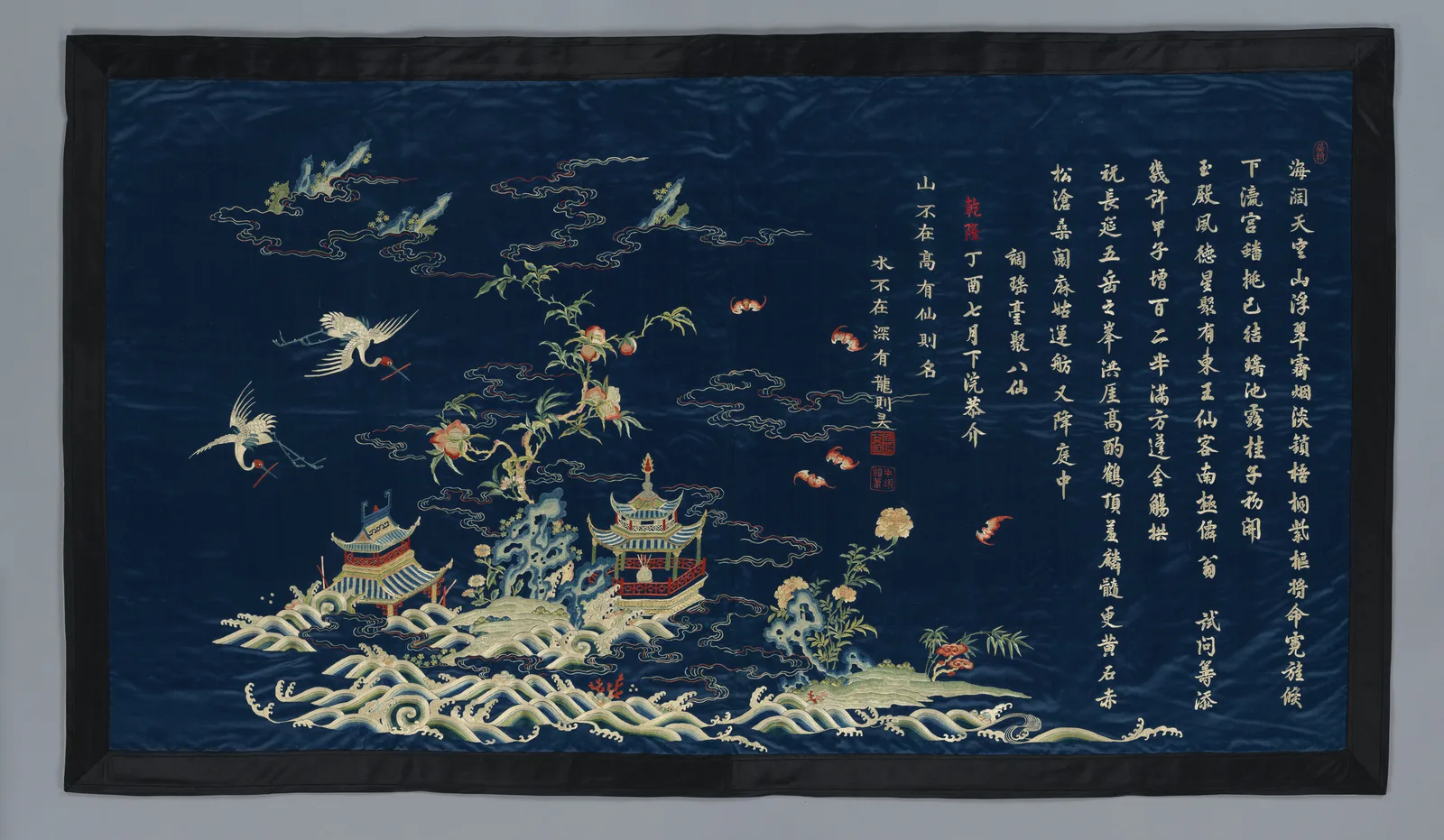
*Panel with cranes over an immortal land, dated 1777 — silk embroidery on silk satin. The Metropolitan Museum of Art — Public Domain. The Met connects crane imagery with longevity themes in this Qing context.*
Dragons
Dragons appear in imperial/status contexts and broader decorative programs. Claw count, placement and accompanying emblems can matter in specialist costume history, but travelers should avoid the universal equation “dragon = emperor.”
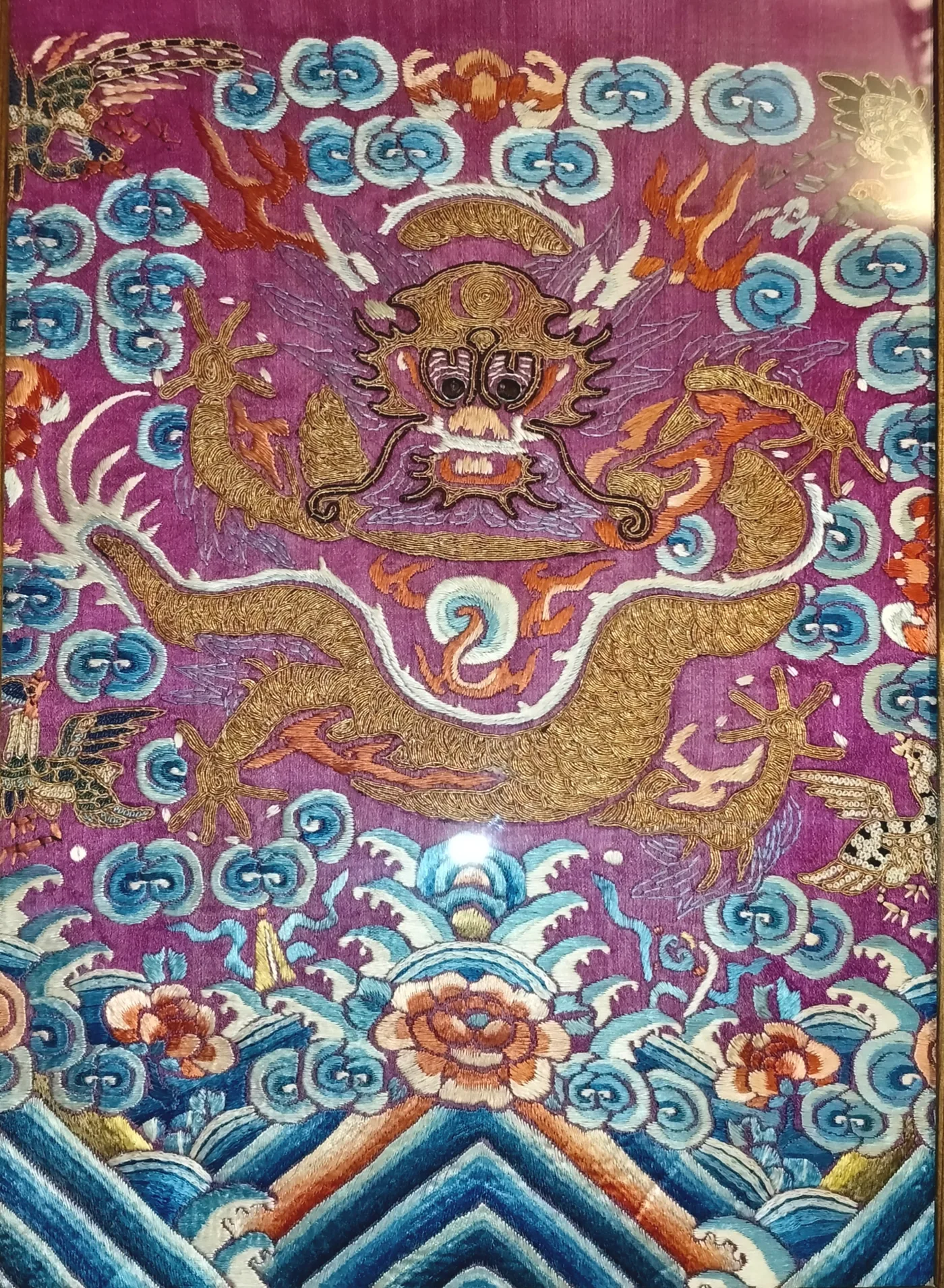
*Imperial dragon embroidery, Qing dynasty. Wikimedia Commons — CC0.*
Phoenixes
Phoenix (fenghuang) imagery often appears in auspicious pairings and bridal/status decorative programs. Museum examples of embroidered phoenixes should be captioned as the objects they are—not as proof of one fixed meaning.
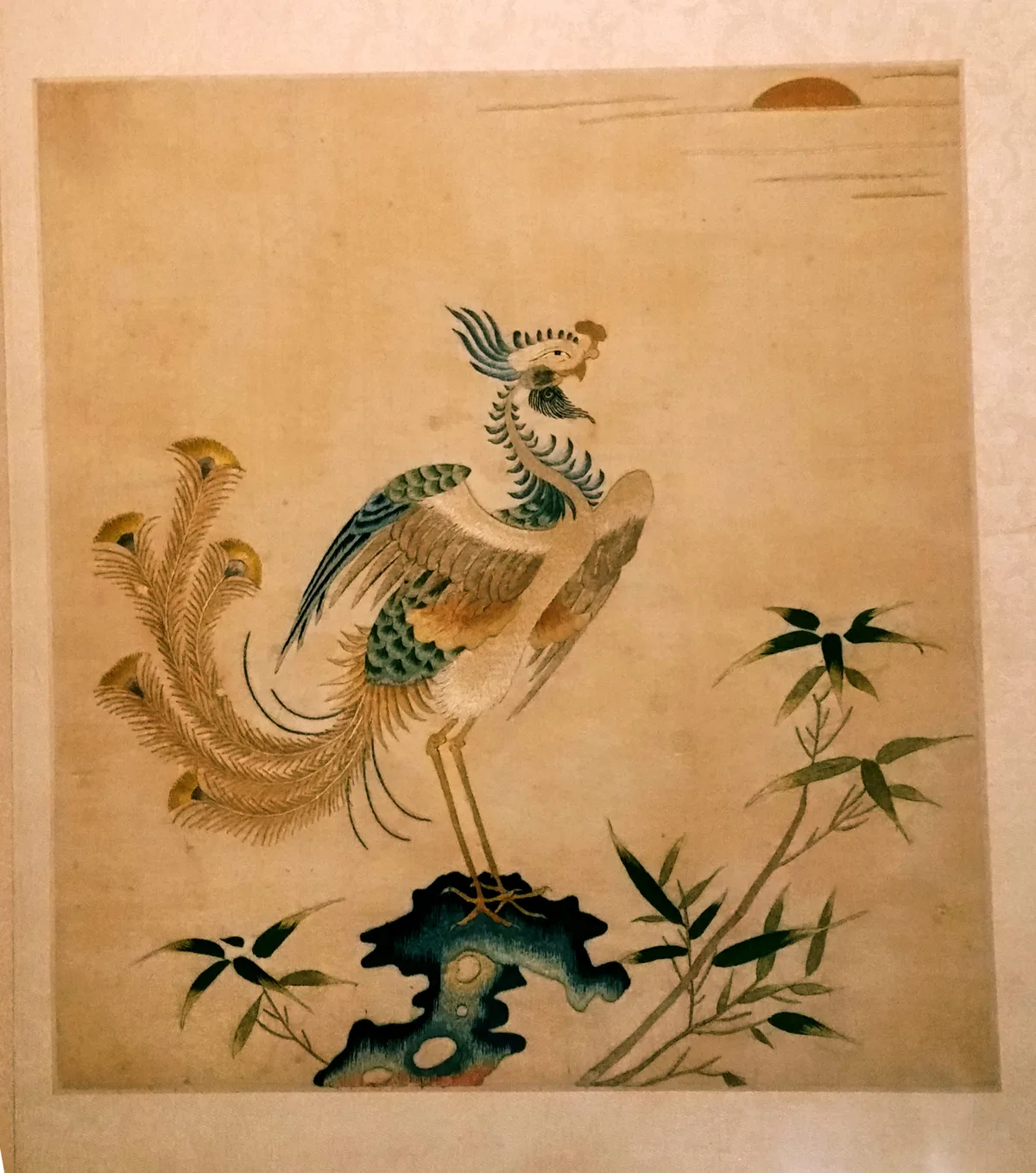
*Phoenix embroidery at Nanjing Museum. Wikimedia Commons — CC BY-SA 4.0.*
Cranes
Cranes frequently participate in longevity imagery. The Met’s crane panel is a useful reminder: meaning is argued from the whole composition and catalogue context, not from the bird alone.
Birds and Rank Badges
Civil and military rank badges used birds and animals as bureaucratic identifiers in specific costume systems. Rank-badge symbolism is not interchangeable with free decorative bird embroidery on screens or panels. Antique formats: Antique Chinese Embroidery.
Bats
Bats often encode blessings through Chinese homophones. Rebus logic is conventional, not mystical.
Butterflies
Butterflies appear in romantic, seasonal and decorative programs; pair with other motifs before assigning a single meaning.
Peonies and Other Flowers
Peonies are widely associated with wealth and flourishing, yet many textiles use floral ornament primarily as design.
Lotus
Lotus imagery often intersects Buddhist and purity themes, depending on object type and setting.
Plum Blossom, Bamboo and Chrysanthemum
These plants participate in literati seasonal and virtue symbolism in Chinese visual culture; embroidered versions inherit that broader vocabulary with textile-specific design constraints.
Peaches, Pomegranates and Fruit Imagery
Peaches often signal longevity; pomegranates frequently participate in fertility/abundance rebus traditions. Again: combinations matter.
Shou / Longevity Characters
Written longevity characters can appear alone or with cranes, peaches and related imagery.
Clouds, Waves and Cosmic Imagery
Background systems (clouds, waves, mountains) structure space and status programs on robes and panels.
Rebus and Wordplay
Many auspicious designs encode wishes through homophones and conventional pairings. Reading them is cultural literacy, not decoding a secret cipher.
Motif Meaning Depends on Context
This is the governing rule of the page:
- Object type (badge vs robe vs panel)
- Period and workshop
- Accompanying motifs
- Placement and number
- Catalogue or reliable comparative examples
Without those, “what does X mean?” answers become overconfident.
How to Read an Embroidered Motif
- Name what you literally see.
- Note companions and composition.
- Check object function.
- Prefer museum interpretation over souvenir-shop cards.
- Leave room for decorative-only readings.
Clothing cross-link: Traditional Chinese Clothing. Hub: Chinese Embroidery.
Common Misconceptions
- No universal one-symbol/one-meaning dictionary.
- Not every dragon is an imperial dragon.
- Colors do not have one fixed meaning in every period.
- Rank badges have specific bureaucratic contexts.
- Motifs can combine several meanings at once.
Motifs & Symbolism FAQ
What do Chinese embroidery patterns mean?
Often auspicious, status, seasonal, religious or decorative meanings—depending on context.
What does a dragon symbolize in Chinese embroidery?
Power and status are common associations, but not a universal imperial equation.
What does a phoenix symbolize?
Auspicious and pairing/status themes are common; read companions and object type.
Why are cranes common in Chinese embroidery?
Longevity and related auspicious programs appear frequently, especially in Qing contexts with supporting imagery.
What does a bat mean in Chinese art?
Often blessings via homophone/rebus logic.
What does a peony symbolize?
Frequently wealth/flourishing; sometimes mainly decorative.
What is a Chinese rank badge?
A costume badge using birds/animals as bureaucratic rank markers—distinct from free decorative embroidery.
How can I identify an embroidery motif?
Start with visible forms, then use object type + catalogue context; avoid photo-only certainty.