
Scroll Formats at a Glance
| Format | How travelers usually encounter it |
|---|---|
| Handscroll | Horizontal; viewed in sections; stored rolled |
| Hanging scroll | Vertical display |
| Album | Bound leaves; intimate viewing |
| Fan | Folding or round formats |
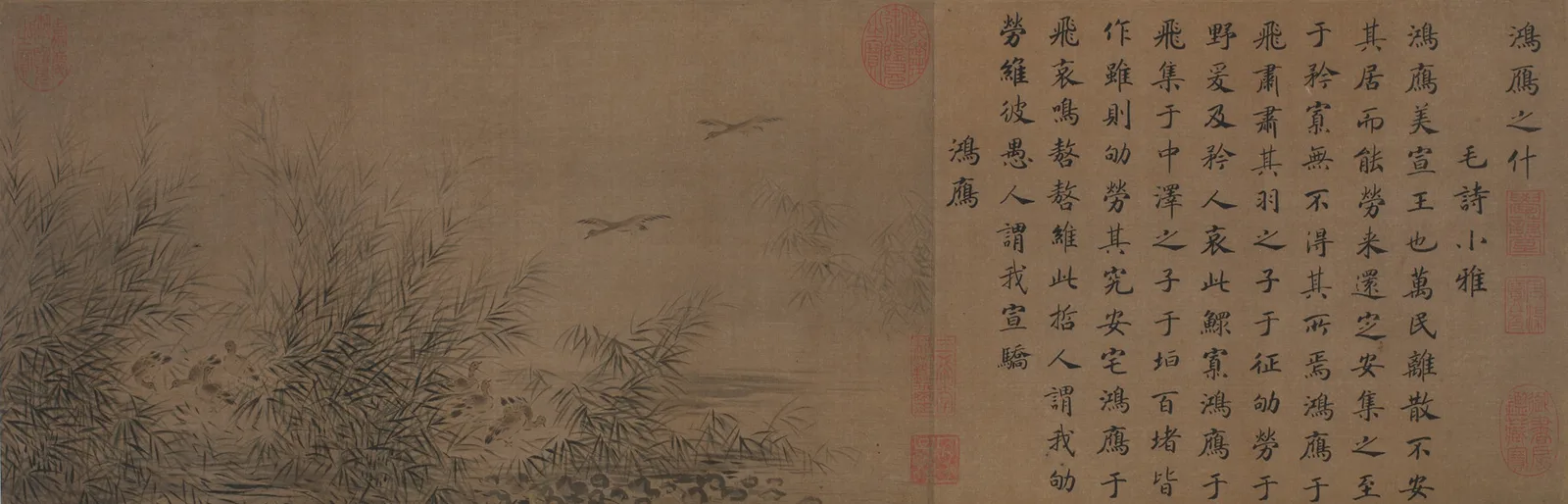
*Courtly Odes, Beginning with “Wild Geese,” Ma Hezhi and assistants, Southern Song; ink and color on silk. The Metropolitan Museum of Art — . Resized; .*
What Is a Handscroll?
A handscroll is a long horizontal painting (often with calligraphy sections) designed for private or semi-private viewing. It is not meant to hang fully open on a wall for weeks.
How a Handscroll Is Viewed
The Met’s handscroll essay describes sequential viewing from right to left in manageable sections, then rerolling. That pacing shapes narrative and landscape experience: you travel through the painting rather than seeing every inch at once.
What Is a Hanging Scroll?
A hanging scroll presents a vertical composition for room or gallery display. Many monumental landscapes use this format.
Handscroll vs Hanging Scroll
| Feature | Handscroll | Hanging scroll |
|---|---|---|
| Orientation | Horizontal | Vertical |
| Viewing | Section by section, right to left | Broader simultaneous view |
| Storage | Rolled | Rolled when not displayed |
| Common mistake | Calling every scroll a handscroll | Assuming all Chinese paintings hang permanently |
Albums
Albums gather leaves into a book-like object—useful for series, seasonal subjects and collector arrangements.
Fans
Painted fans (folding or round) bring painting into portable social objects. Mounted fan paintings in museums may no longer function as usable fans.
Painting on Silk
Silk as a painting ground can hold fine line and color with a different absorbency profile than paper. Many court and professional works use silk.
Painting on Paper
Paper supports a wide range from dry texture to wet ink bloom. English “rice paper” oversimplifies several paper types.
Silk Ground vs Silk Mounting
The painted silk and the mounting silks around a scroll are different layers. Mounts may be later replacements. An old mount does not automatically prove an old painting.
Inscriptions and Colophons on Scrolls
Scrolls often accumulate frontispieces, artist inscriptions and later colophons. See Seals, Signatures & Colophons.
Why Scrolls Are Rolled and Stored
Rolling protects surfaces, saves space and matches historical viewing habits for handscrolls. Museums unroll carefully and limit light exposure.
Light Sensitivity and Museum Rotation
Paper and silk fade and weaken under light. Rotation is conservation, not secrecy. Destination planning: Where to See Chinese Painting.
Antique and Vintage Paintings
Online searches for “antique Chinese silk painting” often mix genuine historical works, later archaistic pieces, decorative reproductions and embroidery. Old-looking mounting is not proof of age. This guide does not offer buying or appraisal advice.
Chinese Silk Painting vs Chinese Silk Embroidery
Silk painting is pigment/ink on silk. Silk embroidery builds images with thread. Related craft guide: Chinese Silk Embroidery.
Common Misconceptions
- A scroll is not always a handscroll.
- Mounting may be later than the painting.
- Silk painting is not embroidery.
- An old scroll mount does not prove an old painting.
- Handscrolls were not intended to hang permanently fully open.
FAQ
What is a Chinese handscroll?
A horizontal format viewed in sections from right to left and then rerolled.
What is a Chinese hanging scroll?
A vertical format designed for display rather than sectional unrolling.
How do you view a handscroll?
Open a section at a time, right to left, then roll it closed.
Are Chinese paintings painted on silk?
Many are; many others are on paper.
What is the difference between paper and silk painting?
Different absorbency and surface behavior; both are major grounds.
Why are Chinese scrolls rolled up?
For storage, protection and historical handscroll viewing practice.
What is a colophon?
Later writing added to a scroll, often by viewers or collectors.
Is a Chinese silk painting the same as embroidery?
No. Painting uses ink/pigment; embroidery uses thread.
Sources & Review
- The Met essay *Chinese Handscrolls*; Ma Hezhi *Courtly Odes* object record.
- Traveler synthesis; no separate expert review claimed.