
Seals & Signatures at a Glance
| Element | Typical role |
|---|---|
| Artist signature | Name / style name claim |
| Artist inscription | Poem, date, dedication, comment |
| Artist seal | Red stamp associated with the painter |
| Collector seal | Ownership / appreciation mark |
| Imperial seal | Court collection mark |
| Colophon | Later written response, often separate section |
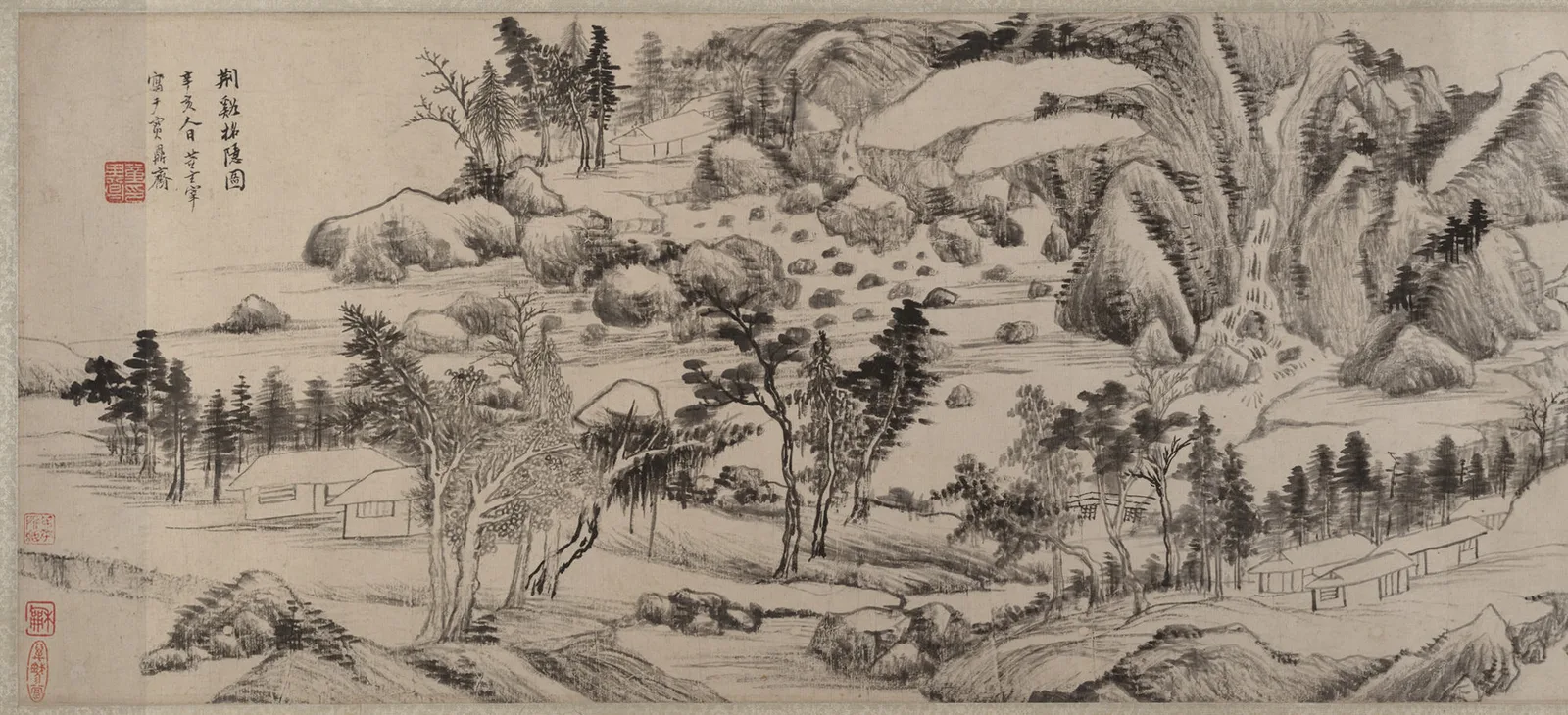
*Invitation to Reclusion at Jingxi, Dong Qichang. The Metropolitan Museum of Art — . Used here because appended calligraphy/colophon structure is legible for travelers. Resized; .*

*Tiger Hill, Lu Zhi, datable to the 1550s, with substantial later colophon history. The Met — . Wide handscroll shown as an inline strip; resize.*
Artist Signatures
Signatures may use formal names or studio/style names. Placement and script style vary by period. A signature can be original, later-added or forged; labels and catalogue essays matter more than confident guessing.
Artist Inscriptions
Inscriptions may date a work, dedicate it, or add a poem that reframes the image. Meaning can shift when inscription and image are read together. Related: Subjects & Symbolism.
Artist Seals
Artist seals are carved stamps printed in red seal paste. Painters may use multiple seals across a career. Seal carving is its own craft linked to calligraphy culture.
Collector Seals
Collectors stamp works they own or admire. Dense seal fields can record a painting’s social life. More seals do not automatically mean greater authenticity.
Imperial Seals
Imperial collection seals mark court ownership and cataloguing. Famous imperial seals have also been copied; treat them as historical claims requiring scholarship, not tourist proof.
What Is a Colophon?
A colophon is later writing—often on added paper—by viewers, friends, collectors or later connoisseurs. It can praise, re-date, re-attribute or simply respond. Colophons may postdate the painting by centuries.
Frontispieces and Added Calligraphy
Some scrolls open with title calligraphy or frontispieces created separately from the painting. Format context: Scrolls & Silk.
Why Paintings Accumulate Layers Over Time
Prestigious objects circulate. Each owner may add seals or invite inscriptions. The layered object becomes a history of looking as well as of making.
Seals and Provenance
Seals can support provenance arguments when matched to known collectors and consistent with other evidence. They are one data type among many.
Can Seals Prove Authenticity?
No, not by themselves. Seals can be carved later, printed on wrong works, or copied. Authentication requires broader stylistic, material and documentary analysis—outside the scope of a travel guide and not offered as a DragonTrail service.
Fake / Added / Misleading Seals
Later seals may be decorative, fraudulent or well-intentioned commemorations. Educational point only: red ink is not a truth stamp.
How to Look at the Red Stamps
- Read the museum label first.
- Separate image, artist writing and later writing.
- Ask whether a stamp is identified as artist, collector or imperial.
- Do not count seals as a scoreboard of authenticity.
- Use seals as prompts for history, not as proof alone.
Painting, Calligraphy and Seal Carving
Seals sit at the intersection of painting, Chinese calligraphy and character culture (Chinese Characters).
If museum calligraphy and painting are priorities in Beijing, private itinerary planning can follow your time window: Beijing private tour quote.
Common Misconceptions
- Every red seal is not the artist’s.
- More seals do not mean greater authenticity.
- A colophon may have been added centuries later.
- The mount may have changed.
- Famous imperial seals have also been copied.
FAQ
What are the red stamps on Chinese paintings?
Seal impressions, usually in red paste, from artists, collectors, institutions or later owners.
Are Chinese painting seals signatures?
Sometimes artist seals accompany signatures; seals alone are not identical to signatures.
What is a collector's seal?
A stamp added by an owner or admirer, recording possession or appreciation.
What is an imperial seal?
A court collection mark associated with imperial cataloguing and ownership claims.
What is a colophon?
Later writing attached to a painting’s scroll history.
Why do Chinese paintings contain poetry?
Poetry can dedicate, comment or collaborate with the image in scholar culture.
Can a seal prove a painting is genuine?
No. Seals are evidence among other evidence, and they can be misleading.
How can I identify a Chinese artist's signature?
Start with museum labels and catalogues; reading seals/signatures fluently takes specialist training.
Sources & Review
- The Met object records for Dong Qichang *Invitation to Reclusion at Jingxi* and Lu Zhi *Tiger Hill*.
- Met Chinese Painting essay for inscriptions/seals practice.
- Traveler synthesis; no appraisal service; no separate expert review claimed.