
Chinese Silk Embroidery at a Glance
| Topic | Orientation |
|---|---|
| What “silk embroidery” usually means | Silk ground, silk thread, or both |
| Not a single school | Crosses Su, Shu and other traditions |
| Common object formats | Panels, screens, pictures, garments |
| Terminology caution | “Thread painting” is often retail/visual language |
| Critical distinction | Embroidered silk ≠ brocade ≠ kesi |
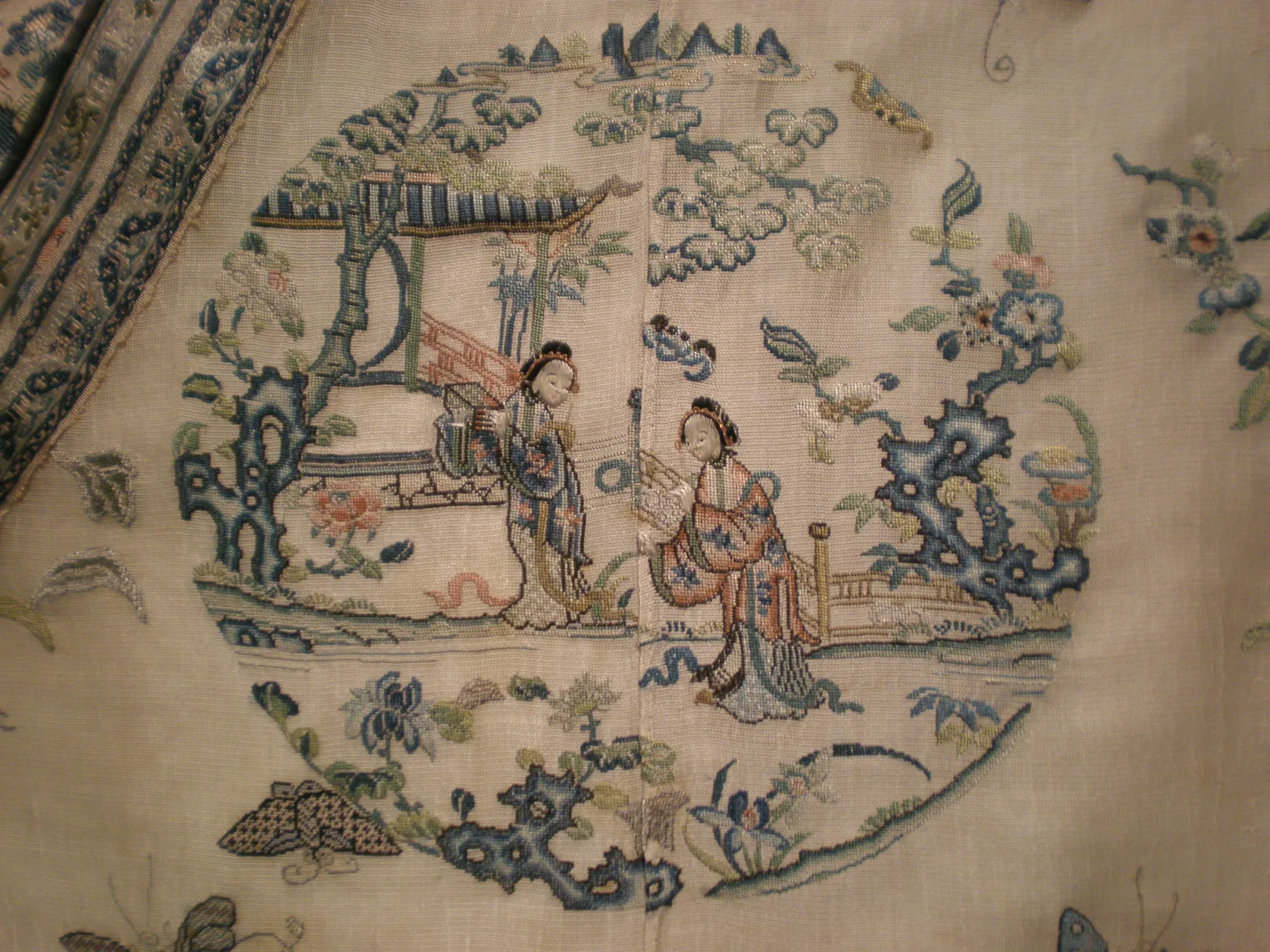
*Central embroidery detail from a woman’s Qing summer robe (silk gauze), Asian Art Museum of San Francisco context via Wikimedia Commons — CC BY-SA 3.0.*
Why Silk Became Important to Chinese Embroidery
Silk supports fine filament work, lustrous surfaces and dense pictorial fills. Prestige workshops and court contexts favored silk for many high-status embroidered objects. That historical prominence explains why “Chinese silk embroidery” is such a common English description, even though not every embroidered Chinese textile is silk.
Silk Ground vs Silk Thread
- Silk ground — the fabric being stitched.
- Silk thread — the stitching material.
- Both — common in prestige pictorial pieces.
- Mixed systems — metallic threads, non-silk grounds, or mixed fibers appear in real collections.
Ask which layer is silk before treating “silk embroidery” as a single technical category.
Embroidered Panels and Screens
Panels and screens are major object formats for pictorial silk embroidery. Freestanding screens may be single-sided or double-sided. Double-sided construction: Double-Sided Chinese Embroidery.
Embroidery Paintings and “Thread Painting”
English commerce and collector language uses “embroidery painting,” “thread painting” and similar phrases for pictorial embroidered surfaces. Treat them as descriptive or retail language rather than proof of one standardized historical technique.
Framed Chinese Silk Embroidery
Framed panels are common in modern retail and antique markets. Framing is a presentation choice; it does not by itself establish age, school or authenticity. Age/value questions: Antique Chinese Embroidery.
Silk Embroidery on Clothing
Robes, skirts, theatrical costume and accessories carry embroidered silk ornament. Clothing systems overview: Traditional Chinese Clothing. Cluster hub: Chinese Embroidery.
Embroidery vs Brocade vs Kesi
| Embroidery | Brocade | Kesi | |
|---|---|---|---|
| Process | Stitched onto fabric | Woven pattern | Tapestry-like weaving |
| Silk role | Often silk ground/thread | Often silk weave | Often silk weave |
| Risk | Mislabeling woven pictorial silk as embroidery | Calling brocade “embroidery” | Calling kesi “embroidery painting” |
Museum woven labels should stay woven in your notes and captions.
How Silk Embroidery Creates Pictorial Effects
Stitch direction, density, color sequencing and silk’s reflective quality create tonal transitions that can resemble painting from a viewing distance. Technique vocabulary: Techniques & Stitches.
How to Examine a Silk Embroidery Object
- Identify format (robe, panel, screen, badge).
- Separate ground fiber from thread fiber if the label allows.
- Look for stitch direction changes across modeled forms.
- Check reverse-side finish.
- Prefer institutional attribution over market adjectives.
Historic vs Modern Silk Embroidery
Historic museum pieces and modern workshop products can share visual language. Modern work is not automatically “fake,” and historic-looking framing is not automatically antique.
Handling and Conservation
For travelers and collectors at a non-specialist level:
- Do not touch museum textiles.
- Strong light fades dyes and weakens silk.
- Fragile silk and metallic threads need professional care.
- Do not attempt amateur restoration.
Common Misconceptions
- Silk embroidery is not one regional school.
- “Thread painting” is not automatically a formal historical technique name.
- Embroidered silk is not brocade.
- Framed presentation does not prove antiquity.
Chinese Silk Embroidery FAQ
What is Chinese silk embroidery?
Embroidery that uses silk as ground, thread or both—across multiple regional traditions.
Is Chinese embroidery made from silk?
Often in prestige contexts, but not always.
What is a Chinese silk embroidery panel?
A common pictorial format: embroidered imagery on a panel, sometimes later framed.
What is Chinese thread painting?
Usually English descriptive/retail language for pictorial embroidery effects, not a single universal historical category.
Is embroidered silk the same as brocade?
No. Embroidery is stitched; brocade is woven.
What is the difference between embroidery and kesi?
Kesi is tapestry-like weaving; embroidery is needlework on a ground.
Are framed Chinese silk embroideries antiques?
Only if independent evidence supports age. Framing alone proves nothing.
Which Chinese embroidery traditions use silk?
Many, including Su and Shu prestige traditions; silk use is shared, not exclusive to one school.