
Brush Painting at a Glance
| Topic | Orientation |
|---|---|
| Core tool | Soft, pointed Chinese brush |
| Variables | Angle, pressure, speed, moisture, loading |
| Companion page | Ink painting |
| Tool set context | Four Treasures |
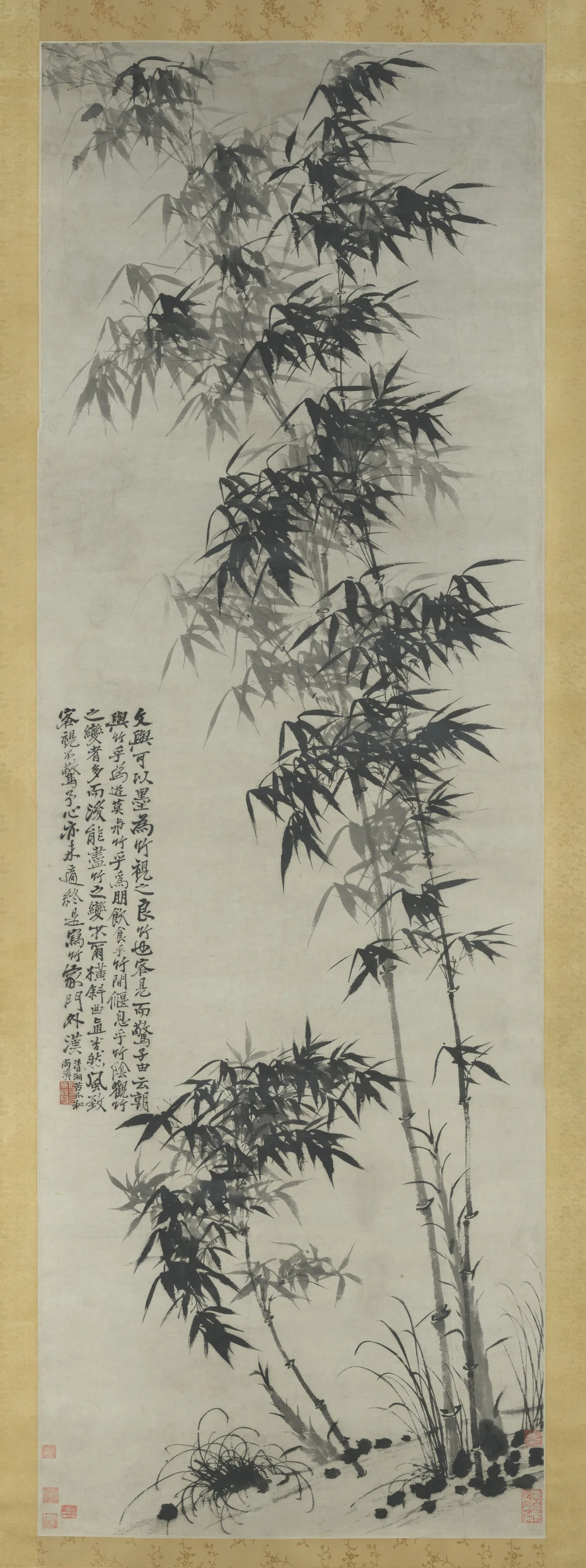
*Bamboo in Wind and Rain, Shitao, ca. 1694. The Metropolitan Museum of Art — . Catalogue notes include artist signature/seal. Resized; .*
The Brush as a Flexible Tool
A Chinese painting brush is designed to hold ink and change mark width continuously. Travelers watching a demonstration see the tip, belly and heel of the brush all contribute different marks. The goal of this page is visual literacy, not a shopping list.
Brush Hair and Shape
Brushes vary in hair type, length and stiffness. Soft brushes favor washes and elastic curves; firmer brushes can support drier texture. Exact workshop recipes differ by period and maker.
Brush Loading
Painters load the brush with ink of one tone or with graded tones so a single stroke shifts from dark to light. Reloading mid-passage is itself a compositional decision.
Pressure and Line Width
Light pressure keeps a fine tip line. Heavier pressure flares the stroke. Calligraphy training makes this control familiar, which is why painting and calligraphy are taught as related disciplines.
Tip, Side and Body of the Brush
Museum and studio language sometimes distinguishes tip lines, side scrapes and fuller belly strokes. Use labels as orientation and verify against what you see: not every school uses the same teaching vocabulary.
Wet Brush / Dry Brush
Wet strokes bloom on absorbent paper. Dry strokes skip and texture. Bamboo, orchids and landscape rocks often showcase both within one work.
Ink Gradation
Gradation can happen inside one loaded stroke or across layered washes. See Chinese Ink Painting.
Texture Strokes
Painting develops specialized marks for foliage, rock and cloth that go beyond writing characters. Compare landscape texture passages with pure calligraphic line to see the difference.
Brushwork and Calligraphy
Shared tools, different ends: calligraphy prioritizes characters; painting prioritizes pictorial structure. Cross-link: Chinese Calligraphy.
Four Treasures of the Study
Brush, ink, paper and inkstone form the classic scholar’s toolkit. Details: Four Treasures of the Study.
Paper and Absorbency
“Rice paper” is an imprecise English blanket term. Chinese painting papers vary in fiber and sizing; some absorb aggressively, others hold sharper edges. Silk behaves differently again. See Scrolls & Silk.
Brush Painting vs Western Brushwork
Chinese soft-brush systems and Western oil/watercolor brush cultures both reward pressure control, but they sit inside different media histories. Neutral comparison is enough; no hierarchy is required.
Can Travelers Try Brush Painting in China?
DragonTrail does not currently sell a dedicated Chinese painting class product. The closest hands-on experience in the Beijing lineup uses calligraphy tools:
Try Traditional Brush & Ink Tools in Beijing → Hutong calligraphy & dumpling lunch
This is a calligraphy session, not a Chinese painting lesson, but it provides useful hands-on familiarity with brush pressure, ink and paper. Broader planning: Beijing private tour quote.
Common Misconceptions
- One brush type does not cover every Chinese painting task.
- Calligraphy brushes and painting brushes overlap but are not always identical in studio practice.
- Dry brush is a technique, not damage.
- “Rice paper” is not a precise material name.
- Beginner workshops are not historically authentic reconstructions of Song academy training.
FAQ
What kind of brush is used for Chinese painting?
A flexible East Asian brush that can shift from fine tip to broad mark; specifics vary by hair and size.
Is Chinese painting done with the same brushes as calligraphy?
Often related tools and skills; studios may still choose different brushes for different tasks.
What is dry-brush technique?
Using reduced moisture so the stroke skips and textures the surface.
How are different ink tones made?
By diluting ink, controlling loading and exploiting paper absorbency.
What are the Four Treasures?
Brush, ink, paper and inkstone—the classic study tools.
Is Chinese painting done on rice paper?
Sometimes on absorbent papers loosely nicknamed “rice paper” in English; silk and other papers are also major grounds.
Can beginners try Chinese brushwork?
Yes through calligraphy-oriented experiences and museum education programs; treat them as introductions, not full painting apprenticeships.
Sources & Review
- The Met object record for Shitao, *Bamboo in Wind and Rain*.
- Met Chinese Painting essay for brush/calligraphy relationships.
- Traveler synthesis; no separate expert review claimed.