
Painting Styles at a Glance
| Term | What it usually names |
|---|---|
| Guohua | Modern “national/traditional Chinese-style painting” category |
| Gongbi | Controlled, detailed brush approach |
| Xieyi | Abbreviated, expressive approach |
| Literati / scholar painting | Scholar-centered ideals and patronage stories |
| Court / professional | Workshop and commissioned painting worlds |
| Subject genres | Figures, landscapes, flowers-and-birds |
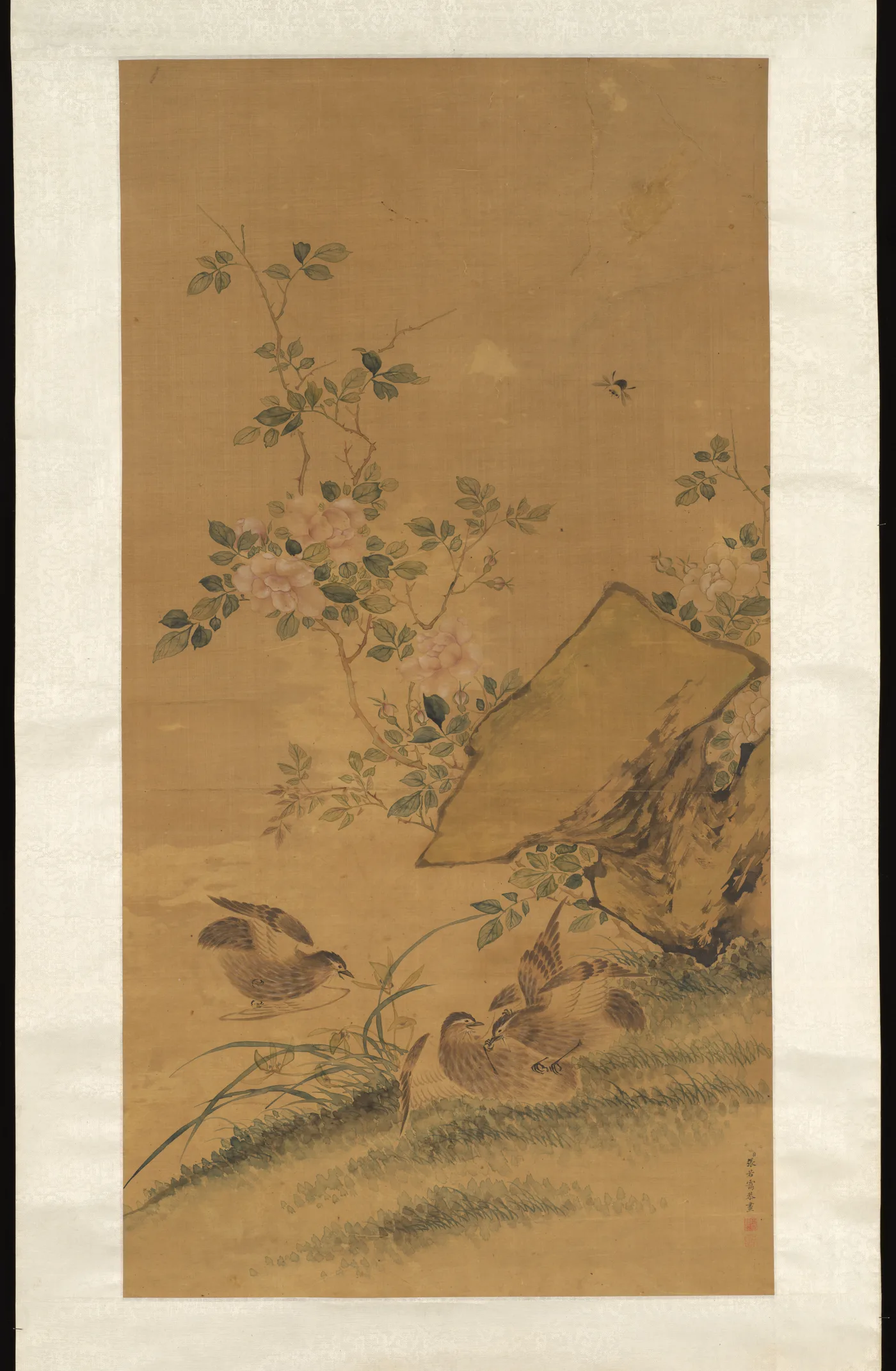
*Flowers and Birds, Zhang Ruoai, early 18th century; ink and color on silk. The Metropolitan Museum of Art — . Resized; .*
What Does Guohua Mean?
Guohua (国画, guóhuà) emerges in modern Chinese art discourse to mark traditional Chinese-style painting against Western-style media and academies. It is useful for twentieth-century conversations and museum education, but it is historically modern terminology—not a Song self-label for every scroll.
Gongbi
Gongbi emphasizes careful outline, controlled washes and detailed finish. Court flower-and-bird painting and many silk works show this discipline. Gongbi is not identical to Western photorealism; it is a Chinese brush method with its own conventions.
Xieyi
Xieyi emphasizes abbreviated form and expressive brush. It is not “sloppy painting.” Economy of stroke can still demand high control.
Gongbi vs Xieyi
| Dimension | Gongbi | Xieyi |
|---|---|---|
| Handling | Controlled, detailed | Abbreviated, expressive |
| Common misconception | “Photorealism” | “Careless” |
| Better reading | Method/approach | Method/approach |
| Can combine? | Yes, contextually within one tradition or even one work | Yes |
Literati / Scholar Painting
Literati painting centers scholar identity, calligraphy, poetry and often ink landscape. It is not simply “amateur” in the casual modern sense; many literati painters were highly skilled and theoretically articulate.
Court Painting
Court painting answers imperial and aristocratic commissions: portraits, auspicious subjects, documentary scenes and decorative programs. Technique can be meticulous or painterly depending on workshop and period.
Professional Painting
Professional painters worked for markets, temples and patrons outside the scholar ideal. Their training and subject range are essential to museum holdings even when later taste privileged literati names.
Three Subject Genres
Figures, landscapes and flowers-and-birds are subject categories. They cut across gongbi/xieyi and court/literati distinctions. See Subjects & Symbolism and Landscape.
Style vs Subject
Gongbi = approach. Landscape = subject/genre. Mixing these classification levels creates false binaries (“is landscape a style?”). Landscape is a subject field that can be painted in multiple approaches.
Ink vs Color Is Not the Same as Gongbi vs Xieyi
Monochrome ink can be meticulous or abbreviated. Color painting can be courtly-detailed or loosely washed. Do not treat ink/color as a synonym for gongbi/xieyi.
Can One Painting Combine Different Approaches?
Yes. A work may outline some forms carefully and wash others freely, or pair a detailed bird with a more open ground. Labels that name one approach are starting points, not exclusive tags.
Common Misconceptions
- Gongbi does not mean “realistic painting” in every Western sense.
- Xieyi does not mean careless.
- Literati painting is not simply amateur painting.
- Guohua is historically modern terminology.
- Subject and style are different classification dimensions.
Explore related guides
Chinese Painting hub · Ink · Landscape · Famous painters
FAQ
What are the main styles of Chinese painting?
Travelers usually meet approach terms (gongbi, xieyi), social categories (literati, court/professional) and subject genres (figures, landscapes, flowers-and-birds).
What is guohua?
A modern umbrella for traditional Chinese-style painting contrasted with Western-style media.
What is gongbi painting?
Painting that emphasizes controlled, detailed brushwork.
What is xieyi painting?
Painting that emphasizes abbreviated, expressive handling.
What is literati painting?
Scholar-centered painting ideals linking image, calligraphy and poetry.
What is the difference between gongbi and xieyi?
Detail and control versus abbreviation and expressive economy—approaches, not total systems.
Is landscape painting a style or subject?
Primarily a subject/genre; it can be painted in multiple styles.
Did court painters use different techniques from scholar painters?
Often different patronage and subject priorities; technique ranges overlap and should not be stereotyped.
Sources & Review
- The Met Chinese Painting essay; Zhang Ruoai *Flowers and Birds* object record.
- Shanghai Museum painting-gallery subject framing.
- Traveler synthesis; no separate expert review claimed.