
| Item | Detail |
|---|---|
| Chinese | 针灸 (zhēnjiǔ) — needle (针) + moxibustion tradition (灸); often needle-focused in English use |
| Setting types | Licensed hospital/clinic TCM; cultural demos without clinical needling |
| Typical sensation | Deqi (得气) described as ache, heaviness, or tingling around needle—training concept |
| Evidence | Condition-specific modern research—not uniform proof for all marketing claims |
| DragonTrail boundary | No personal treatment advice or disease claims |
What Acupuncture Is in TCM Teaching
Classical teaching places needles at acupoints on meridian maps to adjust qi and blood patterns identified through diagnosis. Modern hospitals may combine TCM pattern language with biomedical assessment and imaging when indicated.
Needles used in professional settings are single-use sterile in regulated clinics; verify practice standards before accepting treatment.
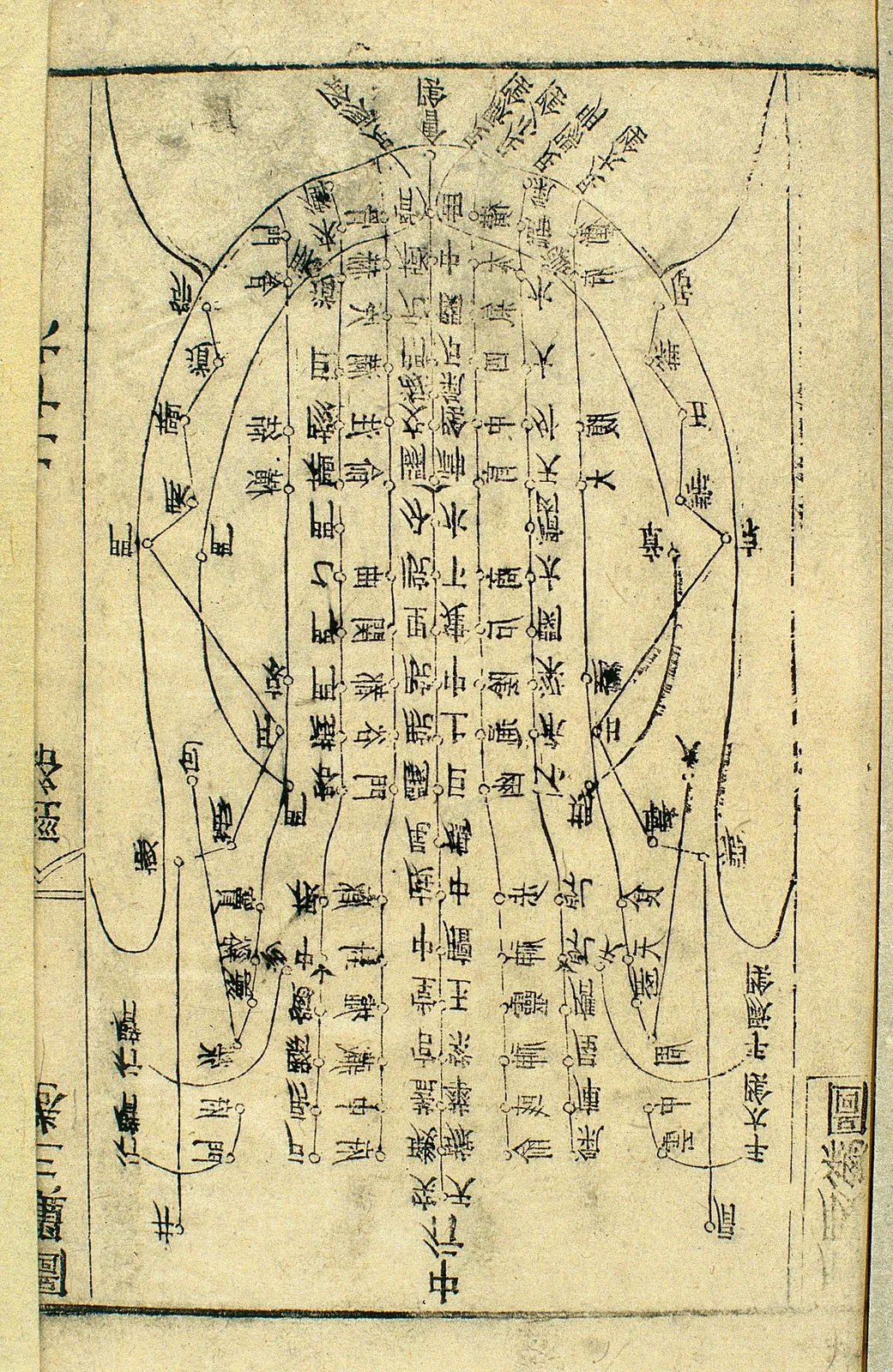
*Acupuncture teaching chart with point locations. Wellcome Collection. Cropped/resized for web; non-generative.*
Common Techniques Travelers Hear About
| Technique | Traveler-level description |
|---|---|
| Manual acupuncture | Hand manipulation after insertion |
| Electro-acupuncture | Mild current through needles—common in research and hospitals |
| Auricular (ear) acupuncture | Points on ear charts—sometimes used in specialized settings |
| Acupressure | Pressure without penetration—not the same as needling |
Related modalities: Moxibustion (heat), Tuina (manual).
Settings: Medical Care vs Cultural Demo
| Setting | What to expect |
|---|---|
| Hospital 中医科 / licensed TCM clinic | Licensed practitioners; medical record; may coordinate with Western departments |
| Cultural introduction | Explanation and sometimes demonstration on a model or limited non-clinical exposure |
| Spa / non-medical wellness | Non-medical TCM wellness (中医养生保健服务) operates under a different scope |
Acupuncture is a medical procedure in China and should be performed within an appropriately licensed medical setting. Non-medical TCM wellness businesses are not permitted to conduct medical diagnosis or treatment, including acupuncture (针刺), under the NATCM *中医养生保健服务规范(试行)* (2023). Do not treat a generic spa menu as a substitute for hospital or clinic needling simply because the staff “seem qualified.”
See TCM Medical Care for Foreigners for clinical logistics; TCM in Beijing for visitor formats.
Evidence and Honest Limits
Research findings vary by intervention and condition. NCCIH summarizes evidence that acupuncture may help certain pain conditions (for example some back, neck, and knee pain contexts) while noting that results and study quality still vary, and that marketing claims often outrun the evidence for other uses.
Classical meridian theory and modern trial design answer different questions. See Evidence & Safety.
Safety Considerations (General)
NCCIH notes that serious complications are uncommon when sterile needles and proper technique are used, but nonsterile needles or improper delivery can cause infections and other injuries.
Discuss with qualified professionals if you have bleeding disorders or anticoagulant medication, a pacemaker (for electro-acupuncture), pregnancy questions, skin infection at needling sites, needle phobia, or a history of fainting.
DragonTrail does not clear individuals for treatment—this is general awareness, not personal medical advice.
What a Cultural Experience Usually Includes
Booked introductions—such as Traditional Chinese Medicine experience—typically emphasize history, meridian charts, and optional light wellness rather than full hospital courses for chronic disease. Confirm whether any needle treatment is included and in what licensed setting when inquiring.
Common Misconceptions
- "Acupuncture is painless for everyone." Sensation varies; deqi is part of training language.
- "One session cures chronic illness." Treatment courses and evidence vary; beware one-visit miracle marketing.
- "Any shop with needles is a hospital." Needle insertion belongs in appropriately licensed medical settings—not ordinary non-medical wellness scope.
FAQ
Does acupuncture hurt?
Many people feel minimal sharpness on insertion then dull sensation; pain tolerance and point choice vary.
Is acupuncture the same as acupressure?
Acupressure uses pressure without penetrating needles; training and regulation differ by venue and country.
Can tourists get acupuncture in English in Beijing?
Some hospital international departments and private clinics offer English; confirm when booking—see TCM in Beijing.
How do I verify a legitimate acupuncture setting?
Ask whether the venue is a licensed medical facility or clinic, who will perform the needling, and whether single-use sterile needles are used. Non-medical wellness businesses operate under a different legal scope in China.
How does acupuncture relate to qi and meridians?
Needles target acupoints on classical maps—see Qi, Meridians & Acupoints.
Continue Exploring
Sources & Review
- NCCIH — Acupuncture: Effectiveness and Safety
- National Administration of Traditional Chinese Medicine — 中医养生保健服务规范(试行) (2023) — non-medical wellness providers may not perform acupuncture or other listed diagnostic/treatment activities
- Wellcome Collection acupuncture teaching charts
- Chinese characters verified
- Author: Chuan Shi
- Last reviewed: September 2026