
| Item | Detail |
|---|---|
| Chinese | 艾灸 (àijiǔ) — moxa + moxibustion |
| Forms | Loose moxa cone; stick moxa (艾条); indirect methods with ginger or salt separation |
| Sensation | Warmth radiating into skin; must not be burn-level pain |
| Settings | Hospital TCM / licensed clinics; cultural demos; limited non-medical wellness techniques under separate scope |
| DragonTrail boundary | No instructions for home moxa on prescription drugs or pregnancy without clinician |
What Moxibustion Is in Classical Teaching
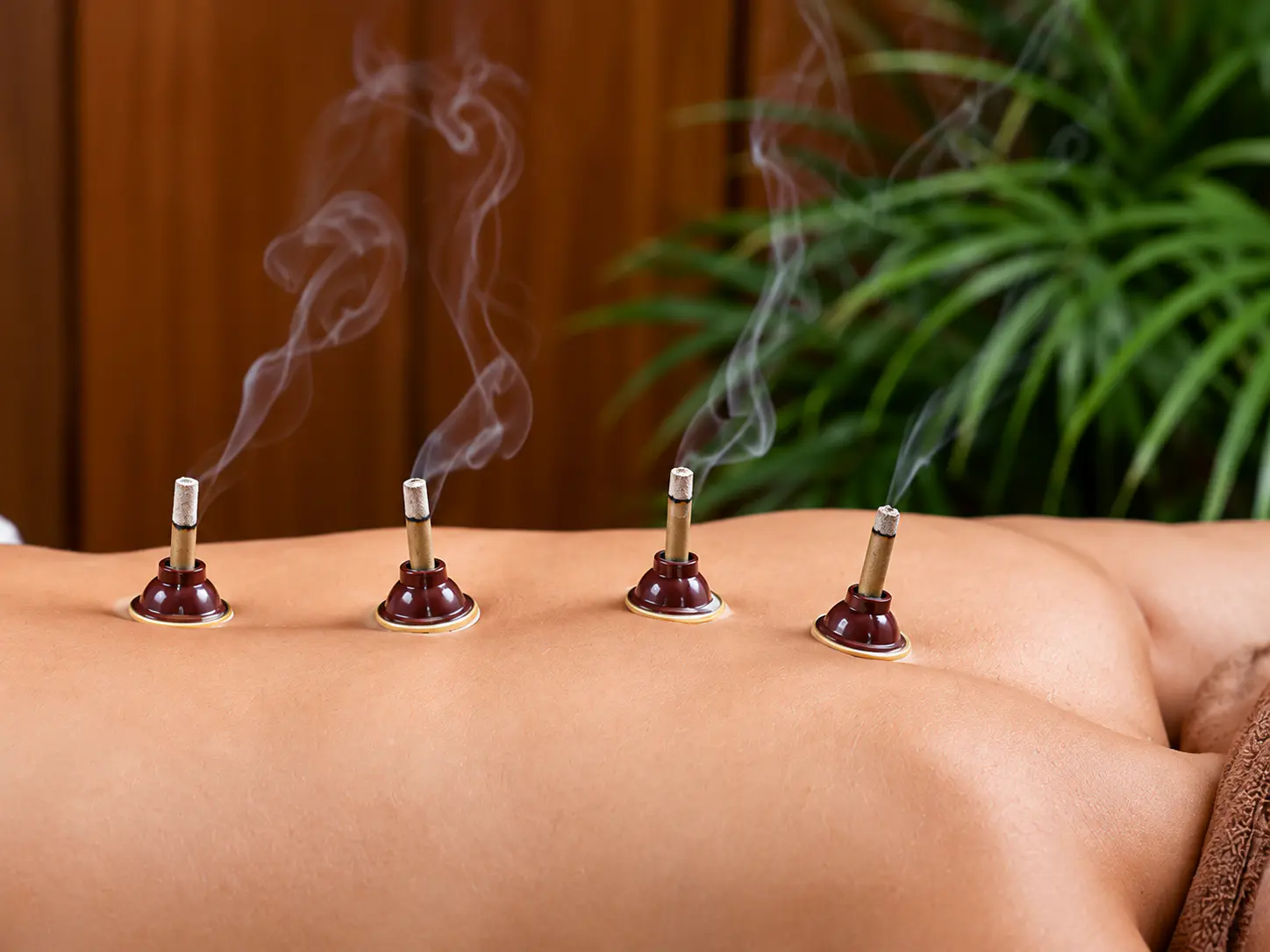
Moxibustion is used to warm, tonify, or move in pattern language when cold or deficiency patterns are identified in professional diagnosis—not tourist self-labeling. Heat is directed at acupoints or broader areas (e.g. abdomen or back in classical examples).
Common Forms Travelers See
| Form | Description |
|---|---|
| Stick moxa | Cigar-like roll held near skin at distance |
| Cone moxa | Small cone placed on point, often with insulating pad |
| Indirect | Heat separated by ginger slice, salt, or box devices |
Scarring moxibustion (瘢痕灸) is a traditional strong technique leaving scars—uncommon in casual tourism; hospitals use varied modern protocols.
Smoke, Scent, and Ventilation
Moxa produces smoke and strong aroma. Clinics use ventilation; sensitive lungs, asthma, or smoke-free hotel policies may conflict—ask before booking.
Some devices use charcoal-filter moxa sticks or electric warmers mimicking heat without full combustion—not identical to classical moxa.
Safety Considerations (General)
Burns are the primary avoidable injury—providers must monitor distance and duration. Discuss with professionals if you have:
- Reduced skin sensation (neuropathy)
- Pregnancy (many clinics restrict abdominal/lumbosacral moxa)
- Heat-sensitive conditions or acute fever
- Smoke sensitivity
See Evidence & Safety.
Relation to Acupuncture
Hospital charts label departments 针灸科 (acupuncture–moxibustion). A visit may include needles, moxa, or both under one treatment plan—see Acupuncture.
Medical vs Non-Medical Settings
Clinical moxibustion belongs in appropriately licensed medical settings. Non-medical TCM wellness (中医养生保健服务) is a different category: under the NATCM *中医养生保健服务规范(试行)* (2023), providers may not conduct medical diagnosis or treatment, and certain higher-risk moxibustion techniques (such as scarring or blistering moxa) are prohibited in that non-medical scope.
What Cultural Experiences May Show
Intro sessions may demonstrate stick moxa sensation on a model or distant heat near non-sensitive demo areas—full courses belong in clinical care, not souvenir workshops.
Traditional Chinese Medicine experience — confirm whether moxa is included when inquiring.
Common Misconceptions
- "Moxa smoke suerilizes the room like incense miracle." Ventilation matters; smoke is not substitute for medical hygiene.
- "Hotter is better." Burns cause injury; warmth should be controlled.
- "Moxa detoxifies." DragonTrail does not endorse detox disease claims.
FAQ
What does moxibustion smell like?
Distinct herbal smoke from mugwort—some find it pleasant, others strong; clinics vary in air filtration.
Is moxibustion the same as acupuncture?
Related modality under 针灸; acupuncture uses needles, moxibustion uses heat—often combined professionally.
Can moxibustion leave burns?
Improper technique can blister or burn—prefer trained licensed medical settings for clinical moxa, and confirm scope before accepting heat treatment in a wellness venue.
Is electric moxa "real" moxibustion?
Electric warmers provide heat without burning mugwort—debated among purists; ask what a venue uses.
Where can I read about moxa in history?
History of TCM and TCM Museums.
Continue Exploring
Sources & Review
- Classical TCM moxibustion teaching literature
- National Administration of Traditional Chinese Medicine — 中医养生保健服务规范(试行) (2023) — non-medical wellness scope limits on certain moxibustion techniques
- NCCIH — Traditional Chinese Medicine: What You Need To Know
- Chinese characters verified
- Author: Chuan Shi
- Last reviewed: September 2026