
| Item | Detail |
|---|---|
| Chinese | 推拿 (tuīná) — "push– grasp" manual therapy |
| Distinct from | Generic spa "Chinese massage" without training disclosure; Western sports massage branding |
| Common settings | Hospital outpatient tuina; wellness centers; hotel packages |
| Sensations | Deep pressure, kneading, stretching—communicate pressure tolerance |
| DragonTrail boundary | No treatment prescriptions; distinguish medical vs non-medical wellness |
What Tuina Is in Professional Teaching
Tuina uses hand techniques classified in textbooks—such as pushing (推), kneading (揉), rolling (㨰), and tapping—on acupoints, meridian pathways, and joints. Practitioners train to match pattern language in clinical tuina (中医推拿) with contraindications for acute injury, fracture, or infection.
Wellness venues may offer "meridian tuina" as non-medical health-preservation (中医养生保健服务). That category is not licensed medical diagnosis or treatment—ask which scope applies before assuming clinical standards.
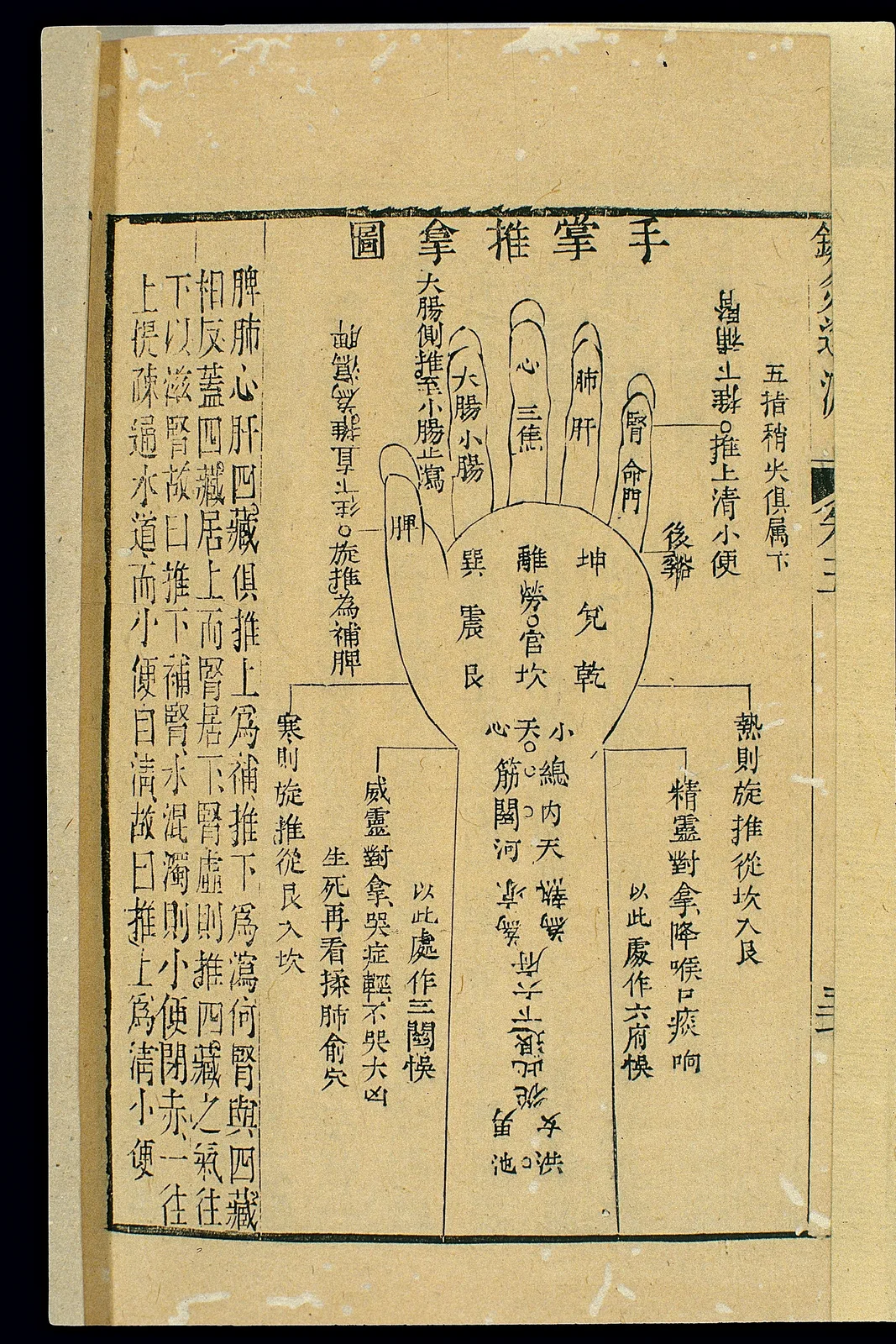
*Tuina teaching illustration. Wellcome Collection. Cropped/resized for web; non-generative.*
Tuina vs "Chinese Massage" on Menus
| Label | Traveler caution |
|---|---|
| 中医推拿 | Often implies TCM-trained therapist in medical or regulated context |
| 保健按摩 / wellness massage | May be non-medical relaxation scope |
| "TCM meridian massage" (English) | Marketing phrase—verify training and claims |
See TCM Massage & Wellness in Beijing for how to choose formats.
What Sessions Often Feel Like
Clothed or draped sessions vary by venue. Hospital tuina may focus on specific regions (neck, back, limbs) with shorter intense work; spa packages add aromatherapy or foot soak cross-sells unrelated to classical tuina.
Speak up about pressure, injuries, and pregnancy before starting—providers should adjust or decline if outside scope.
Safety and Scope (General Awareness)
Tuina is not appropriate for all conditions—acute fractures, severe osteoporosis, open wounds, fever from infection, or recent surgery sites need biomedical clearance, not aggressive manual work.
DragonTrail does not assess individual suitability; this is general traveler caution.
Beijing Options for Visitors
- Tuina massage wellness experience — inquiry-based wellness format
- Hospital outpatient tuina — for existing medical needs with referral/language planning; see TCM Medical Care for Foreigners
- Compare with Cupping and Gua Sha sometimes bundled in wellness menus
Pair relaxation sessions separately from heavy sightseeing days if muscles are already fatigued.
Relation to Acupuncture and Movement
Tuina shares acupoint and meridian vocabulary with Acupuncture but uses hands instead of needles. Tai Chi & Qigong are movement practices—not the same as therapist-applied tuina.
Common Misconceptions
- "Tuina always fixes spine alignment in one visit." Outcomes vary; chronic issues need proper medical assessment.
- "Pain means it is working." Excessive pain can indicate wrong technique or contraindication—stop and communicate.
- "Foot reflexology equals hospital tuina." Different traditions and scope.
FAQ
Is tuina the same as acupuncture?
Both use TCM maps; tuina is manual, acupuncture uses needles—often combined in hospitals for some cases under professional judgment.
Can foreigners book tuina in Beijing without Chinese?
Some wellness experiences offer English coordination via inquiry—confirm when booking tuina wellness.
Will tuina leave marks like cupping?
Usually less marking than Cupping or Gua Sha; gua sha–style scraping may be offered as add-on.
Is tuina medical care?
It can be clinical care in licensed hospital tuina departments, or non-medical wellness elsewhere. Non-medical TCM wellness providers are not permitted to conduct medical diagnosis or treatment—ask which scope applies.
Should I eat before tuina?
Light meal is fine; very full stomach or alcohol before deep abdominal work is uncomfortable—use common sense.
Continue Exploring
- Traditional Chinese Medicine guide
- Acupuncture
- TCM Massage & Wellness in Beijing
- Evidence & Safety
- TCM in Beijing
Sources & Review
- Classical TCM tuina technique frameworks in professional teaching literature
- Wellcome Collection tuina illustrations
- Chinese characters verified
- Author: Chuan Shi
- Last reviewed: September 2026