
| Item | Detail |
|---|---|
| Chinese | 拔罐 (báguàn) |
| Typical mark | Circular or linear bruise-like discoloration from local suction |
| Common styles | Dry cupping; flash cupping; sliding cupping with oil |
| Settings | Hospital TCM; clinics; some wellness venues (non-medical scope differs from clinical care) |
| DragonTrail boundary | No disease-treatment claims; not for self-diagnosis from mark color |
What Cupping Does in Classical Language
TCM teaching describes cupping as releasing stagnation, dispersing cold, or supporting flow along regions such as the back—language tied to pattern differentiation, not microscope findings. Modern explanations often cite local blood flow and fascial stretch; evidence for specific disease claims remains limited and condition-specific. See NCCIH — Cupping.
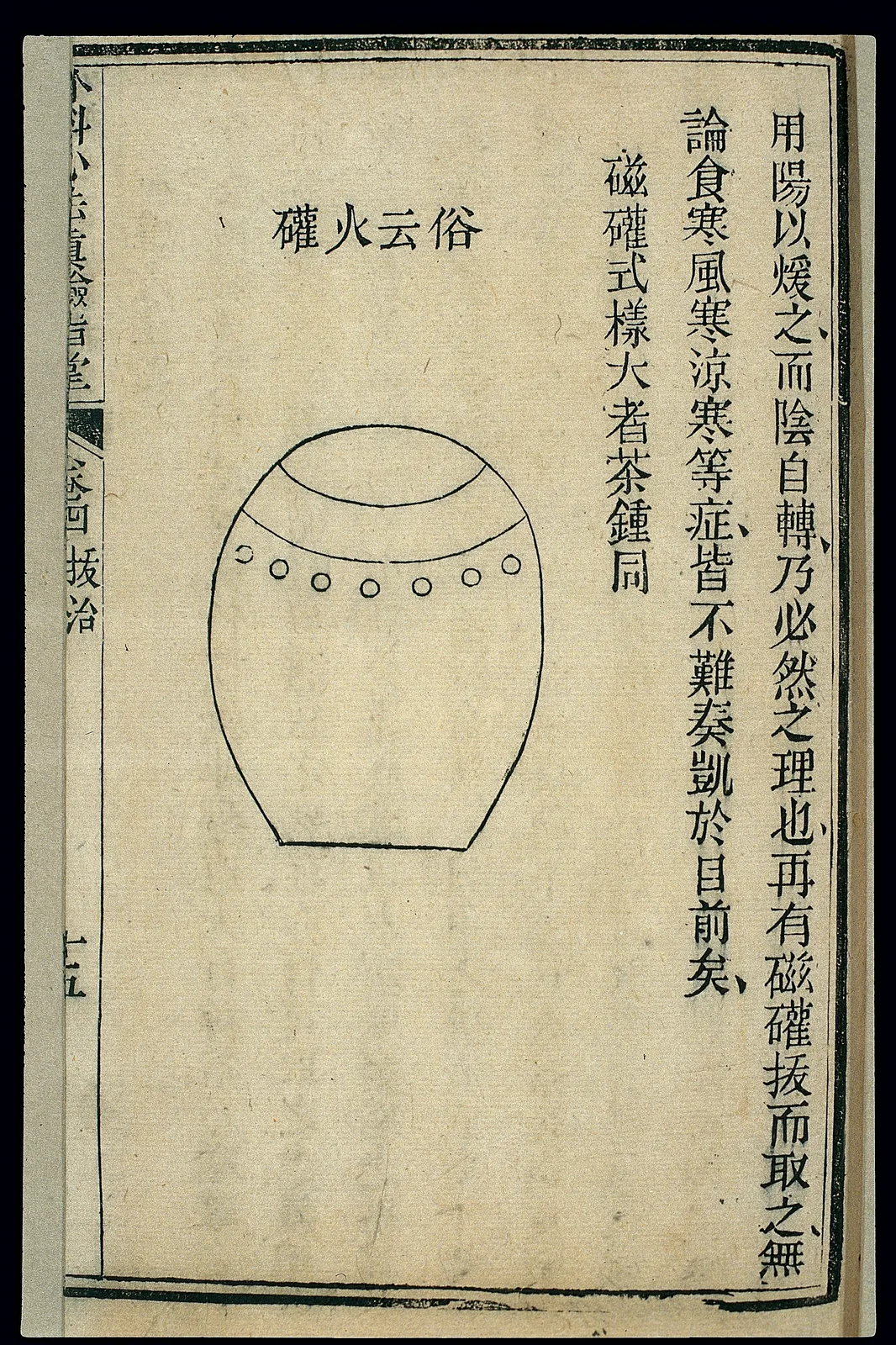
*Cupping vessel in TCM material culture. Wellcome Collection. Cropped/resized for web; non-generative.*
How a Session Usually Works
- Skin is cleaned; oil may be applied for sliding cups.
- Air is removed from cup (fire cupping traditionally heats glass; many clinics use pumps).
- Cups sit minutes until provider removes them.
- Marks fade over days (variable by skin and intensity).
Fire cupping requires trained fire safety; pump cups are common in urban clinics.
Marks: Expected Appearance, Not a Public Diagnosis
Cupping commonly leaves temporary circular marks. Mark color is not a reliable internet diagnosis of "toxins" or organ disease—ignore viral chart memes.
Plan cupping before events where bare shoulders/back photos matter (weddings, pool days).
Safety Considerations (General)
According to NCCIH, cupping can cause side effects including persistent skin discoloration, scars, burns, and infections, and may worsen some skin conditions. Because equipment can become contaminated with blood, improper hygiene between patients can create infection or blood-borne disease risk. Rare severe events have been reported in the medical literature; they are uncommon but are a reason to use reputable settings.
Discuss health history with a qualified provider before cupping if you have bleeding disorders, anticoagulant medication, fragile or broken skin, pregnancy questions, or other medical concerns. DragonTrail does not clear individuals for treatment.
See Evidence & Safety.
Cupping on Tourist Menus
Cupping is often bundled with Tuina or Gua Sha in short wellness packages. Confirm duration, mark visibility, and whether the venue is a licensed medical setting or non-medical TCM wellness (中医养生保健服务). Non-medical wellness providers operate under a different scope from hospital TCM and are not permitted to conduct medical diagnosis or treatment.
TCM Massage & Wellness in Beijing compares formats.
Relation to Other Modalities
| Modality | Skin marking |
|---|---|
| Cupping | Round suction marks |
| Gua sha | Linear petechiae from scraping |
| Acupuncture | Small needle points, usually less bruising |
Common Misconceptions
- "Cupping removes toxins through the skin." Marks are local tissue response—not verified "detox" in biomedical sense.
- "Athletes use it so it must cure injuries." Use in sports is often comfort/recovery context—not proof for all injuries.
- "Anyone can cup at home with Amazon cups." Contraindications and hygiene matter—professional setting preferred.
FAQ
How long do cupping marks last?
Often several days to a week depending on intensity and skin; plan accordingly.
How visible are cupping marks after a session?
Usually obvious circular discoloration on the treated area. Visibility depends on pressure, skin tone, and technique; marks typically fade over days rather than hours.
Does cupping hurt?
Pressure and tightness are common; pain should not be severe—communicate with provider.
Is fire cupping safe?
Trained practitioners use controlled flame; ask about technique if concerned; pump cups avoid flame.
Is cupping acupuncture?
Different tools; sometimes combined in one TCM visit under professional plan in a licensed medical setting.
Continue Exploring
Sources & Review
- NCCIH — Cupping — effectiveness limits and safety (marks, burns, scars, infection, blood-borne disease risk with poor hygiene)
- Wellcome Collection cupping artifacts
- Chinese characters verified
- Author: Chuan Shi
- Last reviewed: September 2026