Quick answer: Permits and altitude for Tibet trips
Most foreign visitors need a Tibet Travel Permit (TTP) arranged through a licensed operator, travel with a licensed guide and approved vehicle, and cannot treat TAR like freestyle independent backpacking.
Altitude is the other half of the plan: Lhasa ~3,650 m as the base, then higher rungs toward Yamdrok / circuit passes, Namtso (~4,700 m+), and Tibet-side Everest via Rongbuk (toward ~5,200 m). Protect acclimatization days — do not rush EBC.
On booked private tours, operators handle permit paperwork; you provide passport details and dates early. Match length to tolerance: Essence 5d vs Classic 8d vs Highlights 10d. Everest = China / TAR north side only, not Nepal.
Permits & altitude at a glance
| Topic | Traveler takeaway |
|---|---|
| Tibet Travel Permit (TTP) | Usual requirement for most foreign visitors; arranged via licensed operator on a booked itinerary |
| Independent freestyle travel | Generally restricted for foreign visitors inside TAR — guide + vehicle is the normal mode |
| China visa vs TTP | Separate layers — a visa (when required) is not the same as TAR travel permission |
| Lhasa altitude | ~3,650 m capital base — protect gentle first days before hard overland mornings |
| Higher rungs | Yamdrok/passes → Namtso ~4,700 m+ → Rongbuk / Tibet-side EBC toward ~5,200 m |
| Who handles paperwork | Operators coordinate TTP (+ route extras when needed) on booked private tours — quote early |
Why permits and altitude belong on the same page
For most foreign visitors, Tibet travel is not a free-range backpacker destination. Licensed arrangements, a Tibet Travel Permit (TTP), and a paced altitude plan usually travel together. Skipping the paperwork conversation and skipping the acclimatization conversation create the same outcome: a trip that cannot start cleanly — or a body that cannot enjoy the monasteries and lakes you came for.
This guide is traveler-facing and planning-level. It is not legal advice, not a medical diagnosis tool, and not a promise that any authority will approve every itinerary. Rules, checkpoints, and medical responses vary. What we can do is explain the usual private-tour shape DragonTrail uses — Essence, Classic, and Tibet-side Everest Highlights — and how operators typically coordinate permits when you book a private plan.
Geography refresher: Tibet Travel Guide. Package roles: tour packages compared. Capital base: Lhasa. Season fit: best time.
Tibet Travel Permit (TTP) — traveler overview
What most foreign visitors need to know
- Entry into the Tibet Autonomous Region (TAR) for most foreign passport holders typically requires a Tibet Travel Permit (TTP) arranged through a licensed travel operator — not a DIY stamp you pick up at the airport on a whim.
- Independent, unescorted travel of the kind common in many Chinese cities is usually restricted for foreign visitors inside TAR. Expect a licensed guide and approved vehicle arrangement as the normal operating mode for private tours.
- The TTP is commonly processed against a confirmed itinerary and group roster. Last-minute freestyle changes ("we will just wander west tomorrow") are not how the system is designed to work.
- On a booked DragonTrail private tour, operators handle the permit paperwork as part of the trip setup. Your job is mainly accurate passport details, travel dates, and agreeing the route shape early enough for processing.
What this page does not claim
- Exact processing times that never change
- Guaranteed approval for every nationality, route, or date
- That a China visa alone equals Tibet entry permission
- DIY "how to forge your own independent tour" instructions
Treat the TTP as a coordination product, not a souvenir stamp. Share passport nationality and intended geography (Lhasa-only vs Classic vs Tibet-side Everest) when you request a quote.
Passport, China visa, and Tibet permission (high level)
Think in layers, not one magic document:
- Passport validity and any entry rules that apply to you as a foreign national entering China.
- China visa / entry permission as required for your nationality and itinerary (rules differ; this is not a visa advisory).
- Tibet Travel Permit and related local arrangements for TAR travel under a licensed operator.
- Additional local permissions that can apply on certain routes (see Aliens' Travel Permit / sensitive areas below) — especially when itineraries push toward Everest-approach towns or farther west.
A valid China visa (when required) does not automatically authorize freestyle Tibet travel. Conversely, a TTP conversation assumes you can enter China under the rules that apply to you. DragonTrail quotes assume you will handle passport/visa eligibility with your own counsel or embassy sources; we coordinate the TAR tour + permit side once dates and nationality are clear.
Not legal advice. Embassies, airlines, and border officers have the final word on entry. If your nationality has special restrictions or your route includes sensitive zones, say so early in the quote so the operator can design a realistic plan — or recommend Essence / Classic shapes that stay inside more common corridors.
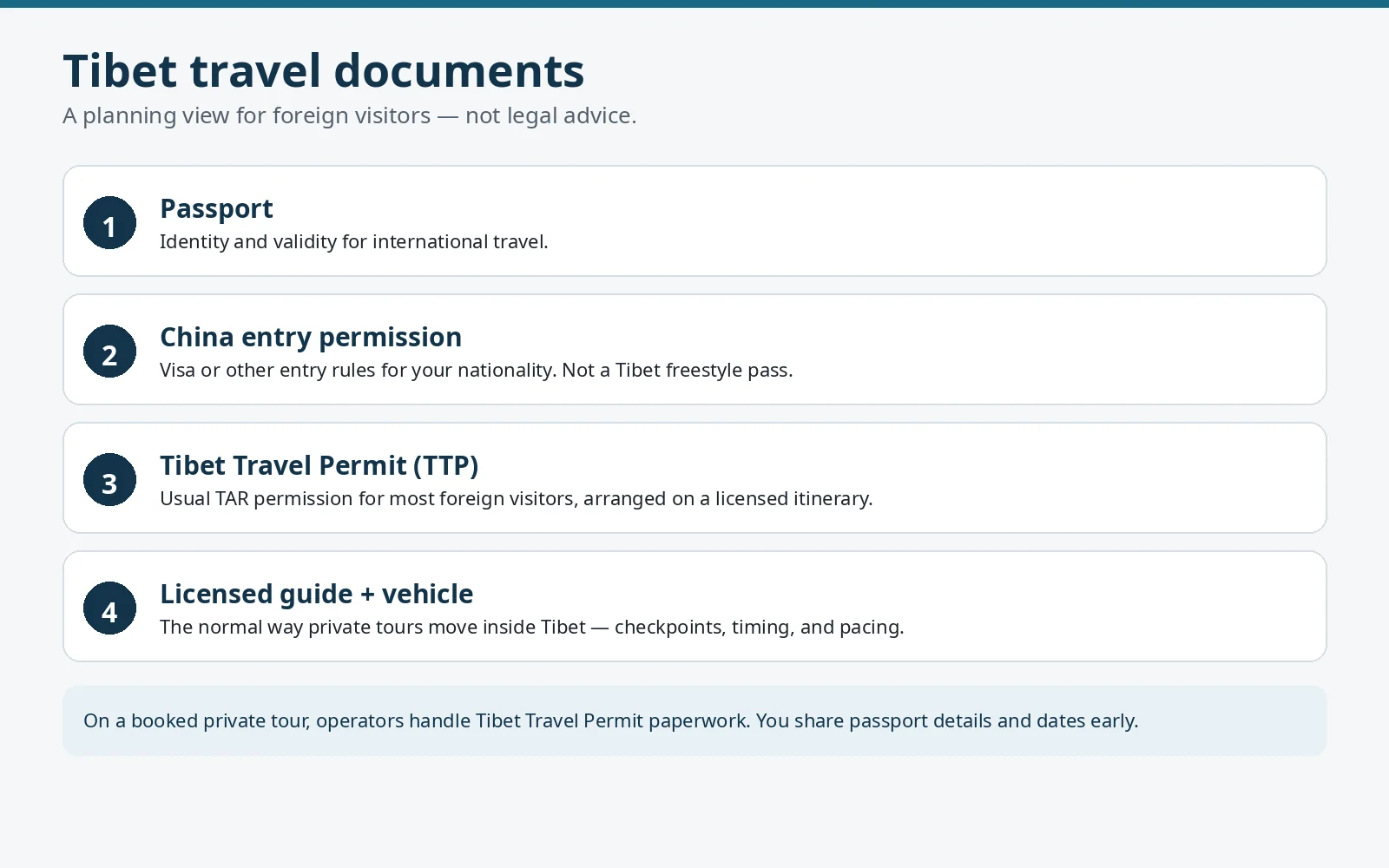
Document layers (planning view)
| Layer | What it roughly covers |
|---|---|
| Passport | Identity and validity for international travel |
| China entry permission / visa | Entering China under rules for your nationality — not a Tibet freestyle pass |
| Tibet Travel Permit (TTP) | TAR travel under licensed operator itinerary for most foreign visitors |
| Additional local permissions | May apply on Everest-approach / sensitive corridors — operator confirms for your dates |
| Guide + vehicle arrangement | Normal operating mode for foreign private tours in TAR |
Guide, vehicle, and "why can't I just rent a car?" norms
For most foreign visitors on TAR itineraries:
- A licensed guide accompanies the itinerary as the normal private-tour mode.
- Travel between sites typically uses an approved private vehicle with a driver who knows plateau roads, checkpoints, and monastery timing.
- Freestyle hitchhiking, self-drive rentals for foreigners, and "we will figure it out in Barkhor" independent loops are not how a private Tibet trip works.
That sounds restrictive until you remember what the plateau asks of a first-timer: altitude, long transfer days, ticket windows, and monastery etiquette. A private guide + vehicle is both a regulatory norm and a practical safety/pacing tool. Compare styles: private vs group.
Private does not mean you invent illegal DIY routes. It means your small group moves on an agreed itinerary with paperwork already coordinated — and can exit a viewpoint early when someone feels altitude pressure.
Aliens' Travel Permit & sensitive / military-area notes (overview only)
Some routes beyond ordinary Lhasa sightseeing — notably stretches toward Tibet-side Everest (Tingri / Rongbuk / north Base Camp viewpoint) and certain western corridors — can involve additional local permissions sometimes discussed under names like Aliens' Travel Permit or area-specific approvals. Exact names and checkpoint practice can change; treat this as awareness, not a DIY checklist.
Practical traveler stance
- If your plan stays inside a well-worn Lhasa Essence or standard Classic southern circuit, your operator usually folds ordinary TTP + guide/vehicle coordination into the booking.
- If you want Tibet-side Everest or farther-west custom geography, expect the operator to confirm what extra paperwork or routing constraints apply for your dates and nationality before locking hotels.
- Military / sensitive areas are not tourist playgrounds. Do not plan freestyle photography walkabouts near restricted installations. Follow guide instructions at checkpoints.
We do not publish fake "always required / never required" matrices here. Ask in the quote. Everest on these trips means the China / TAR north side via Rongbuk — not the Nepal EBC trek. Place guide: Everest Base Camp Tibet.
What operators handle on a booked private tour
On a confirmed DragonTrail private Tibet plan, the usual division of labor looks like this:
Operator / licensed partners typically coordinate
- Tibet Travel Permit application against your roster and itinerary
- Licensed guide and private vehicle for the agreed days
- Hotel nights in Lhasa and on-circuit towns as quoted
- Ticket / visit timing guidance for major sites where arrangements are part of the tour
- Additional local permissions when the agreed route requires them (e.g. Everest-approach shapes)
You typically provide / handle
- Accurate passport bio-page details and travel dates early enough for processing
- China entry eligibility (visa or other permission as required for your nationality)
- Honest health context relevant to altitude (so pacing can be designed — not a medical exam)
- Travel insurance that matches your risk tolerance for high-altitude trips
- Showing up with the documents your operator told you to carry (passport, permit copies as instructed)
Lead times matter. Rushing a TTP while already holding non-refundable multi-leg flights into LXA is how stress starts. Share nationality + preferred geography first; lock airfare after the operator confirms the permit path looks workable for your window. Quote entry: Tibet private tours.
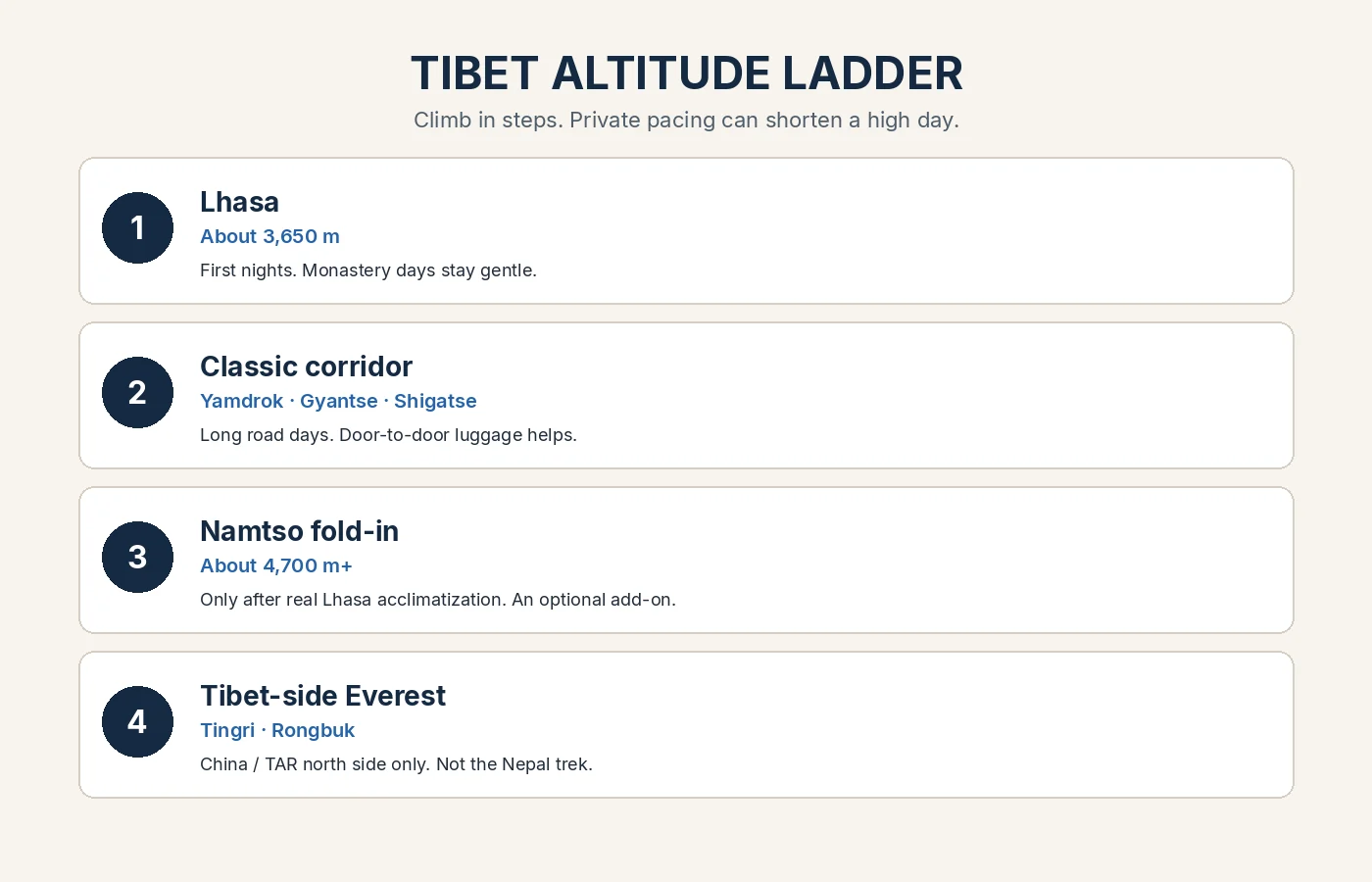
Altitude ladder: Lhasa → lakes → Rongbuk
Approximate planning altitudes (rounded; exact viewpoint GPS varies):
| Place / band | Approx. elevation | Why it matters |
|---|---|---|
| Lhasa capital | ~3,650 m | Acclimatization base for almost every first trip |
| Yamdrok viewpoint / southern passes | Often ~4,000 m+ feel | Wind + short outdoor blocks after Lhasa nights |
| Gyantse / Shigatse corridor | High plateau towns | Overnight steps on Classic — still not "sea level recovery" |
| Namtso / Tashi Dor area | ~4,700 m+ | Northern high-lake day — serious AMS risk if rushed |
| Tingri / Rongbuk / Tibet-side EBC approach | Toward ~5,000–5,200 m viewpoint territory | Cold + thin air; China/TAR north side only |
Ladder logic: spend real nights in Lhasa before the first hard overland morning. Classic adds southern-circuit height after that base. Namtso and Tibet-side Everest are higher rungs — rewarding when paced, miserable when stacked onto a jet-lagged arrival day.
Place guides: Lhasa · Yamdrok–Gyantse–Shigatse · Namtso Lake · Everest Base Camp Tibet.
Altitude rung vs product length
| Product | Altitude story |
|---|---|
| Lhasa Essence (~5 days) | Capital ~3,650 m focus — best first-timer buffer; no EBC pressure |
| Classic Circuit (~8 days) | Lhasa nights then Yamdrok–Gyantse–Shigatse; higher day stops, paced |
| Everest Highlights (~10 days) | Adds Tingri / Rongbuk / Tibet-side EBC (China/TAR north side only) after ladder |
| Namtso fold-in | ~4,700 m+ day — only after real acclimatization; winter caveat |
| Rush itinerary (< buffer) | High AMS + permit-stress risk — prefer longer or Essence-shaped |
Acclimatization days that actually protect the trip
Rule of thumb for first-timers: protect gentle first Lhasa time after flight or train arrival before Potala marathons or 6 a.m. circuit departures. Many private Essence and Classic shapes use the arrival day plus at least one capital sightseeing day as the on-ramp — exact layouts vary; see 5-day Lhasa Essence and 8-day Classic.
What "gentle" means in practice
- Airport / train pickup, hydrate, light dinner, early night — not Barkhor shopping until midnight
- Short outdoor blocks with shade and a vehicle meeting point
- Climb stairs slowly; skip bravado races up Potala approaches on day one
- Alcohol is a poor altitude friend on arrival night
- Tell your guide early if headache, unusual fatigue, or breathlessness appears
What fails
- Landing at LXA and driving toward Namtso or Everest the next morning "to save days"
- Stacking every monastery ticket into the first 24 hours
- Assuming fitness at sea level equals immunity at 3,650 m+
- Hiding symptoms because you "don't want to ruin the group day" — private tours exist partly so the day can flex
Children, seniors, and anyone with relevant medical history need an even more conservative ladder — discuss before you buy Highlights. This page is planning voice, not medical advice. Seek professional care for decisions about medication, oxygen, or whether high-altitude travel is appropriate for you.
Acute mountain sickness (AMS) — warning signs to take seriously
Common early signals people report at altitude include headache, nausea, unusual fatigue, loss of appetite, dizziness, and poor sleep beyond ordinary jet lag. Worsening symptoms, confusion, severe breathlessness at rest, or inability to walk a straight line are red flags — not "push through" moments.
Traveler actions that help
- Tell your guide immediately — do not tough it out silently.
- Stop ascending; rest; hydrate; keep warm.
- Agree a shorter outdoor block or a return to lower lodging when the plan allows.
- Seek medical help when symptoms worsen or neurological/respiratory red flags appear.
Private pacing cannot invent oxygen in your blood, but it can shorten a Namtso shore walk, delay a circuit departure, or keep someone in Lhasa while others adjust — if you speak up. Group coach schedules are less forgiving; see private vs group.
Who should choose Essence 5-day vs rushing toward EBC
| Traveler profile | Better default | Why |
|---|---|---|
| First high-altitude trip, uncertain tolerance | Lhasa Essence ~5 days | Capital sights + real acclimatization without Namtso/EBC pressure |
| Wants lakes + monasteries, solid Lhasa buffer | Classic ~8 days | Southern circuit after capital nights — Yamdrok–Gyantse–Shigatse |
| Clear goal of Tibet-side Everest views + enough nights | Highlights ~10 days | Tingri / Rongbuk / north Base Camp viewpoint after ladder — China/TAR side only |
| "We only have four days total including flights" | Reconsider timing or stay Essence-shaped | Compressing EBC into a tiny window is how AMS and disappointment pair up |
| Kids / seniors / recent illness | Essence or softened Classic; Highlights only with eyes open | Higher rungs need honest health + pacing conversations |
Rushing to EBC usually means skipping Lhasa buffer nights, stacking high sleeping elevations too fast, or treating the north-face viewpoint as a same-week checkbox after a red-eye into LXA. That pattern fails often enough that we would rather quote a stronger Essence / Classic than a brittle Highlights.
Everest here is never the Nepal trek. If your dream is the Nepal side, that is a different country and product — do not buy this Highlights shape expecting Lukla trails.
Decision tree: permits × altitude × product
- Foreign passport + TAR plans? → Assume TTP + licensed guide/vehicle; quote early with nationality.
- Lhasa monasteries only? → Essence; widest altitude comfort; still need permit coordination.
- Yamdrok + Gyantse + Shigatse? → Classic after Lhasa nights; southern circuit guide.
- Namtso craving? → Extra high rung; prefer after acclimatization; winter access caveat — Namtso.
- Tibet-side Everest must-see? → Highlights length + clearer-window bias + extra permission awareness — EBC Tibet.
- Nyingchi or Kailash? → Custom quote only — optional geography, not a half-day from Barkhor, and not part of Essence, Classic, or Highlights.
- Feeling rough on day two? → Speak up; shorten; do not invent a hero drive to 5,000 m.
Overview: itinerary. Season interaction: best time.
Documents checklist (practical, not legal)
Carry what your operator instructs. A typical private-tour kit includes:
- Passport (validity per your entry rules)
- China visa / entry permission as required for you
- Tibet Travel Permit copy / digital / paper forms as the operator specifies for checkpoints and hotels
- Any additional local permit paperwork issued for your route
- Hotel and emergency contacts your guide shares
- Travel insurance details and any personal medication in original packaging
Photograph key pages in an offline phone folder and keep paper backups when instructed. Checkpoint staff may want originals. Do not post permit scans publicly.
Arrival modes and first-night altitude
Flight into Lhasa (LXA) jumps you to ~3,650 m in hours — spectacular and physiologically abrupt. Protect the evening.
Train onto the plateau is slower and still ends high; do not treat soft-sleeper romance as full acclimatization credit for a Namtso dawn the next day.
Either way: hydrate, light activity, early sleep, guide check-in. Airport pickup details fold into quotes on Tibet private tours.
Sleeping elevation vs day-trip elevation
A common planning mistake: "We only visit Namtso for a few hours, so altitude does not count." Day-trip elevation does count for symptoms even if you sleep lower later — and some Classic / Highlights shapes also raise sleeping elevation on circuit or Tingri nights. Ask your quote which nights sit where. Conservatism on sleeping elevation is one reason Highlights wants more calendar days than Essence.
Medication, oxygen, and clinics (boundaries)
Some travelers discuss altitude medication with their clinicians before departure. Some itineraries carry canned oxygen as a comfort tool. Neither replaces descent when true AMS is progressing, and neither is something this page prescribes. Talk to a qualified clinician about your personal risk. On the ground, follow your guide toward appropriate local medical help when red flags appear. DragonTrail does not diagnose over chat.
Photography, drones, and checkpoint etiquette
Monasteries set their own photography rules; follow them. Checkpoints and sensitive zones are not places to film officials or installations. Drones are often restricted or banned — assume no until your operator confirms otherwise for a specific site. Courtesy at permits desks speeds everyone behind you.
How this page pairs with private vs group
Permit coordination exists in both private and quality group products; the difference is pacing leverage. Private vehicles can turn around at a pass when a traveler deteriorates. Rigid coach seats cannot invent that flexibility mid-transfer. If altitude anxiety is part of why you are reading this page, read private vs group next — then choose Essence / Classic / Highlights length honestly.
Lead-time and quote hygiene
Share, in one note when you inquire:
- Passport nationality (and second nationality if relevant)
- Preferred month and night count
- Essence vs Classic vs Tibet-side Everest priority
- Any medical or mobility constraints that affect altitude ladder
- Whether Namtso or west/custom geography is a must
We confirm permit path + altitude-aware pacing before treating the plan as locked. Plans stay quote-led — no floor prices, and no promise that every permit will be approved.
What this page intentionally does not do
We do not publish DIY illegal itineraries, forge-your-own-permit tutorials, medical prescriptions, or guarantees that every authority will approve every route. We do not conflate Tibet-side EBC with Nepal. We do not treat Kailash or Nyingchi as silent half-days inside Essence. Practical norms + speak early + pace the ladder beats false certainty.
Permit- and altitude-aware trip sketches
Still funnel to Essence / Classic / Highlights. Operators coordinate TTP on booked private tours. Everest = Tibet / China north side only — not Nepal.
First-timer altitude-safe Essence
Lhasa ~3,650 m capital focus with real acclimatization — 5-day Essence. TTP + guide/vehicle via operator.
Paced Classic after Lhasa nights
Capital buffer then Yamdrok–Gyantse–Shigatse — 8-day Classic. Speak up early on AMS signs.
Honest Tibet-side Everest Highlights
Only with enough nights for the ladder + extra route paperwork awareness — 10-day Highlights. China/TAR north side via Rongbuk; not Nepal.
Get a private Tibet plan with permit coordination
Share passport nationality, travel month, and whether Lhasa-only, the classic circuit, or Tibet-side Everest matter. We coordinate TTP paperwork on booked private tours and pace the altitude ladder before quoting.
Plan your Tibet trip
5 / 8 / 10 day decision framework
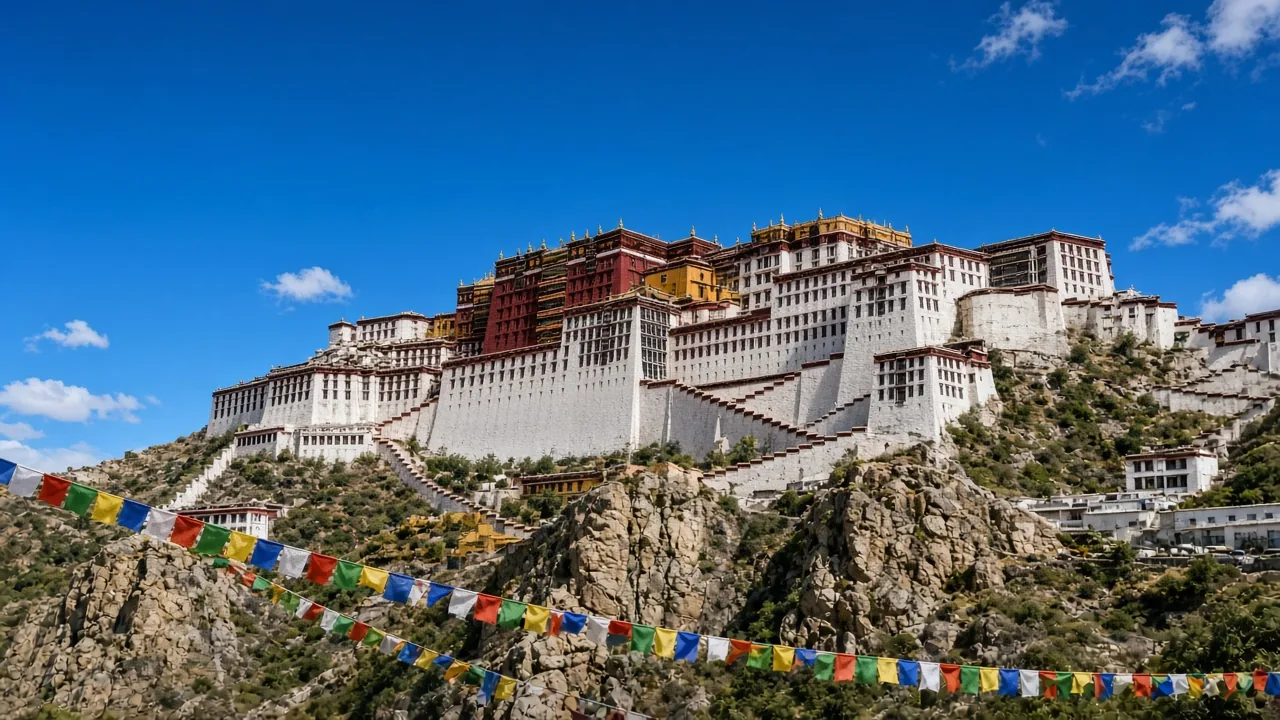
Capital altitude buffer — safest first rung
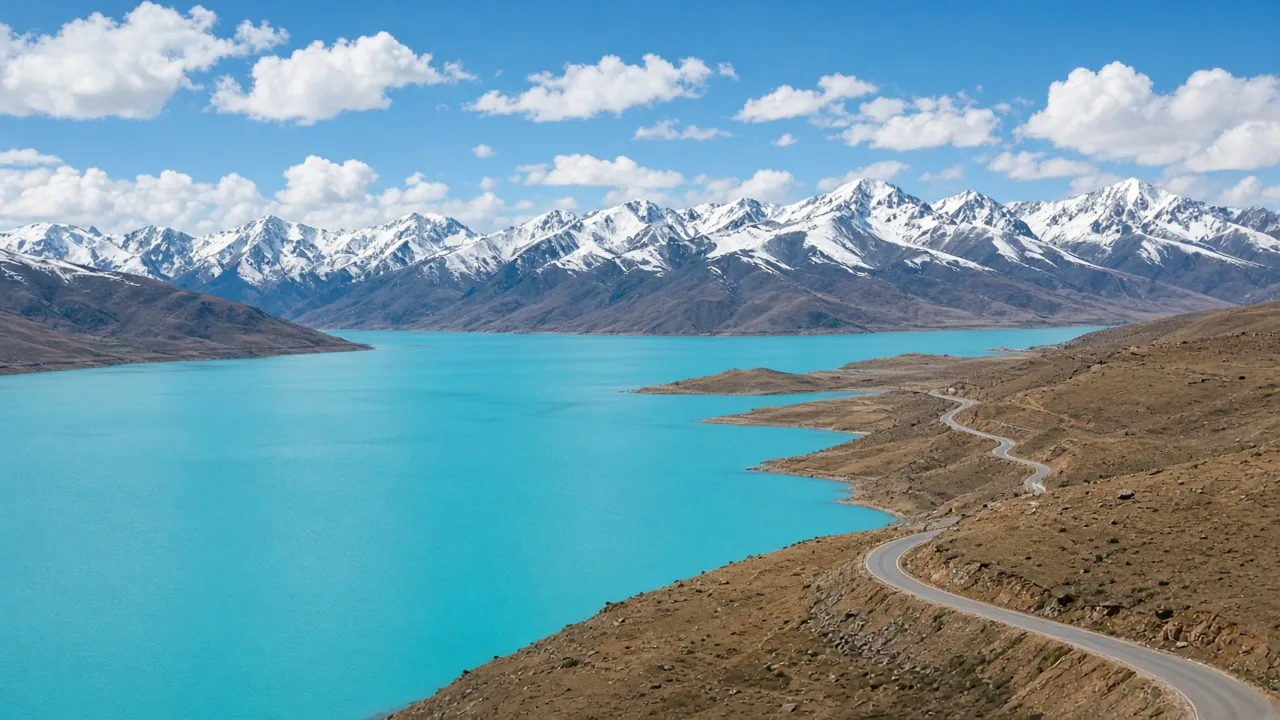
Yamdrok–Gyantse–Shigatse after Lhasa nights
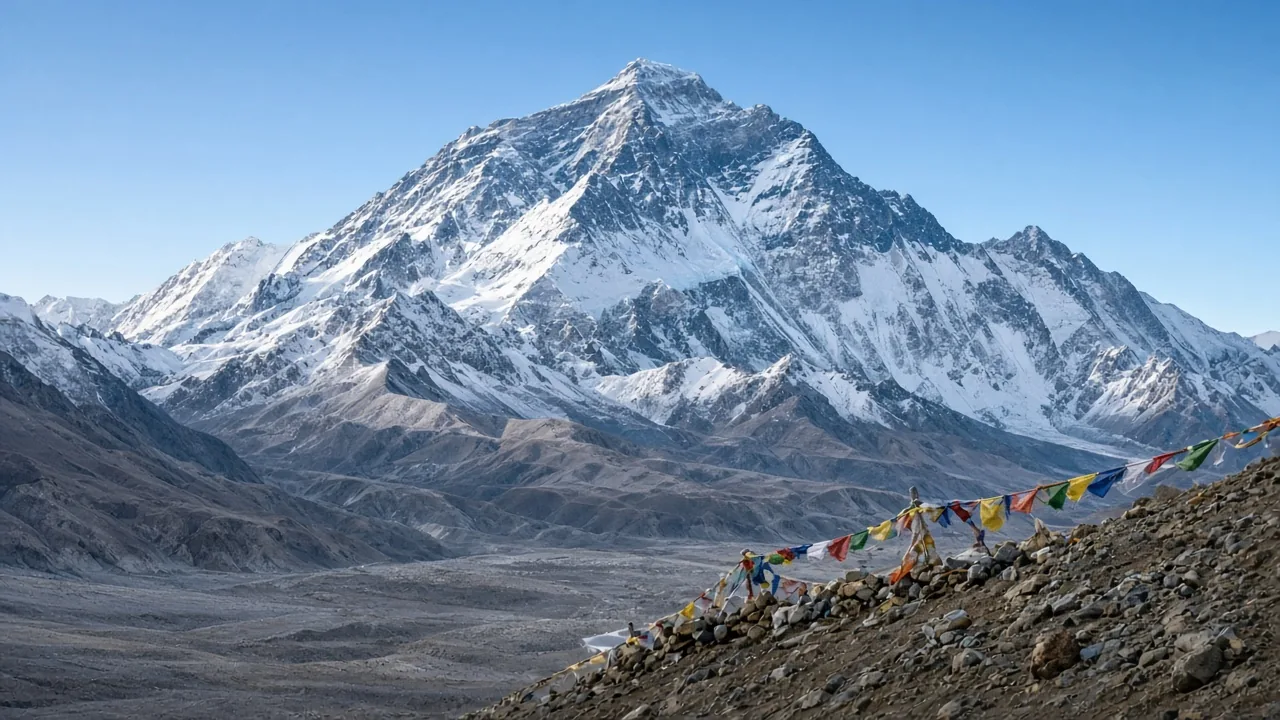
Tingri / Tibet-side EBC — only with ladder nights
~3650 m capital base & acclimatization
China / TAR north side only — not Nepal
~4700 m+ northern lake — pace after Lhasa
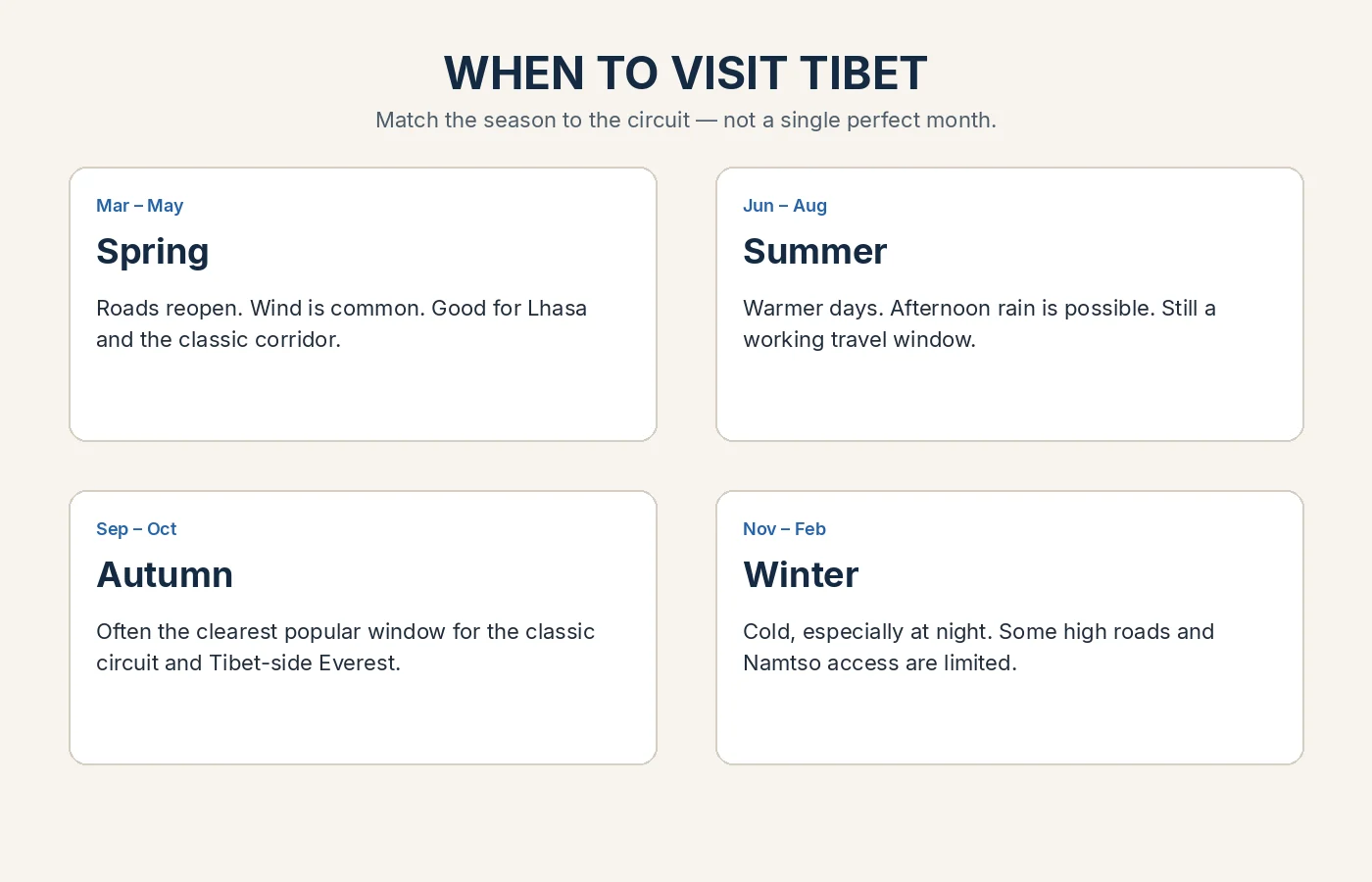
Season × circuit × EBC windows
Tibet Permits & Altitude FAQ
- Most foreign visitors need a Tibet Travel Permit (TTP) arranged through a licensed travel operator for travel inside the Tibet Autonomous Region. Independent freestyle travel of the kind common elsewhere in China is usually restricted. On a booked private tour, operators typically handle the permit paperwork against your passport details and agreed itinerary — share nationality and dates early when you request a quote.
- No. Think in layers: passport and China entry permission (visa or other rules for your nationality) are separate from the Tibet Travel Permit and related local arrangements for TAR travel. A China visa, when required, does not by itself authorize freestyle Tibet travel. This is planning guidance, not legal advice — embassies and border officers have the final word on entry.
- For most foreign visitors, licensed guide and approved vehicle arrangements are the normal operating mode inside TAR — both a regulatory norm and a practical tool for checkpoints, monastery timing, and altitude pacing. Self-drive freestyle loops are not how these private Tibet trips work. Private tours still follow an agreed itinerary; they simply give your small group more pacing leverage than a rigid coach.
- Lhasa sits around 3,650 m. Many first-timers feel some altitude effect even if they are fit at sea level. Protecting gentle first capital days before hard overland mornings toward Yamdrok, Namtso (~4,700 m+), or Tibet-side Everest (toward ~5,200 m viewpoint territory) reduces the chance that AMS cuts the trip short. This is not medical advice — talk to a clinician about your personal risk.
- Common early signals include headache, nausea, unusual fatigue, loss of appetite, dizziness, and poor sleep beyond ordinary jet lag. Worsening symptoms, confusion, severe breathlessness at rest, or inability to walk normally are red flags — tell your guide, stop ascending, rest, and seek medical help when needed. Do not tough it out silently to "save the group day."
- If this is your first high-altitude trip or your calendar is tight, prefer Lhasa Essence (~5 days) or a paced Classic (~8 days) over compressing Tibet-side Everest into too few nights. Highlights (~10 days) exists for travelers who want Tingri / Rongbuk / north Base Camp viewpoints after a real altitude ladder. Everest here means the China / TAR north side only — not the Nepal trek.
- Some routes beyond ordinary Lhasa sightseeing — including Tibet-side Everest approaches via Tingri / Rongbuk — can involve additional local permissions. Exact names and practice can change. Your operator confirms what applies for your dates and nationality when you book Highlights or similar shapes. This page stays overview-level; we do not publish DIY permit matrices.
- On a booked private tour, licensed operator partners typically coordinate the Tibet Travel Permit and any agreed route extras, plus guide and vehicle. You provide accurate passport details and dates early, handle China entry eligibility for your nationality, and carry the documents your operator instructs. Quote-led planning starts on the Tibet tours page — no floor prices on this guide.
Plan a permit-ready, altitude-smart Tibet trip
Open the tours page once nationality, dates, and Essence / Classic / Highlights length look right — quote-led, operators handle TTP on booked private tours.