
Tibet at a glance
| Good first capital trip | 5 days (Lhasa Essence) |
|---|---|
| With classic southern circuit | ~8 days (Classic Circuit) |
| Circuit + Tibet-side Everest | ~10 days (Everest Highlights) |
| Main cultural hub | Lhasa — Potala, Jokhang, Barkhor |
| Classic overland spine | Yamdrok → Gyantse → Shigatse |
| Northern lake add-on | Namtso (separate axis from Lhasa) |
| Highest western push | Tingri → Rongbuk → EBC Tibet side |
| Custom / later-wave | Nyingchi; Mount Kailash / west Tibet |
| Getting around | Hosted private vehicle for circuit & Everest; paced Lhasa walking |
Lhasa, the classic circuit, Namtso and Everest: understand the geography first
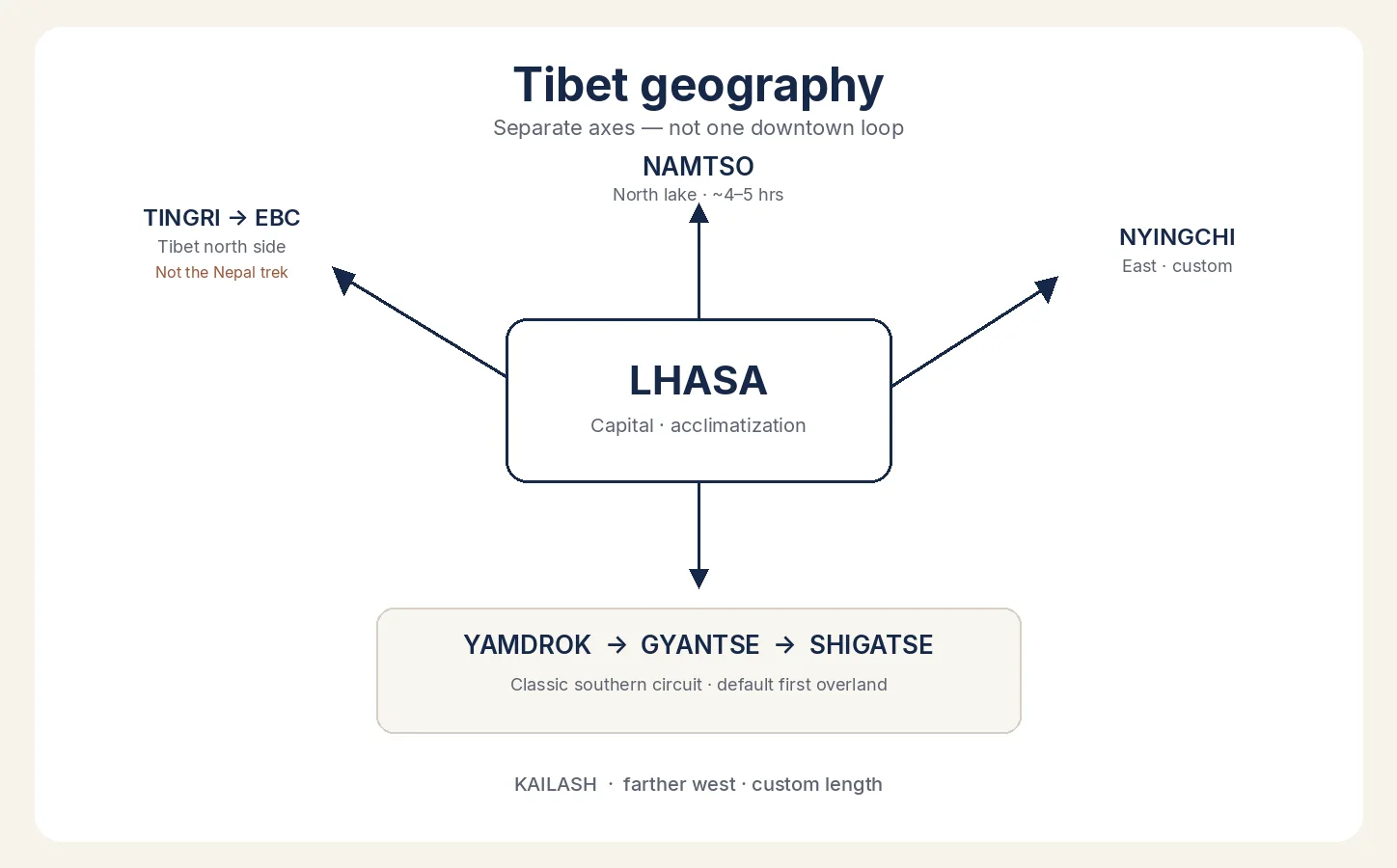
"Tibet" is often used as if it were one compact destination. For planning, treat these as separate pieces:
Lhasa is where almost every first trip begins. You fly into Lhasa Gonggar Airport (LXA) or arrive by train, then spend the first days acclimatizing around Potala Palace, Jokhang Temple, and the Barkhor circuit. Most monastery tickets, hotel density, and English-speaking guide options concentrate here.
The classic southern circuit runs west and south of Lhasa: Yamdrok Lake viewpoint days, the fortress town of Gyantse, then Shigatse (Tashilhunpo Monastery) before returning to Lhasa — or continuing west toward Tingri if Everest is on the plan. This is the spine of a first overland Tibet trip that stays short of the highest Everest approach.
Namtso Lake sits north of Lhasa on a different road axis. It is a high-altitude lake day (or overnight) that competes with southern-circuit days for time — not a "half-day add-on" from a Barkhor hotel.
Tingri and Tibet-side Everest Base Camp continue west from Shigatse toward Rongbuk Monastery and the north / China-side Everest Base Camp viewpoint area. This is not the Nepal trek from Lukla. Same mountain; different country, different logistics, different altitude ladder.
Nyingchi (east Tibet, lower and greener) and Mount Kailash / west Tibet are real trips with real demand — but they are custom or later-wave extensions, not part of the default Classic Circuit. Fold them in only when you have extra days and a clear reason.
Not sure how many days you need? Use the sample itineraries below, then request a private plan on the Tibet private tours page.
Adding Namtso or Tibet-side Everest changes the shape of the trip. They are not downtown Lhasa half-days.
Lhasa, circuit, Namtso or Everest?
None is automatically 'the Tibet trip' — match nights to altitude tolerance and day budget.
| Base | Better for |
|---|---|
| Lhasa | Airport/train arrival, acclimatization, Potala/Jokhang/Barkhor, first/last nights |
| Gyantse / Shigatse | Classic circuit depth — fortress town, Tashilhunpo, hinge toward west |
| Namtso area | High northern lake scenery — needs day budget after Lhasa sleep |
| Tingri / Rongbuk | Tibet-side Everest approach — highest nights; not the Nepal trek |
| Lhasa only | Trips of ~5 days, or travelers who skip long overland |
If you have eight or more days, the better question usually is not "Lhasa or Everest?" but how to protect acclimatization days so Potala, the southern circuit, and any high lake or Everest approach all get proper time.
How many days do you need in Tibet?
5 days — Lhasa Essence
A strong first capital length: arrive LXA, acclimatize with light walking, see Potala / Jokhang / Barkhor with paced mornings, and keep an optional nearby valley or monastery day. You will not have a comfortable southern-circuit overnight loop or a Tibet-side Everest approach. This matches our Lhasa Essence private sample.
8 days — Classic Tibet Circuit
The realistic first overland shape for most travelers: Lhasa acclimatization plus Yamdrok → Gyantse → Shigatse and return. Monasteries, lake viewpoints, and fortress towns without pushing to Tingri / Rongbuk altitude. This is our Classic Tibet Circuit shape — the default "first Tibet" product for many visitors.
10 days — Tibet Everest Highlights
Suitable if you want China-side Everest Base Camp without turning every day into a transfer day. You still need Lhasa acclimatization, then the southern circuit or a Shigatse corridor, then Tingri → Rongbuk / north Base Camp, with buffer before flying out. This is our Tibet Everest Highlights shape.
12+ days
Room for Namtso as a dedicated overnight, a slower monastery focus, or custom folds such as Nyingchi or (with far more planning) Kailash / west Tibet. Those are quote-led extensions — not the default Classic card.
Your arrival altitude response and permit timeline matter almost as much as your number of nights. A traveler who needs an extra quiet Lhasa day after a rough first night has a very different eight-day trip from someone who sleeps well at 3,650 m from day one.
Season also matters: summer monsoon can mean cloudy mountain views; winter is clearer but colder and can tighten high-road access. Confirm the window for *your* travel year before locking non-refundable hotels west of Shigatse.
The simplest first-time Tibet route
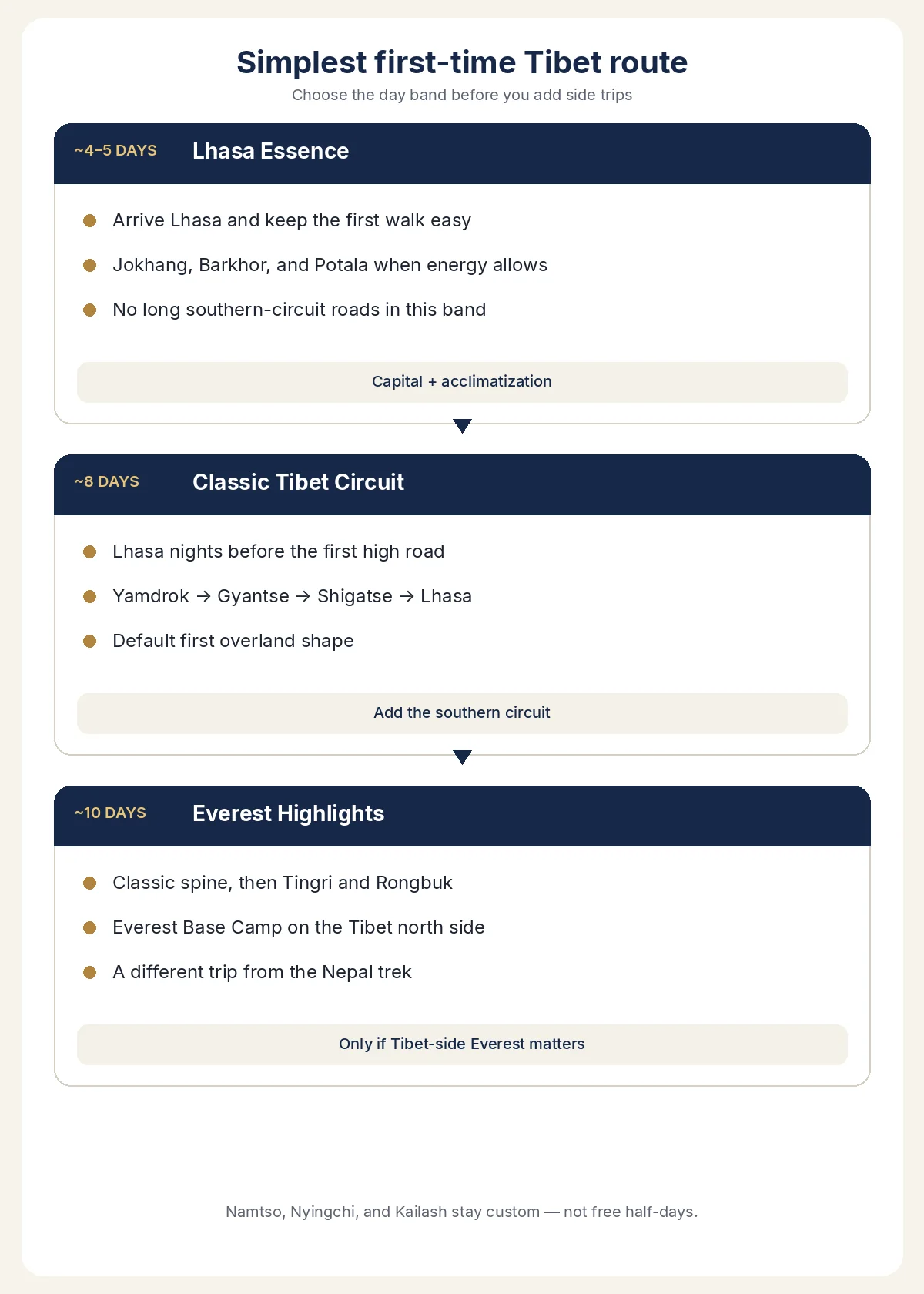
For many first visits, the cleanest logic is:
- Land in Lhasa and use the first two days for acclimatization, Potala (once tickets/timing work), Jokhang, and Barkhor walking at an easy pace.
- Decide early whether the classic southern circuit is enough, or whether Tibet-side Everest is a must. If Everest matters, protect Tingri / Rongbuk nights and do not squeeze them into the last 36 hours before an international flight.
- Add Namtso only if lake scenery is a primary goal and you still have altitude buffer after Lhasa — it is a different road axis from Yamdrok.
- Leave Nyingchi and Kailash for a custom quote unless you already know you have the days and the motivation.
You do not need to visit every famous name on one trip. A well-paced eight-day Classic Circuit often satisfies travelers who care more about monasteries and Yamdrok than about standing at the north Everest viewpoint.
Lhasa essentials: Potala, Jokhang, Barkhor and acclimatization
Lhasa is both the cultural center of a first Tibet trip and the altitude on-ramp. Treat the first 48 hours as health-first, sightseeing-second.
Potala Palace
The hillside palace complex is the postcard of Lhasa — and a timed, ticketed visit. Go when you have slept at least one night in the city if possible; stairs and elevation inside the complex punish rushing. Pair with a quiet afternoon rather than stacking three heavy sites the same morning.
Jokhang Temple and Barkhor
Jokhang is the spiritual heart for many pilgrims; the Barkhor kora (circuit) around it is where you feel daily Lhasa life — prayer wheels, shops, incense, and continuous walking traffic. Early morning or later afternoon often feels calmer than midday tour peaks.
Acclimatization habits that actually help
- Drink water, skip alcohol the first nights, and sleep earlier than you think you need.
- Prefer gradual walking over hero gym sessions or long runs.
- Tell your guide or driver early if headache, nausea, or unusual fatigue appears — pacing changes are normal, not a failure.
- Keep the first dinner simple; heavy late meals plus altitude is a rough combo.
Other Lhasa days worth protecting
Norbulingka, local monasteries such as Drepung or Sera (debate courtyards when in session), and nearby valley viewpoints can fill Essence itineraries without demanding a long overland. They are better as optional depth than as mandatory checklist items that steal sleep.
Classic circuit: Yamdrok, Gyantse and Shigatse
The southern overland loop is the backbone of Classic Tibet Circuit planning. It answers "first Tibet beyond Lhasa" without committing to the highest Everest approach.
Yamdrok Lake
A high turquoise lake south of Lhasa, usually visited as a viewpoint and lakeside stretch on the way toward Gyantse. Weather decides how much of the color you see — clear days are spectacular; cloudy days are still atmospheric. Build photo stops into the road day rather than treating the lake as a five-minute pull-off.
Gyantse
A compact historic town famous for the Dzong (fort) hillside and the Pelkor Chode / Kumbum stupa-temple complex. Gyantse rewards a slower pace: fortress views, monastic art, and a town scale that feels different from Lhasa. Overnight here (or a long day with an early start) beats a blur of tick-box stops.
Shigatse
Tibet's second city and home of Tashilhunpo Monastery. Shigatse is both a cultural day and a logistics hinge: from here you either return toward Lhasa to close a classic loop, or continue west toward Tingri if Tibet-side Everest is on the plan.
How the Classic shape usually feels
- Lhasa sleep and monastery days first
- One scenic road day anchored on Yamdrok
- Gyantse depth
- Shigatse / Tashilhunpo
- Return to Lhasa with a buffer before departure
Private vehicles help on mountain passes, luggage moves, and flexible photo timing — but they do not erase pass altitude or long road hours. Honest day counts matter more than optimistic driving estimates.
Namtso Lake: when it is worth the detour
Namtso is one of Tibet's great sacred lakes — a wide, high, often windy shoreline north of Lhasa. It is also a competing use of scarce trip days.
Consider adding Namtso if:
- you have extra days beyond a tight Classic Circuit;
- high lake landscape is a primary reason for the trip;
- your group has already slept well in Lhasa and can handle another altitude step;
- you prefer a Namtso overnight (or a very early-out / late-back day) rather than a rushed turnaround.
Consider skipping or postponing Namtso if:
- you only have five Essence days in Lhasa;
- Yamdrok + Gyantse + Shigatse already fill an eight-day Classic;
- Tibet-side Everest is the non-negotiable western goal and days are scarce;
- someone in the group is still struggling with Lhasa altitude.
Namtso is not "on the way" to Gyantse. It sits on a different road axis. A private itinerary should choose lake priority deliberately — Classic southern circuit versus Namtso north — rather than zigzagging both at the cost of sleep.
When Namtso is included, protect warm layers, sun protection, and a honest drive-time buffer. The shoreline is exposed; weather turns quickly.
Everest Base Camp on the Tibet side (not the Nepal trek)
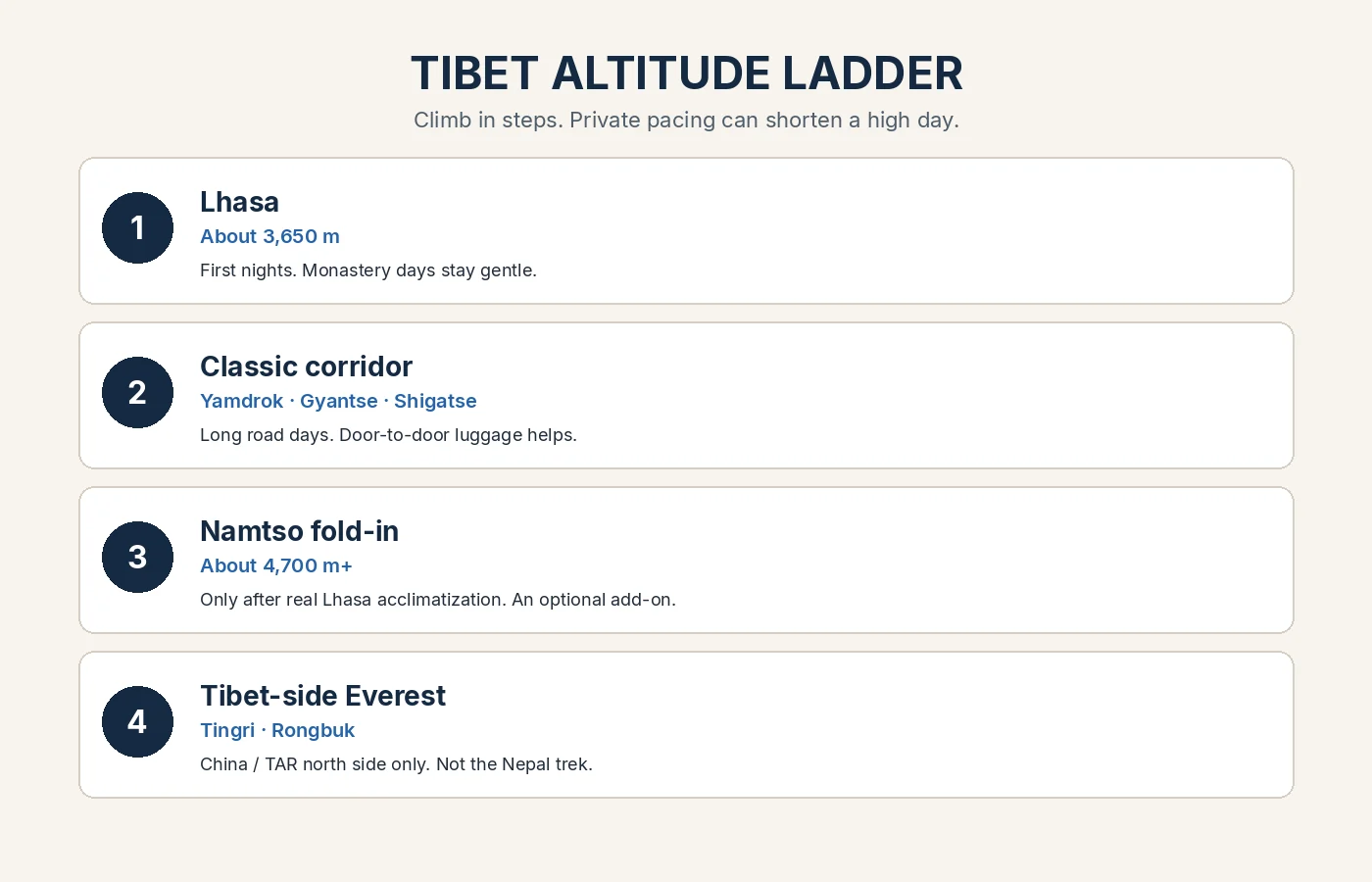
"Everest Base Camp" in global search is dominated by the Nepal trek from Lukla. DragonTrail's Tibet product is the China / Tibet north side: overland from Lhasa via Shigatse and Tingri toward Rongbuk Monastery and the north Base Camp viewpoint area.
What "Tibet-side EBC" usually means in practice
- Overland days west of Shigatse with altitude gain
- Tingri (or nearby) as a staging overnight
- Rongbuk as the monastic / near-Everest base
- A viewpoint visit toward the north Base Camp area when conditions and permits for your dates allow
This is a vehicle-supported high-altitude sightseeing approach, not a multi-day Nepal walking trek. Same peak on the horizon; different country, different trail culture, different preparation story.
Who should prioritize Tibet-side Everest
- Travelers who specifically want the north-face / Tibet viewpoint story
- Groups already committing ~10 days and willing to protect acclimatization
- Photographers who care about Rongbuk light and the northern aspect
Who should skip or defer it
- First-timers with only 5–8 days who will enjoy Lhasa + Classic Circuit more
- Anyone still symptomatic at Lhasa altitude
- Travelers whose mental model is the Nepal EBC trek — that is a different trip to plan in Nepal, not a label to paste onto Tingri
Planning honesty
Road conditions, seasonal closures, and viewpoint access rules can change. A private quote should spell out what is included on the Everest approach days for your dates — and what remains weather- or regulation-dependent — before you travel.
Permits: Tibet Travel Permit and planning guidance
Most foreign travelers need a Tibet Travel Permit (and often additional paperwork for areas west of Lhasa such as Everest-region travel) arranged through a qualified host before entering the Tibet Autonomous Region. Rules depend on nationality, entry point, and the exact places on your itinerary.
What this guide is — and is not
This section is practical trip-planning guidance, not legal advice. Permit policy can change. Your passport nationality, whether you enter via mainland China cities, and whether your route includes restricted scenic areas all affect paperwork. Confirm requirements for your dates with your planning contact before buying non-refundable long-haul flights that assume a fixed Lhasa arrival.
Planning habits that reduce stress
- Share passport details early so permit timelines can be checked against your flights.
- Do not assume a China tourist visa alone equals Tibet entry permission.
- Keep itinerary changes modest once permits are in process — last-minute route swaps can be painful.
- Group and private products both need compliant hosting; "going fully independent" as a foreign visitor is usually not the realistic model inside TAR.
DragonTrail can coordinate the permit pathway as part of a quote-led private plan when you travel with us. See Tibet private tours and tell us nationality + rough dates first.
Altitude and health: pace the ladder
Lhasa sits around 3,650 m. Classic-circuit passes and Namtso sit higher. Tingri / Rongbuk / Tibet-side Everest viewpoints push higher still. The trip works when you treat altitude as a design constraint, not an afterthought.
Practical pacing
- Sleep in Lhasa before big pass days when you can.
- Prefer "arrive, hydrate, light walk, early sleep" over museum-marathon day one.
- Ascend toward Everest only after the group is coping in Lhasa and on intermediate nights.
- Build a buffer day before international departures after high western nights.
Warning signs to take seriously
Persistent severe headache, vomiting, unusual breathlessness at rest, confusion, or rapid worsening after ascent are reasons to stop ascending, rest, and seek local medical help. Portable oxygen and descent plans are part of responsible high-trip design — ask what your private plan includes.
Fitness vs altitude
Being "fit at sea level" helps hiking stamina; it does not guarantee easy sleep at 4,000+ m. Mixed-age families do well when the itinerary allows quiet mornings and flexible scenic stops.
This is general travel information, not a medical diagnosis. Travelers with heart, lung, or pregnancy-related concerns should speak with a clinician before booking high-altitude itineraries.
Getting to Lhasa and around Tibet
Flying into Lhasa (LXA)
Lhasa Gonggar Airport (LXA) is the main air gateway. Domestic connections via Chengdu, Chongqing, Xi'an, Kunming and other hubs are common; schedules shift by season. On arrival:
- private airport pickup is useful after a long multi-leg day;
- the road from Gonggar up toward the city is part of your first altitude exposure — keep expectations gentle for evening one;
- do not schedule Potala for the same afternoon as a late inbound unless the timing is truly realistic.
Train to Lhasa
The train journey is a scenic experience in its own right and a slower altitude ramp for some travelers. Soft-sleeper demand is high in peak months — book early. Train arrival still leaves you needing local transport for monasteries and any overland circuit.
Getting around once you are there
Inside Lhasa, short taxi or private-vehicle hops plus walking bursts cover Barkhor-area days. Overland classic-circuit and Everest-approach days are private-vehicle territory for most visitors: passes, luggage, flexible photo stops, and permit-compliant routing.
Typical road logic (indicative, not a timetable)
| Leg | Role in a first trip | Notes |
|---|---|---|
| LXA → Lhasa hotels | Arrival | Gentle first evening |
| Lhasa → Yamdrok → Gyantse | Classic scenic day | Pass altitude + lake stops |
| Gyantse → Shigatse | Circuit hinge | Monastery + overnight options |
| Shigatse → Tingri → Rongbuk | Everest approach | Highest nights — buffer needed |
| Lhasa ↔ Namtso | Northern lake axis | Competes with southern days |
Private transport is the comfort default for circuit and Everest legs with mixed ages, fixed flights, or photography goals.
Tibet transport choices
| Method | Makes most sense when… |
|---|---|
| Walking + short city hops | Barkhor-area Lhasa days after acclimatization |
| Private vehicle (Lhasa) | LXA pickup, monastery timing, mixed ages, gentle first days |
| Private vehicle (circuit / Everest) | Any Yamdrok–Gyantse–Shigatse or Tingri–Rongbuk overnight |
| Flight into LXA | Most international visitors via mainland hubs |
| Train into Lhasa | Scenic arrival + slower ramp — still need road for circuit/EBC |
| Fully improvisational independent | Usually not realistic for foreign visitors inside TAR |
Sample Tibet itineraries
Frameworks aligned with our three private tour shapes — adjust to your flights, permits, and altitude response.
5 days — Lhasa Essence
Day 1: Arrive LXA + gentle acclimatization Day 2: Jokhang / Barkhor at an easy pace Day 3: Potala timed visit + quiet afternoon Day 4: Optional nearby monastery or valley Day 5: Buffer / departure
8 days — Classic Circuit
Day 1–2: Arrive Lhasa + acclimatization / city monasteries Day 3: Potala + paced Lhasa depth Day 4: Toward Yamdrok + on to Gyantse Day 5: Gyantse fort / Kumbum Day 6: Shigatse / Tashilhunpo Day 7: Return Lhasa Day 8: Depart
10 days — Everest Highlights
Day 1–3: Lhasa acclimatization + key monasteries Day 4–5: Yamdrok / Gyantse corridor toward Shigatse Day 6: Shigatse depth Day 7: Toward Tingri Day 8: Rongbuk / Tibet-side Everest viewpoint day Day 9: Return toward Lhasa Day 10: Buffer / depart
These are route frameworks, not fixed schedules. Monastery ticket windows, road conditions, weather on lake passes, and your flight times can change the best order. Treat them as starting points for a private plan.
Do you need a private driver or guide in Tibet?
The realistic baseline
For most foreign visitors, Tibet travel is arranged through a compliant host with a vehicle and guide for the overland portions. Fully improvisational "show up and DiDi everywhere" independent travel is usually not the model inside the TAR the way it can be in some other Chinese cities.
Private planning becomes especially valuable when:
- you want altitude-aware pacing instead of a fixed group bus clock;
- your group mixes ages or energy levels;
- Everest-approach days need flexible photo stops and honest turnaround calls;
- you care about English-speaking interpretation at monasteries;
- you already hold preferred hotels and need transport/guide folded around them;
- permit and ticket timing should be coordinated with your flights.
When a lighter touch can work
Travelers who only want a short Lhasa Essence stay, who are comfortable with a simpler hosted arrangement, and who do not need western Everest days may need less "full expedition" complexity — but they still need compliant entry and local hosting.
DragonTrail plans are quote-led and customizable. You can request Classic Circuit, Lhasa Essence, Tibet Everest Highlights, or a custom blend (including Namtso or later-wave Nyingchi / Kailash ideas). See Tibet private tours.
Best time to go and what to wear
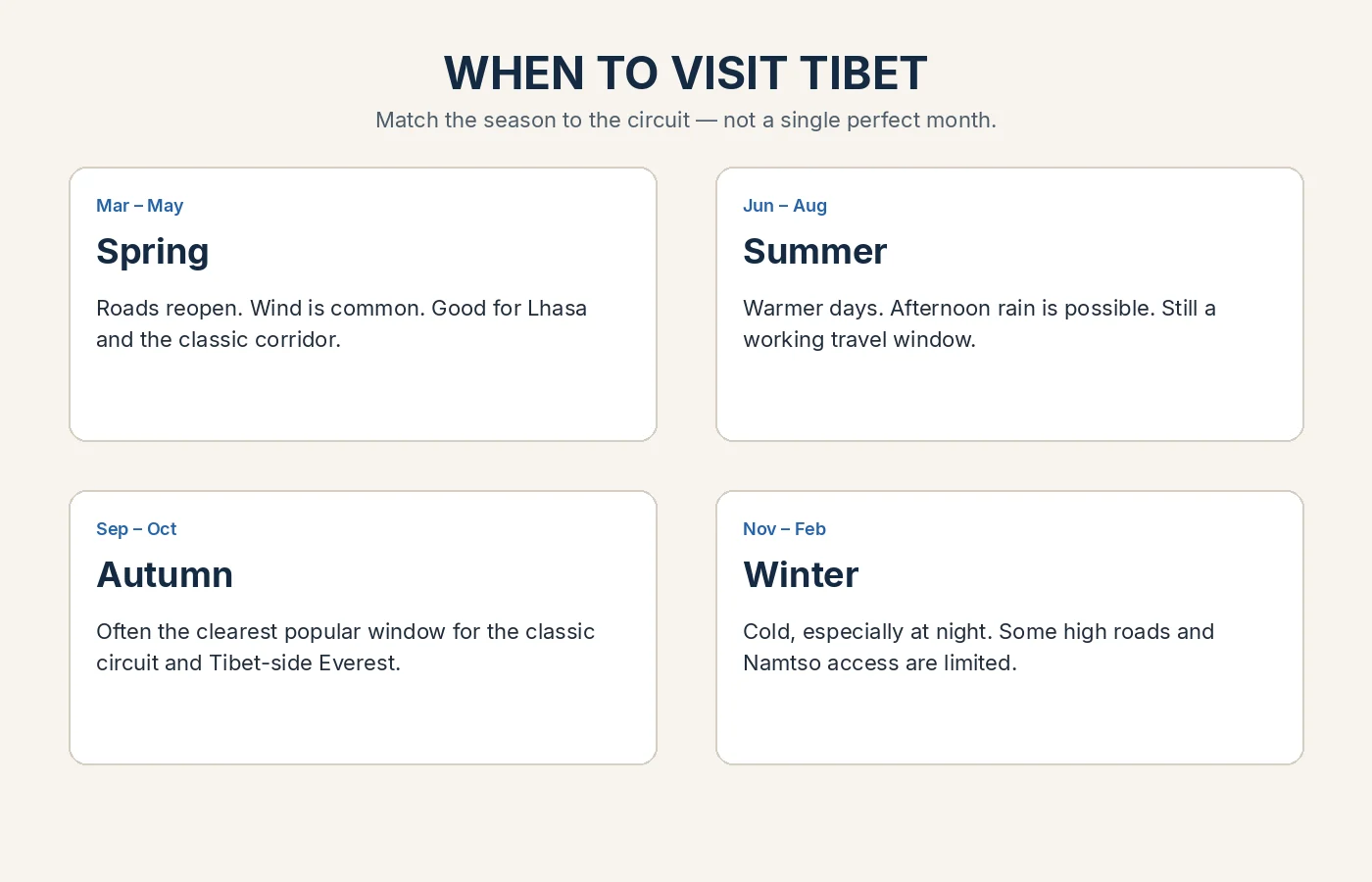
Best time
- Many first-timers prefer spring or autumn for a balance of accessibility and clearer mountain light — exact months shift with your Everest vs Lhasa focus.
- Summer can be greener (and busier), with more monsoon cloud risk on lake and Everest view days.
- Winter can bring sharp visibility and quieter sites, plus colder nights and tighter high-road considerations.
There is no single perfect week for every goal. If Tibet-side Everest views are the priority, bias the plan toward windows with historically clearer high-mountain visibility and ask for a date-specific readout in your quote. If monasteries and Lhasa life matter more, you have a wider usable calendar.
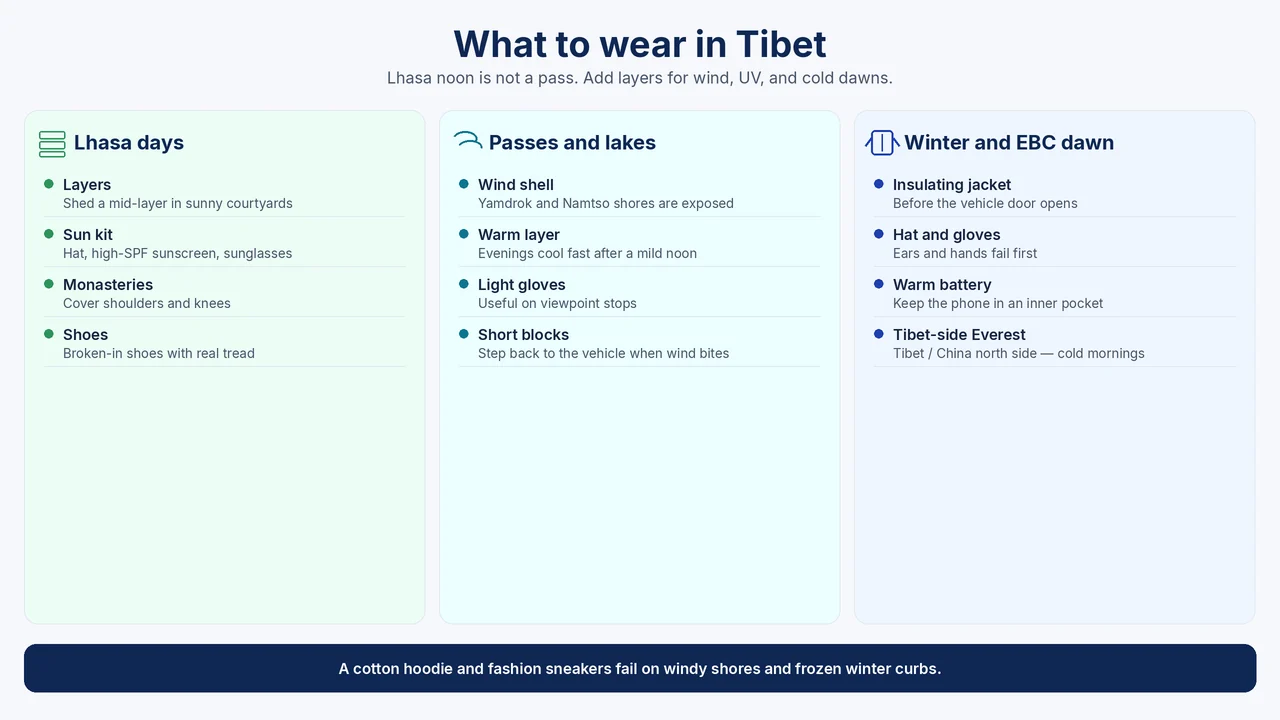
Clothing essentials
- Layers you can add or shed between sunny Lhasa courtyards and windy passes
- A warm insulating jacket for evenings and high viewpoints
- Sun hat, high-SPF sunscreen, and sunglasses — UV is strong at altitude
- Comfortable broken-in walking shoes; optional light gloves for cold dawn stops
- Lip balm and a reusable water bottle
- Modest clothing for monastery interiors (covered shoulders/knees as required on site)
Fashion sneakers and a single cotton hoodie fail on a windy Namtso shoreline or a pre-dawn Rongbuk morning. Pack for temperature swings within the same day.
Health and pacing reminder
Short outdoor blocks with planned rest beat heroic checklists. A private itinerary can bake those breaks in without making the day feel unfinished.
Want help connecting the Tibet trip?
If you already know your dates, nationality, and whether Namtso or Tibet-side Everest matter, DragonTrail can arrange the hard parts — permit coordination, LXA pickup, altitude-aware circuit pacing, Tingri / Rongbuk logistics, or an English-speaking guide when useful.
You do not need to buy a rigid group bus package.
Plan your Tibet trip
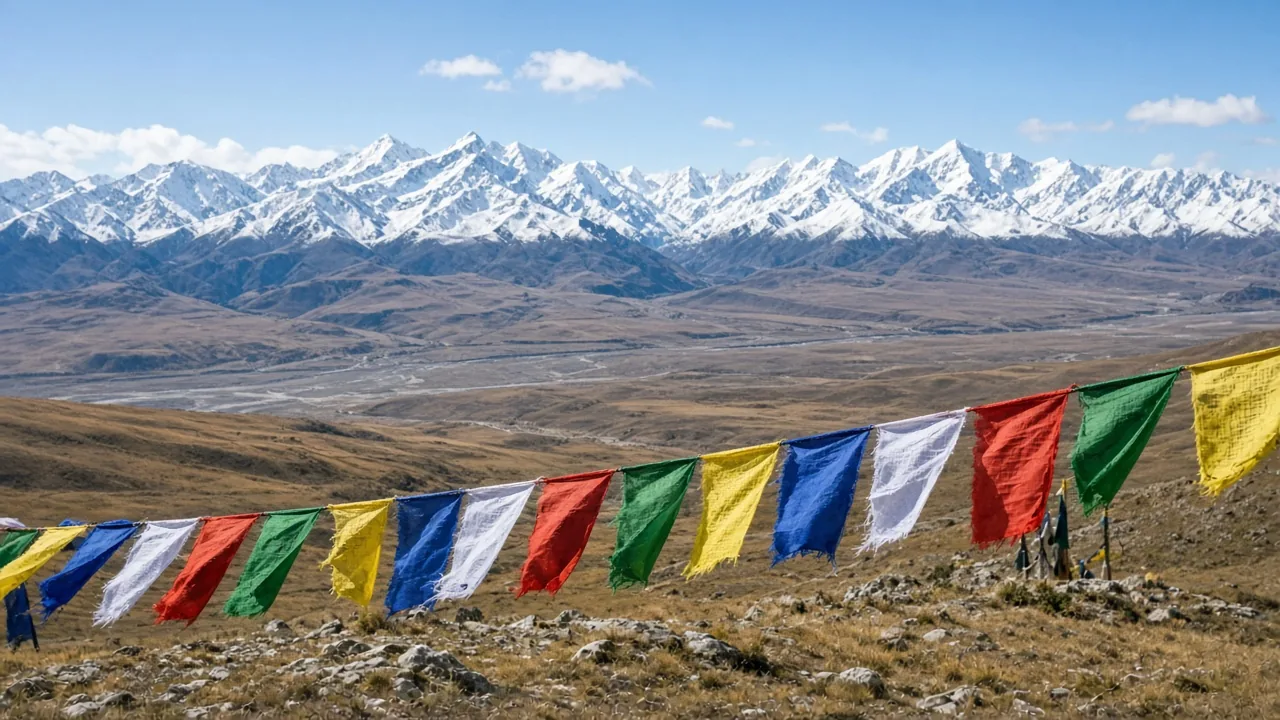
How many days? Realistic 5-, 8-, and 10-day frameworks.
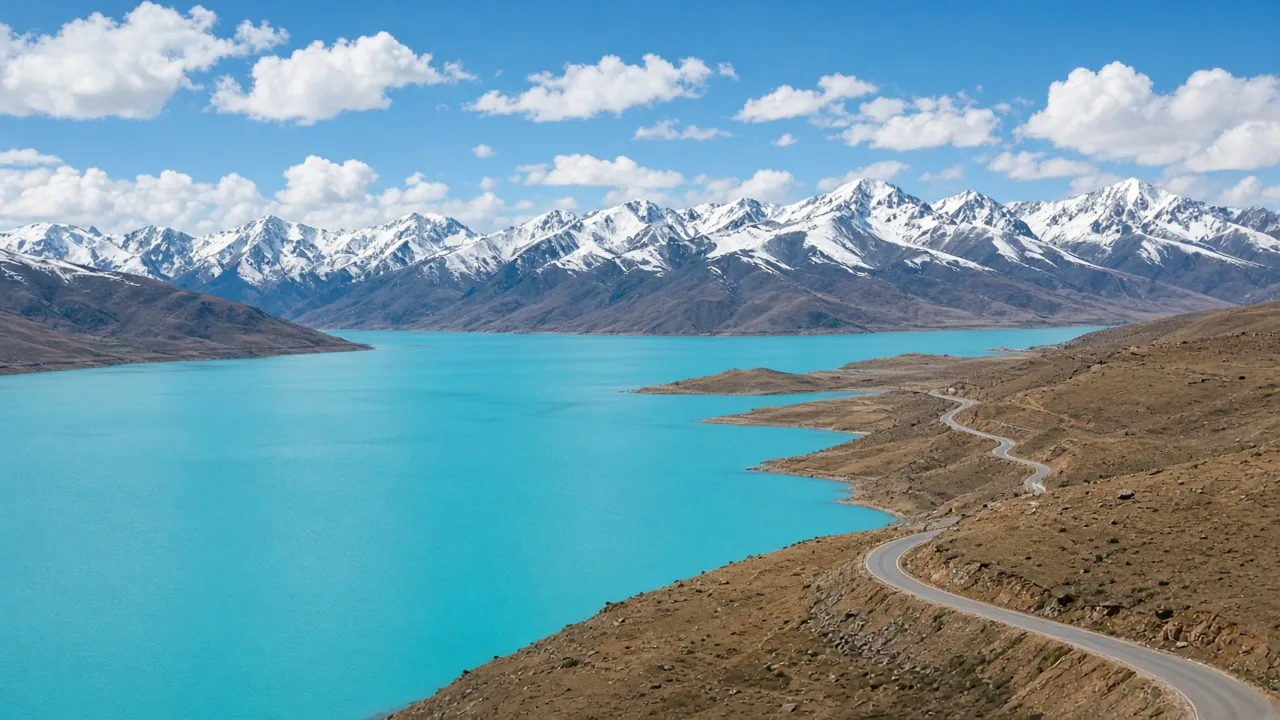
Lhasa Essence, Classic Circuit, and Everest Highlights.
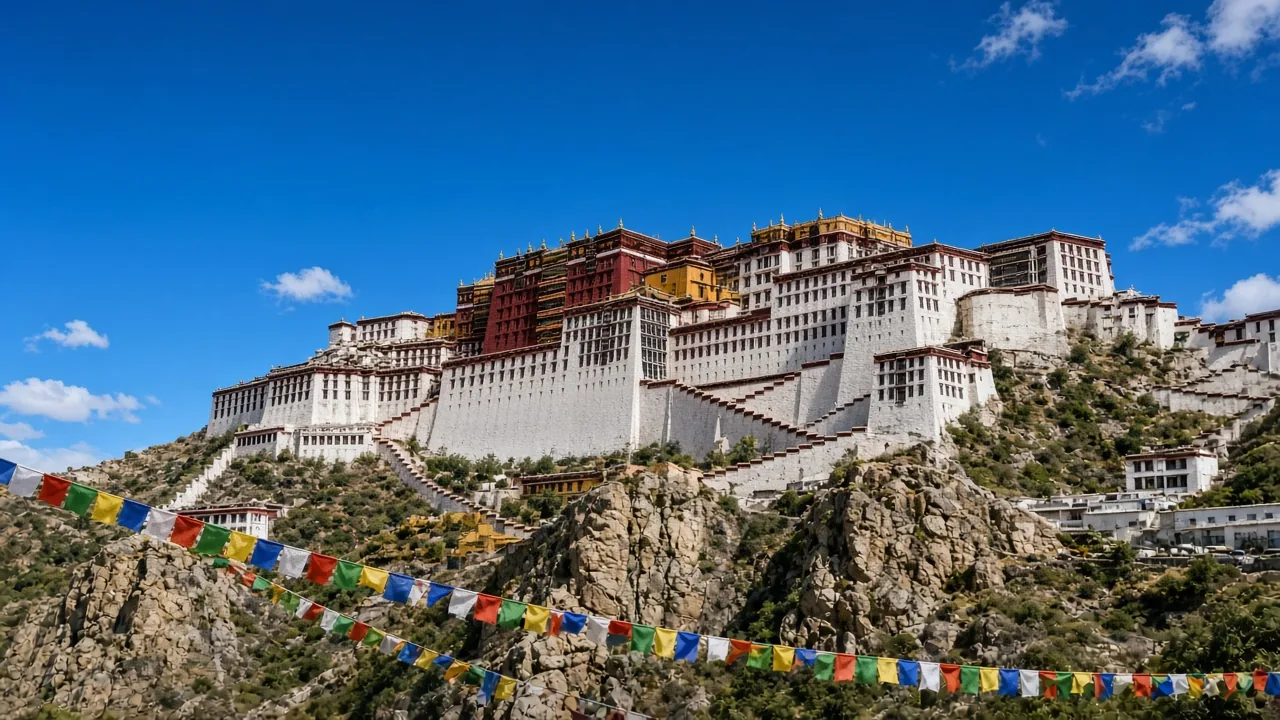
Potala, Jokhang, Barkhor, and first-days acclimatization.
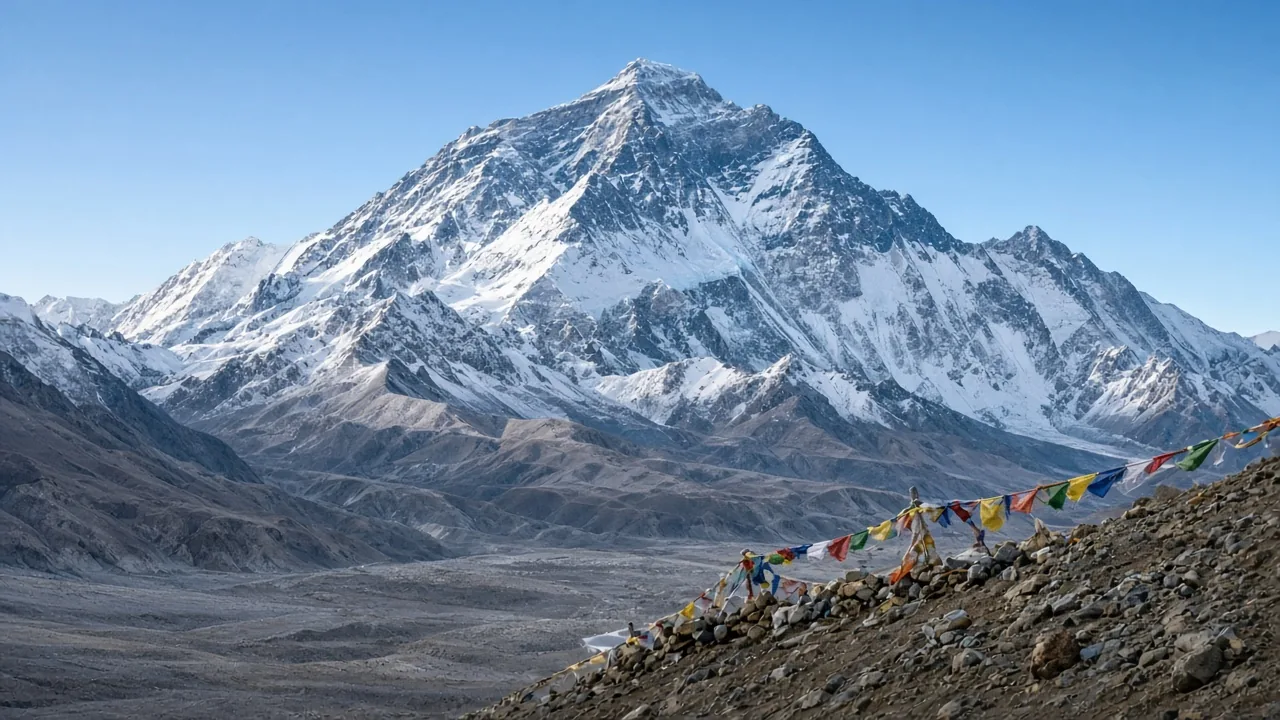
Tingri, Rongbuk, north Base Camp — not the Nepal trek.
When the northern high lake is worth the detour.
Classic southern circuit towns and lake days.
Capital-focused trip without a long overland loop.
Lhasa plus Yamdrok–Gyantse–Shigatse.
Classic spine plus Tingri and Tibet-side EBC.
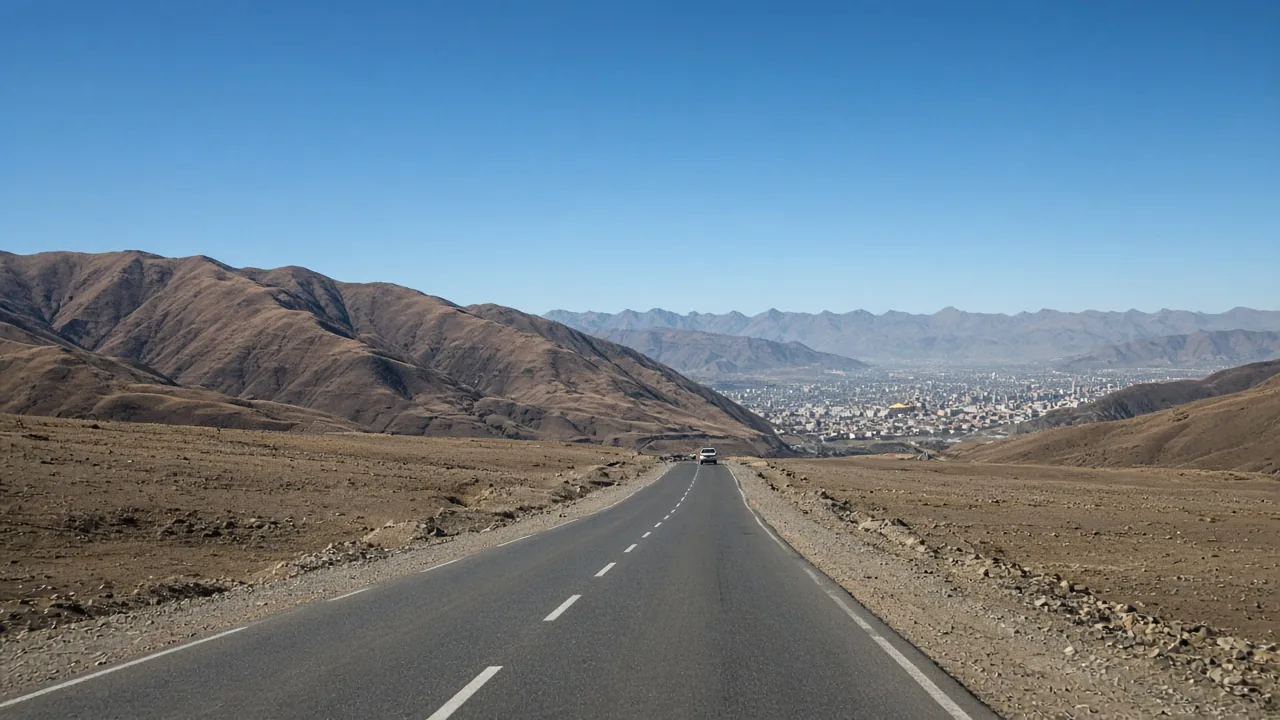
Season windows, weather tradeoffs, packing layers.
Travel permit planning notes and altitude pacing.
When a private vehicle and guide help most.
Essence, Classic, and Highlights — request a quote-led plan.
Tibet Travel Guide FAQ
- Five days work for a Lhasa-focused Essence trip with acclimatization. About eight days suit the classic Yamdrok–Gyantse–Shigatse circuit. Around ten days are more realistic if you add Tibet-side Everest Base Camp via Tingri and Rongbuk without rushing.
- No. The famous Nepal EBC trek starts from the Nepal side (typically via Lukla). Tibet-side / China-side Everest is an overland approach from Lhasa via Shigatse and Tingri toward Rongbuk and the north Base Camp viewpoint area. Same mountain, different country and logistics.
- Most foreign travelers need a Tibet Travel Permit arranged through a qualified host before entering the Tibet Autonomous Region, and additional paperwork can apply for Everest-region travel. This is planning guidance, not legal advice — confirm for your nationality and dates.
- Yamdrok usually sits on the classic southern circuit toward Gyantse and Shigatse. Namtso is a separate northern high-lake axis from Lhasa. Choose based on days and goals; trying to force both into a short trip often costs sleep and acclimatization quality.
- Lhasa is around 3,650 m. Many travelers feel okay after a cautious first 24–48 hours; some need more rest. Higher passes, Namtso, and Tingri/Rongbuk add further steps. Pace ascent, hydrate, and treat severe symptoms seriously.
- Yes as custom or later-wave planning. Kailash / west Tibet and Nyingchi are real trips with real demand, but they are not the default Classic Circuit. Tell us your dates and motivation; we quote them as extensions rather than forcing them onto every first itinerary.
- Foreign visitors generally travel with compliant hosting, vehicle, and guide arrangements rather than fully independent improvisation. A private plan is especially helpful for altitude pacing, mixed-age groups, and Everest-approach flexibility compared with a rigid group clock.
- Yes. The three sample shapes — Lhasa Essence (5 days), Classic Tibet Circuit (8 days), and Tibet Everest Highlights (10 days) — are starting points. Share dates, nationality for permit planning, and whether Namtso or Everest matters; we send a quote-led private plan.
- Many first-timers like spring or autumn for a balance of access and mountain light. Summer can be greener with more cloud risk; winter can be clearer and colder. If Tibet-side Everest views are critical, ask for a date-specific recommendation in your quote.
Plan a practical Tibet trip
Tell us your dates, arrival and departure flights, passport nationality, hotels if already booked, and whether Namtso or Tibet-side Everest matter. We will turn them into a practical private route — with transport or a guide only where it makes sense.