Season windows at a glance
| Window | What to expect |
|---|---|
| Spring (roughly Mar–May) | Often strong for Classic + clearer-mountain bias; cool nights; rising demand late spring |
| Summer (roughly Jun–Aug) | Greener valleys; busier; monsoon cloud / rain risk on lake & EBC view days |
| Autumn (roughly Sep–Oct) | Frequent sweet spot — clearer light, cooler nights; book early |
| Winter (roughly Nov–Feb) | Crisp air possible; cold nights; Namtso / high-pass access can tighten |
| Holiday spikes | Chinese public holidays & festival weeks — hotels, tickets, Barkhor density |
Best time for the product you actually want
Tibet "best time" depends on which geography you are buying, not on a single Instagram month:
- Lhasa monasteries & capital life (Lhasa Essence) → usable most of the year if you pack layers and respect altitude.
- Classic southern circuit (Yamdrok → Gyantse → Shigatse) → spring and autumn often feel sweetest for lake light and road comfort; summer works with monsoon cloud nuance; winter is possible with colder nights.
- Tibet-side Everest (Tingri / Rongbuk / north Base Camp viewpoint — China / TAR side only, not the Nepal trek) → bias toward historically clearer high-mountain windows and accept that cloud can erase the north face any season.
- Namtso as a northern high-lake fold-in → spring/autumn preferred; winter access can tighten or close — ask before locking the day.
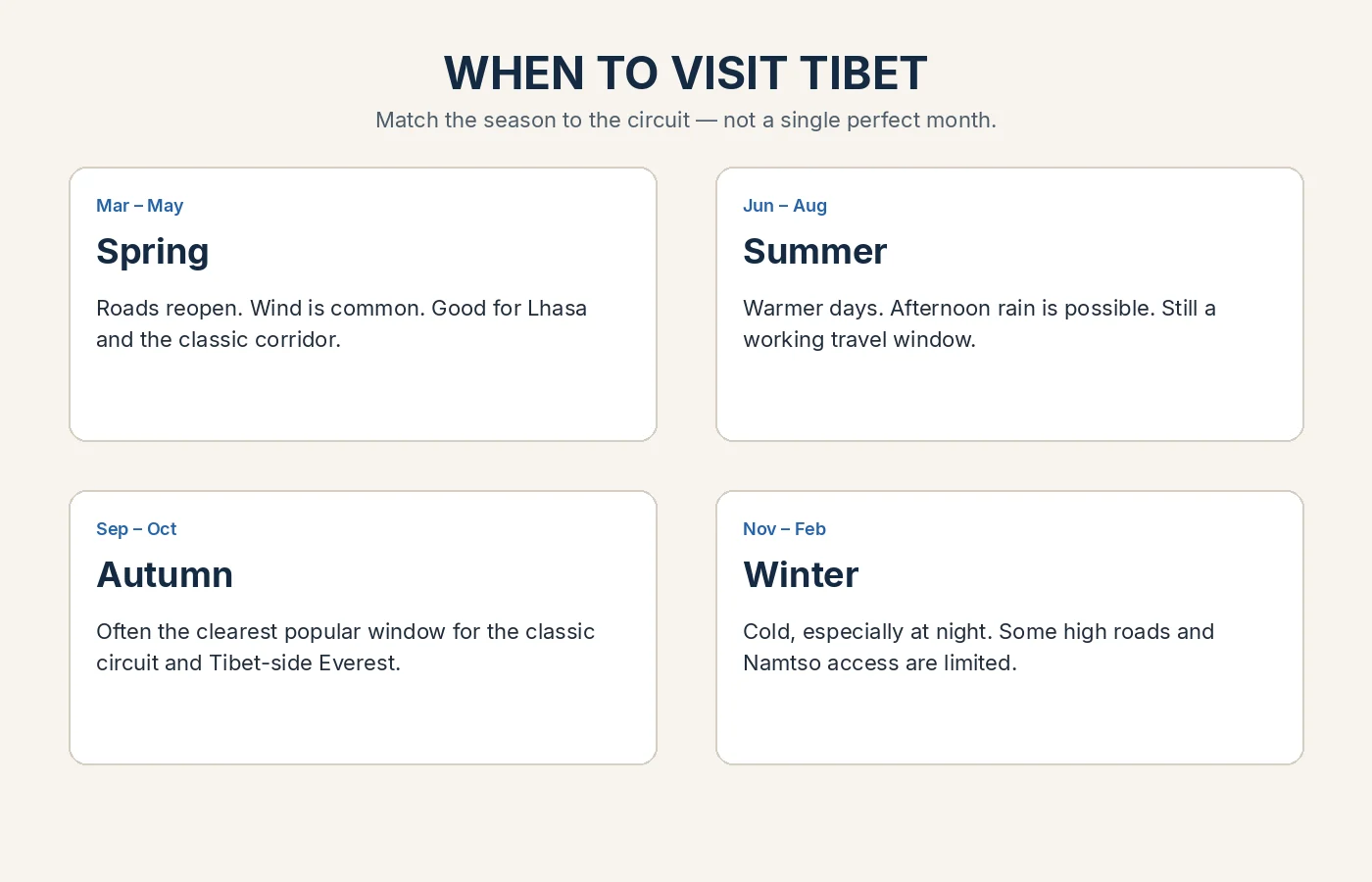
There is no single perfect week for every goal. If Tibet-side Everest views are the priority, ask for a date-specific readout in your quote. If monasteries and Lhasa life matter more, you have a wider usable calendar. Geography refresher: Tibet Travel Guide. Package roles: tour packages compared.
Climate bands on the plateau (planning, not guarantees)
Exact forecasts vary by year and valley. These planning bands help packing and pacing conversations — they are not weather warranties:
| Band / feel | Where you feel it | Planning implication |
|---|---|---|
| Mild sunny courtyard | Lhasa midday in spring–autumn | Still strong UV; evenings cool — layers |
| Cool + wind | Yamdrok / Namtso viewpoints, high passes | Short outdoor blocks; wind shell ready |
| Cold clear morning | Tingri / Rongbuk pre-dawn, winter Lhasa nights | Insulating jacket + gloves before the vehicle door opens |
| Monsoon-adjacent cloud / rain | Summer lake and Everest view days | Greener valleys possible; mountain views may vanish for hours |
| Deep winter harsh | High roads, Namtso corridor, EBC approach | Clear air possible; lodging/road caveats; colder nights |
Wind on lake shores and passes makes air temperature feel harder than a Lhasa courtyard reading. Private pacing exists partly so groups can exit a viewpoint without "ruining the day." Altitude ladder context: permits & altitude.
What to wear — plateau non-negotiables
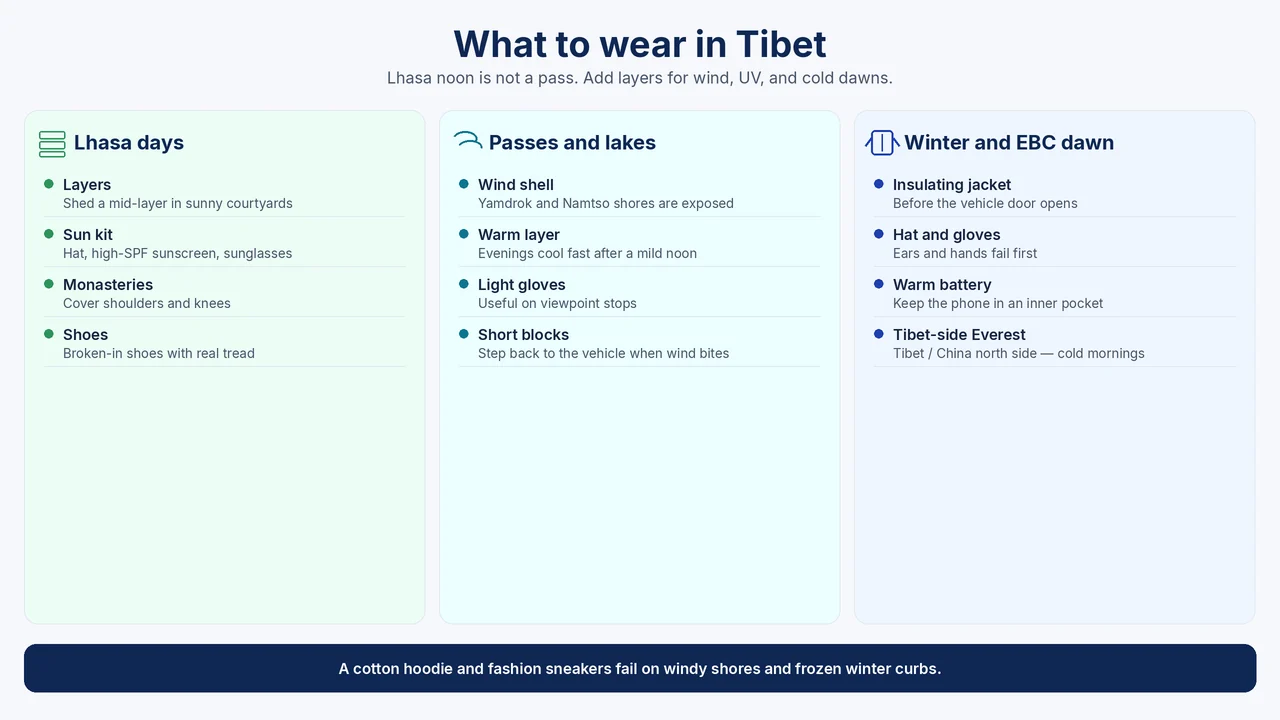
Clothing essentials (year-round baseline)
- Layers you can add or shed between sunny Lhasa courtyards and windy passes
- A warm insulating jacket for evenings, lake shores, and high viewpoints
- Sun hat, high-SPF sunscreen, and sunglasses — UV is strong at altitude even when air feels cool
- Comfortable broken-in walking shoes with real tread; optional light gloves for cold dawn stops
- Lip balm, moisturizer, and a reusable water bottle
- Modest clothing for monastery interiors (covered shoulders/knees as required on site)
Season add-ons
- Spring / autumn: wind shell + mid-layer; mornings colder than midday courtyards suggest
- Summer: rain shell or packable waterproof; still bring a warm layer for high stops and nights
- Winter / EBC approach: heavier insulating jacket, warmer gloves, hat covering ears, thermal base — fashion sneakers fail on frozen curbs and windy shores
What fails quickly: a single cotton hoodie, uncovered ears on Namtso shoreline, phone batteries in outer pockets at Rongbuk, and assuming Lhasa noon temperature equals pass temperature.
If you under-pack warmth or sun protection, you will cut every outdoor stop short — which wastes the trip you came for. Cross-link: permits & altitude for health pacing; private vs group for why flexible exits matter.
Packing by route & season
| Route / day | Extra focus |
|---|---|
| Lhasa capital days | Layers + UV kit; modest monastery cover-up; evenings cooler than noon |
| Yamdrok viewpoint / circuit passes | Wind shell, gloves optional, short outdoor blocks |
| Namtso lakeshore | Warm layer + wind; winter access check; altitude discipline |
| Tingri / Rongbuk / Tibet-side EBC | Insulating jacket for dawn; warm battery; China/TAR north side only |
| Airport / train arrival day | Coat accessible; gentle first evening — not Potala marathon |
Health, altitude, and who needs shorter blocks
Season does not cancel altitude. Lhasa sits around 3,650 m; Yamdrok and circuit passes sit higher; Namtso lakeshore / Tashi Dor around 4,700 m+; Tingri / Rongbuk / Tibet-side EBC approach climbs toward ~5,200 m viewpoint territory. Clear autumn light is wonderful — it is not a medical plan.
Practical rules across seasons:
- Protect real Lhasa acclimatization before the first overland morning — see Lhasa.
- Keep high outdoor blocks short with an agreed vehicle meeting point.
- Children, seniors, and anyone still symptomatic need shorter viewpoints — or a decision to skip Namtso / delay the circuit.
- Phone batteries, medication, and camera gear belong in inner warm layers in cold windows.
Deep dive: permits & altitude. A private itinerary can bake rest without making the day feel unfinished — private vs group.
How season interacts with Lhasa-only vs Classic vs EBC
| Goal | Typical length | Season note |
|---|---|---|
| Capital monasteries only | ~5 days | Widest calendar — still pack layers; holiday crowds spike |
| Classic southern circuit | ~8 days | Spring/autumn often sweet; summer cloud nuance on Yamdrok; winter colder nights |
| + Tibet-side Everest | ~10 days | Bias clearer high-mountain windows; monsoon cloud risk on north-face views; winter logistics tighter |
| + Namtso fold-in | Extra day / overnight | Prefer spring/autumn; ask about winter road/lodging access |
Overview: itinerary. Day-by-day: 5-day Essence · 8-day Classic · 10-day Everest Highlights.
Which Everest this is: Everest on these pages means the Tibet / China north side (Tingri → Rongbuk → north Base Camp viewpoint). The Nepal EBC trek is a different country and a different trip — it is not this Highlights route. Place guide: Everest Base Camp Tibet.
Festivals, holidays, and crowd effects (high level)
Tibet travel calendars mix Tibetan Buddhist festival seasons, Chinese public holiday peaks, and ordinary weekend thickening from domestic travel. Exact festival dates move with the lunar calendar — treat the notes below as planning awareness, not a ticket promise.
What typically changes in peak windows:
- Potala / Jokhang / Barkhor density and ticket timing pressure in Lhasa
- Hotel availability in Lhasa, Gyantse, Shigatse, and Everest-approach towns
- Road congestion on classic-circuit transfer days
- Soft-sleeper and popular domestic flight demand into LXA
Practical stance: if your dates overlap major Chinese holidays (including Chinese New Year / Spring Festival weeks) or known festival spikes, book earlier, accept crowd reality in the plan, and protect altitude buffers rather than stacking heroic site lists. Private transport helps logistics — it does not empty Barkhor.
Monastery etiquette and pacing still apply in quiet months: modest dress, follow photography rules, leave space for pilgrims. Capital rhythm: Lhasa. Circuit towns: Yamdrok–Gyantse–Shigatse.
Month-by-month Tibet notes
These notes are planning ranges, not forecasts. Ask for a date-specific readout when Tibet-side Everest or Namtso are non-negotiable.
January
Deep winter on the plateau. Lhasa can be crisp and relatively quiet for capital sightseeing if you pack real warmth. High roads, Namtso, and Everest-approach logistics can be tighter — clear air is possible; cold nights and access caveats are real. Prefer Essence / carefully planned Classic; treat Namtso and EBC as quote-checked, not assumed.
February
Similar winter profile. Watch Chinese New Year / Spring Festival date each year — it moves and can spike hotels and tickets. Late February may ease slightly depending on the year; still pack for cold dawns and windy passes.
March
Shoulder toward spring. Days lengthen; nights remain cold. Classic circuit becomes more comfortable for many first-timers. Everest views can be excellent on clear spells — confirm road and lodging status for your exact dates. Namtso still needs altitude discipline and a weather eye.
April
Often a strong first-timer month for Lhasa + Classic: workable roads, clearer light than peak monsoon, spring feel without summer crowds at their densest. Still strong UV. Good window to discuss Tibet-side Everest if clarity is a goal — not a guarantee.
May
Late spring sweet-spot territory for many itineraries: capital life, Yamdrok color on clear days, circuit towns. Pre-summer demand rises. If you want Everest Highlights, lock nights earlier. Keep monsoon-risk awareness for late-month cloud trends at high viewpoints.
June
Early summer: greener approaches possible; crowds and domestic travel thicken. Monsoon cloud and rain risk increases on lake and Everest view days — still a valid trip month if you accept soft mountain views. Pack a rain shell and a warm layer for high stops.
July
Peak summer tourism + monsoon nuance on the plateau. Valleys can look lush; north-face Everest and turquoise lake photos may fight cloud for hours. Fine for monastery-first travelers who prioritize culture over summit portraits. Build flex into view days; do not punish the itinerary for weather.
August
Continues summer pattern: busy sites, monsoon-adjacent cloud, strong UV between storms. Family travel common — protect shorter outdoor blocks for kids. Classic still works; EBC is weather-honest. Quote early for popular hotel nights.
September
Often cited as a sweet-spot return: clearer mountain light returns for many years, roads still workable, green giving way to autumn clarity. Strong month for Classic and for travelers who care about Tibet-side Everest views — still not a promise. Book ahead as demand is high.
October
Another frequent favorite for first-timers and photographers. Cooler nights; clearer air common; Yamdrok and circuit light can be excellent. Pack insulating layers for dawn stops. Namtso can be spectacular and windy. EBC mornings are cold — worth it when the north face cooperates. October is a month many first-timers specifically choose — often a better match than peak summer when clear mountain light matters.
November
Late autumn / early winter slide. Clear days possible; cold intensifies at night and on passes. Classic remains workable for hardy groups. Namtso and high Everest approaches need honest logistics checks. Lhasa-only Essence is an easy seasonal fit.
December
Winter consolidates. Quiet capital days for travelers who accept cold. High-road and lake access can tighten. Festival-adjacent holiday travel from other Chinese cities thickens some weekends. Confirm Namtso / EBC realism in the quote; do not buy brochure turquoise ice without a plan.
Season × geography decision tree
- Monasteries / Lhasa life first? → Wider calendar; 5-day Essence or Classic without Everest pressure.
- Yamdrok + Gyantse + Shigatse? → Prefer spring/autumn; summer OK with cloud honesty; winter OK with cold packing — 8-day Classic and Yamdrok–Gyantse–Shigatse.
- Tibet-side Everest must-see? → Bias clearer windows (often spring/autumn); accept monsoon cloud risk in summer; winter only with eyes open — 10-day Highlights and EBC Tibet.
- Namtso craving? → Prefer spring/autumn; winter is a caveat conversation — Namtso Lake.
- Nyingchi or Kailash? → Custom quote only — not one of the three standard trips, and not a half-day from Barkhor.
Layering system that works on the plateau
- Base: moisture-managing layer (not cotton next to skin on active days)
- Mid: fleece or light insulation you can shed in a sunny courtyard
- Shell / warm: windproof or insulating jacket for passes, lakes, and dawn EBC
- Extremities & UV: ears, hands, neck, eyes, skin — where trips fail first at altitude
Remove a mid-layer indoors so you do not soak base layers in sweat, then freeze outside. The same system scales from mild Lhasa noon to a windy Namtso shore — you change how many pieces you wear, not the logic.
Footwear and day-bag deep dive
Broken-in walking shoes with tread beat fashion sneakers on monastery stairs, dusty circuit roads, and icy winter curbs. Optional light hiking shoes help on lake shore walks; you do not need expedition boots for a standard Classic unless winter ice is confirmed.
Day bag: water, layers, sunscreen, sunglasses, lip balm, modest cover-up for halls, spare phone battery kept warm, snacks. Leave room — you will add a purchased scarf or jacket more often than you expect.
Electronics, UV, and dry air
- Inner-pocket battery bank — cold kills phones at Rongbuk and winter Lhasa
- Sunglasses and SPF even on cool cloudy days — UV at altitude is not optional
- Lip balm and moisturizer — dry plateau air cracks skin faster than lowland cities
- Lens cloths that are not wet from breath on cold mornings
Special cases: kids, seniors, mobility
Shorter viewpoint blocks, more indoor monastery nodes, private curb drop-offs, permission to skip optional lakes. Season choice still matters: a windy winter Namtso attempt is a different trip than a mild October Classic even if both say "Tibet." Build the softer plan into the quote rather than improvising on the pass.
Summer monsoon nuance (read before you fear July)
"Rainy season" on the plateau is not a tropical washout that cancels every trip. It often means more cloud and rain risk on high view days, greener valleys, busier hotels, and the need for flexible photography expectations. Monasteries, Barkhor life, and circuit towns remain rewarding. What suffers most is the fantasy of guaranteed turquoise Yamdrok + crystal north-face Everest on a fixed afternoon. Private plans absorb weather better than rigid coach schedules — they do not invent sunshine.
Winter clarity vs winter access
Winter can deliver some of the clearest mountain light of the year — and some of the coldest nights and tightest high-road logistics. Those two facts coexist. Lhasa Essence in January can be excellent for hardy travelers. Namtso or Tibet-side EBC in the same month needs an explicit logistics check: roads, lodging, and group cold tolerance. Clear air is not the same as open access.
When to ask for a quote
Quote earlier for September–October Classics, May–June demand spikes, and any Everest Highlights window where Tingri / Rongbuk nights are scarce. Essence capital hotels are usually easier than Everest-approach inventory — another reason Highlights needs earlier decisions. Ask for a quote on Tibet private tours — this page does not list floor prices.
What this page intentionally does not do
We do not publish fake exact average temperatures as guarantees, promise Everest visibility by calendar day, or treat the Nepal trek as this product. Practical bands + verify dates + match geography to season beats false precision. Nyingchi and Kailash remain custom conversations — not silent add-ons inside Essence or Classic.
Season-aware trip sketches
Still funnel to Essence / Classic / Highlights — season changes execution, not the geography rules. Everest = Tibet / China north side only.
Autumn Classic sweet spot
Sep–Oct bias: Lhasa acclimatization + Yamdrok–Gyantse–Shigatse with cooler nights and clearer light — 8-day Classic.
Clearer-window Everest Highlights
Spring or autumn bias for Tingri / Rongbuk / Tibet-side EBC views; accept weather honesty — 10-day Highlights. Not Nepal.
Winter capital or hardy Classic
Lhasa-first 5-day Essence with real warmth; Classic only with cold packing; Namtso / EBC quote-checked.
Match your dates to a private Tibet plan
Share travel month and whether Lhasa-only, the classic circuit, or Tibet-side Everest matter. We confirm season fit before quoting Essence, Classic, or Highlights.
Plan your Tibet trip
5 / 8 / 10 day decision framework
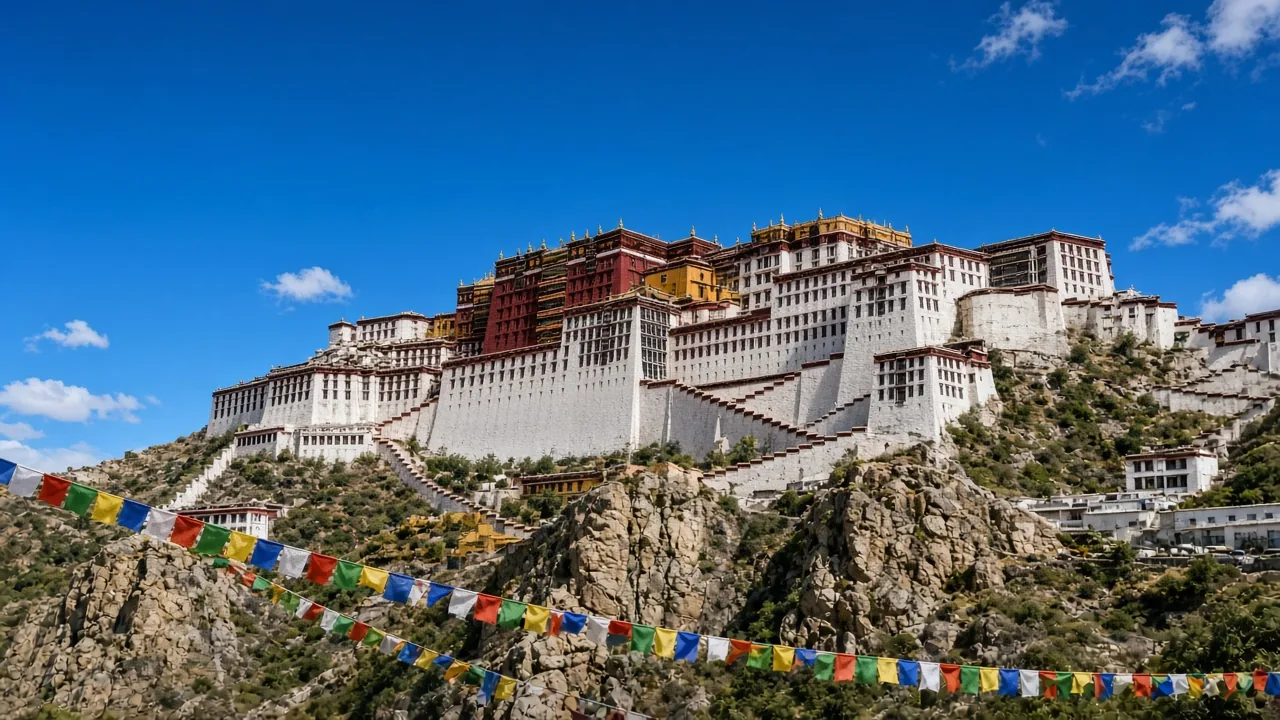
Capital-only band — widest seasonal calendar
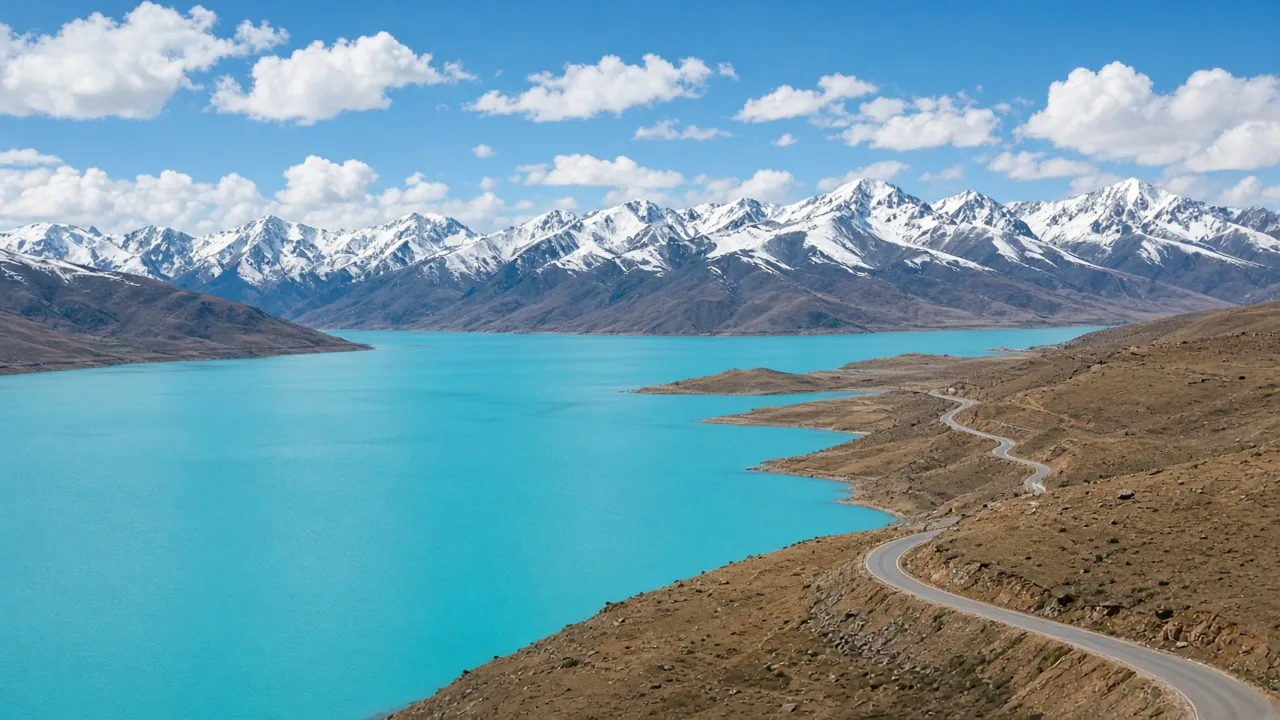
Yamdrok–Gyantse–Shigatse — spring/autumn sweet spot
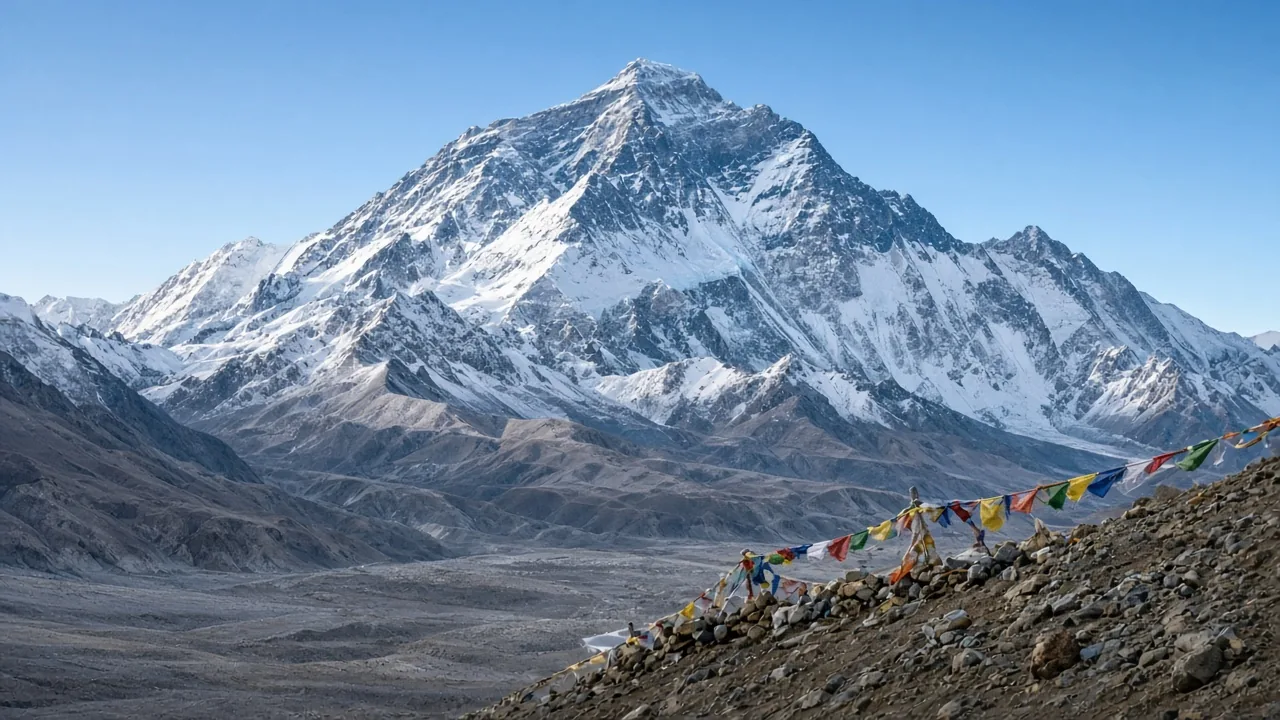
Tingri / Tibet-side EBC — clearer-window bias
Capital base & ~3650 m on-ramp year-round
Northern lake — winter access caveats
Southern circuit corridor season notes
China / TAR north side only — not Nepal
Best Time to Visit Tibet FAQ
- Many first-timers prefer spring or autumn for a balance of accessibility and clearer mountain light. Summer works with greener valleys and more monsoon cloud risk on lake and Everest view days. Winter can bring sharp visibility and quieter sites, plus colder nights and tighter high-road considerations. Exact fit depends on whether you want Lhasa-only, the classic circuit, or Tibet-side Everest.
- Often yes for first-timers and photographers — cooler nights, frequently clearer air, and strong light on Yamdrok and the southern circuit. Pack insulating layers for dawn stops. Tibet-side Everest mornings are cold but can be excellent when the north face cooperates. Book popular hotel nights early.
- Summer on the plateau often brings more cloud and rain risk on high view days rather than a tropical washout that cancels every trip. Valleys can look greener; turquoise lake and north-face Everest photos may fight cloud for hours. Monasteries and circuit towns remain rewarding if you accept flexible photography expectations.
- Yes for hardy travelers — especially Lhasa Essence — if you pack real warmth. Clear air is possible. Namtso and high Everest-approach logistics can tighten or close; ask in your quote whether those days are realistic, weather-dependent, or better swapped for capital or southern-circuit depth.
- Season tunes execution more than geography rules. Essence (~5 days) stays Lhasa-focused year-round. Classic (~8 days) centers on Yamdrok–Gyantse–Shigatse. Highlights (~10 days) adds Tibet-side Everest (China / TAR north side only). Prefer clearer windows when Everest views are the goal; use a wider calendar when monasteries matter most.
- Layers you can add or shed, a warm insulating jacket for passes and evenings, sun hat, high-SPF sunscreen, sunglasses, broken-in walking shoes, and modest clothes for monasteries. Add a rain shell in summer and heavier insulation for winter or Tibet-side Everest dawns. Fashion sneakers and a single cotton hoodie fail on windy shores.
- Not automatically bad — but monsoon-adjacent cloud can erase north-face views for hours. Highlights still works for travelers who accept weather honesty and want the full Lhasa + circuit + Tingri / Rongbuk approach. If crystal summit portraits are the only goal, bias spring or autumn and ask for a date-specific readout. This is the China / TAR north side, not the Nepal trek.
- Yes — ticket timing, Barkhor density, hotels, and domestic flights can spike around Chinese public holidays (including Chinese New Year weeks) and some festival seasons. Exact Tibetan festival dates move with the lunar calendar. Book earlier, protect altitude buffers, and accept crowd reality; private transport helps logistics, not empty sites.
Plan a season-smart Tibet trip
Open the tours page once your month and geography look right — quote-led, no floor prices.