Day order
| Detail | Plan |
|---|---|
| Day 1 | Longxing Temple, then pagodas if the morning went well |
| Evening | City food and an early night, not a county dash |
| Day 2 option A | Zhaozhou Bridge |
| Day 2 option B | Cangyan Mountain |
| Rain | Hebei Museum as an indoor backup, without a fixed gallery script |
| Do not insert | Western Qing Tombs or Xingtai |
Shijiazhuang itineraries fail when they treat three sites as one neighborhood. Longxing Temple is in Zhengding, on the north side of the city. Zhaozhou Bridge is a half day southeast, in Zhao County, and it wants a car. Cangyan Mountain is a full day southwest, in Jingxing, on a mountain road. The shapes below are the ones that respect those distances. A Zhengding-only day by rail from Beijing is possible and tight. One night covers the old town plus a single outing. Two nights is the honest length when both the bridge and the gorge matter.
Pick the shape from the farthest site you refuse to cut. If you will be sorry to miss the bronze and you will not be sorry to miss the counties, stay with the rail day. If the stone arch has gotten into the plan, add a night. If the bridge hall over the gorge has gotten into the plan, give it a day of its own. If both county photographs are non-negotiable, stop trying to do them around a single sleep. The hub is the short version of that choice. This page is the day order.
A rail day for Zhengding only
Leave from Beijing West on an early fast train. Many of the quickest services take about 70–90 minutes. Confirm the timetable. Slower trains take much longer and will quietly delete this itinerary, so filter for a fast train and read the arrival station. You want Shijiazhuang Station (石家庄站), in the city, unless you have a specific reason to use another stop. Zhengding Airport Station is the airfield. It is not the temple.
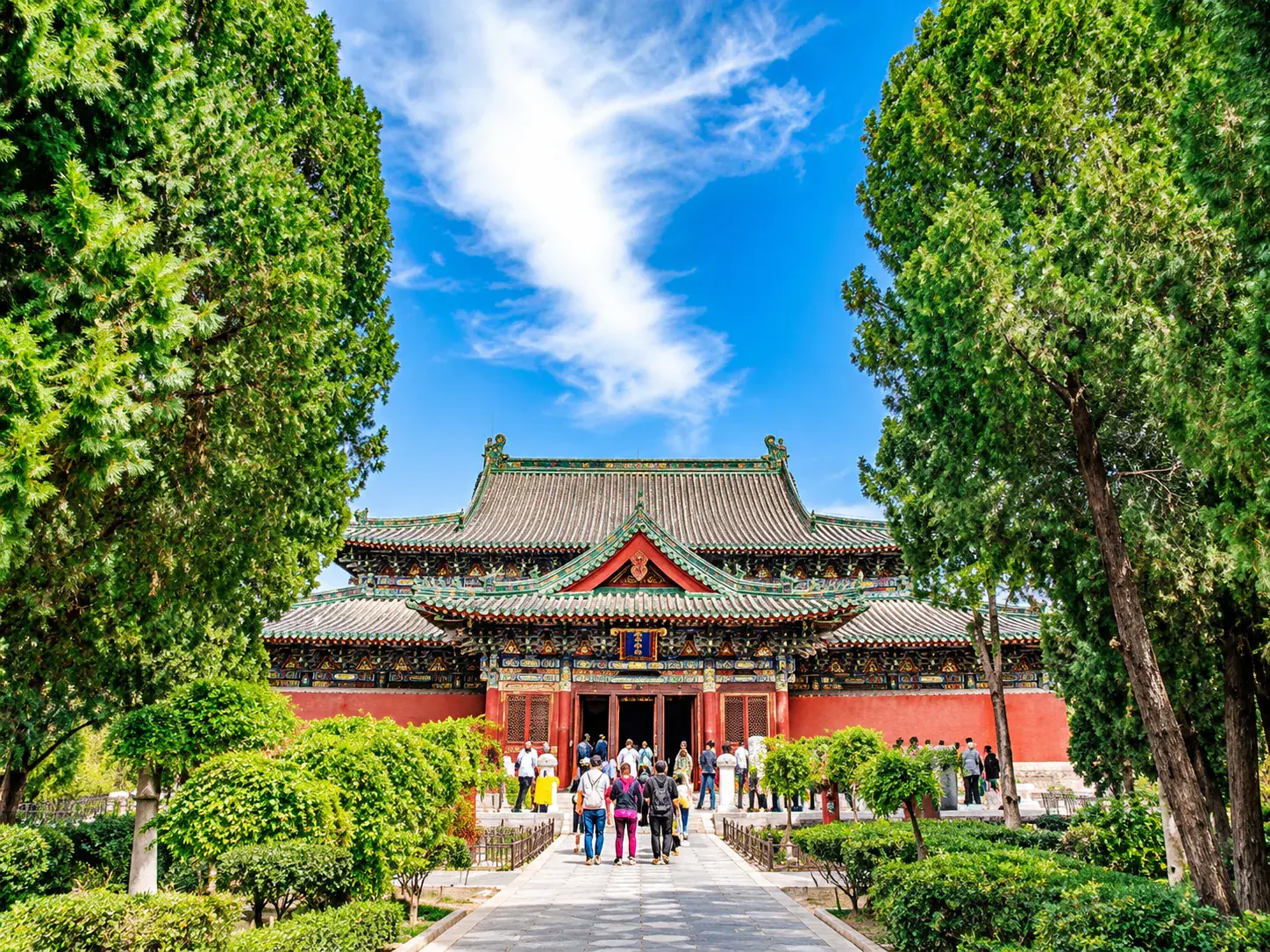
At Shijiazhuang Station, take a taxi to Longxing Temple (隆兴寺). Budget a real cross-town ride, on the order of half an hour in ordinary traffic, more when the city is clogged. Show 隆兴寺. Eat a simple bite if the train breakfast was nothing, and be at the gate as close to opening as the timetable allows. The visit is the halls, then the Song bronze Guanyin, often called the thousand-armed Guanyin. Do not spend the first forty minutes on the gate and the screen wall. Mani Hall's odd Song plan is part of the morning, not an optional corridor. The Zhengding page is the walking order. Follow it until you could describe the bronze without looking at your phone.
If you arrived early and the bronze has had a real visit, add either the Hua Pagoda at Guanghui Temple or a short section of city wall, not both plus Rongguo Mansion plus a long lunch. One extra stop is the margin. Two extra stops means you are now hoping the return train is later than it is. Rongguo Mansion is a film set for *Dream of the Red Chamber*, built largely for visitors. It is the first thing to cut on a rail day. It is not a Song temple you "might as well" include.
Lunch is wheat noodles or dumplings near the old town. Donkey-meat bread is the local filled cake, more famous in Baoding and perfectly edible here. Then taxi back to Shijiazhuang Station with enough time for the queue, security, and a missed turn. Buy the return for late afternoon or evening, not for early afternoon, and not for a train you can only catch by leaving the bronze at a jog. If that return does not exist on your date, this is not a day trip. Stay the night. The from Beijing page is the ticket reading. The arranged version of this single day is the Zhengding day tour.
What this day does not include: Zhaozhou Bridge, Cangyan Mountain, Hebei Museum, the Western Qing Tombs, Handan, Xingtai. Saying them aloud is how the day stays intact.
If the airplane is how you arrive
Landing at Shijiazhuang Zhengding International Airport changes the first afternoon and does not change the sites. The terminal is in the Zhengding area, north of downtown, and it is still a taxi from Longxing. A midday landing with daylight left can be a temple afternoon: bags to the hotel first, then the halls, then the bronze. A night landing is a hotel night. A dark courtyard is not a consolation prize for an on-time flight.
The next morning is an ordinary Shijiazhuang morning. One full day belongs to Zhengding, including a pagoda the rail-day visitor had to cut. Two full days can hold the old town and one county, either Zhao County or Jingxing, not both. If someone else is joining you by train, meet at Shijiazhuang Station unless that ticket actually ends at Zhengding Airport Station. The from Beijing page is their half of the meetup. The airport curb is the wrong landmark for a person who rode the high-speed line into the city.
An early flight out is the mirror. Sleep near the airport only on the night before that flight. The night before Cangyan should be a city bed or a north-side bed, with a driver at a humane hour. A noon departure already rules the gorge out. Use that morning for the museum or for a last walk in the old town. The day trips page is explicit that the mountain fills a date. A date that ends at a check-in desk is a different date.
One night, and one outing
Sleep once, and add a single county. This is the honest minimum when Zhaozhou or Cangyan matters. It is also the maximum if you want the added site to feel like a visit rather than a sighting.
Arrive from Beijing late morning or early afternoon on a fast train into Shijiazhuang Station. Taxi to Zhengding. Spend the first day on Longxing only, with one pagoda if the light and the energy are good. Do not start a mountain road. Sleep in the old town if the next morning is still a temple loose end you care about, or sleep in a central hotel if the next morning is a driver pickup. Do not change hotels at noon on day two.
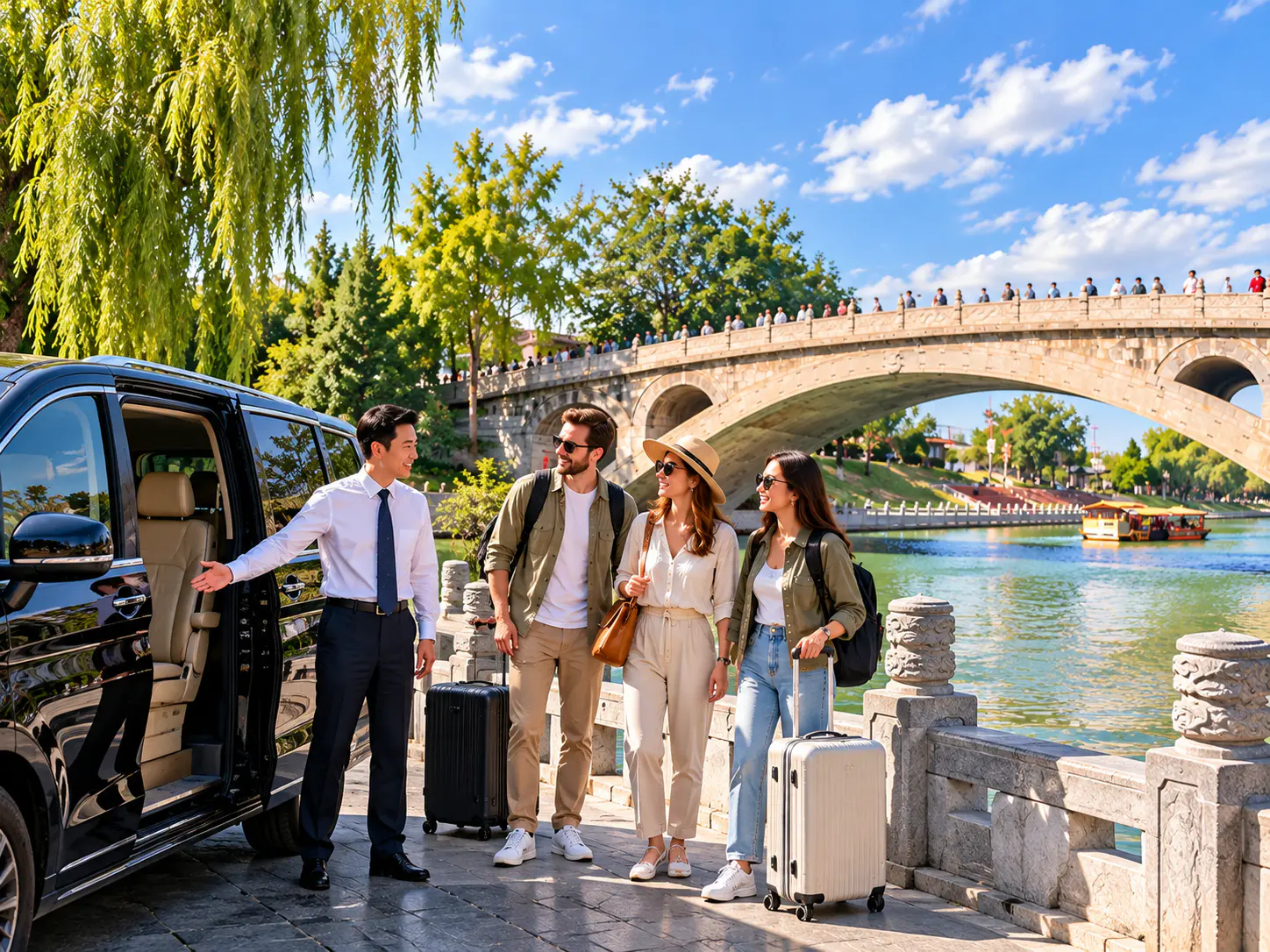
Day two is the outing, and it is a car day. Choose Zhaozhou Bridge if you want the Sui open-spandrel arch, a flatter walk, and a half day that can still connect to an afternoon train toward Beijing or farther south. About an hour each way in ordinary traffic, a calm visit on foot, and you are back in the city for a late train if the morning start was real. The small Yongtong Bridge in the same county is optional and only if you are already finished with Anji Bridge and unhurried. It is not the outing.
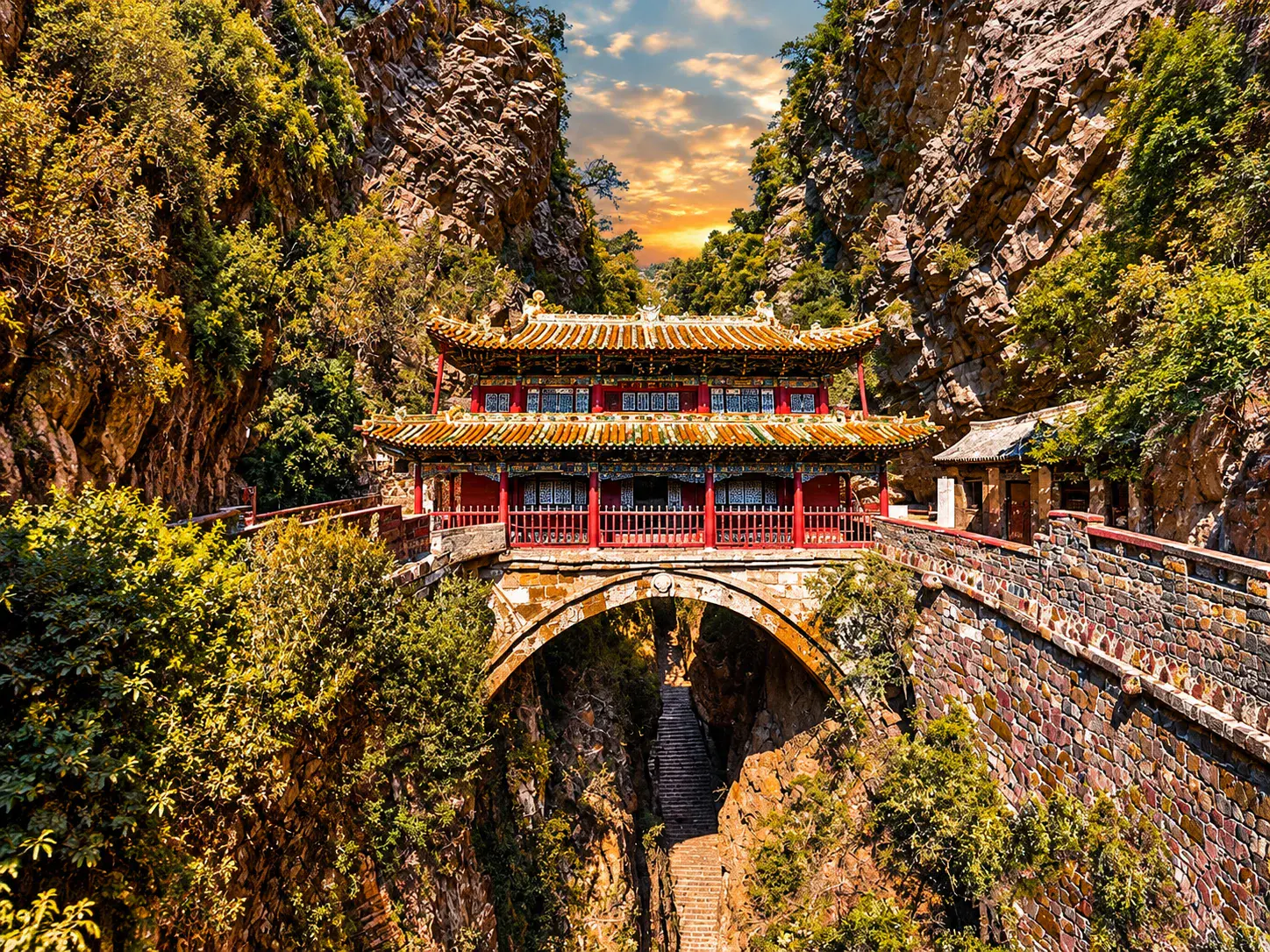
Choose Cangyan instead if the gorge is the picture you will think about later. Give the whole second day to it. Leave in the morning with a private driver. Walk the stairs. Spend real time in the bridge hall. Come down before the paths are a rush. Eat in the city, not on a cliff because a schedule said so. A same-evening train to Beijing can work after Cangyan only when the departure is late enough and the driver is watching the clock. An extra night, or a morning train the next day, is kinder. Do not "swing by" Zhaozhou on the way back from Jingxing. That phrase is how both visits shrink into parking lots.
On this one-night shape the two-day tour is the arranged cousin, with an important difference. The tour's two days include Zhengding and both county sites, using the overnight so the second day can carry Cangyan. If you are building the days yourself and you want both counties seen properly, do not copy that packing. Copy the overnight. Leave the second county for the two-night shape below.
Two nights when you want the bridge and the gorge
Two nights, three days. This is the shape for travelers who have already agreed that Zhengding, Zhaozhou, and Cangyan are all in the trip, and who do not want the mountain squeezed against a closing time.
Day one is Zhengding, as in the one-night plan. Longxing at the start of the visit, even if you arrive at lunchtime, because the bronze is indoors and the courtyards are the part that can wait if you are late. Pagodas only if the afternoon is long. Sleep once, preferably not at the airport and not on the far side of the city from tomorrow's pickup.
Day two is Zhaozhou, not Cangyan. The bridge is the half day, so the afternoon can be Hebei Museum if the weather is poor, a wall walk back in Zhengding if the morning bridge visit ended early, or simply a rest before the mountain. Do not fill a recovered afternoon with a new county. The museum is the right indoor use of a spare few hours: a provincial collection, no need for a list of gallery names, and a weekday closure you should check. Wheat noodles, an early night.
Day three is Cangyan from a morning departure to a real viewing of the bridge hall, then back to Shijiazhuang Station or to the airport. If the train home is precious, aim to be off the mountain with a margin you could spend in traffic. If the stairs took longer, because they do when a group includes curious people, the margin is what saves the ticket. A next-morning departure, which means a third night, is reasonable for a group that dislikes evening station stress. It is not required for everyone. Two nights is the minimum that lets both outings exist. Sleeping a third night is reasonable when the gorge runs long and the evening train would be a sprint.
Swap day two and day three if a weather window is the only clear day for the mountain. Take the clear day for Cangyan. The stone bridge can live with haze. Wet stone steps cannot. Do not swap Cangyan onto the arrival afternoon to "catch" a clear sky that ends at dusk. You will meet the gate as it closes.
How the two-day tour uses its second day
The Shijiazhuang two-day tour is the right booked object when you want Zhengding, the bridge, and the mountain handled as one trip from Beijing, with the car and the night included. Read it as a full two days. The second day is what makes Cangyan possible. Zhaozhou fits because a driver is already part of the day and the bridge is a half-day monument, not because the sites are neighbors. If your group walks slowly, pauses for long meals, or includes someone unsure about stairs, ask for the two-night spacing instead of compressing the tour's already busy shape. The day tour remains available for anyone who, on reflection, only wanted the bronze.
A private driver based in the city is the better tool when you are not starting from Beijing on the morning of day one. You might be arriving by air at SJW, or continuing from Baoding, or already sleeping downtown. In that case the rail day-tour framing is the wrong product, and the county roads are still the same roads. Book the driver for the Zhao County date and again for Jingxing. Use ordinary taxis for a pure Zhengding morning.
If the weather turns
Rain on a Zhengding day changes little except the courtyards. Go anyway. The bronze and Mani Hall are indoors. Drop the wall if the wind is miserable. Keep the pagodas only if the yards are not a misery for the people you are with.
Rain on a Zhaozhou day is manageable. The arch is an outdoor monument, and you will get wet, and the visit is short enough to time between squalls. A serious storm is a reason to switch to the museum, not a reason to drive to the mountain "since we are already out."
Rain or ice on a Cangyan day is a reason to stand down. Replace it with Hebei Museum and a slower Zhengding hour if the temple is still unseen, or with the museum alone if the temple was yesterday. Do not replace it with the Western Qing Tombs. Yi County is a Baoding or Beijing project. The Western Qing Tombs day tour is the outing that belongs on a different date. It is farther than a hopeful glance at the map suggests. Do not replace it with a spontaneous Handan run. Handan and Xingtai deserve their own guides and their own stops on a southbound ticket, after this itinerary is finished.
What each morning feels like
The rail day starts in Beijing, not in Shijiazhuang. Breakfast is whatever the station can hand you. If the fast train is early, you are in the temple by mid-morning, and by early afternoon you are already aware of the return even while you are trying to be good about the halls. That double awareness is why the day feels tight when every connection works. Pack the small bag the night before. Decide in Beijing that Rongguo Mansion is out, so nobody relitigates a film set in the first courtyard.
On the one-night shape with Zhaozhou as the outing, protect Longxing as a morning with hours in it. If you arrived the previous afternoon and the bronze is already done, day two starts with a driver and the characters 赵县赵州桥. You can be back by mid-afternoon: museum, a wall you skipped, or the station. If you arrived too late for a real temple visit, do not spend the only full morning on the bridge and leave the bronze for a scrap before the train. Shift the bridge to the afternoon after the halls, or keep the bridge for a day when the temple is already finished.
On the one-night shape with Cangyan as the outing, the driver is at the door early and breakfast is before you leave the city, not a search along the mountain road. The drive is the first long stretch. The stairs are the middle. The bridge hall is the point, and it deserves a pause as well as a photograph. Come down while you still have patience for the descent. Dinner is back in the city. If the train is the same night, it was chosen with that descent already in the plan.
The two-night shape is the one that lets day two stay a half day. Zhaozhou in the morning, a quiet afternoon, sleep, Cangyan when everyone is fresh. The open afternoon is not a problem to solve. It is why the mountain day works the next morning. Use it for Hebei Museum if the sky is dull, or for the restored gate at dusk if you want the town in a different light. Do not spend it inventing a third outing. Day trips explains why the two counties refuse to share a date. The Zhengding page is still the standard for the morning you give the bronze.
Leaving
Back to Beijing is a fast train from Shijiazhuang Station when the ticket says so. Check the departure station the night before in case you are on a service from a different city stop. Leave a taxi's worth of time between the hotel or the temple and the platform. An evening departure after Zhengding is easy. An evening departure after Cangyan is the one you planned in the morning with the driver, or it is the one you miss.
Southbound, the same station continues toward Xingtai and Handan and on through the big north–south line. That continuation is a new chapter. It is not an extra stop you owe the afternoon. East and north, Hebei also contains the coast and the tombs, which are different journeys from Beijing. Finish the bronze before you collect the province.
The practical test, the night before you travel: name the days out loud. "Tomorrow is only Longxing. The next day is only the bridge. The day after is only the gorge." Or, shorter: "Tomorrow is only Longxing, and we are back in Beijing for dinner." Any itinerary you cannot say in those sentences is still trying to stack the mountain on the temple. Rewrite it before you board.
Three sentences, then the tickets
Write the plan as one of three sentences before anyone opens a booking app. The sentence is what the trains have to serve.
The first sentence is: we see Longxing and we sleep in Beijing. It buys an early outbound, a late return, and nothing in Zhao County or Jingxing. A pagoda is optional. The film set is out. The museum is out unless the bronze hall is closed, in which case you are having a different day and you should admit that at the station, not halfway through a wet courtyard.
The second sentence is: we sleep once in Shijiazhuang and we add one county. It buys an afternoon arrival, a temple that is allowed to be unhurried, and a car the next morning. If the county is the bridge, an afternoon train onward can work. If the county is the mountain, choose a later train or accept a second night. Put the driver's pickup on the same note as the rail time so the two clocks are visible together. A pickup written as "after breakfast" and a train written as a fixed minute will fight, and the mountain will lose.
The third sentence is: we sleep twice, we see the arch, and we see the gorge on separate dates. It buys a weather choice. The clear day goes to Cangyan. The hazier day goes to Zhaozhou and, if anyone still wants a cultural hour, to Hebei Museum. Zhengding stays on the arrival day unless you arrive after dark. If you arrive after dark, the temple moves to the first full morning and one county moves later. Moving the temple is fine. Pressing it against the mountain is the mistake the rest of this page exists to prevent.
If the group cannot say one of those sentences, the tickets are early. Agree the sentence, then book the trains that serve it.
Ways to plan the days
Match the nights to the Zhengding day tour or the two-day tour.
One day
Time fit: 1 day
Zhengding from Beijing and back.
- One day
Why choose it: Zhengding from Beijing and back.
Two days, bridge
Time fit: 2 days
Temple, night, Zhao County.
- Two days, bridge
Why choose it: Temple, night, Zhao County.
Two days, mountain
Time fit: 2 days
Temple, night, Jingxing.
- Two days, mountain
Why choose it: Temple, night, Jingxing.
Want the second day chosen before you book?
Bridge, mountain, or neither. The itinerary is that choice plus Zhengding.
Keep planning
Hebei's capital: Zhengding first, then a bridge or a mountain on another day.
Longxing Temple, the pagodas, and the wall. Not the airport, and not a film-set mansion.
Zhaozhou Bridge or Cangyan Mountain. Each one is the day.
Often 70 to 90 minutes from Beijing West. Confirm the train.
Itinerary questions
- Zhengding. Leave happy. Do not touch Cangyan.
- Temple first, so a delayed train hurts a pagoda and not the only morning in Jingxing.
- Only if you are already in Shijiazhuang the night before. Do not start Cangyan off a late Beijing arrival.
- A wet afternoon in the city. Do not cross the province for a gallery list this guide refuses to invent.
- No. They are further south and their own overnights.
- The Shijiazhuang two-day tour. The driver page is the county-day tool.
Lock Zhengding, then one county day
A tight rail day can hold the temple. It cannot hold the mountain.