
Two days out
| Detail | Plan |
|---|---|
| Zhaozhou / Anji | Zhao County, about an hour by car |
| Why it matters | Sui open-spandrel bridge associated with the craftsman Li Chun |
| Smaller neighbor | Yongtong Bridge, optional, not its own day |
| Cangyan | Jingxing, bridge hall over the chasm |
| How to combine | With a night in Shijiazhuang, not with a first Zhengding afternoon |
| Car | A Shijiazhuang driver is the practical way out of the station |
From Shijiazhuang the two day trips worth planning are not in the same direction, and they are not the same length. Zhaozhou Bridge, also called Anji Bridge (赵州桥 / 安济桥), is a half day in Zhao County (赵县), southeast of the city, about an hour by car in ordinary traffic. Cangyan Mountain (苍岩山) is a full day in Jingxing County (井陉县), to the southwest, on a mountain road that ends in stairs. Do both only on different dates. Do neither by hoping a train will appear at the monument.
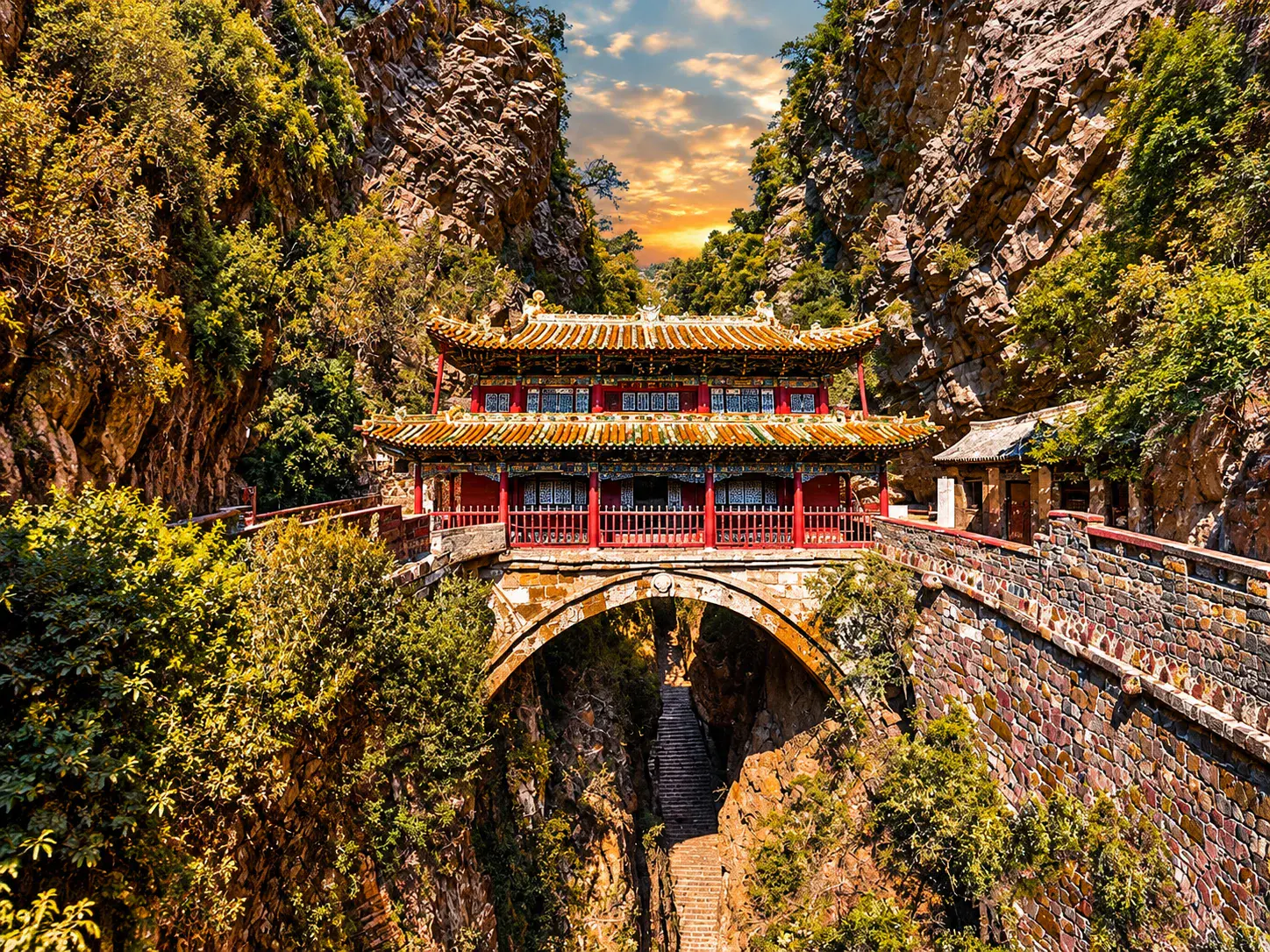
The photograph of the gorge is the bridge hall at Cangyan, a pavilion standing on an arch thrown between the cliffs. It is the picture that makes people try to "add the mountain" after lunch. That picture is a full-day commitment. The other famous photograph from this cluster is the stone arch in Zhao County, and it is a calmer, shorter outing.
If you only remember one rule from this page, remember the split in the map. Southeast is the bridge. Southwest is the gorge. North is Zhengding and the bronze at Longxing Temple. A car can do one of those spokes in a day. It cannot do all three before dinner, and a high-speed train does none of the county spokes for you. The main station is a city station. The monuments are elsewhere.
Zhaozhou Bridge is a half day with a car
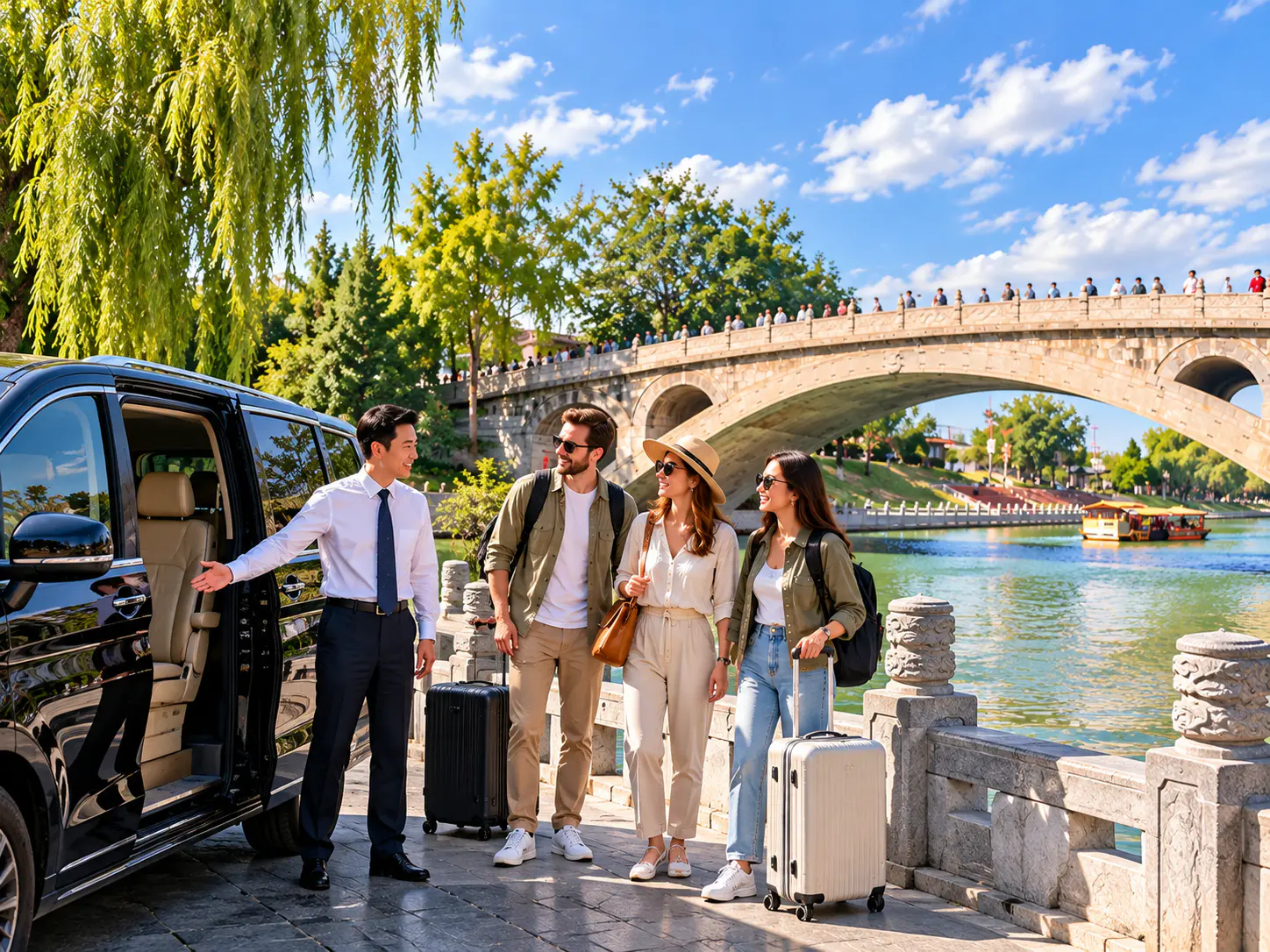
The bridge stands in Zhao County, over the Xiao River, and it is a preserved monument. You visit it on foot. You do not drive across it, and it is not a surviving piece of highway that happens to be old. Cars belong in the parking area. The arch in front of you is the sight: a Sui-dynasty open-spandrel stone bridge associated with the craftsman Li Chun. "Open spandrel" is the idea that makes the structure famous, and it is visible once someone points at it. The great central arch carries the deck. In the shoulders on either side, smaller arches pierce the stone so that floodwater has somewhere to go besides slamming into a solid wall. That is a clever, early solution. It is also why the bridge looks light, almost thin, instead of like a dam with a hole in it.
You are looking at something built under the Sui, when the reunified empire was throwing roads and canals across north China, and this county bridge outlasted the dynasty by more than a thousand years. Li Chun is the name the records and the local memory attach to the work. Treat him as the craftsman associated with the bridge, the way you treat a named master at a temple, not as a character you need a film about. Walk far enough to see the curve of the main arch from the side, low, near the waterline if the path allows. That profile is the one in schoolbooks. Then look at the railings and the stonework without rushing to the next pin. A small exhibition about the bridge is sometimes open beside it. Use it if you like engineering. Skip it if the outdoor arch has already answered your questions. Either way the on-site visit, for most people, is a pair of hours, not a day you must fill with extra activities.
Including the drive, call it a half day from a city hotel. About an hour out in ordinary traffic, a calm visit, about an hour back. Leave a margin for a slow truck on the county road and for the time it takes to park and find the right gate. This is a comfortable afternoon when the morning was short, or a comfortable morning when the afternoon is a train. It is a bad idea at 15:30 after a late Longxing visit, because you will arrive to a closing monument and a driver who still has to get you home. It is a worse idea as the second half of a Cangyan day. The mountain will already have taken the hours, and the two sites do not sit on one loop that a cheerful map app can pretend is "only a bit extra."
Entry rules have, in recent years, included a real-name reservation even for travelers who expected to walk up and pay. Rules change. Check the current ticket and reservation rule before you leave the hotel, and bring the passport you will actually show. The form may be a Chinese-language phone process. A driver or a hotel desk can help you through it more easily than a debate at the gate. Do not assume an international card, or a smile, replaces the identity document.
The small stone bridge, and nothing more
Zhao County has a second, smaller arch, Yongtong Bridge (永通桥), often called the small stone bridge. It sits in the same county, not on the mountain and not in Zhengding. People who have just enjoyed Anji Bridge sometimes have the energy for it. It is optional. It is not a second life goal, and it should not be the reason you cut short the main arch or the reason you decline Cangyan on a different day. The small bridge is interesting if you are already nearby and you want to see another open-spandrel idea at a reduced scale. It has been repaired across later centuries, so you are not sneaking up on an untouched twin. If the group is hungry, cold, or due back at a station, skip it without a speech. The famous bridge is the one you came to Zhao County to see.
There are other county sights that local itineraries like to staple on, including temple yards in the town. Leave them alone unless a specific interest is already yours. A half day stays a half day only if you let it end. The itinerary page shows where this half day sits against a night in the city. It does not sit against a same-day return to Beijing unless you have given up Zhengding, which would be an odd trade. The bronze and the bridge are both worth it. They are worth it on a shape that includes a sleep, not on a single heroic loop from Beijing West.
How to look at the arch once you are there
The visit has a short sequence, and the sequence is the difference between seeing the bridge and orbiting a parking lot. Start with the side view, low enough to take in the main arch and the openings in the shoulders as one shape. That profile is the engineering. The deck comes second: walk it, feel the gentle rise, and notice that the river underneath may look ordinary. The bridge was built for a flood plain, for water that sometimes arrives in a hurry, not for a canyon you admire from a footbridge. Then the railings. Dragons and other stone figures have been recarved and replaced over later centuries. Some panels are much younger than the Sui arch. Enjoy them as evidence that the monument was kept in use and then kept as a monument. A chisel mark is not automatically a seventh-century signature.
Stay on the walkway the site asks you to use. The openings in the shoulders are there so floodwater can pass. They are not a climbing frame, and the stone is a preserved structure, not a playground and not a road. If an exhibition room beside the park is open, it is the right place for the inscription tradition and for the story of later repairs. If it is closed, you have not lost the visit. The arch you can walk around is the reason Zhao County was worth the drive.
When the side view and the deck have both had a few unhurried minutes, you are allowed to be finished. Lingering for a second hour because the drive took an hour is how a half day turns into a late return and a fantasy mountain plan for the morning after. The morning after, if it is Cangyan, points the other way across the plain. Let the bridge end while everyone is still glad they came. Yongtong Bridge, if you still want it, is the only add-on that belongs in this same outing, and only while the group is curious rather than dutiful. Hunger, a station clock, or a cold wind are all good reasons to skip the smaller arch and eat in the city.
Cangyan Mountain is the full day
Cangyan asks for the morning departure and the whole date. Jingxing County is southwest of Shijiazhuang, toward the Taihang foothills. The drive is a mountain road, commonly well over an hour each way and sometimes closer to two when traffic, weather, or a slow climb intervenes. You do not begin walking at the minute the city disappears behind you. You begin walking after the scenic gate, on stone steps and paths that rise toward the cliffs. Wear shoes you trust on worn stone. Bring a layer even in summer, because the gorge can feel different from the plain, and bring more than a layer in winter. This is not a promenade and not a temple courtyard with a gift shop at the first turn.
The sight at the top of that effort is the bridge hall (桥楼殿) of Fuqing Temple: a hall built on a stone arch that spans the chasm between the rock faces. You walk into the pavilion, and the drop is suddenly the point. Railings, timber, and the gap below are the whole drama. Give it time. Look from inside the hall and, if the paths allow, from a viewpoint where you can see the arch from the side, which is how the photograph works. Do not sprint to the railing, take one picture, and declare the mountain done while the people you came with are still on the stairs. The climb is shared. The viewing should be shared too.
The mountain tells a story that Princess Nanyang, said to be a daughter of the Sui ruling house, became a nun here after the dynasty fell. You will see the story on signs and in the way the temple explains itself. Treat it as the story the place tells. Do not repeat it as verified history, and do not build the day around proving or disproving it. The masonry spanning the gorge does not need a romance to be worth the drive. If a guide adds vivid dialogue for the princess, listen as folklore. The hall in front of you is the fact you can check with your own eyes.
Stairs are the mobility question. Someone who managed Longxing's thresholds may still be wrong for this climb. Decide that in the hotel, not at the scenic gate, where turning around wastes the morning and embarrasses everyone. Children who like a hike often like this mountain. Children who are already finished after a dawn transfer will not be improved by a gorge. Holiday weekends compress the paths. Go earlier than you think on those dates, and accept that a narrow stair plus a tour group is a wait, not an emergency.
Check current tickets before you promise the day. Admission, last entry, and any weather closure are local decisions. A clear morning in the city can still be a wet stair on the mountain. If the steps are running water, or the road is icing, this is the day to cancel. Pride is a bad reason to climb slick stone.
Name a turnaround time before the car leaves the hotel. The bridge hall is the destination. Paths continue above and beyond it, and those paths are how a good visit becomes a dusk walk down uneven stone. One further viewpoint is a fair bonus when the hour is early and everyone still wants it. Say who may continue and where you will meet. A split group on a stair, with the driver at the gate and one phone left in a pocket, is the way this mountain goes wrong. Food inside the scenic area is ordinary fuel. Eat breakfast in the city, carry water, and ask what a stall is about to cook before it arrives. The meal is not why you came to Jingxing. The hall over the gap is.
Do not stack the two, and do not stack the mountain on Zhengding
Cangyan and Zhaozhou on one date is the classic mistake, because both are "outside Shijiazhuang" and a phone will draw a triangle. The triangle runs southeast and southwest with a tired return through the city in the middle, and it ends in the dark with neither site properly seen. Pick one. If both matter, sleep in between. Two nights is the honest length for the bronze plus both counties, as the Shijiazhuang hub argues. The two-day tour from Beijing does include Zhengding, the bridge, and the mountain with a single overnight. On that trip the second day is what makes Cangyan possible. It is a packed two days, not proof that you should invent the same packing on your own with a late start.
Do not combine Cangyan with Zhengding on a first afternoon. A morning train from Beijing, a taxi to Longxing, a real visit to the halls, and then a mountain road is how people see a gate, miss the bronze, and meet the gorge at closing. If the first day is the old town, let it be the old town. The mountain is a next-day project from a hotel, with a driver at the door in the morning.
Do not treat Cangyan as a stop between Beijing and Zhengding. Beijing lies to the northeast. Zhengding is on the north side of the modern city. The gorge is southwest, in the hills. Nothing about a southbound high-speed ride from Beijing West passes the bridge hall. You would be leaving the rail line, crossing the plain, climbing, and then coming back north to a temple you could have reached directly. That is a different holiday.
Car, not a train you hope exists
Neither county outing is a high-speed day trip in the way Zhengding can be a rail day from Beijing. You can reach Shijiazhuang Station quickly. You cannot step off a bullet train onto Anji Bridge or into the Jingxing gorge. Public buses toward Zhao County and toward Jingxing exist, and they are the slow, multi-seat way, often with a transfer, reasonable for a resident and clumsy for a traveler who still needs to be back for a timed train. For these two sites, use a car.
A taxi you dismiss and re-hail is a poor pattern on a mountain road. Hire the car for the day, or book a Shijiazhuang private driver, so the same person waits while you walk. Confirm the Chinese destination in writing: 赵县赵州桥 for the bridge, 井陉苍岩山 for the mountain. Add the hotel address for the return. On a Zhengding morning that truly is only Zhengding, an ordinary city taxi is enough, and the day-tour version is the Zhengding day tour from Beijing. The moment the pin moves to a county, the driver who stays is the plan.
When the mountain washes out
Hebei Museum (河北博物院), in the city, is the indoor backup. It is the provincial collection, strong enough for a real afternoon, and it does not depend on a cliff path. Check which weekday it closes before you need it. Displays change, and a closed hall inside a museum is ordinary. You do not need a named gallery list to spend a serious afternoon there. Go anyway on a wet day if the alternative was Cangyan. You will see more than you would have seen from a car turned back at a foggy gate.
If the rained-out plan was Zhaozhou, the museum is still a fair substitute, and so is an unhurried second look at Zhengding's indoor bronze, which does not care about rain. If you have not yet been to Longxing, a lost mountain morning can become a temple afternoon, provided you reach the gate with hours left, not minutes. If you have already done Longxing properly, do not repeat it in a rush just to feel the day was cultural. Read, eat wheat noodles, and let the museum be the rescue.
The Western Qing Tombs are not the rescue and not a Shijiazhuang day trip. They stand in Yi County, nearer to Beijing or to Baoding than to this capital. Take the Western Qing Tombs day tour and give them a different morning, starting from Beijing. Handan and Xingtai are farther down the high-speed line, not scenic leftovers after the gorge. Hebei as a whole has coast and tombs and old towns. Today, from this city, you are choosing between a Sui arch on the plain and a hall above a chasm in the hills. Choose one, go by car, and leave the other for a date that can carry it.
Ways to plan the days
Pick the bridge or the mountain. The driver page is how either one becomes a day.
Bridge day
Time fit: 1 day
Zhao County, the Sui bridge, Yongtong only if you are already there.
- Bridge day
Why choose it: Zhao County, the Sui bridge, Yongtong only if you are already there.
Mountain day
Time fit: 1 day
Cangyan and the hall, then back.
- Mountain day
Why choose it: Cangyan and the hall, then back.
After Zhengding
Time fit: 2 days
Temple one day, one of these the next.
- After Zhengding
Why choose it: Temple one day, one of these the next.
Want a driver for the county, not a second temple?
Say bridge or mountain. We will not schedule both, and we will not schedule either against a late Beijing train.
Keep planning
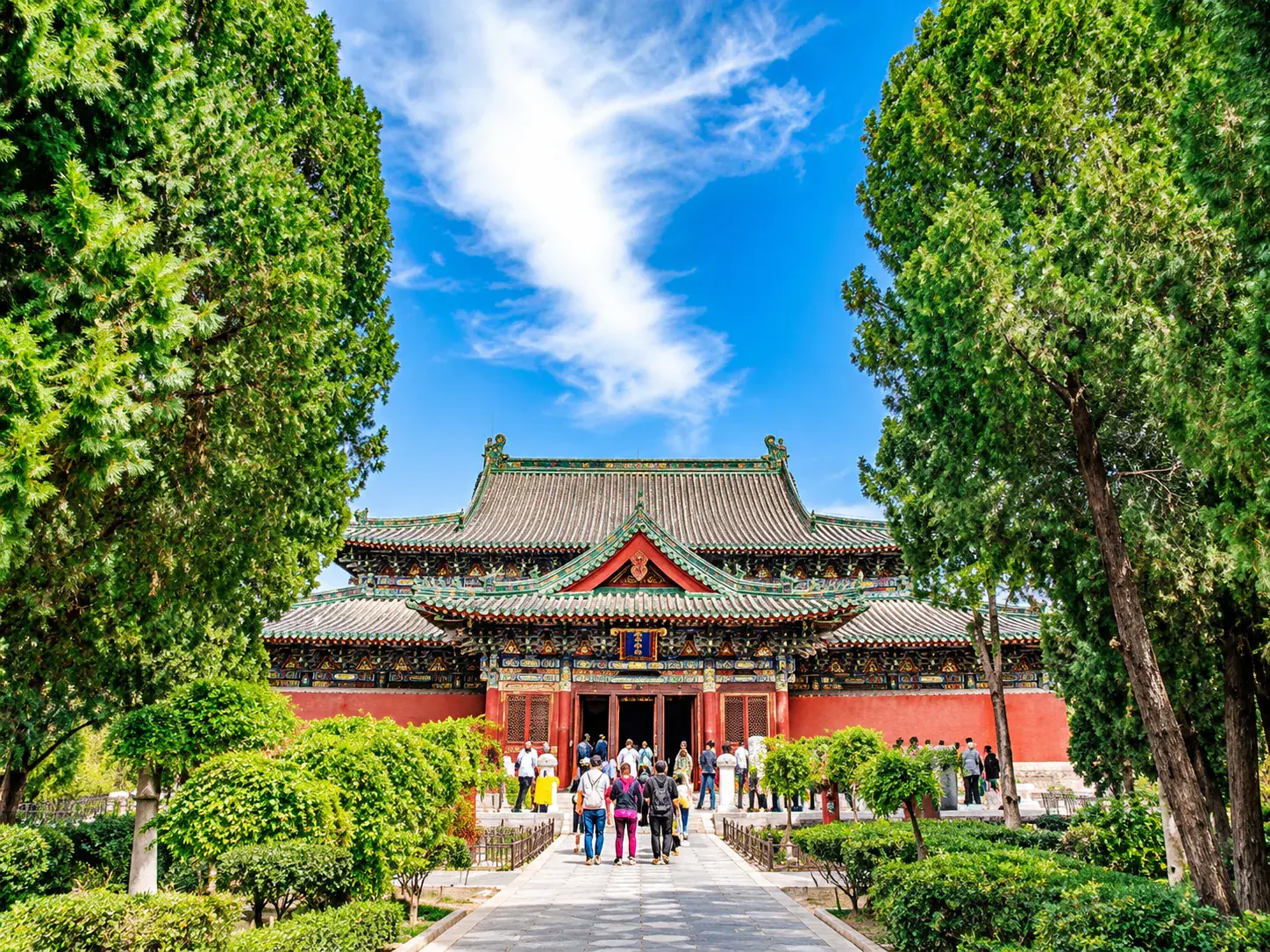
Hebei's capital: Zhengding first, then a bridge or a mountain on another day.
Longxing Temple, the pagodas, and the wall. Not the airport, and not a film-set mansion.
A tight Zhengding rail day, or two days if the mountain matters.
Often 70 to 90 minutes from Beijing West. Confirm the train.
Day-trip questions
- No. It is a preserved monument, not a highway.
- The craftsman associated with the Sui open-spandrel bridge. The visit does not require a lecture, but the name belongs to this span.
- No. It is a smaller bridge nearby and an optional add when you are already in Zhao County.
- Treat her as a story told at the mountain, not as verified history.
- No. Even one of them plus Zhengding is the two-day shape.
- The Shijiazhuang private driver for the car day. The two-day tour if the temple and one county site are both required.
Choose the bridge or the mountain
Zhaozhou is a monument in Zhao County. Cangyan is a day in Jingxing. Zhengding already had its own morning.