
Macau at a glance
| Detail | Plan |
|---|---|
| Day trip | Early ferry, peninsula only |
| Comfortable first stay | 2 nights if Coloane matters |
| From Hong Kong | Ferry about 55–70 minutes, plus immigration |
| Walk | Senado, the facade, the fort, A-Ma Temple |
| Ride | Taipa, Cotai, and Coloane |
| Entry | Check Macau separately from Hong Kong and the mainland |
Macau is a small territory with a walking city at its centre and a resort landscape off to the side. The part that stays with most first-time visitors is the peninsula: a UNESCO historic centre of squares, church fronts, a fort, and a sea temple, all close enough to do on foot if you respect the hills and the heat. Taipa, Coloane, and Cotai sit beyond that walk. They are worth your time when you have a night to spare. They are a poor bargain when you try to staple them onto a late arrival and still “see the churches.”
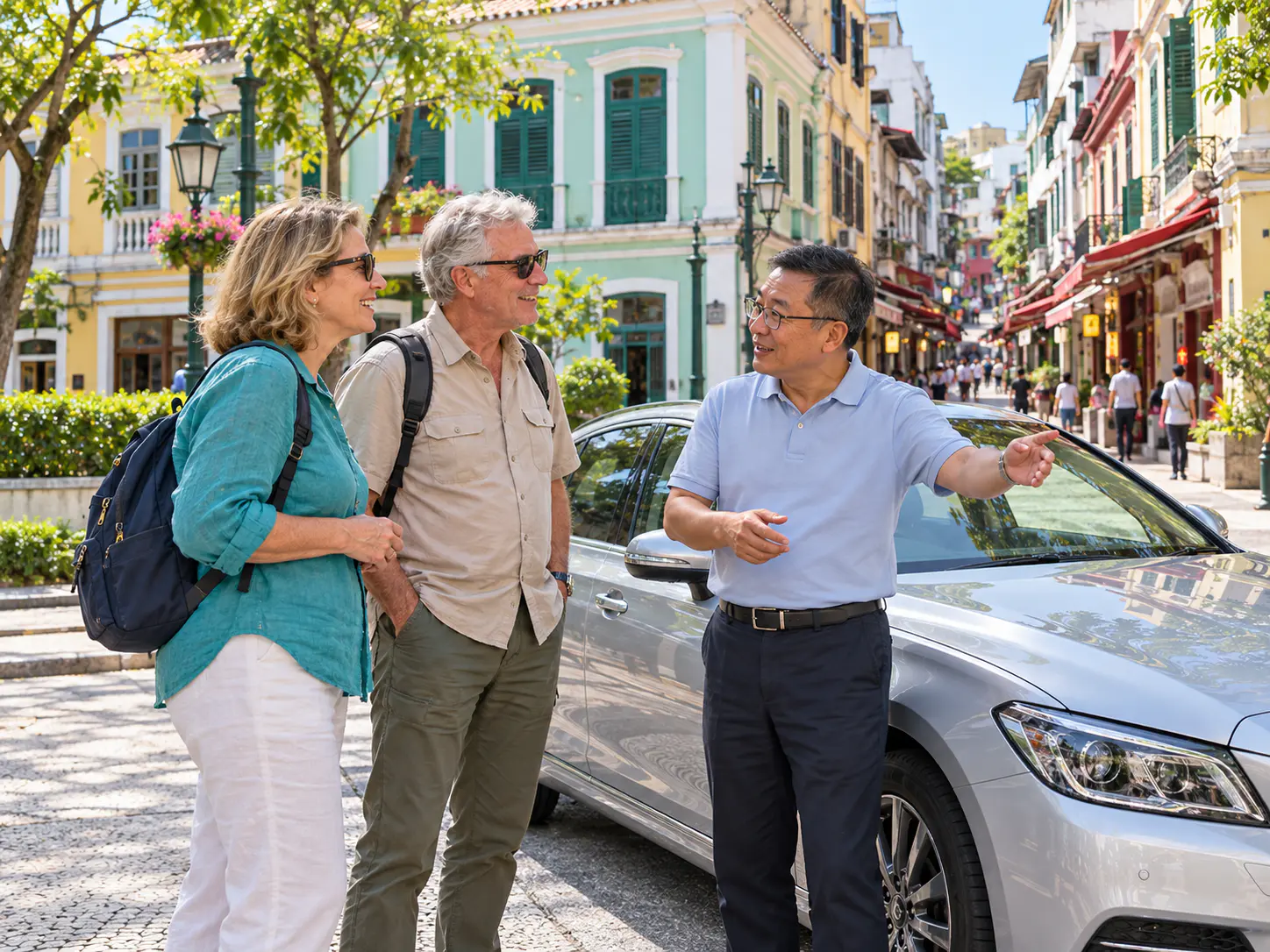
We plan Macau as a place you move through slowly. The distances on a map look friendly. The day gets away from people who treat the ferry, the immigration halls, the stairs, and a second district as if they were free. Give the peninsula a real morning. Eat something Macanese while you are still curious. Add the villages only when the clock allows it.
A peninsula you walk, not a city you drive
The Historic Centre of Macau is a UNESCO area on the peninsula. It is a set of streets and small hills, not a single gate with a turnstile. Cars can creep the edges. They cannot do the visit for you. The black-and-white stone pavement, the church steps, and the lanes between them are the trip.
The historic centre page is the walking order we use: Senado Square, St. Dominic’s, the cathedral, the Ruins of St. Paul’s, Mount Fortress and the Macau Museum, then A-Ma Temple toward the southwest. Guia Fortress and its lighthouse are the high point of the peninsula, and they are their own outing. If your legs are already finished in the square, leave Guia for a bus or for another hour when you are fresh. Do not treat that hill as the next doorway after Senado.
Start that walk early on the day you care about it. Shade is patchy. The staircase in front of the ruins is wide, crowded, and exposed. A long morning covers the central cluster with time to look. A late start covers photos and a feeling that the city was a checklist.
Three places beyond the old streets
Taipa Village, Coloane Village, and Cotai are not one “resort island” with three nicknames. Taipa Village is the food and old-street side: narrow lanes, a church on a small rise, and rooms where a pork chop bun or a plate of African chicken makes more sense than another monument. Coloane Village is quieter, with the Chapel of St. Francis Xavier on the square and the original Lord Stow’s egg-tart bakery in the village itself. A downtown kiosk can sell you a tart. It is not that shop. Hac Sa is a beach on Coloane’s eastern shore. On most short trips it is a view of the water, not a swimming stop.
Cotai is the strip of large resorts built on the land between those older settlements. The scale is the sight: long interiors, copied skylines, and distances that feel longer once you are indoors. Casinos sit inside that landscape. They are optional scenery. A first cultural trip can ignore the gaming floors completely and still understand Cotai by walking a public hall and leaving. The old streets do not depend on a table, and a resort front is enough of a look if the scale interests you.
Read Taipa, Coloane, and Cotai before you promise yourself all three after a peninsula morning. The geography is kind. The pacing is not.
Food you will meet, without a champion
Macanese cooking is what a port city keeps after centuries of Portuguese, Chinese, and farther trade. You do not need a ranked restaurant list to eat well. You need to know which plates are worth ordering when you see them.
Ask for a Portuguese egg tart when it is still warm, with a blistered top and a crust that shatters. African chicken is a Macau plate: chicken baked in a sauce that usually carries coconut, peanut, and a mild chili warmth. It is not a dish you need to compare with a cookbook from another coast. The pork chop bun is the practical meal, a cutlet in a soft roll, easy to eat between the square and the next church. Serradura, sometimes called sawdust pudding, is the cool finish: cream layered with fine biscuit crumbs.
These show up in Taipa Village, in Coloane, and in plain rooms near the historic centre. Pick a busy place that cooks the plate you want. Skip the hunt for a single “best” address. If a shop is built only for a photo of a tart, keep walking until you find one that is handing them over the counter to people who live here.
Patacas in your pocket, and the change you get back
The local currency is the pataca. Hong Kong dollars are widely accepted in cash. Spend them in a small shop or a taxi and the change often comes back in patacas. That is normal. It is not a trick, and it is not a rate you need us to invent. We do not quote an exchange figure here. Use what the hotel desk and the bank say that week, and keep a mix of notes for bakeries, temple stalls, and buses.
Cards are routine in the large resorts and in many sit-down restaurants. The walk you actually came for is full of smaller counters. A little cash keeps the egg tart and the bus from becoming a problem. ATMs are easy to find around Senado and the resort lobbies. Do the withdrawal before you are halfway up Guia Hill.
Arriving from Hong Kong
Hong Kong is the usual pairing, and it is a real crossing, not a subway ride inside one city. TurboJET and Cotai Water Jet both take about 55–70 minutes on the water. They land at different Macau terminals. One arrival puts you on the peninsula, which is the right start for the historic walk. The other puts you on Taipa, which is convenient for Cotai and the villages and a longer transfer if Senado is your first stop. Read the pier on the ticket. The habit “ferries go to Macau” is how people lose an hour.
The bridge bus is the useful choice when you are already on the airport side of Hong Kong, or when you are coming through Zhuhai. It is a road arrival at a boundary port, then another ride into the old streets. For a peninsula-first day it is the less charming way in. Build immigration time on both ends, outbound and back. A day trip has to start early. If the boat is at noon, the historic walk gets compressed, and Cotai plus every church is no longer an honest plan.
The crossing itself is written up in from Hong Kong. If Hong Kong is the longer half of your week, use the Hong Kong guide for that city rather than trying to carry both places in your head from a Macau page.
How to choose
| Choice | Fit | Skip when |
|---|---|---|
| Historic Macau | 2 days | The peninsula churches and squares, plus a Taipa meal. |
| Classic Macau | 3 days | Add Coloane and a slower food evening. |
| Day trip from Hong Kong | 1 day | An early ferry, the historic walk, and a realistic return. |
How many days to give it
One long day can cover the peninsula if you start early and skip Coloane. You walk the centre, you eat once, you leave Guia off the list if the return boat is fixed, and you do not detour into a resort. That is a good day. It is not the whole territory.
An overnight is what makes Coloane and a Taipa meal relaxed. You stop watching the ferry clock during dinner. You can see the village square in the morning without sprinting. Two nights is the comfortable first trip if casinos are not the point: a full peninsula day, a slow food evening in Taipa, and Coloane without stacking it on the same morning as your exit. The day-by-day version is the itinerary.
Do not try to do Cotai and every church after a noon ferry. The map will say you can. Your feet and the immigration hall will disagree.
Weather, holidays, and the streets underfoot
October through December is the weather we would choose for this walk. The air is clearer, the stairs are kinder, and a full peninsula loop feels like a plan rather than a test. Summer is hot, and it carries typhoon risk. When a storm signal shuts the ferries, the day you designed is over. Humid months still work if you start at the first cool hour, use the museum as a pause, and stop pretending midday is a good time for Guia.
Chinese New Year and Golden Week are packed. The centre is still beautiful, and it is also a slow shuffle with long tables and hotels under pressure. If those dates are the only time you can come, keep the plan smaller: the central walk, one meal, and no island-hopping trophy. The month-by-month detail sits in best time.
Rain changes the pavement more than it changes the sights. The Portuguese stone is handsome and slippery. A light shower is a walking day. A gale is a day to stay off the fortress walls.
Buses, taxis, shuttles, and the one job for a car
Walking the peninsula is the point. Once you leave it, public buses, taxis, and hotel shuttles reach Cotai and Coloane. Shuttles are most useful when you are already staying in a large Cotai hotel and need the ferry terminal or a sister resort. Buses are the ordinary way between Taipa Village and Coloane if you are willing to learn one route that morning. Taxis solve a hot afternoon and a piece of luggage. They do not solve a traffic jam on a holiday weekend by magic.
A private car is for luggage, a late ferry, or a Coloane-plus-peninsula day with people who will not ride buses. It is a separate product from the walking days on this guide: Macau private driver. Hire it for that job. Do not hire it to idle beside Senado while you walk streets it cannot enter.
Two trip shapes, and where a longer week lives
If you would rather have the days arranged than assemble them from piers and bus stops, look at tour shapes and then at Macau tours. The two-day shape stays on the peninsula and in Taipa. The three-day shape adds Coloane and a slower food evening. Neither one is a casino tour.
A week that joins Hong Kong and Macau is arranged from the Hong Kong side. Use these Macau pages to decide how large the Macau piece should be. Then match the length to the way you actually like to travel: a walk, a meal, and a village, or a single hard day on the peninsula and a boat home.
What the first morning should hold
The first morning is the historic centre, and it is worth protecting from every other idea. Meet at Senado Square rather than at a resort driveway. Take the short step east to the cathedral while the group is still fresh, come back, and walk north through St. Dominic’s to the stairs. The Ruins of St. Paul’s are the carved stone facade at the top of that flight, not a complete church you settle into. A crypt and a small museum sit behind the wall. They are a brief extra. Mount Fortress and the Macau Museum are the next few minutes on the same hill, the museum especially welcome when you want to be indoors. Then, if the day still has room, continue southwest to A-Ma Temple. Guia Fortress and the lighthouse wait for fresh legs or a bus. They are a different hill.
Keep shopping and Cotai out of the middle of that climb. A Portuguese egg tart can happen on the way down. African chicken or a pork chop bun can happen after the fort, when you are ready to sit or ready to walk with food in your hand. Serradura can wait until there is a real table. None of those plates needs a single winning address, and none of them should send you to Coloane before the peninsula morning is finished. The original egg-tart shop is a village errand for another day.
Shoes matter more than a clever outfit. The patterned pavement is rounded underfoot and slick after rain. The facade steps are broad, busy, and short on shade. A hat and water are the summer kit. In October, November, and December the same stairs feel like the reason you came, and you will still want the water. If a typhoon signal has stopped the ferries, you will not be on the walls at all. The first morning also needs a spoken meeting plan: the foot of the ruin stairs, the fortress rampart, and then either A-Ma’s gate or a café you have already named. “Somewhere in the centre” is how a small district hides people for an hour.
Three entry points, and your own passport
Macau, Hong Kong, and mainland China are separate entry points. Permission that works for one does not automatically cover the others. A ferry from Hong Kong still means leaving one territory and entering another, even though the ride is short. The bridge has its own halls. A land link with Zhuhai is another boundary again. Check your passport and the current rules for your nationality before you buy the boat ticket. We will not guess that answer for you, and we will not pretend one length of stay fits every traveler.
Do the check before you design a tight day trip. The historic walk is robust. The border is the part you cannot charm into moving faster.
Ways to plan the days
These shapes match the Macau tours page. They are starting points, not fixed departures.
Historic Macau
Time fit: 2 days
The peninsula churches and squares, plus a Taipa meal.
- Macau
- Historic Macau
Why choose it: The peninsula churches and squares, plus a Taipa meal.
Classic Macau
Time fit: 3 days
Add Coloane and a slower food evening.
- Macau
- Classic Macau
Why choose it: Add Coloane and a slower food evening.
Day trip from Hong Kong
Time fit: 1 day
An early ferry, the historic walk, and a realistic return.
- Macau
- Day trip from Hong Kong
Why choose it: An early ferry, the historic walk, and a realistic return.
Want help shaping the Macau days?
Tell us your Hong Kong hotel area and whether you want a day trip or a night in Macau. We reply with a walkable historic plan.
Keep planning
Ruins of St. Paul's is a facade. Walk Senado, the forts, and A-Ma Temple in one order so you do not backtrack in the heat.

Taipa Village, Coloane, and the Cotai resorts are three different places. A cultural trip can skip the gaming floors.
October to December is the easy walking season. Summer is hot, and typhoon days are a real reason to keep a spare night.
A day trip covers the peninsula. Two days add Taipa. Three days are what Coloane needs.
Ferries land at different terminals. Build in immigration, and do not start the historic walk after a noon departure.
Compare a 2-day historic stay, a 3-day Coloane trip, and an early day trip from Hong Kong.
Questions people ask
- One long day is enough for the peninsula when you start early and leave Coloane off the plan. You can walk Senado Square, St. Dominic’s, the cathedral, the Ruins of St. Paul’s, and Mount Fortress, eat one Macanese plate, and still make a return boat, as long as both immigration halls cooperate. That day does not also hold a relaxed Taipa dinner and the Coloane village bakery. Guia Fortress is the first piece to drop if the return time is fixed. If the only sailing you can catch leaves around noon, treat the day as a short look at the central streets, not as the full historic centre. Stay a night if the villages matter to you.
- No. Casinos are part of the Cotai landscape and part of the peninsula’s modern edge, and you will see resort architecture if you go near the strip. The gaming floors are optional. A first trip built around the historic centre, Taipa’s old streets, and Coloane Village does not need them at all. Walk the public side of a resort if you are curious about the scale, then leave. Nothing in the UNESCO streets depends on a casino visit. If someone in your group wants to go in, set a time limit so it does not eat the peninsula morning you came for.
- Yes, in a great many cash transactions. Hong Kong dollars are widely accepted across shops, restaurants, and taxis. The local currency is still the pataca, and change often comes back in patacas even when you handed over Hong Kong dollars. Keep both in your wallet so a small bakery or a bus is not a problem. Cards work in resorts and in many restaurants. We do not quote a conversion rate here, because the figure you get at a desk or an ATM is the one that matters that week. Withdraw a little cash before you wander away from Senado or a hotel lobby.
- They are the stone facade of a church, not a complete church with a nave you sit in. Fire destroyed the body of the building, and what remains is the carved front, the great staircase in front of it, and a small museum space behind the wall. Plan for stairs, sun, and crowds. Do not plan for a long interior visit the way you would at a working cathedral. The cathedral itself, St. Dominic’s, and the Chapel of St. Francis Xavier in Coloane are the places where you step into a church. The ruins are the photograph and the climb, and they are worth both when you give them time.
- They are three separate entry points. A status that lets you into Hong Kong does not, by itself, let you into Macau or into mainland China, and the reverse is just as true. The ferry, the bridge, and the Zhuhai boundary each have their own clearance. Check your own passport against the current rules before you travel. This guide will not tell you how many days you may stay, because that answer depends on your nationality and on rules that change. Build the paperwork check into the same evening you choose the ferry, not into the morning you are standing in the hall.
- The original Lord Stow’s bakery is in Coloane Village, not at every downtown kiosk and not automatically at a counter inside a resort. Those other stalls can sell a Portuguese egg tart, and a warm tart is still a pleasure near Senado. They are a different stop from the village shop. Coloane is an easy add only when you have an overnight or a third day. On a pure peninsula day, eat a tart where you are and leave the original shop for the visit that can reach the village without a sprint back to the pier.
Plan a Macau visit
Share whether you are coming by ferry or the bridge, and if Coloane is the reason to stay overnight. We reply with a peninsula-first plan.