
Macau at a glance
| Detail | Plan |
|---|---|
| Day trip | Early ferry, peninsula only |
| Comfortable first stay | 2 nights if Coloane matters |
| From Hong Kong | Ferry about 55–70 minutes, plus immigration |
| Walk | Senado, the facade, the fort, A-Ma Temple |
| Ride | Taipa, Cotai, and Coloane |
| Entry | Check Macau separately from Hong Kong and the mainland |
Macau’s year is a walking problem before it is a sightseeing calendar. The historic centre is stairs, open squares, and fortress walls. Taipa’s lanes and Coloane’s square are kinder, and they are still outdoors. The months when that walk feels pleasant are October through December. The months when you have to design the day around heat, rain, or a crowd are the rest of the story, and they are still visitable if you shrink the plan instead of pretending the weather is a backdrop.
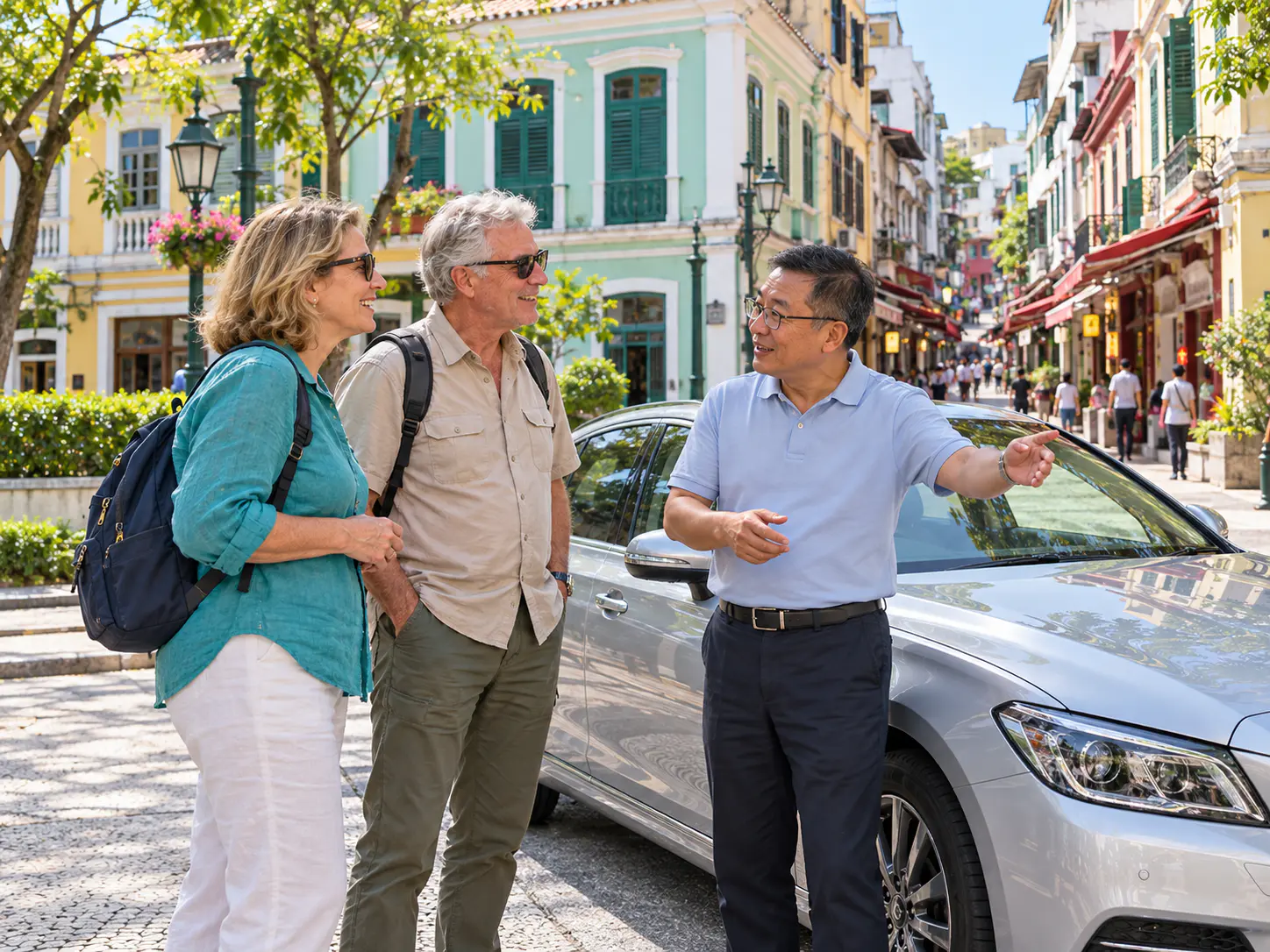
Choose the season for the peninsula first. Everything else, including a beach look at Hac Sa and an evening in Taipa, gets easier when the morning walk was not a test.
The months when walking is pleasant
October, November, and December are the stretch we would book for a first cultural visit. The humidity drops, the light on the facade at St. Paul’s is clearer, and a route from Senado Square to A-Ma Temple feels like a choice rather than an endurance event. You can put Guia Fortress and the lighthouse on the same day as the central cluster if you start early, which is much harder to justify in August. Evenings in Taipa Village are warm enough to sit outside and cool enough that you want to.
These months are not empty. Weekends draw Hong Kong visitors, and the first days of October collide with a major mainland holiday, which is a separate warning below. A random Wednesday in November is the texture to hope for: busy shops, a staircase you can walk without shuffling, and a breeze on the fort wall. Pack a light layer for the museum and for the ferry, which can feel colder than the square. You will not need a winter coat. You will be glad of shoes that can handle a shower, because a clear season still has rain.
If you can move a flexible trip into this window, do it. The churches do not change. Your willingness to walk between them does.
October through December, in practice
October starts with a caveat and then becomes the month people mean when they praise the autumn. The early days can be crowded because of Golden Week. After that, the peninsula settles into good walking weather: warm afternoons, softer mornings, and evenings that suit a Taipa meal without driving you indoors. It is a strong month for a two-night stay, because you will actually want the second day’s village walk.
November is the simplest recommendation. Heat is no longer the subject of the day. Typhoon risk has faded. The historic line, Guia if you are fresh, and a Coloane morning can share one trip without a strategy meeting about shade. This is when a three-day visit feels generous rather than necessary as recovery time.
December stays pleasant and grows busier as the holidays approach. The square looks dressed, the evenings come earlier, and hotel pressure rises around Christmas and the New Year. The walking itself remains kind. Book the ferry and the room before you book the fantasy of a spontaneous weekend. A weekday in early December is still one of the best days to climb the ruin stairs and see the carving instead of the back of a stranger’s hat.
Summer heat
Summer is hot in the specific way that hurts this itinerary. The sun sits on Senado Square, the stone staircase in front of the ruins throws heat upward, and Mount Fortress offers a view with almost no cover. Taipa’s food street is close and airless at midday. Hac Sa may look like relief on a map, and a short trip still should not be redesigned as a beach day to escape a climate you knew about.
You can visit in summer. Start at the first reasonable hour, do the cathedral and St. Dominic’s before the facade, and treat the Macau Museum as a cool room you have earned rather than as homework. Carry water. Eat the pork chop bun or the egg tart in the shade, and save African chicken for an evening when everyone has sat down. Put Guia on a cooler morning or drop it. Do not schedule the southwest walk to A-Ma Temple across the middle of the day if anyone in the group fades in heat. A taxi to Barra is a legitimate summer tool.
The other summer fact is storms. A bright morning can still sit in front of a signal that stops the ferries by afternoon. Build a loose end of the day. A same-day return to Hong Kong in July is the plan most likely to be rewritten by weather you do not control.
Typhoons and what they do to a walking trip
Typhoon season rides with the hot months. A distant storm is a weather report. A higher signal over Macau is a closed city: ferries stop, the bridge is not a place to improvise, buses stand down, and the fortress walls are the wrong viewpoint. The historic centre is stone and open space. It is not a covered market you can shelter-shop your way through while the wind rises.
Watch the official signal, not a rumour in the hotel lobby and not a blue patch of sky. When the boats are suspended, a day trip is over and an overnight guest stays put. Do not ride out to Hac Sa to “look at the waves.” Do not start the ruin stairs because the rain has paused. Use the indoor hours for a meal, a rest, or the museum if it is open, and wait. Itineraries resume the next ordinary morning. They do not resume because you are impatient.
If you are choosing dates in summer, leave a buffer night when you can. The traveler who must be in Hong Kong for a flight on the same evening as a possible signal is the traveler who should not be on a tight Macau day trip that week. Two nights in the pleasant season is a luxury. A spare night in typhoon season is equipment.
Humid days and how the peninsula feels
Humidity is the part of the forecast that the temperature number understates. On a humid morning the climb to the facade feels longer, shirts stick before you reach St. Dominic’s, and the apparently short hop from the fort down toward Barra becomes a decision. The calçada pavement does not care. It is still uneven, and when a humid day also brings rain it is slick.
The practical response is to shorten exposure, not to cancel the centre. Walk the core early. Step into the cathedral and into St. Dominic’s as pauses, not only as sights. Do the museum if you want an hour in which the weather cannot touch you. Save a second hill for another day. Guia in thick humidity, after the ruins, is the outing people describe later as “Macau was tiring,” when Macau was only scheduled badly.
Taipa in the evening can still be a pleasure on a humid day, because you are sitting and eating serradura or a bun rather than climbing. Coloane’s square is small enough to enjoy between showers. The strip’s interiors exist for air-conditioning, and they are available if you want them. They are not a requirement. A humid cultural day can end at dinner in the village without a casino lobby as a recovery ward.
Drink water before you are thirsty, and agree a stop rule with the group: if someone is dizzy on the stairs, the day becomes Senado, one church interior, the facade from a sensible distance, and a taxi. That shortened day is still Macau. The heroic version in August is how people miss the point.
How to choose
| Choice | Fit | Skip when |
|---|---|---|
| Best walking weather | Spring and autumn, or Oct–Dec in the south | Holiday weeks |
| Hot or storm season | Go, with a flex day | A packed outdoor checklist |
| Quiet season | Fewer people, different scenery | Anyone chasing peak bloom or peak snow |
Chinese New Year
Chinese New Year falls in late January or February, and it is the festival that fills the peninsula. The streets are decorated, the mood is public and loud in a way that can be wonderful, and the practical effects are queues, higher room pressure, and a historic centre that moves at the speed of a crowd. Fireworks and special events appear in some years. Shops and small kitchens may close on the core days even when the resorts stay bright.
Come for the festival if the festival is the point, and cut the sightseeing list until it matches the crowd. Senado, the facade, and a pre-agreed meal are a full plan. Guia, A-Ma, Coloane, and a Cotai wander are how that plan fails. Book the crossing from Hong Kong early in the day and early in the calendar. Immigration halls are part of the festival whether anyone advertises them or not.
If you are indifferent to the holiday and flexible on dates, slide your visit to the weeks before or after. The churches are the same. The staircase is kinder when it is not a procession. A winter visit just outside the festival still sits inside the good walking season, which is the combination to prefer.
Golden Week
Golden Week at the start of October is the other packed gate. Travelers from the mainland move in large numbers, the historic photo spots slow down, taxis become a negotiation with the clock, and restaurants that were easy in September ask you to wait. The weather may already be the good weather. The company in the square is the issue.
Treat Golden Week the way you treat a famous museum on a free Sunday. Go early, keep the route in the non-backtracking order, and do not add districts. The peninsula in the first hours of the day is still rewarding. The peninsula at noon, followed by a spontaneous Coloane plan, is a traffic story. Taipa’s food street will be busy at night. Eat earlier than you think, or eat slightly off the most photographed lane.
October is still worth it after the holiday passes. Do not let the first week talk you out of the best month. Do let it talk you out of improvising.
Shoulder weeks, rain, and the ordinary weekend
Spring is changeable. You can get a brilliant walking day and you can get fog on Guia that cancels the view, which is the only reason to have climbed. Mist on the lighthouse hill is a sign to spend the day in the streets, not a sign that the trip was timed badly. March and April can be warm and damp before summer truly arrives. Use the same heat habits in a lighter form: early start, one hill, water, an indoor pause.
Rain without wind is a walking day if you respect the pavement. The stones in Senado are beautiful and slippery. Slow down, skip the rush on the ruin stairs, and keep A-Ma if the rain is soft, because the temple halls give you shelter the ramparts do not. A downpour is a museum hour and a bakery hour. It is not a failure. The centre is close enough that you can wait out a cell of weather and continue.
Ordinary weekends are busier than midweeks in every season, because Hong Kong is near and the ferry is short. If you can walk the ruins on a Tuesday, do that, and keep the weekend for Taipa or for doing less. A Saturday in December can still be lovely. It will not be private.
Matching the season to a day trip or a night
A day trip from Hong Kong is most honest in the good months, when an early boat still leaves you a peninsula walk that does not destroy anyone. In summer, a day trip is possible and should be smaller: central streets, the facade, the fort view, one meal, no Coloane, no Guia unless the morning is unusually kind. If a typhoon is anywhere on the forecast, do not stake a same-day return on hope.
An overnight is what makes Coloane and a Taipa meal relaxed in any season, and in summer it is also what keeps you from crossing the water twice in the worst heat of the day. Two nights is the comfortable first trip when the casinos are not the point, and that advice gets stronger in the hot months, not weaker. You use the cool hours for the stairs and the hot hours for sitting down.
In October through December, two nights feel like a pleasure. In July they feel like the minimum that keeps the visit humane. Either way, do not stack Cotai and every church onto a noon arrival. The season does not change that rule. It only changes how much you will suffer if you break it.
What the calendar does to ferries and rooms
The boats take about 55–70 minutes when they run. The calendar changes everything around that number: how early you must book, how long immigration takes, and whether a return sailing exists at the hour you casually circled. Chinese New Year, Golden Week, and sunny weekends shrink the easy choices. Typhoon signals remove the choices entirely. Look at the return before you look at the midday plan.
Rooms follow the same calendar. The pleasant months and the festivals are when a peninsula hotel or a Taipa stay needs a decision rather than a same-week whim. We are not quoting rates. We are saying that the walking season you want is the season other people want too. Choose the dates, then draw a small route that fits them. A perfect November day with an overstuffed list is worse than a hot June morning with a short, early walk and a long lunch.
If you are pairing the trip with Hong Kong, give the Macau day to the clearer forecast when you can. Hong Kong has indoor backups the ruin stairs do not.
Your passport is not a season
Macau, Hong Kong, and mainland China are separate entry points in every month of the year. A pleasant November morning does not merge those clearances, and a holiday crowd does not change which document you need. Check your passport against the current rules before you lock dates. Festivals are the worst time to discover a problem at the hall, because the line behind you is longest exactly when you can least afford to start again.
Do that check, then go walk. The season is there to make the stairs feel like the right idea.
Ways to plan the days
These shapes match the Macau tours page. They are starting points, not fixed departures.
Historic Macau
Time fit: 2 days
The peninsula churches and squares, plus a Taipa meal.
- Macau
- Historic Macau
Why choose it: The peninsula churches and squares, plus a Taipa meal.
Classic Macau
Time fit: 3 days
Add Coloane and a slower food evening.
- Macau
- Classic Macau
Why choose it: Add Coloane and a slower food evening.
Day trip from Hong Kong
Time fit: 1 day
An early ferry, the historic walk, and a realistic return.
- Macau
- Day trip from Hong Kong
Why choose it: An early ferry, the historic walk, and a realistic return.
Want help shaping the Macau days?
Tell us your Hong Kong hotel area and whether you want a day trip or a night in Macau. We reply with a walkable historic plan.
Keep planning
Macau

Ruins of St. Paul's is a facade. Walk Senado, the forts, and A-Ma Temple in one order so you do not backtrack in the heat.
Taipa Village, Coloane, and the Cotai resorts are three different places. A cultural trip can skip the gaming floors.
A day trip covers the peninsula. Two days add Taipa. Three days are what Coloane needs.
Ferries land at different terminals. Build in immigration, and do not start the historic walk after a noon departure.
Compare a 2-day historic stay, a 3-day Coloane trip, and an early day trip from Hong Kong.
Questions people ask
- October through December is the comfortable window. The humidity eases, the staircase at the Ruins of St. Paul’s is kinder, and you can consider Guia Fortress on the same day as the central streets if you start early. November is the simplest month: typhoon season has faded, and the holiday crush of early October has passed. December stays pleasant and grows busier toward Christmas. Early October can already feel like good weather while Golden Week is still filling the square, so aim for the middle or later part of that month if you want the climate without the procession.
- Summer is a hard time for this particular walk, and it is still a possible time if you change the shape of the day. Start early, use churches and the museum as shade, carry water, and drop Guia Fortress once anyone is flagging. Skip Coloane unless you are staying the night. The stone stairs and the open fort walls are the parts that punish midday pride. Evenings in Taipa can still be a good meal. What summer adds, beyond heat, is typhoon risk. A same-day ferry plan needs a backup, because a higher storm signal stops the boats whether your tickets were already in hand or not.
- When a higher typhoon signal is raised, ferries suspend, the bridge is not a creative alternative, and public transport winds down. The historic centre is exposed stone, stairs, and ramparts. It is the wrong place to wait and see. Follow the official signal rather than a bright patch of sky or a lobby rumour. Stay indoors, eat, and resume the walk on the next ordinary morning. Do not go to Hac Sa for a look at the water, and do not start Mount Fortress because the rain has paused. If your dates sit in summer, a spare night is what keeps a cancelled boat from wrecking a flight.
- Avoid it if you wanted quiet churches and easy tables, and come on purpose if you wanted the festival. The peninsula is decorated and crowded, rooms are under pressure, and small kitchens may close on the core days. A realistic plan is Senado Square, the facade, and one meal you have already thought about. Guia, A-Ma Temple, Coloane, and a Cotai wander are too much on top of those crowds. Immigration on the Hong Kong crossing is slower. If the holiday is not your goal, the weeks just before or after sit in the same cool season and give you the streets at a human speed.
- Yes. The first week of October brings heavy travel, busy photo spots, slower taxis, and waits for popular tables, even when the weather has already turned pleasant. Walk early, keep the historic route in one direction, and do not improvise a Coloane add-on at noon. Taipa’s food street will be lively at night, so eat slightly earlier or slightly off the busiest lane. Once that week passes, October remains one of the best walking months. Let the holiday change your list for a few days. Do not let it talk you out of the season.
- Humidity makes the same distances feel longer and the ruin stairs feel hotter than the air temperature suggests. Start early, step into the cathedral and St. Dominic’s as real pauses, and use the Macau Museum if you want an hour out of the weather. Leave Guia for a fresher day if the air is already heavy at Senado. Rain on top of humidity makes the Portuguese pavement slick, so slow down instead of pushing the group. A shortened route on a humid morning is still a successful visit. The version that adds a second hill and a beach is the one people remember as tiring.
Plan a Macau visit
Share whether you are coming by ferry or the bridge, and if Coloane is the reason to stay overnight. We reply with a peninsula-first plan.