Season by base
| Detail | Plan |
|---|---|
| May and early June | Green courtyards, before the worst beach crush |
| July and August | Beidaihe high season, hot inland cities |
| September | Calmer coast, still mild for walking |
| October | Wall weather, and Golden Week crowds early in the month |
| Winter | Chongli ski; coast walks without swimming |
| Spring dust | Possible inland haze; palaces still open |
Hebei has no single best month. The coast, the Qing gardens, the ski valley, and the southern plain do not ripen together. You choose the anchor first, on the Hebei guide, and then you choose a month that serves that anchor. A date that is kind to Shanhaiguan can be useless at Chongli. A date that is right for snow can be a cold mistake at Beidaihe if someone still expects to swim.
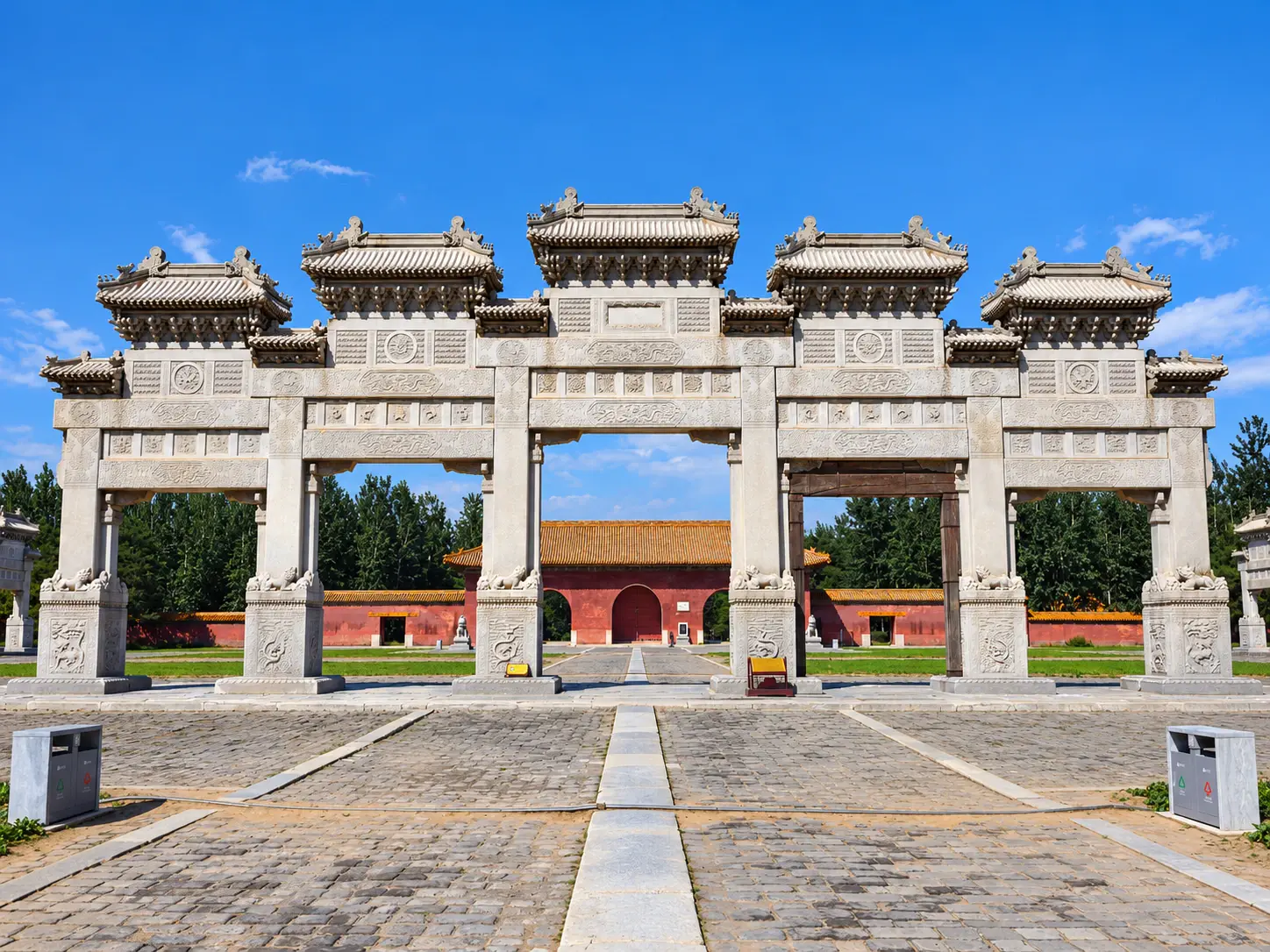
The archway is outdoor stone at the Western Qing Tombs in Yi County. Heat, dust, wind, and holiday crowds all show on a walk like this. So do clear October afternoons. The same week does not describe Qinhuangdao or the lifts above Zhangjiakou. Use the photograph as a reminder that "nice weather" has to name a place.
Summer on the gulf
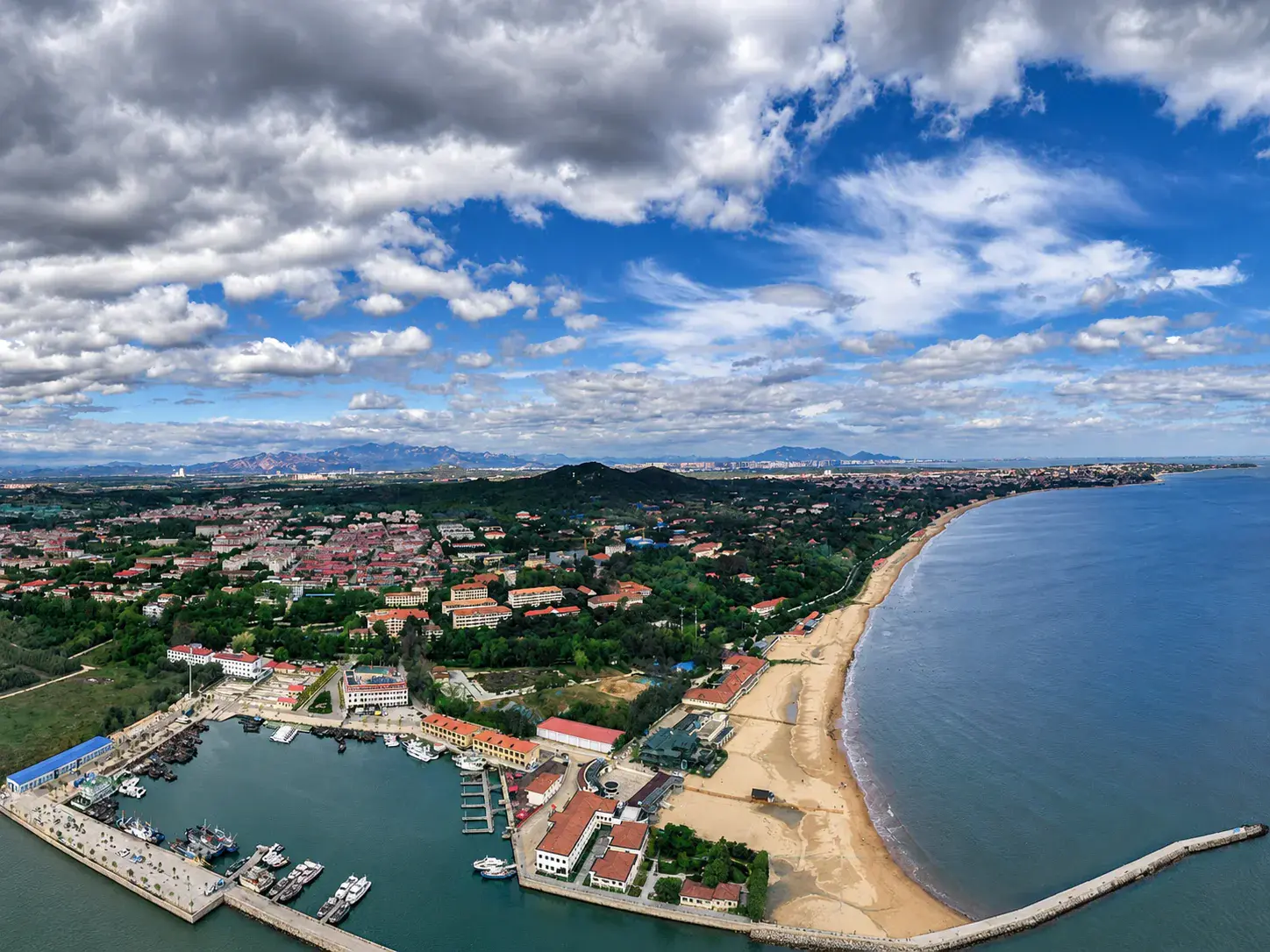
July and August are the crowded season at Beidaihe. Schools are out, the Bohai is as warm as it gets, and the promenade is a domestic resort doing what resorts do. The water is still a northern gulf. It does not become tropical because the calendar says summer. Go in these months if the group wants the shore at its busiest and most swimmable, and if you have already accepted company. Go in another month if the point is a quiet walk.
September often keeps milder afternoons and fewer tour groups. Swimming becomes a personal decision rather than the town's main idea. By October the swimming season is mostly over and the Wall weather, covered below, takes over. A coast night in July is the hardest room of the year to treat casually. Decide early, or shift the trip to September and keep the same clockwise order from Shanhaiguan to Beidaihe. The itinerary page is that order. The month does not rewrite it.
Do not spend a July week trying to add Chengde after the beach. Summer is historically when the Qing court used the Mountain Resort, and the gardens are green, but the resort is also hot and busy, and it lies in a different direction from the gulf. One summer anchor is enough. Chongli in July is a green hill, not a ski trip. Treat a summer night there as a mismatch unless you came for something other than snow.
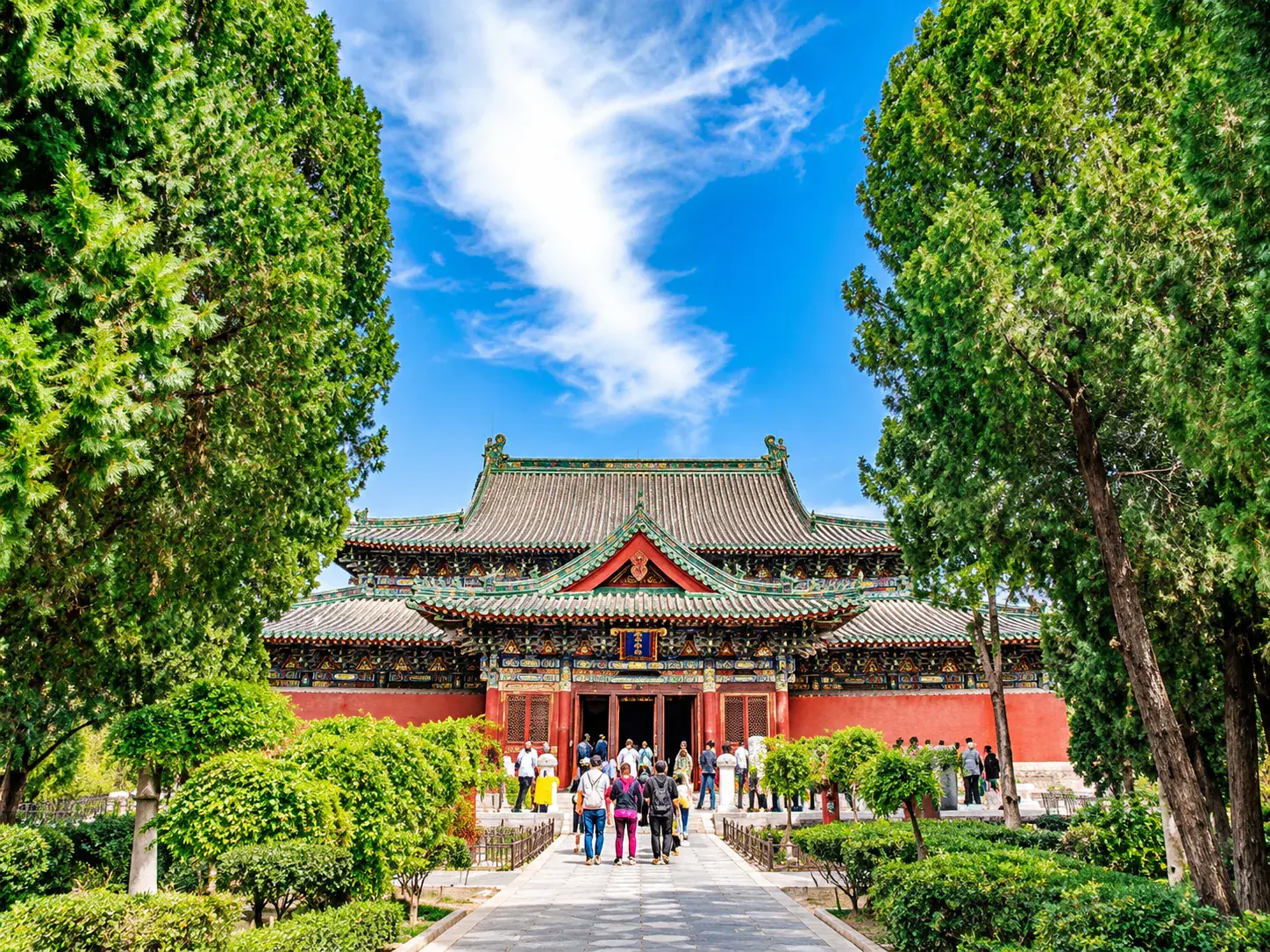
The southern cities in July and August are bright, hot, and hard on courtyards and stairs. Longxing Temple's bronze is indoors. The Zhengding courtyards, the tomb avenues, and the walks at Cangyan or Tianhe are not. Start those days early, carry water, and cut the second outdoor site before you cut the one you came for. The Tangshan memorial is a solemn morning in any month. In summer it is also a hot one. Do not shorten it to preserve energy for Hetou Old Street. The lantern canal can wait for evening, or it can be skipped.
October, the Wall, and the holiday week
October is the month people mean when they want to walk a wall in cool, clear air. At Shanhaiguan that means the pass and Old Dragon's Head without summer haze and without a swimming plan. Jacket weather is normal. Golden Week, the national holiday at the start of the month, sits inside this good weather and fills it. Trains are busy. The First Pass tablet is a crowd photograph. Zhengding, Chengde, and both Qing cemeteries feel the same pressure. If your dates are fixed in that first week, do one anchor, go early in the day, and buy the return before you leave Beijing.
Mid and late October, after the holiday, are the kinder Wall days. The light is still good. The avenues at Yi County and at Zunhua are pleasant walking if the wind is down. Chengde's lakes can be fine, with fewer people than July and colder mornings. The coast is a Wall trip by then, not a beach holiday. A group that still wants to swim should not be talked into October with a promise of "maybe."
The western tombs in the photograph are a strong October day when you are outside Golden Week. They are a long, open walk. The eastern cemetery at Zunhua is the same kind of day on the other side of Beijing, and it is the one that holds Cixi and Ci'an. October does not make those two cemeteries a pair. You still choose one. Yongzheng, Jiaqing, Daoguang, and Guangxu stay on the western side whatever the month.
Winter and the Chongli reason
Winter is when Hebei has a purpose that Beijing's palaces do not replace. Chongli, in the Zhangjiakou mountains, is a ski district on ground used for the 2022 winter events. The practical season runs through the cold months, roughly from December into March, with the heart of it in deep winter. You sleep in the valley, not downtown, and you count arrival and departure as transfers. The ski tours are the trips built for that. A Saturday night in the valley is a crowded night. Weekdays are kinder if your dates can move.
The rest of the province does not become a ski holiday by association. Beidaihe in January is wind off the gulf, an empty promenade, and a Wall visit that does not compete with summer. That can be a good, stern day if the pass is the point. It is a poor surprise if someone packed for the beach photographs they saw online. Chengde in winter is very cold. Snow on Putuo Zongcheng can be beautiful, and some halls and gardens keep shorter hours. Confirm the day. Do not promise a full summer circuit in a winter coat.
Southern mountain days ice up. Tianhe, Cangyan, and the approaches to the Handan caves are the first to become a bad idea under wet stone or frozen steps. The Zhengding halls are the more honest winter visit in Shijiazhuang, because the bronze does not depend on foliage. Handan's terrace is a short outdoor climb. It is possible in a coat and a poor idea as the only reason for a long rail day in the dark of late afternoon. Daylight is short. A plan that needed a 16:30 cave arrival in June needs an earlier start, or a different month, in January.
Spring Festival, the lunar new year travel peak, usually falls in late January or February. Stations are packed. Ski weeks that overlap the holiday are busy in a different way from a quiet midweek in December. It is a hard time to improvise an extra city. Stay with Chongli or stay in Beijing.
Spring dust on the plain
March and April are the dust months. Weather from the northwest can turn the sky yellow over the North China plain. It does not happen every day, and it is not a crisis when the forecast is clear. It is a reason to check the forecast before you promise tomb-avenue photographs or a long outdoor stair. People who struggle to breathe in dust should keep those days optional.
When the air is poor, shift to something indoors. Longxing Temple still makes sense. A museum hour in a southern city can replace a gorge. Chengde's deeper halls are kinder than a haze over the lakes. The coast is too cold for swimming and perfectly able to host an empty Wall walk if the wind is tolerable. Do not roam from city to city waiting for the dust to leave. It is a regional pattern, not a local cloud you can outrun by going to Baoding instead of Shijiazhuang.
Qingming, in early April, is a short travel peak. Labor Day, at the start of May, is another. Neither lasts as long as Golden Week, and both can tighten trains and popular gates. May after that holiday, and much of June, are the kind shoulder for gardens, yamen courtyards, and tomb walks: warm, not yet the July crush, and usually past the worst dust. June is a good Chengde month if you want green and you do not need the historical excuse of high summer. It is only a fair beach month. The gulf is not at its warmest, and the resort town is not yet in full season.
What each anchor wants from the year
Chengde likes May, June, September, and October outside the holiday week. High summer is the old court season and a crowded, hot one. Deep winter is for people who want snow and have checked that the gardens are open enough to justify the ride. A same-day rail attempt is less forgiving in short winter daylight than in June.
The coast likes September if you want fewer people and a possible last swim, October if you want the Wall, and July or August if you want the resort at full volume. Winter is a Wall day with wind. The Qinhuangdao two-day tour and the Shanhaiguan Great Wall tour are the same places in every month. Only the shore's role changes.
Chongli wants winter. The Zhangjiakou page is about that valley, not about a four-season city break. If your dates cannot fall in ski season, choose another anchor. Do not redescribe the hills as grassland to rescue a summer booking. Inner Mongolia's open country is not this resort.
The western tombs want a clear, cool day and an early start in holiday weeks. The Western Qing Tombs day tour is a longer car day than the eastern one. October and May suit it. July is an endurance walk. March is a dust gamble. The Eastern Qing Tombs day tour follows the same seasons on the Zunhua side, where Cixi, Ci'an, and Qianlong are buried. Winter avenues are bitter and still visitable if the group is dressed for wind and the site is open.
Shijiazhuang courtyards prefer spring and autumn. Summer is for people who will start early. Winter is acceptable for the bronze and a poor bet for Cangyan if the mountain road is icy. The Zhengding day tour is the easier winter shape. The two-day tour should be read against the gorge weather, not only against the temple.
Handan and Xingtai are autumn cities for anyone who wants caves or Tianhe without heat or ice. Spring can be lovely and dusty. Summer is plain heat plus stairs. A terrace morning in Handan is less seasonal than the grottoes. Bianque Temple is less seasonal than the gorge. Put the mountain on the dry, cool date and the courtyard on the date that looks worse.
Tangshan can take the memorial in any season if you dress for it and give it a morning. Hetou is an evening scene year-round, with the usual caution that shows and entry rules change. Do not pick Tangshan in July because the beach is busy and you hope the memorial will feel like a coast holiday. It will not. Baoding follows the tomb calendar if Yi County is included, and the ordinary northern calendar if you are only walking the yamen. The yamen is courtyards and shade in pieces. It is still not a reason to travel in a dust storm for fun.
Dates that are already fixed
If the dates cannot move, shrink the map. Golden Week gets one anchor and early starts. Spring Festival gets Chongli or Beijing, not a new rail city every day. A July booking gets the beach or the gardens or a southern temple, not a tour of all three. A January booking gets skiing or a frank winter Wall day, not Beidaihe as a swimming surprise.
From Beijing the trains themselves change character in those weeks. Seats go earlier. The return you meant to buy at the station is the return that forces an extra night. Buy it when the anchor is chosen. Where you sleep still follows the morning you need, not the month's reputation. A good October does not make Handan, Chengde, and the coast into one base. It makes each of them, separately, a pleasure. Pick one.
What you wear, and what the light is doing
The avenue in the photograph is uncovered stone. In May and October a light coat in the morning and a shirt by noon is a normal swing. In July the same walk is sun from the first arch to the last hall, and the heat is the reason some people should stop early and say so. In January the wind matters more than the postcard. A clear winter day at Yi County is beautiful and short. Do not dress for a garden stroll and then act surprised by an open cemetery.
Chengde's lakes can feel milder than the tomb avenues because trees and water break the sun, until you climb at an outer temple and the wind finds you. Shanhaiguan's pier is brighter and gustier than the photos suggest in October, and genuinely hot underfoot in August. Beidaihe adds glare off the gulf. A hat is not a style note. Chongli in January is a different wardrobe again: the cold of a ski hill, dry air, and a sunset that ends the day while Beijing is still thinking about dinner. You will not reuse a Beidaihe packing list there, and you should not try.
Dust days look like a filter on every outdoor photograph. If the forecast is yellow, keep the Zhengding bronze, a yamen courtyard you can leave, or a memorial visit you were going to make anyway. Save the avenue, the gorge, and the pass tablet for a clearer date in the same week if you have one. If you do not, go anyway only when the group is comfortable breathing that air, and expect flat light.
Tianjin sits on the same regional weather as the plain and does not lend you a milder calendar. A hazy day there is often a hazy day in Baoding. It is not a reason to swap cities, and it is not a coast holiday. The gulf resort is farther east, with its own wind. Treat Tianjin as its own day in whatever month you already chose for Beijing, not as the place Hebei goes when the tombs look too hot.
Holiday weeks change the hour more than the season. Golden Week in fine October weather still means you start at opening or you photograph the backs of other visitors. The same is true at Zhengding, at the First Pass, and on a temple stair in Chengde. A midweek later in the month gives the architecture back. If you cannot move the week, move the clock: first entrance, one site, an unhurried meal, and a train you already hold. That is the good version of a crowded month. The bad version adds a second city because the first gate felt disappointing, and then both feel disappointing.
Ways to plan the days
Match the month to the base you already chose.
Summer coast
Time fit: 2 days
Accept Beidaihe crowds or move the trip to September.
- Summer coast
Why choose it: Accept Beidaihe crowds or move the trip to September.
Autumn walls and palaces
Time fit: 2–4 days
Chengde or Shanhaiguan in October, avoiding the first holiday week if you can.
- Autumn walls and palaces
Why choose it: Chengde or Shanhaiguan in October, avoiding the first holiday week if you can.
Ski week
Time fit: 3+ days
Zhangjiakou and Chongli, not a beach weekend in disguise.
- Ski week
Why choose it: Zhangjiakou and Chongli, not a beach weekend in disguise.
Want the month checked against your base?
Tell us the city and the dates. A good month for the beach can be a poor month for ski hills.
Related Hebei reading
Which Hebei city is worth the night, and which one to leave for another trip.
Short shapes from Beijing that keep a single Hebei base.
Coast crowds, Wall weather, and when Chongli is the point.
Which train direction matches Chengde, the coast, or the southern line.
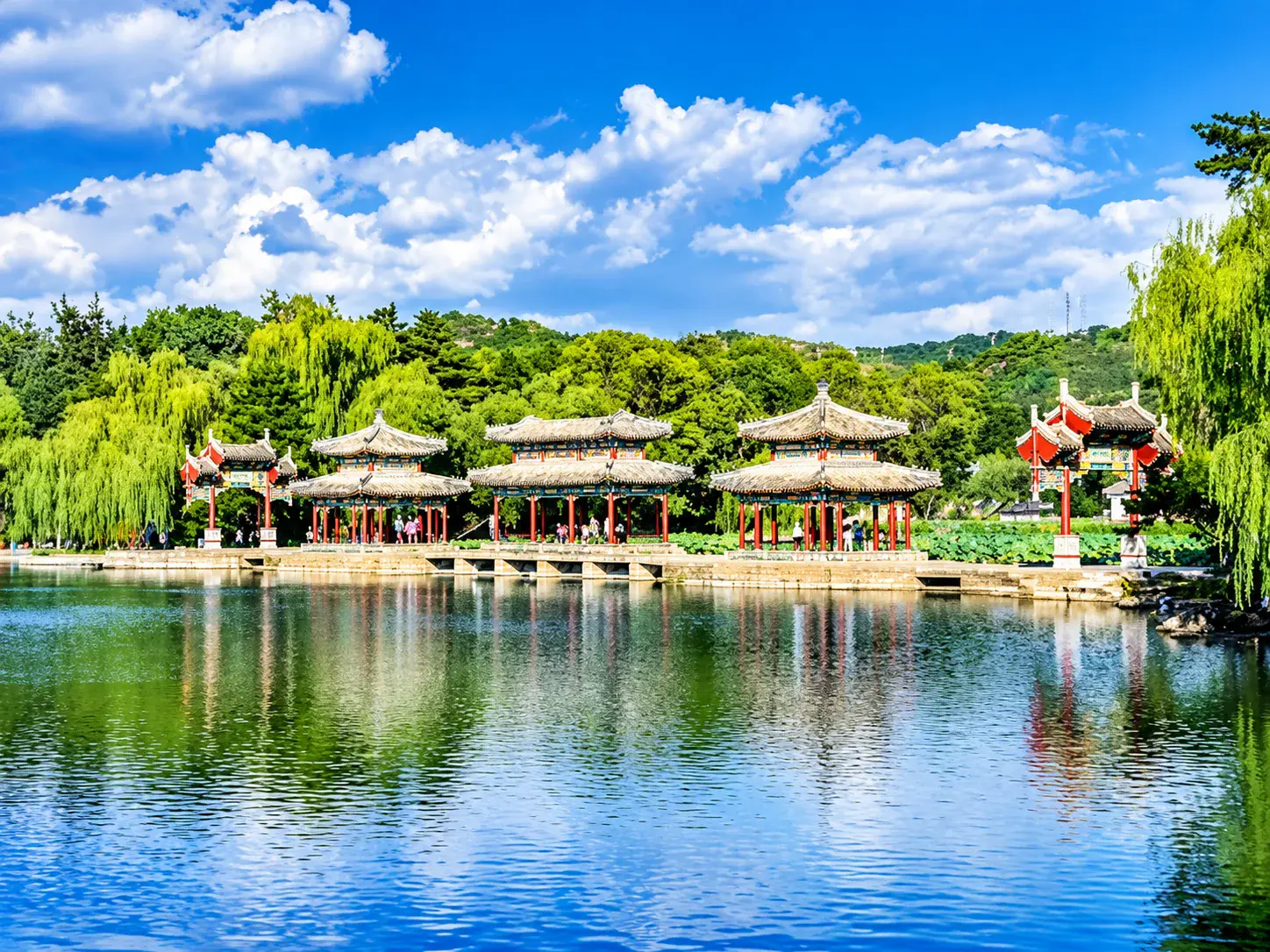
Mountain Resort, as its own overnight.
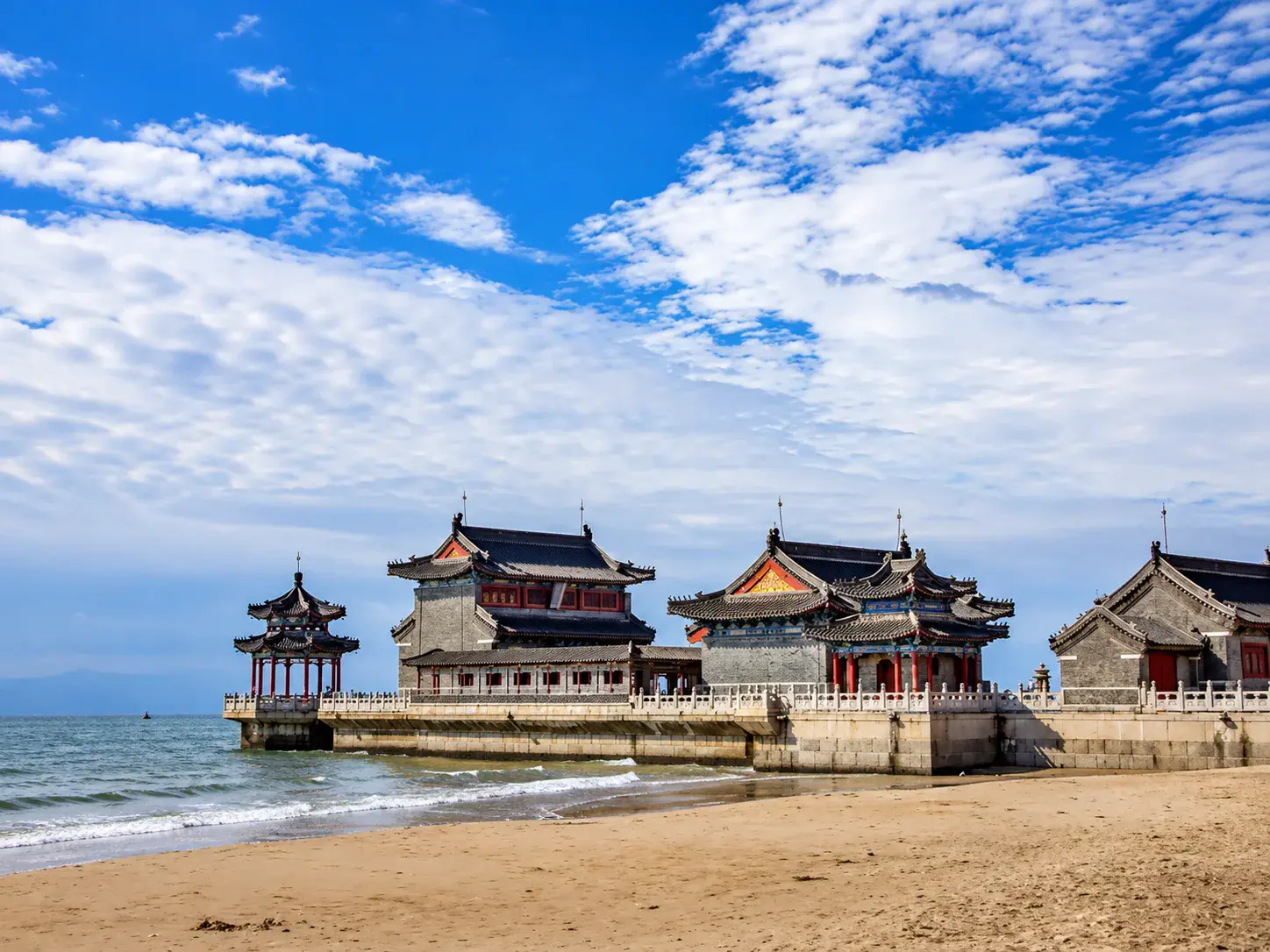
Beidaihe and Shanhaiguan, not a Chengde afternoon.
Season questions
- July and August, when school holidays and warm water stack up. September is the calmer swim window.
- Skip the beach holiday. Do not skip Chongli if skiing is the trip. Chengde in snow is a different, quieter visit.
- Early October crowds scenic gates, including the Wall at Shanhaiguan, even when the sea is already cold.
- Cool months with long enough daylight. Summer is hot stone and stronger midday sun. Check the day's hours.
- Dust and haze happen inland. The halls and tombs are still the visit; do not wait for a guaranteed blue sky.
- No. October can suit the Wall. Chongli's reason for a trip is winter snow.
Time Hebei to the base, not the province
Summer for the sea if you accept crowds, autumn for palaces and the Wall, winter for Chongli.