DragonTrail position on this hike
DragonTrail does not offer Jiankou to Mutianyu hiking tours. Interest in the route is real, but popularity alone does not make it safe, legal or suitable to book as a tour.
- The route involves unopened or unrestored Great Wall sections.
- Safety risk includes loose bricks, collapsed sections, steep exposure and weather changes.
- Possible legal consequences for visitors and operators under Beijing's Great Wall protection framework.
- Heritage-protection concern: wild-wall foot traffic damages fragile structures.
- Rescue difficulty: injuries on unrestored ridge can require mountain rescue, not simple first aid.
Safer alternatives at a glance
What to do instead
Do not treat Jiankou to Mutianyu as a bookable tourist hike. Use this page to understand the risks, then choose a legal Mutianyu or Jinshanling route instead.
| Safer alternative | Best for |
|---|---|
| Mutianyu Tower 14-20 route | First-time visitors, families, moderate hikers |
| Full official Mutianyu route | Active visitors who want a longer legal hike |
| Mutianyu cable car + west ridge route | Seniors, layovers, comfort-first travelers |
| Jinshanling Great Wall hike | Serious hikers and photographers |
| Mutianyu + Jiankou viewpoint-style photography | Visitors who want wild-wall scenery without illegal climbing |
What is the Jiankou to Mutianyu hike?
Why the traverse became famous
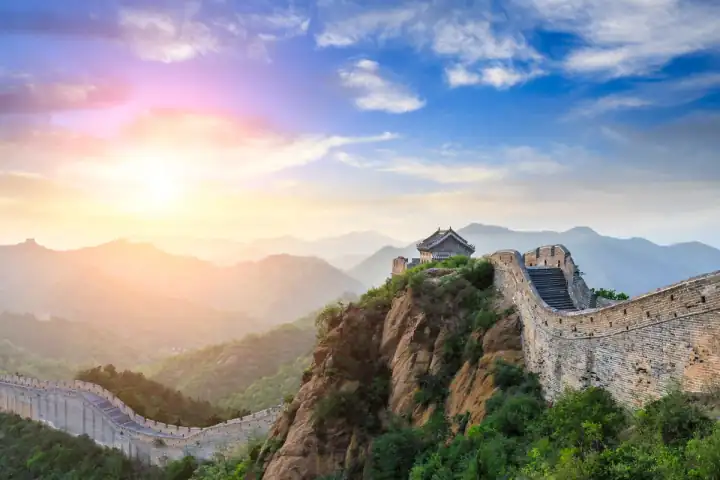
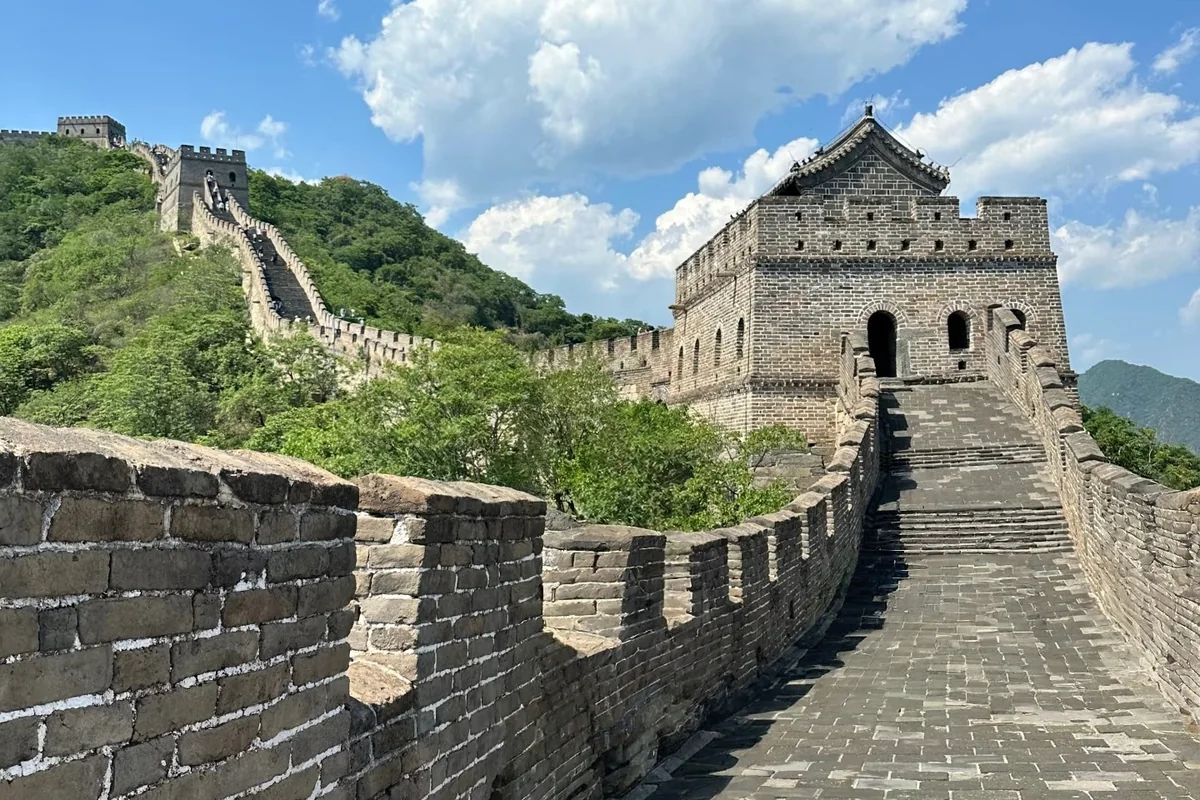
The classic Jiankou-to-Mutianyu idea is a west-to-east traverse from the wild Jiankou Great Wall into the restored Mutianyu Great Wall area. It became famous because it combines two contrasting experiences: a rugged unrestored wall and a managed scenic area. Jiankou itself is widely described as unrestored, not ticketed, with rugged beauty, steep cliffs and extremely challenging terrain. The drive from Beijing to Jiankou is around 2.5 hours each way.
| Section | Character |
|---|---|
| Jiankou | Wild, unrestored, steep, dramatic, risky |
| Mutianyu | Restored, ticketed, managed, safer, easier to exit |
Why people want to do it
The appeal of the Jiankou-to-Mutianyu traverse is real and worth naming so we can find a safer way to satisfy the same desire.
- Wild wall texture that does not exist on the restored Mutianyu side.
- Dramatic ridgelines and unrestored watchtowers.
- Far fewer people than any commercial scenic area.
- Strong photography material, especially for sunrise and sunset.
- Adventure status and bucket-list framing in older blog posts.
- The connection from wild Jiankou into managed Mutianyu as a single arc.
Why this is not a normal tour product
The same things that make Jiankou attractive are also the reasons DragonTrail will not sell it as a tour.
- Unrestored wall with no normal safety infrastructure.
- No standard tourist guardrails, route markings or easy exits.
- Unclear access legality at the Mutianyu boundary.
- Weather exposure: rain, snow, ice, lightning and poor visibility.
- Rescue difficulty: injuries may need mountain rescue rather than first aid.
- Heritage damage: foot traffic can break unstable bricks and collapsed sections.
Is the Jiankou to Mutianyu hike legal in 2026?
Do not treat Jiankou to Mutianyu as a legal, normal, bookable tourist hike. The safest approach is to stay out of unopened sections and to plan a legal Mutianyu or Jinshanling visit instead.
- Jiankou is widely described as not an officially open tourist section: it is not maintained, not ticketed, and not part of a managed scenic area.
- Climbing unopened Great Wall sections, or organising tours on unapproved sections, is prohibited under Beijing's Great Wall protection framework.
- Beijing strengthened its Great Wall protection regulations in March 2026, with new measures addressing illegal climbing of closed or visitor-restricted 'Wild Great Wall' sections.
- For DragonTrail this is non-negotiable: we do not sell or organise Jiankou-to-Mutianyu hiking tours, regardless of demand.
Is it safe? The risk model
Not a normal hiking difficulty rating
The risk is not normal 'hiking difficulty'. It comes from the combination of all of the layers above on a single ridge. Even fit travelers can misjudge loose stone, descent difficulty, route exposure, weather changes and how long rescue may take. A responsible operator should not turn a known high-risk route into a standard paid hike.
| Risk layer | What it means |
|---|---|
| Unrestored wall | Loose bricks, broken steps, collapsed areas |
| Exposure | Steep ridges, drops, strong wind |
| Weather | Rain, snow, ice, lightning and poor visibility |
| No normal facilities | No standard tourist guardrails, route markings or easy exits |
| Rescue difficulty | Injuries may require mountain rescue rather than simple first aid |
| Legal restriction | Access and tour organisation may violate protection rules |
| Heritage damage | Foot traffic can damage fragile wall structures |
Why DragonTrail does not offer this hike
DragonTrail does not offer Jiankou-to-Mutianyu hiking tours for three reasons. They are stated together so they cannot be unbundled.
- Guest safety: the route is not suitable for international visitors, families, seniors, layover travelers or casual hikers; we will not turn a known high-risk route into a paid hike.
- Legal and compliance risk: commercially organising hikes on unopened or restricted Great Wall sections creates legal and liability risk, and DragonTrail will not sell illegal or restricted wild-wall hiking.
- Heritage protection: the Great Wall is protected cultural heritage; DragonTrail stands for safe access, legal routes, heritage respect and high-quality interpretation—not unsafe access.
What many older guides miss
Many older Jiankou-to-Mutianyu articles still frame the route as a bucket-list hike. That creates three problems: outdated access information, understated risk, and weak alternatives.
- Outdated access information: some blog posts predate stricter access controls. Hiking-community sources report that the Jiankou-to-Mutianyu connection was blocked at the Mutianyu boundary in 2025, with a barrier at Tower 23.
- Understated risk: trip reports focus on scenery and personal success; one successful hike does not make a route safe for general visitors.
- Weak alternatives: many pages say it is dangerous, then still describe how to do it. This guide does the opposite: explains why people want the route, why DragonTrail does not offer it, and which safer legal options still match wild scenery, hiking or photography.
What people actually want from Jiankou to Mutianyu
Choose a safer route based on what you want
Most people searching this route are not looking for danger itself. They want one of the experiences above. Skip the unsafe traverse and choose the legal option that still fits that goal.
| Underlying desire | Safer alternative |
|---|---|
| Wild-wall scenery | Jinshanling or legal Jiankou viewpoints |
| Physical challenge | Full Mutianyu traverse or Jinshanling hike |
| Photography | Jinshanling sunrise/sunset or Mutianyu west ridge |
| Fewer crowds | Jinshanling or early Mutianyu |
| 'Not Badaling' experience | Mutianyu or Jinshanling |
| Great Wall authenticity | Jinshanling military-wall hike |
| One-day adventure from Beijing | Jinshanling private hiking day |
| Safe family Great Wall experience | Mutianyu private tour |
Safer alternative 1: official Mutianyu west ridge (Tower 14-20)
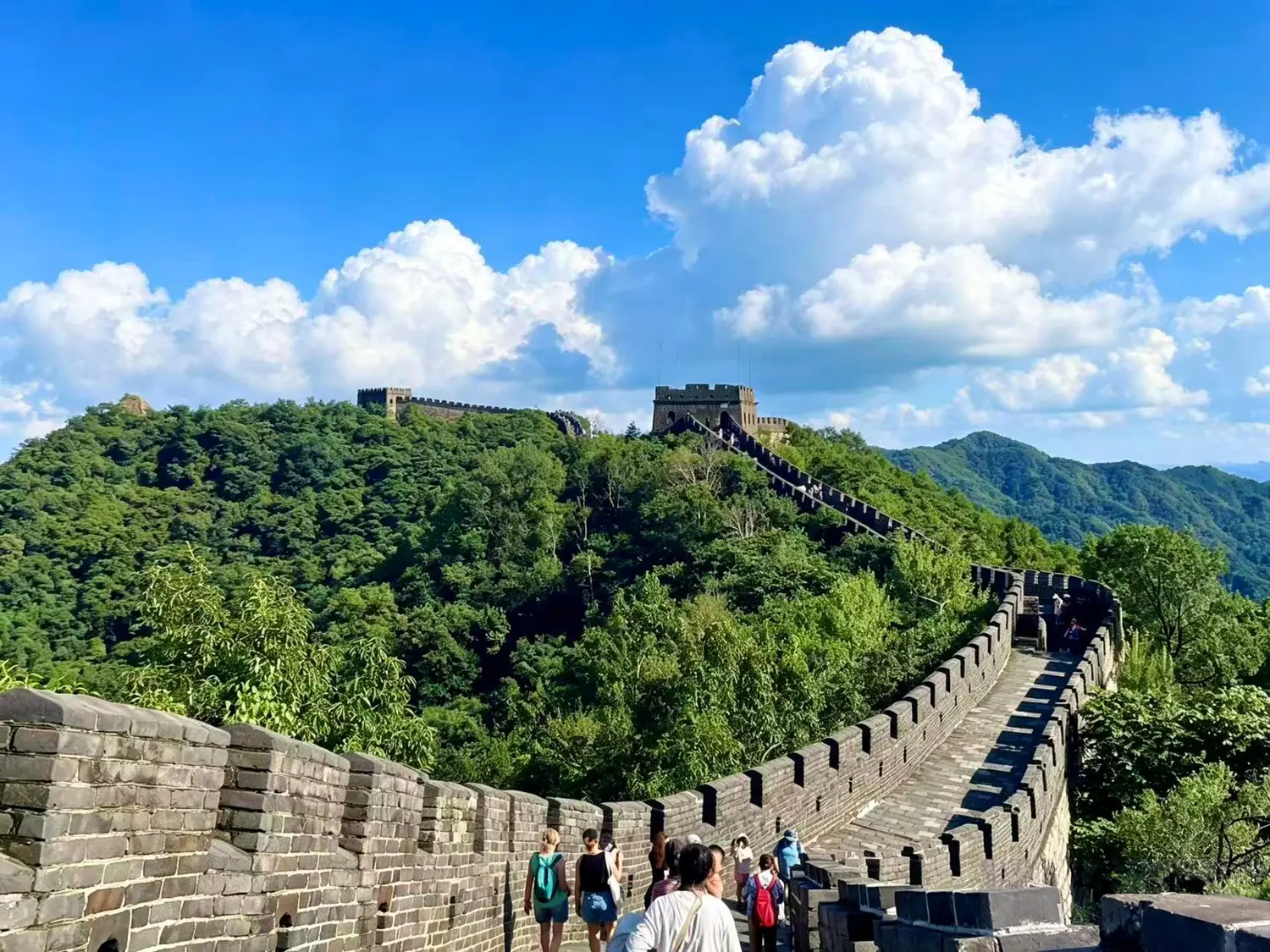
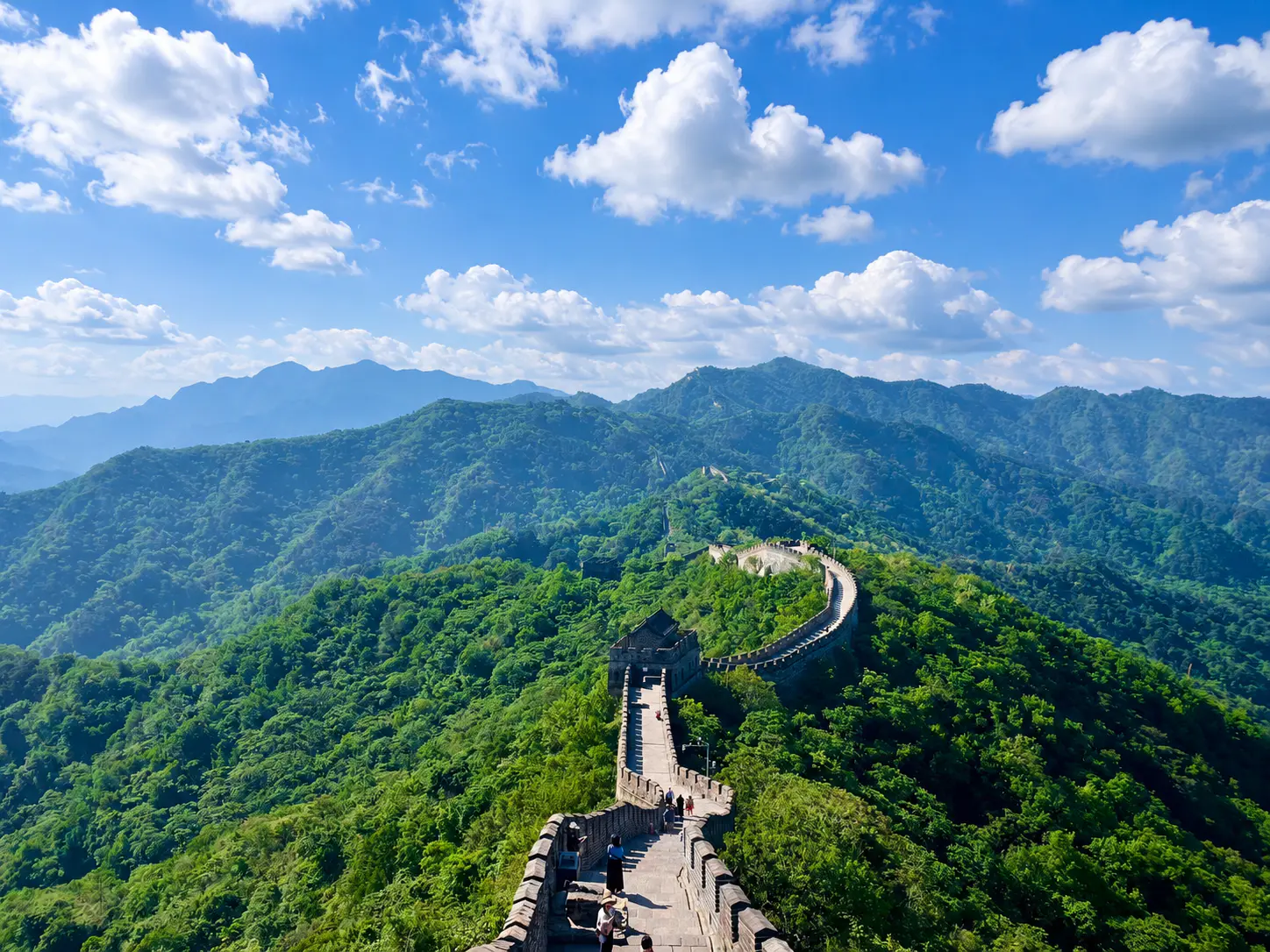
The default substitute for most travelers who searched for Jiankou-to-Mutianyu. It gives mountain scenery and restored Ming wall through fully legal visitor access.
- Best for: first-time visitors, families, seniors, layover travelers, moderate hikers, and visitors who want scenery without risk.
- Route: Visitor Center, scenic shuttle bus, west cable car to Tower 14, walk toward Tower 18 or Tower 20, return to Tower 14, cable car down.
- Why it works: mountain scenery, restored Ming wall, classic ridge views, safe exit route, cable car support, legal visitor access; the correct substitute for Jiankou for most travelers.
Safer alternative 2: full official Mutianyu route
For visitors who would have chosen Jiankou for the physical challenge but should stay legal. Do not treat this as the same as Jiankou—it is not. It gives a real Great Wall hike inside the official scenic area.
- Best for: active visitors, travelers who want a longer walk, people who considered Jiankou but should stay legal, and private-tour guests with enough time.
- Route option A: Tower 14, walk toward Tower 6, descend by the official ride system.
- Route option B: Tower 14, walk to Tower 20, return to Tower 14.
- It is a legal Great Wall hike with scenery and route control—the strongest Mutianyu option if you want more than a short cable-car stop.
Safer alternative 3: Jinshanling Great Wall hiking
Jinshanling is a strong alternative if your priority is hiking, photography or quieter ridge scenery. Unlike Jiankou, Jinshanling is a formal scenic area and is suitable for legal guided or self-guided hiking.
- Best for: serious hikers, photographers, repeat Great Wall visitors, travelers seeking solitude, and visitors with a full day.
- Why it fits the same goals: quiet, dramatic, hiking-focused, more authentic, less commercial, better photography.
- Benchmark route: the Zhuanduokou to Houchuankou photographer route is roughly 5 km / 3 miles and around 3 hours - a structured hiking option that does not require any illegal wild-wall traverse.
- If your main goal is hiking and photography, Jinshanling usually provides a better legal alternative.
Safer alternative 4: Mutianyu + wild-wall viewpoint logic
Some travelers want Jiankou because they want to see the wild wall, not necessarily climb it. This route gives wild-wall context without entering the restricted section.
- Best for: photographers, cultural travelers, cautious hikers, visitors interested in Great Wall preservation, and people who want the wild-wall atmosphere without trespassing.
- Route: Mutianyu west route, walk toward Tower 18 or Tower 20, take in views toward the Jiankou direction, hear the wild-wall history from a guide, and return without illegal crossing.
- What it does not do: it does not put visitors on the restricted side; the boundary between Jiankou and Mutianyu (around Mutianyu Tower 23) is treated as a hard stop.
Which alternative should you choose?
| Guest request | Recommended alternative |
|---|---|
| "I want the Jiankou to Mutianyu hike" | DragonTrail does not offer it—choose Jinshanling or the full Mutianyu route instead |
| "I want wild scenery" | Jinshanling or Mutianyu west ridge |
| "I want a hard hike" | Jinshanling private hiking tour |
| "I want photos" | Jinshanling or Mutianyu Tower 14-20 |
| "I have a layover" | Mutianyu short west route only |
| "I have kids" | Mutianyu cable car route |
| "I'm a senior traveler" | Mutianyu Tower 14-16 |
| "I want legal and safe" | Official Mutianyu or Jinshanling |
| "I want no crowds" | Jinshanling or early Mutianyu weekday |
Jiankou to Mutianyu vs safer routes
| Factor | Jiankou to Mutianyu | Mutianyu official route | Jinshanling hiking |
|---|---|---|---|
| Legal status | Restricted / not normal tourist route | Legal scenic area | Legal scenic area |
| Safety | High risk | Low to moderate | Moderate |
| Best for | Not recommended as a tour | Most visitors | Hikers / photographers |
| Facilities | Very limited / none | Strong | Basic but formal |
| Rescue access | Difficult | Managed scenic area | Managed scenic area |
| Photography | Strong but risky | Strong and safe | Very strong |
| Family suitability | No | Strong | Weak |
| Senior suitability | No | Strong | Limited |
| Layover suitability | No | Strong from PEK if time works | No |
| DragonTrail booking | Not offered | Available | Available as a specialist hike |
What this guide covers—and what it does not
This guide focuses on the current legal and safety situation rather than providing instructions for accessing restricted sections. We keep that limit intentionally.
- Covered here: legal status, safety risks, why DragonTrail does not offer the route, why people search for it, safer Mutianyu and Jinshanling alternatives, FAQ, and how to plan a safe legal visit.
- Not included: step-by-step access instructions, village trail directions, barrier-bypass details, GPS-style route descriptions, how to avoid patrols, or how to enter closed sections.
- Why the boundary matters: detailed wild-wall how-to content creates safety, legal and operational risk for everyone involved—visitors, operators and the Great Wall itself.
Common mistakes when planning a Jiankou to Mutianyu hike
Mistake 1: assuming old blog posts reflect current access
Many Jiankou-to-Mutianyu posts predate stricter access controls. The Mutianyu-side connection was blocked at the boundary in 2025, with a barrier near Mutianyu Tower 23, so old route descriptions no longer match the reality on the ground.
Mistake 2: treating one successful trip report as proof of safety
Personal success stories focus on scenery and outcomes, not risk. A single completed hike does not make a route safe for general visitors, especially families, seniors or anyone unfamiliar with unrestored mountain ridges.
Mistake 3: trusting tour pages that romanticise the route
Pages that sell 'Jiankou to Mutianyu hiking tours' often understate the legal and safety reality. The marketing language and the operational reality are not the same thing.
Mistake 4: underestimating rescue difficulty on unrestored terrain
On unrestored ridge, even a moderate injury can require mountain rescue rather than first aid. Plan against the worst-case rescue scenario, not the best-case photo.
Mistake 5: attempting the route on a layover or with family or seniors
Layover travelers, families and seniors should not be on this route. Layovers add return-clock pressure; families and seniors add mobility and speed constraints that do not match unrestored terrain.
Mistake 6: booking with operators that do not explain the legal status
If an operator sells this route without explaining the legal and safety reality, that is a signal about the operator, not about the route. Choose a legal Mutianyu or Jinshanling alternative instead.
FAQ: Jiankou to Mutianyu Great Wall Hike
- You should not treat it as a normal legal tourist hike. Jiankou is widely described as an unopened or non-ticketed wild section, and current sources state that climbing unapproved Great Wall sections or organising tours on them is prohibited.
- No. DragonTrail does not offer Jiankou to Mutianyu hiking tours due to safety, legality, liability and heritage-protection concerns.
- Jiankou is unrestored, steep and exposed. Risks include loose bricks, collapsed sections, poor footing, weather changes, strong wind, ice, lightning and difficult rescue conditions.
- Jiankou is not a normal ticketed scenic area like Mutianyu or Badaling. It is generally described as not maintained, not ticketed and not open for tourists in the standard sense.
- The safest alternative is the official Mutianyu west route: cable car to Tower 14, walk toward Tower 18 or Tower 20, then return to Tower 14.
- Jinshanling is the best legal alternative for serious hikers and photographers. It is farther from Beijing but gives a stronger hiking and ridge-line experience than normal Mutianyu.
- Yes. You can choose Jinshanling or use Mutianyu's west route for views toward more rugged Great Wall terrain without entering restricted sections.
- No. Jiankou is not suitable for families, seniors, layover travelers or casual hikers. Use Mutianyu instead.
- No. For layovers, use Mutianyu only. Jiankou creates too much legal, timing and safety risk.
- Some pages may be outdated, informal or operating in a legally risky zone. DragonTrail does not offer the route because it does not match a safe, compliant, professional travel operation.
Looking for a safe alternative to Jiankou?
The Jiankou to Mutianyu hike is famous, but DragonTrail does not offer it because it involves wild, unrestored and restricted Great Wall sections with real safety and legal risks. The right next step is to satisfy the same underlying desire - scenery, hiking, photography, solitude - on a legal route.
Practical next steps: casual visitors—Mutianyu private tour; families and seniors—Mutianyu cable-car route; layover travelers—short Mutianyu west route only; serious hikers—Jinshanling private hiking tour; photographers—Jinshanling or the Mutianyu west ridge.
DragonTrail Beijing does not offer Jiankou to Mutianyu hikes, but we can recommend a safer legal route based on your available time, fitness level, hotel or airport location, family or senior needs, photography goals, weather and return deadline.