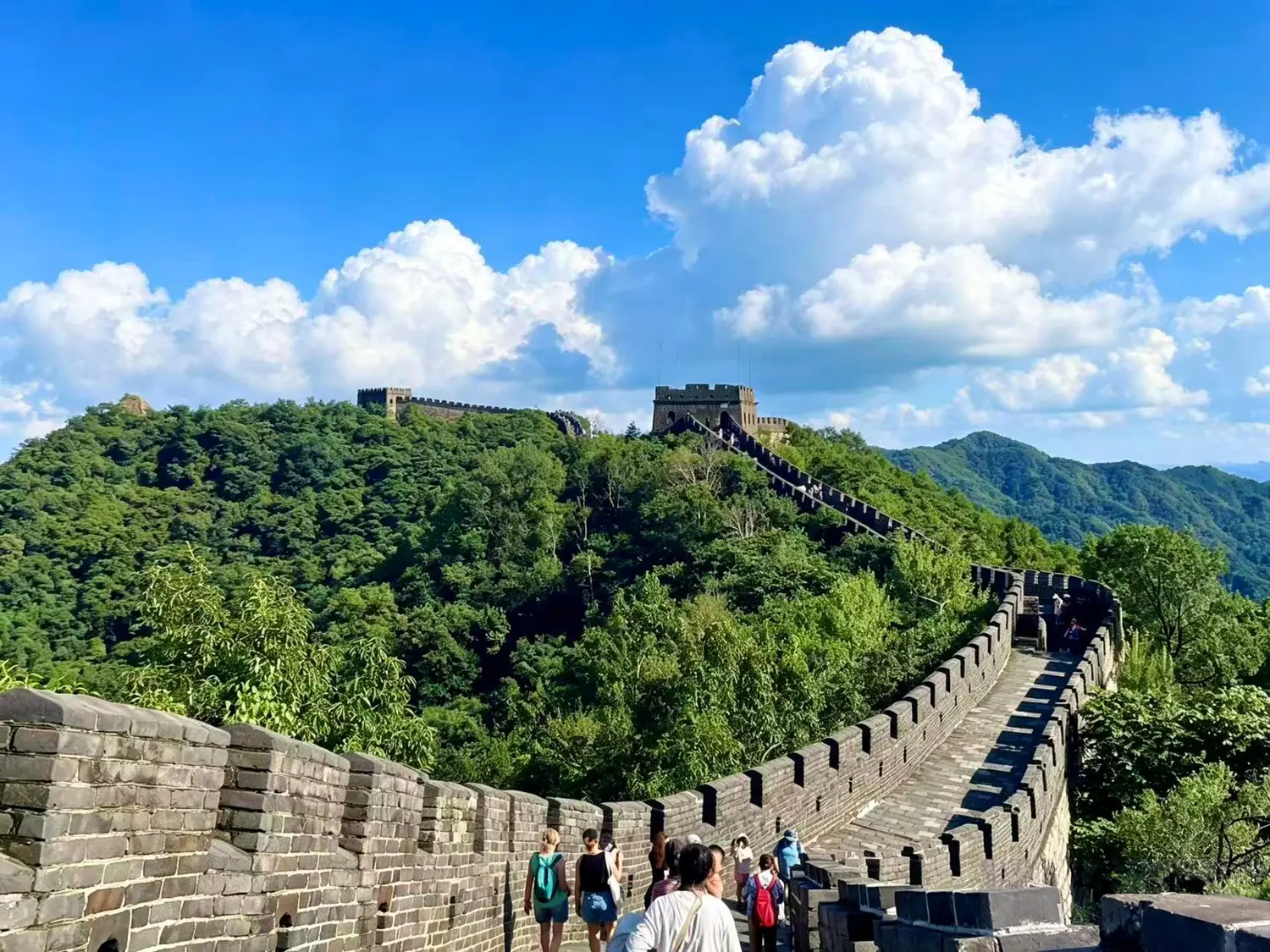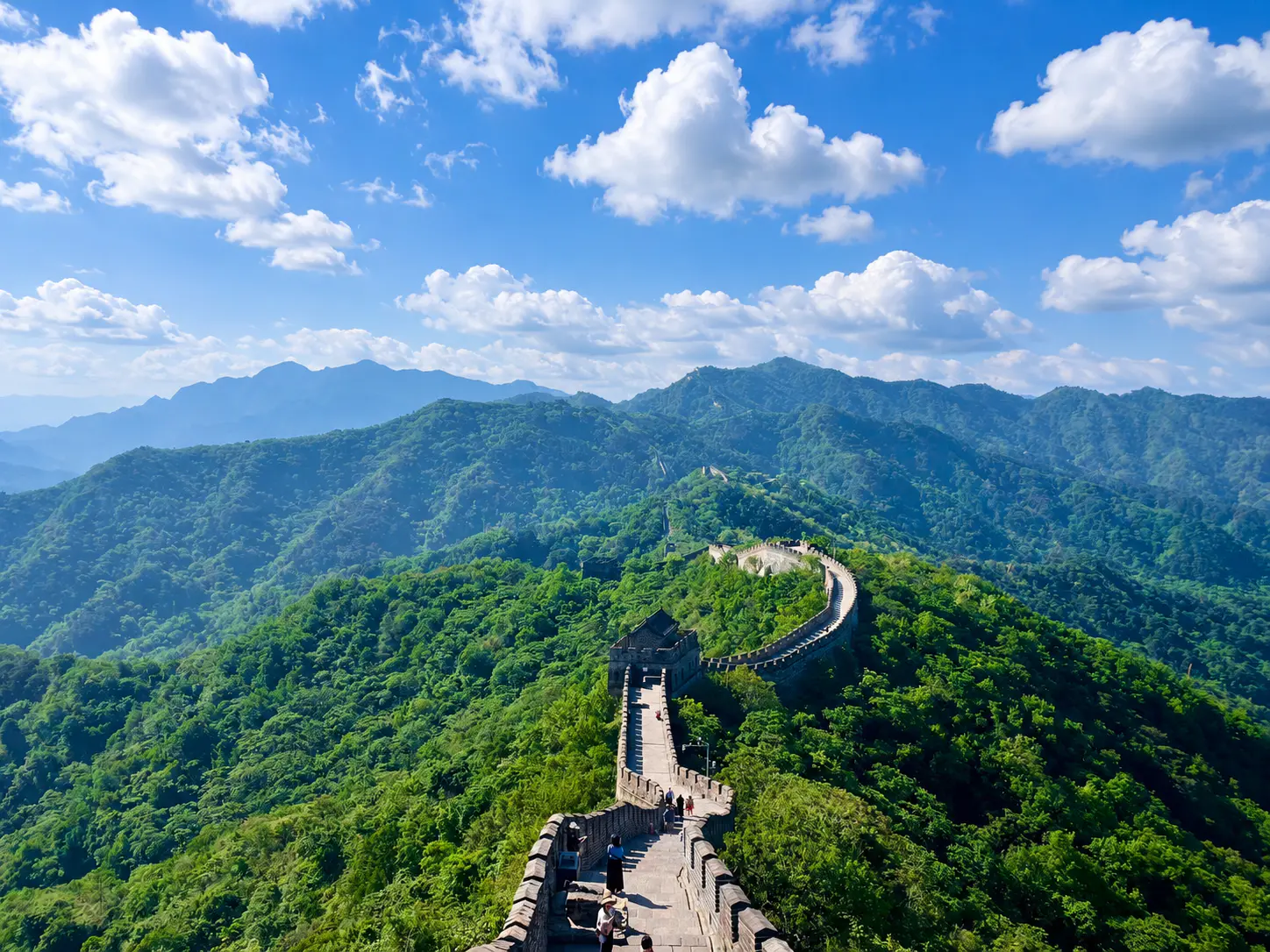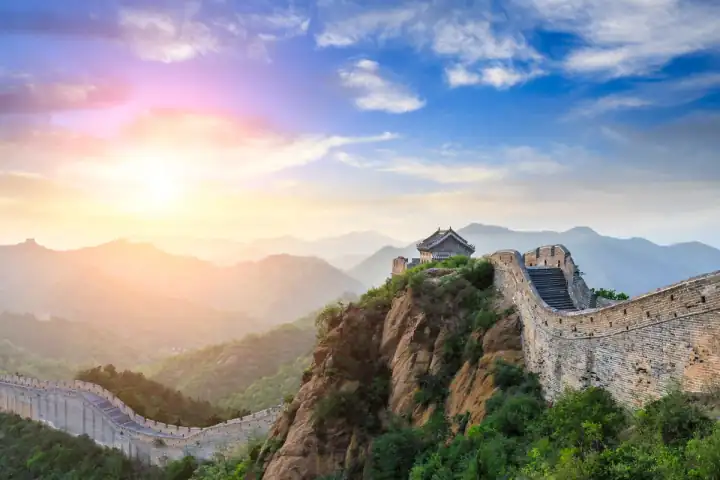
Best route by visitor type
Choose by reality, not the map
Pick the route by time, physical ability, ride system, weather, and return risk — not by what looks attractive on the map. A great route on paper becomes a bad day if the group is mismatched or the return clock is tight.
| Visitor type | Best route |
|---|---|
| First-time visitor | Tower 14 → Tower 20 → Tower 14 |
| Family with children | Tower 14 → Tower 16 or 18 → Tower 14 |
| Senior traveler | Tower 14 → Tower 15/16 → Tower 14 |
| Layover traveler | Tower 14 → Tower 16/18 → Tower 14 |
| Fun-focused traveler | Chairlift to Tower 6 → east route → toboggan down |
| Strong walker (west + east) | Tower 14 → Tower 20 → Tower 6 → toboggan down |
| High-stamina west extension | Tower 14 → Towers 21–23 → Tower 14 |
| Full-route hiker | Tower 6 → Tower 1 → Tower 23 → Tower 14 down |
| Photographer | Tower 14 → Tower 20, then Tower 10 if time allows |
Understand the Mutianyu route system first
Three zones, three ride systems
Mutianyu is best understood as three route zones — west, middle, and east — each tied to a different ride system. The cable car serves the west route and lands you near Tower 14. The chairlift serves the east route and lands you near Tower 6. The toboggan is downhill only from the Tower 6 area. Knowing which side of the mountain you are on decides where you start and where you can easily exit.
| Zone | Towers | Main access | Best for |
|---|---|---|---|
| West route | Tower 14–23 | Enclosed cable car | Best views, first-timers, photographers |
| Middle route | Tower 14–6 | Cable car or chairlift connection on foot | Mixed route, cable car up + toboggan down |
| East route | Tower 6–1 | Chairlift + toboggan | Toboggan, Zhengguan Terrace, shorter route |
Route 1: Classic west route — best for most visitors
Flow
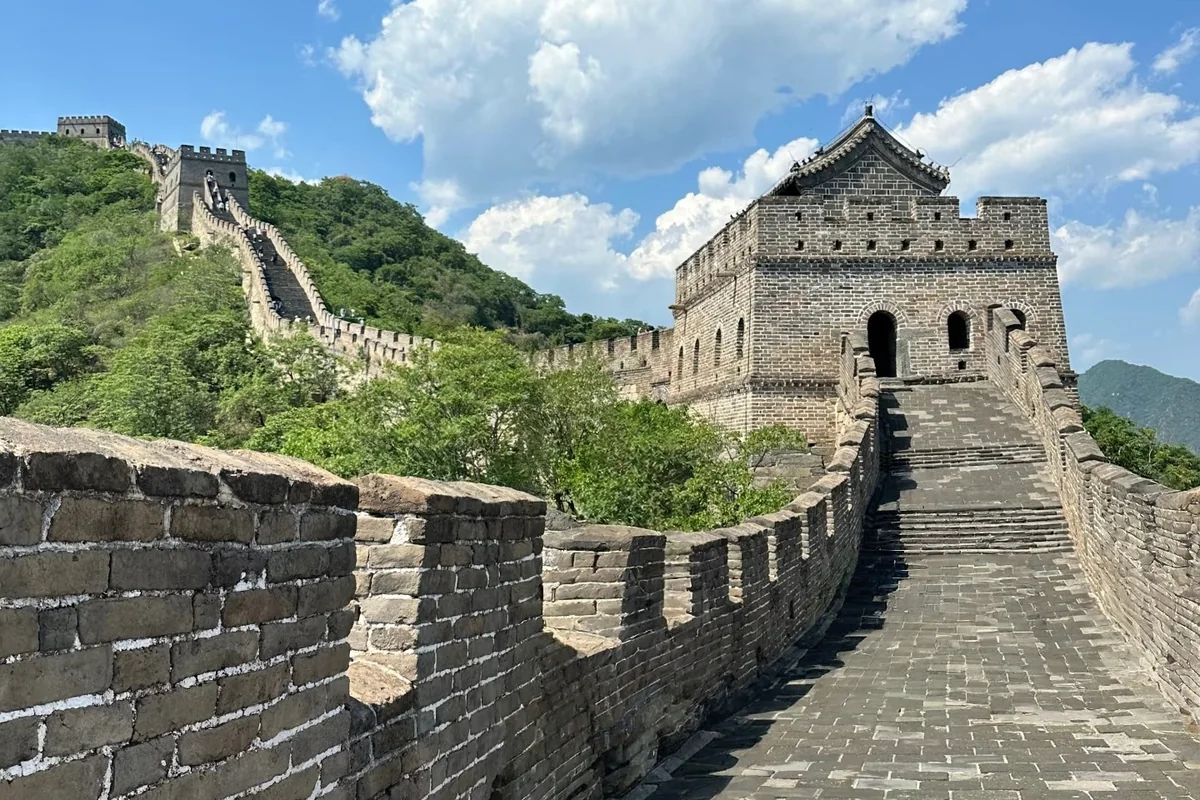
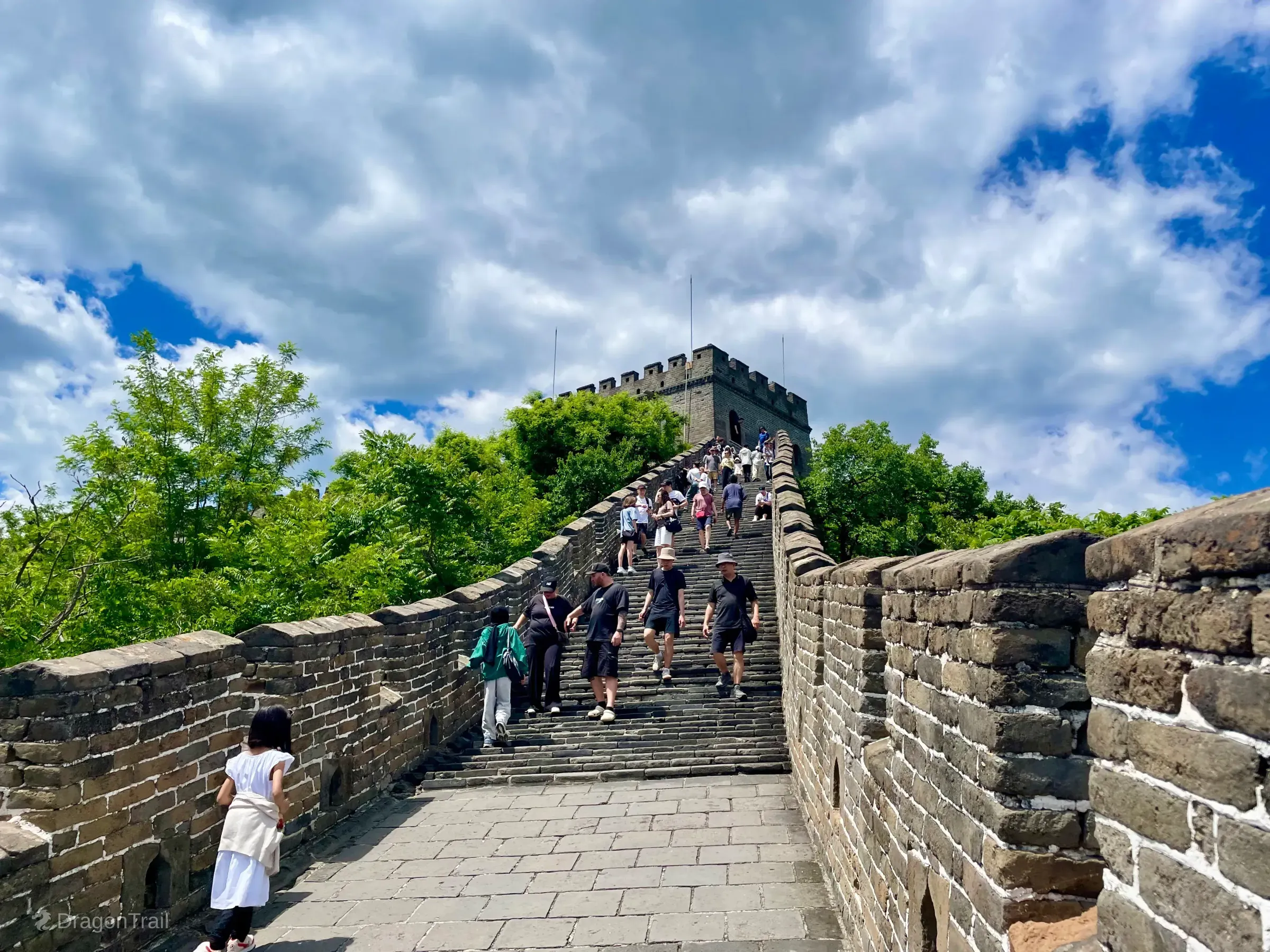
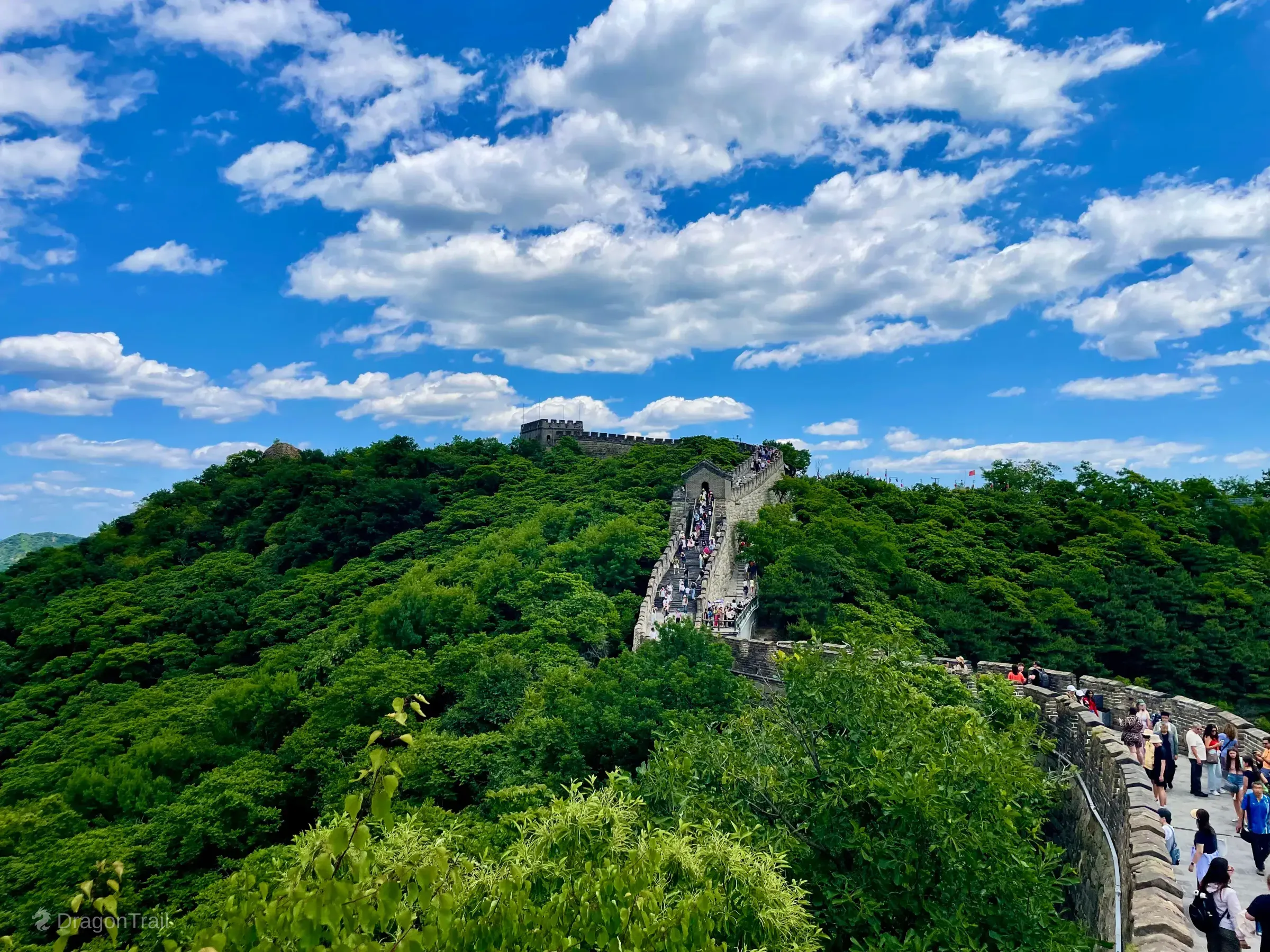
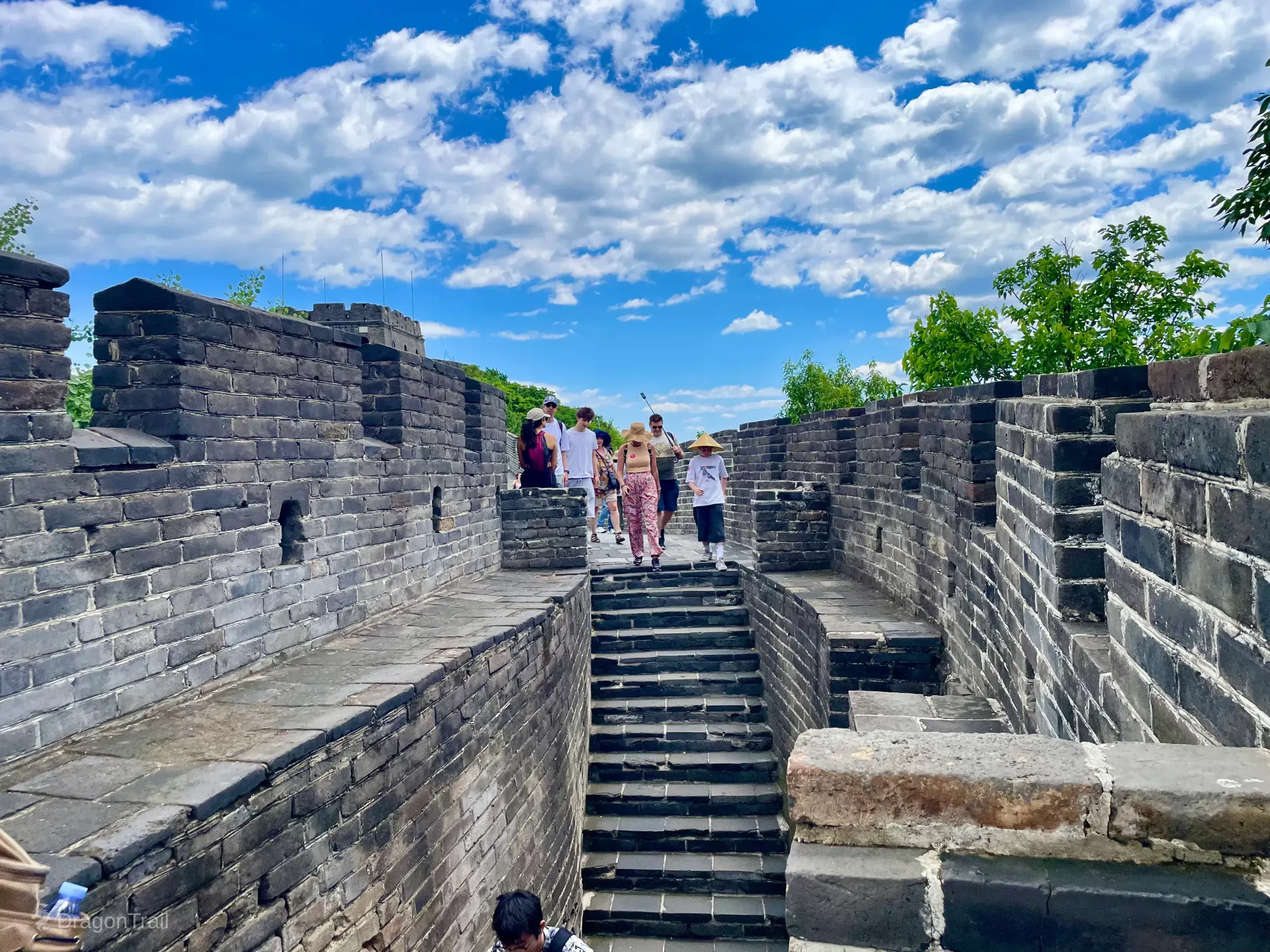
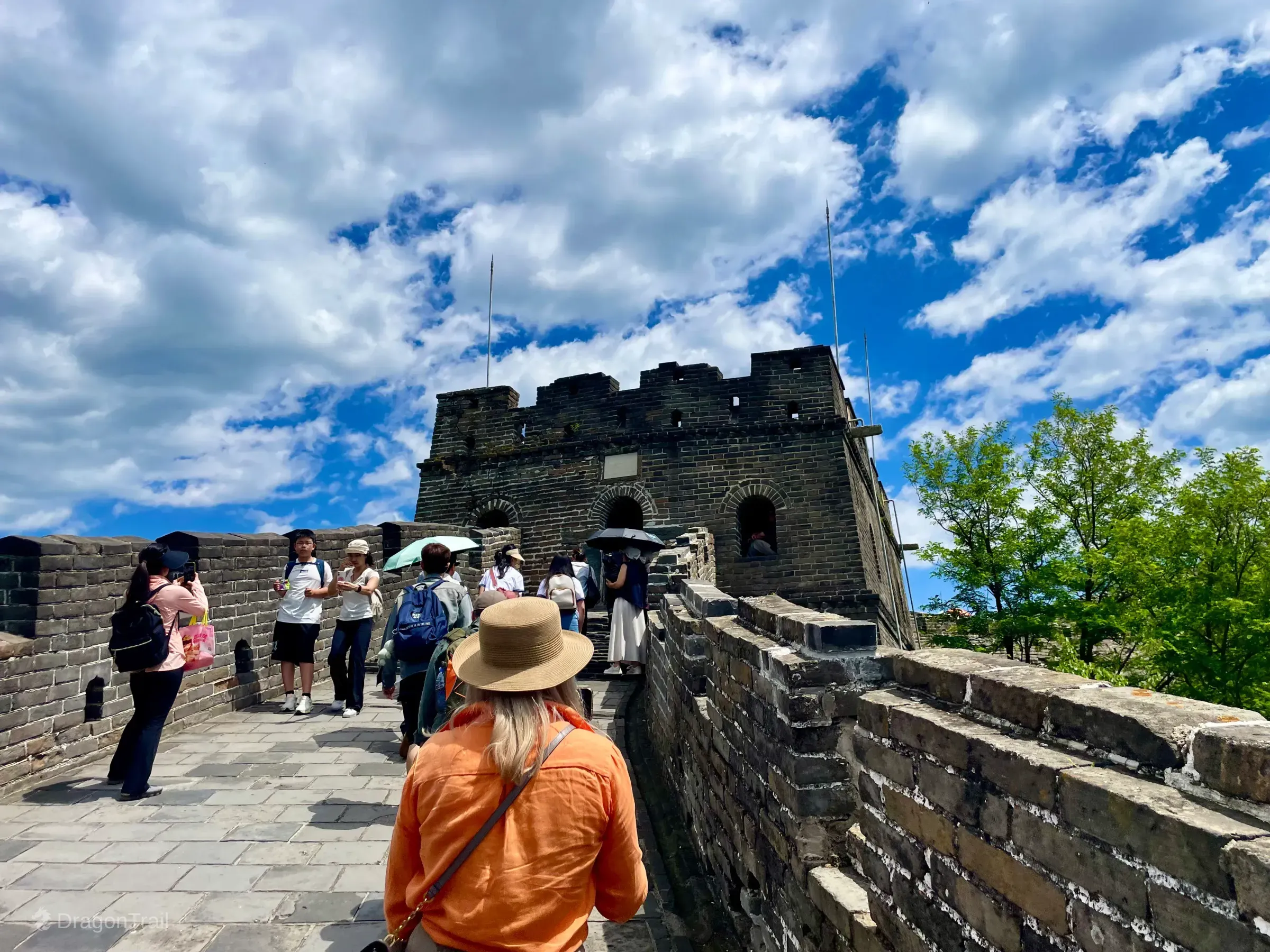
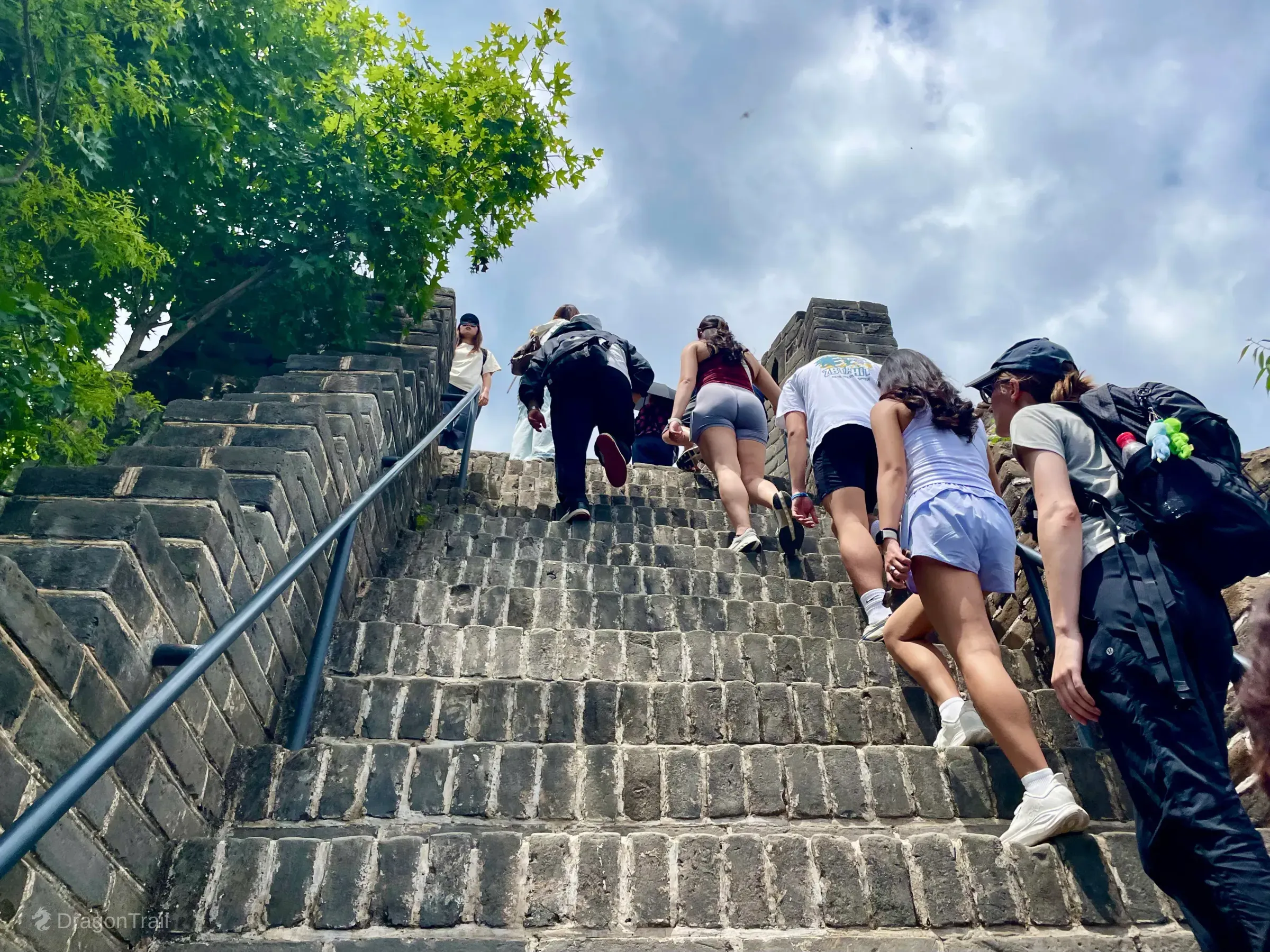
Cable car up to Tower 14, walk west to Tower 18 or Tower 20, return to Tower 14, cable car down. The two extra towers between 18 and 20 are the steepest and most rewarding section on the western ridge.
 Click to enlarge
 Click to enlarge
 Click to enlarge
 Click to enlarge
 Click to enlarge
Realistic timing for ordinary visitors
Fit walkers without long photo stops can do Tower 14 → 20 → 14 in about 1.5 hours, but for an ordinary visit with photos and rests, plan 2–2.5 hours of actual wall walking.
| Version | Wall walking time | Total on-site time |
|---|---|---|
| Short version: Tower 14–16 return | 45–75 min | 2.5–3 hr |
| Standard version: Tower 14–18 return | 1.5–2 hr | 3–3.5 hr |
| Full west version: Tower 14–20 return | 2–2.5 hr | 3.5–4.5 hr |
| West extension: Tower 14–23 return | 3–4 hr | 4.5–6 hr |
Why the classic west route works
It is the most reliable route because your exit point is the same as your entry point. If someone gets tired or the weather turns, you simply turn back to the cable car.
Open route boundary
Current official visitor information lists Towers 1–20 as the open daytime section. Tower 1 is the eastern endpoint; Tower 20 (Hero Platform) is the western end of the managed open daytime visitor section. Towers 21–23 lie beyond that open section. Do not leave the managed visitor corridor for wild-wall hikes.
Towers 21–23 access note
When restoration work affects the wall between Towers 19–20, access to Towers 21–23 may temporarily use an ecological trail outside the wall. Confirm on arrival with scenic-area staff (hotline 010-61626022). A separate official restoration project also began on the wall section between Towers 16 and 17 on May 26, 2026; the interior of Tower 16 remained accessible under the published notice.
- Best for: first-time visitors, families, seniors with moderate fitness, layover travelers, photographers, anyone who wants the iconic Mutianyu ridge view.
- Tower 14 — cable car arrival point and route control anchor
- Tower 15 — recognizable photo section
- Tower 16 — strong viewing point with high scenic value
- Tower 18 — start of the harder west-end feeling
- Tower 20 — Hero Platform and the steepest classic west-end climb
- Towers 21–23 — beyond current open daytime section (historical / architectural context only)
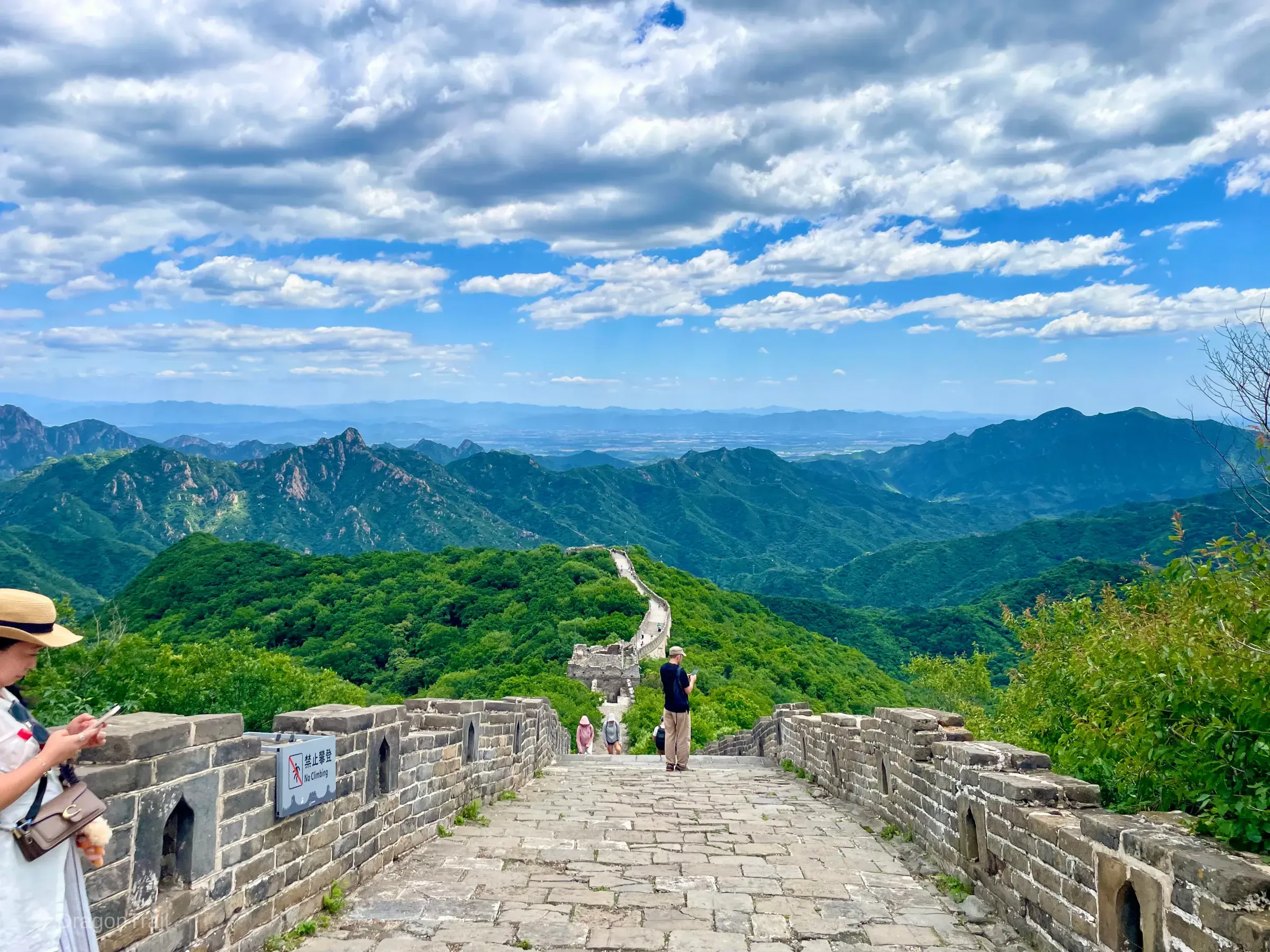
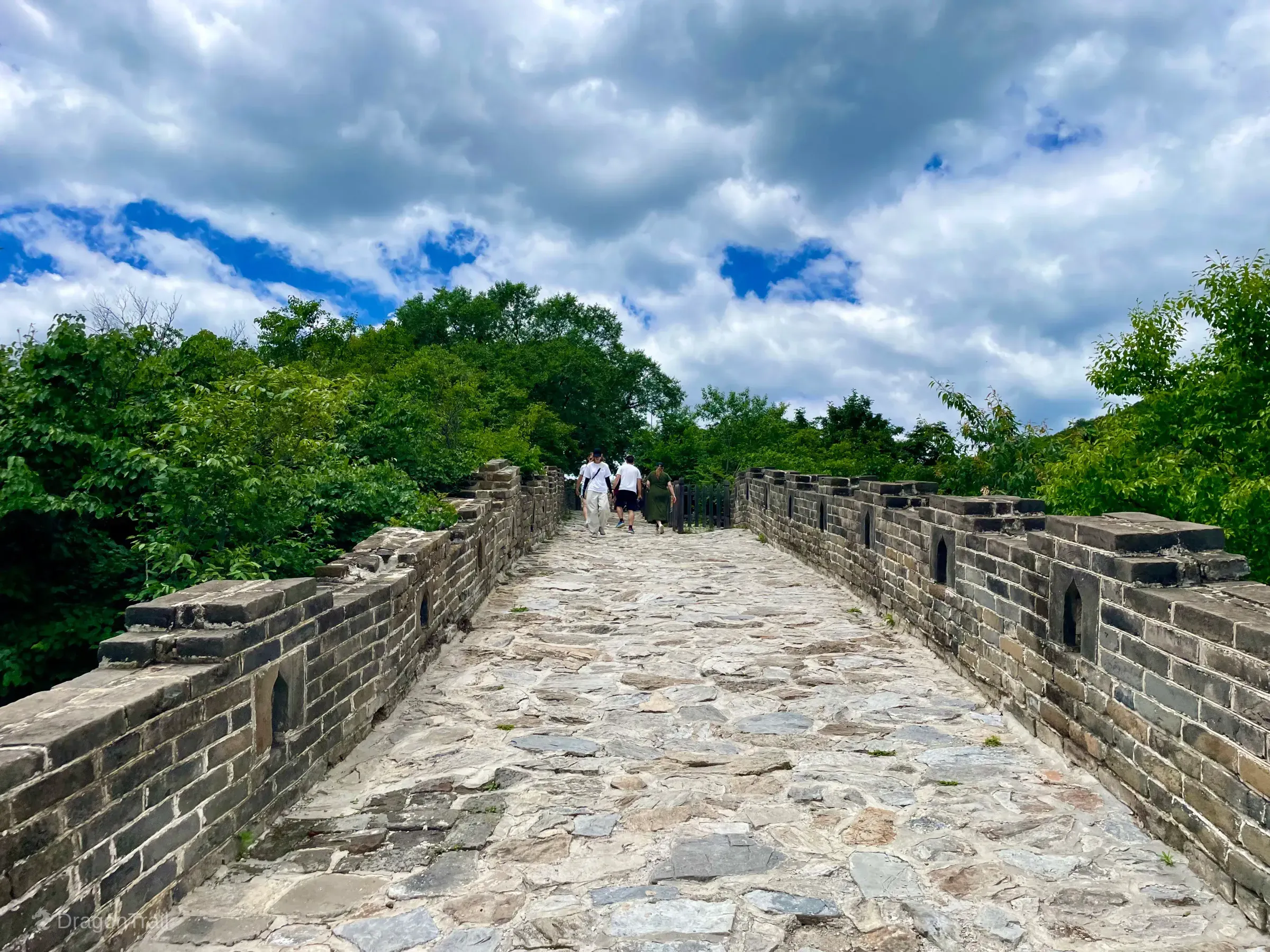
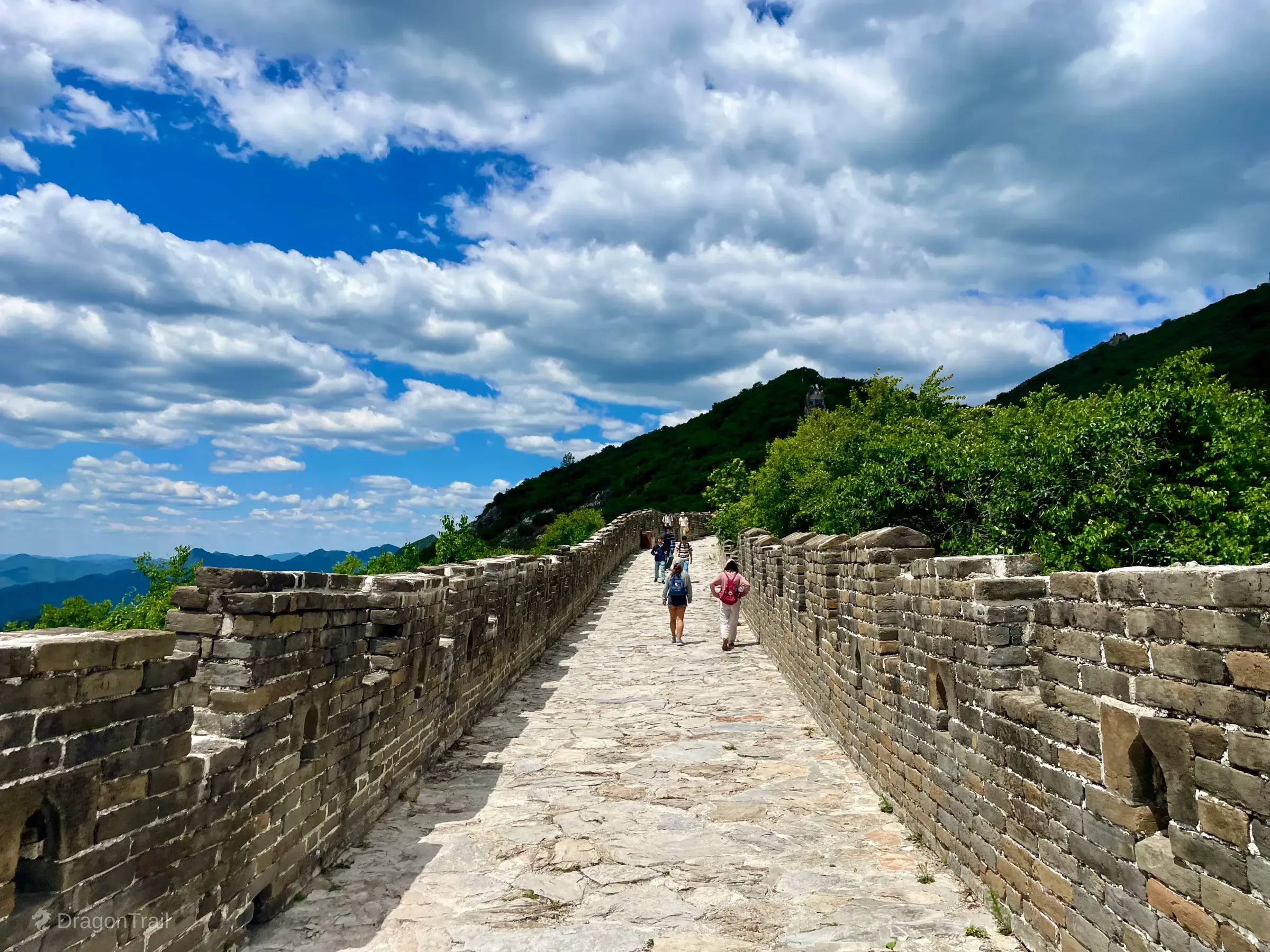
Field views from the Cloudtop ridge beyond the current open daytime visitor section (historical / architectural context):
 Click to enlarge
 Click to enlarge
 Click to enlarge
Route 2: comfort route — best for seniors, families, and layovers
Flow
Cable car up to Tower 14, walk to Tower 15 or 16, return to Tower 14, cable car down. Plan a total on-site time of 2.5–3.5 hours.
| Segment | Time |
|---|---|
| Cable car access and boarding | 30–60 min depending on queue |
| Tower 14–15/16 walk | 45–75 min |
| Return to Tower 14 | 30–45 min |
| Descent and shuttle back | 30–60 min |
Why the comfort route works
The comfort route avoids the steepest and most exposed sections of the wall. It is the right default for older travelers, families with young children, and anyone whose visit needs predictable timing — including layover guests with a return clock to protect.
- Best for: seniors, families with young children, visitors with limited walking ability, layover travelers, hot summer days, and winter days with possible icy steps.
- Lower physical load than the standard or full-depth route
- Best timing control of any Mutianyu route
- Same entry and exit point, so backing out is easy
- Pairs naturally with the 200 RMB cable car package
Route 3: middle route — cable car up, toboggan down
Flow
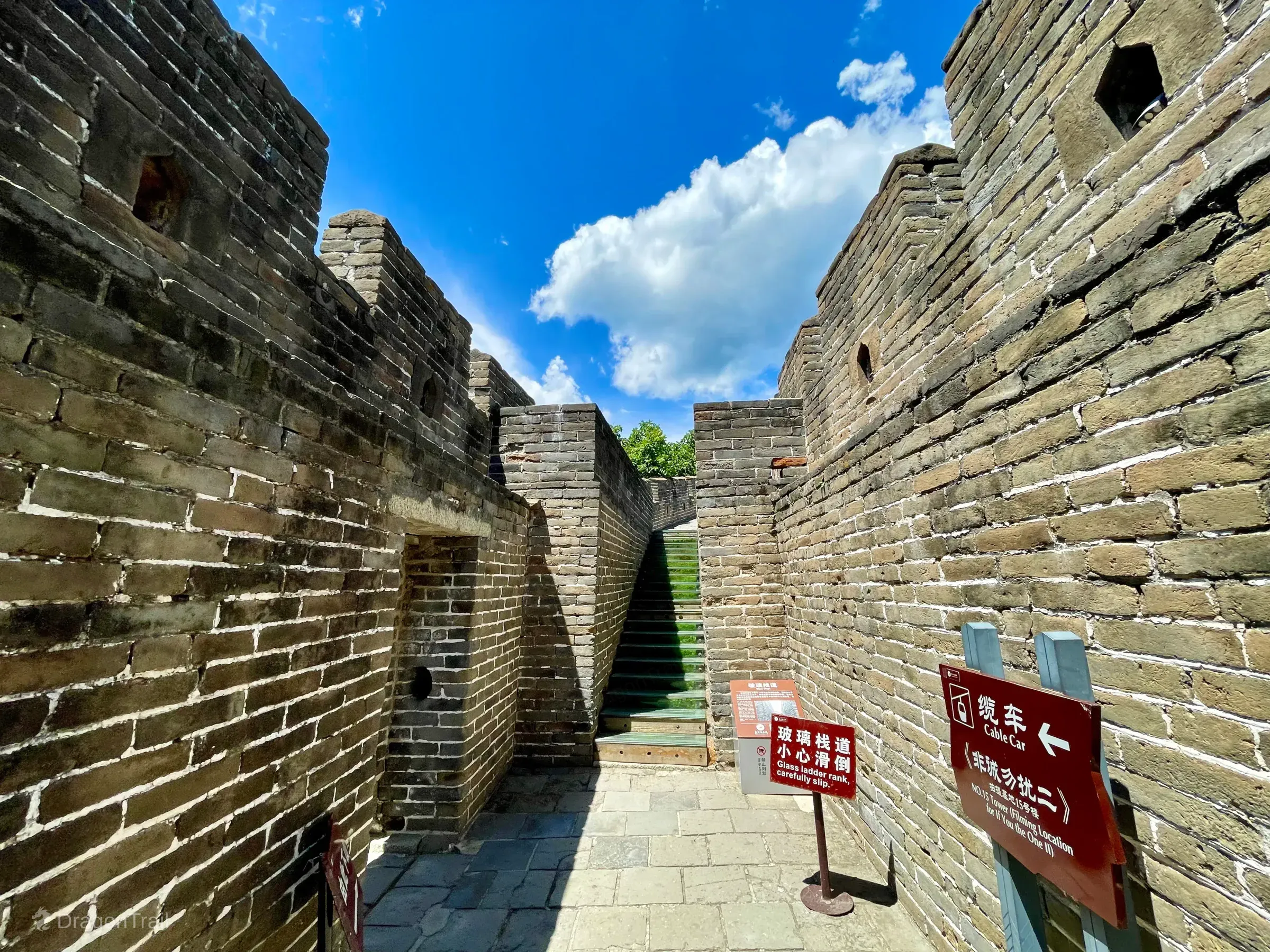
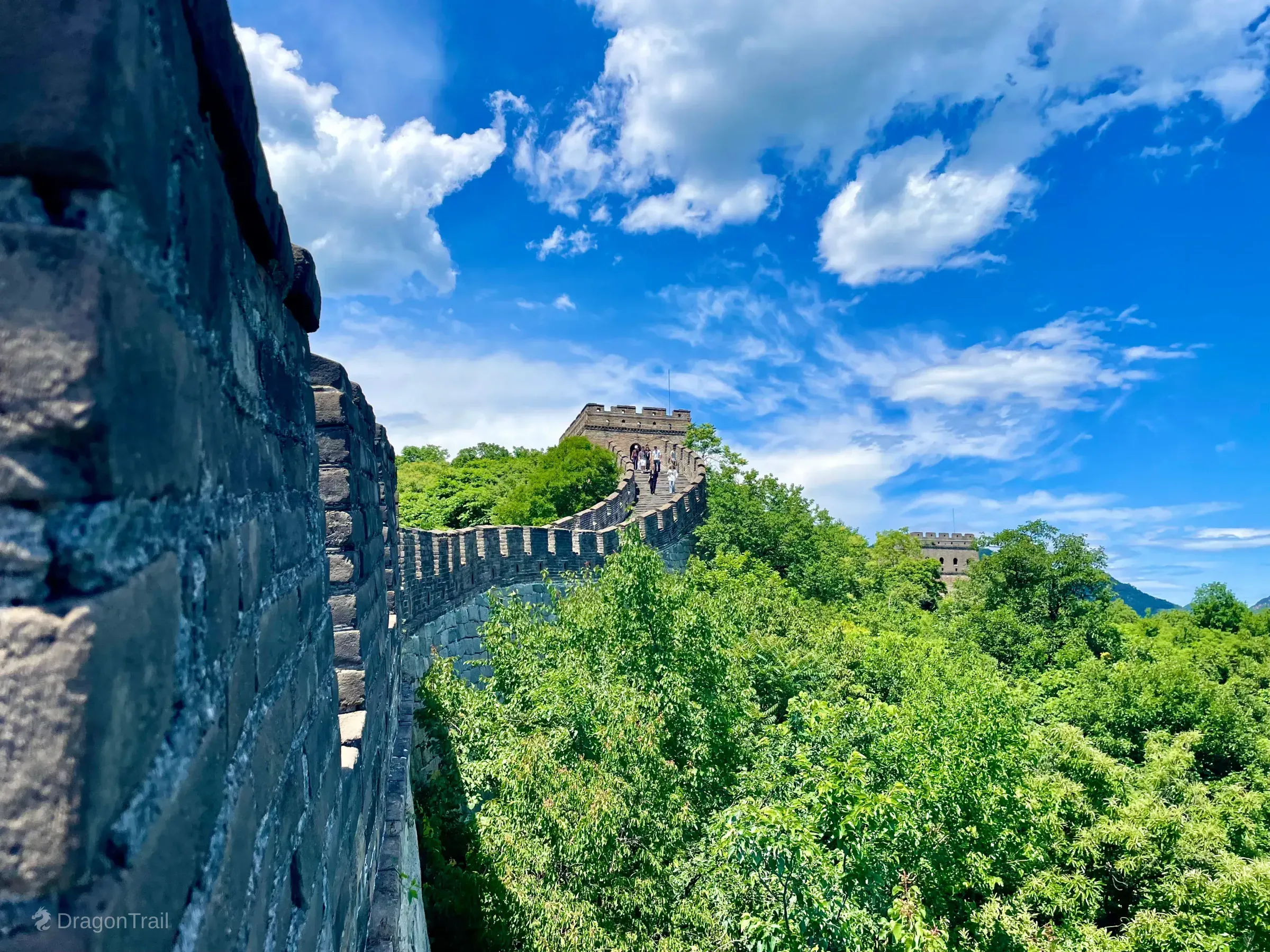
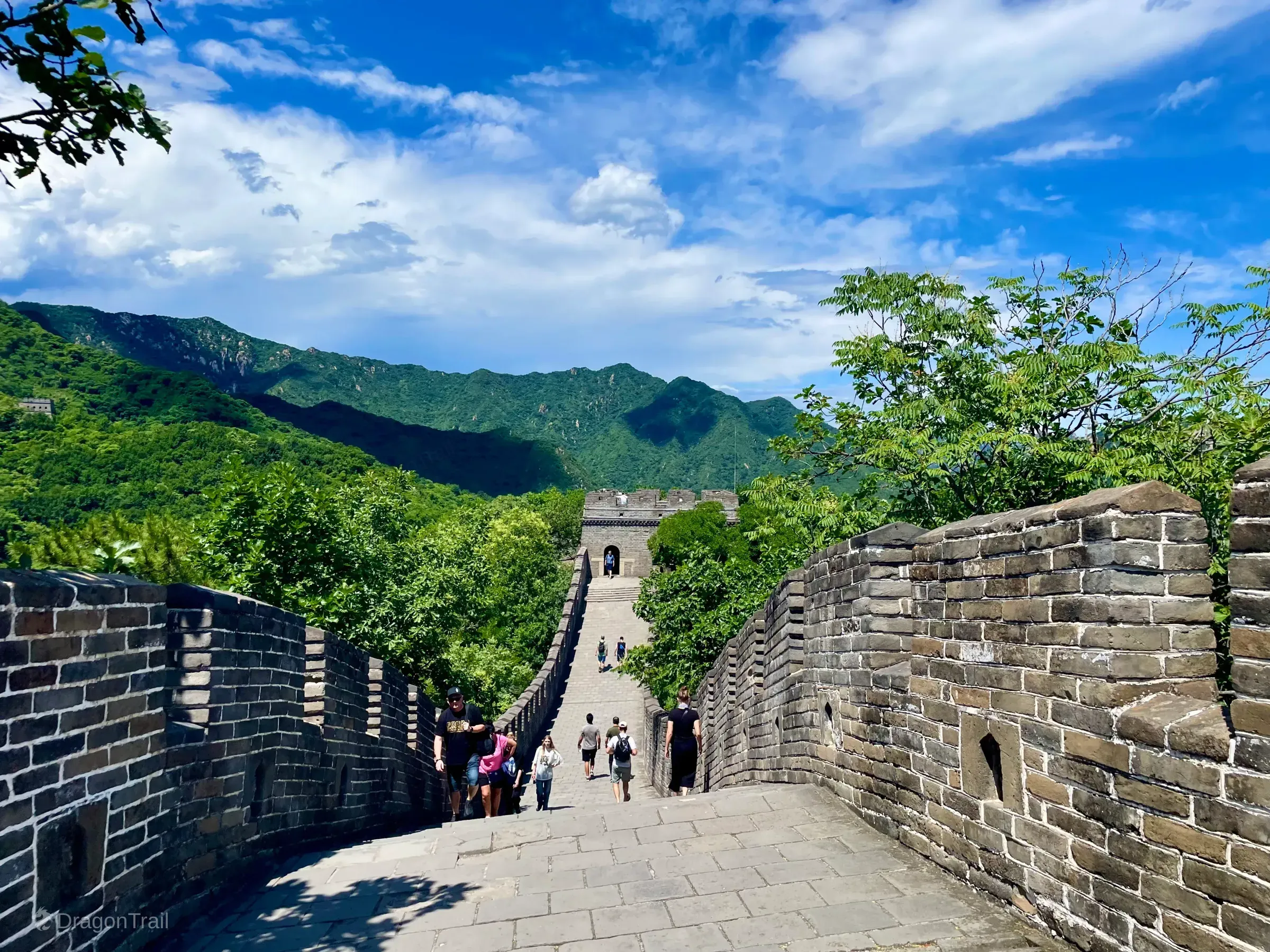
Cable car up to Tower 14, walk east toward Tower 6 (pause at Tower 10 Glass Steps and Tower 11 Outer Branch Wall if time allows), then toboggan or chairlift down on the east side. Plan 3.5–5 hours on site.
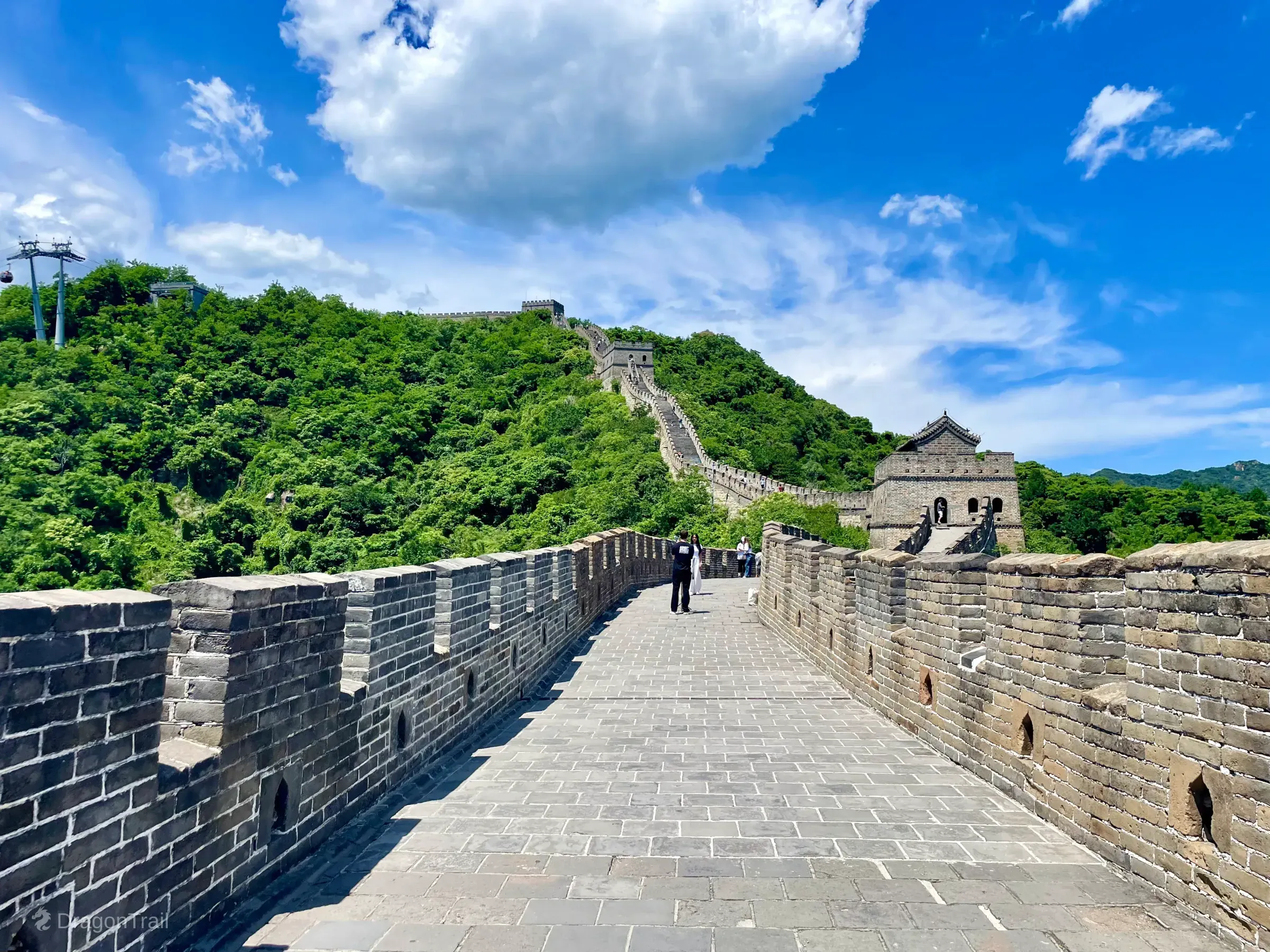
Middle-route terrain encountered while walking east through the Tower 12–7 section toward Tower 6.
 Click to enlarge
 Click to enlarge
 Click to enlarge
 Click to enlarge
| Segment | Time |
|---|---|
| Tower 14 → Tower 6 walk | About 1.5–2 hr |
| Photo and rest time | 30–60 min |
| Toboggan descent and queue | 20–90 min depending on crowd |
Ride-system constraint and when not to choose it
The middle route uses two separate ride systems on opposite sides of the mountain. The cable car on the west and the chairlift/toboggan on the east are independently operated, so mixing them needs separate one-way tickets.
Avoid this route if
You are traveling with seniors; you have small children; your layover timing is tight; the weather is rainy or icy; you do not want to manage separate ticket systems; the toboggan queue is very long.
- Cable car = west route / Tower 14
- Toboggan = east route / Tower 6 (downhill only)
- A 140 RMB cable car round trip is not the same ticket as a 140 RMB chairlift + toboggan combo
Route 4: fun east route — best for toboggan visitors
Flow
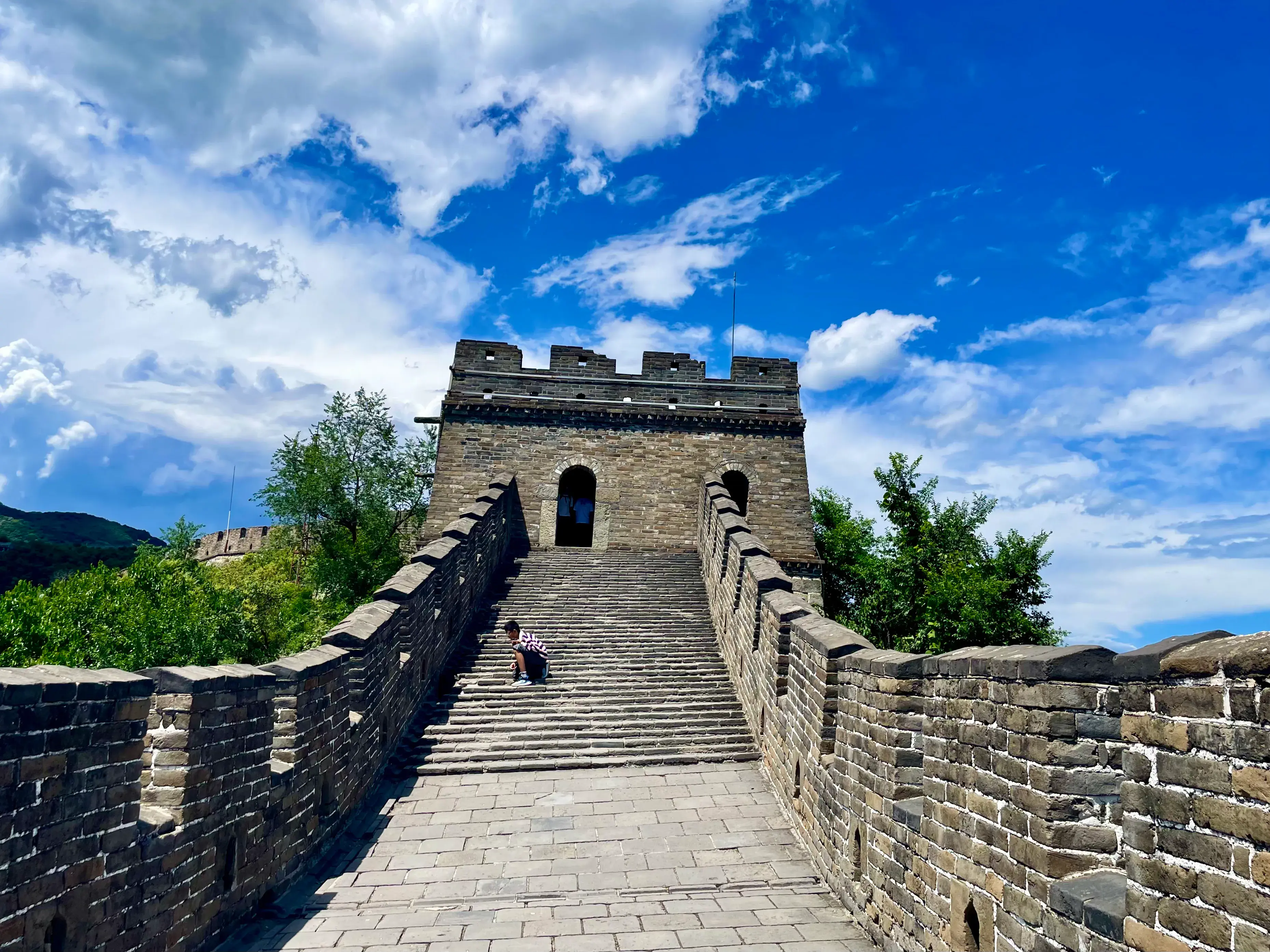
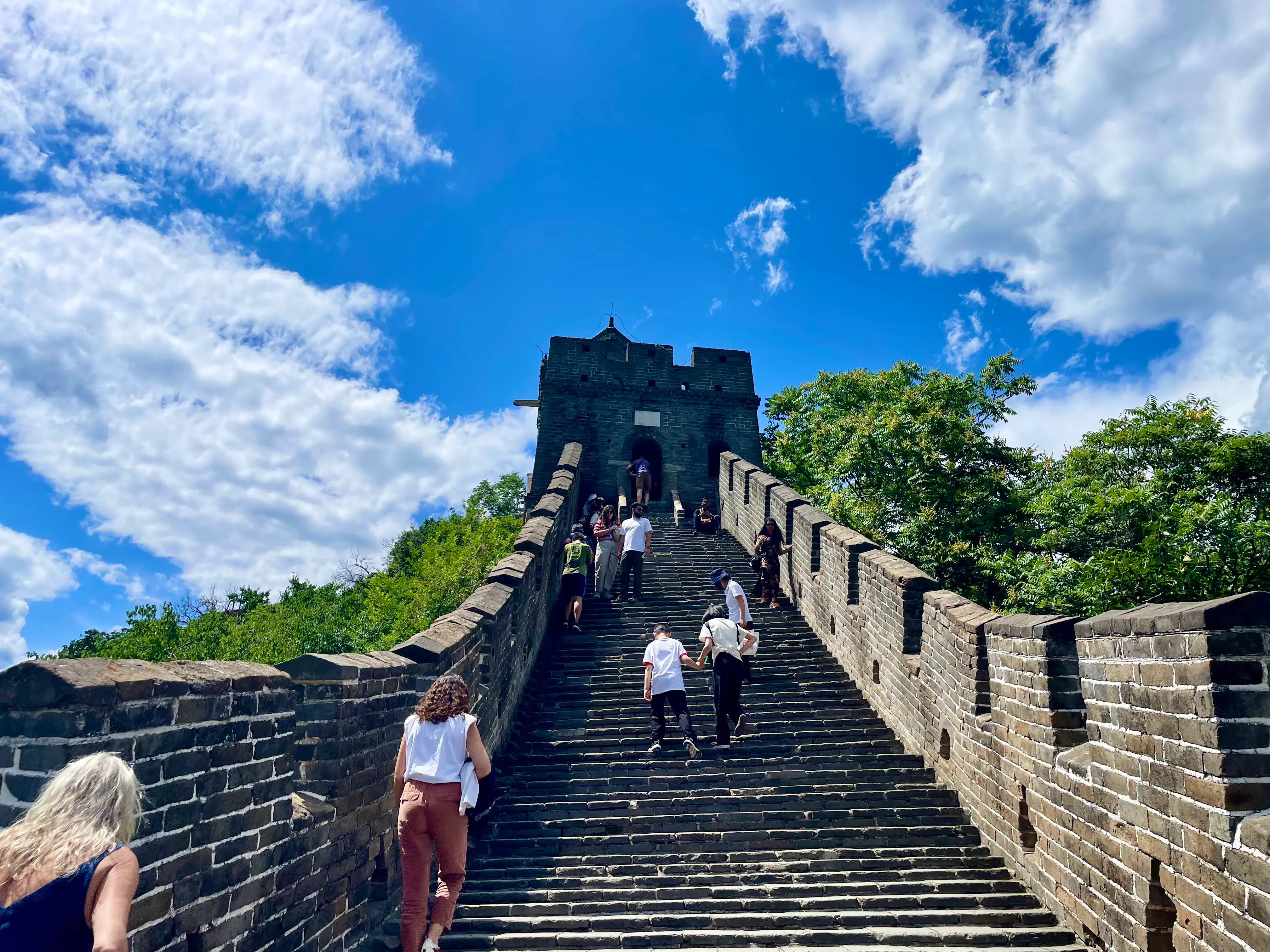
Chairlift up to Tower 6, walk toward Tower 1 or nearby eastern towers, return to Tower 6, toboggan down. The chairlift and toboggan are part of the same east-side visitor system, so the tickets line up cleanly.
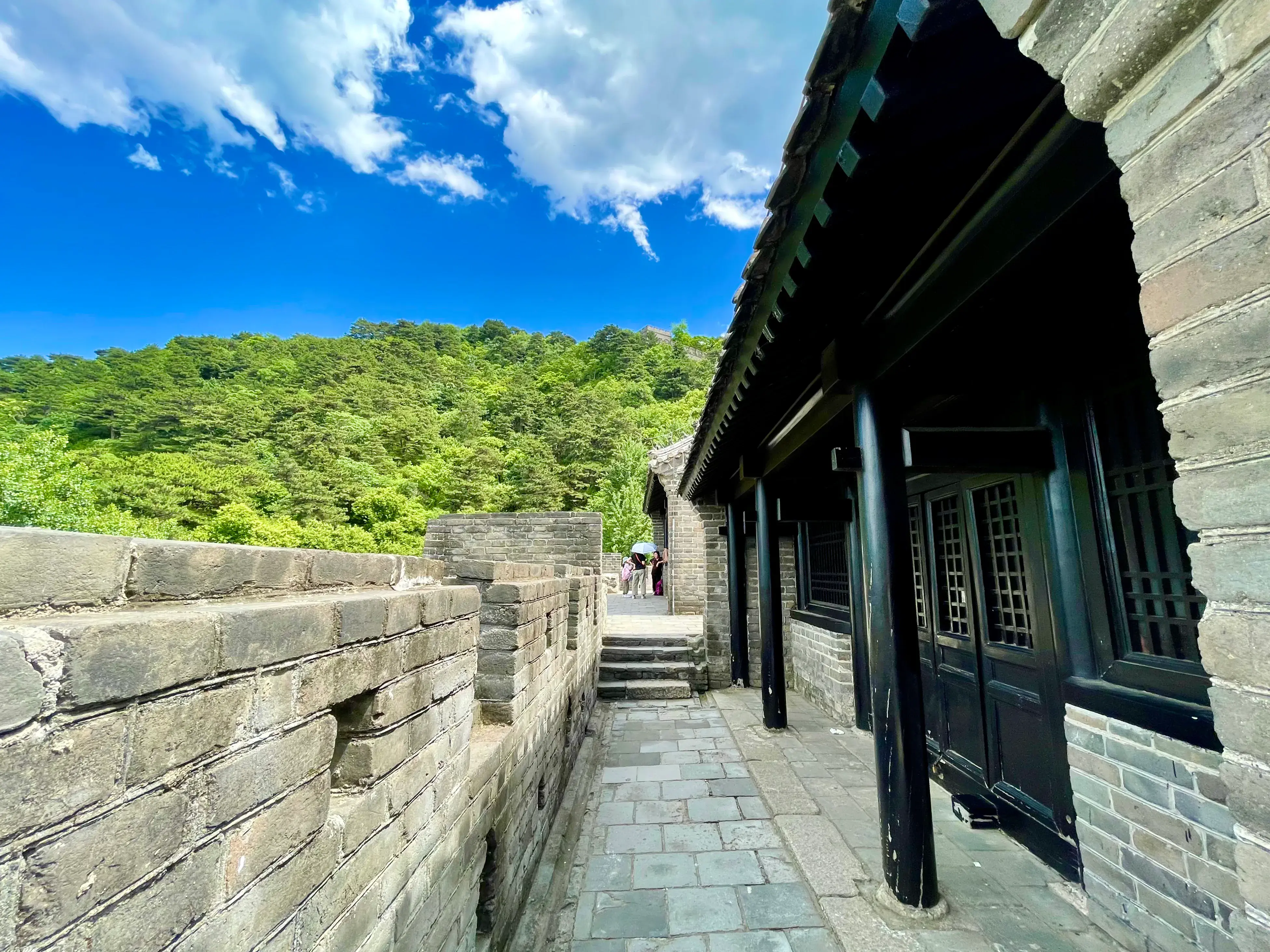
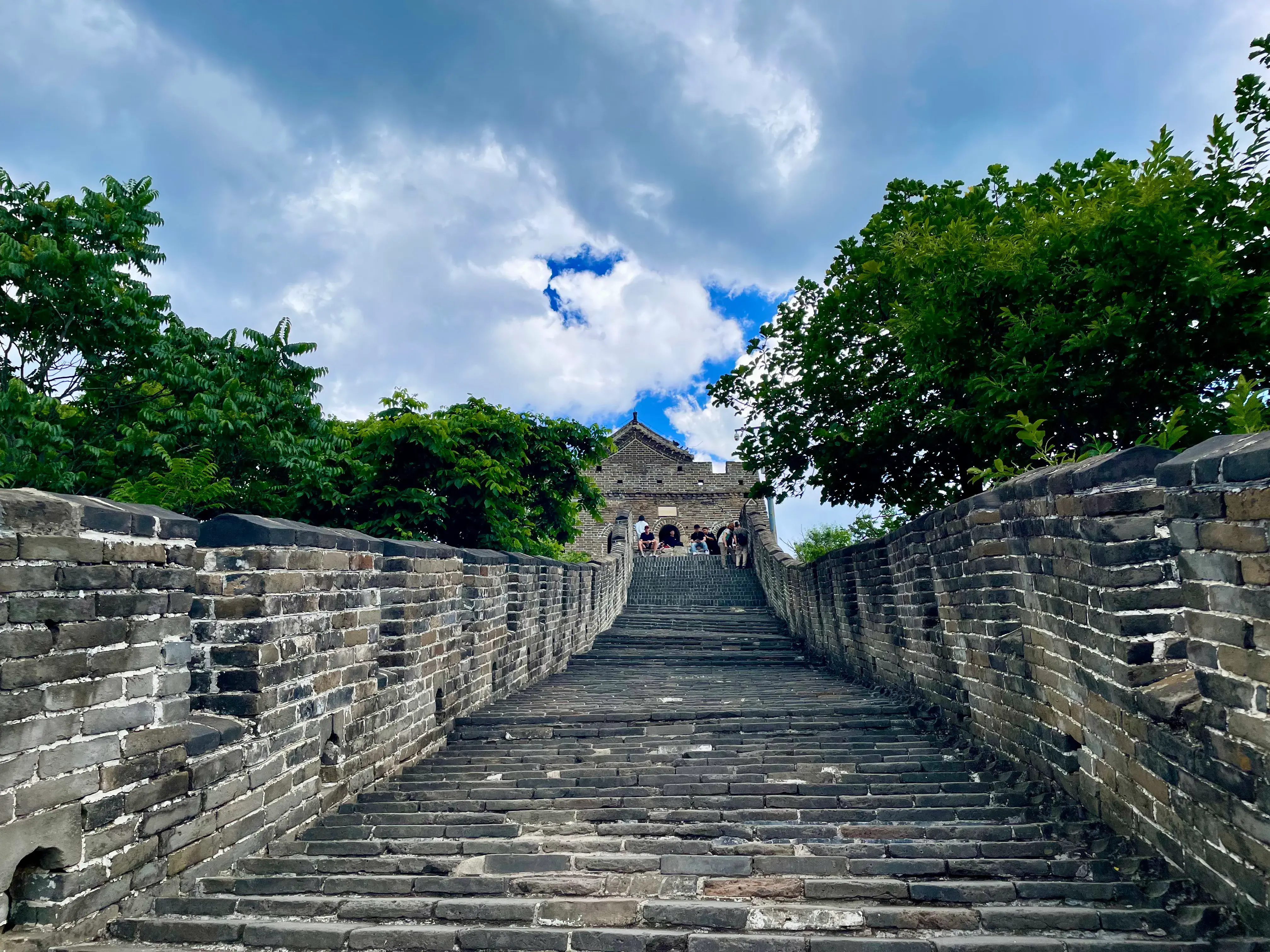
The east-wall route from the Tower 6 area toward Tower 1 includes repeated stair climbs and the architectural stop at Zhengguantai.
 Click to enlarge
 Click to enlarge
 Click to enlarge
 Click to enlarge
| Version | Wall walking time | Total on-site time |
|---|---|---|
| Tower 6 area only | 45–75 min | 2.5–3 hr |
| Tower 6 → Tower 1 → Tower 6 | 1.5–2 hr | 3–4 hr |
Why the fun east route works
This is the cleanest toboggan plan because the chairlift up and the toboggan down are the same east-side ride system — one ticket window, one operator, one side of the mountain.
Main weakness
It does not give the same west-route views as Tower 14–23. If your goal is iconic panoramic ridge scenery, choose the cable car west route instead.
- Best for: younger travelers, families with older children, visitors whose main goal is the toboggan, groups of friends, visitors with less interest in the high west route.
- Single ticket system avoids cross-mountain ticket confusion
- Memorable descent — the slide is the headline of the day
Route 5: full Mutianyu route — best for strong walkers
| Aspect | Detail |
|---|---|
| Flow | Chairlift up to Tower 6 → walk east to Tower 1 → return west through Tower 6 → continue through Tower 14 → walk west through Tower 20 → return to Tower 14 → cable car down |
| Time on site | 6–7.5 hr (excluding a long lunch) |
| Total distance | About 5.4 km |
| Cumulative ascent | About 420 m |
| Physical load | High |
Constraints and who should skip it
The longest managed daytime route covers the open Tower 1 through Tower 20 section. It is genuinely demanding — uneven steps, steep gradient changes, and exposed ridge sections at both ends. Treat the Tower 2–1 and Tower 18–20 (Hero Slope) stretches as the hardest segments of the day.
Not ideal for
Seniors; young children; visitors with knee problems; people with high blood pressure or heart disease; layover travelers without a large buffer; anyone arriving late in the day.
- Best for: well-bodied adults, repeat Great Wall visitors, photographers, hiking-focused travelers, visitors with 6–7.5 hours on site.
- Landmark stops: Tower 10 Glass Steps, Tower 11 Outer Branch Wall, Ming cannons below Towers 5/9/10/13 — see the map guide for placement.
- Stone side entrances along the route are heritage features for troops and supply — not public shortcuts off the wall.
- Hardest points: Tower 6 → Tower 1 return; Tower 18 → Tower 20; return from the west end to Tower 14
- Heat in summer; icy or slippery steps in winter; ride closing time at day's end
- See the tower-by-tower Mutianyu Watchtowers Guide for architecture and field photos.
Route 6: photography route — best for serious photo planning
Flow
Cable car up to Tower 14, walk west toward Tower 20, return toward Tower 10 for the Glass Steps and central panorama, continue east if time allows, descend from Tower 6 or Tower 14. The early west section (Tower 16 and Tower 19–20) is the highest-value photography zone; Tower 10 and Tower 4 carry the route eastward later in the day.
| Zone | Best for |
|---|---|
| Tower 14–20 | Ridge-line views and west-wall drama |
| Tower 16 | High viewpoint and long wall curves |
| Tower 19–20 | Hero Slope depth and mountain layering |
| Towers 21–23 | Beyond current open daytime section (historical / architectural context) |
| Tower 10 | Glass Steps + central panorama — allow 10–15 min for the glass walkway |
| Tower 4 / Zhengguan Terrace | Architectural composition |
| Tower 1 | Eastern endpoint / Big Corner Tower area |
Practical note
Do not overpack this route for ordinary travelers. Use it only when you explicitly value photography and have enough time to slow down at light-sensitive spots — early-morning Tower 16, late-afternoon Tower 19–20, or autumn foliage windows on the ridge.
- Best for: photographers, content creators, drone-free landscape work, visitors who care about light direction, autumn foliage visits.
- Tower 16 — best in early light
- Tower 19–20 — best in late afternoon
- Tower 10 — Glass Steps plus central panorama; Tower 4 — architectural composition
Which route should you choose?
| Situation | Best route | Why |
|---|---|---|
| First visit to Mutianyu | Tower 14 → Tower 20 → Tower 14 | Best scenery and simple return |
| Only 2–3 hours on site | Tower 14 → Tower 15/16 → Tower 14 | Safe and efficient |
| 3–4 hours on site | Tower 14 → Tower 18/20 → Tower 14 | Best standard route |
| Want the toboggan | Tower 6 route | Cleanest toboggan flow |
| Want both views and toboggan | Tower 14 → Tower 6 | Requires mixed ride tickets |
| Senior traveler | Tower 14 → Tower 15/16 → Tower 14 | Lowest friction |
| Family with young children | Tower 14 short route | Easier control |
| Teenagers / friends | Chairlift up + toboggan down | More fun |
| Photographer | Tower 14 → Tower 20, plus Tower 10 | Strongest visual route |
| Strong hiker | Full open daytime section (Towers 1–20) | Maximum coverage |
| Layover traveler | Tower 14 short or standard west route | Best timing control |
How long to allow on site
Best time allowance for most visitors: 3–4 hours
For most visitors, 3–4 hours on site is enough for a strong Mutianyu visit without overloading the day. That window pairs naturally with the standard west route from Tower 14 toward Tower 18 or 20.
| Available on-site time | Recommended route |
|---|---|
| Under 2 hours | Do not overplan; Tower 14 short route only |
| 2–3 hours | Tower 14 → Tower 15/16 → Tower 14 |
| 3–4 hours | Tower 14 → Tower 18 or 20 → Tower 14 |
| 4–5 hours | Tower 14 → Tower 6 → toboggan down, or deeper west route |
| 5–6 hours | Do not plan beyond Tower 20 without a new official notice |
| 6–7.5 hours | Full Towers 1–20 route possible for strong walkers |
| Over 7.5 hours | Full route + photography stops possible |
Which towers are most worth your time
Not every tower deserves equal time
Use this hierarchy to avoid the common "all towers are equal" mistake. On a normal 3–4 hour visit, spend more time at the Essential and High towers and let the others pass.
| Tower | Priority | Reason |
|---|---|---|
| Tower 14 | Essential | Cable car arrival / route control point |
| Tower 20 | High | Hero Platform — steepest classic west climb |
| Towers 21–23 | Medium-high | Beyond current open daytime section — not a current visitor plan |
| Tower 16 | High | Strong high-view section |
| Tower 10 | High | Central panoramic view |
| Tower 6 | High | Chairlift / toboggan access |
| Tower 4 | Medium-high | Zhengguan Terrace / architectural value |
| Tower 1 | Medium-high | Eastern endpoint / Big Corner Tower area |
| Tower 15 | Medium | Good west-route continuation |
| Tower 18–19 | Medium | Harder west-end transition |
| Tower 7–13 | Medium | Middle route continuity |
| Tower 2–3–5 | Lower for first-timers | Useful mainly for the full east route |
Best route by ride choice
Once you have chosen the ride system, the right route is almost decided for you.
- Cable car round trip → Tower 14 → Tower 20 → Tower 14. Best for first-timers, families, seniors, layovers, photographers.
- Chairlift + toboggan → Tower 6 → Tower 1 → Tower 6. Best for fun-first visits, teenagers, young couples, groups of friends.
- Cable car + toboggan → Tower 14 → Tower 6. Best for active visitors, guests who want both route types, visitors with 4+ hours on site.
- Hiking more seriously → Tower 6 → Tower 1 → Tower 23 → Tower 14. Best for well-bodied walkers with 6–7+ hours on site.
Common route mistakes
Trying to do Tower 20 with too little time
Tower 20 is worth it, but not if you are rushing to catch a flight or return before the rides close.
Assuming the toboggan is available from Tower 14
The toboggan is tied to the Tower 6 east-side system, not the Tower 14 cable car system. Buying the wrong ticket at the wrong window is the most common first-timer error.
Choosing the full route for seniors
The full Tower 1–20 route is too much for many older visitors. Use the Tower 14 short route instead — it delivers the iconic views without the steep ends.
Using outdated maps that stop at Tower 20
Towers 21–23 on the west ridge are open again. Tower 20 is the Hero Platform, not the end of the visitor wall. Fit guests can continue west; everyone else should plan a turn-back before energy drops.
Ignoring the return
Walking out is easy to overestimate. Always plan the return point before starting — and on a tight day, make it the same side of the mountain as your entry.
Going beyond the open section
The managed open visitor section runs from Tower 1 through Tower 20. Do not leave it for unrestored wild-wall hikes toward Jiankou or other closed sections — those are not part of a safe Mutianyu day.
Treating summer noon and winter ice the same
Route difficulty changes with heat, wind, ice, crowding, and ride closure time. Summer asks for early or late timing and more water; winter can bring icy sections and short-notice closures near Tower 1 and Tower 20.
Best time of day for each route
Do not start long routes late
Do not start a long Tower 20 or full-route plan late in the day. The ride closing time is the single hardest deadline on the wall.
| Time | Best route | Reason |
|---|---|---|
| 08:00–09:30 | Tower 14 → Tower 20 | Lower crowds, better light |
| 09:30–12:00 | Tower 14 → Tower 18 / Tower 10 | Balanced crowd and light |
| 12:00–14:00 | Shorter routes / rest | Harsh light, hotter in summer |
| 14:00–16:00 | Tower 6 / middle route | Crowds begin to thin |
| 16:00–17:00 | Short west section only | Good light, but ride closure risk |
Recommended routes by traveler type
These are the routes we usually recommend when planning a Mutianyu day. Pick by group, not by ambition.
When a longer route makes sense
We override the default only when time, weather, and fitness are all suitable for something larger — otherwise the safer default wins.
- Default private tour route: cable car round trip → Tower 14 → walk toward Tower 18 or 20 depending on energy → return to Tower 14.
- Default family route: cable car round trip → Tower 14 → Tower 15/16 → return.
- Default layover route: cable car round trip → Tower 14 → Tower 15/16 or Tower 18 → return.
- Default fun route: chairlift up → Tower 6 → east route short walk → toboggan down.
- Default strong-walker route: cable car up → Tower 20 → return through Tower 14 → continue toward Tower 6 → toboggan down.
- Full-section hikers (rare): chairlift or cable car positioning → cover Towers 1–20 with an early start and strict ride-close buffer.
FAQ: Best route at Mutianyu Great Wall
- For most first-time visitors, the best route is cable car up to Tower 14, walk west toward Tower 20, then return to Tower 14 and take the cable car down.
- The easiest route is Tower 14 to Tower 15 or 16 and back to Tower 14 by cable car. It is best for seniors, families, and layover travelers.
- Yes, if you have enough time and fitness. Tower 20 gives one of the strongest west-end views, but the section near Tower 19–20 is steeper and should not be rushed.
- Fast walkers may do Tower 14 to Tower 20 and back in around 1.5 hours, but ordinary visitors should allow 2–2.5 hours with photo stops.
- Yes. Tower 14 to Tower 6 is the middle route and takes around 1.5–2 hours for many visitors. It is often used by people who want cable car up and toboggan down.
- Yes, if you walk from Tower 14 to the Tower 6 area and buy the correct east-side toboggan ticket. The cable car and toboggan are separate ticket systems on different sides of the mountain.
- Tower 14 to Tower 15/16 and back to Tower 14 by cable car. Skip the open chairlift and the toboggan unless the guest is fully comfortable with both.
- For young children, use the Tower 14 short cable car route. For older children or teenagers, chairlift up and toboggan down can work if conditions are dry and the on-site age rule allows.
- Use the cable car route from Tower 14, usually to Tower 16 or Tower 18, then return. Avoid full routes unless the layover is very long.
- Well-bodied visitors with high stamina can cover the open daytime route from Tower 1 through Tower 20 in one long day. It needs an early start, 6–7+ hours on site, water, proper shoes, and a clear ride-close buffer.
- No. Current official visitor information lists Towers 1–20 as the open daytime section. Towers 21–23 lie beyond that open section — do not plan to walk there without a new official notice.
Plan a Mutianyu visit
For most visitors, the best Mutianyu route is cable car up to Tower 14, walk west as far as energy allows, ideally Tower 18 or Tower 20, return to Tower 14, then cable car down. The toboggan route is better only when your main priority is fun and weather is suitable. A Towers 21–23 west extension or a full Towers 1–20 day is better only when you are fit, unhurried, and intentionally seeking a hiking-style visit.
This default wins because it gives the strongest balance of scenery, comfort, route control, timing reliability, family and senior suitability, and layover safety.