
Day-band chooser
| Length | Best fit |
|---|---|
| About 2 days | A Dunhuang sampler only — do not force the corridor |
| 3–4 days | Essence — Dunhuang focus, skip Hexi road days |
| 5 days | Classic lower bound — works when flights are kind |
| 5–7 days | Classic — Hexi Silk Road, the default first trip |
| 8–10 days | Highlights — Classic spine plus Dunhuang depth |
| Longer | Custom mix — name Qinghai, Xinjiang, or Maijishan on the quote |
How many days for Gansu?
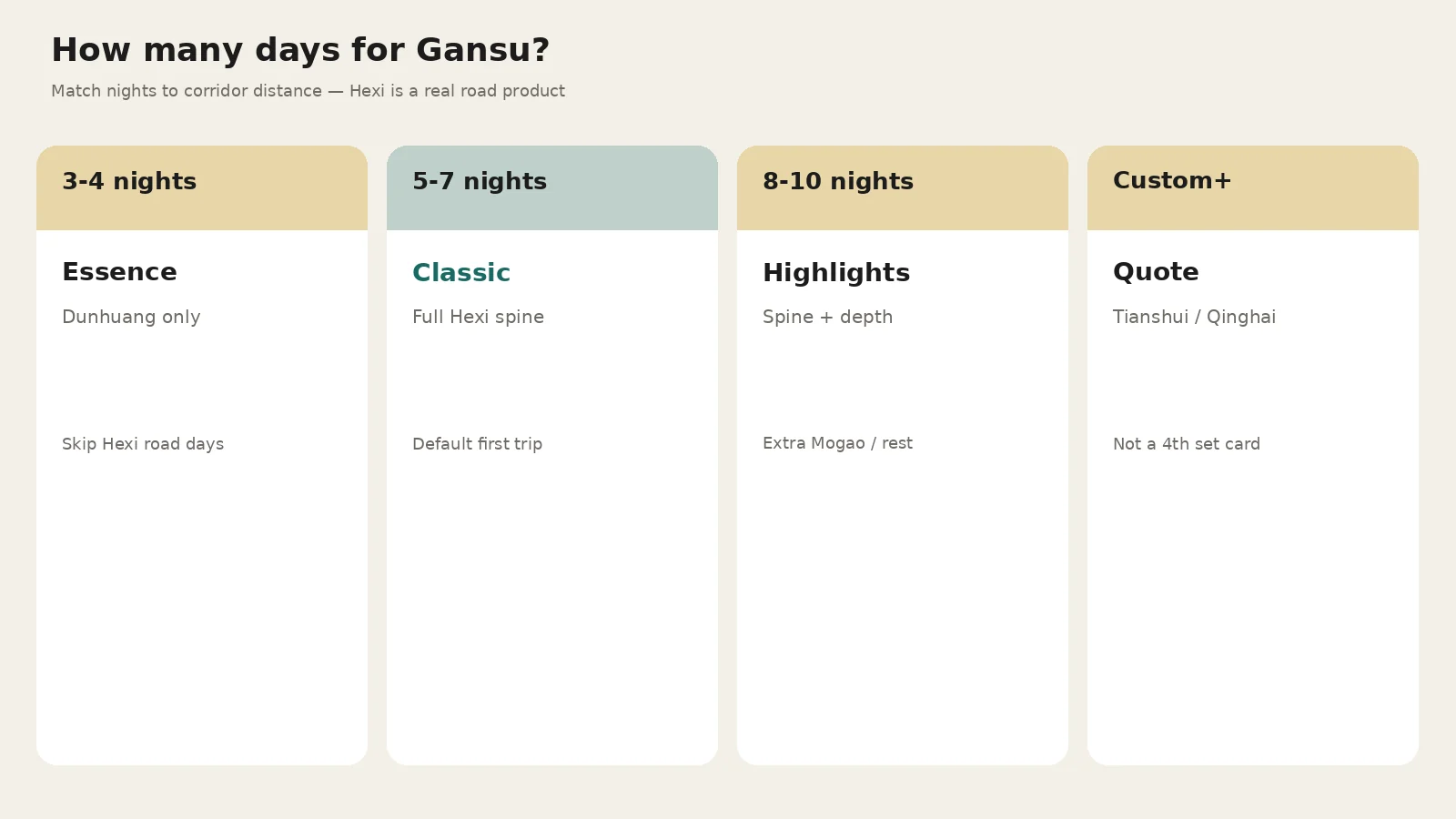
Gansu itinerary planning is mostly distance honesty. The Hexi Corridor between Lanzhou and Dunhuang is not a compact city break. Zhangye Danxia, Jiayuguan Fort, and the Mogao Caves do not sit in one downtown. If you want the colored ridges, the fort, and the caves, Classic’s 5–7 day band exists so those stops are not crushed into four nights.
Decision tree
- Only Dunhuang free? → 4-day Essence
- Want the full Hexi spine? → 6-day Classic (a clear picture of the 5–7 day band)
- Want the spine plus a softer Dunhuang finish? → 9-day Highlights (a clear picture of the 8–10 day band)
Why not “see everything in four days”
Compressing Lanzhou, Danxia, the fort, and Mogao into Essence nights usually means sunrise drives, skipped light, and a damaged cave morning. A private plan should refuse that optimism. Dunhuang-only is a real trip. The corridor is a different trip.
Transfer classes
Treat Lanzhou → Zhangye, Zhangye → Jiayuguan, and Jiayuguan → Dunhuang as separate planning classes. Each one is a travel day with a scenic purpose, not a same-morning hop you tuck beside a full museum. Your quote locks the exact overnights. Read Hexi Corridor for the narrative spine.
Airport logic
- Classic often arrives Lanzhou (LHW) and departs Dunhuang (DNH), or returns the way it came when flights require it
- Essence usually uses DNH on both sides
- Highlights may add a buffer night near Dunhuang after corridor fatigue
Season interaction
Summer heat argues for earlier scenic starts and midday shade. Winter shortens cave hours and makes long dusk drives less kind. See best time before you lock dates.
Package mapping
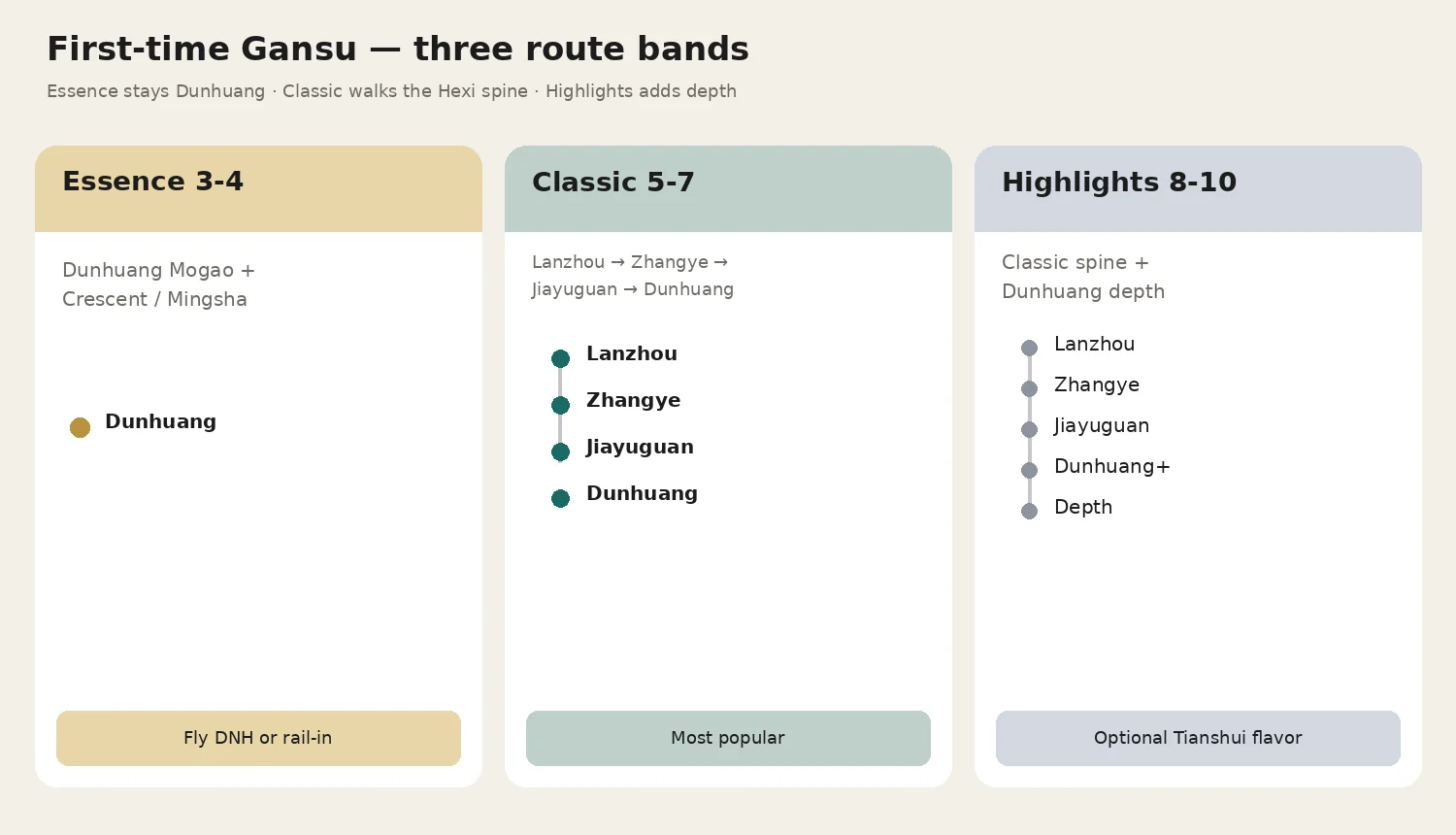
The day bands map to the three shapes on tour packages and Gansu private tours: Dunhuang Essence (3–4), Hexi Silk Road Classic (5–7), and Gansu Silk Road Highlights (8–10). Classic is the default first trip.
Sample rhythms
Essence: arrive Dunhuang → Mogao morning → Crescent Lake / Mingsha → buffer or depart. Classic: Lanzhou → Zhangye Danxia → Jiayuguan Fort → Dunhuang caves and dunes. Highlights: the Classic spine, plus an extra Dunhuang cultural or rest day so Mogao is not the afternoon after a long transfer.
Common failure modes
- Stacking a Danxia sunset and a maximalist fort museum on the same exhausted day when you do not have Highlights nights
- Booking Mogao for the afternoon after a long Jiayuguan → Dunhuang transfer
- Treating Lanzhou as a two-day sightseeing climax instead of the hub where the corridor starts
3–4 days — Dunhuang Essence
Essence is the Dunhuang trip. Mogao Caves in a protected morning, then Crescent Lake and Mingsha Shan while you still have light and energy. Fly into Dunhuang (DNH) or rail in, and leave the same way. You are not driving the Hexi spine.
This band fits a traveler whose calendar is short and whose reason for Gansu is the caves and the dunes. It fails the moment someone also expects Zhangye’s rainbow ridges and Jiayuguan Fort “on the way.” Those places are not on the way from a Dunhuang hotel in any kind way.
Skip Hexi road days on purpose. A private vehicle in Dunhuang still matters: cave timed entry, dune wind, and a hotel that is not beside the ticket gate. It does not magically shrink the corridor.
Day-by-day: 4-day Essence itinerary. Place depth: Dunhuang.
If you only have about two free days, be honest. A soft Dunhuang sampler can beat a tortured corridor dash. Ask for a shorter note on Gansu private tours rather than forcing Classic into a weekend.
5–7 days — Hexi Silk Road Classic (default first)
Classic is the trip most first-timers should open. The shape is Lanzhou → Zhangye Danxia → Jiayuguan Fort → Dunhuang. You arrive through Lanzhou (LHW) more often than not, sleep along the corridor, and finish at the caves instead of starting there already tired.
Five days can work when flights cooperate and the group accepts a tighter transfer. Six or seven is the kinder reading of the same geography: a real Danxia light window, a fort morning that is not glued to a sunset ridge, and a Dunhuang night before Mogao. The 5–7 day range exists so a quote can hold a buffer night when cave timing or a long road day needs kindness.
Lanzhou is logistics and a Yellow River / noodle evening, not the scenic climax. Do not spend the first two days “doing the capital” and then sprint the rest. Zhangye is the color. Jiayuguan is the western wall. Dunhuang is the magnet.
Direction can reverse — Dunhuang first, then eastbound — when flights say so. That is a quote detail, not a fourth plan. Tell us the tickets; we do not publish a separate eastbound product.
Day-by-day: 6-day Classic itinerary. Stops: Zhangye, Jiayuguan, Lanzhou, Dunhuang.
8–10 days — Gansu Silk Road Highlights
Highlights keeps the Classic spine and adds Dunhuang depth: a second cave or museum morning, a dune hour that is not rushed after check-in, and a rest block after corridor fatigue. Nine days is the representative sample inside the 8–10 band. Eight can work for fit walkers with kind flights. Ten is the version that absorbs a weather or ticket surprise without deleting Mogao.
What Highlights is not: a tour of every county in Gansu. Maijishan, near Tianshui, can be an optional flavor when the calendar and the routing truly allow it. It is not required on the 9-day sample, and it is not a fourth published plan beside Essence, Classic, and Highlights.
Qinghai Lake, Xining, or a Xinjiang continuation belong on a custom note — or on their own pages. Tibet, Lhasa, and Everest Base Camp are a different trip: Tibet private tours. Qinghai combinations: Qinghai private tours. Do not paste those axes onto a Gansu card and call it Highlights.
Day-by-day: 9-day Highlights itinerary. Season and style: best time, private vs group.
Arrival, heat, and cave mornings
- A late LHW or DNH landing eats the first scenic block. Count usable days, not nights on a hotel folio.
- An early international or long domestic departure after Dunhuang needs a conservative buffer. Cave mornings and flight mornings compete.
- June–August Hexi heat is infrastructure: earlier starts, shade, water, and a hotel rest, not a blog afterthought.
- Mogao uses timed entry. The kind plan is a morning after you have already slept in Dunhuang, not the same afternoon you arrived from Jiayuguan.
- Winter daylight is shorter. A “sunset Danxia plus evening fort” fantasy gets worse when the sun drops early.
- Wind at Mingsha can close the romantic hour you pictured. Keep a second dune window on Highlights; on Essence, protect the one you have.
Private vs shared coach changes who owns those windows. A coach must keep a departure slot. A private vehicle can wait out a cave delay or a dust gust. Read private vs group before you assume a group tour will match this pacing.
Two calendars that both say “six days”
Pair A lands in Lanzhou late morning, leaves Dunhuang the evening of day 6, and cares about Danxia light and a real fort. Classic fits: hub night, Zhangye, Jiayuguan, then Dunhuang with a cave morning.
Pair B lands in Lanzhou at 23:00 and must fly out of Dunhuang at 08:00 on day 6, with a parent who dislikes long midday heat. The brochure still says six days. The usable outdoor blocks are shorter. Pushing Danxia sunset, a full fort museum, and Mogao into that window is the wrong kindness. Say so in the quote note — shorten the scenic list or add a night.
Count road classes and cave mornings, not the hotel-night headline.
Which length matches which trip
| If you choose… | Request… |
|---|---|
| Dunhuang only, 3–4 days | Dunhuang Essence on the Gansu tours page |
| Full Hexi spine, 5–7 days | Hexi Silk Road Classic — default first |
| Spine plus Dunhuang depth, 8–10 days | Gansu Silk Road Highlights |
| Qinghai, Xinjiang, or Maijishan as well | Same page — describe it on the quote, or open Qinghai / Tibet tours |
Sequencing rules that keep the corridor kind
- Put the longest transfer on its own planning class. Do not attach a maximalist museum to both ends of it.
- Sleep in Dunhuang before Mogao when you have come from Jiayuguan.
- Give Zhangye a light window. Midday flat light wastes the reason you drove there.
- Keep Lanzhou to hub logistics, a river walk, and a noodle meal unless someone in the group has a specific reason to stay longer.
- If June–August heat or a holiday peak overlaps the trip, assume slower roads, slower tickets, and less appetite for a second scenic site.
- If mobility is limited, say so before the quote. Dune walks and cave stairs are scoped kindly on a private plan; they are not removed by silence.
- Photography that needs specific overnight towns (Danxia dusk, fort dawn, yardang side light) can move a hotel night. That is a quote note, not a new package name.
- Children do better with one headline site a day on the corridor. Highlights exists partly so you can refuse the double-header.
What stays off this page
Wuwei is not a required stop on Essence, Classic, or Highlights. A dedicated Tianshui day is optional flavor, not the skeleton. Xinjiang is a different map. Qinghai is a different map — use Qinghai private tours when the lake or Xining is the point. Tibet is a different map — use Tibet private tours for Lhasa or the Tibet side of Everest.
If you want a blend, ask on the Gansu quote and name the extra axis. We will say whether it still belongs on a Gansu plan or should move.
How these pages fit together
| Page | Job |
|---|---|
| This overview | Choose 3–4, 5–7, or 8–10, then open the matching day-by-day |
| 4-day Essence | Dunhuang Mogao, Crescent Lake, Mingsha |
| 6-day Classic | Lanzhou, Zhangye, Jiayuguan, Dunhuang |
| 9-day Highlights | Classic spine plus Dunhuang depth |
| Tour packages | Essence, Classic, and Highlights side by side |
| Dunhuang | Caves, dunes, and why the morning matters |
| Zhangye | Danxia / rainbow ridges and the light window |
| Jiayuguan | Fort and the western Great Wall |
| Lanzhou | LHW, the river, and hub nights |
| Hexi Corridor | Why the road itself is the trip |
| Gansu travel guide | The hub around these pages |
Questions worth answering once
When you write to Gansu private tours, these eight answers save a round of email:
- Arrival airport — Lanzhou (LHW), Dunhuang (DNH), or a Classic exit that uses both
- Nights you actually have after jet lag and domestic connections
- Whether a Mogao timed entry in the morning is comfortable, and any mobility limits
- Whether Danxia sunset matters more than a soft fort morning
- Heat tolerance for June–August corridor days
- Whether a Yellow River or noodle hour in Lanzhou is enough (it usually is)
- Whether a Qinghai or Xinjiang idea should be named on the quote instead of assumed
- Photography needs that would change which town you sleep in
Plans are quoted after dates, party size, and the route shape are known. This guide does not list a rate.
A note you can adapt
Two adults. We can land in Lanzhou around midday on the 12th and leave Dunhuang on the evening of the 18th. We want Zhangye Danxia in good light, Jiayuguan Fort without rushing, and Mogao the morning after we arrive in Dunhuang. Dunes matter, but not at the cost of the caves. Please shape Hexi Silk Road Classic. If the dates are tight, tell us what to drop rather than stacking two sites after the longest drive.
That note is answerable in one pass.
Open a day-by-day
Classic first. These are shapes aligned with Essence, Classic, and Highlights — not a fixed coach clock.
5–7 days — Hexi Silk Road Classic
Time fit: 5–7 days
Default first trip. Lanzhou → Zhangye Danxia → Jiayuguan → Dunhuang. Day-by-day: 6-day Classic.
3–4 days — Dunhuang Essence
Time fit: 3–4 days
Mogao morning, then Crescent Lake / Mingsha. No Hexi road days. Day-by-day: 4-day Essence.
8–10 days — Gansu Silk Road Highlights
Time fit: 8–10 days
The Classic spine plus an extra Dunhuang cultural or rest day. Day-by-day: 9-day Highlights.
Compare the three shapes
Time fit: Guide
Essence, Classic, and Highlights side by side: tour packages compared.
How to use these frameworks
These are route shapes, not a coach timetable. Cave entry, Danxia wind, fort hours, and flights change the best order. Treat the bands as the starting point for a private plan on Gansu private tours.
Open the day-by-day child that matches your nights, then request that shape. Most first trips start with Classic.
- Hub: Gansu travel guide
- Packages: tour packages
- Bands: 4-day Essence · 6-day Classic · 9-day Highlights
- Places: Dunhuang · Zhangye · Jiayuguan · Lanzhou · Hexi Corridor
Protect buffers on arrival and departure days. Corridor road hours and cave timed entry both punish optimism. A private plan should leave margin for heat, wind, and museum fatigue rather than stacking every scenic stop into the same exhausted afternoon.
Ready to lock a band?
Request Dunhuang Essence, Hexi Silk Road Classic, or Gansu Silk Road Highlights. We quote the plan after dates and flights are clear.
Keep planning Gansu
Essence · Classic · Highlights compared
Why the road between Lanzhou and Dunhuang is the trip
Mogao, Crescent Lake, Mingsha

Colorful Danxia / Rainbow Mountains
Fort and the western Great Wall
Capital hub, LHW, noodles
Desert heat, cave hours, Danxia light
Private vehicle vs coach; Mogao timing
Gansu FAQ
- Often yes if flights cooperate — the band is 5–7 so a quote can hold a buffer night when a transfer or cave timing needs kindness. Six is usually the more human reading of the same Lanzhou → Zhangye → Jiayuguan → Dunhuang spine. See the 6-day Classic itinerary.
- Sometimes — Dunhuang first, then eastbound toward Lanzhou. Tell us the flights. Direction is a quote detail, not a separate plan. The stops stay Zhangye Danxia, Jiayuguan Fort, and Mogao.
- Overnights are locked in your quote. This guide teaches shape and pacing: where you should sleep relative to Mogao, Danxia light, and the long road days. It is not a fixed hotel list.
- Be honest — a soft Dunhuang sampler may beat a tortured corridor dash. Ask for a short note on Gansu private tours rather than forcing Hexi Silk Road Classic into a weekend.
- Optional Highlights flavor near Tianshui only — not required on the 9-day sample, and not a fourth Gansu plan. Name it on the quote if the grottoes are a real priority. Otherwise stay on the Hexi spine.
- Private pacing helps. Flag constraints in the quote note so Mogao stairs and dune walks are scoped kindly, and so we do not stack a fort museum onto the longest transfer day.
- No. Plans on Gansu private tours are quoted after we know dates, party size, and whether you want Essence, Classic, or Highlights.
- DragonTrail Gansu trips are private for your group. A coach product keeps a shared clock; a private vehicle can protect a Mogao morning and a Danxia light window. See private vs group.
Read the Classic day-by-day?
Most first trips start with the Hexi spine, then request that shape.