

When should you visit the Hexi Corridor?
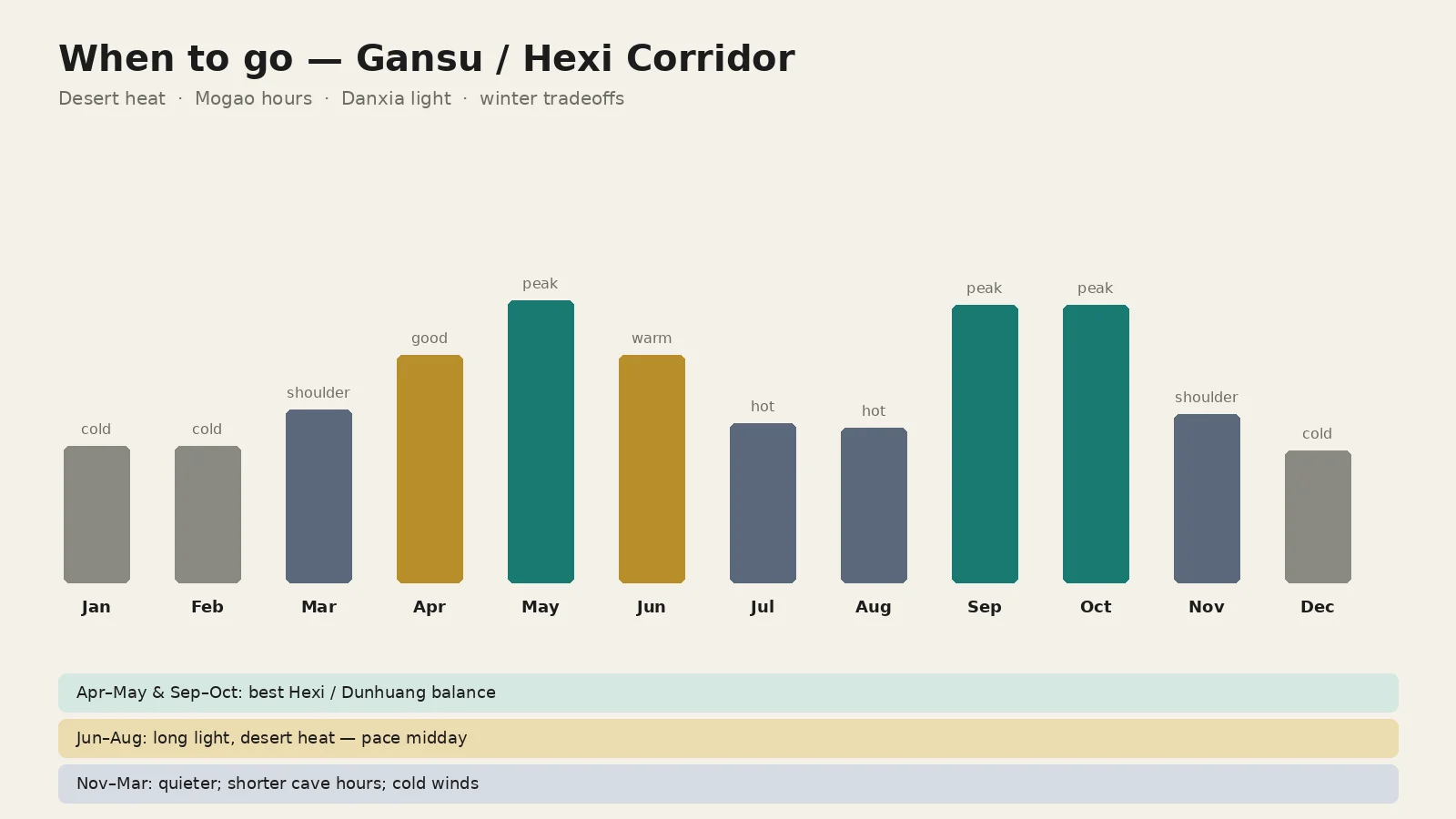
April–May and September–October are the usual Hexi / Dunhuang balance windows; summer needs heat pacing; winter is quieter with shorter cave hours.
Pack sun protection, layers, and closed shoes — desert UV and the day/night swing are real on Classic road days.
Match the month to Dunhuang Essence, Hexi Silk Road Classic, or Gansu Silk Road Highlights — see tour packages. Lanzhou is the hub, not the climax.
Season snapshot
| Window | Detail |
|---|---|
| Apr–May | Strong shoulder — Classic-friendly |
| Jun–Aug | Long light · midday heat discipline |
| Sep–Oct | Strong shoulder — peak balance |
| Nov–Mar | Quiet · cold · shorter cave hours |
| Holiday spikes | Golden Week and summer weekends — caves, ridges, and hotels |
Best time for the Hexi trip you actually want
Gansu "best time" is not one Instagram month. On the Hexi Corridor it is a conversation about desert heat, Mogao hours, Danxia light, Fort wind, and how much road you are willing to sit. Lanzhou is the capital hub for flights and a Yellow River evening — not the scenic climax. Dunhuang is the magnet. Classic walks the corridor between them.
- Hexi Silk Road Classic (6-day Classic itinerary, about 5–7 days) → the shape we recommend for most first trips. Lanzhou on-ramp, Zhangye Danxia, Jiayuguan Fort, then Dunhuang. April–May and September–October usually give the kindest balance of cave hours, ridge light, and road comfort.
- Dunhuang Essence (4-day Essence itinerary, about 3–4 days) → Mogao Caves plus Crescent Lake / Mingsha. The calendar is wider than a full corridor drive, but summer dune walks and cave mornings still need heat discipline.
- Gansu Silk Road Highlights (9-day Highlights itinerary, about 8–10 days) → the Classic spine plus Dunhuang depth. Extra nights absorb wind, timed entry, and a slower Danxia sunset without stealing the Fort morning.
Many first-timers like May or September–October. Summer brings long light and real midday heat. Winter is quieter, colder, and often shorter at the caves. Geography refresher: Gansu travel guide. Package roles: tour packages compared. Day-count framework: itinerary overview.
Climate bands on the Hexi Corridor (planning, not guarantees)
Exact forecasts vary by year, gorge, and dune. These planning bands help packing and pacing — they are not weather warranties:
| Band / feel | Where you feel it | Planning implication |
|---|---|---|
| Mild days / cool nights | April–May and September–October along the corridor | Strong Classic window; layers for the vehicle and the evening |
| Hot sand / strong UV | Dunhuang dunes, open plazas, June–August noon | Early Mogao and dune starts; shade the middle of the day |
| Low-angle Danxia light | Zhangye ridges in shoulder months, and clear summer evenings | Protect a sunset or soft morning — do not stack it after a late Fort arrival |
| Fort wind and stone | Jiayuguan ramparts and the western wall | Closed shoes, a shell, and a morning visit before the corridor drive |
| Cold clear / short cave hours | November–March Mogao and open sites | Quieter visits; confirm timed entry; shorter outdoor blocks |
| Dust and wind events | Open Hexi roads and dune days | A private day can move; a fixed coach clock usually cannot |
The corridor is a dry continental belt: big day–night swings, UV that ignores a cool breeze, and wind that turns a "mild" forecast into a jacket hour on the Fort. Private pacing exists so a group can leave a dune overlook without pretending the afternoon was ruined. Why flexible timing matters: private vs group.
What to wear on desert Hexi days
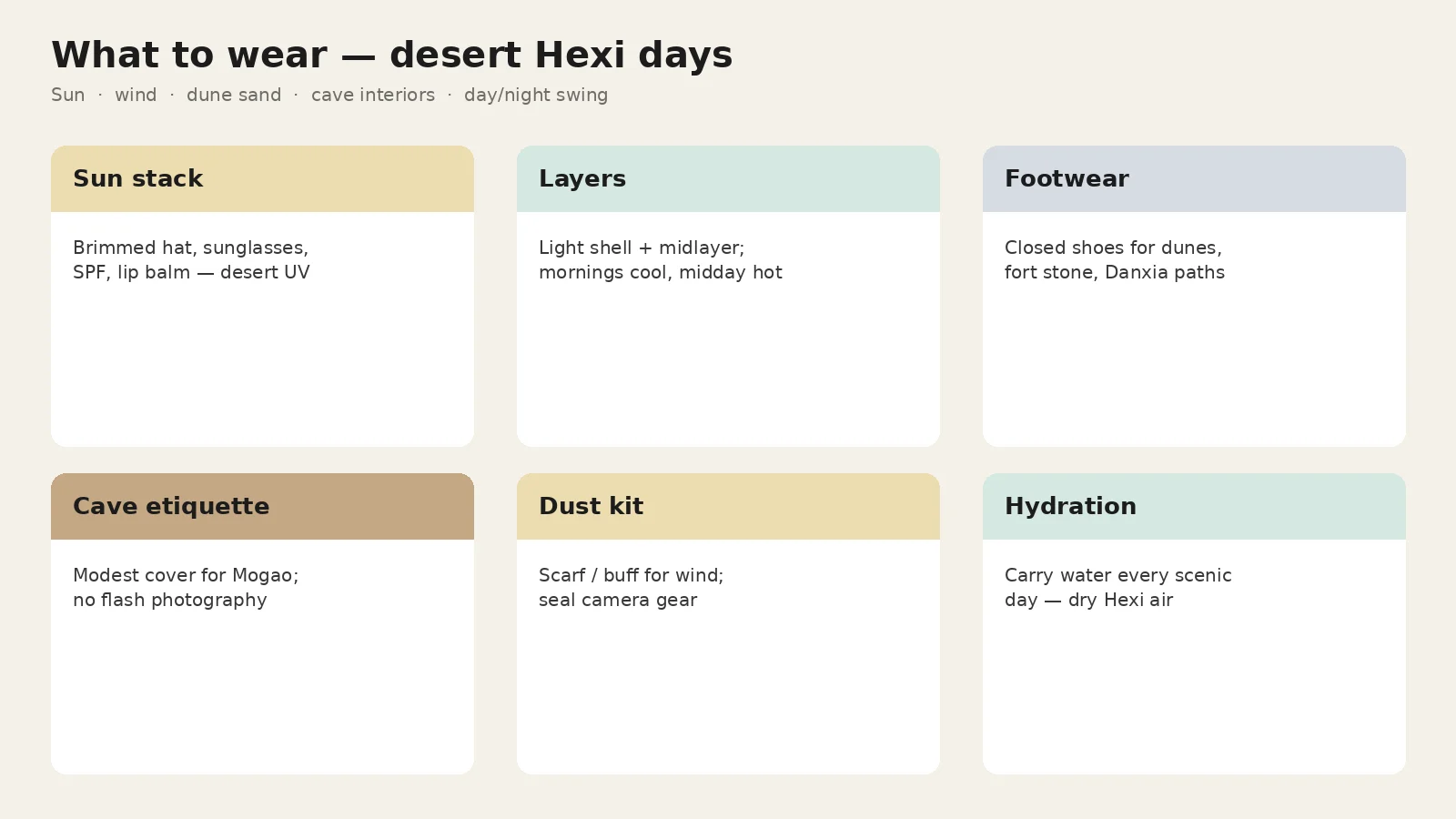
Sun stack. Brimmed hat, sunglasses, high-SPF sunscreen, and lip balm. Desert UV is real in shoulder months, not only in July. Reapply after a dune walk.
Layers. A light shell plus a midlayer. Mornings at Zhangye, Jiayuguan, and a Lanzhou river path can feel cool while Dunhuang noon is hot. Shed a layer in the vehicle so you do not soak a base layer and then freeze on a rampart.
Footwear. Closed, broken-in shoes for Mingsha sand, Fort stone, and Danxia paths. Fashion sandals and brand-new boots end Classic days early.
Cave etiquette. Modest cover for Mogao — shoulders and knees as the site requires — and no flash photography. A light scarf that also works as a dust buff is more useful than a separate "temple outfit" you never unpack.
Dust kit. Scarf or buff for wind, a small cloth for lenses, and a way to seal camera gear in the vehicle. Hexi dust is fine and persistent.
Hydration. Carry water every scenic day. Dry air hides thirst until the afternoon transfer.
What fails quickly: a single cotton tee at Mingsha noon, open shoes on Fort stairs, an uncovered neck at Danxia in May, and a phone left on the dashboard in July.
Place pacing sits on the scenic pages: Dunhuang · Zhangye · Jiayuguan · Lanzhou · Hexi Corridor.
Heat, cave hours, Danxia light, and the Fort
Four constraints decide whether a month feels easy or merely possible.
Dunhuang heat. June–August long light is a gift for photographers and a tax on anyone who walks Mingsha at noon. Essence still works if Mogao is a morning timed entry and the dune block starts early, with hotel or shaded lunch in the middle. Do not treat "we are only here three days" as a reason to stack caves, dunes, and a night market into one exhausted afternoon.
Mogao hours. Winter does not automatically close the caves, but hours shorten and timed entry still has to be confirmed for your dates. A private plan should not promise a late-afternoon cave slot in January the way it might in May. Highlights uses the extra Dunhuang night so a shortened cave morning does not erase the dunes.
Danxia light. Zhangye's colorful ridges reward lower-angle light and clear air. Shoulder seasons are the popular window. Summer sunsets can still work if the group accepts heat on the walkways and does not arrive from Jiayuguan already late. If sunset is the priority, say so when you request a Gansu plan — it changes which town owns the night.
Fort visits. Jiayuguan is a stone-and-wind morning, not a scenic climax that replaces Dunhuang. Classic puts it on the corridor between Zhangye and Dunhuang. A soft morning on the ramparts beats a heroic late stop after a long road day. Closed shoes matter more than a fashion layer.
Lanzhou is the shoulder, not the finale. Use it for LHW arrival or departure, a Yellow River walk, and a noodle meal when energy allows. Do not spend the best light of a short trip in the capital because the corridor "starts there." Essence travelers who fly DNH can skip a long Lanzhou scenic day entirely.
Buffers. Arrival and departure days should stay soft. Hexi road hours and cave timed entry both punish optimism. A private plan leaves margin for heat, wind, and museum fatigue instead of stacking every scenic into the same afternoon.
How season interacts with Essence, Classic, and Highlights
| Goal | Typical length | Season note |
|---|---|---|
| Mogao + Crescent Lake / Mingsha | 3–4 days | Essence — wider calendar; summer still needs early starts |
| Lanzhou → Danxia → Fort → Dunhuang | 5–7 days | Classic — April–May and September–October are the easiest spine |
| Classic spine + Dunhuang depth | 8–10 days | Highlights — buffers absorb heat, wind, and cave-hour swings |
Season tunes the days. It does not invent a fourth published shape. A Qinghai add-on, an Xinjiang continuation, or a Maijishan spur belongs on a custom quote. Tibet, including Lhasa and Everest Base Camp, is a different trip: Tibet private tours. Qinghai Lake and Xining belong on Qinghai private tours. Wuwei and a dedicated Tianshui stop are not part of Essence, Classic, or Highlights — ask if you want either folded in.
Deep day-bands: itinerary overview · 4-day Essence · 6-day Classic · 9-day Highlights.
Holidays, weekends, and wind
Chinese public holidays and peak summer weekends change:
- timed-entry pressure at Mogao;
- hotel inventory in Dunhuang and Zhangye;
- road time on Lanzhou–Zhangye–Jiayuguan–Dunhuang days.
Golden Week (early October) and summer Saturdays are the densest windows for Dunhuang and Danxia. Chinese New Year weeks can quiet some sites and also scramble flights — ask which effect dominates your year.
Wind and dust happen on the corridor. A private day can move a dune walk or a Fort visit. A coach product with a printed clock usually cannot. Private transport helps logistics and pacing. It does not empty Mogao or guarantee a windless ridge.
If your dates overlap a holiday, book earlier and accept crowd reality in the plan. Compare shapes on tour packages.
Month-by-month Hexi notes
These notes are planning heuristics, not guarantees. Confirm Mogao timed entry, park hours, and your LHW or DNH flights for the travel year.
January
Cold, dry, and often clear. Quieter Mogao and Fort mornings, with shorter cave hours. Essence is the easiest winter product if you accept cold dune air and a modest outdoor block. Classic still works for travelers who pack real warmth and do not expect long ridge walks. Lanzhou feels like a winter city hub, not a scenic substitute for Dunhuang.
February
Similar cold to January, with Chinese New Year date volatility. Hotels and flights need earlier decisions some years and feel quieter others. Dust events still occur. Confirm cave hours before you lock a one-night Dunhuang dash.
March
Shoulder begins. Days lengthen; nights stay cold; wind remains a planning factor on the Fort and the open road. Good for travelers who want fewer people and will wear a shell. Danxia can be beautiful on clear mornings. Ask whether you want Classic this early or prefer waiting for milder April–May sand.
April
A strong first-timer month. Desert heat has not peaked, cave hours are workable, and Danxia light is often kinder than midsummer noon. Book Dunhuang and Zhangye lodging if Classic is locked — spring weekends thicken. Layers still matter after sunset.
May
A frequent sweet spot. Longer light, accessible Mogao mornings, and more comfortable dune and ridge time than July. Highlights buffers feel generous rather than defensive. SPF and a hat are already non-negotiable. Watch late-May holiday weekends for density.
June
Long daylight and a real heat climb. Essence and Classic both work if dune and cave blocks start early and midday is shade, lunch, or the vehicle. Danxia sunsets can still be the photographic hour — do not arrive late from Jiayuguan and expect a comfortable walk. Hydrate on every road day.
July
Peak desert heat. Valid with early starts, shade, and water — not cancelled. Midday Mingsha heroics fail. Mogao remains a morning. Fort stone radiates heat; keep that visit short and early. Photographers get long evenings. Families and heat-sensitive travelers should say so before the quote locks the dune hour.
August
Similar heat to July, with continued long light and busy summer weekends in Dunhuang. Classic transfer-plus-scenic days are where private pacing earns its keep. Essence is easier than an all-day corridor sprint. Highlights is the honest choice when you want Dunhuang depth without compressing the Fort and Danxia into leftover hours.
September
Often the best balance of the year. Heat eases, light stays strong, cave hours are workable, and Danxia color reads well in clearer air. Excellent for Classic and for Highlights Dunhuang nights. Book popular Dunhuang and Zhangye hotels early as autumn travel picks up. Pack a warmer evening layer. Lanzhou is a pleasant arrival hub, still not the reason you came.
October
Another strong first-timer month — cooler nights, often clear air, good Fort mornings. Early October can overlap National Day Golden Week: denser caves, ridges, and hotels. Mid and late October are usually calmer. Late October can tip toward colder mornings and a wind shell on the ramparts. The shoulder window still applies.
November
Shoulder into winter. Clear, dry, quieter sites. Outdoor comfort shortens on dunes and ridges. Cave hours may contract — confirm them. Essence and a hardy Classic remain rewarding if warmth is real. Highlights with a long Dunhuang ambition needs an honest readout on how short the outdoor blocks become.
December
Cold, dry, and quiet. Strong for travelers who prefer empty plazas over peak dune menus. Pack insulating layers you can shed indoors. Do not assume a summer-length Mogao day. A Lanzhou night is logistics and noodles, then move toward the corridor or fly DNH if Dunhuang is the whole trip.
How the year maps back to packages
- April–May and September–October — the usual Hexi / Dunhuang balance, and the easiest Classic spine.
- June–August — long light and desert heat; pace midday; Essence and Classic still go.
- November–March — quieter, colder, shorter cave hours; quote the tradeoff before you promise dunes and ridges.
A layering system that survives a corridor day
- Base: a breathable shirt you can live in for a cave queue and a vehicle hop — not one heavy cotton tee.
- Sun layer: light long sleeves you are willing to keep on at Mingsha and on Danxia walkways.
- Shell: a compact wind layer for Jiayuguan, open ridges, and dusty road stops.
- Warm option: a fleece or light insulated jacket for evenings, winter dawns, and cold Lanzhou mornings.
- Extremities: a hat that shades face and neck, broken-in closed shoes, and light gloves only if you are traveling deep winter.
Remove the midlayer indoors and in a warm vehicle. The same small scarf covers a Mogao dress expectation and a dust gust, which is the point of packing light on a multi-hotel Classic route.
Footwear, sand, and camera dust
Closed shoes win at Mogao approaches, Fort stairs, Danxia paths, and most dune boardwalks. Sand will find your socks on a Mingsha day — pack a spare pair.
- Smooth fashion soles slip on dusty stone and metal park stairs.
- Brand-new boots create the blisters that cancel a Danxia sunset.
- Winter frost on shaded Fort paths can be slick even when the dunes look dry.
Keep phones and spare batteries out of direct noon sun. A microfiber cloth is worth more than an extra lens when the corridor is blowing. Seal the camera in the vehicle between stops. Polarized sunglasses help on pale dune faces and on the Yellow River glare in Lanzhou, which is a bonus — not a reason to linger in the capital.
Kids, older travelers, and anyone who dislikes heat
Shorter blocks, indoor or vehicle resets, and permission to skip a second dune add-on. Season still changes the trip: a July Mingsha noon is a different day from a September morning on the same Essence card.
- Families: early caves or dunes, midday rest, evening light if energy remains.
- Older travelers or anyone watching stairs: Essence, or Classic with a soft Fort morning and no heroic ridge add-on.
- Photographers: shoulder months often beat midsummer haze and Golden Week density; say if Danxia sunset outranks a second Dunhuang museum hour.
- Heat-sensitive groups: bias May or September–October, and ask for the dune block before the heat peak.
Private versus coach tradeoffs, including Mogao timing: private vs group.
When to request a plan
Ask earlier for Golden Week, peak July–August weekends, and any Classic or Highlights plan that needs specific Dunhuang or Zhangye lodging. Essence hotel nights in Dunhuang are simpler inventory than a three-town corridor — another reason Classic deserves earlier decisions in popular months.
Share your travel month, heat tolerance, and whether you are arriving LHW, DNH, or mixing them. Tell us if Mogao timed entry, a Danxia sunset, or a soft Fort morning is the non-negotiable. We pace the quote around those constraints on Gansu private tours.
If the idea is really Qinghai Lake, Xining, or the railway, start on Qinghai private tours. If the idea is Lhasa, the classic circuit, or Everest on the Tibet side, start on Tibet private tours. Those are not Gansu add-on cards.
What a quote still has to confirm
We do not publish fake exact temperatures as if they were promises, and we do not lock Mogao hours without checking your dates. Practical bands plus a yearly check beat false precision.
Summer is not cancelled. Winter is not automatically closed. Both need honest packing and a check of cave hours. A Tianshui or Wuwei idea, a Maijishan spur, or an Xinjiang continuation is a custom conversation — not a silent extra day inside Classic.
Questions worth answering once:
- Arrival airport — LHW, DNH, or a mixed Classic exit.
- Nights you actually have after jet lag and domestic-flight buffers.
- Comfort with Mogao timed entry, and any mobility limits on Fort stairs or dune paths.
- Whether Danxia sunset outranks a soft Fort morning.
- Heat tolerance for June–August.
- Whether a Lanzhou noodle evening is welcome — as a hub, not the climax.
- Whether Qinghai or Xinjiang ideas belong on a separate quote.
- Photography needs that change which town owns the night.
Related reading, including pages that open as the rest of the guide is published:
- Hub: Gansu travel guide
- Packages and days: tour packages · itinerary · 4-day · 6-day · 9-day
- Places: Dunhuang · Zhangye · Jiayuguan · Lanzhou · Hexi Corridor
- Style: best time · private vs group
Match nights to corridor distance, protect Mogao mornings, and request a realistic private plan instead of a crushed checklist.
Packing by stop
| Stop | Extra focus |
|---|---|
| Dunhuang dunes | Early start, SPF, closed shoes, spare socks |
| Mogao Caves | Modest cover, no flash, morning timed entry |
| Zhangye Danxia | Sun hat; protect sunset or a soft morning |
| Jiayuguan Fort | Wind shell and closed shoes on stone |
| Lanzhou hub | Light city layer — arrival logistics, not the climax |
| Winter corridor | Insulating midlayer; shorter outdoor blocks |
Match season to a day-band
Season changes how the days run. Classic stays the Hexi spine for most first trips. Essence stays Dunhuang-focused. Highlights adds depth when heat, wind, or cave hours need room.
Classic 5–7
Time fit: 5–7 days
Hexi spine for most first trips — Lanzhou, Danxia, the Fort, Dunhuang — easiest in April–May and September–October. 6-day Classic.
Essence 3–4
Time fit: 3–4 days
Dunhuang Mogao plus Crescent Lake / Mingsha. Wider calendar, with early starts in summer heat. 4-day Essence.
Highlights 8–10
Time fit: 8–10 days
Classic spine plus Dunhuang depth so wind, heat, and shorter cave hours do not erase a stop. 9-day Highlights.
Plan around your dates
Tell us the month — we pace heat, cave hours, and Danxia light in the quote.
Keep planning Gansu

Essence · Classic · Highlights compared
How many days for Gansu?
Mogao, Crescent Lake, Mingsha

Colorful Danxia / Rainbow Mountains
Fort and western Great Wall
Capital hub, LHW, noodles
The road between the hubs and Dunhuang
Private vehicle vs coach; Mogao timing
Gansu FAQ
- Midday can be harsh, especially on Mingsha and open plazas. Private plans still go in June–August: Mogao as a morning timed entry, dunes early, and shade or a hotel reset in the middle. If you dislike heat entirely, bias April–May or September–October and say so when you request a plan.
- Clear air and lower-angle light help the Zhangye ridges most. April–May and September–October are the popular balance. Summer sunsets can still work if you accept heat on the walkways and do not arrive late from Jiayuguan. Name a sunset priority in your quote so that night is protected.
- Mogao does not automatically shut for the season, but hours often shorten and timed entry still has to match your dates. Confirm the window in the quote before you promise a late cave visit in November–March. Highlights uses an extra Dunhuang night so a shorter morning does not erase the dunes.
- Wind and dust happen on the Hexi Corridor. A private day can move a dune walk or a Fort visit when the air turns. A fixed coach clock usually cannot. Pack a buff, seal camera gear, and treat a shifted afternoon as part of the plan rather than a failure.
- Often May, or September into October, when cave hours, Danxia light, and road comfort line up. Flights and leave dates matter more than hunting a perfect week. Early October can overlap National Day crowds; mid or late October is usually calmer.
- Heat and short cave hours may push a tight Classic calendar toward Highlights, because the extra nights absorb weather swings. Scarce leave days still keep Dunhuang Essence honest — do not pretend a 5–7 day corridor fits inside a long weekend. Season tunes the days; it does not replace the geography.
- No. Gansu private tours are quoted after we know your dates, party size, and whether you want Essence, Classic, or Highlights. Share the month and the route shape on the Gansu tours page.
- DragonTrail Gansu trips are private for your group, with a vehicle and pacing built around Mogao timing, heat, and corridor drives. A shared coach can suit travelers who want a fixed clock and the same stops as everyone else. See the private versus group guide for the tradeoffs.
Request a season-smart Gansu plan
Open the Gansu tours page once your month and route shape look right.