
Shaoxing wine (绍兴酒, Shàoxīng jiǔ) is a celebrated huangjiu tradition associated with Shaoxing in Zhejiang. Outside China it is often encountered first as a cooking ingredient, but Shaoxing wine also has a long tradition as a beverage. It is a type of huangjiu rather than a synonym for every Chinese rice wine, and products intended for cooking may differ from bottles intended for drinking.
Shaoxing Wine at a Glance
| Field | Detail |
|---|---|
| Chinese | 绍兴酒 (Shàoxīng jiǔ) |
| Place | Shaoxing, Zhejiang |
| Category relationship | A major huangjiu tradition |
| Traveler caution | Products intended for cooking may differ from bottles intended for drinking |
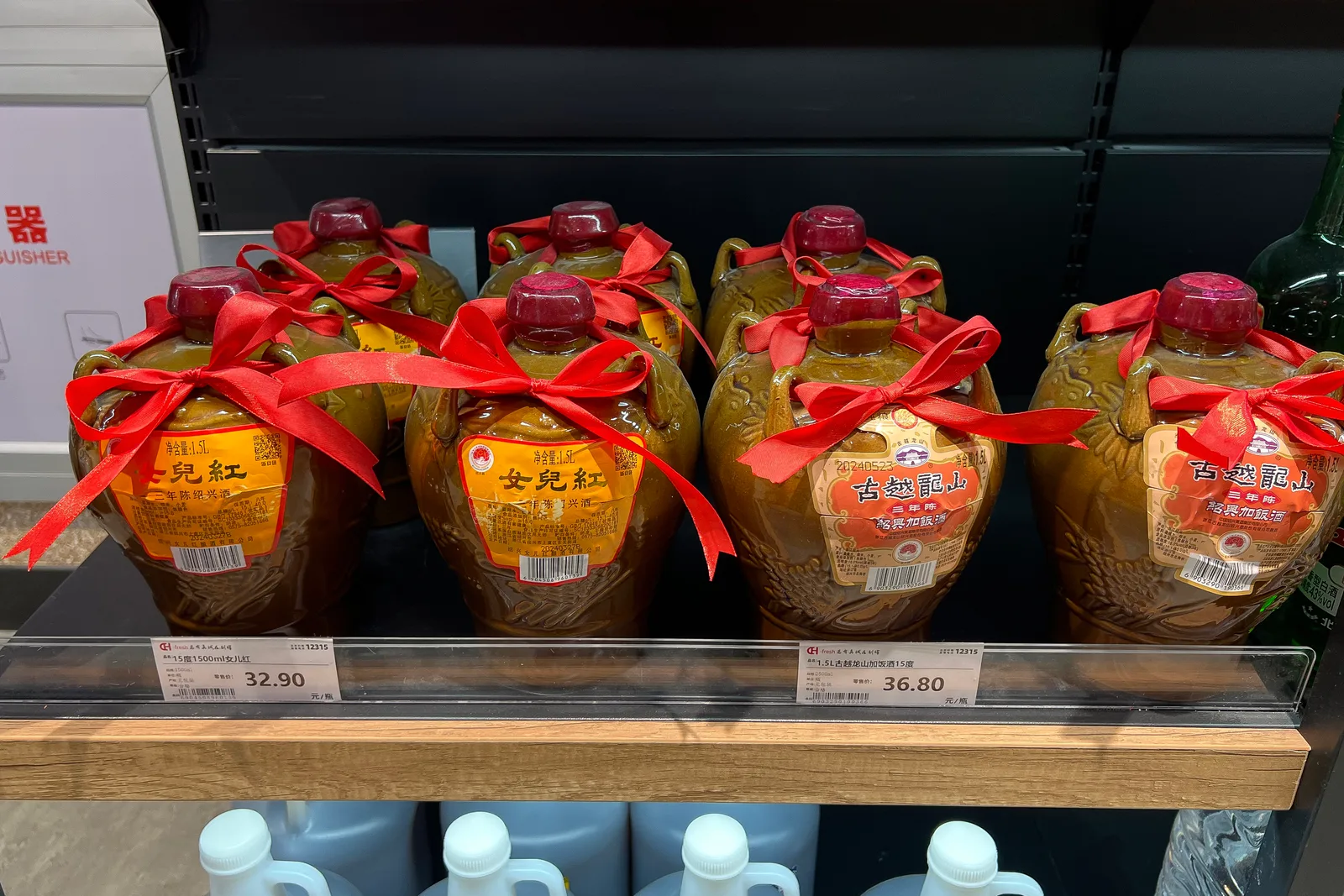
*Jarred Shaoxing wine at a supermarket in Beijing. Wikimedia Commons, CC BY-SA 4.0. Cropped/resized for web; non-generative.*
What Is Shaoxing Wine?
Shaoxing wine refers to huangjiu traditions tied to Shaoxing's place identity. In traveler English it is one of the most searched Chinese alcohol terms—often because recipes call for it—yet the category also includes bottles intended for drinking.
Is Shaoxing Wine Huangjiu or Rice Wine?
Both answers need precision:
- Relative to Chinese categories: Shaoxing wine is a huangjiu tradition.
- Relative to English "rice wine": many people use that umbrella for Shaoxing, but "rice wine" also covers other products. Shaoxing wine ≠ every Chinese rice wine.
See Huangjiu and Chinese Rice Wine.
Why Shaoxing, Zhejiang Matters
Shaoxing's name on a label signals a place-linked tradition within Zhejiang's fermented-grain beverage culture. Treat place association as cultural geography—not marketing poetry about "oldest" or "best" without a sourced claim.
How Shaoxing Wine Is Brewed and Aged
At overview level: rice / glutinous rice based fermentation within huangjiu practice, then aging/style finishing. Exact industrial methods vary by producer.
Names Travelers May Encounter
English and Chinese retail labels may mention style or marketing names such as Huadiao (花雕), Jiafan (加饭), or Nü'er Hong (女儿红). These terms appear in popular discussion; treat them as names you may see rather than a rigid, exhaustive classification scheme unless a specific authoritative definition is attached to a particular product.
What Does Shaoxing Wine Taste Like?
Profiles vary by style and age—from lighter and fresher to deeper and more oxidative. Cooking products may taste saltier or differently seasoned than drinking bottles.
Drinking Shaoxing Wine vs Shaoxing Cooking Wine
This is the key traveler disambiguation:
- Drinking-oriented Shaoxing huangjiu is produced and labeled for beverage use.
- Cooking-oriented products sold internationally or in Chinese supermarkets may include salt or other seasonings and should not be assumed identical to drinking wine.
If a recipe calls for "Shaoxing wine," cooks often mean a cooking product; if a host pours Shaoxing at the table, they usually mean a beverage. When shopping, read the label for culinary vs drinking cues. Cooking context also sits beside Chinese Food practice.
What About Shaoxing Wine Substitutes?
Cooks outside China often use other rice wines or dry sherry-style stand-ins depending on the dish. Substitutions change flavor; there is no universal one-to-one replacement.
Is Shaoxing Wine the Same as Mirin?
No. Mirin belongs to Japanese culinary/beverage traditions; Shaoxing wine belongs to Chinese huangjiu traditions. They are sometimes substituted in home cooking abroad, but they are not the same product lineage.
How Travelers Encounter Shaoxing Wine in China
Possible contexts include Zhejiang/Shaoxing dining, restaurants featuring Shaoxing dishes, specialty shops, and supermarket shelves in major cities. Do not assume every Chinese restaurant nationwide pours Shaoxing as a table wine.
Common Misconceptions
- Shaoxing wine is not all Chinese rice wine.
- Shaoxing wine is huangjiu-related, not baijiu.
- Cooking Shaoxing products are not automatically identical to drinking wine.
- Mirin is not the same tradition.
FAQ
What is Shaoxing wine?
A major huangjiu tradition associated with Shaoxing, Zhejiang—often encountered first as a cooking ingredient outside China, but also drunk as a beverage.
Is Shaoxing wine the same as Chinese rice wine?
Not exactly. It may be called rice wine in English, but "Chinese rice wine" also covers other products.
Is Shaoxing wine the same as huangjiu?
Shaoxing wine is a type of huangjiu tradition, not the entire huangjiu category.
Can people drink Shaoxing wine?
Yes—drinking-grade Shaoxing huangjiu is a beverage. Check labels; cooking products may differ.
Is cooking Shaoxing wine the same as drinking wine?
Not necessarily. Cooking products may be salted or otherwise formulated for the pantry.
What is Huadiao wine?
A name travelers may see on Shaoxing-related labels/styles. Treat it as a label term to recognize rather than a universal legal definition on this page.
Is Shaoxing wine the same as mirin?
No. Different culinary and beverage traditions, even if home cooks sometimes substitute.
Continue with Chinese Alcohol & Wine
Sources & Review
- PMC7691429 — Huangjiu / Chinese rice wine fermentation
- Journal of the Institute of Brewing — Shaoxing / Chinese rice-wine research context
- Author: DragonTrail editorial
- Last updated: 29 August 2026