
Chinese Rice Wine at a Glance
| English label | May point to | Notes |
|---|---|---|
| Chinese rice wine | Multiple products | Umbrella, not one SKU |
| Mijiu (米酒) | Rice-based fermented drinks | Context varies by region |
| Huangjiu (黄酒) | Fermented grain family | Not always rice-only |
| Shaoxing wine | Zhejiang huangjiu tradition | Subset relationship |
| Jiuniang / laozao | Sweet fermented rice | Different context from aged bottled huangjiu |
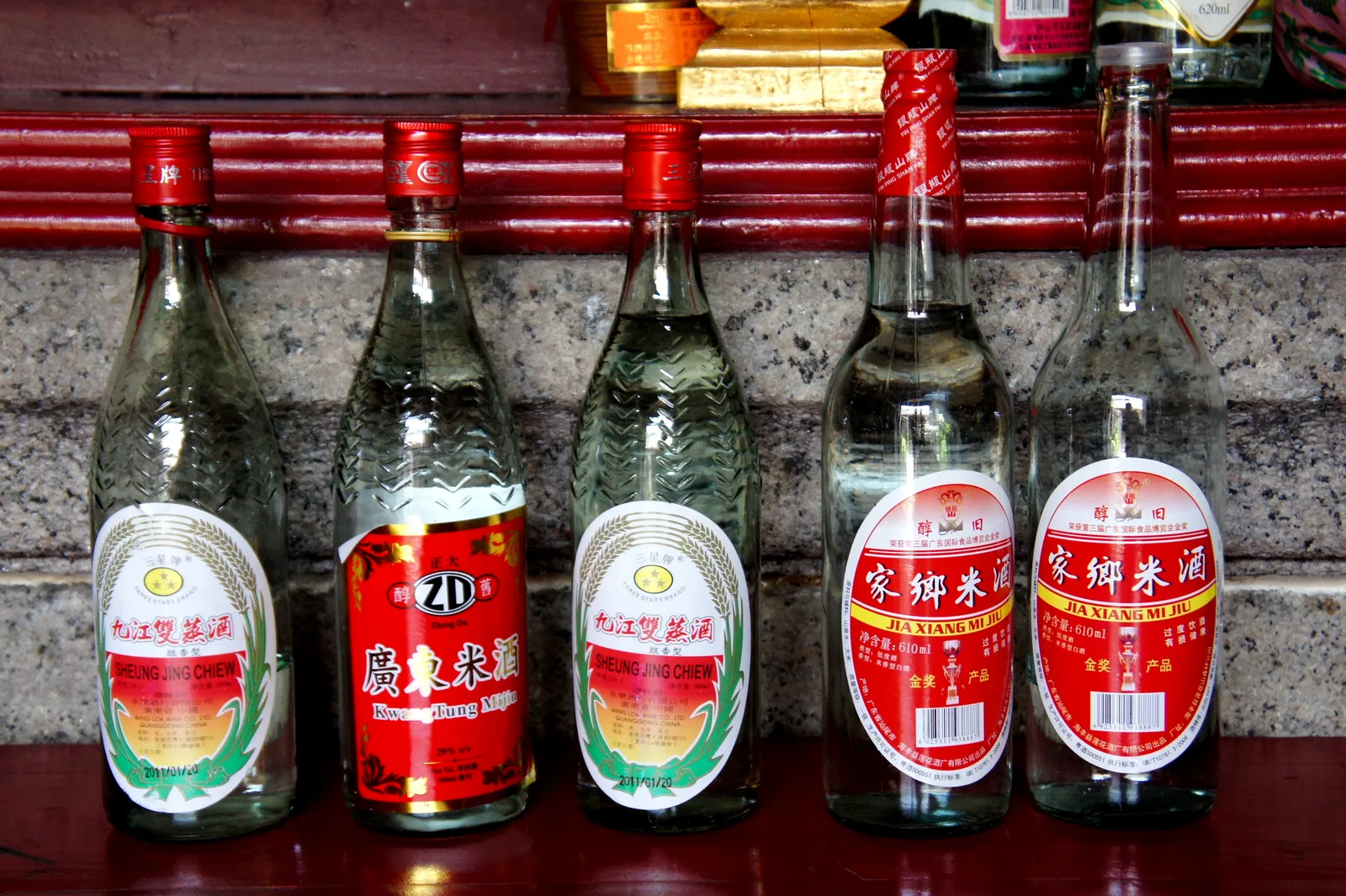
*Chinese alcoholic drinks displayed in a supermarket.*
Why "Rice Wine" Is an Umbrella Term
English collapses several Chinese products into one phrase. Always ask which Chinese term or place style is meant before treating two bottles as interchangeable.
Mijiu, Huangjiu and English Terminology
| Term | Chinese | Relationship |
|---|---|---|
| Mijiu | 米酒 | Literally "rice alcohol/wine"; usage varies |
| Huangjiu | 黄酒 | Fermented grain-beverage family |
| Shaoxing wine | 绍兴酒 | Major huangjiu tradition |
| Putaojiu | 葡萄酒 | Grape wine — not rice wine |
How Chinese Rice Wine Is Fermented
Rice-based fermented beverages typically rely on grain preparation plus fermentation starters. Processes differ for sweet fresh fermented rice versus aged bottled styles. High-level orientation only—see peer-reviewed huangjiu literature for technical depth.
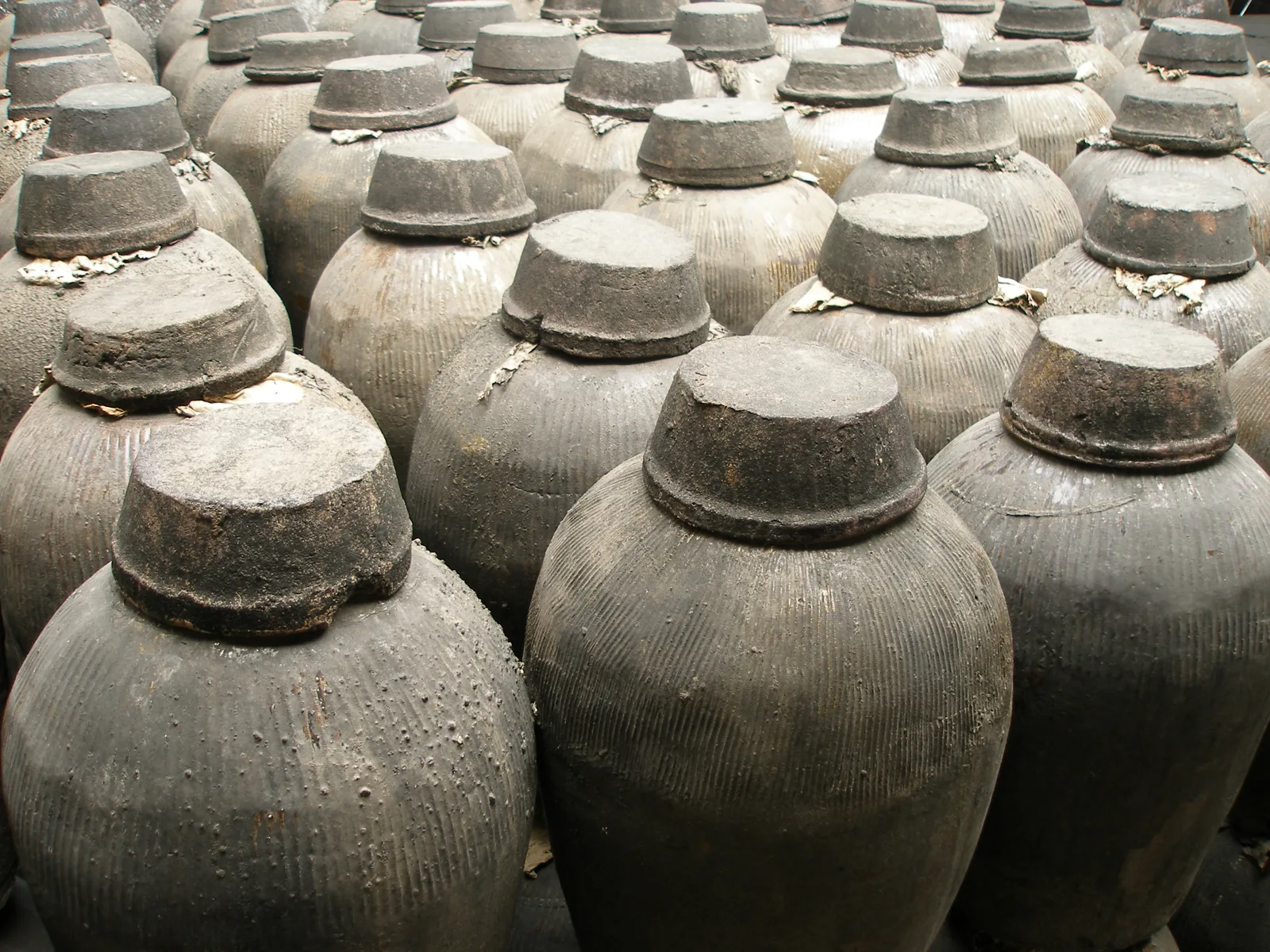
*Grains used as raw ingredients in Chinese fermented drinks.*
Rice, Glutinous Rice, Millet and Regional Variation
Important: not every huangjiu is produced only from rice. Millet and other grains appear in some regional traditions. Do not flatten China's fermented grain beverages into a single rice-only story.
Shaoxing Wine and Other Regional Examples
Shaoxing is one of the best-known rice-based Chinese wine traditions internationally, but it is only one part of the wider huangjiu and rice-wine landscape. Other regional mijiu/huangjiu products exist with local names. See Shaoxing Wine and Huangjiu.
Jiuniang / Laozao and Sweet Fermented Rice
Sweet fermented-rice foods/drinks (酒酿 / 醪糟) occupy a different everyday context from bottled aged huangjiu. Do not flatten them into one beverage story.
Chinese Rice Wine vs Sake vs Makgeolli
Short orientation only: sake and makgeolli belong to Japanese and Korean traditions respectively. They are not Chinese rice-wine synonyms, even when English menus use "rice wine" loosely.
Drinking Rice Wine vs Cooking with Rice Wine
Cooking products and bottles intended for drinking can differ in seasoning and labeling. For pantry vs table distinctions in the Shaoxing case, see the Shaoxing guide. Broader meal culture: Chinese Food.
What Travelers May See in Restaurants and Shops
Menus may say "rice wine" in English for very different Chinese products. Shops may shelve cooking Shaoxing next to drinking huangjiu. Ask for the Chinese name when clarity matters.
Common Misconceptions
- "Chinese rice wine" is not one standardized category.
- Rice wine ≠ exact synonym of huangjiu.
- Shaoxing wine ≠ all rice wine.
- Not all huangjiu is rice-only.
- Chinese rice wine is not the same as sake.
FAQ
What is Chinese rice wine?
An English umbrella that may mean mijiu, rice-based huangjiu, Shaoxing wine, or sweet fermented-rice drinks depending on context.
Is Chinese rice wine the same as huangjiu?
Not exactly—overlap exists, but huangjiu is not strictly rice-only and the English umbrella is looser.
Is rice wine the same as Shaoxing wine?
Shaoxing wine is one major tradition often called rice wine in English; it is not every rice wine.
Is Chinese rice wine distilled?
Usually no—these are fermented products. Distilled grain spirits are a different family (baijiu).
What is mijiu?
米酒—literally rice alcohol/wine; usage and style vary by region and product.
Is rice wine the same as sake?
No. Sake is a Japanese tradition; Chinese rice-wine labels cover different Chinese products.
Can Chinese rice wine be used for cooking?
Yes—many English recipes call for it—but products intended for cooking may differ from bottles intended for drinking.
Continue with Chinese Alcohol & Wine
Sources & Review
- PMC7691429
- PMC8844729
- Author: DragonTrail editorial
- Last updated: 29 August 2026